What Does a Bad Starter Sound Like? Sounds, Causes, and Fixes

A bad starter may make one loud click, a grind, a fast whir, or no sound at all. These sounds offer clues, but they do not prove the starter failed. A weak battery, loose cable, solenoid, relay, or flywheel can create a similar problem.
If the dash lights work but the engine will not crank, listen before buying a part. A few checks can tell you whether the fault is in the starter, battery, or alternator. This guide fits most 12-volt passenger vehicles with a key or push button.
Read our guide to whether a car can run without a battery for more context on the vehicle’s electrical system.
Quick Summary
- One strong click with bright lights points toward the starter, solenoid, relay, or a cable connection.
- Rapid clicking more often points toward a weak battery or poor terminal connection.
- Grinding or whirring can mean the starter gear is not engaging the flywheel correctly.
- Test the battery and connections before ordering a starter.
- A full starter replacement often costs $350 to $1,100, so diagnosis matters.
What Does Each Bad Starter Sound Like?
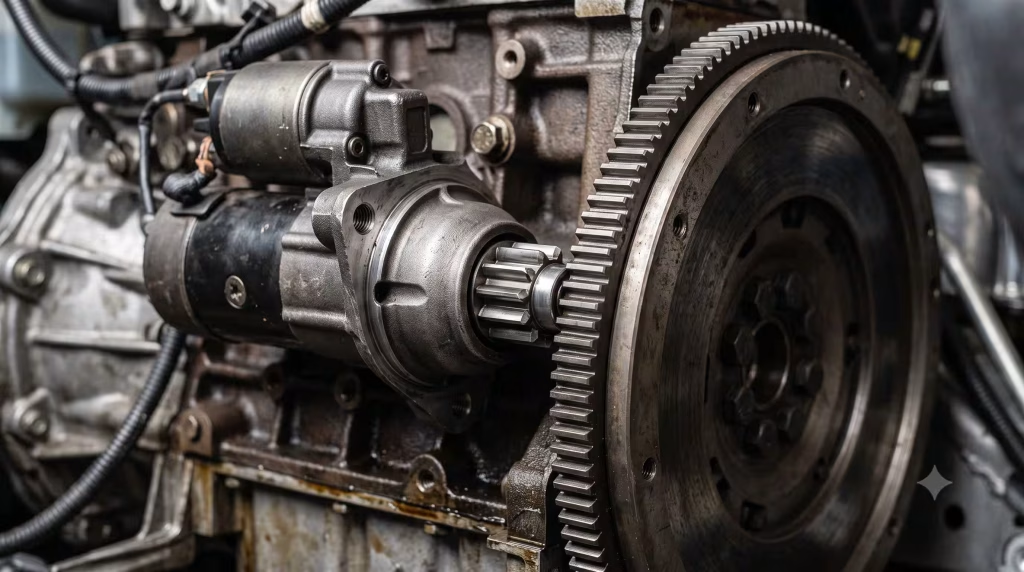
A failing starter can click once, click many times, grind, or whir without turning the engine. AAA Automotive says one click or silence with dash power may point to the starter. Rapid clicks more often mean low battery power. Listen for the pattern, then choose the next check.
Single click with bright lights points toward the starter circuit. Rapid clicking points toward battery power or terminal connections. Grinding or whirring points toward starter gear engagement and flywheel inspection. Starter noise diagnostic map Listen first, then test the most likely part of the starting circuit. Single click Starter, solenoid, relay, or cable Rapid clicking Battery charge or terminal connection Grinding or whirring Starter gear and flywheel engagement.
Starter Noise Diagnostic Map
| Sound when starting | What it may indicate | First check |
|---|---|---|
| One strong click | Starter solenoid, starter motor, relay, or cable fault | Check battery voltage, terminals, and the starter circuit |
| Rapid clicking | Weak battery, corrosion, or a loose connection | Inspect terminals and try a proper battery test |
| Grinding | Starter pinion gear or flywheel ring gear damage | Stop repeated attempts and arrange an inspection |
| High-pitched whir | Starter motor spins without engaging | Have the starter gear and flywheel checked |
| Silence | Ignition switch, relay, neutral safety switch, cable, or starter issue | Confirm the car is in Park or Neutral and test power |
Use AAA’s starter troubleshooting guide when the dash lights work but the engine does not crank. Do not keep turning the key if you hear grinding. Repeated gear contact can damage the flywheel.
How Can You Tell a Starter From a Weak Battery?
Start with the lights and the battery. AAA’s battery guide notes that a healthy battery reads about 12.6 volts with the vehicle off. Rapid clicks suggest low power. One click with bright lights points more toward the starter circuit, but clean connections still matter.
Turn on the headlights, then try to start the car. Very dim lights and rapid clicks point to the battery or its terminals. Bright lights with one click point more toward the starter, solenoid, or relay.
The battery can be weak without making rapid clicks. Cold weather, internal damage, corrosion, or a failing alternator can reduce its power. Compare the symptoms with our guide to a weak battery causing rough running before replacing the starter.
Safety First: Keep hands, clothing, and tools away from belts and fans. Never bridge starter terminals unless you have the correct wiring information and proper insulated equipment.
What Can Cause a Starter to Make These Sounds?
One starting noise can have several causes. The starter motor, battery, alternator, ignition switch, wiring, and neutral safety switch can all create a no-start. The starter needs strong power and a clean gear connection before it can turn the engine.
| Part or condition | Why it creates a starter-like symptom | Clue to watch |
|---|---|---|
| Weak battery | Cannot supply enough current to turn the starter | Rapid clicks or dim lights |
| Corroded terminals | Restricts current between the battery and starter | White or blue buildup on posts |
| Starter solenoid | Cannot send full power to the starter motor | One click with no crank |
| Starter relay | Does not pass the start signal | Silence or an intermittent no-start |
| Starter motor | Internal brushes, windings, or bearings are worn | Single click, slow crank, or intermittent failure |
| Pinion gear or flywheel | Gears fail to mesh correctly | Grinding or free-spinning whir |
| Ignition or neutral safety switch | Start command does not reach the relay | Silence in one key or gear position |
The alternator can be involved indirectly. If the car starts with a jump and then dies while driving, the charging system may not be restoring the battery. Read our guide on what to do when a battery dies while driving before blaming the starter.
How Do You Test a Starter Before Replacing It?
Check the battery, cable connections, and start signal before replacing the starter. A resting reading near 12.6 volts is a useful start, but voltage alone cannot prove the battery can deliver enough current. A full check also covers the relay, solenoid, and starter response under load.
1. Check the battery terminals
Turn the vehicle off and inspect both battery posts. Look for looseness, cracked cables, or white and blue corrosion. Clean only with the vehicle off and the correct battery-terminal brush. A poor connection can imitate a failed starter and can also make a jump start fail.
2. Measure battery voltage
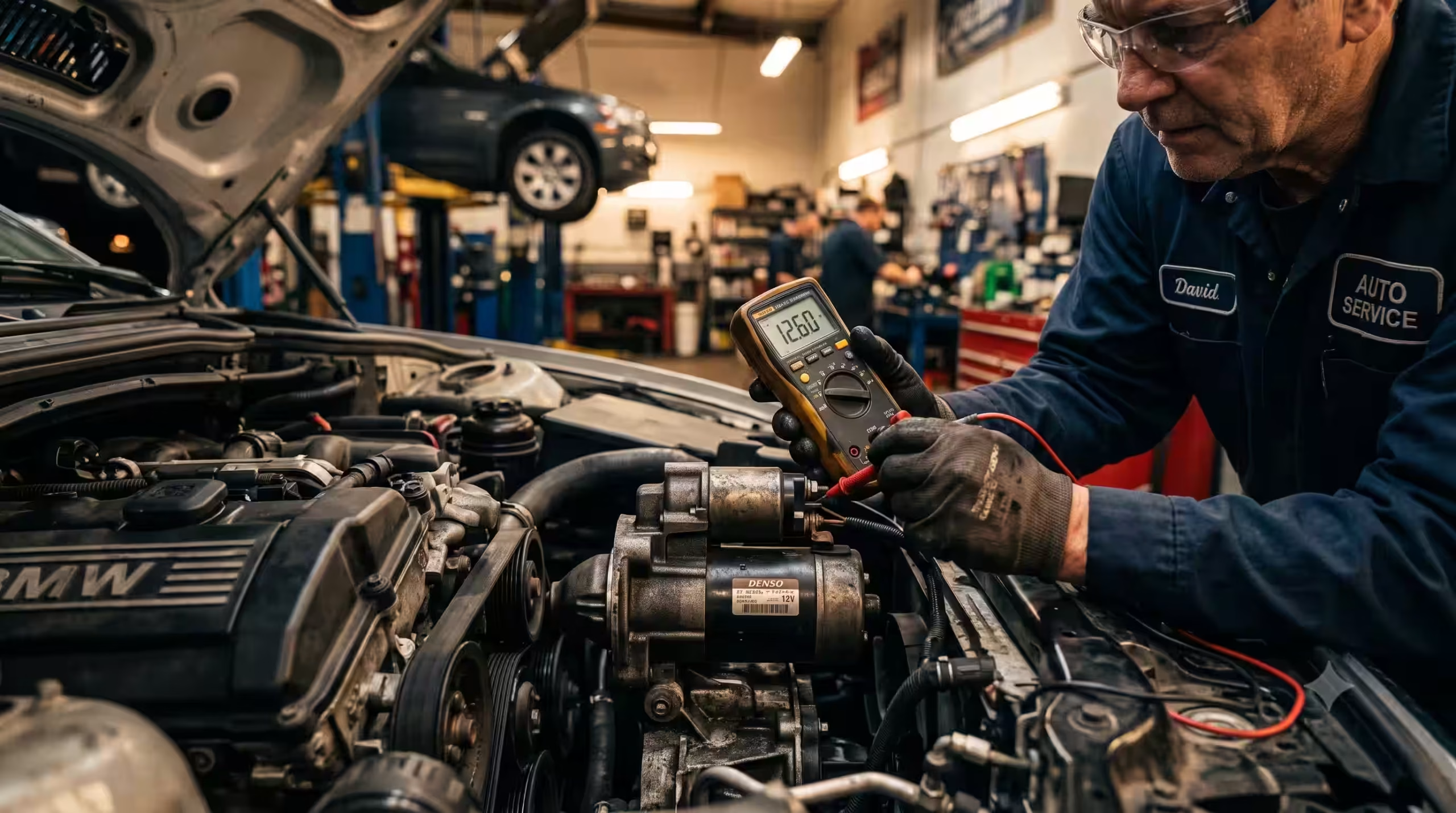
Set a digital multimeter to DC volts and touch the probes to the battery posts. About 12.6 volts with the car off is a healthy starting point. A much lower reading means the battery needs charging or testing before you judge the starter.
3. Observe the voltage during cranking
Ask a helper to turn the key while you watch the meter from a safe position. A sharp voltage drop with rapid clicks suggests a battery or connection fault. Bright lights and one click call for a closer look at the starter circuit.
4. Check the easy interlocks
Confirm an automatic transmission is in Park, then try Neutral once. Check the security light, key fob, and ignition switch. For related electrical context, see our car computer reset guide, but record codes before clearing them.
5. Get a current-draw and start-circuit test
If the battery and connections pass, a shop can test starter current draw and voltage drop. This shows whether the motor receives power and uses it correctly. It can also expose a relay, solenoid, cable, or ground fault before you order a part.
Check: You have enough evidence for a starter diagnosis when the battery and connections test healthy, the vehicle receives a start signal, and the starter still clicks or fails to crank.
Can You Jump Start a Car With a Bad Starter?
A jump can help a weak battery, but it will not repair a failed starter. One click with bright dash lights points more toward the starter. Rapid clicks point more toward low battery power. If a correct jump changes nothing, stop repeating attempts and test the starting system.
If the car starts after a jump, do not assume the starter is healthy. Extra current may overcome a weak battery or poor connection. It may also hide an intermittent starter fault. Drive only far enough to reach a safe repair location if the charging system remains uncertain.
If the car grinds, smells hot, or produces smoke, stop trying to start it. A jump cannot repair damaged gears, a bad solenoid, a broken relay, or a failed ignition switch. Use our ignition switch guide for background, but avoid unsafe bypass attempts on modern vehicles.
When Should You Stop Driving and Call a Mechanic?
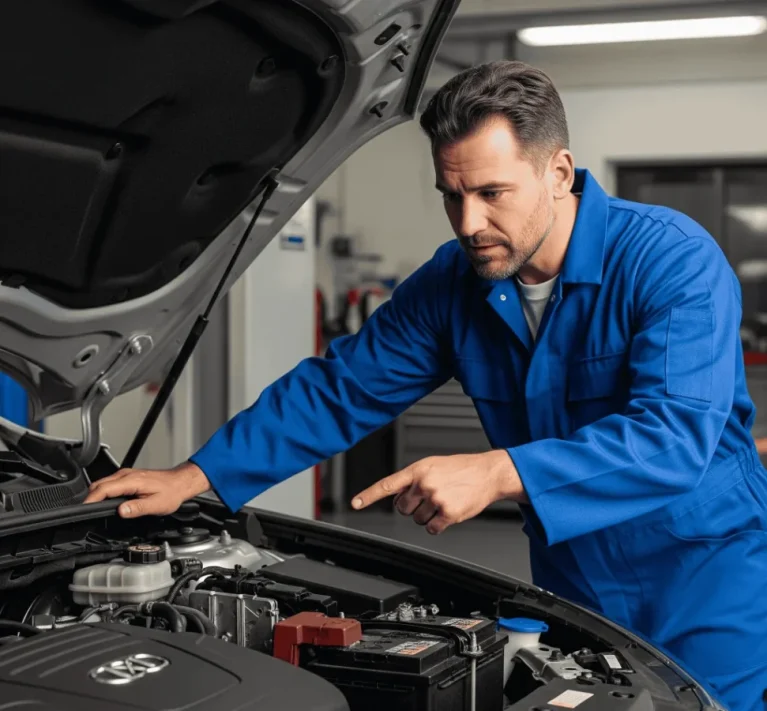
Call a mechanic when the starter grinds, smokes, stays engaged after the engine starts, or leaves an intermittent no-start. A full replacement often costs $350 to $1,100. A timely diagnosis can prevent extra flywheel, battery, or electrical damage.
Call for help when the car will not crank in Park or Neutral, the battery and terminals test well, or the vehicle starts only after repeated key turns. A mechanic can run voltage-drop and current-draw tests instead of guessing from sound alone.
Never crawl under a vehicle held up by a jack alone. Avoid starter wiring while the battery is connected unless the service procedure allows it. If you smell burning insulation or see smoke, switch off the vehicle and move away from the engine bay.
What Does a Starter Diagnosis or Replacement Cost?
AAA reports that a complete starter replacement commonly costs $350 to $1,100, including the part and labor. Its repair-cost guide explains why access, part quality, labor time, and related damage change the final price. Diagnosis is cheaper than the wrong part.
| Repair stage | Best decision |
|---|---|
| Battery or terminal check | Test before buying a starter |
| Starter circuit diagnosis | Confirm voltage drop, relay, solenoid, and ground |
| Starter replacement | Match the correct part to the vehicle and engine |
| Grinding-related repair | Inspect the starter gear and flywheel ring gear |
A lower-cost part is not always the best value if it has poor fit or a short warranty. Ask the shop whether the quote includes diagnosis, the starter, labor, core charge, and any flywheel inspection. That short list makes quotes easier to compare.
Frequently Asked Questions
What does a starter sound like when it is going bad?
A bad starter may click once, grind, whir without turning the engine, or fail at random. One click with bright lights points toward the starter. Rapid clicks suggest low battery power. Check the battery near 12.6 volts at rest, then inspect connections before ordering a part.
Is one click always a bad starter?
No. A single click can come from the solenoid, relay, a loose cable, a poor ground, or a weak battery. Treat it as a clue, not proof. A resting reading near 12.6 volts is helpful, but terminal condition and a load test matter too.
What does rapid clicking usually mean?
Rapid clicking usually means the starting system is losing voltage again and again. A weak battery, corroded terminal, or loose cable can cause it. About 12.6 volts at rest is a useful reading, but a load test gives a better answer. Clean, tight connections still matter.
Can a bad starter drain a car battery?
Repeated attempts can drain a battery because the starter draws heavy current. If the battery starts near 12.6 volts but drops sharply during cranking, check the battery and starting system together. A normal resting reading does not guarantee strong cranking power.
Can a jump start fix a bad starter?
A jump can help a weak battery, but it cannot repair a failed motor, damaged gear, or bad solenoid. One click with bright lights may remain after the jump. If the car still will not crank, stop trying and arrange a starter and voltage-drop test.
How long can you drive with a bad starter?
You may not get another start after the next stop. A failing starter can become an intermittent no-start without warning. Replacement often costs $350 to $1,100, and repeated attempts can add battery or flywheel damage. Arrange a diagnosis before relying on the vehicle.
What Is the Best Way to Confirm a Bad Starter?
The best confirmation is a test sequence, not sound alone. Check the battery and terminals, look for about 12.6 volts at rest, watch the cranking response, confirm the start signal, and test current draw. If those checks pass and the engine still will not crank, replacement is more likely justified.
Do not let one click push you into buying the first starter you find. The cause may be a battery, cable, relay, solenoid, ignition switch, or neutral safety switch. Listen closely, test in a safe order, and call a mechanic when you see grinding, smoke, or repeated no-starts.