Can a Car Battery Die While Driving? (How Far You Can Go)


You cruise down the road when your radio shuts off. Seconds later, battery and ABS warning lights flash across your dashboard. Your steering wheel turns stiff. The headlights dim down, and your engine dies in traffic. A dead car in moving traffic feels scary. But knowing what broke keeps you safe and saves money.
Can a Car Battery Die While Driving? (The Direct Verdict)
Yes, a car battery can die while driving, but the battery itself rarely causes the breakdown. Once your engine starts, the alternator supplies all electrical current and charges the battery. If the alternator or drive belt fails, the engine consumes remaining battery power until voltage drops below 10.5 volts.
Your car splits electrical work between two key parts. The battery stores chemical power. It gives a quick blast of current to turn the starter. Once the engine fires up, the alternator takes over full power generation.
The alternator makes AC power and converts it into DC power. It runs spark plugs, fuel injectors, onboard computers, and cabin fans. At the same time, it recharges the battery pack. If the charging system stops, your engine runs on borrowed time. The ignition drains the battery until power runs dry. When voltage drops too low, the engine shuts off on the spot.
Why Cars Die While Driving (Even If the Battery Tested Okay)
A car dies while driving even with a good battery when the charging path breaks. The alternator powers ignition spark and fuel delivery while the motor runs. A failed diode pack, a loose drive belt, a blown high-amp fusible link, or a rusted ground wire cuts electrical flow instantly.
In a repair shop, mechanics check five common mechanical and electrical faults that cause an engine shutdown on the road.
1. Blown Alternator Diodes and Worn Carbon Brushes
The alternator does the heavy lifting in your car. Inside the case, copper coils spin fast to create power. Small carbon brushes rub on copper slip rings to pass electrical current. Over many miles, these brushes wear down until contact stops.
Diodes inside the unit change raw AC power into clean DC power. Underhood heat and high amp draw wear these diodes out. When a diode burns up, output drops fast. The alternator stops feeding the car, and the battery drains flat.
2. Broken or Slipping Serpentine Belt
The alternator needs physical spin to make power. A rubber drive belt runs from the engine crank to the alternator pulley. If a belt tensioner weakens, the belt slips under heavy electrical loads.
Belt slip keeps the alternator from spinning fast enough. If the belt snaps, the alternator stops turning right away. On most cars, this same belt turns the water pump. A broken belt causes charging loss and rapid engine overheating.
3. The Blown High-Amp Fusible Link
Car makers protect vehicle wires with a large fuse called a fusible link. This heavy fuse handles 80 to 140 amps of current. It sits on the positive battery clamp or inside the main fuse box.
A short circuit or wrong jump-cable connection blows this fuse. When the link pops, the alternator still spins, but charging power cannot reach the battery or cabin circuits. The engine burns battery power until it stalls.
4. Severed Ground Straps and Terminal Corrosion
Power needs a clean return path to flow. Thick copper wires link the engine block and battery to the metal car frame. Road salt and engine shake can loosen or rust these braided ground straps.
White and green corrosion builds up across battery posts. This crust creates heavy electrical resistance and blocks charging current even with a healthy alternator. If a main ground wire snaps, the spark coils lose their ground path, and the engine dies instantly.
5. Internal Shorted Battery Cell
Standard car batteries hold six lead-acid cells linked in a row. Each cell makes about 2.1 volts of power. Road shock and heat break down lead paste on the plates over time.
This shed paste drops into the bottom of the battery case. When pileup touches the plates, it causes a short circuit. A shorted cell drops battery voltage to 10.5 volts right away and puts heavy strain on the alternator.
The Pre-Stall Warning Signs: Inside the Electrical Cascade
Car computers use a smart order when power drops. The engine computer cuts small luxury parts first to keep spark plugs firing as long as possible.
| Failure Stage | Active Symptoms | Vehicle System Status |
|---|---|---|
| Stage 1: Warning Light | Red battery or ALT light turns on. | System voltage drops below 13.0 volts. |
| Stage 2: Screen Cutout | Radio screen shuts off, cabin fan slows down. | Computer cuts non-essential power draws. |
| Stage 3: Sensor Light Flood | ABS, traction, and airbag lights turn on. | Brake sensors lose stable reference voltage. |
| Stage 4: Dim Lights | Headlights dim to amber, wipers wipe slow. | System voltage drops below 11.5 volts. |
| Stage 5: Heavy Steering | Electric power steering cuts out completely. | Computer cuts steering rack motor to save power. |
| Stage 6: Engine Stalls | Tachometer drops to zero, motor stalls out. | Voltage drops below 10.5 volts; spark stops. |
When power steering drops out, drivers panic because they feel like they cannot turn the wheel. The steering rack remains mechanically linked to the front wheels. Turning without electric assist demands intense physical effort. Knowing this order helps you react with a cool head. When ABS and traction lights come on with a battery light, pull over before power steering assist cuts out.
How Far Can You Drive After the Battery Light Turns On?
Most modern cars can travel between 5 and 25 miles after the battery light turns on. A healthy battery gives 15 to 30 minutes of run time on reserve power before fuel pumps and spark plugs shut off completely.
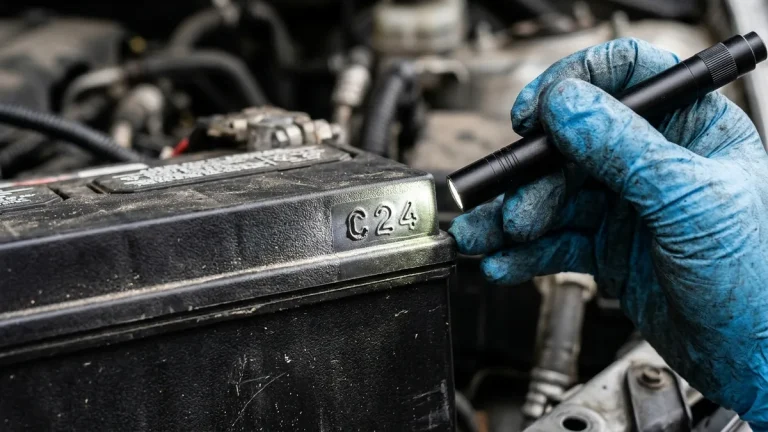
Batteries carry a Reserve Capacity rating on the top sticker. Makers rate reserve capacity as the minutes a full battery can put out 25 amps at 80 degrees Fahrenheit before voltage hits 10.5 volts. A standard battery gives 90 to 120 minutes of lab bench reserve time.
Real driving takes far more power than a bench test. Cars pull 40 to 70 amps on the road. Extra accessories cut your driving range in half.
| Electrical Load Profile | Active Accessories | Typical Run Time | Estimated Distance |
|---|---|---|---|
| Daytime Minimal Load | Computer, fuel pump, spark only | 20 to 30 minutes | 15 to 25 miles |
| Moderate Daytime Load | Radio on, cabin fan on low speed | 15 to 20 minutes | 10 to 15 miles |
| Severe Night Driving Load | Headlights on, wipers on, defroster, A/C | 8 to 12 minutes | 3 to 8 miles |
To stretch your distance, turn off your air conditioner, heater fan, and radio right away. Unplug phone cords from charge ports. You can track your power draw with our car battery drain calculator.
What to Do When Your Engine Dies at Highway Speeds
When an engine cuts out at highway speeds, follow this five-step safety protocol to stop safely:
- Grip the wheel firmly. Prepare for heavy steering as electric power assist cuts out.
- Apply steady brake pressure. Do not pump the pedal; use remaining booster vacuum reserve.
- Steer toward the shoulder. Use rolling forward momentum to clear active traffic lanes.
- Turn on hazard flashers. Alert surrounding highway drivers that your car broke down.
- Shift to Park and set the handbrake. Stop on level ground and call for roadside assistance.
Losing engine power at highway speeds creates quick fear. Understanding each mechanical step keeps you in complete control of the vehicle.
1. Stay Calm and Grip the Wheel Firmly
When the engine stalls, power steering assist stops. Your wheel stays linked to the tires. Steering just needs much more muscle, especially as you slow down. Hold the wheel with two hands and steer toward the right shoulder.
2. Manage Your Hydraulic Brake Pedal
Your power brakes use engine vacuum. When the engine dies, the brake booster holds vacuum for one or two firm pedal pushes. Do not pump the brake pedal. Push down with firm, smooth pressure to bring the car to a halt.
3. Use Rolling Speed to Reach Safety
Do not stop in moving highway lanes. Use your roll to guide the car across lane lines onto the right shoulder. If an off-ramp sits close by, coast down the ramp into a safe lot.
4. Turn On Hazard Warning Flashers
Press the hazard flasher button right away. Even when a battery cannot crank the starter, it can flash hazard bulbs for hours. Hazard flashers warn traffic behind you that your vehicle sits disabled.
5. Park Safely and Call for Help
Once stopped on the shoulder, put the shifter in Park. Pull the handbrake lever up tight. Stay inside the car with your seatbelt buckled on fast freeways. Plan roadside costs with our road trip cost calculator.
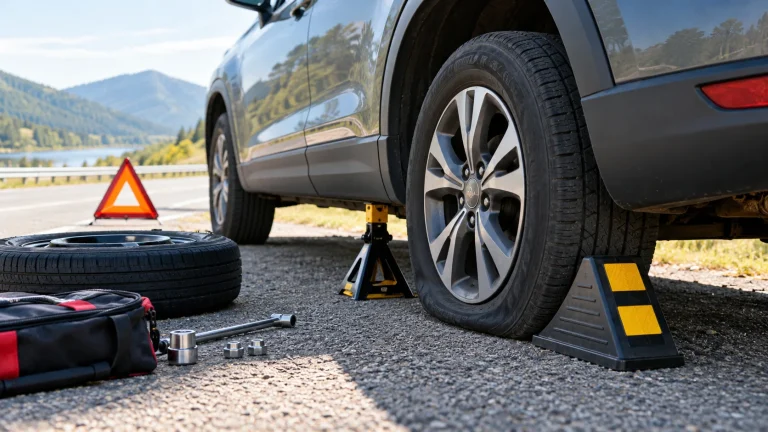
If you must swap a tire on the shoulder, check tight specs with our lug nut torque guide. After sorting your charge issues, check your engine fluids with our oil capacity chart.
The 3-Minute Voltmeter Test: Battery vs. Alternator Diagnosis
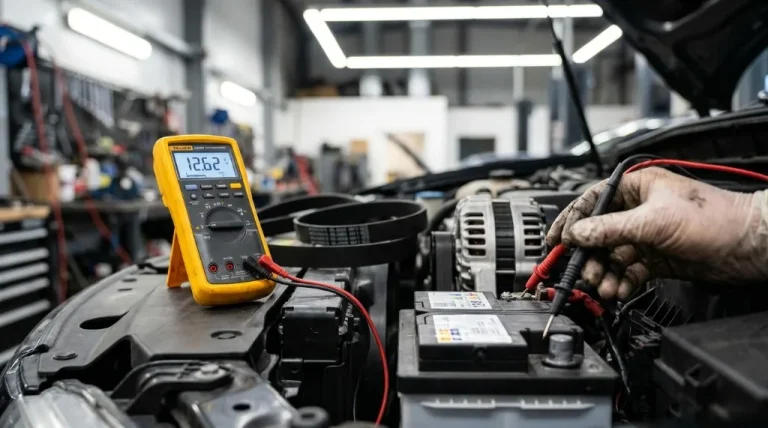
To diagnose a roadside electrical shutdown, measure terminal voltage with a digital meter. A healthy resting battery shows 12.6 volts with the engine off. With the engine idling, a functional alternator produces 13.8 to 14.4 volts. Any reading below 12.8 volts confirms a dead alternator.
Drivers often waste hundreds of dollars on a new battery when a failed alternator caused the breakdown. You can find the true culprit in three minutes with a simple digital multimeter.
Test 1: Engine-Off Resting Battery Voltage
Set your digital multimeter to DC volts. Touch the red meter probe to the positive battery post. Touch the black meter probe to the negative battery post.
| Multimeter Reading | Battery Condition | Diagnostic Action |
|---|---|---|
| 12.6 Volts or Higher | Fully charged and healthy | Battery holds adequate chemical charge. |
| 12.2 to 12.4 Volts | Moderately discharged | Charge battery fully with an external charger. |
| Below 11.9 Volts | Deeply discharged or shorted cell | Test with a carbon pile load tester; prepare to replace. |
Test 2: Engine-Running Alternator Output
Use jumper cables or a jump box to start the engine. Keep meter test probes planted firmly on battery posts while the engine idles at eight hundred RPM.
| Running Multimeter Reading | Charging System State | Probable Mechanical Cause |
|---|---|---|
| 13.8 to 14.4 Volts | Normal charging operation | Alternator and regulator work correctly. |
| 12.8 to 13.5 Volts | Weak charging output | Worn carbon brushes or slipping drive belt. |
| Below 12.6 Volts | Total charging failure | Failed diode pack or blown main fusible link. |
Safety Warning: The Dangerous Battery Disconnect Trick
Old-school drivers sometimes pull the negative battery cable while the engine idles. They say that if the engine runs, the alternator is good. Never do this on modern cars.
The battery acts as an electrical sponge. Pulling the cable while the alternator spins creates a huge voltage spike. Voltage spikes shoot past forty volts and destroy sensitive microchips in your engine computer, radio, and instrument cluster. If low voltage scrambled your sensors, read how to reset your car computer without disconnecting the battery.
To learn more about your electrical setup, check if a car can run without a battery installed. See how a weak battery causes rough running and misfires. You can also view our car battery weight guide, and see how long a car battery lasts with the radio on.
Frequently Asked Questions About Roadside Electrical Failures
Can a completely dead battery destroy an alternator?
Yes. A completely flat battery acts as a massive drain. When you jump-start a car with a dead battery, the alternator runs at full power for a long time. This continuous strain overheats stator windings and melts diode packs. The alternator burns out shortly after.
Will jump-starting fix a car that died while driving?
No. Jump-starting only gives enough spark to start the motor. If a broken alternator caused the stall, the car dies again within minutes of taking off the cables. Call a tow truck when your car dies on the road.
Why did my ABS, traction control, and battery lights turn on together?
Stability control chips need steady power above eleven volts. When charging drops, battery voltage sags low. The computer shuts down traction control and ABS first to save power for the engine spark plugs.
Can a loose ground wire cause an engine to shut off while driving?
Yes. The engine ground strap completes the return path for electrical current. A loose, broken, or rusted strap cuts the circuit. This stops alternator charging and cuts ignition spark on the spot.