Can a Car Run Without a Battery? (The $2,000 Mistake)

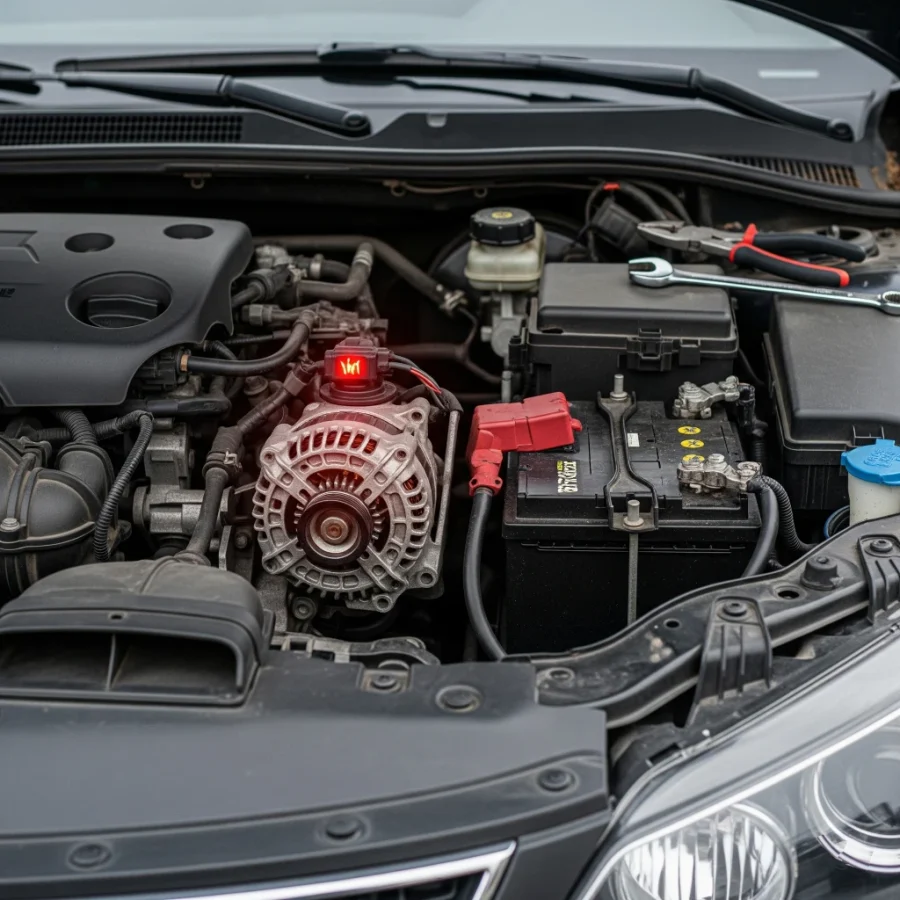
An old mechanic tells you to test your alternator. He says to pull the negative battery cable while the engine idles. If the engine stays running, he claims the alternator works. Do not touch that cable. On modern cars, this outdated test can fry costly electronic modules within seconds.
Can a Car Run Without a Battery? (The Direct Verdict)
Yes, a modern car can fire and run for brief moments without a battery. But doing so causes severe wire damage. Your battery acts as a voltage buffer. Pulling the cable while the alternator spins creates voltage spikes. These spikes fry engine computers, transmission boxes, and radios instantly.
Your vehicle splits power work between two critical parts. The car battery gives cold cranking amps. It spins the starter motor. The engine fires up. Then the alternator takes over full power output.
The alternator powers spark plugs. It runs fuel injectors and cabin fans. Raw alternator power is dirty. It carries AC ripple and voltage spikes. The 12-volt battery acts as a massive shock absorber. It absorbs dirty power and smooths system voltage into clean DC power. Remove that battery, and raw voltage spikes hammer your car wiring. There is zero protection left.
The 100-Volt Spike: What Actually Happens When You Unhook the Cable
Unhooking a battery from a running engine causes a load dump. The alternator field collapses fast. This break creates an instant voltage surge between 40 and 100 volts. This massive spike burns modern car chips that have a strict 16-volt limit.
Car makers design vehicle chips to run between 12.0 and 14.8 volts. Sensitive computer chips cannot survive voltage spikes. Unhook the battery cable, and the regulator loses ground. The alternator pushes full power into an open circuit.
Within milliseconds, this surge attacks every computer wired to the main wiring system:
| Electronic Component | Normal Work Range | Load Dump Damage Effect |
|---|---|---|
| Engine Control Module (ECM) | 12.0 to 14.4 Volts DC | Microchip gates melt. The engine shuts down and will not restart. |
| Body Control Module (BCM) | 12.0 to 14.4 Volts DC | Anti-theft chips scramble. Power windows and door locks lock up tight. |
| Transmission Control Module (TCM) | 12.0 to 14.4 Volts DC | Shift solenoids lose signal. The gearbox locks into third-gear limp mode. |
| Alternator Diode Bridge | Up to 24 Volts Peak | High heat burns silicon diodes. Alternator output drops to zero right away. |
| Infotainment & Instrument Cluster | 12.0 to 14.4 Volts DC | Digital screens flash, blow internal filters, and turn pitch black. |
Backyard mechanics claim they tested an alternator this way without trouble. Surviving an open-circuit unhook comes down to sheer luck. The voltage regulator takes a split second to react. But diode burnout happens in microseconds. Even when the car keeps running, heat cracks form inside computer silicon chips. These hidden flaws create strange electrical breakdowns weeks later.
Why Your Grandfather Could Pull the Battery (And Why You Can’t)
Classic cars from the 1960s used mechanical contact points and carbs. They carried zero silicon microchips. Their simple ignition coils soaked up dirty voltage spikes without harm. Modern cars contain more than fifty networked computers. These chips blow out under sudden voltage surges.
The tip to unhook the battery cable comes from an older era. Early cars used simple mechanical parts. Fifty years ago, cars ran on simple analog wires. A mechanical timer used tungsten points to fire spark plugs. A carb fed fuel through engine vacuum without computer sensors.
Those old cars had no chips. They had no brake computers or fuel sensors. An old mechanic could pull the battery cable on a 1968 muscle car. The engine kept idling without trouble. Heavy copper windings in older generators soaked up voltage ripple. They handled dirty power without burning up.
| Design Feature | Classic Vehicles (Pre-1975) | Modern Vehicles (Post-2000) |
|---|---|---|
| Ignition System | Mechanical timer and points | Digital ECM with coil-on-plug ignition |
| Fuel Delivery | Mechanical vacuum carb | High-pressure electronic fuel injection |
| Onboard Computers | Zero chips | 30 to 70 networked computers |
| Voltage Surge Tolerance | Survives spikes up to 30 volts | Fails permanently above 16 volts |
| Cable Pull Risk | Low risk with slight bulb flicker | Severe risk with big repair bills |
Modern vehicles use high-speed CAN network wiring. These small computers send low-voltage signals. Some run on just 2.5 volts. Exposing small chips to raw, unfiltered alternator power ruins vehicle chips fast.
Can You Drive Without the Aux Battery in Start-Stop Cars?
Many modern vehicles carry two batteries: a primary starter battery and a small aux battery. The aux battery powers cabin screens and safety sensors. It runs them during engine auto-stop cycles. Driving without an aux battery triggers dash warnings and disables start-stop systems, but rarely destroys engine computers.
Car makers install dual-battery setups in cars with auto stop-start systems. You stop at a red light. The engine shuts off to save fuel. Your foot leaves the brake pedal at a light. The starter draws heavy current to refire the motor.
This heavy starter draw causes a brief voltage drop. It pulls down power in the main battery. The aux battery shields your cabin screens. It protects safety computers from this voltage dip. Cabin chips stay powered smoothly. The screens run without rebooting.
If your aux battery dies, your car stays drivable. The main battery keeps enough power. It runs ignition and alternator circuits without trouble. But the Body Control Module spots the missing voltage. The car disables auto-stop features and turns on a dash warning light.
The Safe 3-Minute Alternator Test (Zero Wires Unhooked)
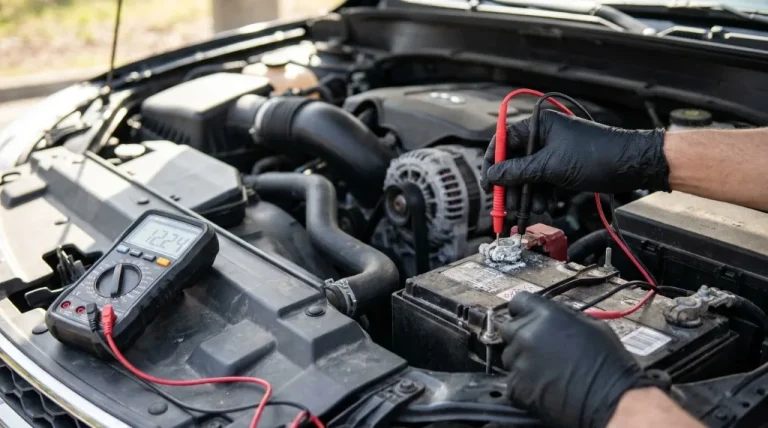
You can test an alternator in three minutes using a basic digital meter without unhooking a single wire. A healthy resting battery shows 12.6 volts with the engine off. With the engine running, a good charging system works hard. It maintains between 13.8 and 14.4 volts under power load.
Pro mechanics never pull battery cables to check charging systems. A digital meter gives exact diagnostic facts without putting small chips at risk.
Step 1: Measure Engine-Off Resting Battery Voltage
Turn your digital meter dial to DC volts. Touch the red meter lead to the positive battery post. Touch the black meter lead to the negative battery post.
A healthy lead-acid battery reads 12.6 volts or more. A reading of 12.2 volts shows a half-depleted charge. If your meter reads below 11.9 volts, your battery sits stone dead.
Step 2: Measure Engine-Running Alternator Output
Start the engine and let it run at a smooth idle. Place your meter test leads back onto the battery terminal posts.
A good alternator makes 13.8 to 14.4 volts at idle. This higher voltage proves the alternator works well. It charges the battery while running the motor.
Step 3: Perform an Electrical Load Stress Test
Keep your meter leads on the posts. Have a helper turn on high beams, rear defrosters, and the cabin AC fan on high. Watch the meter screen closely.
A healthy alternator handles this power draw. It keeps system voltage above 13.5 volts. Voltage dropping below 12.8 volts under load reveals a fault. The alternator is weak, the belt slips, or diodes are failing.
| Meter Reading | Vehicle Running State | Test Result |
|---|---|---|
| 12.6 Volts or Higher | Engine off, key out of ignition | Battery holds a full chemical charge. |
| 12.0 to 12.4 Volts | Engine off, key out of ignition | Battery charge is low; recharge with external charger. |
| 13.8 to 14.4 Volts | Engine running at idle | Alternator charging system works in top shape. |
| 13.2 to 13.6 Volts | Engine running under full accessory load | Normal voltage drop under heavy power strain. |
| Below 12.8 Volts | Engine running with accessories on | Failed alternator or a blown main fuse. |
Can You Limp Home on a Dead Battery After a Jump-Start?
You can drive home after a jump-start only if the alternator charges. The battery must hold minimum terminal voltage. A stone dead battery acts as a severe power drain. The alternator runs at full output continuously. Stator coils overheat and burn out quickly.
Drivers stuck with a dead battery think a quick jump-start fixes everything. A battery with dead cells or internal shorts ruins your charging system. Driving on a bad battery burns out your alternator.
The alternator keeps the battery charged while driving. It cannot charge a stone-dead battery from zero. A flat battery pulls maximum current continuously. The alternator runs at full capacity without rest. Internal copper coils overheat fast.
If you must limp your car home after a jump-start, follow these safety steps:
- Turn off your air conditioning and cabin heater blowers right away.
- Shut off your audio unit, touchscreens, and heated seats.
- Unplug all phone charge cords and portable plug-in accessories.
- Keep daytime running lights off if road safety rules allow.
- Drive at smooth, moderate engine speeds straight to a repair shop.
You can check electrical accessory draw and run time with our car battery drain calculator. If you need a tow truck, plan roadside travel costs with our road trip cost calculator. Check spare tire torque specs with our lug nut torque guide, and check oil levels with our oil capacity chart.
To learn more about charging problems, read our guide on whether a car battery can die while driving. See how a weak battery causes rough running and engine misfires. Check standard battery sizes with our car battery weight chart, and see how long a car battery lasts with the radio on. To protect your chips, read how to reset your car computer without unhooking the battery.
Frequently Asked Questions About Running Cars Without Batteries
Can a car run on just the alternator with no battery installed?
The engine can fire for a few seconds, but the open electrical circuit makes extreme voltage ripple. The engine will stall or suffer fried computers within seconds. Never drive a modern vehicle without a connected battery.
Does unhooking the battery while running reset the computer?
No. Pulling the battery cable while the engine idles does not safely reset vehicle computers. The resulting voltage spike burns flash memory chips. It permanently ruins engine and transmission computers.
How does a car battery act as a surge protector?
A lead-acid car battery has low internal electrical resistance. It acts like a massive filter. It absorbs AC ripple and voltage spikes before they reach small sensors.
What happens if a battery cable vibrates loose while driving on the highway?
If a battery terminal vibrates loose, the alternator keeps powering the car. The sudden loss of battery filtering exposes the car to voltage swings. These swings trigger dash warnings and damage sensors.