How Long Can a Car Battery Run the Radio? (Safe Hours)

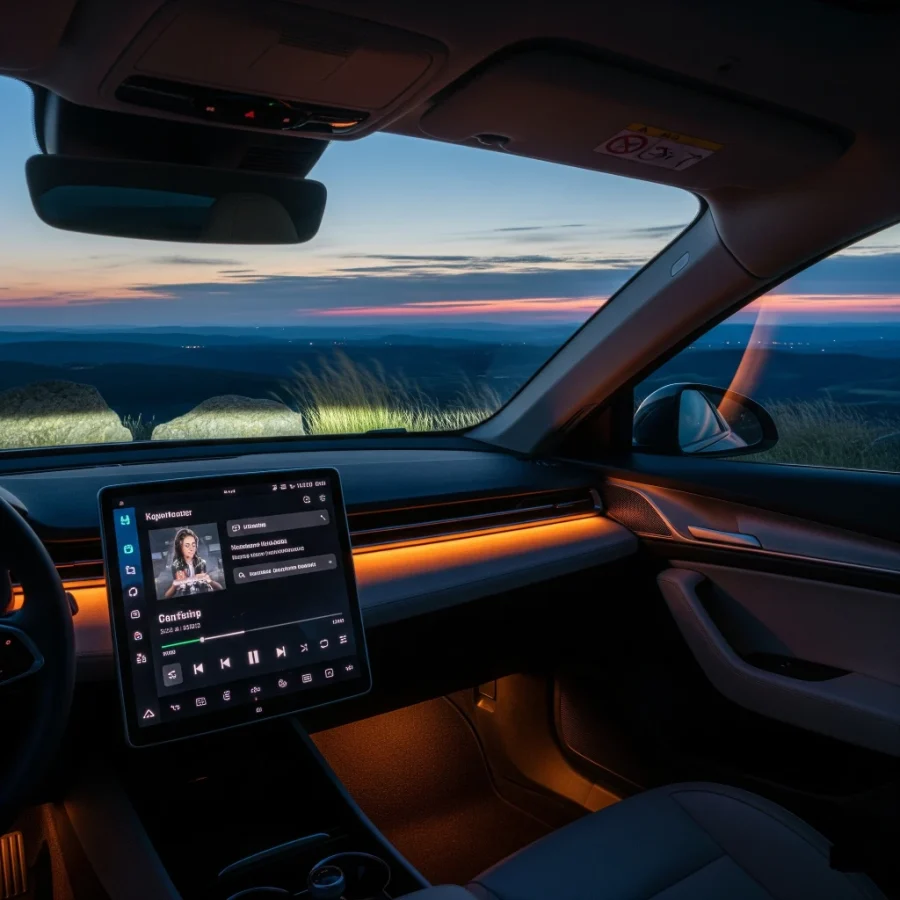
You sit in a parked car and turn on your favorite songs. The engine sits silent. After an hour of music, you turn the ignition key. The dashboard flashes, the starter clicks, and the engine refuses to crank. Listening to the radio without the alternator running drains your battery fast.
How Long Can a Car Battery Run the Radio? (The Safe Limit)
A healthy car battery safely runs a factory radio for one to two hours before you risk a dead engine. The radio can play for six hours until total power loss. But your starter motor needs heavy reserve amps to turn the motor over.
Most drivers think a car battery works like a phone cell. They run music until the screen goes dark. Drivers get stuck with dead starters. Car batteries belong to the Starting, Lighting, and Ignition (SLI) class. Manufacturers build starter batteries with thin lead plates. These plates deliver five hundred cranking amps for five brief seconds. They do not tolerate continuous accessory power drains.
When battery charge drops below seventy-five percent, terminal voltage declines. The radio still plays music because sound chips only need nine volts. But your heavy starter motor demands full twelve-volt pressure. If you play music past two hours, the starter will not crank the motor.
The Amp-Hour Rule: How Fast Your Stereo Drains the Battery
You can calculate audio runtime by dividing usable battery capacity by total current draw. A typical sixty amp-hour car battery gives fifteen usable amp-hours for accessory use. A two-amp factory stereo drains that reserve within seven hours.
Every car battery carries a specific Ampere-Hour (Ah) rating. This score measures how many amps a battery gives over twenty hours. A standard sedan utilizes a Group 35 or Group 24F battery rated at sixty amp-hours. You can never expend that full rating for music. Draining an automotive starter battery past fifty percent causes permanent plate sulfation.
To keep your car running, limit accessory draw to twenty-five percent of capacity. That gives you fifteen amp-hours of safe electrical reserve. Different sound setups drain this reserve at different speeds:
| Audio Hardware Setup | Operating Current Draw | Safe Run Time (Engine Starts) | Time to Total Battery Failure |
|---|---|---|---|
| Stock OEM Radio (Low Volume) | 0.8 to 1.2 Amps | 10 to 12 Hours | 25 to 30 Hours |
| Factory Touchscreen (Mid Volume) | 2.0 to 3.5 Amps | 4 to 5 Hours | 12 to 15 Hours |
| Premium Sound with OEM Amp | 4.0 to 7.0 Amps | 2 to 3 Hours | 6 to 8 Hours |
| Aftermarket 500W Amplifier | 15.0 to 25.0 Amps | 35 to 45 Minutes | 2 to 3 Hours |
| High-Power 1000W Competition System | 35.0 to 60.0 Amps | 10 to 15 Minutes | 45 to 60 Minutes |
Sound volume changes these run times fast. Cranking the volume knob from low to loud triples power draw. Deep bass frequencies demand substantial bursts of power. Heavy bass drops create sudden electrical peaks. These current spikes pull battery voltage down rapidly.
The Key Position Trap: Why the RUN Setting Kills Batteries in 20 Minutes
Leaving your key in the RUN setting drains your battery in twenty minutes. The RUN setting wakes engine computers, fuel pumps, and headlamps. These extra systems pull over twenty amps before your radio plays a single song note.
An ignition lock has four distinct steps: Lock, Accessory, Run, and Start. Many drivers turn the key two clicks into the Run spot to play music. Mechanics call this the Key-On-Engine-Off mode. In this spot, the car gets ready to run.
When you switch into the Run setting, your car powers up major electrical networks:
- The engine control module wakes and powers electronic engine sensors.
- The high-pressure in-tank fuel pump primes the fuel rail with gas.
- Exterior daytime running lights and cabin accent lamps illuminate fully.
- Heating and ventilation blend doors cycle into active climate positions.
- Transmission computers and brake stability controllers energize their circuits.
These awake circuits pull fifteen to twenty-five amps of steady current. That draw matches ten factory radios running together. In the true Accessory spot, your car powers only the stereo and power ports. That mode pulls only two amps. Always check your dash lamps. If warning lights glow on the dash, your key sits in the high-draw Run spot.
Touchscreens vs Old Stereos: Why Modern Cars Die in Half the Time
Modern cars deplete starter batteries rapidly because digital touchscreen displays require active computer networks. Older analog radios operated on one simple switched circuit. Modern touchscreens keep multiple control modules and processors awake. These background processors pull continuous parasitic draw from the 12-volt battery.
Thirty years ago, vehicle audio systems relied on basic analog parts. A small cassette deck or AM tuner drew half an ampere of direct current. The radio functioned independently. You could play an old stereo for six hours. Then you turned the key, and the engine started on the first crank.
Modern automobiles use complex computer networks. The radio is no longer an isolated music box. It functions as an active electronic node across the Controller Area Network bus. When you power a touchscreen, the radio sends wake-up signals to body modules and network hubs.
| Vehicle Feature | Classic Analog Stereo (1990s) | Modern Digital Infotainment (2020s) |
|---|---|---|
| Display Technology | Segmented LCD screen (0.05 Amps) | 10-inch backlit color touchscreen (2.5 Amps) |
| Network Communication | Zero network wires | High-speed CAN bus communication |
| Background Modules Awake | Zero computer modules | 3 to 7 body and network modules |
| USB Charging Ports | None (12V cigarette lighter only) | Dual fast-charge USB-C ports (3.0 Amps) |
| Total Key-Off Current Drain | 0.5 to 1.0 Amps total | 4.5 to 8.5 Amps total |
Plugging your phone into a car USB port makes current draw spike again. Fast-charging phone circuits pull up to three amps from vehicle wiring. Charging a phone while running a touchscreen cuts your safe listening time in half.
The 12.2-Volt Cutoff: Why Your Radio Plays While the Starter Clicks Dead
A car radio plays music at 11.5 volts, but a starter fails below 12.0 volts. Drivers think their battery stays strong because music sounds clear. This creates a dangerous false confidence trap. In reality, the battery has lost the charge needed to crank the engine.
Car receivers use solid-state microchips. These audio components feature internal voltage regulators. They produce clean audio output even when supply voltage drops down to nine volts. The radio sounds normal right up to the moment the battery dies.
Your starter motor confronts a heavy mechanical load. The starter must rotate a heavy flywheel against high engine cylinder compression. That mechanical resistance requires immense electrical current. If resting voltage falls below twelve volts, the starter solenoid clicks and will not spin.
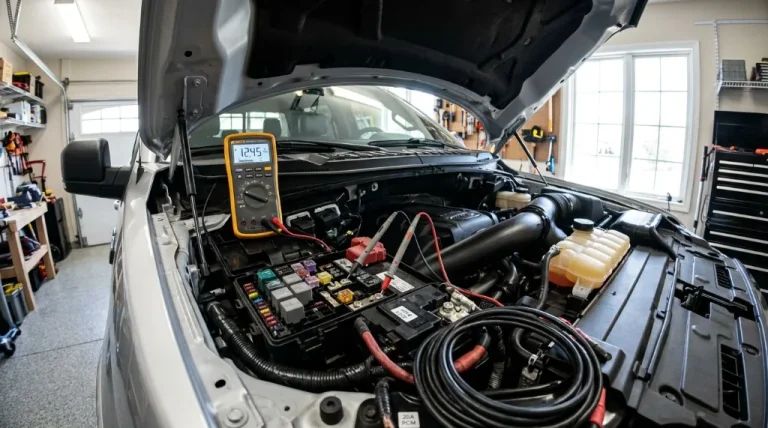
| Multimeter Resting Voltage | Approximate Battery Charge | Vehicle Cranking Ability |
|---|---|---|
| 12.6 Volts or Higher | 100 Percent | Engine cranks fast and starts immediately. |
| 12.4 Volts | 75 Percent | Safe restart range; stop accessory use now. |
| 12.2 Volts | 50 Percent | Borderline cranking power; starter spins sluggishly. |
| 12.0 Volts | 25 Percent | High risk of starter failure; solenoid may chatter. |
| 11.8 Volts or Lower | Zero Percent | Starter solenoid clicks; engine will not crank. |
Allowing battery voltage to drop below twelve volts triggers chemical plate damage. When lead plates sit discharged, soft lead sulfate transforms into hard crystalline sulfate. These rigid crystals coat the lead plates permanently. The battery loses capacity and will fail within months.
Drive-In Movies and Tailgating: 5 Rules to Prevent a Dead Battery
You can avoid a dead battery at drive-in movies by managing power use. Turn off extra lights, dim screens, and idle the engine for ten minutes during long shows to keep battery voltage above twelve volts.
Drive-in movie lots are the top spot where drivers drain batteries. Motorists tune to the local FM station and run audio for two full hours. Follow these five simple rules to avoid dead batteries at the end of the show:
- Turn your headlight switch to the manual OFF position. The AUTO setting turns on parking lights and cabin lamps in dark areas.
- Use your screen settings to turn the display off while audio plays. Modern units include a simple screen-off button.
- Keep your ignition switch in the Accessory spot. Never leave push-button cars in the ignition-on mode.
- Start your engine at intermission. Let the motor idle for ten minutes so the alternator recharges your battery reserve.
- Keep a compact lithium jump pack in your glove box. A small pack gives instant start power without waiting for help.
Test electrical load and run time with our car battery drain calculator. If you plan road trips, check fuel travel costs with our road trip cost calculator. Verify wheel specs with our lug nut torque guide, and check oil levels with our oil capacity chart.
Learn about electrical buffers in our guide on whether a car can run without a battery. See what happens when a car battery dies while driving on the road. Find out how a weak battery causes rough running and engine trouble. Check battery sizes with our car battery weight reference, and learn how to reset your car computer without unhooking the battery.
Frequently Asked Questions About Car Radios and Battery Drain
Can listening to the radio with the engine off damage the car battery?
Listening to the radio for short periods will not harm a good car battery. But dropping battery charge below twelve volts creates lead sulfation on internal plates. Repeated deep drains permanently shorten battery life.
Why does my car radio turn off automatically after ten minutes?
Modern car control modules include an automatic power-saver timer. If the car spots audio play with the motor off, it cuts power after ten minutes to protect starter power.
Will a dead car battery recharge itself if you let it sit?
A dead battery will not recharge on its own. Empty lead-acid cells can show a tiny surface voltage bounce after resting. But they lack the amps needed to start the engine.
How do I turn on the radio without draining the battery on push-button start cars?
Press the start button once without touching the brake pedal. This click puts the car into Accessory mode. Do not hit the button twice. A second press turns on the high-draw Run mode.