How Long Do Electric Car Batteries Last? Years, Miles, and Warranty Guide

Most modern electric-car batteries are expected to provide useful service for about 12 to 15 years in moderate climates. In very hot or very cold conditions, the estimate can be closer to 8 to 12 years. The battery usually loses range gradually instead of suddenly dying.
How long do electric car batteries usually last?
The U.S. Department of Energy says current EV batteries may last 12 to 15 years in moderate climates and 8 to 12 years in extreme climates. Its guidance also lists driving and charging patterns, battery design, chemistry, and thermal systems as factors that affect battery life. You can read the agency’s EV battery guidance for the underlying estimate.
Is EV battery life measured in years, miles, or charging cycles?
EV battery life reflects time, mileage, charge and discharge cycles. Lithium-ion cells age while parked, and heat or cold can speed the process. Some EVs travel well beyond 100,000 miles on the original lithium-ion battery pack. Others need work earlier because of a defect, recall, accident, or component fault.
Battery warranty versus real battery life
A battery warranty is not an expiration date. It is the period during which the automaker agrees to cover certain failures or capacity loss under listed terms.
Many U.S. EVs have battery coverage around eight years or 100,000 miles, but the details differ by vehicle. Read the owner’s warranty booklet for the time and mileage limit, capacity-retention threshold, covered defects, damage exclusions, and transfer terms.
A capacity guarantee often uses a threshold, such as 70 percent of original capacity. Falling below that threshold during the warranty period may qualify for service. It does not mean a battery at 71 percent is unsafe or unusable.
What does EV battery degradation mean?
EV battery degradation is the gradual loss of usable energy storage. As usable capacity falls, the car may show fewer miles of range after charging. It normally happens slowly over years rather than all at once.
Range can drop temporarily for reasons that are not permanent degradation. Cold weather reduces battery efficiency and increases cabin-heating demand. High speeds, strong winds, steep grades, cargo, towing, and low tire pressure can reduce range too. A shorter trip estimate on a winter day does not prove the battery is failing.
Owners should pay attention to a large, unexplained change in range, repeated charging faults, dashboard warnings, or a sudden loss of power. Those signs call for a dealer or EV-qualified technician, especially when the vehicle remains under battery coverage.
What makes an electric-car battery last longer or wear faster?
Heat is one of the clearest long-term concerns for lithium-ion batteries. EVs use liquid cooling, air cooling, or other thermal controls to keep the pack within its intended temperature range. A well-designed thermal system can reduce stress during hot weather, cold weather, charging, and hard driving.
Charging habits matter, but the simple claim that fast charging ruins every battery is wrong. DC fast charging adds heat and puts more demand on the pack than lower-power charging. It is useful for road trips and busy days. The best routine is usually the one in the owner’s manual, because the recommended daily charge level differs by vehicle and battery chemistry.
Leaving an EV parked for long periods at a very high or very low state of charge can add stress. Follow the vehicle’s storage instructions. Do not force an 80 percent rule onto every EV. Some models, especially those with certain battery chemistries, have different manufacturer guidance.
Physical damage matters as much as charging behavior. A hard impact underneath the car, flood exposure, or crash damage can affect the battery pack. Treat a damaged high-voltage battery as a repair and safety issue, not a routine maintenance item.
Do electric car batteries suddenly fail?
Most batteries lose capacity gradually. A sudden failure can still happen because of a manufacturing defect, damaged pack, faulty module, recall-related issue, or electrical fault. Those problems are different from normal aging.
A little range loss is expected. A warning light, charging error, or physical damage deserves an inspection.
How long is an EV battery warranty in the United States?
Many EV warranties last about eight years or 100,000 miles, but there is no substitute for checking the exact vehicle’s documents. Some automakers provide longer coverage for specific models, trims, or states. A warranty may cover complete failure, defects, or capacity below a stated percentage.
Read the warranty before you buy, lease, or purchase a used EV. Confirm the original in-service date, remaining mileage, and whether the battery warranty transfers.
How much does an EV battery replacement cost, and is it worth it?
The cost of battery replacement varies widely by model, battery pack size, damage, labor, and whether a shop can repair a module instead of replacing the full pack. Get a written diagnosis first. A replacement may be worth it when the vehicle is otherwise in good condition, retains useful value, and the repair restores reliable driving range. It may make less sense after major collision damage or when the repair cost exceeds the car’s value.
Ask whether the automaker, dealer, or qualified independent shop can repair a battery module, replace a component, or install a new battery pack. Insurance may apply when road debris or a collision damaged the high-voltage battery.
What happens to EV batteries after 8 to 10 years?
After 8 to 10 years, an EV’s battery usually has less original capacity, not an automatic failure. The driving range may be lower, while the car can still suit daily driving. Check the battery warranty, service history, and diagnostic results before deciding whether the battery needs replacement.
At the end of its useful life in a vehicle, a battery may be reused for stationary energy storage or sent for battery recycling. Recycling recovers materials for new battery technology and reduces the need to discard an entire pack as ordinary waste.
Should you worry about battery life when buying a used EV?
A used EV can be a sensible purchase, but the battery should be part of the inspection. Confirm recalls, remaining high-voltage battery warranty, and service records. Compare displayed range with weather, trim, wheels, and state of charge in mind. A battery-health report or pre-purchase inspection is useful for an older vehicle.
How can you help an EV battery last longer?
Use the charging limits and storage instructions in the owner’s manual. Charge to the level the manufacturer recommends for normal driving, and use a higher charge level when you need the range for a trip. Keep the vehicle’s software current because manufacturers may update battery controls and diagnostics.
Use home or workplace charging when it fits your routine, and use DC fast charging when speed matters. For a related ownership calculation, see what it costs to charge an electric car. The lowest-cost charging plan is not always the same as the best plan for every driver, so review your utility rate and vehicle guidance.
Tires affect the range you see from day to day. Check pressure regularly, especially as seasons change. This guide on how to check tire pressure explains three simple ways to do it.
When should an EV battery be inspected or replaced?
Range loss by itself does not prove that an EV needs a battery replacement. Battery inspection makes sense when the car shows repeated charging errors, a high-voltage warning, unusual range changes in similar driving conditions, or damage after a collision or impact.
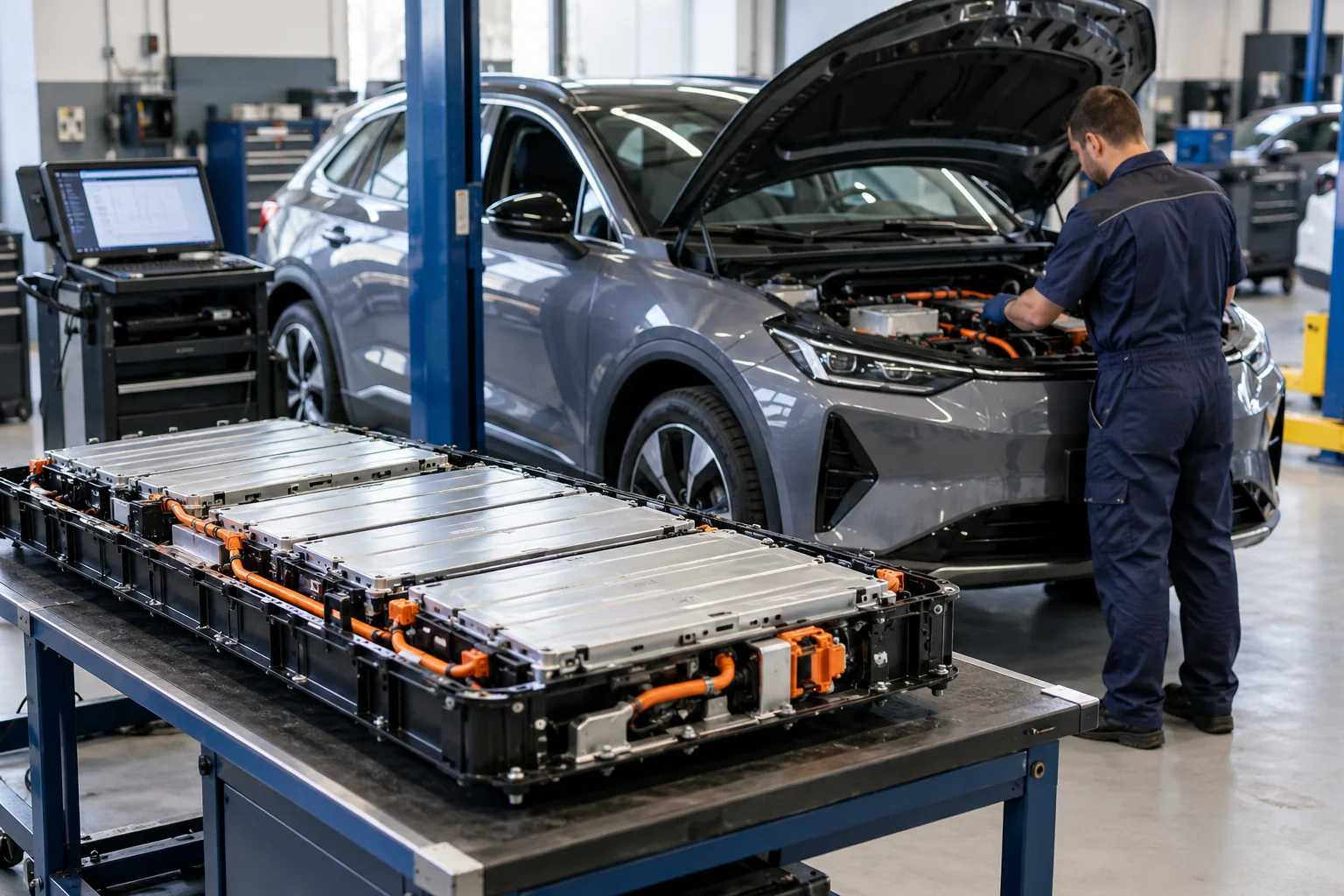
Start with the manufacturer or a qualified EV service center. The technician can check diagnostic codes, warranty status, charging behavior, and the pack’s condition. Do not try to open, repair, or disconnect a high-voltage battery at home.
The bottom line on electric-car battery life
Electric-car batteries are built to last for years, and their range usually declines gradually. Plan around the exact model’s warranty, climate, charging guidance, and current battery condition. That gives you a better buying decision than any one-size-fits-all mileage claim.
Frequently asked questions
How many years does an electric car battery last?
Many modern EV batteries may provide useful service for 12 to 15 years in moderate climates. Extreme heat or cold can shorten that estimate. The result varies by vehicle design, use, charging habits, and the condition of the battery pack.
How many miles can an EV battery last?
There is no universal mileage number. Some packs operate beyond 100,000 miles with normal range loss, while others need earlier work due to a defect, recall, accident, or component failure. Check the specific model’s warranty and service history.
Do electric car batteries lose range over time?
Yes. Lithium-ion batteries gradually lose usable capacity, so a full charge may show fewer miles after years of use. Seasonal weather, speed, hills, cargo, and tire pressure can change range temporarily without causing permanent battery degradation.
Does fast charging damage an EV battery?
DC fast charging can add heat and stress compared with lower-power charging, but it is not automatically harmful. Use it when it is useful and follow the manufacturer’s charging guidance. Battery design, cooling, climate, and total use all matter.
What does an EV battery warranty cover?
Coverage differs by manufacturer and model. A warranty may cover battery defects, complete failure, or capacity falling below a stated threshold during the coverage period. Read the time, mileage, capacity, damage exclusions, and transfer terms before you buy.
Should I buy a used EV with an older battery?
You can, provided you check the remaining battery warranty, recall status, service records, and current condition. Compare displayed range in suitable conditions and consider a battery-health report or pre-purchase inspection before buying an older or higher-mileage EV.