
OEM Wiper Blade Sizing and Arm Connector Architecture
Modern windshield wiping systems operate with vehicle-specific arm curvatures, aerodynamic airfoils, and motorized sweep geometries. Installing mismatched blade lengths risks glass scratches, motor overload, and dangerous blind spots during heavy rainstorms. Cross-reference our verified database to ensure exact millimeter fitment and secure connector engagement.
Wiper Blade Types: Rubber Compounds and Structural Frames
Wiper blades feature three core chassis designs and three rubber compounds. Match the structural profile and material formulation to your local climate conditions and driving habits.
| Blade Design | Chassis Construction | Best Application | Expected Lifespan |
|---|---|---|---|
| Beam (Flat) | Curved tensioned steel spine without external brackets | High-speed highway travel and curved windshield glass | 12 to 24 months |
| Hybrid | Articulated steel skeleton enclosed in aerodynamic polymer shell | All-weather durability with factory OEM appearance | 9 to 18 months |
| Conventional Frame | Exposed steel framework with multiple claw contact pressure points | Flat glass profiles (e.g. Jeep Wrangler TJ/JK, work trucks) | 6 to 12 months |
| Silicone Premium | Synthetic silicone squeegee depositing hydrophobic water-beading layer | High-UV southern climates and continuous wet weather | 18 to 36 months |
| Winter Heavy Duty | Tear-resistant rubber boot sealing internal joints against ice accumulation | Sub-zero freezing rain, slush, and heavy blizzard duty | Single winter season |
Wiper Arm Connector Styles and Release Mechanisms
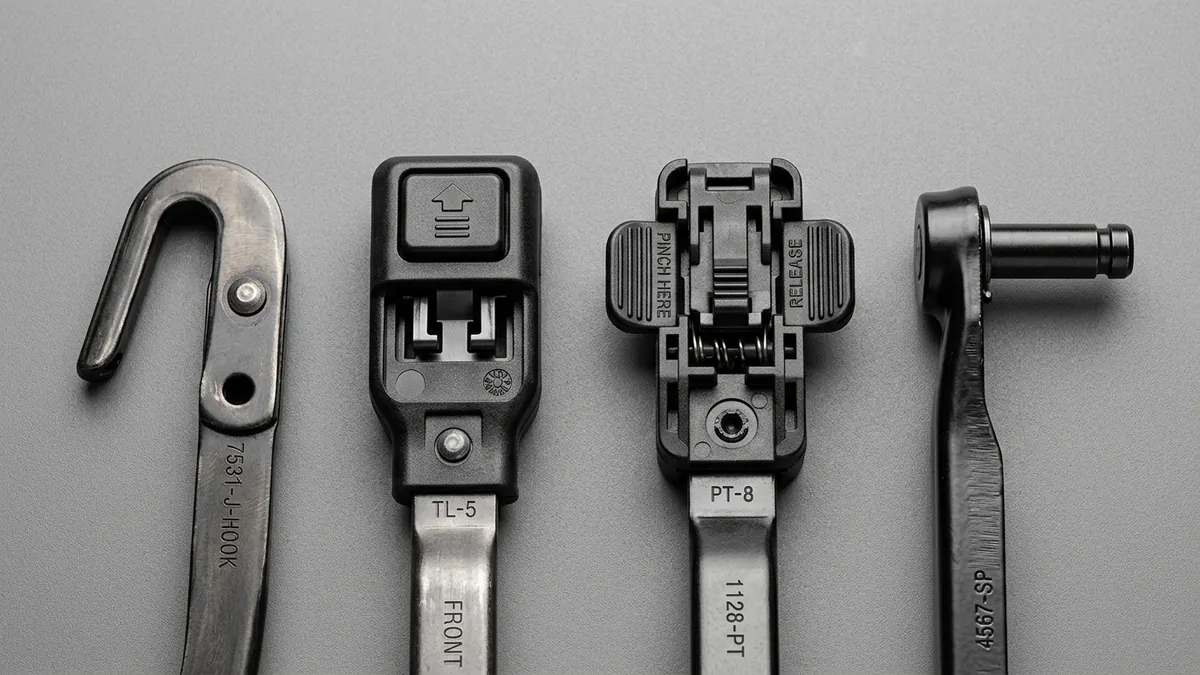
Automakers utilize several wiper arm attachment interfaces. The traditional 9x3mm J-Hook remains common on Asian and older domestic vehicles. Newer vehicles feature Push Button 22mm, Pinch Tab, or Top Lock 19mm attachments that eliminate bulky universal adapters.
Wiper Maintenance and Seasonal Replacement Protocol
Extreme solar radiation, road grime, and winter road salts degrade wiper squeegees over time. Clean blade edges monthly using a microfiber cloth damp with automotive washer fluid. Replace squeegees immediately when physical tears, chatter ridges, or permanent water streaks appear across the primary sightline.
When performing full vehicle seasonal maintenance, verify companion fluid levels and mechanical specifications across our sister tools: check factory oil capacities in our Engine Oil & Fluid Capacity Finder, verify wheel lug torque in our Lug Nut Torque Specification Guide, compute highway trip fuel expenses with our Road Trip Gas Cost Calculator, and audit tire clearance with our Tire Size Comparison Calculator.
Frequently Asked Questions About Windshield Wiper Sizing
Do driver and passenger sides always use the same wiper blade size?
Most modern vehicles require asymmetrical blade lengths. Drivers commonly need 24 to 28-inch blades to clear forward sightlines, while passenger sides require 16 to 20-inch blades to match windshield curvature without contacting the A-pillar.
What is the most common windshield wiper arm connector?
The 9x3mm J-Hook remains the dominant connector across domestic and Asian passenger cars. European and late-model domestic vehicles frequently use Push Button 22mm, Pinch Tab, or Top Lock 19mm arm styles.
How do you measure windshield wiper blade size with a tape measure?
Measure the physical rubber squeegee element from tip to tip along the curve using a standard tape measure. Round down to the nearest whole inch. Never measure the metal arm assembly. Always measure both driver and passenger blades separately.
Can you put a 1-inch larger or smaller wiper blade on a car?
Installing a 1-inch longer wiper blade risks colliding with the windshield molding, hitting the adjacent blade, or overworking the wiper motor linkage. Installing a 1-inch shorter blade operates safely without damage, though it reduces the cleared visual field.
How frequently should windshield wiper blades be replaced?
Replace conventional natural rubber blades every 6 to 12 months. Premium synthetic EPDM and silicone blades endure extreme UV exposure, ozone degradation, and sub-zero temperatures up to 24 months.
Beam vs Conventional vs Hybrid wiper blades: which design performs best?
Beam blades provide superior performance on curved modern windshields because curved steel spines distribute uniform pressure across the entire glass sweep. Conventional bracketed frames create uneven pressure ridges, while hybrid blades balance winter protection with factory aerodynamics.
Are silicone wiper blades better than natural rubber or synthetic EPDM?
Silicone wiper blades last twice as long as natural rubber and deposit an active hydrophobic water-beading barrier across the windshield glass. Synthetic EPDM resists ozone cracking and sun dry-rot equally well at a lower initial cost.
Why do new wiper blades streak, squeak, or chatter across the windshield?
New wiper blades chatter when tree sap, road grime, automated car wash wax, or water spots contaminate the glass surface. Strip the windshield glass with isopropyl alcohol or dedicated automotive glass stripper, then wipe the new rubber edge clean with washer fluid.
Do winter wiper blades make a noticeable difference in snow and freezing ice?
Winter wiper blades feature a thick tear-resistant rubber boot that seals all metal linkages, preventing snow pack and ice freeze-up. Premium frameless beam blades also resist ice buildup because they eliminate external exposed hinges entirely.
Why are rear windshield wiper blades smaller and require specialized clips?
Rear wiper blades range between 10 and 14 inches to clear flat hatchback, SUV, and wagon rear glass without striking high-mount brake lights or aerodynamic roof spoilers. Many automakers use proprietary plastic snap clips rather than standard front J-Hooks.
Should you replace wiper blade rubber refills or buy complete blade assemblies?
Complete blade assemblies ensure proper tension spring pressure and include fresh connector adapters. Rubber refills cost less, but they fail to resolve warped frames, loose hinges, or weakened internal tension springs.
What causes wiper blade lift and slapping at highway cruising speeds?
Highway airflow gets under conventional steel wiper frames, creating aerodynamic lift that decouples the squeegee from the windshield. Low-profile beam blades integrate asymmetrical airfoils that convert high-speed headwinds into downward glass downforce.