Test, Don’t Guess: Why Haphazard Parts Changing Is Costing You Thousands

An automotive diagnostic process is a fixed order of steps: verify the fault, collect evidence, evaluate what you found, test, rectify, then check the repair. Follow it and you replace one part. Skip it and you replace four, because a trouble code only points at the circuit that misbehaved.
You know the story already. Engine light comes on. Somebody plugs in a reader, reads out “P0171, that’s your oxygen sensor,” and you pay for an oxygen sensor. Two weeks later the light is back, and now you’re the one holding a receipt for a part that was working fine when it came off the car.
That’s not bad luck. That’s a missing process.
What a Diagnostic Trouble Code Actually Tells You
A DTC records that a signal fell outside its expected threshold. That’s all. The code tells you which circuit the computer was watching when the reading went wrong, and roughly what kind of wrong it was. It never tells you which component failed, and it never authorizes a purchase.
Think about what the ECU can actually see. It has no eyes. It reads voltages, frequencies, and resistances against a table of what those values should be under a given set of conditions. When a number sits outside the window for long enough, it logs a code and, usually, freezes a snapshot of everything else happening at that moment.
So P0171 (system too lean, bank 1) does not mean “the oxygen sensor is bad.” It means the fuel trim went further positive than the calibration allows. Which could be a split intake boot. Could be a lazy sensor. Could be a leaking injector seal, a stuck PCV valve, or a hole in the exhaust upstream of the sensor pulling in fresh air. The sensor is the messenger. Codes are pointers. And if your instinct is to clear the light and see whether it comes back, understand what that wipes first: here’s what happens when you reset the car computer without disconnecting the battery.
The parts changer treats the pointer as the answer. The diagnostician treats it as the first line of a police report.
The Parts Cannon Trap
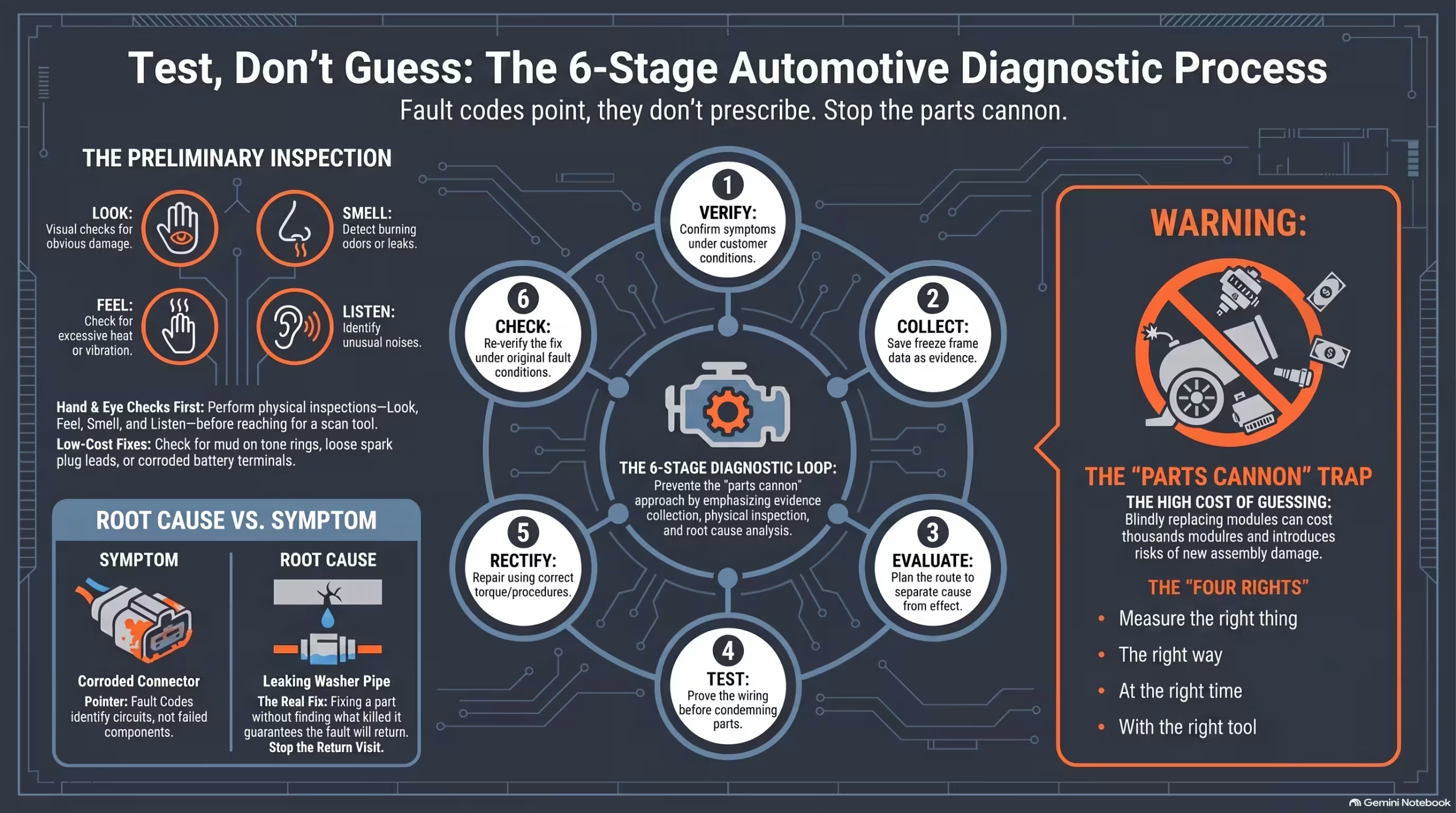
The parts cannon is the habit of firing new components at a fault until something sticks. It feels fast and it’s ruinously expensive. One customer paid $1,400 for computer, fuel, and ignition parts on a rough running engine that turned out to have a broken valve spring.
Read that case again, because it’s the whole article in one job. A rough running engine came in. The shop scanned it, saw misfire and fuel related codes, and decided the electronics were at fault. Computer parts, fuel parts, ignition parts, all new. The engine still ran terribly, because nobody had done a compression or leakdown test. A valve spring was broken. The cylinder was never going to seal no matter how many modules got fitted to it.
The same reflex shows up at the pump, incidentally. A car runs rough, so somebody starts buying 93 octane on the theory that better fuel will smooth it out, which is its own small parts cannon. Our breakdown of premium versus regular gas covers when octane actually matters and when you’re donating money to the forecourt.
Nobody in that shop was stupid. They were fast. Speed without a process is just expensive guessing, and the customer funded all of it.
There’s a second cost people forget: every unnecessary part fitted is a new opportunity for damage. Cross threaded sensor, torn gasket, connector broken during removal, wiring pinched on reassembly. I’ve seen a car leave a shop with three faults it arrived without, all introduced during a repair that didn’t need to happen.
The Six-Stage Automotive Diagnostic Process
The six stage automotive diagnostic process runs verify, collect, evaluate, test, rectify, check, and then loops back. Each stage exists to stop you from skipping ahead. Real diagnostics means measuring the right thing, in the right way, at the right time, with the right tool.
That last sentence is the “four rights,” and it’s the bar that separates a technician from a fitter. You need system knowledge and a logical routine working together. One without the other gets you nowhere: knowledge with no routine wanders, routine with no knowledge tests the wrong things beautifully.
Stage 1: Verify
Confirm the symptom exists, under the conditions the customer described. Not “I found a code,” but “I drove it, and at 40 mph under light throttle with the engine warm, it stumbles.”
Half the arguments between shops and customers come from skipping this. The customer says the car judders. The technician takes it round the block cold, feels nothing, clears a code and hands the keys back. Same complaint next week, plus a lost afternoon.
Get the details before you touch anything. Cold or warm? Wet or dry? First start of the day, or after a motorway run? Does it happen with the AC on?
Stage 2: Collect
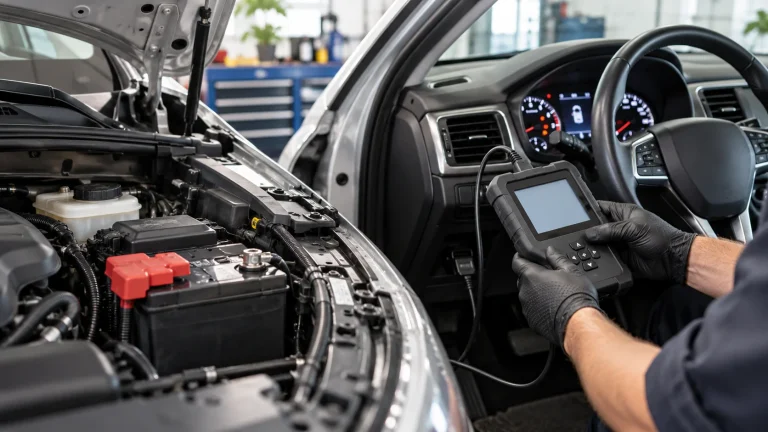
Now gather evidence. Scan the vehicle, record every DTC across every module, and save the freeze frame data. Freeze frame is a snapshot of engine parameters captured the exact second the fault set, and it’s the closest thing you get to a witness statement. Coolant temp, engine load, RPM, fuel trims, vehicle speed. That’s the recipe for reproducing the fault on demand instead of hoping it shows up.
Then check the service history. Repeated repairs on the same system are a screaming clue. If this is the third alternator in two years, the alternator isn’t the problem. Something is killing alternators, and the usual suspects are covered in our piece on why a battery dies while driving.
Manufacturer bulletins belong here too. Somebody at the factory may have already documented your exact symptom with a revised part number.
Stage 3: Evaluate
Stop. Think. This is the stage everybody skips because it doesn’t look like work.
You’ve got codes, freeze frame, history, and the customer’s description. Sit with them for two minutes and plan a route before a single bolt comes out. Which of these codes is a cause and which are downstream effects? What single failure could produce all of them at once? What’s the cheapest test that would rule out the biggest chunk of possibilities?
A stored crank sensor code alongside three misfire codes is one story. Four misfire codes on their own is a completely different one.
Stage 4: Test
Simple and non invasive first. Always. And test systems before you test individual components, because isolating half the circuit in one measurement beats checking eight parts one at a time.
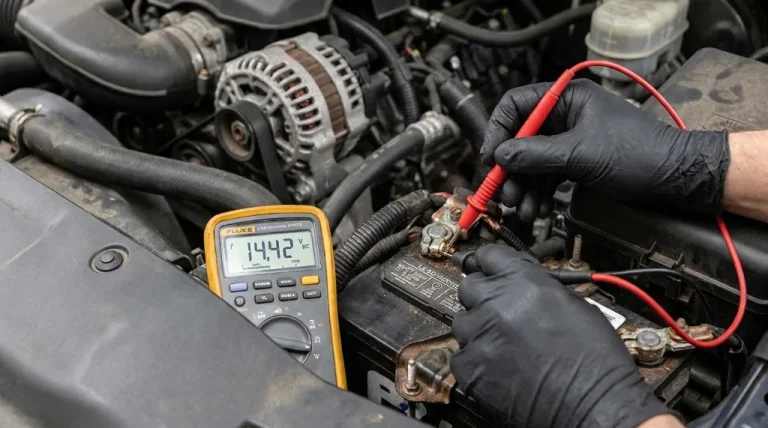
Voltage drop across a suspect ground takes ninety seconds and tells you more than an hour of continuity checking with the circuit dead. It also catches faults that look nothing like electrical faults, which is why a weak battery can cause an engine to run rough long before it ever fails to start the car.
The rule that saves the most time: prove the wiring before you condemn the component. Sensors get blamed for connector problems constantly.
Stage 5: Rectify
Do the repair properly, with the right tools and the manufacturer’s procedure. Torque figures exist for a reason. So do the reassembly sequences that look fussy until you skip one and end up with a leak.
And repair the cause, not only the failed part. Which brings us to the next section.
Stage 6: Check
Re verify. Physically inspect what you worked on, clear the codes, then drive the car under the conditions from Stage 1 and scan it again. You’re looking for two things: the original fault gone, and nothing new appearing.
That second scan catches the connector you didn’t fully seat and the earth strap you left off. Better you find it on the forecourt than the customer finds it on the motorway.
Root Cause Analysis: Finding What Killed the Part
Root cause analysis asks a second question after you find the broken part: what killed it? A fuse blows because current climbed somewhere in the circuit. Replace the fuse and ignore the short, and the new fuse blows too. Usually on the customer’s drive home.
Here’s the case that sticks with me. A car came in with an open circuit fault in the rear lighting. The technician traced it to a badly corroded connector block behind the tail light, replaced the block, tested the lights, job done. Clean work, correct diagnosis of the fault.
Weeks later the same car was back with the same fault. The new connector had corroded exactly like the old one, because a rear screen washer pipe had a slow leak and had been dripping onto that connector the whole time. Twenty pence of pipe. Two repairs billed, one of them for free, and a customer who now believes the shop can’t fix a tail light.
The fault was the corroded connector. The root cause was the washer pipe. Fixing the first without the second bought a few weeks.
Same logic on fuses. A fuse is a deliberate weak point that fails when amperage climbs beyond design, which happens because resistance dropped somewhere it shouldn’t have. A chafed wire touching the body. A wiper motor with worn brushes drawing current it was never meant to draw. Push a new fuse in without finding that, and you’ve bought yourself a countdown, not a repair.
Ask it out loud on every job: this part failed, so what made it fail? If you can’t answer, you haven’t finished.
Hand and Eye Checks Come First, Every Time
Hand and eye checks are the physical look, feel, smell, and listen inspections you do before any tool comes out of the drawer. They cost nothing and they solve a surprising share of faults. Mud on a tone ring. A spark plug lead half off. A green battery terminal.
The temptation with modern cars is to reach for the scope or the scanner immediately, because that’s the interesting part. Resist it for five minutes. Open the bonnet and actually look.
Misfire on one cylinder. Before you set up an oscilloscope to read ignition waveforms, check whether that plug lead is properly seated. I’ve watched a technician spend forty minutes capturing beautiful secondary ignition patterns on a cylinder whose lead was hanging half off the plug, disturbed during an air filter change the week before.
ABS warning light. Before quoting a wheel speed sensor, get the wheel off and look at the sensor and tone ring. Mud, road salt crust, or oil from a leaking hub seal will kill the signal just as effectively as a dead sensor. Clean it, clear the code, drive it. Worth knowing before you panic at a dash light: the shop bill for a genuine fault in that system runs high, as our numbers on the cost to fix a VSA system show.
Won’t crank, cranks slowly, or dies randomly. Look at the battery terminals before you condemn a starter or alternator. Corrosion creates unwanted resistance, and resistance in a circuit pulling 200 amps produces a voltage drop that chokes the starter. The terminal looks tight. It isn’t clean. Ten minutes with a wire brush has fixed more “dead starters” than I can count. Before you condemn the unit, compare what you’re hearing against what a bad starter actually sounds like, then read up on what causes a car starter to fail so you catch the cause instead of fitting your second starter in a year.
And check the fuel level. Yes, really. Gauges fail, senders stick, and people run on the assumption that the needle is honest. Every experienced technician has a story about the no start that needed a gallon of petrol.
None of this is glamorous. All of it is billable time you don’t waste, and it’s the single fastest way to stop being the person who fires parts at a car and hopes.
Frequenlty Asked Questions
Can a code reader tell me exactly which part to replace?
No. A code reader reports which monitored signal went out of range, so the named sensor is a suspect and nothing more. Wiring, connectors, vacuum leaks, and mechanical wear all set sensor codes without the sensor being faulty.
What is freeze frame data and why does it matter?
Freeze frame data is a snapshot of engine parameters recorded the second the fault set: coolant temperature, engine speed, load, fuel trim, vehicle speed. It tells you the conditions to recreate during testing, which is how you catch faults that only appear when warm.
How long should a proper diagnosis take?
Budget one to two hours for a straightforward fault and more for intermittents. Shops that quote fifteen minutes are reading codes rather than diagnosing. Paying for diagnostic time is cheaper than paying for parts that get fitted and then removed.
Should I clear the codes before taking the car to a shop?
Don’t. Clearing codes wipes freeze frame data and readiness monitors, which erases the evidence your technician needs and can add a day of drive cycles before the fault reappears. Write the codes down, then leave them in memory.
Why did my problem come back after a repair?
Because the repair fixed the fault and missed the cause. A corroded connector replaced under a leaking washer pipe corrodes again. Ask your shop what killed the original part, and if there’s no answer, expect the fault to return.
Do I need an expensive scan tool to diagnose my own car?
Not to start. A $30 reader plus a $20 multimeter covers most home diagnosis, since the meter does the actual testing. Spend money on a factory service manual and wiring diagrams for your model before upgrading the scanner.