What Causes a Car Battery to Drain Overnight? 6 Silent Parasitic Culprits and the 45-Minute Multimeter Test

You park your car in the driveway on a mild evening with no warning lights on the dashboard. Eight hours later, you turn the key and hear rapid starter solenoid clicks. A dead battery in the morning ruins your schedule. Finding what causes car battery to drain overnight requires a systematic electrical test before you buy new parts.
Modern vehicles contain dozens of onboard computers that run after you pull the ignition key. When a single module stays awake, it drains current until system voltage collapses. Check your factory battery group in our searchable car battery size database before you begin testing.
Why Did Your Battery Die Overnight? Root Cause Diagnosis
A car battery drains overnight due to an electrical draw over 50 milliamps, commonly caused by stuck glove box switches, bad relays, or awake modules. A shorted alternator diode or hard plate sulfation also drops charge fast. These faults drain power without showing dashboard warning lights before you sleep at night.
A healthy vehicle pulls a tiny trickle to save radio clock time and key fob memory. Technicians expect normal off-draw between 20 and 50 milliamps, but when an electrical fault doubles that draw, the battery goes dead before dawn. Check your baseline health with normal resting battery voltage specs using a basic digital multimeter.
Awake in the Dark: How Rogue CAN Bus Modules and Stuck Relays Siphon 2.5 Amps
Rogue computers cause the most stubborn overnight drains in modern cars. Network gateways link dozens of small controllers across your chassis. When an alarm bug stops a gateway from sleeping, the network pulls up to 2.5 amps continuously. That heavy draw empties half of your battery reserve in twelve hours.
Mechanical switches cause simple drains that fool many drivers. A bent trunk latch or crooked glove box lid keeps a five-watt bulb lit all night. A small five-watt bulb draws 0.40 amps from your car wires, and over twelve hours, that small lamp pulls five amp-hours from your lead plates. Drivers miss these loads because closed doors hide the glowing lamp. Inspect common switch points with our list of car accessories that drain a battery when off.
Stuck A/C clutch relays cause fast overnight drains on car batteries. Road salt and water slip inside plastic relay boxes over time, and this wet grime sticks metal contact points together. The relay stays active with the key out of the ignition switch, and it pulls 1.5 amps until morning.
The 45-Minute Quiescent Sleep Cycle: Why Early Testing Fails
Car computers do not stop running the second you turn off the key. Body control modules track door switches, cabin lights, and smart key signals. Auto makers call this shutdown delay the quiescent sleep cycle. Modern Ford trucks, GM utility vehicles, and German cars need forty-five minutes to reach full rest.
Testing your car ten minutes after parking shows high readings near 500 milliamps. That current powers onboard chips during network shutdown, and testing too fast causes drivers to pull good fuses in error. Let your car sit with latched doors for forty-five minutes before writing down meter numbers.
Thermal Clues: Spotting Hot Relays and Warm Telematics Modules
Electric current creates heat as it moves through copper wires and chips. Mechanics use heat patterns to find drains without cutting wire tape. A computer module pulling two amps feels warm to your fingers on a frosty morning.
Touch the plastic face of your glove box door after the car sits all night, and if an interior bulb stays on, the trim feels warm to your palm. Technicians also scan heat cameras across the fuse box. Fuses feeding active drain circuits glow bright yellow against cold black fuse blocks.
Bad Alternator Diode vs True Parasitic Draw: The B+ Cable Isolation Test
A bad alternator drains your car battery overnight even when every cabin fuse tests fine. The alternator uses six silicon diodes to turn alternating current into direct current. When one diode shorts out inside, battery power leaks backward through the stator coils right into the engine frame ground.
This broken diode pulls between 1.5 and 3.5 amps of direct current continuously, but you can isolate this fault with an overnight wire test. Unbolt the thick positive wire from the back of the alternator before parking for the night. Wrap the bare wire lug with vinyl tape to stop electrical sparks. If your battery stays full until dawn with that wire loose, your diode pack is dead. Review physical signs in our guide on dead battery vs bad alternator tests.
How Leaky Rectifier Diodes Backfeed Current to Ground
Car alternators generate raw AC power inside copper coils. Silicon diodes act as one-way gates that push positive volts to the battery while blocking backflow. Under-hood heat and heavy electrical loads wear out these diode gates over time.
A blown diode drops its one-way wall, so battery power runs backward through alternator coils all night long. The metal alternator case feels warm because stator coils turn battery power into wasted heat. This reverse leak empties a fresh battery in eight hours flat.
The AC Ripple Multimeter Check: Detecting Alternator Voltage Leaks
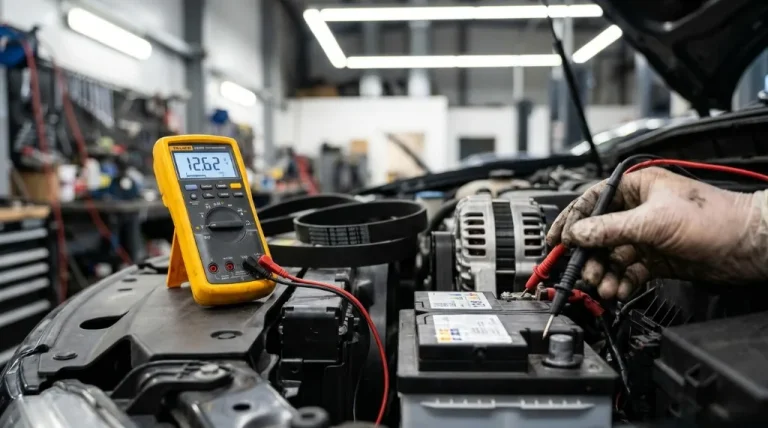
You can check a bad alternator diode using your digital meter while the engine idles. Set your multimeter dial to AC volts, and touch the red probe to the positive battery post and the black probe to the negative post.
A good alternator rectifier blocks raw AC volts, showing under 0.05 volts AC on the screen. A reading above 0.20 volts AC proves that leaking diodes bleed alternating current into your direct current system. This bad AC wave burns plate chemistry during day drives and drains current at night.
The Cold Morning Shock: Why Freezing Weather Exposes Weak Cranking Amps
Freezing air does not suck electric power out of battery cells. Frigid winter cold slows down chemical action between lead plates and liquid acid. A battery keeps its stored energy in winter, but cold resistance slows down electron flow. This cold drag stops weak batteries from spinning cold starter gears.
At 32 degrees Fahrenheit, a standard wet battery loses 35 percent of its cranking punch, and at zero degrees, available starter power falls by 60 percent. A tiny 70-milliamp drain causes zero trouble during warm summer months, yet that same draw stops your engine in January. Cold weather thickens engine oil while slowing battery chemical speed. Learn more about cold-weather battery life in our comparison of AGM vs lead-acid car batteries.
Internal Plate Sulfation: Why Discharged Batteries Freeze at 32°F
Lead-acid batteries make voltage by moving sulfuric acid across porous lead plates. Normal battery use creates soft lead sulfate film on plate faces. Engine charging clears this soft film back into liquid acid during routine highway drives.
When a drain empties a battery in freezing cold, soft film turns into hard white crust. Mechanics call this permanent plate damage lead sulfation. Hard crust blocks acid from touching plate pores and destroys electrical capacity. A sulfated battery shows a false 12.6-volt reading, yet falls to zero volts when you turn the key.
The Non-Invasive Isolation Protocol: Testing Fuse Voltage Drop in Millivolts
Old repair guides tell drivers to yank fuses one by one while watching a meter. That old trick causes errors on modern cars. Pulling a fuse wakes up sleeping CAN bus system computers and resets the forty-five minute test cycle. Skilled mechanics use the clean fuse voltage drop method.
Every automotive blade fuse has two exposed metal test pins on its top edge. When electric current runs through a fuse, small metal resistance creates a tiny millivolt drop. Read DC millivolts across those two top pins, as this test finds hot circuits without waking sleeping computers. Learn correct meter setups with our full guide on how to test a car battery with a multimeter.
Step 1: The Screwdriver Latch Trick to Lock Doors Open
Car fuse panels sit inside the cabin, behind kick panels, or under the dash. Opening the front door turns on cabin lamps and wakes body computers. You must fool the car into sensing shut doors while keeping panels open for meter probes.
Open the driver door and spot the rotating metal latch inside the door jamb. Push the latch inward with a screwdriver until it clicks twice into its locked slot. Hit the lock button on your key fob and set the key twenty feet away. The car enters deep sleep while you probe every cabin fuse.
Step 2: Connecting the Multimeter in Series for Total Milliamps
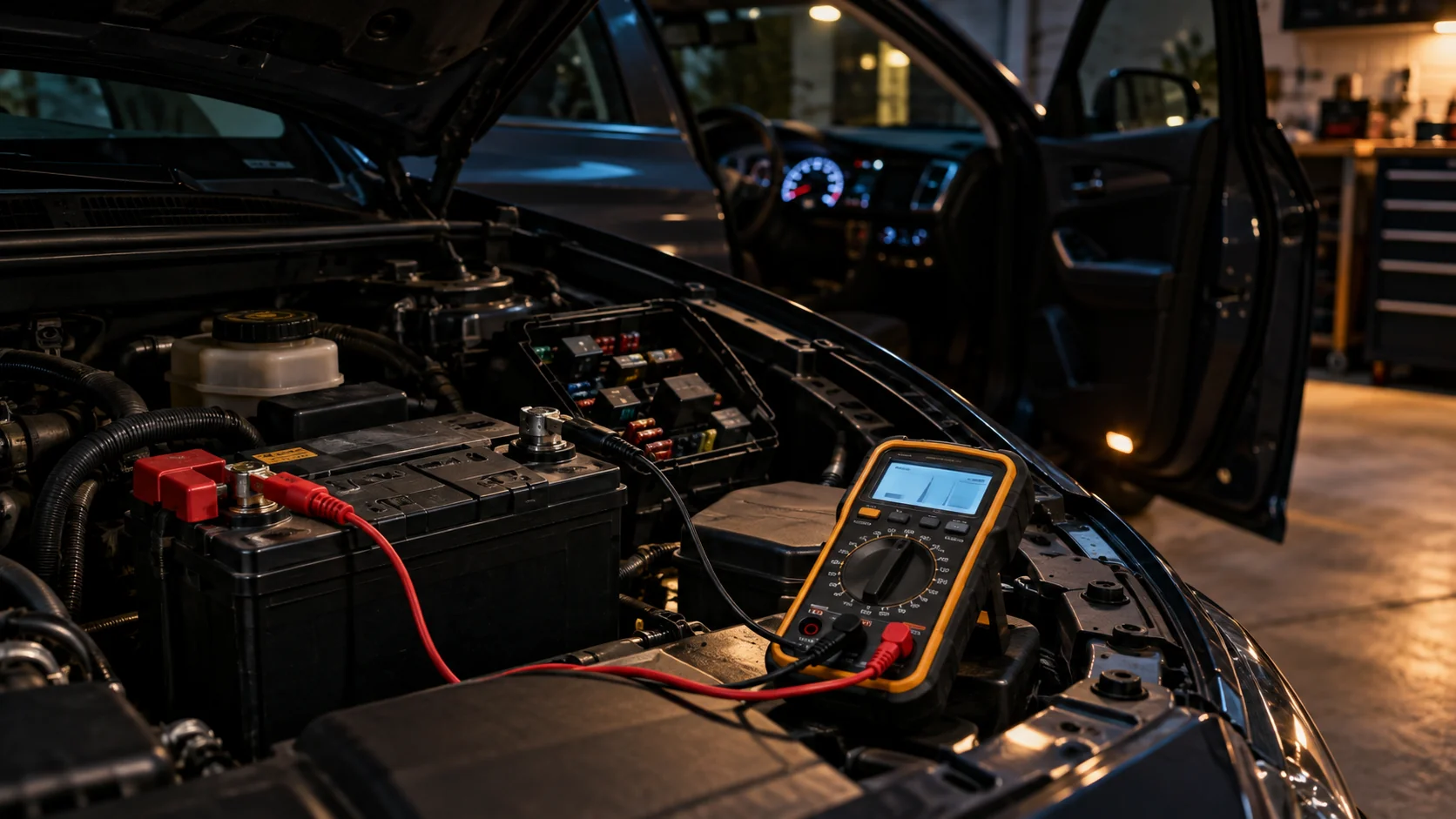
Check your total parasitic draw before testing individual circuit fuses. Move your red meter probe wire into the 10A socket, and set your meter dial to DC amps. Loosen the black negative battery terminal clamp and lift the cable clear of the lead post.
Clamp the black meter lead to the loose negative cable end, and hold the red meter probe against the clean negative lead battery post. Car current now travels through your digital meter. A reading under 0.05 amps shows normal sleep current, while a reading over 0.10 amps confirms an active drain problem.
Step 3: Measuring Fuse Back Test Points in Millivolts
Turn your digital multimeter dial to the DC millivolts setting, marked as mV. Keep your car in its undisturbed sleep state, and touch your pointed probe tips against both exposed metal pins on the top of each fuse.
A sleeping circuit shows 0.0 millivolts on the digital screen. When electric current runs through a fuse, your meter reads between 0.3 and 4.5 millivolts. A reading of 1.2 millivolts on a 10-amp fuse indicates a continuous drain of 160 milliamps. Check your fuse box map to service that active circuit.
The Drain Timeline Matrix: Battery Reserve Depletion Rates
Car batteries store a set amount of electric energy measured in amp-hours. A standard car battery provides between 50 and 70 amp-hours of reserve capacity. The starter motor needs half of that reserve to spin the engine. When drains eat more than half of your amp-hours, battery voltage falls below 11.9 volts.
Find your battery life using this simple math rule: Divide usable amp-hours by parasitic amp draw. A 60-amp-hour pack gives 30 usable amp-hours before starting failure, and a two-amp drain eats those 30 amp-hours in fifteen hours. Discharge speed scales directly with total amperage draw.
| Parasitic Draw (Amps) | Measured Current (mA) | Hours to Cranking Failure | Common Source Components |
|---|---|---|---|
| 0.03 A | 30 mA | 1,000 Hours (41 Days) | Normal radio clock and key fob receiver |
| 0.15 A | 150 mA | 200 Hours (8 Days) | Plugged-in OBD-II tracker or radar tool |
| 0.50 A | 500 mA | 60 Hours (2.5 Days) | Awake dash cluster or trunk light lamp |
| 1.50 A | 1,500 mA | 20 Hours (Overnight) | Stuck A/C clutch relay or bad alternator diode |
| 2.50 A | 2,500 mA | 12 Hours (Overnight) | Awake CAN bus gateway or shorted power seat switch |
Drivers facing frequent dead batteries should also check for physical plate age. Review our diagnostic list of early signs a car battery is dying to tell old cells apart from wiring shorts.
Frequently Asked Questions About Overnight Battery Drain
What can drain a car battery overnight when the car is off?
An electrical draw over 50 milliamps commonly drains a car battery overnight. Common causes include lit glove box lamps, stuck compressor relays, dash cameras, and computer gateways that fail to sleep. A shorted alternator diode also bleeds battery current backward into the engine metal frame while you sleep.
How do I know if my battery drain is a bad alternator or parasitic draw?
Disconnect the thick positive alternator wire before parking your car for the night. Wrap the bare wire end with vinyl tape to prevent direct shorts. If your battery holds voltage until morning with the alternator loose, a shorted diode causes the drain. If the battery still dies, the drain comes from cabin wiring.
How much parasitic draw is acceptable on a modern car?
Normal parasitic draw on a modern car measures between 20 and 50 milliamps. This tiny current runs computer memory, digital clocks, and keyless entry radio receivers. Any continuous drain over 50 milliamps indicates an electrical issue that will discharge your battery over time.
Why does a brand-new battery keep dying overnight?
A brand-new battery dying overnight points to an active car wiring fault, as fresh lead plates do not self-discharge in twelve hours. When a vehicle circuit pulls one to two amps continuously, even a fresh pack empties its reserve in twelve hours. Common causes include bent door switches, stuck horn relays, and awake telematics modules.
Can cold weather drain a car battery overnight?
Cold weather does not drain electrical power from a car battery. Freezing cold slows chemical reactions inside the lead cells. A battery loses 35 percent of its cranking strength at the freezing mark and 60 percent at zero degrees. A minor electrical draw that goes unnoticed in warm weather causes morning failure in winter.