When Do Car Seats Expire? Every Major Brand Explained

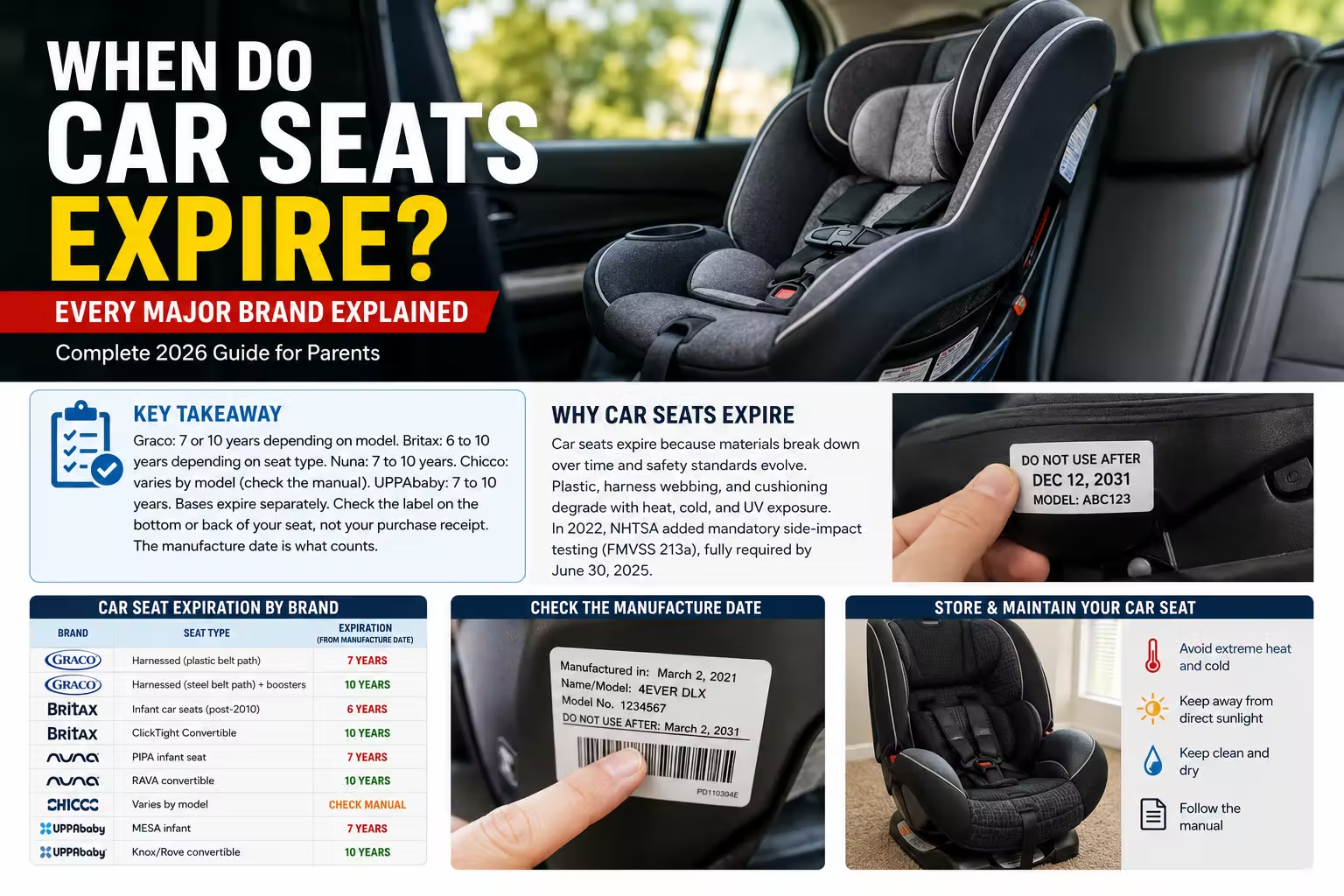
Most car seats expire between 6 and 10 years from the date of manufacture, not the day you bought it. That’s the detail most parents miss. A seat sitting in a box in your garage for two years has already used up two years of its lifespan. This post breaks down the exact expiration timeline for Graco, Britax, Nuna, Chicco, and UPPAbaby, explains whether bases and boosters expire separately, and walks through what to do when your seat reaches the end of its useful life.
Key Takeaway
- Graco: 7 or 10 years depending on model.
- Britax: 6 to 10 years depending on seat type.
- Nuna: 7 to 10 years.
- Chicco: varies by model (check the manual).
- UPPAbaby: 7 to 10 years.
Bases expire separately. Check the label on the bottom or back of your seat, not your purchase receipt. The manufacture date is what counts.
Why Car Seats Have Expiration Dates
Car seats expire because their materials break down over time, even when the seat looks perfectly fine on the outside. Two forces are working against every seat from the moment it’s manufactured: physical degradation and evolving federal safety requirements.
Plastic and Harness Degradation Over Time
The polypropylene shell on your car seat expands and contracts with every temperature swing inside your vehicle. Summer heat pushes interior temperatures well above 150°F, and winter drops them below freezing. That repeated cycling creates micro-fractures in the plastic that you can’t see or feel. Over years, those invisible cracks weaken the shell’s ability to absorb crash energy.
The harness webbing takes its own beating from UV exposure through car windows. Webbing loses tensile strength gradually, which means it may not hold during a high-force crash the way it would when new. None of these changes are visible to the naked eye. Your seat can look brand new and still be structurally compromised.
Safety Standards Change
Every car seat sold in the United States must meet Federal Motor Vehicle Safety Standard No. 213, administered by the National Highway Traffic Safety Administration (NHTSA). These standards aren’t static. NHTSA amended FMVSS 213 in 2022 to add mandatory side-impact testing requirements under FMVSS 213a, with full manufacturer compliance required by June 30, 2025. That deadline has now passed, which means seats currently on store shelves are built to a stricter standard than seats made before mid-2025 (NHTSA.gov). A seat made in 2018 was built to pre-213a standards. It won’t include the side-impact engineering improvements now required on all new seats.
So what does the expiration timeline actually look like for specific brands? Here’s every major manufacturer, broken down by seat type.
Car Seat Expiration by Brand: Full Table
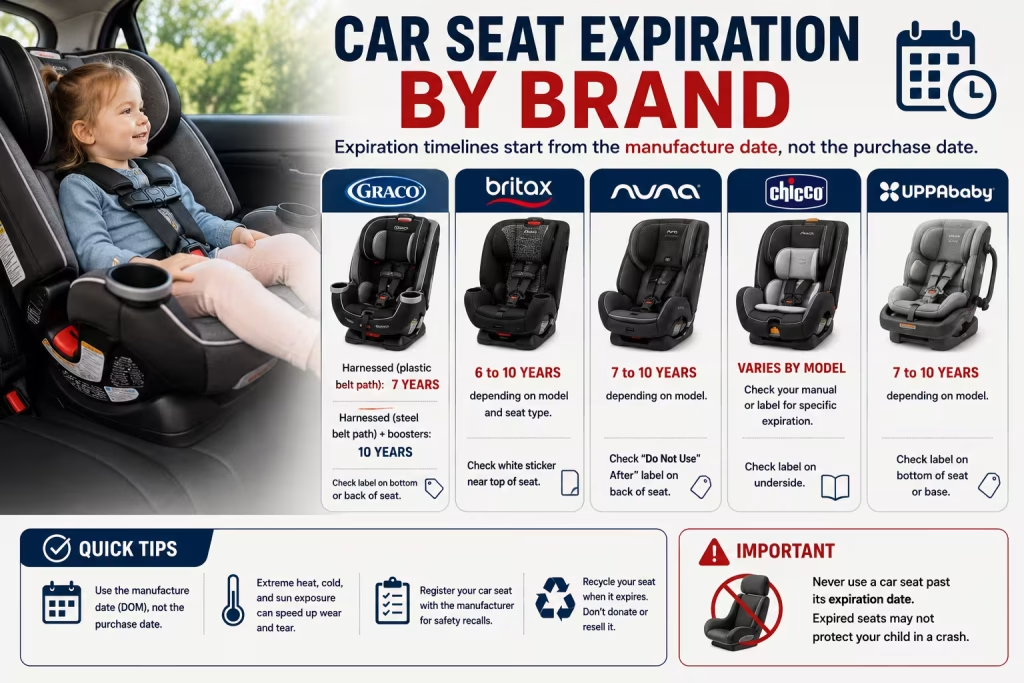
Every major brand sets its own expiration window based on internal testing and material science. According to Graco, the company defines useful life as 10 years for steel-reinforced belt path seats and boosters, and 7 years for plastic-reinforced belt path seats. Britax states a range of 6 to 10 years depending on model and manufacture date. Here’s the full breakdown.
| Brand | Seat Type | Expiration (from Manufacture Date) | Where to Find the Date |
|---|---|---|---|
| Graco | Harnessed (plastic belt path) | 7 years | Bottom or back label |
| Graco | Harnessed (steel belt path) + boosters | 10 years | Bottom or back label |
| Britax | Infant car seats (post-2010) | 6 years | White sticker under fabric, near top of seat |
| Britax | Convertible (non-Classic line, post-2010) | 7 years | White sticker near top of seat |
| Britax | ClickTight Convertible | 10 years | White sticker near top of seat |
| Britax | Harness-2-Booster | 9 years | White sticker near top of seat |
| Nuna | PIPA infant seat | 7 years | Back of seat, “Do Not Use After” label |
| Nuna | RAVA convertible | 10 years | Back of seat |
| Chicco | Varies by model | Check manual | Underside label |
| UPPAbaby | MESA infant | 7 years | Bottom of carrier and base |
| UPPAbaby | Knox/Rove convertible | 10 years | Underside or engraved |
How to Calculate Your Expiration Date
Every car seat uses the date of manufacture (DOM), not the purchase date. Here’s the math:
DOM + Lifespan = Expiration Date
Example: If your Graco 4Ever was manufactured in March 2020 and it has a 10-year lifespan, it expires in March 2030. But if you bought that seat in September 2020, you’ve already lost six months. A seat made six months before you bought it already has six months used up.
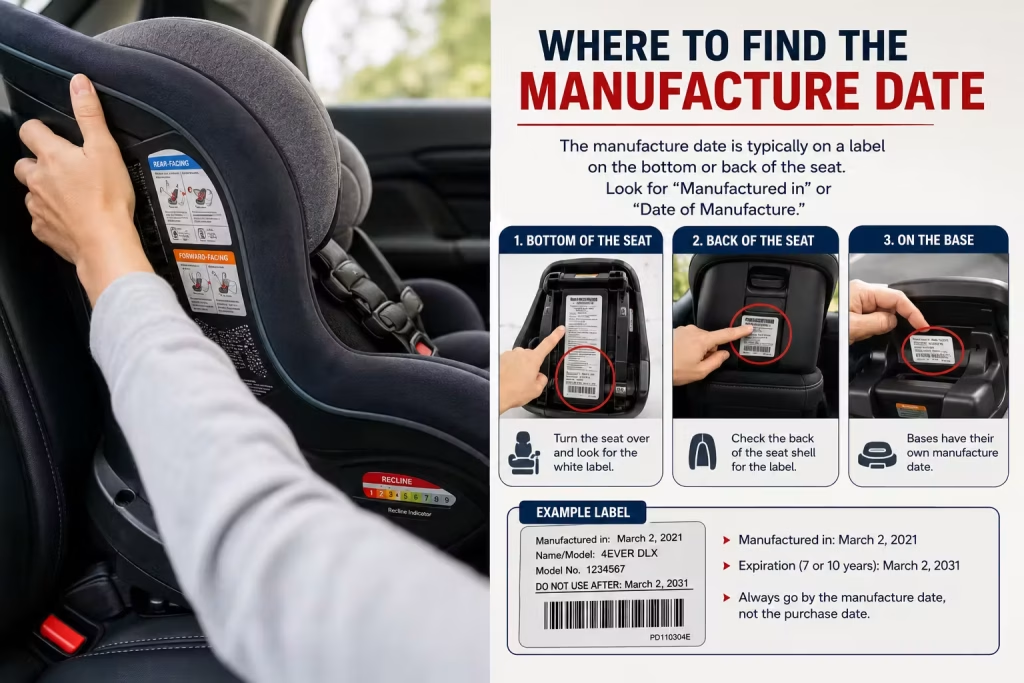
Where exactly is the manufacture date? For most brands, flip the seat over and look for a white or silver sticker on the bottom or back of the plastic shell. It typically shows the model number, manufacture date, and lot number. If the label says “Do Not Use After” followed by a date, that’s your answer. If it only shows the DOM, add the lifespan from the table above.
Does the Car Seat Base Expire Separately?
Yes, car seat bases have their own manufacture date and their own expiration, independent of the seat itself. They are separate products even when sold together as a set.
Here’s where this gets tricky. You might buy a Nuna PIPA carrier and base as a bundle, but the carrier and base could have been manufactured weeks or even months apart. Both have a 7-year lifespan, but their expiration dates could differ by several months. Always check both labels.
Where do you find the base expiration date? Same approach as the seat. Flip the base over and look for the manufacture date label on the bottom of the shell. Most brands stamp it in the same format as the carrier.
⚠️ Safety First: Do not assume your seat and base expire on the same date, even if you bought them together. Check both labels individually.
Can you pair a new seat with an old base? No. If your base is expired but your seat still has years left, you’ll need a new base or need to install the seat using the vehicle seat belt instead of the base (only if the manufacturer allows belt-only installation for your model).
Do Car Seat Boosters Expire?
Yes, booster seats expire too, even though they don’t have a harness system. The same material degradation that affects harnessed seats applies to boosters.
Graco’s belt-positioning boosters carry a 10-year useful life. Britax belt-positioning boosters expire in either 6 or 10 years depending on the specific model (check your user guide or serial label for the exact window). The plastic shell on a booster goes through the same heat cycling and UV exposure as any other seat in your car.
There’s a common misconception that boosters are “less important” because the child is older and the seat is simpler. But the booster’s job is to position the vehicle’s seat belt correctly across your child’s hips and chest. If the plastic is degraded and the booster cracks or shifts during a crash, the belt won’t sit where it’s supposed to. Materials still break down whether there’s a harness attached or not.
Common Myths About Car Seat Expiration
The 6-Year Rule Applies to Every Seat
This is false. There’s no universal expiration period for all car seats. Actual lifespans range from 6 to 12 years depending on brand and model. Graco seats range from 7 to 10 years. Britax spans 6 to 10 years. And Maxi-Cosi’s Magellan model carries a 12-year lifespan, one of the longest on the market. The only way to know your seat’s expiration is to check the label on your specific model.
I Can Reuse It for My Second Child
Only if the seat is still within its expiration window and has never been in a crash. A seat manufactured in 2018 with a 7-year lifespan expires in 2025. If your second child arrives in 2026, that seat is already past its useful life regardless of how it looks. Always verify both the DOM and crash history before passing a seat to a younger sibling.
Expiration Is Just a Marketing Tactic to Sell More Seats
This comes up a lot, and it’s understandable. But plastic fatigue is a real, documented phenomenon. The polypropylene used in car seat shells undergoes chemical changes when exposed to repeated temperature extremes (from below freezing to above 150°F inside a parked car). Over years, those changes make the material more brittle and less capable of absorbing impact energy. No manufacturer can guarantee structural performance past their tested lifespan. Would you trust a decade-old bike helmet in a crash?
I Can Extend the Life by Storing It Inside
No. Expiration is calculated from the manufacture date regardless of storage conditions, use frequency, or how carefully you’ve treated the seat. A seat stored in a climate-controlled closet for five years has the same expiration date as one that’s been in a car every day. The clock starts at manufacture, not at first use.
Safety First: What to Do When Your Car Seat Expires
Once your car seat reaches its expiration date, stop using it immediately. Don’t wait until you’ve bought a replacement to remove it from the car. Here’s the right process:
Step 1: Remove the seat from your vehicle right away. Do not drive with a child in an expired seat, even for short trips.
Step 2: Mark it clearly. Write “EXPIRED — DO NOT USE” on the shell with permanent marker. This prevents anyone from pulling it out of the trash or a donation bin and using it.
Step 3: Dispose of it properly. Cut the harness straps, remove the fabric cover, and recycle the plastic shell if your local program accepts it. Do not donate an expired car seat. It creates a liability issue, and more importantly, it puts another child at risk.
If your seat’s label is damaged, faded, or missing entirely, a Certified Child Passenger Safety Technician (CPST) can help you verify whether the seat is still within its useful life. Many fire stations and police departments have CPSTs on staff, and Safe Kids Worldwide maintains a directory of inspection stations.
⚠️ Safety First: Never use an expired car seat, even if it looks fine. Internal degradation is invisible. The seat may not protect your child in a crash.
When to Check Your Car Seat’s Expiration Date
Don’t wait for a problem to check your seat’s status. There are five situations where you should verify expiration before anything else:
Buying used. Secondhand car seats are risky because you don’t know the full history. Always verify the manufacture date and calculate the expiration before using a pre-owned seat.
Accepting hand-me-downs. Family members mean well, but a seat from your sister’s first child may already be expired or approaching expiration.
Passing a seat to a younger sibling. Run the math again. A 2019 seat with a 7-year lifespan expires in 2026. If your second child needs it in 2027, you’re past the window.
Before a long road trip. A cross-country drive isn’t the time to discover your seat expired three months ago.
Right now. Add a calendar reminder for the expiration year when you first buy a car seat. It takes 30 seconds and saves you from guessing later.
Frequently Asked Questions
How long are Graco car seats good for?
Graco car seats are good for either 7 or 10 years from the date of manufacture. Seats with plastic-reinforced belt paths (like the Contender 65) have a 7-year useful life. Seats with steel-reinforced belt paths and belt-positioning boosters carry a 10-year useful life. You can verify your specific model on Graco’s official car seat expiration page at gracobaby.com.
Do car seat bases expire?
Yes. Car seat bases have their own expiration date based on their individual manufacture date. Even if you bought the base and carrier together as a set, they may have been manufactured at different times. Check the label on the bottom of the base separately from the carrier.
Do car booster seats expire?
Yes. Booster seats expire between 6 and 10 years from manufacture, depending on brand and model. Graco belt-positioning boosters last 10 years. Britax boosters vary between 6 and 10 years. The plastic shell degrades from heat cycling and UV exposure the same way harnessed seats do.
How do car seats expire if they look fine?
Plastic degrades from repeated temperature cycling (freezing winters to scorching summers inside a parked car) and UV exposure through vehicle windows. These changes happen at a molecular level and are invisible to the naked eye. The harness webbing also loses tensile strength over time. Manufacturers set expiration dates based on the period they can guarantee structural integrity through crash testing.
What to Do Right Now
Check the label on the bottom or back of your car seat. Find the manufacture date. Add the lifespan for your specific model (use the table above). That’s your expiration date. If you’re past it, stop using the seat today and replace it.
Pull the seat out right now and check the label. It takes 60 seconds.
Sources
- Graco. “Car Seat Expiration.” Graco.com. Retrieved June 2026. https://www.gracobaby.com/carseatexpirationpage.html
- Britax. “Expiration Dates FAQs.” us.Britax.com. Retrieved June 2026. https://us.britax.com/support/faq/expiration-dates
- Strolleria. “When Does the Nuna PIPA Expire?” Strolleria.com. Retrieved June 2026. https://strolleria.com/pages/when-does-the-nuna-pipa-expire
- NHTSA. “Federal Motor Vehicle Safety Standard No. 213.” NHTSA.gov. https://www.nhtsa.gov