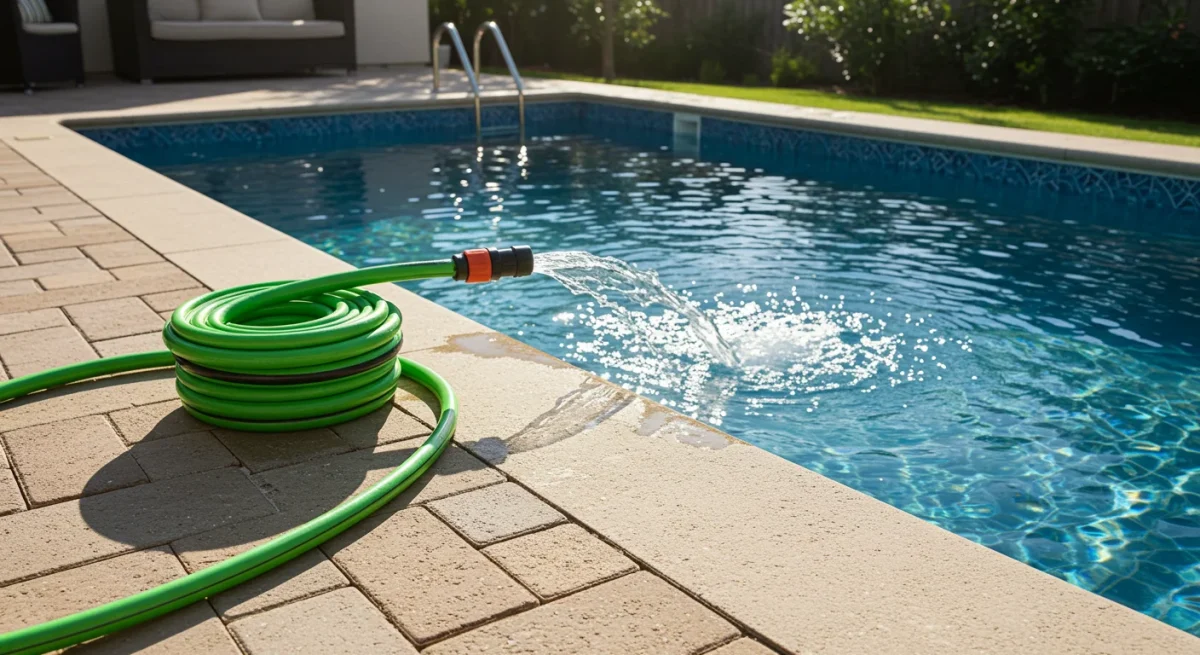
Best Hose for Filling a Pool: Our Top Picks for a Fast, Safe Fill

The best hose for filling a pool is the Flexzilla Pro ¾-inch. It delivers 23 GPM from a standard spigot, it’s NSF-certified drinking-water safe, and it won’t kink halfway through a 15-hour fill. For most homeowners, it’s the one to buy.
If you need industrial-grade durability for repeated fills or a commercial setup, the Continental rubber hose is worth the extra cost. And if you’re wondering about expandable hoses, skip them entirely. Their latex liners aren’t built for continuous pressure and they fail spectacularly mid-fill.
I compared hose diameters, GPM ratings, safety certifications, and burst pressure specs so you don’t have to. Below is the full breakdown, plus a side-by-side comparison table to make the choice fast.
Karen’s Verdict
- Best Overall: Flexzilla Pro ¾-inch (~$45-65) delivers 23 GPM, NSF-certified drinking-water safe
- Best Heavy-Duty: Continental Commercial Rubber (~$80-120) for repeated fills and commercial use
- Avoid: Any expandable hose. They burst under continuous pressure every time
Key Takeaways
- Prioritize Diameter: A ¾-inch hose is the single most important feature for a faster fill. It delivers significantly more water than a standard ⅝-inch hose.
- Demand Safety: Only use hoses clearly marked “Drinking Water Safe” or “Potable.” Standard hoses can leach harmful chemicals into your fresh pool water.
- Material Matters: A hybrid polymer hose (like those from Flexzilla) offers the best all-around balance of durability, kink-resistance, and manageable weight for this task.
- Check the PSI Rating: Look for a burst pressure rating of over 350 PSI. Your hose will be under continuous pressure for a day or more, so it needs to be tough.
- Use a Y-Splitter: To cut your fill time nearly in half, use a brass Y-splitter at the spigot to run two high-flow hoses at once.
The Quick Comparison: Best Pool-Filling Hoses Side by Side
This table covers every spec that matters when choosing a hose for pool filling. The two recommended picks are the Flexzilla Pro and the Continental rubber hose. Standard vinyl and expandable hoses are included for comparison, but neither is suited for this job.
| Feature | Flexzilla Pro ¾” | Continental Rubber | Standard Vinyl ⅝” | Expandable Hose |
|---|---|---|---|---|
| Diameter | ¾ inch | ¾ inch | ⅝ inch | ½ to ¾ inch (variable) |
| Flow Rate (GPM) | ~23 GPM | ~23 GPM | ~12 GPM | ~8 to 12 GPM |
| Material | Hybrid Polymer | Commercial Rubber | PVC Vinyl | Latex/TPC |
| Drinking Water Safe | ✅ NSF Certified | ✅ NSF Certified | ❌ Usually not | ❌ No |
| Burst Pressure | 150 PSI working | 200 PSI working | 150 to 200 PSI | 80 to 100 PSI |
| Weight (100 ft) | ~12 lbs | ~28 lbs | ~10 lbs | ~3 to 5 lbs |
| Kink Resistance | Excellent | Excellent | Poor | N/A (collapses) |
| Approx. Price (75ft) | $45 to $65 | $80 to $120 | $15 to $30 | $20 to $40 |
| Pool Fill Use | ✅ Recommended | ✅ Recommended | ⚠️ Slower | ❌ Do Not Use |
| Our Pick | ⭐ Best Overall | ⭐ Heavy-Duty Pick | Not recommended | ❌ Avoid |
GPM figures based on typical home water pressure of 45-55 PSI through a 75 ft hose length. Prices approximate as of June 2026.
Fill time estimate: At 23 GPM, a 15,000-gallon pool fills in approximately 11 hours. At 12 GPM, the same pool takes about 21 hours.
Why Your Hose Choice Matters More Than You Think
Your hose choice controls three things that directly affect your pool: fill speed, water safety, and whether you wake up to a flooded yard. The right hose fills a 15,000-gallon pool in roughly 11 hours. The wrong one takes 21 hours, or ruptures mid-fill after leaching chemicals into your fresh water from day one.
Your hose isn’t an accessory. It’s the primary delivery system for tens of thousands of gallons of water. The right hose protects your family and your investment by keeping the water pure. And the right hose won’t burst, kink, or crack under the relentless pressure of a multi-day fill.
I’ve seen new pool owners whose cheap vinyl hose sprung a leak 12 hours into a fill, flooding their yard. Others discover months later that their pool water chemistry is a mess because their hose leached contaminants from the start. Both problems are avoidable with the right equipment.
The 4 Critical Features of a Pool-Filling Hose
Four specs determine whether a hose is worth buying for pool filling: inner diameter, material safety rating, burst pressure, and length. Everything else on the label is marketing. Here is what each one actually means for your fill.
Hose Diameter: The #1 Factor for a Faster Fill
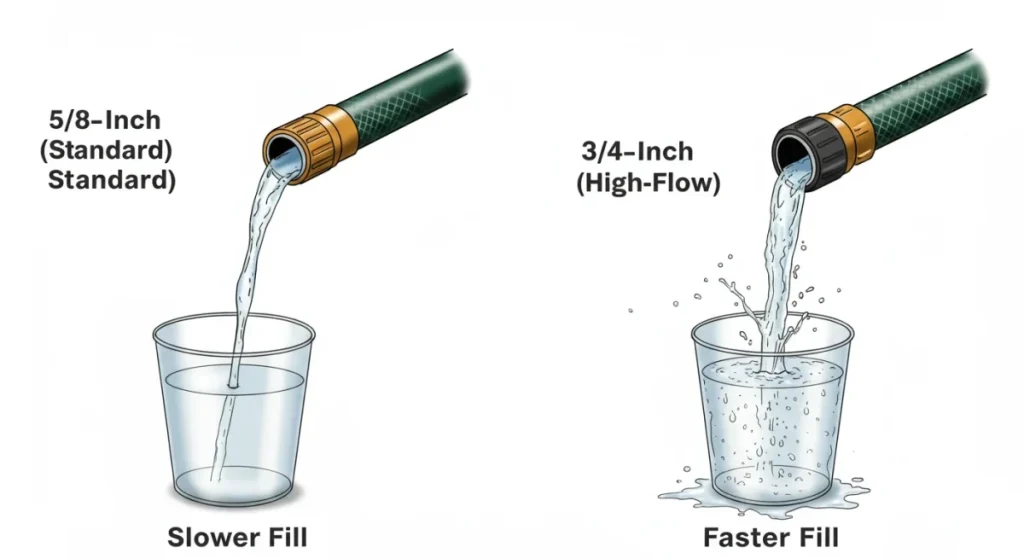
The most critical factor determining fill speed is the hose’s internal diameter. It directly controls the flow rate, which we measure in Gallons Per Minute (GPM).
Think of it like this: trying to fill a bucket with a drinking straw versus a milkshake straw. The wider the straw, the faster the job. A standard ⅝-inch garden hose might deliver around 12 GPM. A ¾-inch hose, however, can push out up to 23 GPM from the same spigot.
For a 15,000-gallon pool, that’s the difference between filling it in about 21 hours versus 11 hours. That’s a massive time savings. Before you can even begin to estimate your fill time, you need to know your pool’s size. If you’re unsure, here’s how to calculate your pool’s volume in gallons.
Hose Material: Balancing Durability, Flexibility, and Safety
A hose’s material dictates its weight, durability, and, most importantly, its safety.
Heavy-Duty Rubber Hoses: These are the tanks of the hose world. Brands like Continental and ELEY make commercial-grade rubber hoses that can withstand high pressure and extreme temperatures. They are incredibly durable but also very heavy and can be expensive.
Hybrid Polymer Hoses: This is the sweet spot for most pool owners. A brand like Flexzilla has perfected this material, which is lightweight, incredibly flexible even in cool weather, and famously kink-resistant. It’s a durable and easy-to-manage choice for a long fill.
Standard Vinyl Hoses: I strongly advise against cheap vinyl hoses for this job. They are lightweight and inexpensive, but they kink constantly, have low burst pressure ratings, and can crack easily when left in the sun. That leads to catastrophic failure mid-fill.
The “Drinking Water Safe” Imperative
This is non-negotiable. A standard hose can contain lead, BPA, and phthalates that leach into the water as it passes through. This not only contaminates your pool from the very start but can also pose health risks.
Health authorities like Nashville Metro Water Services point out that hoses not intended for drinking can release chemicals unsafe for human contact or consumption. Always look for packaging that explicitly states the hose is “Potable” or “Drinking Water Safe” and carries NSF/ANSI Standard 61 certification.
Hose Length: Go Long, But Not Too Long
You need a hose long enough to comfortably reach from your outdoor spigot to the deepest part of your pool without being pulled taut. Measure this distance and then add about 10 feet for some slack.
However, avoid buying an excessively long hose. Water loses pressure due to friction as it travels through the hose. A 150-foot hose will have a noticeably lower GPM than a 75-foot hose connected to the same spigot. The goal is to find the right balance: long enough to do the job without stress, but not so long that you sacrifice precious water pressure.
Durability Ratings: Burst Pressure (PSI) & UV Resistance
Burst pressure, measured in Pounds per Square Inch (PSI), tells you how much pressure the hose can withstand before it ruptures. A typical home’s water pressure is 40-60 PSI. For a hose that will be running continuously for 24-48 hours, you want a huge safety margin. Look for a hose with a burst pressure rating of at least 350 PSI.
Since the hose will be lying out in the sun, good UV resistance is key. This feature prevents the sun’s rays from degrading the material, which helps it stay flexible and resist cracking over time.
My Top-Rated Hoses for Filling a Pool in 2025
Two hoses stand out for pool filling in 2026: the Flexzilla Pro ¾-inch for most homeowners, and the Continental commercial rubber hose for those who want maximum durability. Here is why each one earns a recommendation, and what to skip.
Best Overall for Speed and Safety: Flexzilla Pro Water Hose (¾-Inch)
I’ve personally used Flexzilla hoses on countless residential pool setups. Their hybrid polymer material is fantastic. It’s surprisingly lightweight for its strength and rarely kinks, which is a lifesaver when you’re maneuvering 100 feet of hose. It’s drinking water safe, has a high burst rating, and provides the excellent flow rate you need from a ¾-inch diameter.
Typical retail price: $45 to $65 for 75 ft | $65 to $90 for 100 ft (Amazon, Home Depot, and Lowe’s, as of mid-2026)
A Flexzilla Pro ¾-inch hose delivers approximately 23 GPM at standard home water pressure, filling a 15,000-gallon pool in roughly 11 hours. The NSF-certified drinking-water-safe hybrid polymer construction eliminates chemical leaching concerns while weighing just 12 lbs per 100 feet, making it manageable enough for a single person to position and reposition during a fill.
The Heavy-Duty Champion: Continental Commercial-Grade Rubber Hose
If your top priority is bomb-proof durability for years to come, you can’t go wrong with a commercial rubber hose from a brand like Continental. This is the kind of hose you’d find on a construction site. It’s heavy, it’s an investment, but it will withstand almost any abuse and provide fantastic water flow.
Typical retail price: $80 to $120 for 75 ft | $110 to $160 for 100 ft This is an investment hose. Expect to pay more than a standard garden hose, but it will outlast 3 to 4 cheaper hoses.
A Word of Caution on Expandable Hoses
Expandable, “pocket” hoses are great for light watering, but you should never use one to fill a swimming pool. Their inner lining is made of thin latex or TPC, which is not designed for the prolonged, continuous pressure of a pool fill. They are notorious for bursting spectacularly under these conditions. Trust me, it’s a risk you don’t want to take.
Pro-Tips to Fill Your Pool Even Faster & More Safely
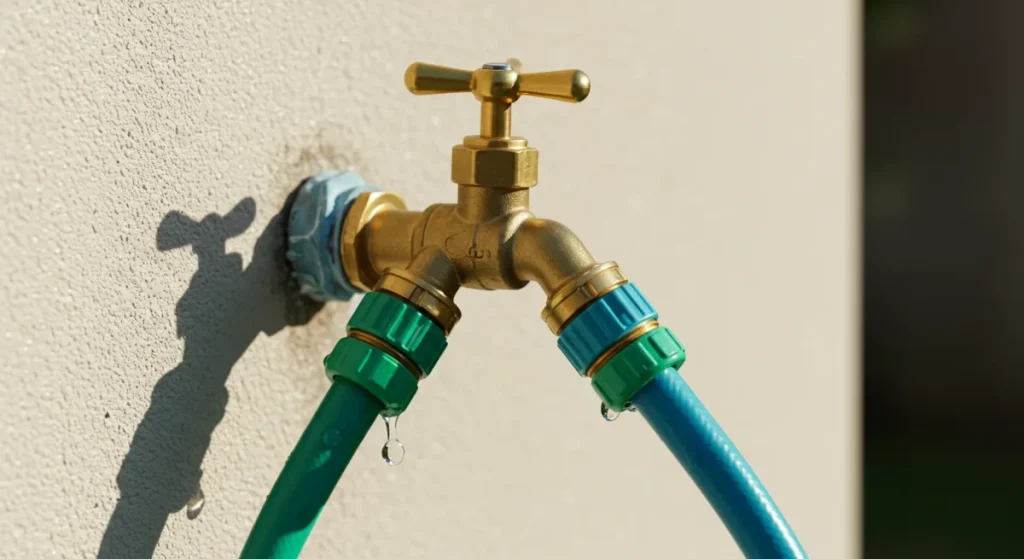
These three techniques meaningfully reduce fill time and protect your pool equipment. The first one alone can cut hours off a standard fill.
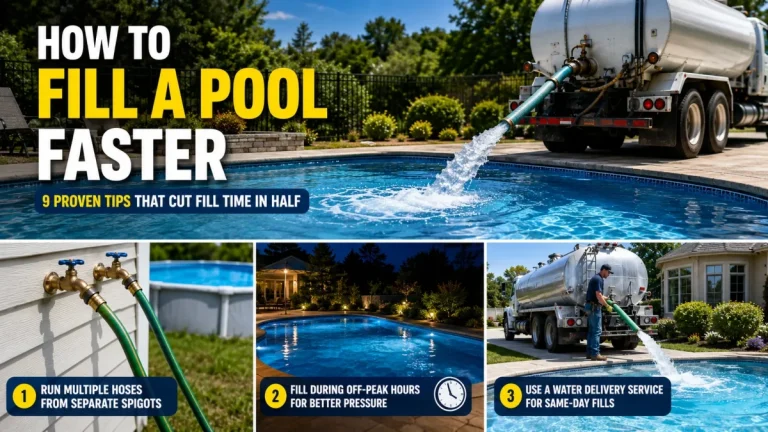
- The Two-Hose Technique with a “Y” Splitter: This is my favorite trick. Buy a durable brass “Y” splitter from any hardware store. Attach it to your spigot, connect two high-flow hoses, and run them both into the pool. You will effectively double your GPM and cut your fill time in half.
- Securing the Hose to Prevent Liner Damage: A high-flow hose can whip around from the water pressure, potentially scuffing or even tearing a new vinyl liner. Place a soft, folded towel under the hose end in the pool, or use a rope to loosely tie it to your pool ladder.
- Protecting Your Home’s Water Supply: It’s a good practice to use a backflow preventer on your spigot. This device ensures that no pool water can be siphoned back into your home’s pipes or the municipal water supply. This is a safety step recommended by water departments across the country, including the City of Phoenix Water Services.
On a Private Well? Run your hose at a moderate flow, not full blast. Continuous high-demand draws can overheat well pumps not rated for extended operation. Check your pump’s GPM rating before starting a multi-hour fill. When in doubt, fill in two sessions with a 2-hour break between them.
How Your Hose Choice Impacts Fill Time and Cost
A ¾-inch hose at 23 GPM fills a 15,000-gallon pool in about 11 hours. A standard ⅝-inch hose at 12 GPM takes roughly 21 hours. That is a 10-hour difference from one equipment choice. Here is how that translates across different pool sizes.
| Pool Size | ⅝” Hose (12 GPM) | ¾” Hose (23 GPM) | Time Saved |
|---|---|---|---|
| 5,000 gal | ~7 hrs | ~3.6 hrs | ~3.4 hrs |
| 10,000 gal | ~14 hrs | ~7.2 hrs | ~6.8 hrs |
| 15,000 gal | ~21 hrs | ~10.9 hrs | ~10 hrs |
| 20,000 gal | ~28 hrs | ~14.5 hrs | ~13.5 hrs |
| 30,000 gal | ~42 hrs | ~21.7 hrs | ~20 hrs |
Based on standard home water pressure of 45-55 PSI at the spigot. Actual times vary based on local water pressure and hose length.
Of course, using thousands of gallons of water impacts your utility bill. To see exactly how a high-GPM hose affects your schedule, check out how long it takes to fill a pool with a hose. We also break down the average cost to fill a pool in our detailed guide so you can budget accordingly.
Frequently Asked Questions (FAQ)
What size hose is best for filling a pool?
A ¾-inch diameter hose is the best choice. It delivers a much higher flow rate (Gallons Per Minute) than a standard ⅝-inch hose, significantly reducing the time it takes to fill your pool.
Is it safe to fill a pool with a regular garden hose?
It is only safe if the hose is specifically rated as “Drinking Water Safe” or “Potable.” Regular vinyl garden hoses can leach harmful chemicals like lead and phthalates into the water, which is unsafe for swimmers.
Which is better for filling a pool, a ¾” or ⅝” hose?
A ¾-inch hose is far superior. The wider diameter can increase the water flow by over 50%, saving you many hours of fill time.
How can I fill my pool faster with a hose?
Use a ¾-inch, kink-resistant hose. For maximum speed, use a brass Y-splitter at the spigot to connect and run two hoses into the pool simultaneously.
Are Flexzilla hoses a good choice for filling a pool?
Yes, Flexzilla hoses are an excellent choice. They are drinking water safe, kink-resistant, and relatively lightweight, and their ¾-inch pro models provide the high flow rate needed for this task.
How long does it take to fill a pool with a garden hose?
Fill time depends on your pool size and hose diameter. A ¾-inch hose delivering 23 GPM fills a 15,000-gallon pool in about 11 hours. The same pool takes roughly 21 hours with a standard ⅝-inch hose at 12 GPM. For exact estimates by pool size, see the fill time table above.
How many GPM do I need to fill a pool?
For most residential pools, a hose delivering 20 to 25 GPM is the practical maximum from a standard home spigot. A ¾-inch hose typically achieves this range at normal home water pressure (45-55 PSI). You can double your effective GPM by running two ¾-inch hoses simultaneously using a brass Y-splitter.
Do I need a backflow preventer to fill a pool?
Most water utilities recommend one, and some require it by code. A backflow preventer screws onto your outdoor spigot and stops pool water from being siphoned back into your home’s supply lines or the municipal water system. They cost $10 to $25 at any hardware store and take 30 seconds to install.
The Final Verdict: Your First Fill Sets the Tone
The right hose for filling a pool is not a complicated decision once you know what actually matters. Diameter drives speed, NSF certification guarantees safety, and burst pressure determines whether your hose survives a 15-hour fill or fails at hour seven.
For most homeowners: Flexzilla Pro ¾-inch, drinking-water-safe, 75 to 100 ft. Add a brass Y-splitter if you want to cut that 11-hour fill to six. That is the complete setup.
The water you put in on day one sets the baseline for your pool chemistry all season. Get the fill right and everything else is easier.