How Much Does It Cost to Fill a Pool? (2026 Pricing)
Filling a 15,000-gallon pool costs $60 to $150 with a garden hose using city water. Hire a water delivery service for the same pool and you’re looking at $450 to $1,500, roughly 10 times more. The price gap is massive, and which option makes sense depends entirely on your timeline and local water restrictions.
This guide breaks down the real cost by pool size and fill method so you can decide what’s actually worth your money. You’ll also learn the sewer credit trick that most homeowners miss, a move that can shave $40 to $80 off your water bill.
Filling a 15,000-gallon pool with a garden hose costs $60 to $150 using city water. Well water costs almost nothing beyond electricity. A water delivery service runs $450 to $1,500 for the same pool, roughly 10x more, but fills in hours instead of days. Most homeowners choose the hose unless under water restrictions.
Pool Filling Cost at a Glance
The total cost to fill a pool depends on two things: how many gallons your pool holds and which water source you use. Here is a quick-reference table covering the three most common fill methods across standard residential pool sizes.
| Pool Size | City Water (Garden Hose) | Well Water | Water Delivery Service |
|---|---|---|---|
| 10,000 gallons | $40 to $100 | $1 to $5 (electricity) | $300 to $1,000 |
| 15,000 gallons | $60 to $150 | $2 to $8 (electricity) | $450 to $1,500 |
| 20,000 gallons | $80 to $200 | $3 to $10 (electricity) | $600 to $2,000 |
| 25,000 gallons | $100 to $250 | $4 to $13 (electricity) | $750 to $2,500 |
How to read this table: City water rates range from $4 to $10 per 1,000 gallons depending on your municipality. Water delivery runs $30 to $100 per 1,000 gallons. Well water is essentially free beyond the electricity needed to run your pump.
The formula is simple: (pool gallons / 1,000) x your local rate per 1,000 gallons = your total fill cost.
Cost to Fill a Pool with a Garden Hose (City Water)
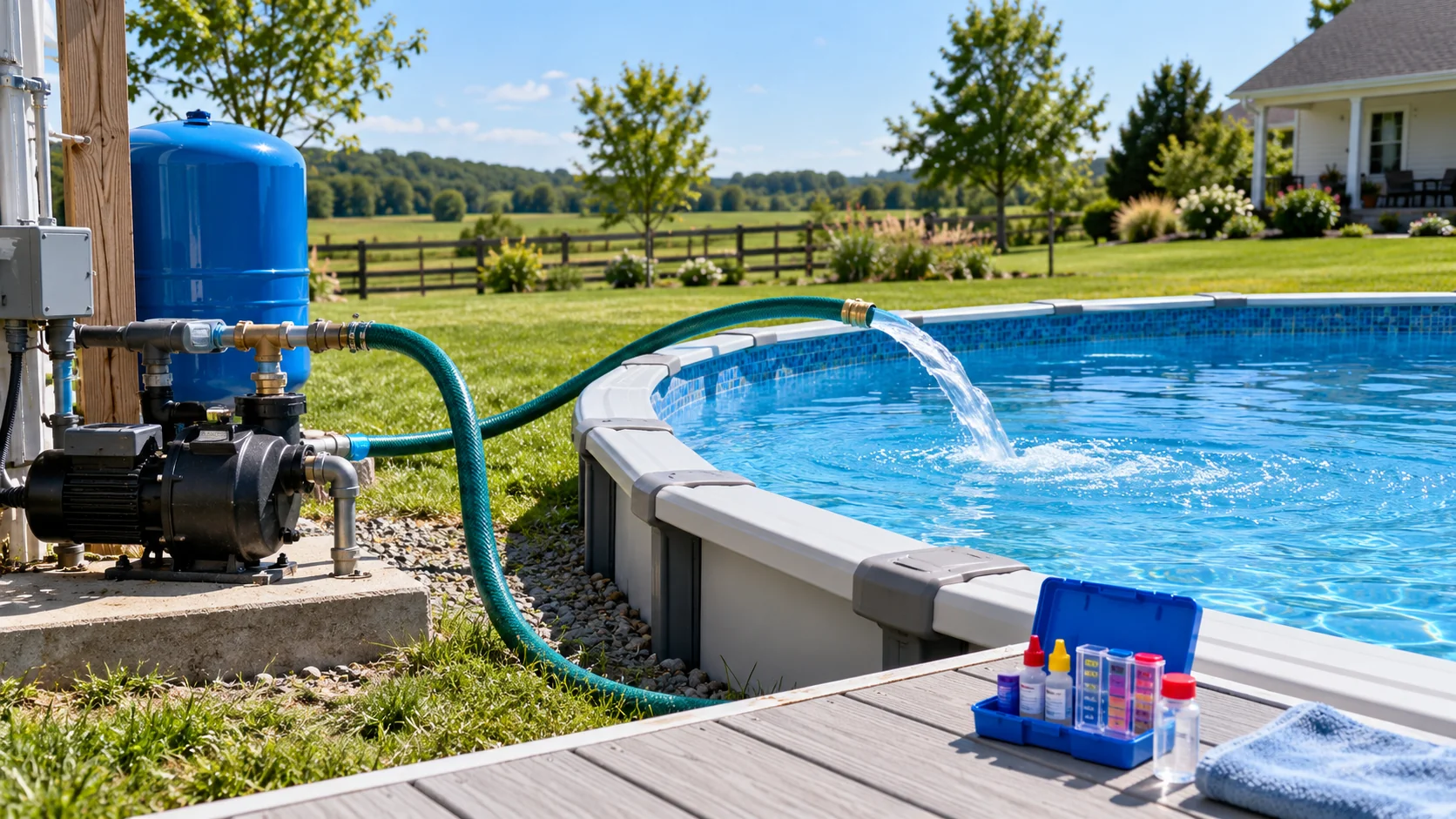
City water is the cheapest way to fill a pool for most homeowners. In 2026, HomeGuide reports that municipal water costs $4 to $10 per 1,000 gallons across most US cities, which means a standard 15,000-gallon pool runs $60 to $150 to fill completely using a garden hose.
Here’s how to calculate your exact cost. Find your local water rate on your last utility bill (it’s listed per 1,000 gallons or per CCF, where 1 CCF = 748 gallons). Divide your pool’s total gallons by 1,000, then multiply by that rate.
For example, a 15,000-gallon pool in a city charging $6 per 1,000 gallons costs exactly $90 to fill.
💡 Sewer Credit Tip: Most cities charge a sewer fee on every gallon of water you use because they assume it goes down the drain. Pool water doesn’t. Call your water utility before filling and ask for a “sewer exemption” or “irrigation meter credit.” In many municipalities, this saves 80 on a single pool fill. Not every city offers it, so confirm with your local provider first.
The main downside of the hose method? Speed. Filling a 15,000-gallon pool with a standard garden hose takes roughly 24 to 48 hours of continuous flow. That’s fine if you’re not in a rush. If you need the pool ready by the weekend, delivery might be worth the premium.
Horizontal bar chart comparing pool fill costs by size and method
Source: HomeGuide, 2026. City water at $4 to $10/1,000 gal; delivery at $30 to $100/1,000 gal.
Cost to Fill a Pool with Well Water
Well water is practically free because you’re pulling from your own supply. The only cost is the electricity to run your well pump, typically $1 to $10 for a full pool fill depending on your pump’s wattage and local electricity rates.
That sounds like a no-brainer, but there’s a catch. Standard residential wells produce 3 to 5 gallons per minute. At that flow rate, filling a 15,000-gallon pool takes 2 to 3 days of continuous pumping. Running your well that hard can stress a low-yield system.
If your well has a low recovery rate (under 3 gallons per minute), you risk running the well dry temporarily. That won’t damage the aquifer, but it can burn out your well pump. A well pump replacement runs $500 to $2,000, which wipes out any savings from “free” water.
The smart approach: Run your well pump for 4 to 6 hours, then let it recover for 2 to 3 hours. Repeat this cycle over several days. It takes longer, but it protects your pump and keeps your household water supply available.
🚨 When to Call a Pro: If your well pump starts cycling rapidly (turning on and off every few seconds) or your household water pressure drops significantly while filling, stop immediately. These are signs of a low-yield well under stress. Consider using city water or a partial delivery to finish the job.
Pool Water Delivery Cost
Water delivery costs $30 to $100 per 1,000 gallons, roughly 10 times more than city water, but fills your pool in hours instead of days. According to HomeGuide’s 2026 data, a 15,000-gallon pool costs $450 to $1,500 to fill via delivery service, with most homeowners paying between 950.
The wide price range comes down to three factors: your location, the delivery company’s water source, and how many truckloads you need. A standard water tanker holds about 6,000 gallons, which means a 15,000-gallon pool needs 2 to 3 truckloads.
Some delivery companies offer pretreated water that’s already balanced for pH and chlorine. This saves you $30 to $50 in startup chemicals and a few hours of testing, but it typically costs 15% to 20% more per load.
💡 Save on Delivery: Get quotes from at least 3 local companies. Prices vary wildly even within the same metro area. Ask these three questions: Is the water pretreated? What’s the per-truckload price vs. per-gallon price? Are there mileage or travel fees?
When delivery makes sense: You’re under local water restrictions that limit hose use, you need the pool ready within 24 hours, or your well can’t handle the volume. Outside of those situations, the garden hose wins on value every time.
[INTERNAL-LINK: pool water delivery service → Sibling spoke on delivery cost and how it works]
What Raises Your Pool Fill Cost?
Four things push your cost above the baseline: pool size, local water rates, delivery distance, and whether you need startup chemicals after filling. Understanding these variables helps you avoid sticker shock when the water bill arrives.
Pool size is the biggest multiplier. Every 5,000 gallons added to your pool increases the fill cost by $20 to $50 with a hose or $150 to $500 with delivery. A 25,000-gallon pool costs roughly 2.5 times more than a 10,000-gallon pool regardless of method.
Local water rates vary dramatically. Cities in the Southwest (Phoenix, Las Vegas, Tucson) often charge $8 to $12 per 1,000 gallons due to water scarcity, while Midwest and Southeast cities average $4 to $6. Check your utility bill before estimating.
Delivery distance adds up. Most water delivery companies include 15 to 25 miles in their base price. Beyond that, expect a $1 to $3 per mile surcharge. Rural homeowners can pay 20% to 30% more than suburban customers for the same volume.
Startup chemicals cost $30 to $75. After filling, you’ll need to balance pH, alkalinity, and chlorine levels. This applies regardless of fill method, though pretreated delivery water can reduce or eliminate this step.
How to Reduce the Cost of Filling Your Pool
Three moves cut your pool fill cost significantly: choose city water over delivery, request a sewer credit, and time your fill strategically. Most homeowners can save $100 to $500 by combining these approaches.
Use city water unless you have a reason not to. The garden hose method costs 90% less than delivery for the same pool. Yes, it takes 1 to 2 days longer. But saving $400 to $1,300 is worth the wait for most people.
Request a sewer credit before you start filling. Call your water utility and ask about a pool-fill sewer exemption. Many cities will waive the sewer portion of your water bill for that billing cycle. This typically saves $40 to $80, and the process is usually a single phone call or a short online form.
Fill during off-peak hours. Some municipalities charge tiered water rates, where usage above a certain threshold costs more per gallon. Spreading your fill across 2 to 3 days (instead of running the hose nonstop) can keep each day’s usage below the tier threshold and lower your per-gallon rate.
Consider the hybrid approach. If you need the pool partially usable fast, pay for one truckload of delivery (roughly 6,000 gallons for $180 to $600) and fill the remaining volume with a garden hose over the next day. You get speed where it matters and savings where it doesn’t.
FAQ
How much does it cost to fill a 10,000-gallon pool?
Filling a 10,000-gallon pool costs $40 to $100 with a garden hose using city water. With a water delivery service, the same pool costs $300 to $1,000. Well water is essentially free beyond a few dollars in electricity. The exact price depends on your local water rate, which ranges from 10 per 1,000 gallons in most US cities.
Will filling a pool raise my water bill?
Yes, expect a noticeable spike for that one billing cycle. A 15,000-gallon pool fill adds $60 to $150 to your water bill when using city water. One homeowner reported their monthly bill jumping from $45 to $130 during the fill month, then returning to normal the next cycle. Request a sewer credit to reduce the impact by 80.
Is pool water delivery worth the cost?
Pool water delivery is worth it in three specific situations: you’re under local water restrictions that limit hose use, you need the pool ready within 24 hours, or your well can’t handle the volume. Otherwise, the garden hose saves you $400 to $1,300 on a 15,000-gallon pool. If speed matters but budget is tight, try the hybrid approach with one delivery truckload plus a garden hose for the rest.
Can I get a sewer credit when filling a pool?
Many US municipalities offer a sewer exemption or irrigation meter credit for pool fills. The process varies by city, but it usually requires a phone call or online form submitted before you start filling. Savings range from $40 to $80 depending on your sewer rate and pool size. Not every city offers this, so contact your local water utility to confirm availability.
What is the cheapest way to fill a pool?
The cheapest way to fill a pool is with a garden hose using city water at $4 to $10 per 1,000 gallons. Well water is technically cheaper (only electricity), but risks pump damage on low-yield wells. To minimize city water cost, request a sewer credit before filling and spread the fill across 2 to 3 days to avoid tiered rate thresholds.
Can a pool lose an inch of water a day?
Yes, pools can lose up to a quarter inch of water per day through normal evaporation. Losing a full inch daily is above normal and could indicate a leak. Hot, windy, and dry conditions increase evaporation rates. If you consistently lose more than half an inch per day with the pump off, consider a bucket test or call a pool leak detection service.
Conclusion
Filling a pool in 2026 costs $60 to $150 for a 15,000-gallon pool using a garden hose, or $450 to $1,500 via water delivery service. City water wins on price by a factor of 10. Delivery wins on speed. And the sewer credit trick can knock 80 off your total regardless of method.
For most homeowners, the garden hose is the right call. Hook it up, let it run for a day or two, and pocket the hundreds you would have spent on delivery. Save the tanker truck for emergencies and water restriction situations.