Wood Fence Cost (2026 Price Guide: Cedar vs Pine, Styles & Cost per Foot)

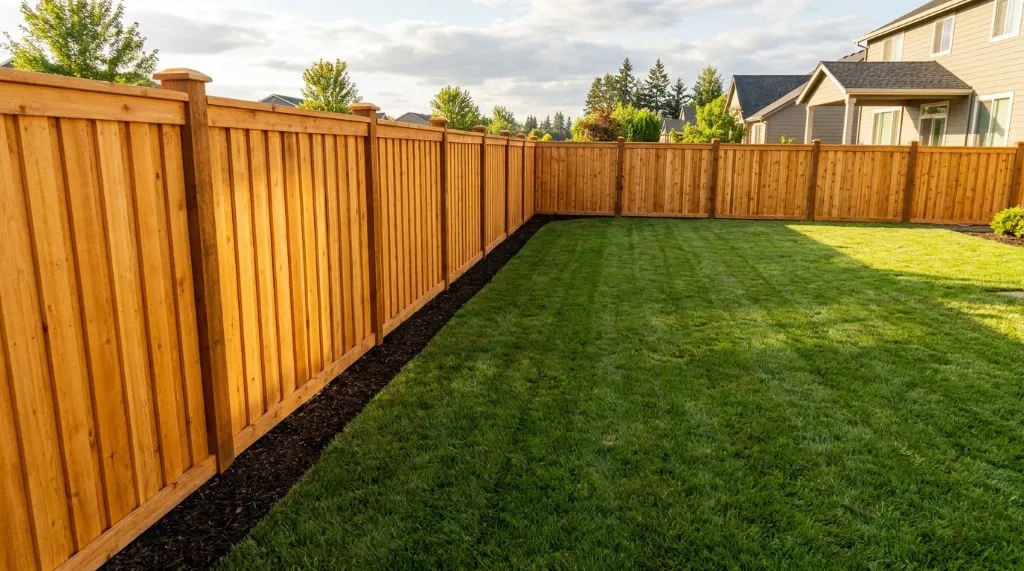
A residential wood fence costs between $18 and $55 per linear foot installed. Pressure-treated pine averages $18 to $35 per foot, Western red cedar runs $28 to $55 per foot, and California redwood costs $38 to $72 per foot. A standard 150-foot backyard fence costs $2,700 to $8,250 total. Final costs vary by lumber species, terrain slope, and style.
| Fence Length | Pressure-Treated Pine | Western Red Cedar | California Redwood |
|---|---|---|---|
| 50 Linear Feet | $900 – $1,750 | $1,400 – $2,750 | $1,900 – $3,600 |
| 100 Linear Feet | $1,800 – $3,500 | $2,800 – $5,500 | $3,800 – $7,200 |
| 150 Linear Feet (Average) | $2,700 – $5,250 | $4,200 – $8,250 | $5,700 – $10,800 |
| 200 Linear Feet | $3,600 – $7,000 | $5,600 – $11,000 | $7,600 – $14,400 |
| 300 Linear Feet | $5,400 – $10,500 | $8,400 – $16,500 | $11,400 – $21,600 |
Wood Fence Cost per Linear Foot: Pressure-Treated Pine vs Cedar vs Redwood
Lumber selection accounts for 45% of your project invoice. Pressure-treated pine delivers the lowest material cost at $7 to $11 per foot for raw lumber. Western red cedar runs $12 to $18 per foot for materials. California redwood costs $18 to $26 per foot for lumber. Each species carries distinct grain densities, natural chemical defenses, and weather endurance profiles.
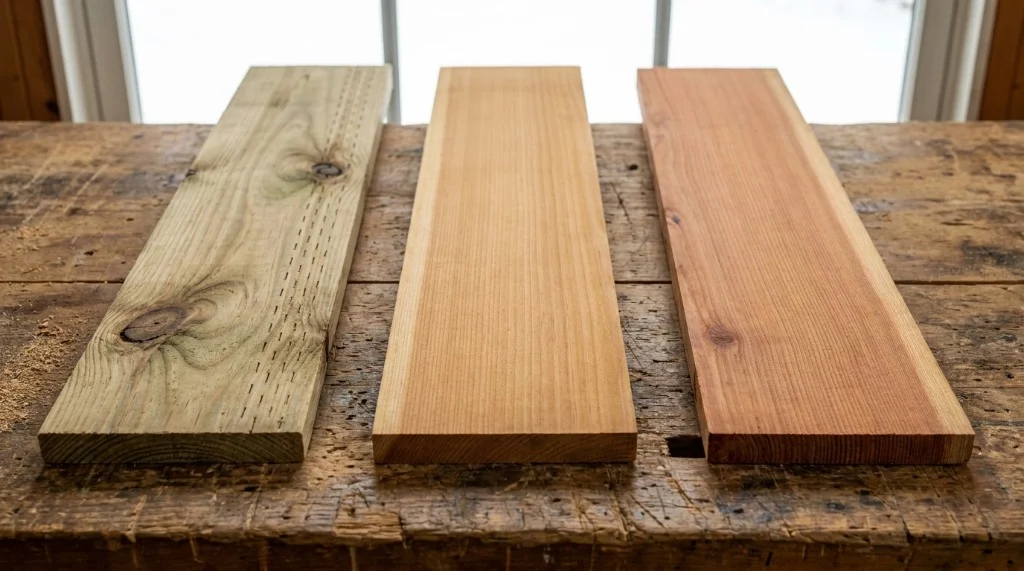
Pressure-Treated Pine: The Budget Option for Wet Soil Conditions
Lumber mills infuse southern yellow pine with preservatives under high pressure. The formula uses copper compounds to repel subterranean termites and fungal rot organisms. Raw pine costs $18 to $35 per linear foot installed. Pressure-treated posts perform best when ground moisture stays high year-round.
Pine pickets hold high internal moisture when you purchase them from local yards. Fresh pine lumber contains up to 28% water weight. This moisture causes boards to cup and twist as sunlight bakes the wood. You must allow pressure-treated pine to dry for 60 to 90 days before you apply exterior stain or water sealant.
Western Red Cedar: Natural Insect Resistance and Minimal Warping
Western red cedar contains natural organic compounds called thujaplicins. These extractives provide organic defenses. They repel insects, mildew, and wood rot. Cedar fence installation costs $28 to $55 per linear foot. Cedar boards contain straight grain pores that stay flat across hot summers and wet winters.
Cedar pickets dry evenly with very low shrinkage. Builders harvest cedar from Pacific Northwest timber stands. The timber contains zero sticky pitch pockets. This quality helps paint and oil stains sink deep into the grain. Cedar posts last 15 to 20 years in dry soils, but they decay faster in wet clay earth.
California Redwood: Premium Grain Density and Decades of Rot Defense
California redwood remains the top grade of natural fence lumber. Redwood contains high concentrations of natural tannins. These tannins give the heartwood a rich cinnamon hue while repelling insects. Redwood fence installation runs between $38 and $72 per linear foot. Top architectural grades contain zero sapwood and zero loose knots.
Redwood heartwood resists open flames better than pine or spruce. The tight ring spacing prevents surface splintering over decades of direct sun exposure. Homeowners in western states pick redwood for high-end perimeter privacy. With oil-based penetrating treatments every four years, a redwood fence framework maintains structural strength for 25 to 30 years.
| Lumber Species | Raw Material Cost / Ft | Total Installed Cost / Ft | Average Lifespan | Warpage Tendency | Stain Reapplication Cadence |
|---|---|---|---|---|---|
| Pressure-Treated Pine | $7 – $11 | $18 – $35 | 12 – 15 Years | High (Shrinks and twists) | Every 2 – 3 Years |
| Western Red Cedar | $12 – $18 | $28 – $55 | 18 – 22 Years | Low (Remains straight) | Every 3 – 4 Years |
| California Redwood | $18 – $26 | $38 – $72 | 25 – 30 Years | Very Low (Superior stability) | Every 4 – 5 Years |
Wood Fence Installation Cost by Style: Board-on-Board, Shadowbox, and Dog-Ear
Picket configuration and structural framing shift total installation expenses by 20% to 50%. Standard dog-ear privacy layouts cost $20 to $38 per foot. Shadowbox semi-privacy fences cost $24 to $44 per linear foot. Board-on-board designs require 30% more pickets and cost $28 to $52 per linear foot. The chosen layout dictates sightline privacy and panel wind tolerance.
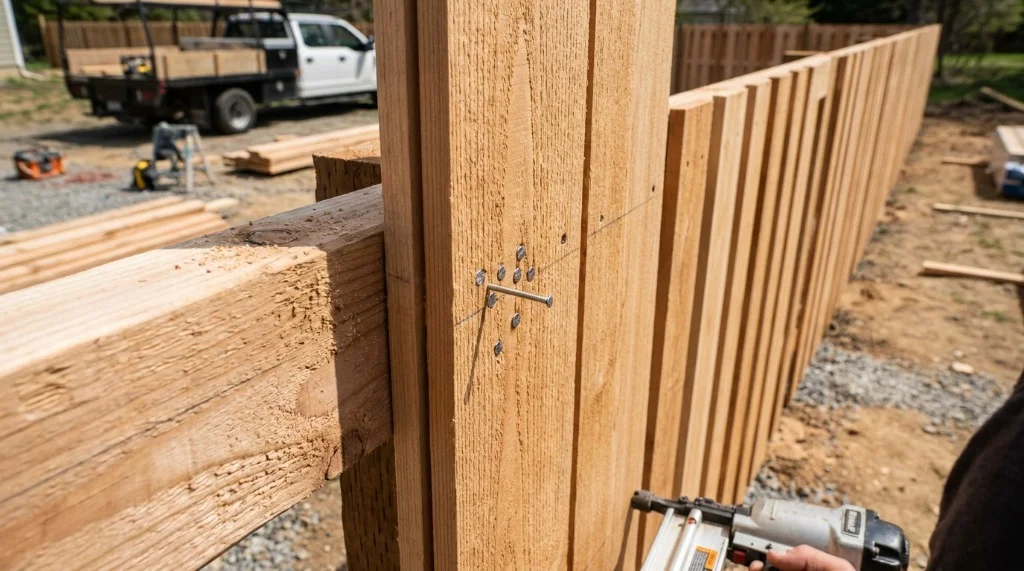
Dog-Ear and Flat-Top Privacy: Fast Installation at Lowest Cost
Dog-ear privacy fencing is the most common residential installation. Installers nail 1×6 pickets side-by-side directly against horizontal backer rails. The top corners feature 45-degree angle cuts. These cuts shed rainwater and soften vertical sightlines. Installed dog-ear fences cost $20 to $38 per linear foot. This design uses the minimum board count for an eight-foot panel.
Side-by-side picket placement introduces one major flaw in outdoor spaces. Timber pickets shrink across their width as they dry in outdoor air. A standard wet picket shrinks by up to 3/8 inch over its first summer. This gap exposes your yard to neighbors.
Board-on-Board: Why That 1.5-Inch Overlap Prevents Shrinkage Gaps
Board-on-board construction provides complete visual privacy across all seasons. Contractors nail a base layer of vertical pickets with 3.5-inch gaps between boards. Then they nail an overlapping layer of face pickets directly over these seams. Installed board-on-board fences cost $28 to $52 per linear foot. The finished panel requires 17 to 19 pickets per eight-foot run, compared to 14 pickets on standard builds.
You must maintain a strict 1.5-inch overlap on both sides of every face board. Outdoor air draws moisture out of green lumber. Each board contracts across its width. The 1.5-inch overlap absorbs this contraction without breaking the visual barrier. The fence blocks sightlines from all viewing angles even after five years of full sun exposure.
Shadowbox Semi-Privacy: High-Wind Airflow Without Post Failures
Shadowbox fences alternate vertical pickets on opposite sides of 2×4 rails. Installers call this layout a good neighbor fence. Both property owners view an identical finished board pattern. Installed shadowbox fencing runs $24 to $44 per linear foot. The staggered design allows direct wind currents to pass freely between alternating boards.
The open air passage reduces total wind pressure against your structural posts during severe storms. Solid privacy panels act as giant sails. They transfer thousands of pounds of lateral force into post bases. Shadowbox panels relieve this wind load. This stops post snapping in open plains and coastal areas. The design offers total privacy from the front. It permits angled views from the side.
Where Your Budget Goes: 55% Materials vs 45% Contractor Labor
A professional wood fence estimate divides into 55% raw materials and 45% professional labor. Materials include lumber pickets, 2×4 rails, 4×4 posts, fast-setting concrete mix, and exterior fasteners. Professional labor costs range from $12 to $25 per linear foot, or $45 to $85 per worker hour. Crews spend most labor hours on post holes, line clearing, and gate fabrication.
For a detailed breakdown of site preparation, permit fees, and underground utility marking protocols, consult our comprehensive fence installation cost guide before you hire an outside crew.
Average Contractor Labor Rates per Linear Foot and Man-Hour
A standard three-person fence crew installs between 80 and 120 linear feet of wood privacy fencing per work day. Labor invoices reflect the physical effort required to dig deep holes, haul 80-pound concrete bags, and plumb vertical posts along string lines. Standard labor pricing sits at $14 to $22 per foot on flat terrain with soft loamy soil. Tight urban lots or remote rural sites raise labor charges due to travel and material staging.
Hidden Site Surcharges: Rocky Soil, Old Fence Teardown, and Tree Roots
Contractors append specific site surcharges when yard conditions slow production. Tearing down decayed wood fences and hauling old footings costs $3 to $6 per linear foot. Digging through limestone shelves, river rocks, or dense clay requires pneumatic jackhammers or mechanical augers. This heavy equipment adds $10 to $25 per post hole. When crews must chop thick subterranean tree roots across the fence line, expect a surcharge of $50 to $120 per hole. Stepping panels down steep hillsides requires custom rail cuts and extended posts. This custom work raises installation labor rates by 15% to 25%.
Walk Gate and Double-Drive Gate Hardware Costs
Fence gates represent the highest stress points along any perimeter line. A standard four-foot walk gate costs $250 to $450 installed. This price covers the frame, pickets, tee-hinges, and a gravity latch. A ten-foot to twelve-foot double-drive gate for vehicle access costs $600 to $1,400 installed. Wide gates need an internal diagonal truss rod. A steel frame stops corner drag over time.
Structural Engineering: How to Stop Ground Rot and Mid-Span Picket Sag
Premature wood fence failures originate from soil moisture absorption and inadequate horizontal framing. A 2×6 pressure-treated kick board raises cedar pickets two inches above damp turf. Installing three horizontal 2×4 backer rails prevents middle panel bowing. Grade 304 stainless steel nails stop black tannin drip streaks down picket faces.
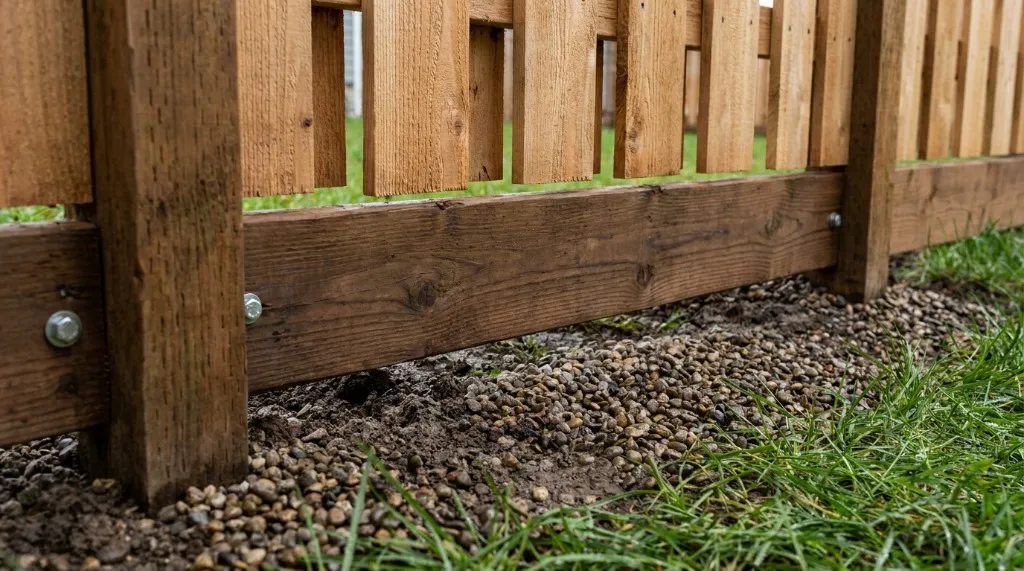
The 2×6 Ground-Contact Kick Board: Raise Cedar Pickets Above Damp Soil
Fence pickets rot from the bottom up when they make direct contact with lawn soil, wet mulch, or standing puddles. Capillary action pulls water upward through open timber pores. This rots the lower six inches within five years. A kick board solves this rot hazard. Builders also call this a rot board. Contractors bolt a 2×6 pine board horizontally between post bases. The timber carries a UC4A ground-contact rating.
Your vertical cedar pickets rest flush on top of this rot board. They sit two full inches above soil level. When lawn mowers or weed trimmers strike the perimeter, they hit the durable $14 pressure-treated board. This barrier shields your cedar pickets from physical damage. If the kick board wears out after ten years, you unscrew two bolts. You replace that single board without tearing down fence panels.
PostMaster Steel Posts vs Traditional 4×4 Wood Posts
Wood posts rot at the groundline because concrete footings trap water between the timber and the collar. Moisture pools in this gap where soil bacteria thrive. Heavy storms snap rotted posts at the groundline after eight to twelve years. Galvanized steel PostMaster posts or Simpson Strong-Tie Galvanized Post Anchors solve this problem.
Steel PostMaster posts feature an open channel. They withstand 73-mile-per-hour sustained winds. You screw your horizontal 2×4 wood rails directly into the steel flange. Cedar cover pickets conceal the metal frame. This maintains an all-wood exterior look. Steel posts cost $35 to $48 each. Wood posts cost $14, but steel posts last over 30 years without rot.
The 3-Rail Rule: Why Two Rails Fail on Six-Foot Panels
Budget contractors cut costs on six-foot fences by installing only two 2×4 rails. This shortcut causes panel failure within two seasons. Six-foot cedar pickets flex under summer sun and winter moisture cycles. Without center support, pickets bow outward at the four-foot midpoint. This tears fasteners straight from the wood.
Every six-foot wood fence panel strictly requires three horizontal rails. Place the top rail six inches below the picket caps. Position the bottom rail six inches above the rot board. Mount the third rail across the exact center span. This three-point anchor locks pickets tight as lumber expands and shrinks.
Fastener Metallurgy: Stop Cedar Tannin Black Streaks with 304 Stainless Steel
Natural cedar and redwood lumber contain high volumes of water-soluble tannic acid. When galvanized nails contact tannic acid, a chemical reaction occurs. This reaction triggers dark tannin bleeding. Black chemical streaks bleed down from nail heads across your boards.
Secure all cedar and redwood pickets using Freeman 304 Stainless Steel Ring-Shank Nails or hot-dipped galvanized fasteners. Stainless steel resists tannin acids and will never corrode or streak. The ring-shank texture provides 40% higher pull-out grip than smooth nails. This locks boards down for years.
Staining and Sealing Costs: Protect Your Fence for Under $1 per Square Foot
Applying professional exterior wood stain costs between $1.50 and $3.50 per linear foot, or $0.40 to $0.75 per square foot for DIY labor. Unsealed lumber suffers from solar rays and rain penetration. Unprotected wood turns dull gray. The boards crack and cup inward within eighteen months of outdoor exposure.
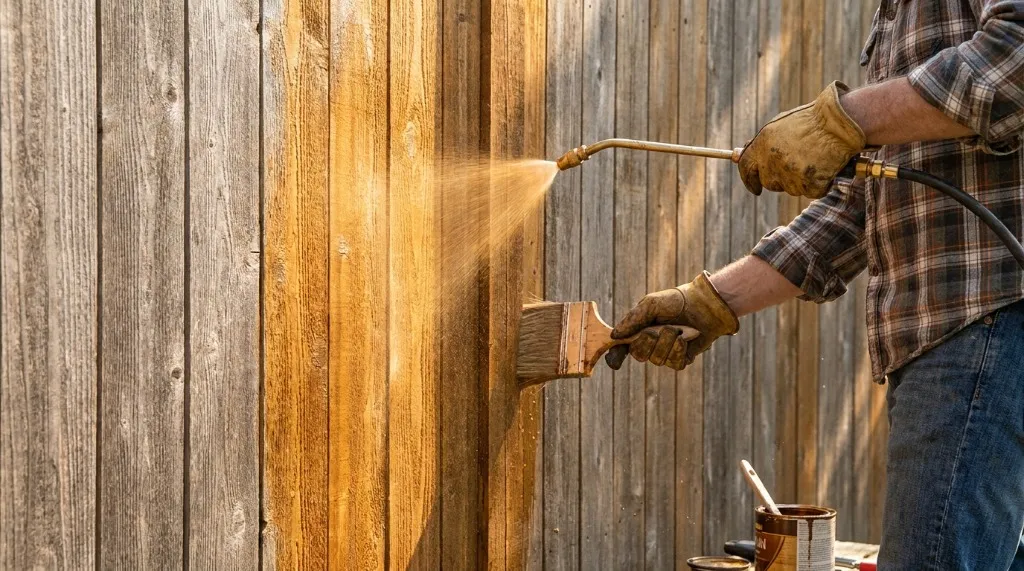
Penetrating Oil Stain vs Water-Based Acrylic: Why Peeling Matters
Never apply water-based acrylic exterior paint or thick solid latex stains to a residential perimeter fence. Acrylic coatings form a plastic film on top of the timber surface. Ground moisture enters tiny wood checks. Water gets trapped behind the acrylic film. Trapped vapor makes acrylic blister and peel within three seasons.
Use penetrating oil-based exterior wood stain instead. Deep oils sink directly into wood cellular pores. They replenish natural oils and repel moisture. Oil stains never form a surface film, which means they never crack or peel. When color fades after four years, you spray a fresh coat directly over clean wood. You never scrape or power sand the surface.
The 15% Moisture Test: When New Wood Is Ready for Sealing
Applying stain to wet wood seals internal moisture inside the lumber. This accelerates fungal wood rot. You must verify that your fence lumber dries below 15% internal moisture content before you apply protective oils. Cedar reaches this dry state in four to six weeks of sun. Pressure-treated pine needs two to three months to dry out treatment fluids.
Purchase a General Tools Digital Pin Wood Moisture Meter equipped with two metal contact pins. Press the pins one-eighth inch into multiple pickets on shady and sunny sides of your fence. When all digital readings drop below 15% moisture, apply your penetrating oil stain using a Chapin Industrial 2-Gallon Lawn & Garden Sprayer and immediately back-brush the liquid into the grain pores.
Wood Fence vs Vinyl, Composite, and Aluminum: Which Material Fits Your Budget?
Wood fences provide the lowest upfront purchase price for natural privacy at $18 to $55 per linear foot. Vinyl fencing costs $28 to $62 per linear foot, composite runs $45 to $95 per foot, and ornamental aluminum runs $32 to $70 per foot. Synthetic materials avoid staining upkeep, but wood delivers natural grain warmth and lower upfront cost.
For pet owners who need boundary containment without blocking scenic open views, compare these figures with our electric and invisible fence cost breakdown to review below-ground wire options.
| Perimeter Material | Initial Cost / Linear Foot | 20-Year Maintenance Cost | Average Lifespan | Aesthetic Look |
|---|---|---|---|---|
| Wood (Cedar / Pine) | $18 – $55 | $1,800 – $3,500 (Staining) | 15 – 25 Years | Natural warm wood grain |
| Vinyl (PVC) | $28 – $62 | $300 – $600 (Washing) | 25 – 30 Years | Uniform clean synthetic sheen |
| Composite Timber | $45 – $95 | $400 – $800 (Washing) | 25 – 35 Years | Engineered wood appearance |
| Ornamental Aluminum | $32 – $70 | $200 – $500 (Inspection) | 35 – 50+ Years | Open decorative wrought iron look |
Frequently Asked Questions About Wood Fence Costs
How much does 150 feet of wood fence cost to install?
Installing 150 linear feet of pressure-treated pine privacy fence costs between $2,700 and $5,250 total. Installing 150 linear feet of Western red cedar privacy fence costs between $4,200 and $8,250 total. Final figures include posts, concrete, rails, pickets, one walk gate, and standard contractor labor on clear level terrain.
Is cedar worth the extra cost over pressure-treated pine?
Yes. Cedar costs 30% to 40% more upfront than pine, but it saves thousands in repairs. Cedar pickets resist cupping and twisting under weather exposure. Pine pickets curl and split within four years if you skip annual sealing. This forces early picket replacement and extra labor.
Do fence posts need concrete or crushed gravel?
Concrete provides superior lateral strength against high storm winds, but installers must slope the concrete collar above grade to shed rainwater. If contractors leave a concrete cup below soil level, water pools around the post collar and rots the wood within eight years. In well-draining soil, crushed gravel packs tight and lets moisture drain away from timber bases.
Can neighbors share the cost of a boundary line wood fence?
Many jurisdictions enforce good neighbor fence statutes requiring adjoining owners to split reasonable boundary fence replacement costs. Always hire a surveyor to confirm boundary lines before you install posts. Discuss picket styles, contractor bids, and payment timelines with your neighbor in writing before ordering materials.