Electric & Invisible Fence Cost (2026 Pricing, DIY vs Pro, and Setup Guide)

An invisible electric dog fence costs between $250 and $2,800 in 2026. A standard DIY in-ground kit for a half-acre yard costs between $250 and $450 in hardware. Professional installation from brands like Invisible Fence or DogWatch averages $1,400 to $2,500 for the same acreage.
Pet owners choose hidden radio fences when neighborhood homeowners associations ban physical fences, or when enclosing a large property with wooden or chain link fencing costs too much. Physical fences cost upwards of $15 to $45 per linear foot, as detailed in our fence installation cost guide. An invisible fence provides complete perimeter security across large boundaries at a fraction of that cost.
Total Cost Breakdown: What Does an Invisible Dog Fence Cost in 2026?
An electric invisible dog fence costs between $250 and $2,800 in 2026, with most homeowners spending an average of $1,150. Basic DIY in-ground and wireless kits cost $250 to $450 for a half-acre yard. Professional installations covering one to five acres average $1,400 to $2,800 including trenching and training.
Total cost depends on yard size, fence type, and soil quality. Rocks, thick tree roots, and driveways raise labor costs. These baseline numbers cover standard gear and basic yard layouts.
| Property Size | Perimeter Linear Feet | DIY System Cost | Professional Installed Cost |
|---|---|---|---|
| 1/4 Acre | 420 Linear Feet | $220 to $350 | $950 to $1,400 |
| 1/2 Acre | 600 Linear Feet | $280 to $450 | $1,200 to $1,850 |
| 1 Acre | 850 Linear Feet | $380 to $650 | $1,500 to $2,400 |
| 3 Acres | 1,450 Linear Feet | $550 to $950 | $2,200 to $3,400 |
| 5 Acres | 1,900 Linear Feet | $750 to $1,400 | $2,800 to $4,800 |
Professional Installation vs DIY: Where Does Your Money Actually Go?
Professional installation costs $900 to $2,200 more than DIY setups. This fee covers machine trenching, surge protectors, boundary mapping, and pet training. DIY kits require you to bury wire, splice corners, and train your pet for three weeks.
Dealers like Invisible Fence Brand or DogWatch charge mostly for labor. Hardware makes up only thirty percent of the bill. The rest pays for trenching crews and training visits. Installers bury wire deep, cut through driveways, and tune signal widths near metal gates.
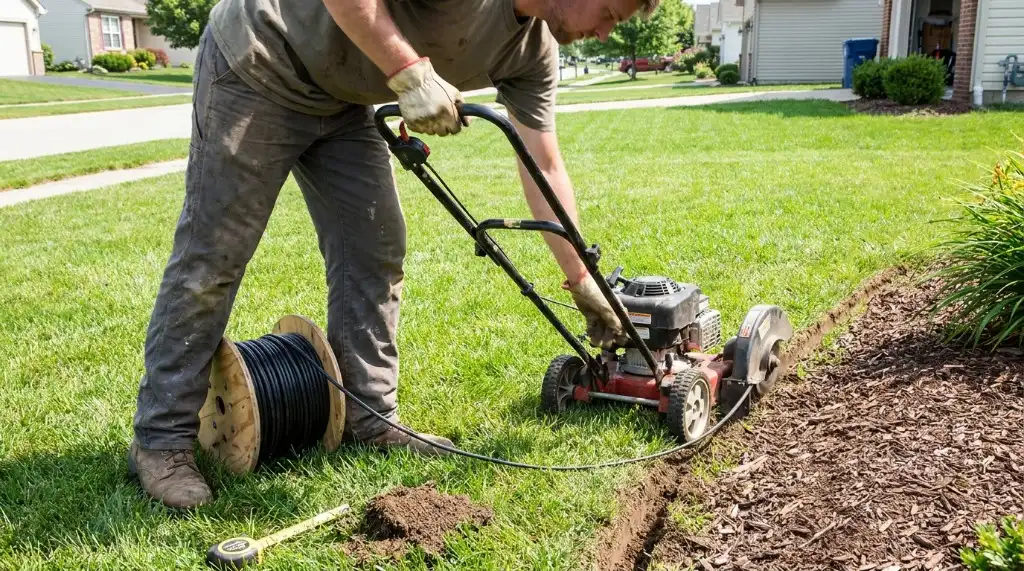
DIY installation saves money upfront if you have standard gardening tools. You can slice sod with a hand spade or a gas lawn edger. Homeowners who own power garden tools can prep soil using tools explained in our guide on rear tine tiller operation. A DIY project takes six to eight hours for a half-acre yard.
In-Ground Wired vs Wireless vs GPS Collars: Feature and Cost Comparison
In-ground wired systems cost $250 to $650. They deliver stable boundaries without dead zones. Wireless hubs cost $280 to $450. They create circular containment zones without digging. GPS collars cost $700 to $1,200 upfront. They require a $10 to $25 monthly fee for satellite tracking.
| Feature & Metric | In-Ground Wired Fence | Central Wireless Hub | GPS Satellite Collar |
|---|---|---|---|
| Hardware Cost | $250 to $650 | $280 to $450 | $700 to $1,200 |
| Monthly Fees | $0.00 | $0.00 | $10 to $25 / month |
| Boundary Flexibility | Custom shapes, excludes gardens | Circular radius only | Custom polygonal shapes |
| Signal Drift | Zero drift (fixed wire) | 3 to 6 feet drift indoors | 5 to 15 feet satellite drift |
| Heavy Tree Canopy Impact | No impact | Minor metal wall interference | High signal loss under dense woods |
| Installation Effort | High (trenching required) | Low (plug into wall outlet) | None (digital app mapping) |
Wired fences remain the top choice for suburban yards. A buried wire holds its boundary in heavy woods or clouds. In-ground transmitters broadcast a steady radio frequency signal at 7 kHz or 10 kHz along the loop. This frequency isolates the dog collar from neighbor pet fences and home Wi-Fi bands. Wireless units work best on flat quarter-acre lots where a circular zone fits. GPS collars like Halo or SpotOn excel on rural properties larger than five acres where burying thousands of feet of copper wire costs too much.
Hidden Expenses That Inflate Your Final Bill
Hidden expenses add $150 to $500 to a basic fence project. These costs include driveway saw cuts, surge protectors, extra collars, and batteries. Budget for these items before buying equipment.
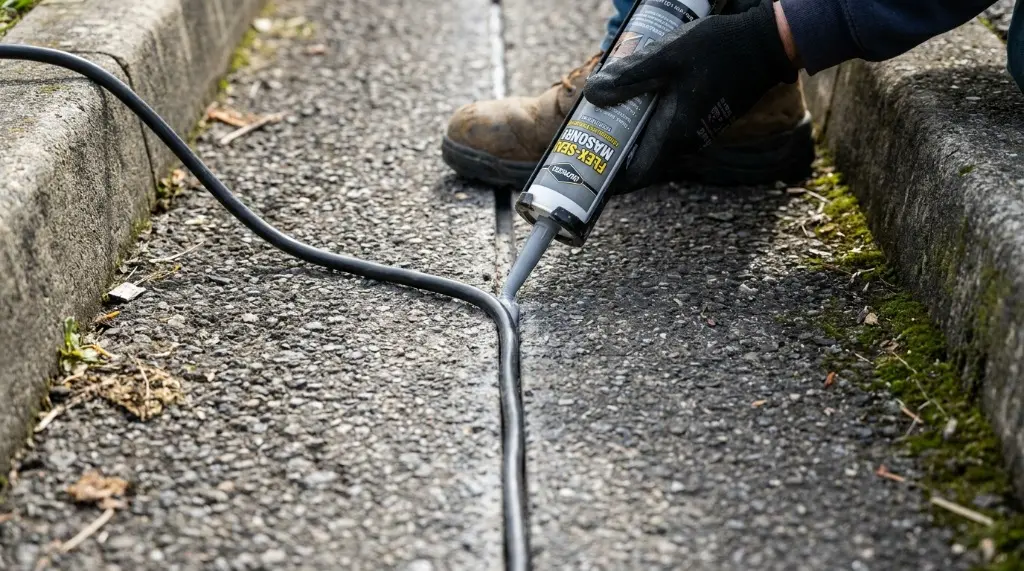
Driveway crossings present the biggest hurdle during installation. Never leave copper wire exposed on top of pavement. Cut a 3/8-inch deep groove with a diamond masonry blade. Push the wire into the groove. Seal it with flexible masonry sealant. A saw rental and sealant add $60 to $120 to your project.
A dedicated lightning surge protector protects your indoor transmitter from voltage spikes. Lightning hitting a lawn sends high voltage down copper wire into your transmitter. A surge protector and an eight-foot ground rod cost $45 to $75. This setup routes power surges into the dirt before they melt your system.
Collar batteries create ongoing costs. Many budget collars use disposable batteries that cost $15 to $22 each. Dogs that test boundaries often deplete batteries every three months. This habit costs $60 to $90 per dog each year. Buying rechargeable receiver collars removes this ongoing cost.
The 20-Gauge Wire Failure Trap: Why Gauge Thickness Dictates System Lifespan
Factory kits include thin 20-gauge wire with cheap vinyl jackets. This wire cracks and rots within two years. Upgrade to 14-gauge solid copper wire with thick polyethylene insulation. It stops ground rot, resists shovel nicks, and lasts over twenty years.
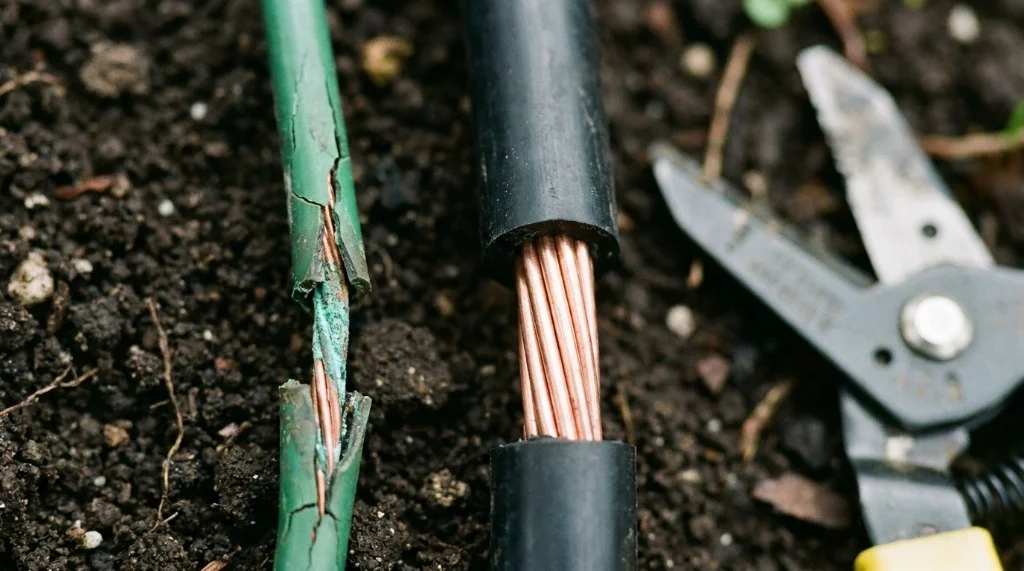
Brands include thin wire to keep kit prices under $300. Standard 20-gauge wire has insulation only twenty mils thick. Winter frost cycles stretch and snap this thin wire in the soil. Garden spades and lawn aerators cut thin vinyl. Once water enters, damp soil turns copper strands into green dust within months.
Pros install 14-gauge solid copper wire with sixty-mil thick high-density polyethylene (HDPE) jackets. Solid copper carries radio signals for miles without signal drop. The thick jacket blocks water, tree roots, and rodents. Upgrading wire on a half-acre yard costs $70 to $120 extra. It saves hours of work hunting for broken wire.
Best Dog Fence Systems and Equipment to Buy in 2026
Reader Disclosure: This section contains affiliate links. If you purchase equipment through these links, we earn a commission at no extra cost to you. We recommend verified, field-tested containment gear built for durability and pet safety.
Reliable containment gear prevents signal dropouts and false collar corrections. These six field-tested products match specific property sizes, terrain layouts, and budgets.
1. Best Overall In-Ground System: PetSafe YardMax In-Ground Dog Fence Kit
The PetSafe YardMax In-Ground Fence Kit pushes the correction zone past the boundary wire toward the property line. This design grants pets full access to the inner yard edge without premature warning beeps. The kit features a waterproof rechargeable collar with five correction tiers, tone modes, and enough transmitter power to cover ten acres with additional wire spools.
2. Best Heavy-Duty Large Property System: SportDOG Brand In-Ground Fence (SDF-100C)
Built for large acreage and stubborn hunting dogs, the SportDOG SDF-100C In-Ground System handles up to one hundred acres of containment wire. The collar is waterproof down to twenty-five feet. It offers strong correction levels, built-in surge protection, and batteries that last two months per charge.
3. Best Plug-and-Play Wireless Hub: PetSafe Stay & Play Wireless Fence
If you rent your home or want zero trenching labor, the PetSafe Stay & Play Compact Wireless Fence sets up in thirty minutes. Plug the base station into any wall outlet. It broadcasts a circular boundary covering up to three-quarters of an acre (210 feet across). The collar recharges in two hours and fits dogs over five pounds.
4. Essential Wire Upgrade: Extreme Dog Fence 14-Gauge Solid Core Direct-Burial Wire
Installing heavy Extreme Dog Fence 14-Gauge Solid Copper Boundary Wire protects containment loops against soil rot for decades. The solid copper core carries strong radio frequencies across large properties. Its sixty-mil high-density polyethylene jacket resists ground frost, soil moisture, and lawn aerator spikes.
5. Must-Have Diagnostic Tool: Underground Boundary Wire Break Locator & Cable Tester
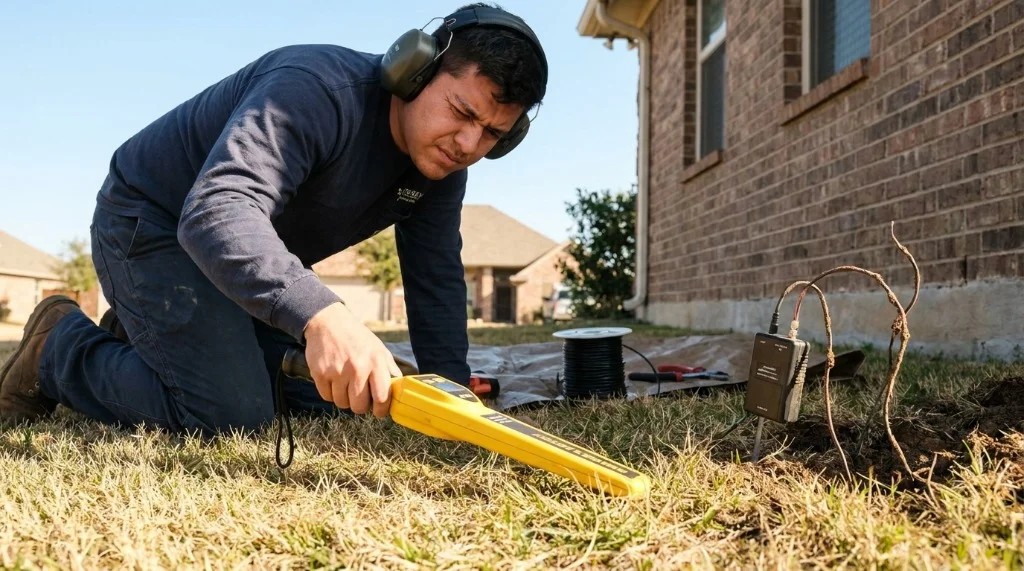
A severed boundary cable triggers a continuous loop alarm on your wall transmitter. Connect an Underground Boundary Wire Break Locator Kit to trace the break without digging up the lawn. The battery transmitter sends a pulsed tone through the buried wire. Sweep the receiver wand over the grass until the tone cuts out. That dead spot shows the exact location of the cut.
6. Weatherproof Splicing Kit: 3M Scotchlok DBY Direct Bury Splice Connectors
Regular wire nuts corrode underground in wet soil. Secure all boundary loop connections using 3M Scotchlok DBY Direct Bury Silicone Splice Kits. Each piece features a snap lock terminal inside a gel capsule. The silicone sealant encapsulates bare copper conductors. This barrier blocks moisture, garden fertilizers, and acidic soil minerals.
Step-by-Step DIY Installation Plan That Prevents False Shocks
A solid DIY setup requires planning your loop route. Twist lead wires to cancel signals, cut a two-inch turf slit, and test collar response with a test light tool. This routine stops accidental shocks on walkways and patio doors.
Running an unshielded single boundary wire across a patio door or sidewalk triggers collar shocks whenever your pet leaves the house. Twist the outgoing and returning wires together at ten to twelve turns per foot across human walkways. These opposing radio signals cancel out. Your dog walks across the twisted span without warning beeps or corrections.
Bury perimeter wire one to three inches below the turf. You do not need a wide trench. Use a gas lawn edger or a flat spade to cut a narrow slit in the grass. Push 14-gauge wire to the bottom of the slit with a paint stick to protect the jacket. Press the sod closed with your boots. Check wire continuity with tools explained in our guide on test light vs multimeter.
If you route wire past big trees, watch for shallow root systems. Never cut structural tree roots thicker than two inches. Review our best practices for protecting tree health during yard excavations to keep your shade trees thriving.
Dog Training Protocol: Preventing Boundary Panic and Re-Entry Shocks
Boundary training takes fourteen days on a leash. It covers visual flag drills, audio beeps, and mild static correction. Without proper training, a scared dog bolts past the wire and gets locked out by boundary shocks.
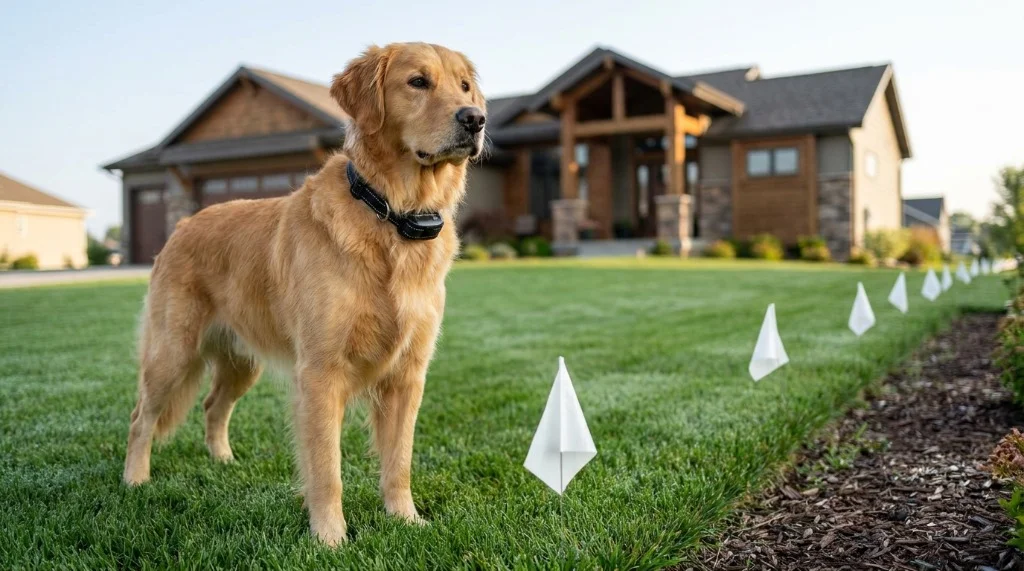
Set the collar to tone-only mode for the first four days. Fit the collar with short contact prongs for short-haired dogs or long stainless steel contact prongs for thick double coats to ensure skin contact without friction sores. Walk your dog on a ten-foot leash near the white boundary training flags, spaced every eight to ten feet along the turf perimeter. Whenever the collar beeps within three feet of a flag, pull your dog back toward the center of the yard and award a high-value treat. Your dog learns that the warning beep means retreat.
Turn on the lowest static level during days five to eight. Walk your dog toward the flags to let it feel a mild tickle. Guide the dog back to the safe yard area immediately. The dog connects the warning beep to the physical sensation. This reinforces boundary respect without causing fear.
Re-entry lockout happens when a dog chases prey past the wire at full speed. Once outside, the dog cannot return because the wire shocks it from the outside. Systems like PetSafe YardMax solve this problem. They limit the correction field to a defined strip. Dogs cross back into their yard without correction.
Frequently Asked Questions About Invisible Dog Fence Costs
Can an invisible dog fence keep coyotes and stray dogs off my yard?
No. Invisible fences only stop animals wearing programmed collars. Stray dogs, coyotes, and wild animals enter your yard freely without feeling any shock. If you need physical barriers to exclude deer or predatory animals, pair your system with an external boundary like our fishing line deer fence or compare installation costs for a traditional wood fence.
Can I attach invisible fence wire directly to a wooden or deer fence?
Yes. Fasten wire to an existing wood fence or chain link barrier with zip ties or cable staples. Mounting wire a few inches off the ground stops dogs from digging under fences. It also skips trenching work.
Does an invisible electric fence lower home insurance rates?
No insurance company offers discounts for invisible dog fences. Insurers view wood or metal fences as physical property upgrades. Invisible fences rely on collar batteries and training that can fail during storm outages.
How do I find a buried wire break without hiring a pro?
Disconnect both boundary wires from your garage transmitter. Attach an inexpensive RF wire break locator to one wire and an earth ground rod. Walk along your yard with the handheld receiver wand. The speaker tone cuts out right over the wire break.