How Long Can a Car Battery Last: Climate Lifespan Data, Sulfation Traps, and Testing Limits

A standard car battery lasts between three and five years under normal road conditions. Knowing how long can a car battery last depends on local climate, daily driving habits, and charging health. Extreme summer heat cuts life down to two or three years in southern states. Regular voltage tests and clean cable clamps keep car power steady. Check your vehicle group size in our searchable car battery size database of 2,780 vehicle models.
Most drivers replace batteries only after a morning no-start. Learning the wear cycle helps you swap an old pack before bad plates strand you on the road.
Average Lifespan of a Car Battery: Standard Flooded vs AGM Chemistries
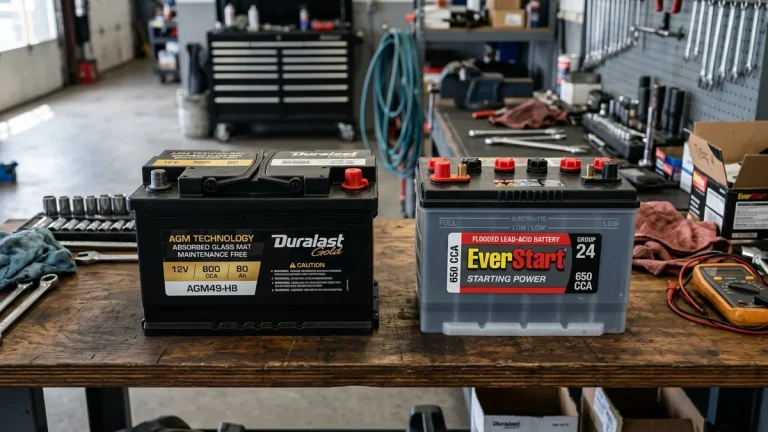
A conventional flooded lead-acid car battery lasts three to five years, while an Absorbent Glass Mat battery lasts five to seven years. Flooded units lose water and shed plate paste under high heat. AGM packs hold liquid acid inside glass fleece mats. This design stops plate wear, resists road vibration, and supports heavy computer loads.
Car makers choose battery types based on electrical draw. Standard flooded batteries give dependable starting power for base models. These packs use liquid acid around positive lead plates and negative lead sponges.
Cars with auto start-stop and heated seats need Absorbent Glass Mat batteries. AGM units deliver strong cycle life. They survive deep power drops without fast voltage loss. Review our technical teardown on AGM vs lead acid car batteries to inspect internal plate designs.
Climate Lifespan Map: Why Florida and Arizona Batteries Die Twice as Fast as Northern Packs
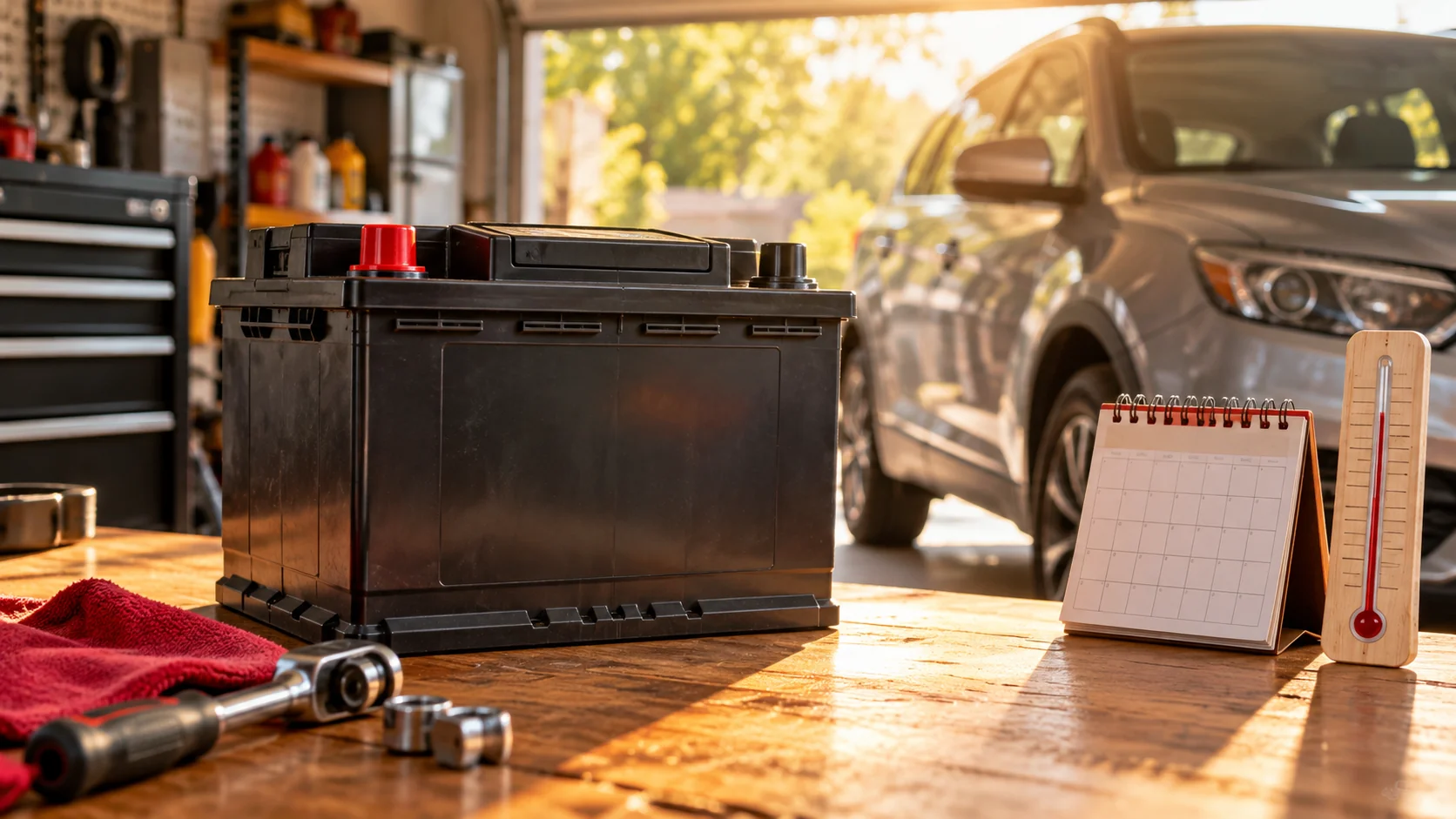
Car batteries die in hot southern states within two to three years because high heat speeds up internal grid corrosion and water loss. Engine bay heat often tops 140 degrees Fahrenheit. Chemical wear doubles for every 18 degrees of temperature rise. This internal plate damage occurs months before winter cold exposes weak cranking power.
Many drivers think winter cold destroys car batteries. Freezing air only reveals damage caused by summer heat. Frigid winter cold thickens motor oil and doubles starter load. It also cuts battery cold cranking amps in half. The weakened battery fails on cold mornings because summer heat already degraded the lead grids.
| Region / Climate Zone | Representative Locations | Average Lifespan | Primary Failure Mechanism | Recommended Test Interval |
|---|---|---|---|---|
| Extreme Heat / Sunbelt | Florida, Arizona, Texas, Las Vegas | 2 to 3 Years | Grid corrosion and electrolyte loss | Every 6 months after year two |
| Moderate / Temperate | North Carolina, Ohio, Pennsylvania | 3 to 5 Years | Normal plate wear and active paste loss | Annually after year three |
| Cold / Northern | Minnesota, Montana, Canada | 4 to 6 Years | Sulfation and diminished winter CCA | Before each winter season |
Drivers in desert states or coastal Florida must treat batteries as wear parts with a strict 30-month limit. Checking terminal clamps and watching acid levels extends pack life. Review our diagnostic guide on signs a car battery is dying to catch weak cells early.
The Short-Trip Sulfation Trap: How 10-Minute Commutes Destroy Lead Plates
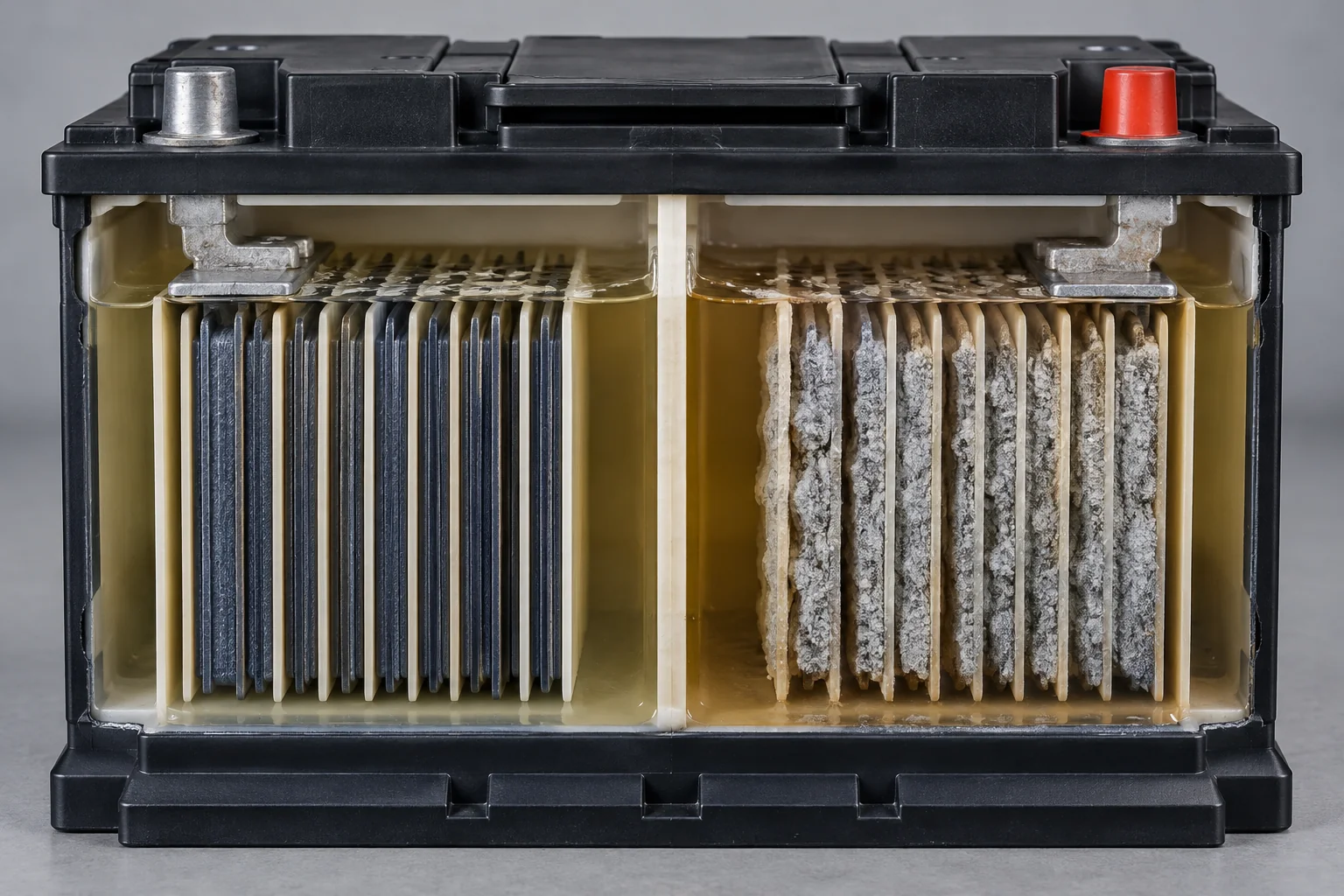
Short trips under 15 minutes harm car batteries. Alternators cannot replace the power drained during engine cranking. Car starters pull 150 to 250 amps of electrical power. Alternators need 20 minutes of steady highway driving to refill this reserve. Short drives leave batteries low on power. This cycle causes hard lead sulfate crystals on the plates.
When a car battery sits below a full charge, soft lead sulfate coats the internal plates. If you drive on the highway, the alternator turns this coating back into active lead and sulfuric acid.
Leaving a battery at 75 percent charge turns soft coating into hard crystals. These dense deposits reduce plate surface area and choke electrical flow. Review our guide on what drains a car battery when off to eliminate phantom power draws.
How to Read Car Battery Date Codes: Decode Manufacture Stamps Before Buying
Car battery date codes reveal the exact build month and year stamped on the plastic case or shipping label. A letter indicates the month from January through December. A nearby number shows the production year. Buying a fresh pack built within the last three months guarantees full plate life and maximum starting amps.
Battery makers use standard Battery Council letter and number stamps. The letter code begins with A for January and B for February. It runs in order through M for December. Makers skip the letter I so buyers do not confuse it with the number one.
Check the case stamp on retail batteries with these four inspection steps:
- Find the stamped code on the plastic top cover or the round side sticker.
- Read the first letter to find the month, where D indicates April.
- Read the next number to confirm the build year, where 4 indicates 2024.
- Pass on any shelf battery stored longer than six months without a fresh charge.
State of Health vs State of Charge: Testing Battery Life with Multimeters and Load Testers
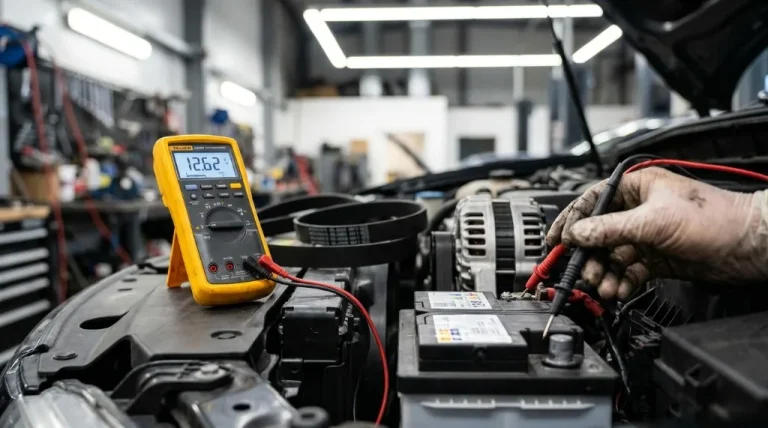
State of charge shows current power levels, while state of health measures permanent plate wear and true cranking strength. A failing battery can show 12.6 volts with no load, yet drop below 9 volts when turning the starter. Validating pack condition needs resting voltage tests and 15-second carbon pile load checks.
Testing battery health starts with voltage checks across terminal posts after an overnight rest. A fully charged lead-acid battery reads 12.60 to 12.66 volts DC at room temperature. A reading of 12.20 volts shows a 50 percent drop that needs immediate charging.
Run these garage diagnostic checks before you buy a replacement pack:
- Measure resting voltage across posts with a digital meter to check base charge.
- Remove surface charge by turning on high beams for 15 seconds after driving.
- Apply a carbon pile load equal to half the cold cranking amp score for 15 seconds.
- Confirm that terminal voltage stays above 9.60 volts DC at 70 degrees Fahrenheit under load.
Check charging system power with a reliable meter like the Fluke 87V Multimeter. For standard home testing, verify post voltage with the AstroAI Digital Multimeter. If voltage drops while the engine runs, inspect the charging system using our guide on dead battery vs bad alternator tests.
Frequently Asked Questions About Car Battery Lifespan
How long do car batteries last in Florida, Texas, and Las Vegas?
Car batteries in Florida, Texas, and Las Vegas last two to three years on average. Hot summer days push engine bay temperatures past 140 degrees Fahrenheit. This extreme heat boils off water inside the liquid acid and corrodes positive lead grids. The damage causes sudden no-start failures without warning lights.
How long can a car battery last without charging or being driven?
A connected car battery lasts two to four weeks without driving before computer draw drops power below starting levels. Car alarm modules and remote receivers pull small currents day and night. Disconnected batteries stored in cool spaces hold starting voltage for three to six months before needing a top-up charge.
How many years should a car battery last in cold climates like Canada?
Car batteries in northern states and Canada last four to six years on average. Cold temperatures preserve lead plate grids by slowing chemical corrosion. Northern drivers must check charging health before winter hits. Freezing weather cuts chemical speed and demands full cranking current to turn cold motor oil.
What is the lifespan of a hybrid car 12-volt auxiliary battery?
A hybrid vehicle 12-volt auxiliary battery lasts three to five years, similar to standard car batteries. The auxiliary unit boots computer modules and security sensors rather than turning a heavy starter motor. These sealed AGM packs wear out over time from small charge cycles and vehicle sleep loads.
How long can a car battery last on accessory mode with the radio on?
A healthy battery runs a car radio and dash screens for 45 to 90 minutes before power drops below safe starting levels. Running heavy loads like heater fans or headlights drains the pack in 20 minutes. Keep the engine running if you plan to use electronics for long periods.
How do you know if a car battery is bad or just discharged?
A discharged battery takes a full charge to 12.6 volts and holds over 9.6 volts during a load test. A bad battery shows high internal resistance, rejects charging current, or drops below 9 volts under starter load. Follow our practical tutorial on how to test a car battery with a multimeter.