Car Battery Finder: Match Your Exact BCI Group Size, CCA, and Chemistry Without Fitment Mistakes

Match your vehicle to the right BCI group size, cranking amps, and chemistry with a direct battery finder checklist. Buying the wrong size leads to blown fuses, loose trays, and dead cells. Check your vehicle group size directly in our searchable car battery size database of 2,780 vehicle models.
Parts store lookup menus check only basic outer fit. They miss alternator charge maps, base ledge locks, and computer sensor resets. Basic driveway checks stop costly electrical faults.
How to Use a Car Battery Finder: The 5 Physical Fitment Checks Parts Store Dropdowns Miss
A car battery finder pairs your car to a set case size, post layout, and cranking amp score. Store tools miss tray base lips, cable reach, hood room, and computer sensor resets. Direct checks at home keep the case tight, cables safe, and car power running well.
Parts books match cars by year, make, and trim. Factory options alter battery needs between car trims. Cold weather packs often take larger battery cases. A fast check in your driveway stops you from buying the wrong battery.
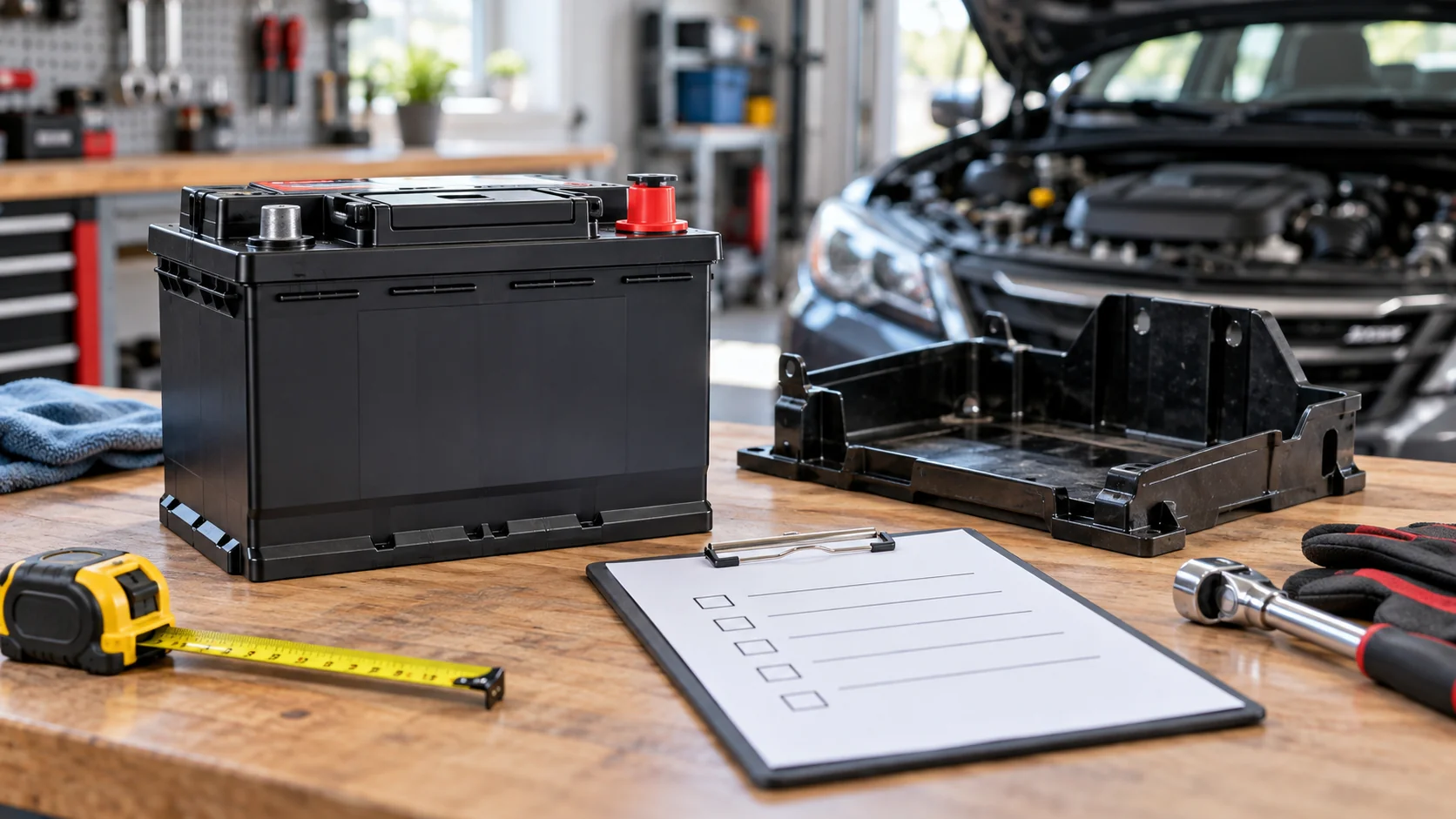
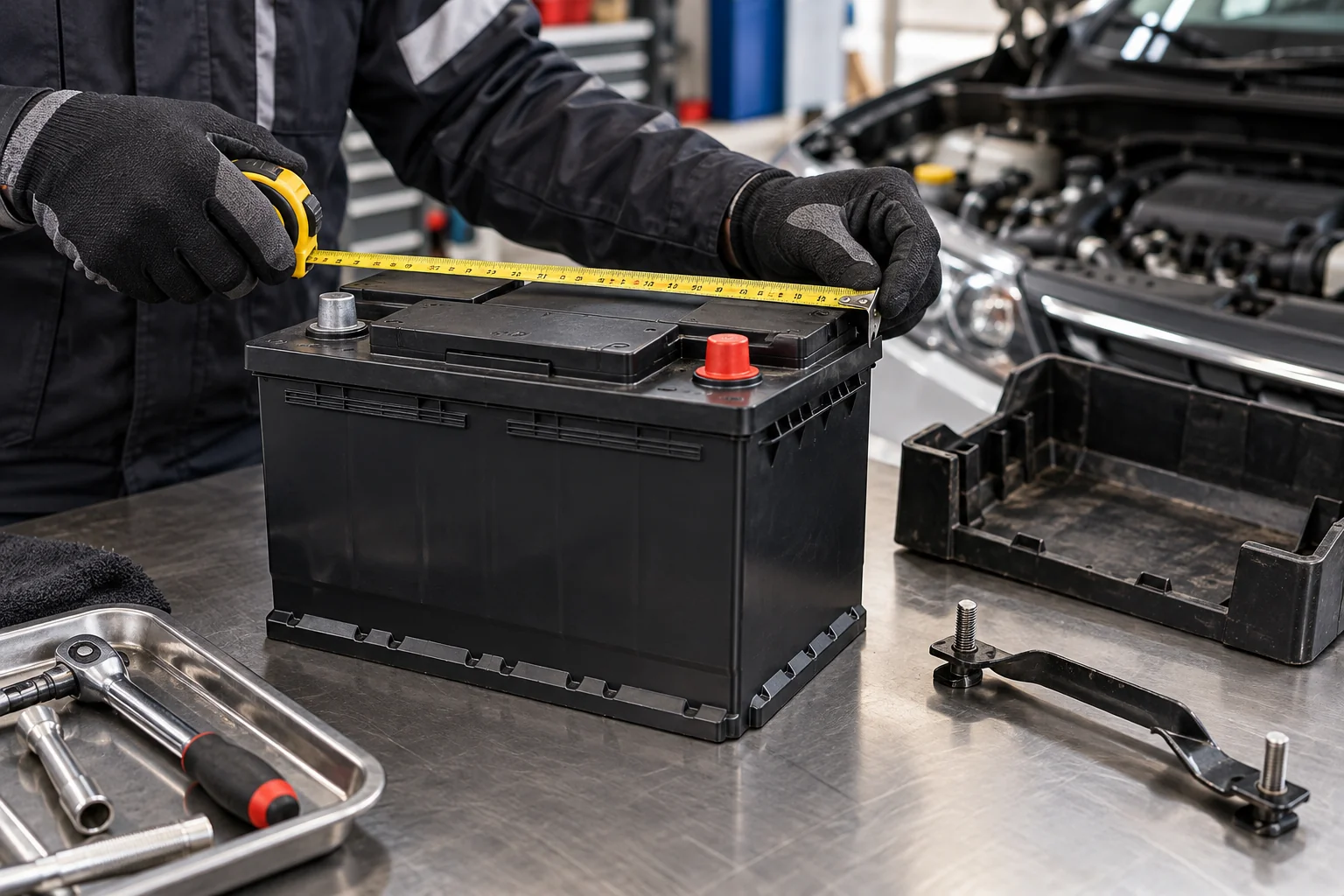
Verify mounting clearances and electrical needs before you buy a new pack:
- Measure the flat base of the metal tray. Check clear space below the closed hood.
- Check if your car uses a top crossbar clamp or a bottom ledge wedge block.
- Confirm if the positive terminal post sits on the left or the right side.
- Match or beat the factory cold cranking amp score in your owner’s manual.
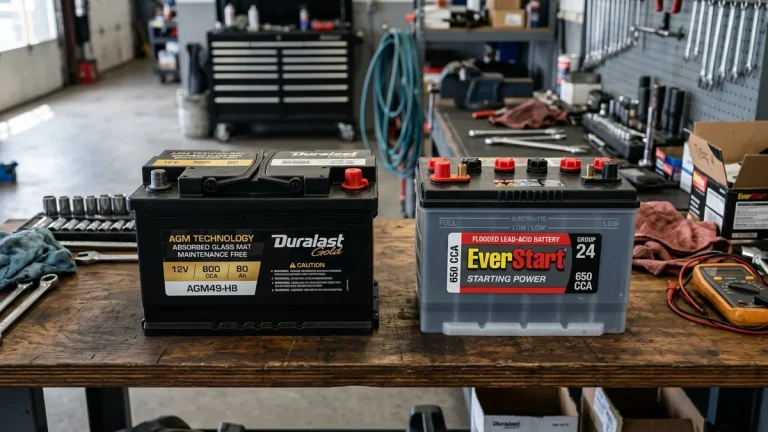
- Check if your car takes a flooded pack or an Absorbent Glass Mat unit.
Car Battery Group Sizes Explained: Decoding BCI Dimensions, Terminal Posts, and Hold-Down Lips
Battery Council group sizes set standard outer dimensions and post layouts for car batteries. Each group code gives the exact length, width, and height to fit the tray without hitting the hood. Group numbers rule physical fit. Separate ratings measure cold cranking amps and reserve run time.
Standard codes like Group 35, Group 24, and Group 48 set outer case sizes. Two packs with the same group code can give varied cranking amps and run times based on internal lead plate thickness.
Terminal post styles also differ across battery groups. Top posts feature round lead lugs on the top lid. Side terminals use threaded bolt sockets found on General Motors cars. Low European posts sit flush with the top lid to clear low hoods. Small Japanese cars use thin pencil posts.
Thick lead plates add real weight to the battery box. Review our workshop measurements on how much a car battery weighs to see typical pack weights.
Master BCI and DIN Group Size Chart: Dimensions, Terminal Layouts, and OEM Vehicle Matches
Car makers build battery trays to match Battery Council and German DIN sizes. Common sizes like 35, 24F, 48, and 94R fit most modern sedans, crossovers, and pickup trucks. Exact case sizes, post spots, and base lips determine if a fresh pack mounts tight without extra shop mods.
| BCI Group | DIN Code | Dimensions (L x W x H) | Terminal Layout | Typical CCA | Vehicle Lookup Link |
|---|---|---|---|---|---|
| Group 35 | – | 9.06 x 6.88 x 8.88 in (230 x 175 x 225 mm) | Top Post, Positive Right | 550 – 650 | Subaru Outback Battery Specs |
| Group 24F | – | 10.30 x 6.80 x 8.88 in (260 x 173 x 225 mm) | Top Post, Positive Right | 650 – 750 | Toyota Tacoma Battery Specs |
| Group 48 | H6 / L3 | 11.00 x 6.90 x 7.50 in (278 x 175 x 190 mm) | Recessed, Positive Right | 680 – 760 | Ford F-150 Battery Specs |
| Group 94R | H7 / L4 | 12.40 x 6.90 x 7.50 in (315 x 175 x 190 mm) | Recessed, Positive Right | 750 – 850 | Jeep Wrangler Battery Specs |
| Group 51R | – | 9.38 x 5.12 x 8.75 in (238 x 129 x 223 mm) | Top Post, Positive Right | 450 – 500 | Honda Civic Battery Specs |
| Group 86 | – | 9.06 x 6.81 x 8.00 in (230 x 173 x 203 mm) | Top Post, Positive Left | 525 – 650 | GM Compact Cars Database |
Inspect your vehicle tray for bottom hold-down lips. European cars use a standard B13 base ledge with lips on four sides. If a new pack lacks this lip, the clamp cannot lock the case down.
The Reversed Terminal Trap: Why Group 24 vs 24F Mistakes Blow Fusible Links and Fry Alternator Diodes
Reversing battery cables sends power the wrong way into car modules. This fault instantly blows the main 100-amp to 150-amp fuse link and burns out alternator diodes. Group 24 and Group 24F share equal outer sizes, but have positive and negative posts on opposite sides of the case.
The letter F indicates reversed terminal spots. On a standard Group 24 battery, the positive post sits on the top left corner. On a Group 24F battery, the positive post sits on the top right corner.
Car battery cables have no slack. Factory cables reach only the right terminal post. Never pull tight cables across a battery lid. Pulling cables cracks lead post seals and causes acid leaks.
Reversed terminals push reverse power into car computer chips. Alternator diodes blow out fast under backward power. Always verify terminal post layout before you tighten the hold-down bracket.
AGM vs Flooded Battery Selection: Stop Acid Stratification and Premature Failure in Start-Stop Systems
Vehicles with auto start-stop engines need Absorbent Glass Mat or Enhanced Flooded batteries. Putting a standard flooded battery in a start-stop vehicle causes fast acid settling and plate damage. This error ruins the pack within six months. Matching the original battery type protects car computers and stops charge faults.
Vehicles with start-stop engines shut off the engine at traffic lights. Car computers, cabin fans, and headlights draw power straight from the 12-volt battery while stopped. Lifting off the brake pedal needs quick high amps to turn the starter.
Standard flooded batteries fail under heavy engine restarts. Acid drops away from water during short trips and sinks to the bottom of the case. This acid layer ruins the bottom lead plates. AGM batteries lock acid inside glass mats. This setup stops acid from settling and fights road vibration.
You can safely upgrade a flooded car to an AGM pack. Never downgrade a factory AGM system to a flooded battery. If your car loses power on the road, read our guide on why car batteries die on the road.
Bigger Battery Upgrades: How to Swap from Group 35 to 24F or 27F Without Alternator Overload
Upgrading to a larger battery group size gives extra cranking amps and reserve run time without harming car alternators. Alternators replace only the power drained during engine starts. A larger battery runs cooler and lasts longer under continuous electrical loads from lights, dash cameras, and sound gear.
Vehicles with big winches or camping gear need more battery storage. Toyota Tacoma owners often swap the small stock Group 35 pack for a larger Group 24F battery. This change adds over 100 Cold Cranking Amps.
Check these three installation points before fitting a larger battery box:
- Take out the plastic tray sleeve. Confirm the metal base tray holds the longer case.
- Check clear hood space with modeling clay on the posts to verify half an inch of room.
- Make sure the factory hold-down bar and J-bolts clamp the wider case securely.
A weak battery makes electrical noise that disrupts engine sensors. Review our technical guide on how a weak battery causes rough engine running to spot early charging faults.
Battery Management System (BMS) Calibration: How to Reset Ford, BMW, and Audi Charging Algorithms
Modern vehicles use smart battery sensors to track battery age and steadily raise alternator charging output. Installing a new battery without a sensor reset causes the car computer to overcharge the fresh pack. This high voltage boils liquid electrolyte and cuts life short. Always calibrate the battery sensor right after replacement.
As an automotive battery gets old, internal plate resistance rises. The engine computer lifts alternator output to push power into aged plates. Installing a fresh battery without a reset leaves that high voltage active. This extra heat boils fresh plates.
Run these make-specific sensor reset steps after you complete the installation:
- On Ford trucks, turn the ignition key to the ON position with the engine off. Flash the high-beam lights five times, then press the brake pedal three times until the battery lamp flashes.
- On BMW, Audi, and VW cars, plug in an OBD-II scan tool to register the new battery size and clear the old cycle counter.
- On other car brands, review our guide on how to reset your car computer safely using standard garage tools.
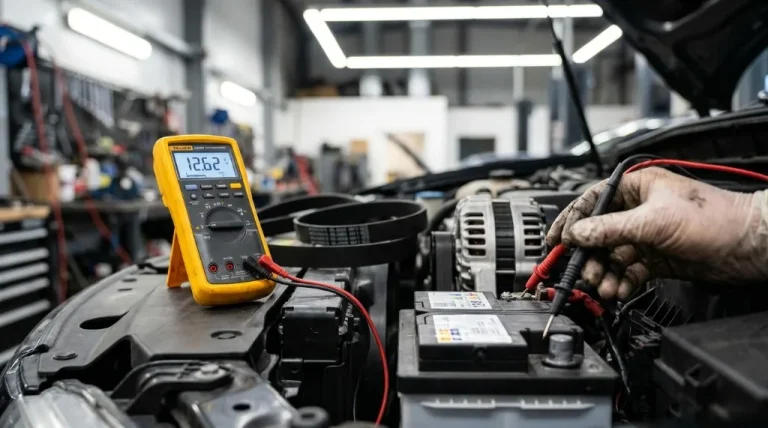
Check alternator charging voltage with a pro meter like the Fluke 87V Multimeter. For standard home checks, use the AstroAI Digital Multimeter.
Frequently Asked Questions About Car Battery Fitment
What is the difference between Group 86 and Group 35 batteries?
Group 86 and Group 35 batteries share similar length and width specs. Group 86 measures 8.00 inches tall with the positive post on the left. Group 35 measures 8.88 inches tall with the positive post on the right. Factory battery cables will not reach across the case if you swap them.
Who makes Costco Interstate car batteries?
Clarios builds Interstate car batteries sold at Costco warehouse stores. Clarios makes each pack to official Battery Council standards. Costco sells both flooded and AGM models backed by full replacement warranty coverage.
Can I install a battery with higher CCA than my manual specifies?
Yes. A higher Cold Cranking Amp score gives stronger engine starts in cold winter weather. The car starter motor pulls only the exact amps its coils need. Extra cranking amps give safe buffer room without stressing factory wires.
Can a car run without a battery connected?
Modern cars cannot run safely without an automotive battery connected. The battery acts as an electrical shock absorber. Disconnecting the battery while the engine runs triggers voltage spikes over 18 volts. These sudden voltage spikes destroy delicate car chips. Read our analysis on whether a car can run without a battery.
What voltage should a fresh car battery show before installation?
A healthy 12-volt car battery reads 12.60 to 12.66 volts DC at room temperature before installation. A test reading of 12.45 volts indicates a 75 percent charge level. Never install a battery that reads under 12.40 volts without charging it first. Refer to our guide on normal car battery voltage specifications.