How Much Does a Car Battery Weigh? (Full Size Chart)

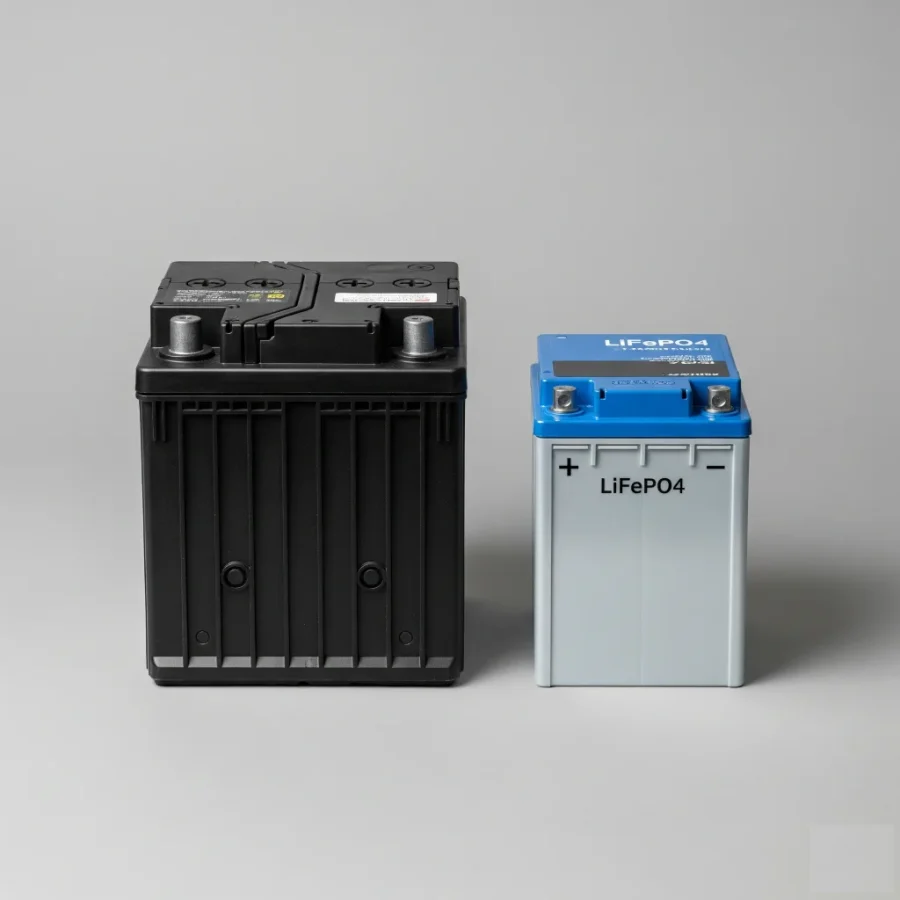
A standard 12-volt car battery weighs between 30 and 50 pounds (14 to 23 kilograms). Small cars use lighter Group 51R batteries that weigh about 28 pounds. Large pickup trucks and diesel SUVs need Group 65 or Group 49 batteries that top 50 pounds. Heavy lead plates and liquid acid make up over 90 percent of this total weight.
I have worked as an ASE Master Technician for fifteen years. In that time, I have lifted thousands of batteries out of tight engine bays. Battery weight tells you a lot about electrical life. Inside each standard case, lead plates react with acid to create starting power. More lead gives you higher Cold Cranking Amps (CCA) and longer reserve run time. However, that extra lead also adds dead weight over your front axle.
Car Battery Weight by BCI Group Size (Full Specifications Table)
Battery Council International (BCI) group sizes set the physical case dimensions, terminal spots, and total weight ranges for vehicle batteries. A small Group 51R battery for a Honda Civic weighs about 28 pounds. An oversized Group 49 battery for a luxury German car tips the scales at 54 pounds.
You must match your factory BCI group size when you buy a new battery. The hold-down clamp, heat shield, and battery tray depend on these exact case sizes. If you install an undersized battery, you save ten pounds of vehicle weight. However, you lose critical cranking power on freezing winter mornings.
| BCI Group Size | Average Weight (lbs) | Average Weight (kg) | Typical Vehicle Fitment | Cold Cranking Amps (CCA) |
|---|---|---|---|---|
| Group 51R | 26 to 29 lbs | 11.8 to 13.2 kg | Honda Civic, CR-V, Fit, Nissan Micra | 450 to 525 CCA |
| Group 35 | 32 to 38 lbs | 14.5 to 17.2 kg | Toyota Camry, RAV4, Subaru Outback, Nissan Altima | 550 to 650 CCA |
| Group 24 | 38 to 44 lbs | 17.2 to 20.0 kg | Toyota Tacoma, Lexus RX, Acura MDX | 600 to 750 CCA |
| Group 48 (H6) | 42 to 48 lbs | 19.1 to 21.8 kg | Chevy Silverado, Ford F-150, BMW 3-Series, VW Golf | 680 to 800 CCA |
| Group 65 | 45 to 54 lbs | 20.4 to 24.5 kg | Ford F-250, Ford Expedition, Lincoln Navigator | 750 to 880 CCA |
| Group 49 (H8) | 48 to 58 lbs | 21.8 to 26.3 kg | Audi Q7, BMW X5, Mercedes E-Class, RAM 1500 | 800 to 950 CCA |
| Group 31 (Commercial) | 58 to 68 lbs | 26.3 to 30.8 kg | Semi-trucks, heavy marine craft, diesel motorhomes | 900 to 1100 CCA |
Battery size lines up directly with engine displacement. A small four-cylinder engine turns over easily. Auto makers can install a light Group 51R battery in those cars. A large turbo-diesel engine needs huge turning force to start. It often uses two Group 65 batteries to spin the crankshaft. Engine size also sets your required fluid levels. When doing routine motor maintenance, check your factory crankcase specs with our engine oil capacity guide. When system voltage drops too low during starting, see how a weak battery causes engine misfires across your car sensors.
Flooded Lead-Acid vs. AGM: Why Newer Batteries Are Heavier
Absorbent Glass Mat (AGM) batteries weigh 3 to 7 pounds more than standard flooded batteries of the exact same physical size. This extra weight comes from dense glass fiber mats and thicker lead plates. Car makers use AGM units to handle the heavy demands of modern start-stop engines.
Standard flooded batteries submerge positive and negative lead plates in open liquid acid. Empty space surrounds these plates, which leaves room for fluid to slosh around. AGM batteries do away with loose liquid acid completely. Factory workers wrap thin glass fleece mats around pure lead plates under strong mechanical pressure.
This tight build creates clear performance gains. Tightly clamped plates survive rough road bumps three times longer than loose plates. The glass fleece holds concentrated acid, which packs more active weight into every cubic inch. AGM plates also use pure lead grids without antimony, which adds real metallic mass to the pack.
Never replace an AGM battery with a lighter flooded unit if your car uses an intelligent battery sensor. The computer charging plan expects the heavy internal build and low resistance of an AGM battery. A cheaper battery strains your charging system. If you suspect key-off accessories are pulling current while your car sits, test parasitic load with our car battery drain calculator. Learning about these loads also helps you see how long a battery lasts with the radio running while parked.
Chemical Mass Breakdown: What Inside a Battery Carries the Weight?
Solid lead parts make up 60 to 65 percent of car battery weight, liquid acid accounts for 28 to 32 percent, and the plastic case adds 5 to 7 percent. In a standard 40-pound battery, metallic lead plates account for 24 to 26 pounds of the total weight.
Every standard 12-volt car battery holds six two-volt cells linked in a row. Inside each cell, sponge lead plates sit right next to lead dioxide plates. A blend of water and sulfuric acid fills the rest of the cell volume.
| Component Part | Percentage of Total Mass | Weight in a 40-lb Battery | Material Composition |
|---|---|---|---|
| Lead Plates & Grids | 60% to 65% | 24 to 26 lbs | Sponge lead, lead dioxide, calcium-tin alloy |
| Liquid Electrolyte | 28% to 32% | 11 to 13 lbs | 35% sulfuric acid, 65% distilled water solution |
| Case, Cover & Partitions | 5% to 7% | 2 to 3 lbs | High-impact polypropylene thermoplastic |
| Lead Terminal Posts & Straps | 2% to 3% | 1 to 1.5 lbs | Solid cast lead alloy |
This high lead content explains why dead car batteries carry real scrap cash value. Metal scrap yards buy old automotive cores to melt down the lead plates inside. A standard car battery yields 20 to 25 pounds of clean, reusable lead. Scrap yards pay thirty to fifty cents per pound for scrap units. That means a single old core brings you eight to twelve dollars in cash. Retail parts stores charge a ten to twenty dollar core deposit to make sure you return your old core.
A completely dry battery with no acid weighs 8 to 14 pounds less than a full, ready unit. Never tip an old flooded battery on its side. Spilled acid burns your skin and destroys cotton clothing in seconds.
Standard 12V Starter Batteries vs. Electric Vehicle Traction Packs
A standard 12-volt car starter battery weighs between 30 and 50 pounds, while an electric vehicle (EV) traction battery pack weighs between 900 and 2,900 pounds (400 to 1,300 kg). The 12-volt battery runs low-voltage computers, while huge lithium traction packs supply drive power to the wheels.
Automakers place heavy EV battery packs low in the frame between the front and rear axles. This low mounting spot gives the car a low center of gravity. It keeps the vehicle steady in sharp turns, even with all that extra curb weight. The battery pack in a Tesla Model Y weighs about 1,060 pounds. A GMC Hummer EV uses a giant battery pack that weighs 2,923 pounds. That battery pack weighs more than an entire Honda Civic car.
| Vehicle Class & Model | Battery Technology | Gross Battery Weight | Energy Capacity |
|---|---|---|---|
| Gasoline Sedan (Toyota Camry) | 12V Flooded Lead-Acid | 38 lbs (17 kg) | 0.7 kWh (Auxiliary only) |
| Hybrid Drivetrain (Toyota Prius) | Lithium-Ion / NiMH Traction | 85 to 110 lbs (38 to 50 kg) | 1.3 kWh |
| Compact EV (Chevy Bolt EV) | Lithium-Ion NMC Traction | 947 lbs (430 kg) | 65 kWh |
| Midsize EV (Tesla Model 3 / Y) | 2170 / 4680 Cylindrical Cells | 1,060 lbs (480 kg) | 75 to 82 kWh |
| Full-Size EV Truck (Ford F-150 Lightning) | Pouch Cell Lithium-Ion Pack | 1,800 lbs (816 kg) | 131 kWh |
| Super-Truck EV (GMC Hummer EV) | Ultium Double-Stack Pack | 2,923 lbs (1,326 kg) | 212 kWh |
Electric cars still carry a small 12-volt auxiliary battery. This unit closes main high-voltage relays, powers safety flashers, and turns on car computer boards. If this low-voltage battery drops below ten volts, the entire EV stays shut down. Heavy traction packs also impact long-distance travel range and payload limits. If you are packing your vehicle for a long drive, estimate fuel and charging costs with our road trip cost calculator. To spot sudden power drops on the road, read our guide on battery dies while driving symptoms.
How to Safely Lift and Install a Heavy Battery Without Injury
Lifting a 45-pound lead-acid battery at arm’s length over a high truck fender puts harsh torque on your lower back. Always use a sturdy battery strap or post-clamp handle, plant your feet firmly against the bumper, keep your back straight, and turn with your feet.
Use these shop steps to lift and replace heavy vehicle batteries without back pain:
- Loosen the ten-millimeter clamp nut on the negative (-) terminal post first. Slip the cable clamp off and tuck it away from the post. Pulling the ground cable first prevents bright sparks if your ratchet touches bare body sheet metal.
- Clear away loose parts before you pull the unit. Modern engine bays hide batteries under plastic air ducts, cowl trays, and metal support bars. Unclip and move these parts out of your path.
- Unbolt the bottom hold-down clamp. Remove the long hold-down J-bolts or the bottom plastic wedge bolt with a socket wrench. Brush away loose dirt from the tray with a wire brush.
- Clamp on a proper lifting handle. Snap a strong battery strap onto the corner posts, or grip the case with a clamp tool. Lifting a wet, dirty battery case with bare hands leads to drops and broken plastic.
- Lift straight up using your leg muscles. Keep your elbows in close to your ribs. Lift the battery straight out of the tray until it clears the front core support before you take a step. Keep the battery upright so acid cannot seep past the vent caps.
When you swap batteries in modern computer cars, use a memory saver tool. This keeps your radio presets, clock time, and idle positions safe in computer memory. Check out our steps to reset a car computer without disconnecting battery cables.
If you also plan to rotate wheels or check suspension parts during your service session, verify factory fastener limits with our lug nut torque chart.
Never run your engine without a bolted battery. Running without a battery can ruin alternator diodes, as explained in our guide on whether a car can run without a battery.
Frequently Asked Questions About Car Battery Weight
How much does an empty car battery weigh without acid?
An empty car battery without acid weighs between 22 and 34 pounds. Liquid acid makes up roughly 28 to 32 percent of total battery weight. Pouring out acid saves little shipping weight, and draining acid breaks strict environmental rules.
Does a heavier car battery indicate higher quality?
Yes, weight points directly to lead plate thickness and build quality. Budget batteries use thin lead plates to cut two to four pounds of weight, but they lose Cold Cranking Amps and service life. Heavy commercial batteries pack more pure lead, which gives you longer reserve power.
How much scrap lead can I recover from an old car battery?
A standard 40-pound passenger car battery yields between 20 and 26 pounds of clean scrap lead. Scrap metal yards pay cash for old lead cores based on this weight.
Why are AGM batteries heavier than standard batteries of the same size?
AGM batteries pack dense glass fiber mats tightly between lead plates. They leave no empty cavities inside the case. This compact build adds three to seven pounds of weight compared to flooded batteries of the same physical size.