How Long Can You Finance a Used Car? Typical Loan Terms Explained

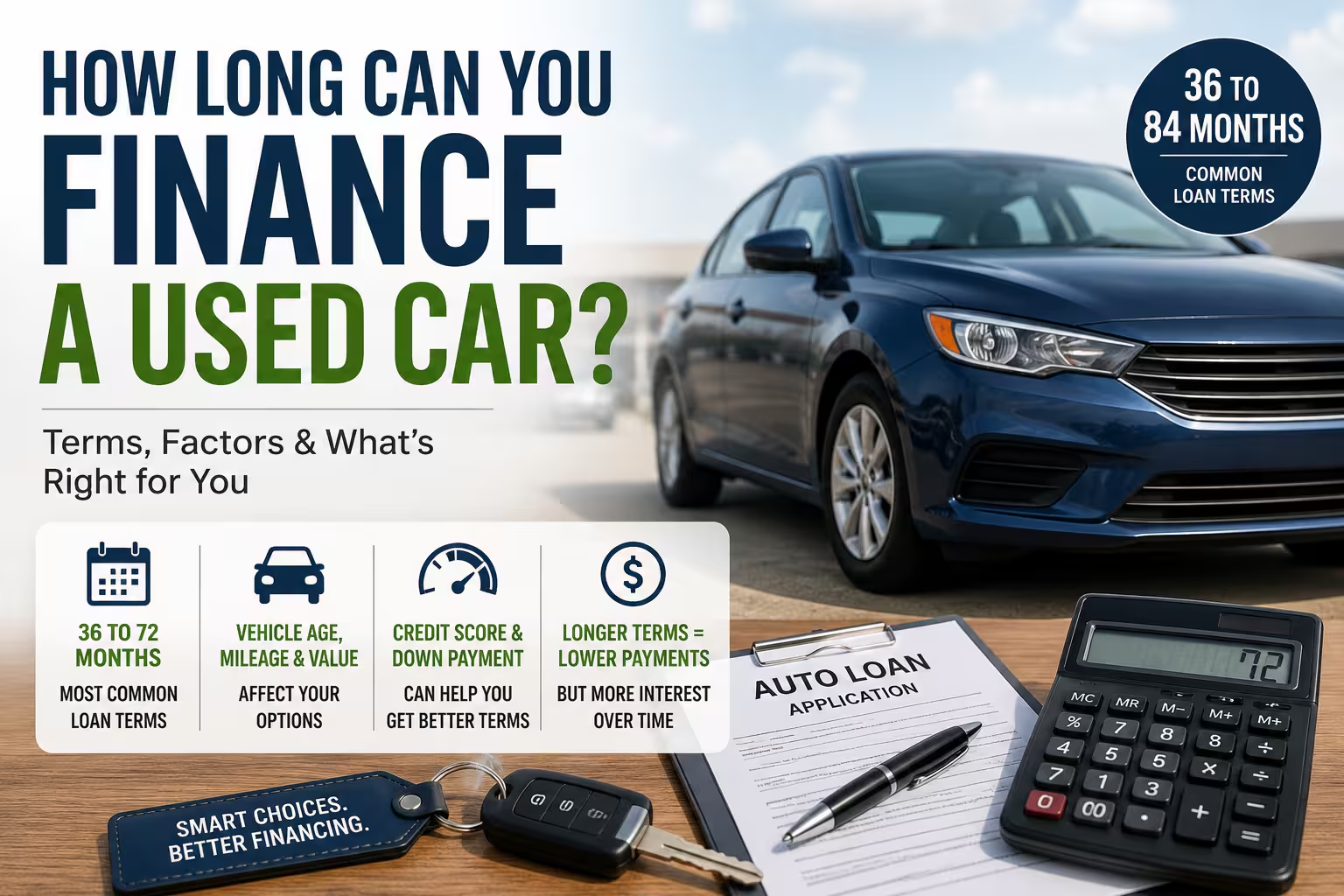
You can often finance a used car for 36 to 72 months. Some lenders offer 84-month terms, and a few may go longer, but the maximum depends on the car, the lender, and your finances.
The longest loan you can get is not always the best one to choose. A longer term can lower your monthly payment, but it can also increase the interest you pay and keep you owing more than the car is worth for longer.
How Long Can You Finance a Used Car?
Most used-car buyers will see loan terms between three and six years, or 36 to 72 months. An 84-month loan may be available for some newer used vehicles, especially when the buyer has strong credit and the car has a high enough value.
There is no single maximum that applies to every used car loan in the United States. Each lender sets its own rules. A lender may approve a longer term for a low-mileage late-model vehicle but offer a much shorter term for an older car with high mileage.
The useful question is not only, “How long can I finance this car?” Ask, “How long should I be making payments on this car?”
What Determines the Longest Loan Term You Can Get?
Lenders usually look at the vehicle and the borrower before deciding how long a used car loan can be. The age and mileage of the car matter, but they are only part of the decision.
Here are the factors that usually affect your options:
- Vehicle age: Older cars may qualify for shorter terms because they have more repair risk and may lose value faster.
- Mileage: A high-mileage vehicle can make a lender less willing to extend the loan for many years.
- Vehicle value: Lenders compare the amount you want to borrow with the vehicle’s value. This is called the loan-to-value ratio.
- Credit profile: Better credit may give you more choices, including a lower APR or a longer repayment term.
- Down payment or trade-in: Putting money down can reduce the amount financed and improve the loan-to-value ratio.
- Loan amount: A very small loan may not qualify for a long term because lenders often have minimum payment or balance rules.
- Where you buy the car: Dealer financing, bank financing, credit-union financing, and private-party loans can have different requirements.
The Consumer Financial Protection Bureau explains that loan-to-value is the amount of your loan compared with the car’s actual cash value. Lenders can use that ratio when deciding whether to approve financing and on what terms.
Used Car Loan Terms Compared: 36, 48, 60, 72, and 84 Months
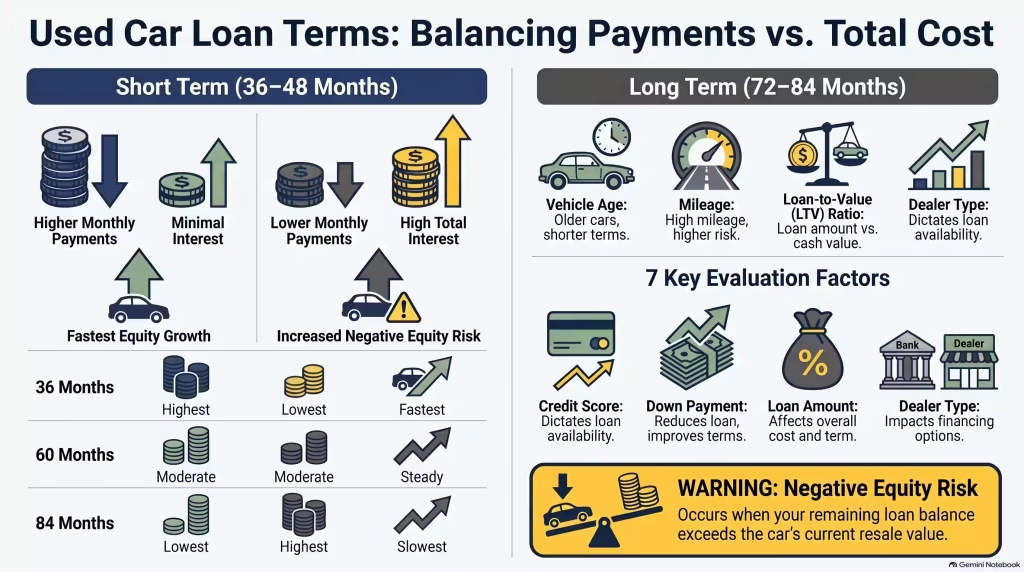
A shorter loan usually means a higher monthly payment but less interest overall. A longer loan usually means a lower payment but more interest and slower equity growth.
| Loan term | Monthly payment | Total interest | Equity builds | Best fit |
|---|---|---|---|---|
| 36 months | Highest | Usually lowest | Fastest | Buyers with room in their budget who want to reduce interest costs |
| 48 months | Higher | Lower than longer terms | Faster | Buyers who want a balance of payment and total cost |
| 60 months | Moderate | Moderate | Steady | A common middle-ground option for many used-car buyers |
| 72 months | Lower | Higher | Slower | Buyers who need payment flexibility and have checked the full cost |
| 84 months | Lowest | Often highest | Slowest | Buyers who understand the added risk and plan carefully |
The APR changes the result. So does the amount financed. Compare offers using the same vehicle price, down payment, and loan amount. That makes it easier to see whether a lower payment is worth the extra interest.
Is a 72- or 84-Month Loan a Bad Idea for a Used Car?
A 72- or 84-month used car loan is not automatically a bad choice, but it needs more careful review than a shorter term. You could be making payments when the car is older, needs more maintenance, or is worth less than your remaining balance.
Longer terms can create three common problems:
- You pay interest for more months. Even a reasonable APR can cost more when it applies for a longer period.
- You build equity slowly. Your loan balance may decline more slowly than the car’s value.
- You may face repair costs while still making payments. This matters more when you are financing an older used car.
Negative equity means you owe more on the loan than the vehicle is worth. The CFPB warns that a longer loan can keep you at risk of negative equity for a longer time. Read the CFPB’s explanation of auto-loan terms and negative equity.
A long term can make sense in limited situations. For example, you may have a stable budget, a low APR, a substantial down payment, and a reliable late-model used car. Even then, compare the total amount paid before you sign.
Should Your Loan Last Longer Than the Car’s Expected Useful Life?
Your loan should not ignore the car’s age, reliability, and likely maintenance needs. A used car can last for years, but no one can promise how long any individual vehicle will remain dependable.
Before choosing a long term, check the vehicle history report, maintenance records, inspection results, warranty coverage, and expected repair needs. A starter problem can leave a car unable to crank and lead to an unexpected repair bill, which is one reason to leave room in your budget beyond the loan payment.
This does not mean every older car requires a short loan. It means the loan term should fit the car’s condition and your financial cushion. If a repair bill would force you to use high-interest credit, a lower car price or larger down payment may be safer than simply stretching the loan.
How Do You Choose the Right Used Car Loan Term?
The right used car loan term is the shortest one that fits your budget without leaving you unable to handle normal ownership costs. That includes insurance, fuel, maintenance, registration, and unexpected repairs. If fuel cost is a major part of your decision, use the same ownership-cost mindset explained in Do Hybrid Cars Save Money?.
Use this process before you accept financing:
- Set your total car budget. Start with the out-the-door price, not only the advertised vehicle price. Include recurring costs such as the fuel grade the vehicle requires. Premium versus regular gas can change the operating budget, especially for a car that requires premium fuel.
- Decide on a down payment. A larger down payment lowers the amount financed and can reduce negative-equity risk.
- Get preapproved if possible. A bank or credit union offer gives you a benchmark before you discuss dealer financing.
- Compare at least three loan terms. Ask for 48-, 60-, and 72-month versions of the same loan.
- Compare APR, term, and amount financed together. A lower monthly payment does not always mean a less expensive loan.
- Leave room for basic maintenance. Small preventive checks matter too. Checking tire pressure regularly can support tire life and fuel economy.
- Read the contract before signing. Check for optional products, fees, and any terms that affect early payoff.
The Federal Trade Commission recommends comparing a preapproved offer with dealer financing by reviewing the APR, loan term, and amount financed. See the FTC’s car-financing guidance.
Can You Pay Off a Used Car Loan Early?
In many cases, you can pay off a used car loan early, but you should check the loan agreement first. Some loans allow extra principal payments without a penalty, while others may have specific payoff terms or restrictions.
If your loan allows extra principal payments, paying more than the required monthly amount can reduce the remaining balance faster. That may reduce the interest you pay over the life of the loan. Contact the lender and ask how it applies extra payments before sending additional money.
Do not assume that making one larger payment automatically reduces future interest in the way you expect. Ask whether the extra amount goes to principal and request the payoff amount if you want to close the loan completely.
What Should You Check Before Financing a Used Car?
You should check the final price, APR, loan term, amount financed, and the vehicle’s condition before financing a used car. Looking at all five helps you avoid choosing a loan based only on the monthly payment.
The FTC also advises used-car buyers to consider the down payment, monthly payment, financing period, and APR.
Keep copies of the buyer’s order, financing contract, vehicle history report, warranty information, and inspection records. These documents can help you understand what you agreed to and what protections may apply.
Frequently Asked Questions
Is 72 months too long for a used car loan?
A 72-month loan can work for some buyers, but it can increase total interest and slow equity growth. Compare it with a 48- or 60-month option before choosing it, especially if the car is older or has high mileage.
Can you get an 84-month loan on a used car?
Some lenders offer 84-month loans for used cars, often for newer vehicles with lower mileage and enough value. Approval depends on the lender, your credit, the loan amount, and the vehicle’s age and condition.
Does the age or mileage of a used car limit the loan term?
Yes, it can. Many lenders consider age and mileage because they affect the vehicle’s value, reliability, and resale potential. An older or high-mileage car may qualify only for a shorter loan term.
Is a 60-month loan reasonable for a used car?
A 60-month loan is a common option because it can balance the monthly payment with total interest costs. Whether it is reasonable depends on the APR, down payment, vehicle condition, and your budget.
Can I pay off a used car loan early?
Often, yes. Review the contract and ask the lender whether extra payments go directly to principal and whether any prepayment terms apply.
Should I choose a longer term if I plan to keep the car for many years?
Keeping the car longer can reduce the risk of selling or trading it while you still owe money, but it does not remove the extra interest cost of a long loan. Compare the total loan cost and make sure the payment leaves room for repairs and maintenance.
The Bottom Line
You can often finance a used car for 36 to 72 months, while 84-month terms may be available for some buyers and vehicles. The best term is usually the shortest one that fits your budget and still leaves room for the real costs of owning a used car.
Before signing, compare more than one loan term, focus on APR and total interest instead of only the payment, and make sure the loan makes sense for the car’s age, mileage, and condition.