How Often Should You Rotate Car Tires? (5,000 to 8,000 Miles)

The Short Answer: Every 5,000 to 8,000 Miles
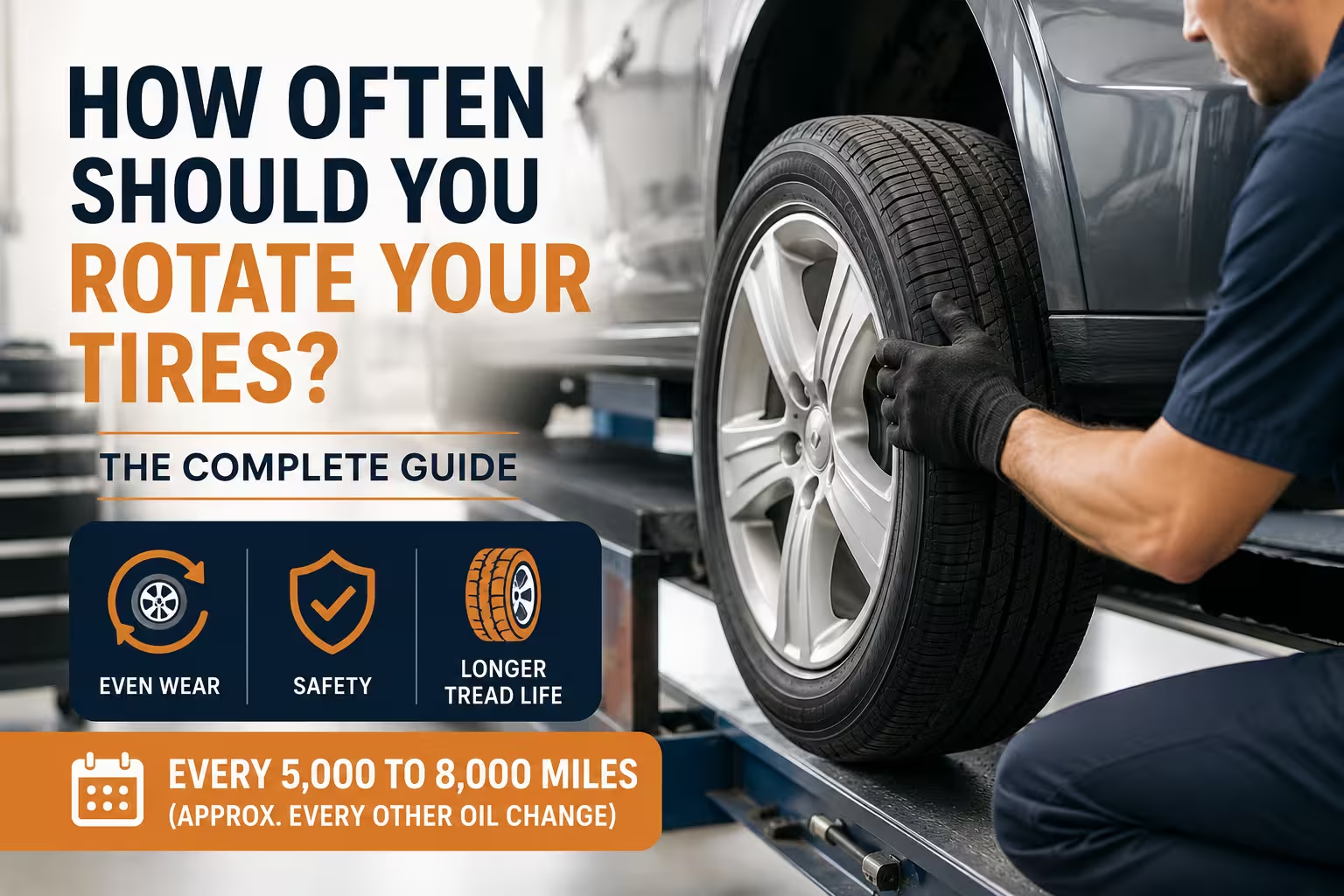
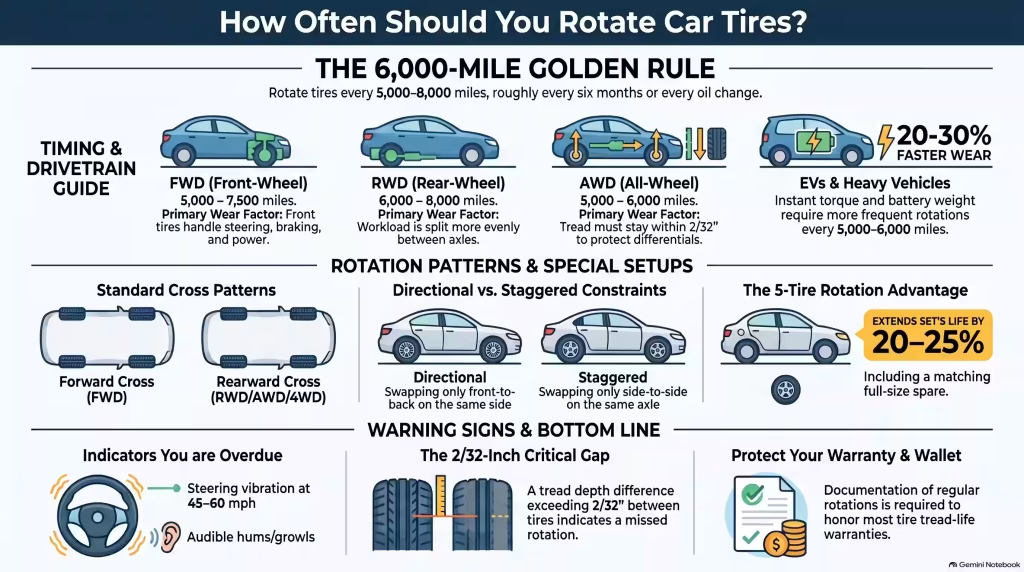
Rotate your car tires every 5,000 to 8,000 miles, or roughly every six months. That lines up with about every other oil change for most drivers. NHTSA tire safety guidance puts the window at 5,000 to 8,000 miles, and sooner if you spot uneven wear.
Six thousand miles is the number I’d write on the fridge if you want one figure to remember. It sits in the middle of every recommendation out there, and it’s close enough to a typical oil change interval that you’ll actually stick to it.
Your owner’s manual wins any argument here. A few automakers ask for 3,750 miles on performance tires. If your manual says something shorter than 5,000, follow the manual.
Why Tire Rotation Matters (Even Wear, Safety, Tread Life)
Rotation matters because your four tires don’t wear at the same speed, and moving them around evens out the difference. On a front-wheel drive car, the front pair can wear close to twice as fast as the rear pair, because those two tires steer, brake, and put the power down all at once.
Picture what that does to your wallet. You buy four tires. Twelve thousand miles later the fronts are down to 4/32 inch and the rears are still at 8/32. Now you’re buying two tires early, and the new pair never quite matches the old pair for grip. Do that twice and you’ve paid for six tires to get the life of four.
The safety side is less obvious and more important. Tread depth is what pushes water out from under the contact patch. When your fronts are worn thin and your rears are deep, the car behaves differently in rain than it did when the set was new. Worn rears in particular can let the back end step out on a wet corner, which is a much harder save than a bit of front push.
Rotation is also the cheapest maintenance on the car. Many shops throw it in free with an oil change, and even paid it runs about $20 to $50. There’s no consumable, no fluid, no part. You’re buying back tread life with 30 minutes of labor.
How Often Should You Rotate Car Tires by Vehicle Type
The interval shifts with drivetrain: 5,000 to 6,000 miles for AWD and EVs, and 5,000 to 8,000 for everything else. Weight, torque delivery, and which wheels do the work all change how fast a given corner wears down.
| Drivetrain | Rotate every | Why |
|---|---|---|
| Front-wheel drive (FWD) | 5,000 to 7,500 miles | Fronts steer, brake, and pull, so they wear fastest |
| Rear-wheel drive (RWD) | 6,000 to 8,000 miles | Work is split between axles, so wear spreads out |
| All-wheel drive (AWD) | 5,000 to 6,000 miles | All four must stay within 2/32 to 3/32 inch |
| SUVs and trucks | 5,000 to 7,500 miles | Extra weight, towing, and load speed up wear |
| Electric vehicles (EV) | 5,000 to 6,000 miles | Battery weight and instant torque chew tread faster |
Front-Wheel Drive (FWD)
Rotate FWD tires every 5,000 to 7,500 miles. This is the drivetrain where skipping rotations shows up fastest, because roughly 80 percent of braking force and all of the steering and acceleration land on the same two tires.
Watch the outer shoulders of your front tires. FWD cars scrub the outside edges in corners, and the wear pattern shows there long before the center of the tread goes flat.
Rear-Wheel Drive (RWD)
Rotate RWD tires every 6,000 to 8,000 miles. The rears handle acceleration while the fronts handle steering, so the workload splits across the axles instead of piling onto one end.
That doesn’t mean the wear is equal. On a rear-drive car the fronts still wear faster in normal driving, just not as dramatically. If you enjoy the throttle, flip that: hard launches will cook the rears first.
All-Wheel Drive (AWD) and the 2/32 Inch Rule
Rotate AWD tires every 5,000 to 6,000 miles, and treat that as a hard limit rather than a suggestion. All four tires need to stay within about 2/32 to 3/32 inch of each other in tread depth. Miss that window and the repair bill jumps from tire money to drivetrain money.
Here’s the mechanical reason. A tire with less tread has a smaller rolling diameter, so it spins slightly faster to cover the same ground. Your center differential or transfer case has to absorb that difference every mile you drive. Constant slip means heat, and heat means a worn coupling or a cooked differential.
Some AWD systems are fussier than others. Subaru’s symmetrical AWD and older Honda systems have a reputation for punishing mismatched tires. If you damage one AWD tire beyond repair at 20,000 miles, you often can’t just buy one. You either buy four or have the new tire shaved down to match the others, which shops do for around $25 to $40 per tire.
Check your tread with a quarter or a proper depth gauge before every rotation. Washington’s head disappearing means you’re at 4/32 inch and it’s time to shop.
SUVs, Trucks, and EVs
Rotate SUVs, trucks, and EVs every 5,000 to 6,000 miles, closer to the short end of the range. All three carry more weight than a sedan, and weight is what grinds tread away.
EVs deserve their own note. A battery pack adds 800 to 1,200 pounds, and electric motors deliver full torque from zero, so tires on a Model Y or a Mach-E can wear 20 to 30 percent faster than the same tire on a gas crossover. If you drive an EV and you’re used to a gas car’s maintenance rhythm, move your rotation reminder earlier than feels necessary.
For trucks that tow or haul, count the load, not just the odometer. A summer of pulling a trailer is worth more wear than the same miles empty.
Tie It to Your Oil Change
Rotate at every other oil change if you run full synthetic on a 7,500 mile schedule, or at every oil change if your interval is 5,000 miles. Either way you land inside the 5,000 to 8,000 mile window without tracking a second maintenance date.
This is the trick that makes rotation actually happen. Nobody remembers a standalone rotation. Everybody remembers an oil change, because the car nags about it.
Say it out loud when you drop the car off: “rotate the tires too.” The shop is already pulling the car onto a lift. Most will do it free, and the ones that charge usually charge less when it’s bundled.
If you drive an EV and have no oil change to anchor to, pick a calendar date instead. Tire rotation and cabin air filter, twice a year, same weekend. While you’re at it, check your tire pressure monthly, because underinflation does more damage to tread life than a late rotation ever will.
Rotation Patterns: Which One Fits Your Car
Use the forward cross for front-wheel drive and the rearward cross for rear-wheel and four-wheel drive. Both patterns move each tire to a new corner so no single tire stays in the hardest-working position for long.
Forward cross (FWD): Fronts move straight back on the same side. Rears cross over to the opposite front corner.
Rearward cross (RWD, 4WD, AWD): Rears move straight forward on the same side. Fronts cross over to the opposite rear corner.
X-pattern (light FWD cars): All four tires cross diagonally. Left front to right rear, right front to left rear, and the same in reverse.
Every one of these assumes four identical, non-directional tires. Once that stops being true, your options shrink fast.
Staggered and Directional Tires
Directional tires only move front to back on the same side, and staggered setups only move side to side. Neither can use a cross pattern, because the tires can’t legally or physically end up on the wrong side of the car.
Directional tires have an arrow on the sidewall and a tread that sweeps one way to throw water out. Mount one on the wrong side and it scoops water in instead. So a left front goes to the left rear, and that’s your whole rotation.
Staggered means your rear tires are wider than your fronts, common on Mustangs, Chargers, and most sports cars. Different sizes can’t swap axles at all. If they’re non-directional you can swap left to right on the same axle, which buys you a little even wear. If they’re staggered and directional, which plenty of performance cars are, there’s no rotation available without dismounting the tires from the wheels. Some owners do exactly that once a season. Most just accept shorter rear tire life and budget for it.
Don’t Forget the Full-Size Spare
Include a full-size matching spare in the rotation and you spread the same wear across five tires instead of four, which stretches the set roughly 20 to 25 percent further. Never do this with a compact donut spare.
The five-tire version of the forward cross works like this: the spare goes to the right rear, the right rear moves to the right front, and everything else follows the normal pattern with one tire shifting into the spare’s place in the trunk.
Two warnings. A donut spare is speed limited to 50 mph and distance limited to about 70 miles, so putting it into regular service is genuinely unsafe. And if your spare has been sitting for years, check the DOT date code on the sidewall. Rubber ages whether you drive on it or not, and a ten-year-old spare belongs in the trash no matter how deep the tread looks.
Signs You’re Overdue for a Rotation
You’re overdue if you notice vibration, uneven tread depth, or new road noise. Any one of these means rotate now rather than waiting for the next oil change.
- Steering wheel vibration at 45 to 60 mph. Uneven wear throws off balance, and this speed band is where you feel it first.
- A tread depth gap you can measure. Check all four with a gauge. More than 2/32 inch between the deepest and shallowest tire means you waited too long.
- A hum or growl that rises with speed. Cupped or feathered tread makes noise the way a worn bearing does. If it changes when you lift off the throttle, get it looked at.
- Feathering you can feel. Run your palm across the tread sideways. Smooth one direction and sharp-edged the other means the tread blocks are wearing at an angle.
- More than 8,000 miles or six months since the last one. No symptoms needed. The calendar is reason enough.
One caution on vibration: rotation fixes wear-related shake, but it won’t fix a bent wheel, a thrown wheel weight, or a bad alignment. If the shake survives a rotation and a rebalance, the problem is somewhere else in the suspension.
What Happens If You Never Rotate
Skip rotations entirely and you’ll lose thousands of miles of tread life, void part of your tire warranty, and end up with a car that handles worse in rain. On a FWD car the fronts can hit the wear bars while the rears still have half their life left.
The warranty piece catches people off guard. Most tread life warranties, the 60,000 or 80,000 mile promises on the sticker, require documented rotations at the manufacturer’s interval. No records, no claim. Keep the receipts, even the free ones.
Then there’s the pattern that never goes away. Once a tire develops cupping or feathered edges, rotating it doesn’t smooth the tread back out. The damage is cut into the rubber. You can slow it down, but that tire will stay noisy for the rest of its life.
Worst case is a blowout. A tire worn to 2/32 inch, the legal minimum in most states, has almost no ability to clear water and runs hotter than a healthy tire. Heat plus a pothole is how sidewalls fail at highway speed.
Frequently Asked Question
How many miles between tire rotations?
Every 5,000 to 8,000 miles. Most drivers land near 6,000. Check your owner’s manual first, since a few automakers set shorter intervals for performance tires or heavy vehicles, and follow whichever number is smaller for your car.
Should I rotate tires every oil change?
Rotate at every other oil change if you use synthetic oil on a 7,500 mile schedule. If your oil change comes every 5,000 miles, rotating each time works fine and keeps the whole job on one visit.
Do AWD cars need more frequent rotation?
Yes. All-wheel drive cars need rotation closer to every 5,000 miles because all four tires must stay within about 2/32 to 3/32 inch of each other. Bigger gaps strain the center differential and transfer case.
Can you rotate directional or staggered tires?
Yes, but only in limited patterns. Directional tires move front to back on the same side. Staggered setups with different front and rear sizes can only swap side to side, and only if the tires aren’t directional.
What happens if you don’t rotate tires?
Your drive tires wear out first, sometimes at half the mileage the other two reach. You then replace tires in pairs instead of full sets, and the uneven tread cuts wet grip and adds road noise.
Should the spare tire be rotated?
Only if it’s a full-size matching spare. Work it into a five-tire rotation and you spread wear across five tires instead of four. Never rotate a compact donut spare into service, since it isn’t built for regular driving.
The Bottom Line
Rotate your car tires every 5,000 to 8,000 miles, or every six months, whichever comes first. Drive an AWD car or an EV and you should aim for the 5,000 to 6,000 mile end of that range.
The habit matters more than the exact number. Tie it to your oil change, say it out loud at the counter, and keep the paperwork for your warranty claim. Then pair it with a monthly tire pressure check, because correct pressure and regular rotation together will do more for tread life than any tire you can buy.