What Is a Convertible Car Seat? Types, Features, and How It Compares

Here’s the short answer up front: a convertible car seat is a child safety seat that converts from a rear-facing seat for babies and toddlers into a forward-facing harnessed seat for older kids, typically covering 5 to 65 pounds in one purchase. If you’re deciding what to buy after the infant carrier, a convertible car seat is almost always the answer. The stakes are real.
According to data validated by the National Highway Traffic Safety Administration (NHTSA), correctly installed car seats reduce the risk of fatal injury in a passenger car crash by 71% for infants and 54% for toddlers. Despite these lifesaving numbers, NHTSA research reveals that about 46% of car seats are installed incorrectly, making proper installation just as critical as choosing the right seat.
Key Takeaway
- A convertible car seat replaces the infant carrier and lasts from roughly 5 lbs to 65 lbs, so one $200 seat can cover 4 to 6 years of use.
- NHTSA data shows correct car seat use cuts fatal injury risk by 71% for infants.
- Rotating and 360 car seats are safe when they meet FMVSS 213 and are installed correctly. You’re paying $150 to $300 extra for convenience, not extra crash protection.
- Skip anything without a 5-point harness and a clear rear-facing weight limit of at least 40 lbs.
What Is a Convertible Car Seat?
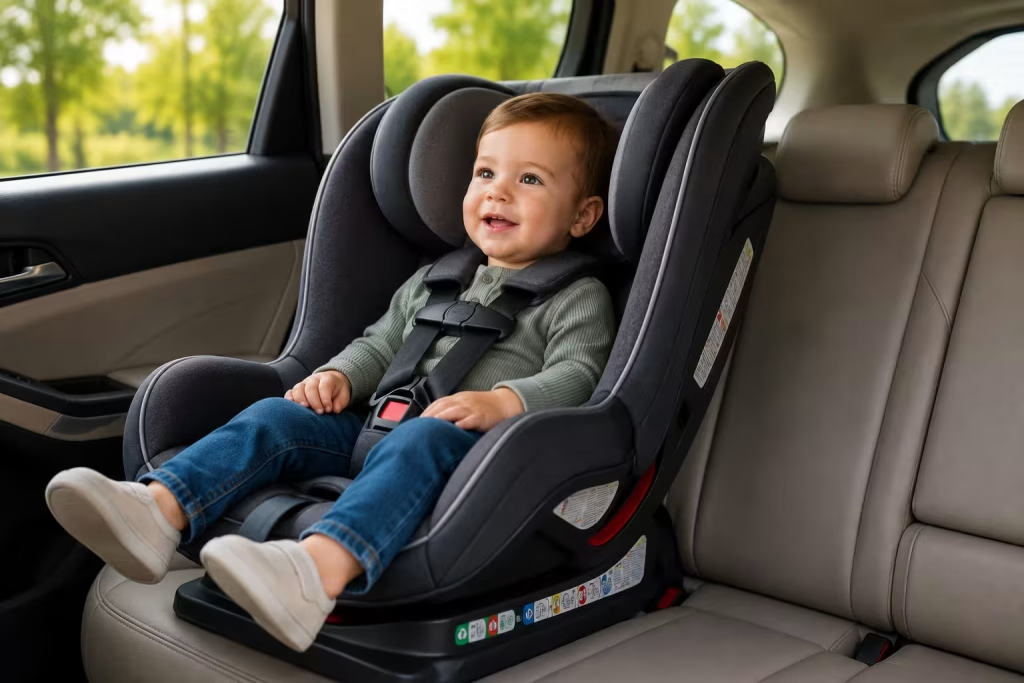
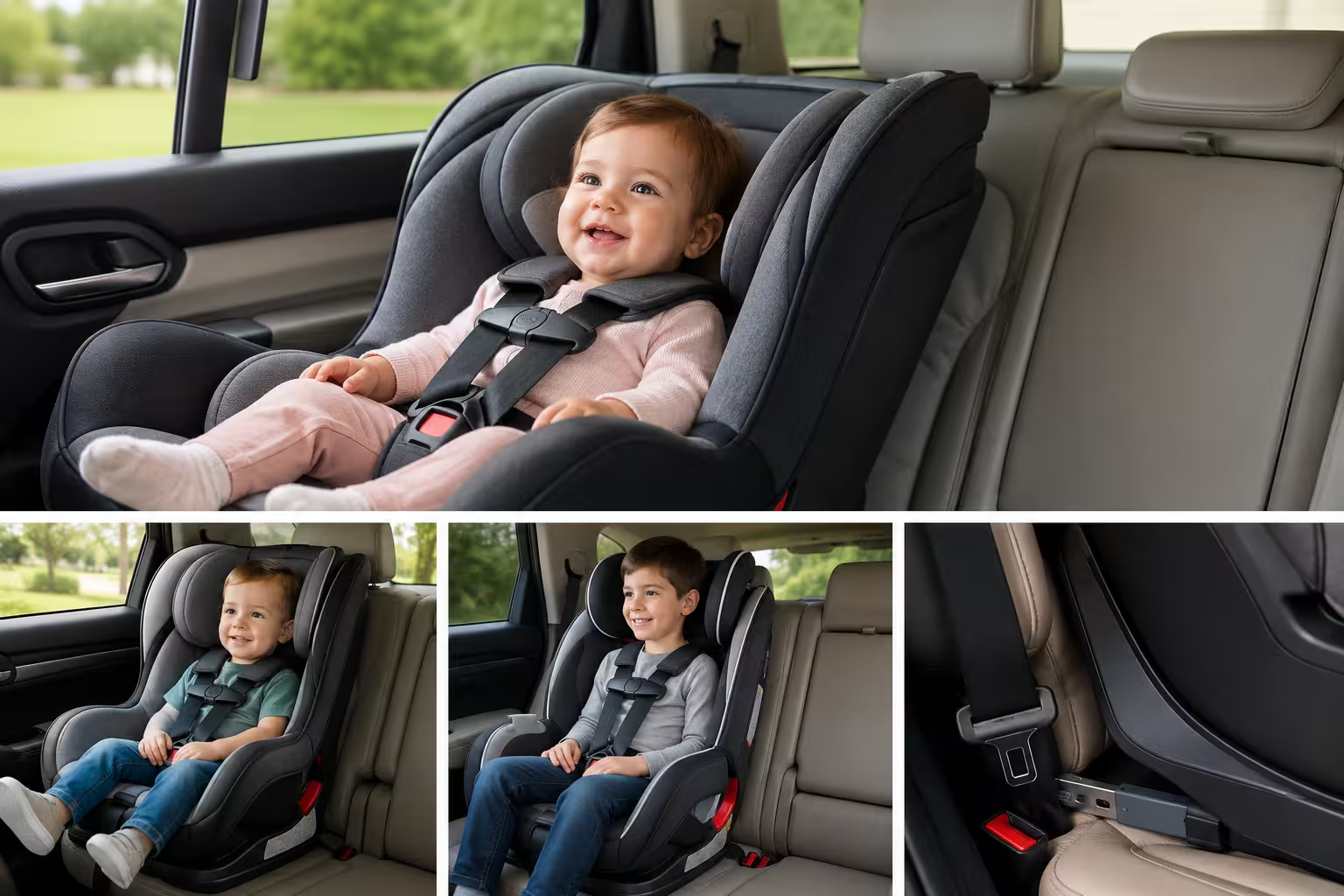
A convertible car seat is a child restraint that installs rear-facing for infants and toddlers, then “converts” to forward-facing with the same 5-point harness as your child grows. Most models fit children from about 5 pounds up to 65 pounds, which is why one convertible car seat can span birth through preschool.
The name confuses a lot of first-time parents. Nothing folds or transforms dramatically. Converting the seat usually means re-routing the harness, adjusting the recline angle using the built-in recline indicator, and reinstalling the seat facing forward using either the LATCH system (Lower Anchors and Tethers for Children) or the vehicle seat belt, plus the top tether.
What defines a convertible car seat in practice?
- Dual orientation. Rear-facing mode typically covers 5 to 40 or 50 pounds. Forward-facing mode extends to 65 pounds on most models.
- 5-point harness. Two shoulder straps, two hip straps, and a crotch buckle, joined by a chest clip positioned at armpit level.
- Stays in the car. Unlike an infant carrier, a convertible seat isn’t a carry handle seat. It installs once and stays put.
- Long service life. Most seats carry an expiration date of 6 to 10 years from manufacture, printed on a sticker on the seat shell.
Why does that matter for your wallet? Because a convertible car seat priced at $200 that lasts five years costs you about $40 a year of use. That’s the math I’d run before any purchase in this category.
A convertible car seat is a dual-mode child restraint that works rear-facing from about 5 pounds and forward-facing up to about 65 pounds, using a 5-point harness in both positions. NHTSA reports correctly installed car seats reduce fatal injury risk by 71% for infants.
Convertible Car Seat vs. Infant Car Seat: Key Differences
The core difference is portability versus longevity. An infant car seat (the “bucket seat” with a carry handle) clicks in and out of a base and snaps onto a stroller, but most kids outgrow it by height between 9 and 18 months. A convertible car seat stays installed in the vehicle and lasts years longer.
Is one safer than the other? No. Both must pass the same federal crash standard, FMVSS 213. The real comparison is about lifestyle and cost, which is exactly where I’d focus.
| Feature | Infant Car Seat | Convertible Car Seat |
|---|---|---|
| Orientation | Rear-facing only | Rear-facing and forward-facing |
| Typical weight range | 4 to 30 or 35 lbs | 5 to 65 lbs |
| Portability | Carrier clicks out, stroller compatible | Stays installed in the car |
| Newborn fit | Excellent, deep recline and inserts | Good on models with infant inserts |
| Typical lifespan of use | 9 to 18 months | 4 to 6 years |
| Typical price | $80 to $350 (plus base) | $60 to $450 |
Here’s why I still recommend most families buy the infant seat first: newborn convenience is worth real money in year one. Moving a sleeping baby without unbuckling is not a small perk. But if the budget only allows one seat? Buy a convertible car seat with a low minimum weight and a newborn insert, and skip the carrier entirely. That’s the best-for-the-money play.
Types of Car Seats Explained: Infant, Convertible, Booster, All-in-One
There are four main types of car seats: infant car seats (rear-facing carriers), convertible car seats (rear- and forward-facing), booster seats (belt-positioning for big kids), and all-in-one car seats that attempt to cover every stage from birth to booster in a single shell.
Think of it as a progression tied to your child’s size, not their age:
- Infant car seat. Rear-facing only, carry handle, base stays in the car. Used from birth until the height or weight limit, whichever comes first.
- Convertible car seat. The workhorse middle stage. Rear-facing first, then forward-facing with the harness.
- Combination seat. Forward-facing harness that later becomes a booster.
- Booster seat. No harness. It positions the vehicle’s own lap and shoulder belt correctly across a bigger kid’s body.
- All-in-one car seat. Marketed as birth-to-booster, but the newborn and booster fits are usually its two weakest stages.
Which type should you actually budget for? For most families the realistic sequence is infant seat, then convertible car seat, then booster. Here’s the three-tier pricing reality for the convertible stage:
| Tier | Price range | What you’re paying for | Example segment |
|---|---|---|---|
| Budget | $60 to $100 | FMVSS 213 compliance, basic padding, lower rear-facing limits | Lightweight travel-friendly seats |
| Mid-range | $150 to $250 | Extended rear-facing to 50 lbs, easier installs, better recline | The sweet spot for most buyers |
| Premium | $300 to $450 | Steel-reinforced frames, plush fabrics, rotation features | Comfort and convenience buys |
My recommendation is the mid-range tier, and here’s the specific dollar reason: extended rear-facing to 50 pounds buys you roughly an extra year of the safest riding position for about $100 more than a budget seat. That’s the single best safety upgrade per dollar in this entire category.
What Are Bucket Seats in a Car? Two Meanings Parents Should Know
“Bucket seat” means two different things, and the difference matters when you’re reading car seat forums. Among parents, a bucket seat is slang for the infant car seat carrier, named for its bucket-like shape. In automotive terms, bucket seats are the individual contoured front seats in a car, as opposed to a bench seat.
Why does the automotive meaning matter here? Because deeply contoured second-row bucket seats, the captain’s chairs in many SUVs and minivans, can affect installation. Aggressive side bolstering sometimes prevents a convertible car seat from sitting flush, which compromises the install angle. Check your vehicle manual’s child restraint section before assuming a seat fits.
What Is the Newborn Car Seat Test?
The newborn car seat test, formally called the Car Seat Tolerance Screening, is a hospital observation where a premature or low birth weight baby sits in their car seat for 90 to 120 minutes while nurses monitor heart rate, breathing, and oxygen levels. It checks whether the semi-upright position causes breathing problems before discharge.
Hospitals typically require it for babies born before 37 weeks or under about 5 pounds 8 ounces. If a baby fails, the hospital may repeat the test, recommend a car bed (a restraint that lets the baby lie flat), or delay discharge.
What does this mean for your purchase? Check the seat’s minimum weight before you buy. Many convertible car seat models start at 5 pounds, but some start at 4, and if you’re expecting an early arrival, that one-pound spec difference can decide whether your seat is usable on discharge day.
Most buying guides treat the car seat test as a hospital procedure with no purchasing implications. In reality, the seat’s minimum weight rating and lowest harness height are the two specs that determine whether a preemie can go home in a convertible seat at all.
Are 360, Rotating, and Swivel Car Seats Safe?
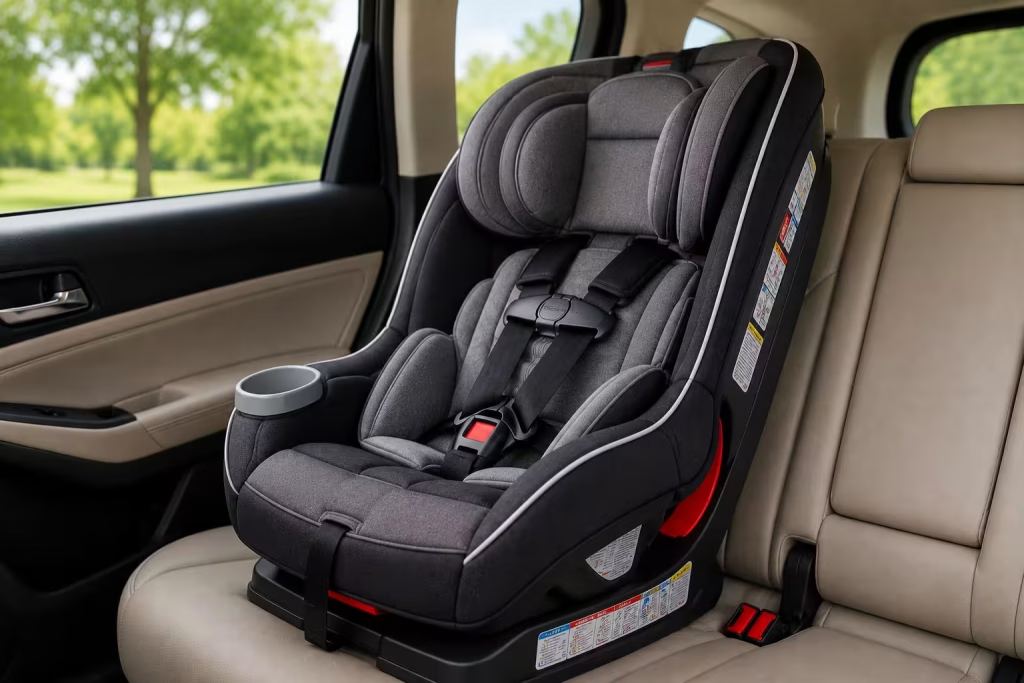
Yes. Rotating car seats, also called 360 car seats or swivel car seats, are safe when they meet FMVSS 213, the same federal crash standard every seat sold in the U.S. must pass. The rotation feature exists for loading convenience, not crash performance, and a rotating seat is only as safe as its installation.
So why do parents keep asking whether 360 car seats are safe? Because the swivel mechanism looks like a moving part in a product where rigidity feels safer. Here’s the honest breakdown:
Where rotating car seats genuinely help:
- Loading a toddler rear-facing without wrestling over the seat edge, especially in tight garages and street parking.
- Caregivers with back or mobility issues. This is the group I’d tell to spend the money without hesitation.
Where the skepticism is fair:
- Remember that NHTSA finding that nearly half of car seats are installed incorrectly? A swivel car seat adds a rotation-lock step to verify every single ride. An unlocked seat is a misused seat.
- Weight and price. Most rotating models run 25 to 35 pounds and cost $300 to $550, versus $150 to $250 for an equivalent fixed convertible car seat. That premium buys convenience, not crash protection.
My verdict: on a tight budget, a correctly installed $180 fixed seat beats a $450 swivel seat every time, because installation quality is what actually moves safety outcomes. If loading comfort matters daily and the budget allows, buy the rotating seat and make locking the rotation your habit at every buckle-up.
Rotating, 360, and swivel car seats sold in the United States must pass FMVSS 213, the same federal crash standard as fixed car seats. The rotation mechanism is a loading convenience feature and does not change crash protection when the seat is locked and installed correctly.
What Car Seat Comes After the Infant Car Seat?
A convertible car seat comes after the infant car seat. When your baby outgrows the infant carrier by height or weight, usually between 9 and 18 months, you move them into a convertible car seat installed rear-facing, and they should stay rear-facing until they reach that seat’s rear-facing limits.
The most common mistake I see? Treating the switch to a convertible as the moment to turn the child forward-facing. Those are two separate milestones. Carrier to convertible car seat is a change of equipment. Rear-facing to forward-facing is a change of position, and it should happen as late as the seat allows, since rear-facing spreads crash forces across the child’s entire back and protects the head and neck.
Your realistic timeline:
- Birth to 9-18 months: infant car seat (the bucket), rear-facing.
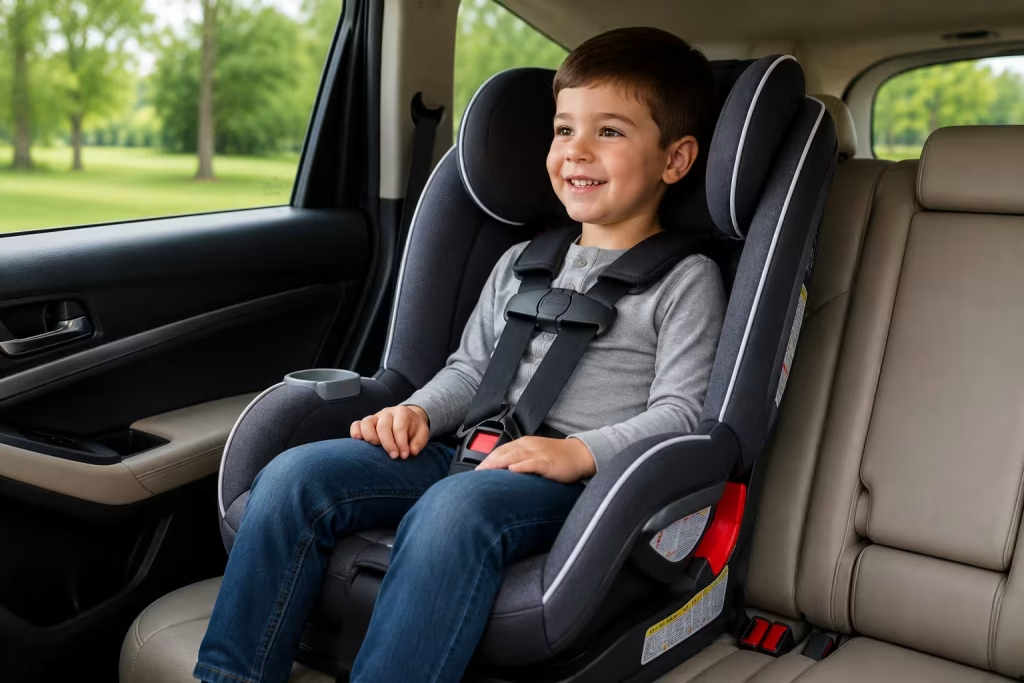
- 9-18 months to age 4+: convertible car seat, rear-facing until the seat’s rear-facing limit, then forward-facing with the harness.
- Roughly age 5 to 7: booster, once the child exceeds the harness limits and can sit properly.
- Booster until the vehicle belt fits, typically around 4 feet 9 inches tall.
Shopping tip from the comparison side: buy the next seat before you need it. Waiting until your child visibly doesn’t fit means buying under pressure, and pressured buyers overpay for features they never use.
FAQ: Convertible Car Seat Questions Parents Ask
At what age can a baby use a convertible car seat?
From birth, provided the seat’s minimum weight (usually 4 to 5 pounds) and lowest harness position fit the baby. Many families still start with an infant carrier for portability, then switch to a convertible car seat between 9 and 18 months when the carrier is outgrown.
Are rotating car seats worth the extra money?
They’re worth it for daily loading comfort, tight parking, or caregivers with back problems, at a premium of roughly $150 to $300 over comparable fixed seats. They’re not worth it if you frequently move seats between vehicles, since most rotating models weigh 25 to 35 pounds.
Is a convertible car seat safe for a newborn?
Yes, when the newborn meets the seat’s minimum weight and the harness sits at or below the shoulders. Hospitals may require a Car Seat Tolerance Screening (a 90 to 120 minute monitored sit) for babies born before 37 weeks before approving discharge in any upright seat.
Do convertible car seats fit in cars with bucket seats?
Usually yes, but deeply contoured second-row bucket seats or captain’s chairs can prevent a flush install on some models. Check your vehicle manual’s child restraint section and test the recline indicator after installation to confirm the correct angle.
The Bottom Line
A convertible car seat is the longest-serving, best-value piece of child safety gear you’ll buy: one seat, two orientations, 4 to 6 years of use. Buy the infant carrier first if portability matters to your daily routine, go straight to a convertible if budget rules, and treat rotation as a comfort upgrade rather than a safety upgrade. Whichever tier you choose, the installation is the part that earns that 71% risk reduction, so get the install checked by a certified child passenger safety technician. It’s free at most inspection stations, and it’s the highest-return 30 minutes in this entire buying process.