Can You Charge an Electric Car in the Rain? A Practical Guide for EV Drivers

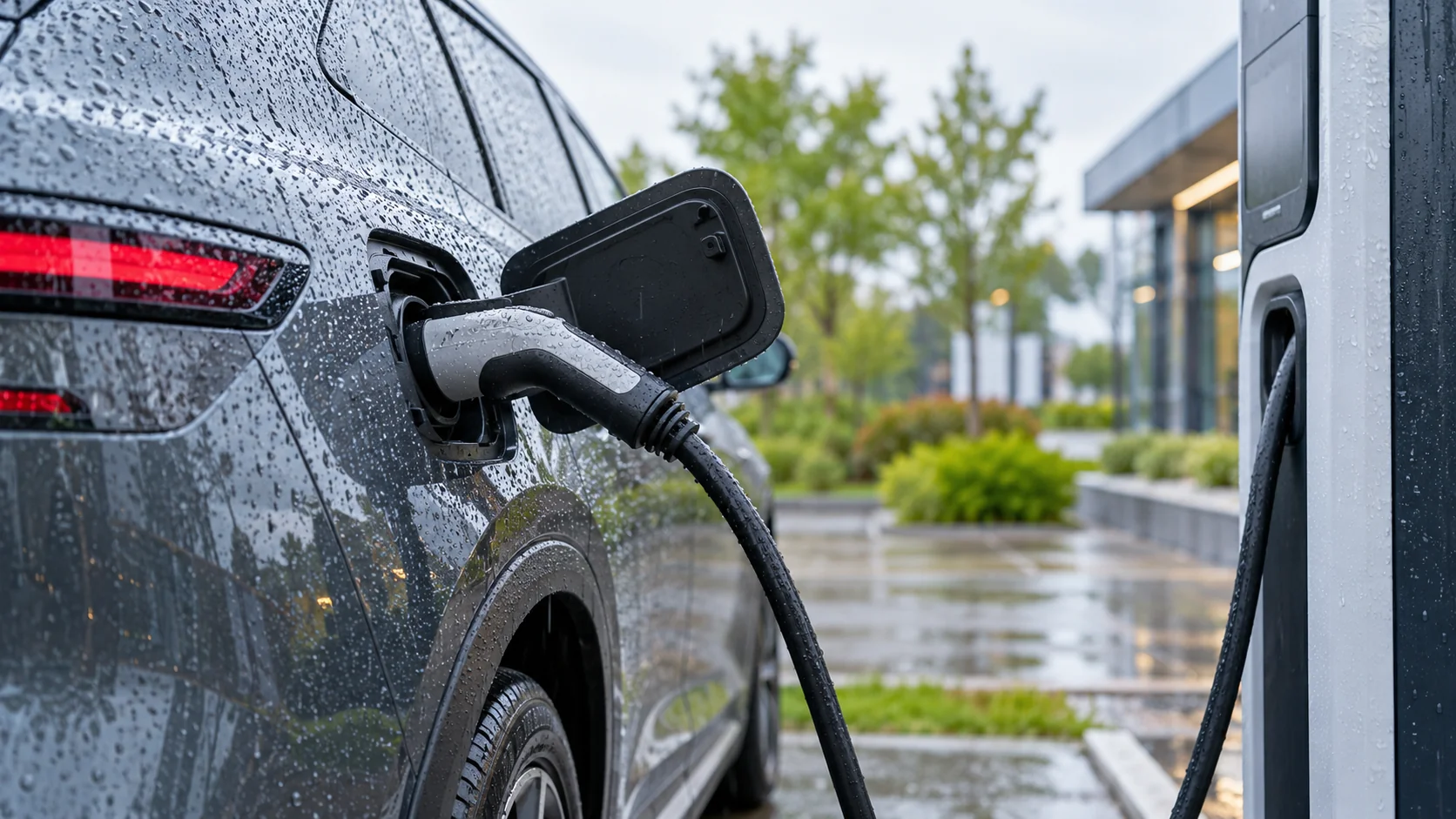
Yes, you can charge an electric car in the rain, and the same holds true in snow, sleet, or a full storm. EV charging equipment is designed to be weatherproof from the outset: sealed connectors, ground fault circuit interrupters that cut power the moment they sense a fault, and housings rated against water intrusion. Your car won’t accept current until the plug is seated and verified.
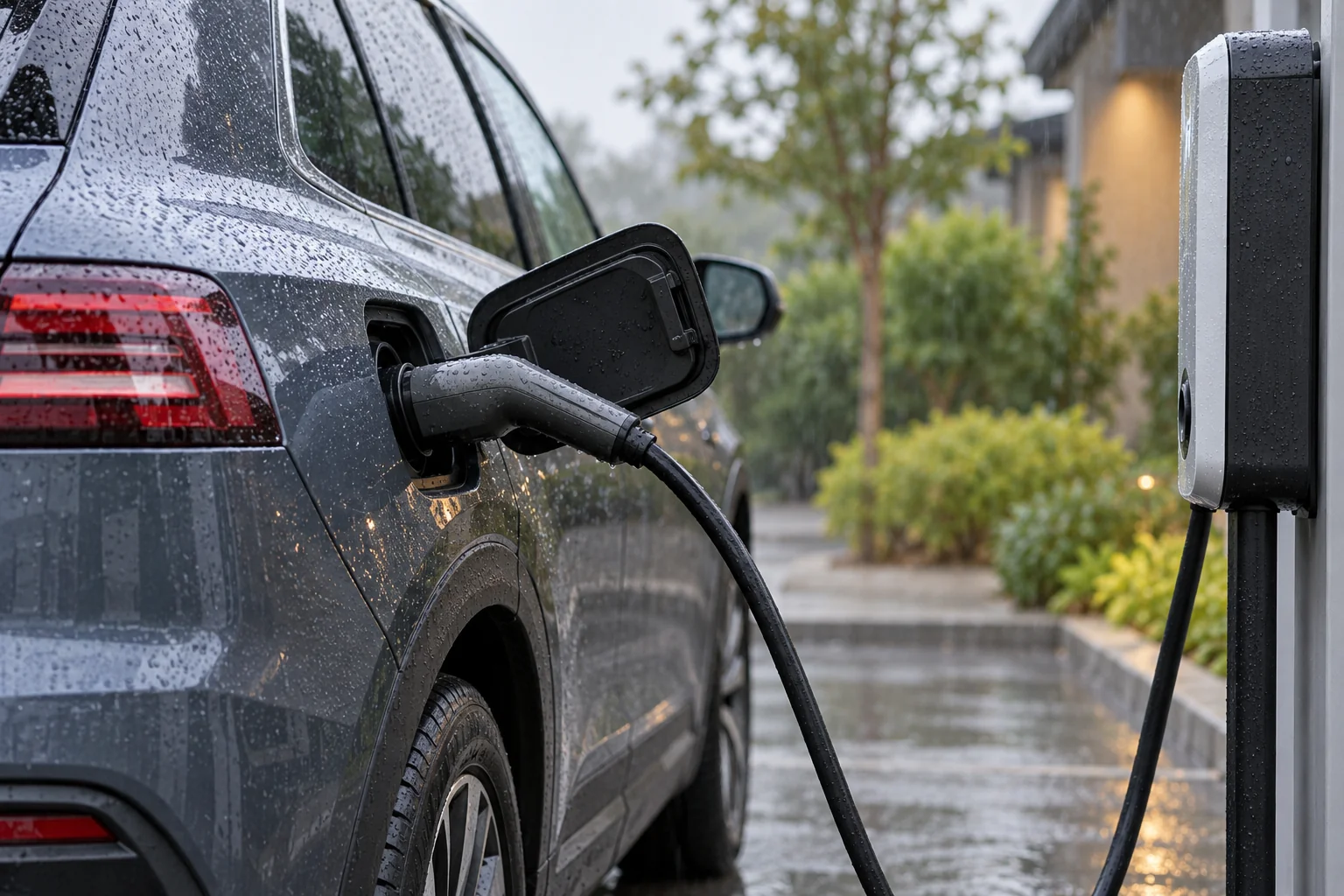
The worry makes sense. Water and electricity have been a bad pairing since grade school science. But an EV charging station isn’t an extension cord with a plug on the end. It’s a certified piece of electrical equipment that assumes rain is the default condition, not the emergency.
Why EV Charging Equipment Is Designed to Be Weatherproof
EV charging stations are designed to be weatherproof because they have to pass certification before they’re legal to sell or install. In the US, that means UL 2594 for the charging equipment itself and NEC Article 625 for how it gets wired and grounded. Both require GFCI protection and sealed enclosures. A charger that hasn’t cleared those safety standards never reaches your driveway in the first place.
That certification is why “is it safe to charge an electric car in the rain” has a boring answer. The interesting part is the mechanism.
What an IP Rating Actually Tells You
Ingress protection is a two-digit code defined by the International Electrotechnical Commission under IEC 60529. First digit, 0 through 6, covers solids like dust. Second digit, 0 through 8, covers liquids.
An IP65 charging point resists low-pressure water jets from any direction. IP66 handles powerful jets. Both comfortably clear anything rainy weather produces, including torrential rain hitting the unit sideways for hours.
Most home chargers land at IP65 or IP66. IP67 adds temporary submersion resistance, which sounds reassuring and is almost entirely irrelevant for a wall-mounted unit six feet off the ground.
Is It Safe to Charge Your EV in Heavy Rain or a Thunderstorm?
Yes, it’s safe to charge your EV in heavy rain and safe during a thunderstorm, at least where the electrical current is concerned. Before any power flows, the vehicle and the EVSE run a handshake over a pilot signal confirming the connector is fully seated. No handshake, no electricity. A wet charging plug sitting loose in the port is an inert piece of plastic.
Lightning is the one place I’d add a caveat, and it has nothing to do with the charger. Standing beside outdoor electrical equipment while lightning is overhead is a bad idea whether you’re charging a car or watering a lawn. Plug in, go inside, let it run.
Home Charging vs. Public Charging in Wet Weather
Home chargers, workplace charging units, and public EV charging stations all meet the same safety standards, so none of them is safer than another in wet conditions. What actually differs is whether you stay dry. Public charging stations rarely have canopies. Your garage always does. The hardware doesn’t care either way.
| Charger type | Typical IP rating | Where it lives | Wet weather notes |
|---|---|---|---|
| Level 1 (120V) | IP44 to IP54 | Home, standard outlet | Fine in rain; keep the outlet end off wet ground |
| Level 2 (240V) | IP65 to IP66 | Home, workplace, public | Built for permanent outdoor use |
| DC fast charging | IP65 to IP67 | Public stations | Toughest enclosures, exposed year-round by design |
Level 1 is the one worth watching. Not because it’s unsafe, but because a household outlet and a domestic cable weren’t engineered for permanent outdoor duty the way a proper Level 2 unit was. Use it as a backup, not a daily habit.
If you’re still working out whether home charging beats public charging on cost, we broke that down in what it actually costs to charge an electric car.
What Happens If the Charging Cable Lands in a Puddle?
Nothing. A charging cable that falls into a puddle stays inert because power only flows once the connector is locked into the port and the handshake completes. The cord’s conductors sit inside sealed insulation with moisture barriers at both ends, which is why a wet EV charging cord doesn’t create a shock path back to you.
Pick it up, shake it off, wipe the contacts, plug in. That’s the whole procedure.
Where I’d bother being careful: don’t leave the connector sitting in standing water for days, and don’t coil a cord in a puddle overnight through winter. Repeated freeze cycles wear seals faster than rain ever will. This is a longevity issue, not a safety one.
Can You Drive an Electric Car in the Rain?
Yes, you can drive an electric car in the rain with no special precautions, since the battery pack sits in a sealed enclosure rated for wet conditions and road spray. EVs are safe to drive through standing water at depths a gas car would handle, and often better, because there’s no air intake to swallow water and hydrolock an engine.
Deep flooding is a different problem for every vehicle on the road. That’s a buoyancy and electronics question, not an EV-specific one.
Extreme Weather: When to Actually Stop
Stop charging when water approaches the charging port or the base of the charging station, which is the point where flooding exceeds what any IP rating covers. In an event of extreme weather like a hurricane or flash flood warning, unplug, and if you can, move the car to higher ground. Hail is the other one, though that’s a body panel concern rather than a charging safety concern.
Adverse weather conditions short of that? Rain or shine, plug in and forget about it.
Practical Habits Worth Keeping
None of these are safety requirements. They’re the things that keep equipment working past year five.
- Wipe the connector before inserting if it’s been exposed to rain or road salt
- Hang the cable on its holster rather than leaving it coiled on wet ground
- Use a dedicated Level 2 charger over a domestic extension cable for regular home charging
- Check the port seal twice a year, especially if you park outside through winter
Port covers get recommended a lot. They’re genuinely optional. They reduce grit and moisture reaching the pins over thousands of connection cycles, which matters more in coastal or salted-road climates than in dry ones.
If you’re weighing whether an EV makes financial sense at all against the alternative, our look at whether hybrid cars actually save money covers the ownership math from the other direction.
Frequently Asked Questions
Is it safe to charge an EV when it is raining?
Yes. Charging equipment is designed to be weatherproof, sealed, and GFCI-protected specifically for rain. Water contact during normal charging poses no electric shock risk to you or the vehicle.
Can my EV charging port get wet?
Yes. The port is sealed and rated for outdoor exposure. Rain, road spray, and snow won’t damage it or create a hazard, since power only flows after a verified connection.
Do public charging stations handle rain like home chargers do?
Yes. Public EV charging stations meet the same ingress protection and safety standards as home chargers. Location affects your comfort while plugging in, not the equipment’s performance.
Does charging in rain or snow hurt battery life?
No. Outdoor charging in wet weather has no measurable effect. Charging frequency and depth matter far more, as covered in our guide to how long EV batteries last.
My charger won’t start after sitting in the rain. What’s wrong?
Usually an incomplete connection rather than water. Reseat the plug fully and check for a fault light. If it continues, apply standard electrical diagnostic steps.