How to Remove Dried Glue from Vinyl Flooring (Step-by-Step Guide)

Dried glue on vinyl flooring is fixable in most cases, and you probably already have everything you need at home. Start with gentle heat from a hairdryer held 4 to 6 inches above the spot for about 20 to 30 seconds. That softens the adhesive enough to lift it cleanly with a plastic scraper or an old credit card. For any sticky residue left behind, a cloth dampened with 70% isopropyl alcohol will clear it up without harming the wear layer.
Whether you’re dealing with leftover construction adhesive from a DIY project, super glue from a quick repair, or old mastic from pulled-up tiles, the method changes slightly depending on the glue type. This guide walks through each one, from simple household fixes to stronger commercial options, so you can restore your floor without scratching or dulling the finish.
Key Takeaways
- Always spot-test any cleaner in a hidden area before applying it to the main floor.
- Plastic scrapers only. Metal will gouge and permanently scratch vinyl.
- Start mild: heat and scrape first, then rubbing alcohol, then commercial remover.
- Never use acetone, bleach, or ammonia on vinyl. All three damage the wear layer.
- If your home was built before 1980, stop and test for asbestos before scraping old adhesive.
How Do You Remove Small Spots of Dried Glue With Household Items?
For small glue spots, start with the gentlest method you have and work up only if needed. Most common glue spills, including super glue, hot glue, and craft adhesive, respond well to heat or rubbing alcohol without any commercial product. The goal is to soften or dissolve the adhesive without attacking the vinyl’s wear layer underneath it.
Method 1: Heat and Scrape (Best First Step for Any Glue)
This is the safest starting point regardless of what type of glue you’re dealing with. Heat softens most adhesives by disrupting the molecular bonds holding them to the surface, which makes lifting the glue off much easier than trying to scrape it while it’s still hard.
- Apply gentle heat. Hold a hairdryer 4 to 6 inches above the glue spot, set to low or medium. Warm it for 20 to 30 seconds. You want the glue to feel pliable and slightly soft, not hot. Overheating vinyl can warp or discolor the surface, so keep the dryer moving slightly rather than holding it in one spot.
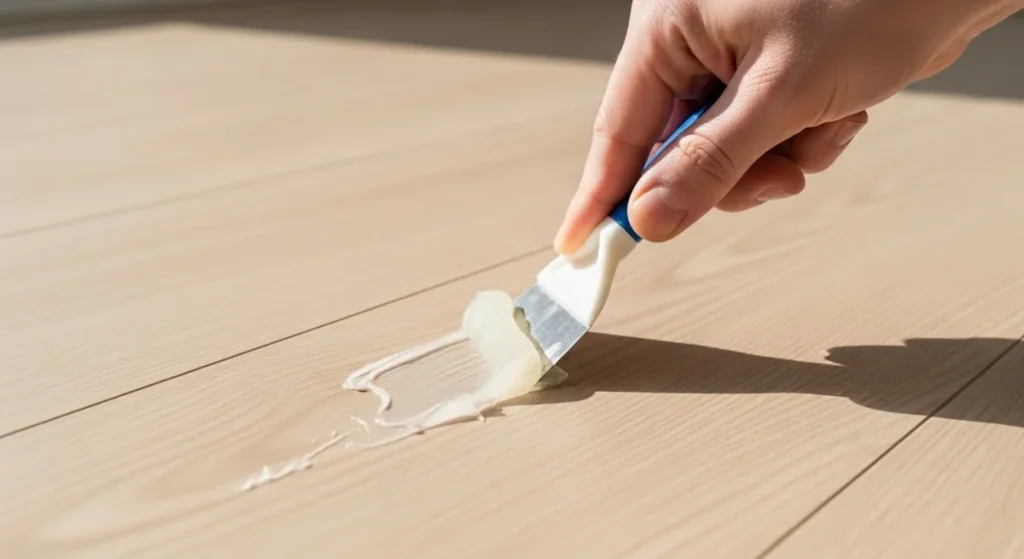
- Scrape carefully. Once the glue feels soft, take your plastic scraper and hold it at a low angle, nearly flat against the floor. Push under the edge of the glue and lift gently. The goal is to slide under the adhesive, not to dig into the floor.
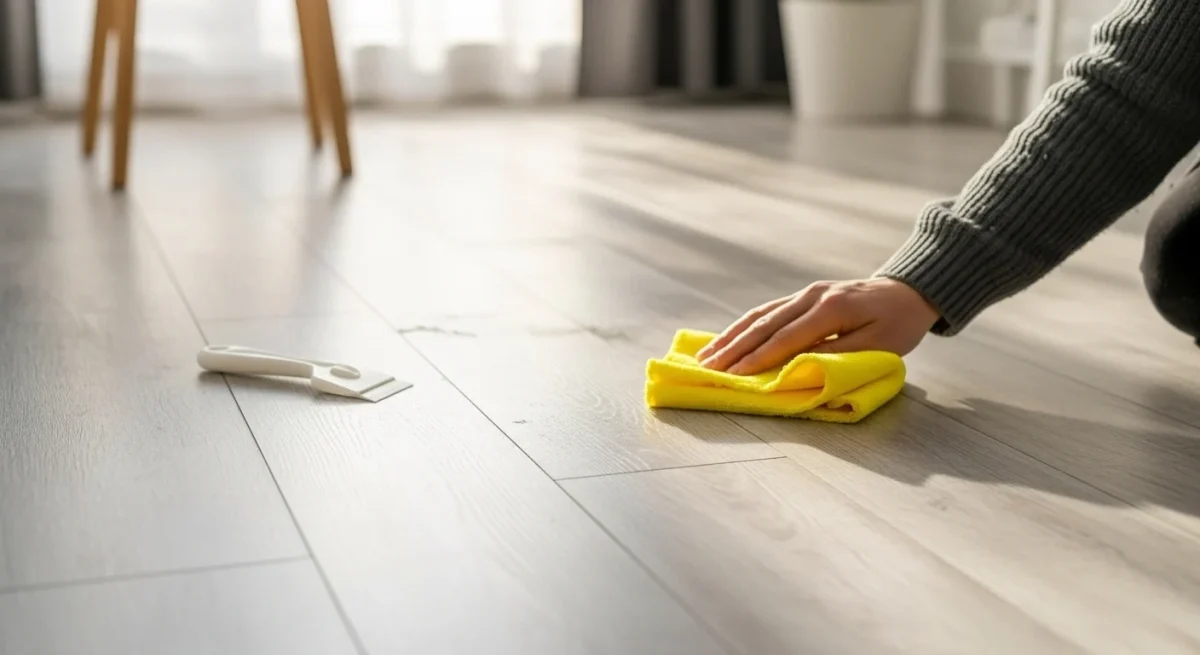
- Wipe and repeat. Use a damp cloth to pick up any loose bits. For thicker glue, you may need to warm and scrape two or three times rather than trying to force it all off at once.
Method 2: Oil or Vinegar to Loosen Adhesive
If heat alone isn’t getting the job done, the lipid content in oils and the mild acidity in vinegar can help break down the adhesive bond without harming the vinyl. This method works especially well on sticker residue, tape adhesive, and older dried craft glue.
- Choose your solution. Dab a small amount of mineral oil, baby oil, or a 50/50 mix of white vinegar and warm water onto a clean cloth.
- Let it dwell. Lay the damp cloth directly over the glue spot and let it sit for 15 to 20 minutes. This gives the solution time to penetrate and weaken the adhesive from below.
- Wipe and scrape. Remove the cloth and rub the area firmly. The glue should be soft enough to come off. Use your plastic scraper for anything stubborn that remains.
- Clean the residue. Oil and vinegar both leave a film if you skip this step. Wipe the area with a cloth dipped in warm soapy water, then dry it completely.
Does Rubbing Alcohol Damage Vinyl Flooring When Removing Glue?
No. Rubbing alcohol, specifically 70% isopropyl alcohol (IPA), is one of the safest and most effective options for dissolving sticky adhesive residue on vinyl. It works by breaking down the polymer chains in water-based and solvent-based adhesives alike, and it evaporates quickly so it doesn’t soak into seams or underlayment the way water can. Avoid concentrations above 90%, which can be harsher on the finish.
- Dampen, don’t pour. Apply a small amount to a soft cloth. Never pour IPA directly onto the floor.
- Rub in circles. Place the cloth on the residue and rub with gentle circular pressure. You’ll feel the glue starting to dissolve and transfer onto the cloth.
- Wipe clean. Alcohol evaporates fast, but follow up with a plain water wipe to remove any last traces.
| Glue Type | Best Household Method |
| Super glue (cyanoacrylate) | Rubbing alcohol (70% IPA) + plastic scraper |
| Hot glue | Heat and scrape only. Hot glue re-softens easily with a hairdryer. |
| Craft glue (PVA) | Warm water soak + gentle scraping. PVA is water-soluble. |
| Tape or sticker residue | Baby oil or mineral oil, 15-min dwell, then scrape |
| Epoxy (partially cured) | Rubbing alcohol while still soft. Fully cured epoxy needs commercial remover. |
| Construction adhesive | Heat + IPA for surface spots. Widespread adhesive needs commercial stripper. |
What Is the Best Vinyl Floor Adhesive Remover for Stubborn Glue?
When household methods fall short on fully cured or heavy-duty adhesive, a commercial remover is your most reliable option. The key is picking one that’s labeled safe for vinyl or resilient flooring. Using the wrong product can strip the finish or soften the surface. Look for citrus-based or soy-based formulas first since they’re effective and low-fume. Save solvent-based products for the toughest jobs.
How to Choose a Commercial Remover
- Citrus-based removers (like Goo Gone): These use citrus oil (d-limonene) to break down adhesives. They work on a wide range of glue types, smell pleasant, and are generally safe for vinyl wear layers when used as directed. This is most people’s best starting point.
- Soy-based removers: These work by biodegrading the adhesive rather than dissolving it chemically. They need a longer dwell time, sometimes up to 30 minutes, but they’re very effective and have almost no VOCs.
- Solvent-based removers (like Decco or Adhesive-B-Gone): These are the heaviest-duty option. Use them for fully cured construction adhesive or old mastic. They require good ventilation and a careful spot test first.
In most US hardware stores including Home Depot and Lowe’s, you’ll find all three types. Goo Gone Adhesive Remover is the most widely available and a solid first choice. For old flooring adhesive on a subfloor, look for a product specifically labeled as mastic remover.
How to Apply Commercial Removers Safely
- Read the label first. Dwell times, ventilation requirements, and cleanup methods vary by product. What works for one formula may not apply to another.
- Ventilate the space. Open windows and doors before you start, especially with solvent-based products. Good airflow prevents VOC buildup.
- Spot test, even with vinyl-safe products. Apply a small amount to a hidden patch, wait the full dwell time, then wipe and check the surface.
- Apply to cloth, not directly to the floor. Put the remover on your rag, then place the rag over the glue. This gives you control over how much contacts the vinyl.
- Wait, then scrape. Once the glue has softened into a gel-like consistency, lift it with your plastic scraper. If you see scuff marks from the scraper, you may need to address those separately.
- Neutralize and clean. Wipe the area with warm soapy water after you’re done to remove any chemical residue from the floor.
How Do You Remove Widespread Flooring Adhesive from a Subfloor?
Pulling up old vinyl tiles usually leaves a sticky, blackened layer of adhesive on the subfloor underneath. This is a different job from spot cleaning. You need a smooth, flat surface for your new flooring installation, and that means getting the old adhesive off as completely as possible. The method depends entirely on whether you’re working over concrete or wood.
How to Remove Vinyl Flooring Adhesive from Concrete
Concrete is dense and durable, so you can be more aggressive here than you would with finished vinyl. For thick patches, a long-handled floor scraper, sometimes called a bully scraper, handles the bulk of it mechanically. Work in sections and scrape at a low angle to avoid gouging the concrete surface. For the thin residue layer that remains, a dedicated mastic remover or chemical adhesive stripper designed for concrete gets it down to bare slab. Most professionals use both methods in sequence: mechanical scraping first, then chemical cleanup.
How to Remove Vinyl Flooring Adhesive from Wood
Wood subfloors need more care. They’re sensitive to both moisture and heat, and oversaturating them with chemical remover can cause swelling, warping, or delamination between layers. The safest approach is a heat gun on low combined with a pull scraper, working in small sections at a time. If you do use a chemical remover, apply it sparingly, let it dwell, then scrape and wipe immediately. Don’t let it pool or spread beyond the work area.
| SAFETY WARNING: Asbestos Risk in Older Homes |
| If your home was built before 1980, stop all scraping work immediately and read this section carefully. Old vinyl flooring, and especially the black mastic adhesive commonly used beneath 9×9-inch or 12×12-inch tiles, may contain asbestos fibers. Dry scraping, sanding, or chipping this type of adhesive releases microscopic fibers into the air. The World Health Organization identifies asbestos as a confirmed cause of severe respiratory disease, including mesothelioma. If you see thick black mastic or suspect pre-1980 materials, do not disturb them. Contact a certified asbestos abatement professional in your area for testing and, if necessary, licensed removal. This is not a DIY situation. |
What Chemicals Should You Never Use to Clean Vinyl Floors?
Knowing what not to use is as important as knowing what works. Vinyl flooring’s wear layer is a thin PVC-based coating, and several common household cleaners will damage or dissolve it on contact. The damage from the wrong cleaner is often permanent. These are the three you need to keep away from vinyl floors entirely.
Will Acetone or Nail Polish Remover Damage Vinyl?
Yes, and significantly. Acetone is a powerful organic solvent that dissolves PVC polymers, which is exactly what your floor’s wear layer is made of. Applying acetone to vinyl softens the surface, causes discoloration, and leaves a permanently dull or gummy patch that you can’t buff out. Most nail polish removers are acetone-based. Check the label before using any nail care product near your floor. Acetone-free nail polish remover is safer, but even that should be tested first.
Are Bleach and Ammonia Safe for Vinyl Floors?
Neither one is safe for vinyl, and both cause irreversible damage. Chlorine bleach is an oxidizing agent that reacts with vinyl’s surface coating, pulling color out of the floor and leaving yellow or white staining. Ammonia, found in many glass cleaners and multi-surface sprays, is highly alkaline and degrades the protective finish over time. The floor won’t show damage immediately, but repeated use causes the surface to become progressively dull and more vulnerable to scratching. If you’re unsure what’s in a cleaner, check the label for either ingredient before using it anywhere near vinyl.
| Product | Safe for Vinyl? |
| 70% Isopropyl alcohol (rubbing alcohol) | Yes. Safe and effective for adhesive residue. |
| White vinegar (diluted 50/50) | Yes. Mild and effective for light adhesive. |
| Baby oil or mineral oil | Yes. Good for sticker residue and tape adhesive. |
| Citrus-based remover (Goo Gone) | Yes, with spot test. Follow label directions. |
| Acetone / nail polish remover | No. Dissolves the wear layer permanently. |
| Bleach | No. Causes permanent color stripping and staining. |
| Ammonia-based cleaners | No. Degrades the finish with repeated use. |
| Abrasive scrubbers (steel wool, sandpaper) | No. Scratches the surface permanently. |
How Can You Maintain Your Vinyl Floor After Glue Removal?
Once the glue is gone, a quick final cleanup keeps the treated spot from standing out against the rest of your floor. Oil-based methods and commercial removers both leave a residue that attracts dirt if you skip the finishing step. A proper rinse and dry takes about five minutes and makes a real difference in how the floor looks afterward.
Cleaning the Area After Glue Removal
- Wash. Wipe the treated area with a soft cloth dipped in warm water and a single drop of pH-neutral dish soap. Keep the cloth damp, not soaking wet.
- Rinse. Wipe again with a second cloth dampened with plain water only. This pulls up any soap film left behind.
- Dry. Buff the spot dry with a clean towel. Don’t let water sit on vinyl seams, especially on glue-down installation where the adhesive beneath can be weakened by prolonged moisture. If the area is large, run a fan over it for a few minutes.
Tips to Prevent Future Glue Stains
- Lay down protection before any project. A silicone mat, drop cloth, or even folded cardboard catches glue drips before they reach the floor.
- Clean wet glue immediately. Fresh glue wipes up in seconds with a damp paper towel. Dried glue takes considerably longer to deal with.
- Use a silicone mat under hot glue guns. Hot glue hardens fast and bonds strongly to vinyl. Prevention is much easier than removal.
- Keep acetone-based products away from the work area. If you’re doing nails, crafts, or repairs near vinyl floors, set up on a table with a mat underneath.
Frequently Asked Questions
Does WD-40 Remove Vinyl Glue?
WD-40 can soften and loosen certain types of adhesive residue on vinyl, so it does work in some cases. The active solvents in the formula break down lighter adhesive bonds. The significant downside is the oily petroleum residue it leaves behind. That film is slippery, attracts dirt quickly, and requires thorough cleanup with soap and water to fully remove. Because of that extra step, 70% isopropyl alcohol is almost always a better first choice. It’s more targeted, evaporates cleanly, and doesn’t leave any residue behind.
Can I Use Baking Soda to Clean My Vinyl Floors?
Baking soda isn’t a good choice for vinyl floor cleaning, even though it seems gentle. The reason is abrasion. Baking soda ranks at about 3 on the Mohs hardness scale, which is mild compared to most cleaning agents, but still harsh enough to create microscopic scratches in vinyl’s wear layer over repeated use. Those tiny scratches accumulate and gradually dull the surface’s protective finish. For routine cleaning, a pH-neutral floor cleaner or plain warm water with a drop of dish soap does the job without that risk. Save baking soda for odor control in other areas of the home.
How Do You Soften Hardened Glue on Vinyl?
The most reliable and lowest-risk method is gentle heat from a hairdryer. Hold it 4 to 6 inches from the surface and run it on a low or medium setting for 20 to 30 seconds. This raises the surface temperature enough to soften the adhesive’s bond without reaching the threshold where vinyl begins to warp or discolor. Keep the dryer moving slightly rather than holding it in one spot. Once the glue feels pliable, use a plastic scraper held at a low angle to lift it cleanly. For old or fully cured glue that doesn’t respond to heat alone, follow up with rubbing alcohol or a citrus-based remover.
What Is the Difference Between Glue-Down Vinyl and Floating Vinyl for Removal?
Glue-down vinyl is installed with adhesive bonded directly to the subfloor, meaning the floor itself is the adhesive-holding surface. Residue removal on glue-down vinyl requires extra care because too much moisture or chemical soaking can weaken the installation adhesive still holding other tiles in place. Floating vinyl, including most LVP, locks together without adhesive and sits over an underlayment. With floating vinyl, any glue spills are on the surface only and carry no risk of destabilizing the installation. Use the same cleaning methods for both, but be especially conservative with liquid volume on glue-down floors.
What Should I Do if the Glue Has Been There for Years?
Old, fully cured adhesive requires a different approach than fresh spills. Start with heat from a hairdryer to check whether the adhesive has any remaining flexibility. If it softens even slightly, the heat and scrape method may still work with patience. If it stays rigid, move to a commercial citrus-based or soy-based remover and give it the full dwell time the label specifies. For mastic or black adhesive in older homes, check for asbestos before disturbing anything. If the adhesive is bonded so deeply that surface methods aren’t working and the surrounding flooring isn’t worth saving, a full replacement may be the more practical solution.
Conclusion: Keep Your Floors Looking Flawless
Removing dried glue from vinyl flooring rarely requires extreme measures when you approach it the right way. Start mild with heat and a plastic scraper, step up to rubbing alcohol for sticky residue, and only reach for a commercial remover when the glue is truly stubborn. A spot test before any chemical, careful attention to what not to use, and a proper cleanup afterward are what separate a clean result from one that damages the floor in the process.
The most common mistake is also the most avoidable one: reaching for acetone, bleach, or a metal scraper out of frustration. None of those fixes the problem. They create a new one. Stick to the methods in this guide, work in stages, and your vinyl floor will look as clean as the day it was installed.