Warm Mood Lighting Ideas for Dark Winter Living Rooms (2700K Guide)
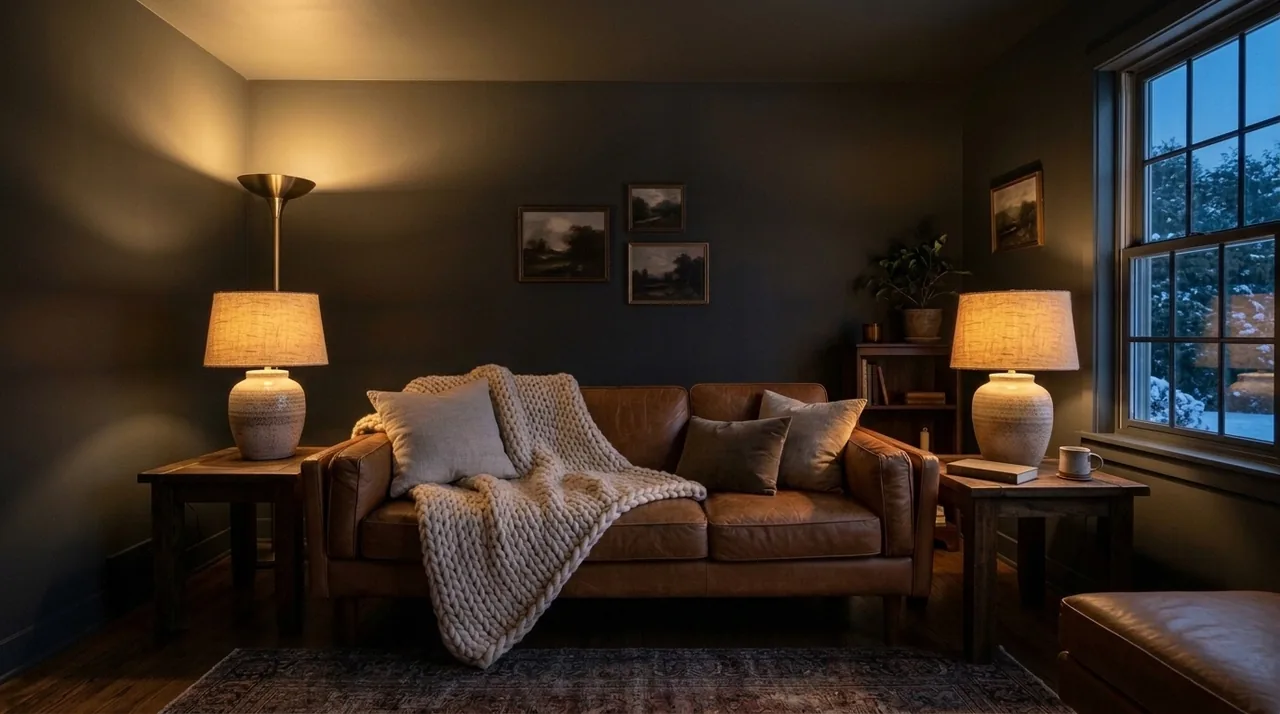
Skip the overhead ceiling fixture and layer three vertical tiers of 2700K lighting across your dark winter living room. Aim for 15 to 20 lumens per square foot using CRI 90+ and R9 50+ dim-to-warm LED bulbs. Bounce light off matte walls and ceilings to erase harsh shadows fast.
Short winter days leave north-facing living rooms feeling flat by four in the afternoon. Flipping on the ceiling flush mount floods the room with flat downward glare that washes out wood grain and cozy textiles. Low-angle lamps and warm wall bounce fix that glare immediately while keeping enough brightness for reading and evening conversation.
How Do You Layer Warm Mood Lighting Without Overhead Lights?
Build a no-overhead lighting plan by placing fixtures at three distinct heights. Use a floor torchiere at 60 to 72 inches (400 to 800 lumens) for ceiling bounce, seated table lamps with shade bottoms at 48 to 52 inches (200 to 400 lumens), and accent sconces or picture lights (200 to 400 lumens).
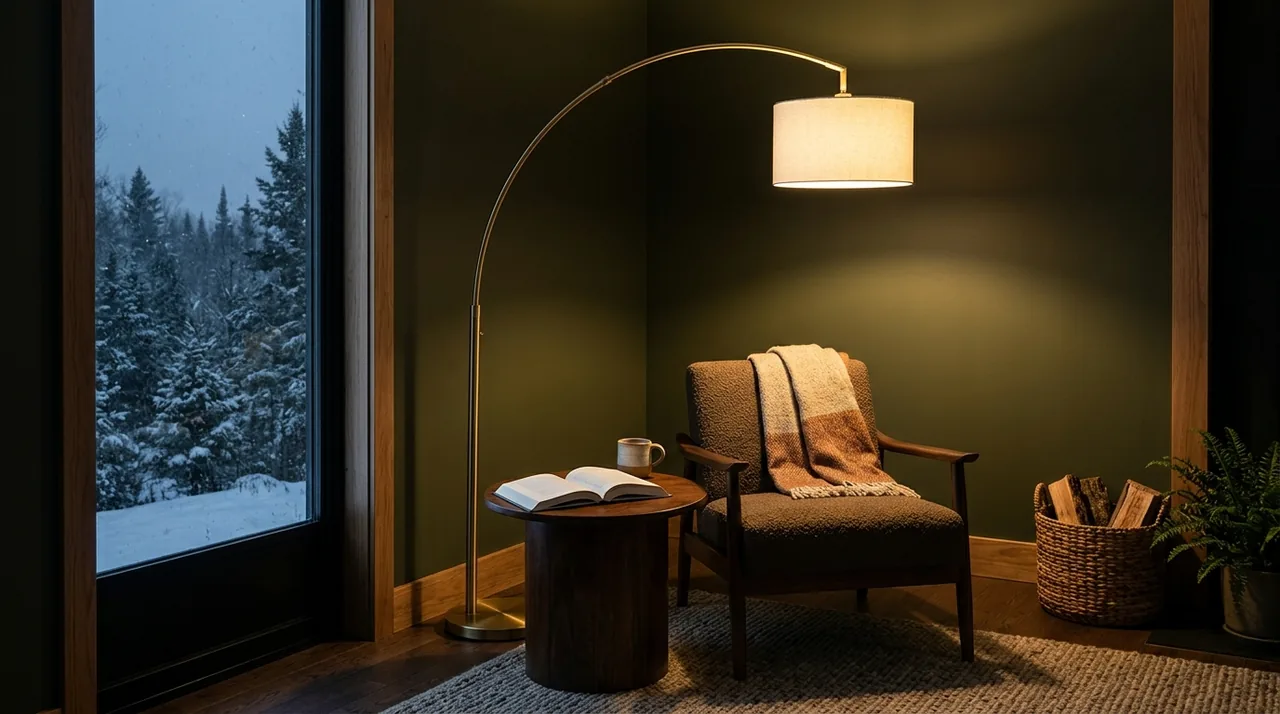
Relying on a single bright lamp in one corner creates a blinding hotspot next to a pitch-black sofa. Spreading smaller pools of 2700K light around the perimeter pulls the eye across the entire room. Every corner stays soft, legible, and balanced without turning on a single ceiling switch.
Tier 1: Floor Torchieres for Soft Ceiling Bounce
Place a tall floor torchiere in the darkest corner of your living room to replace the missing ceiling fixture. Aim an uplight between 60 and 72 inches tall at a matte white ceiling with a 400 to 800 lumen bulb. The ceiling scatters that warm 2700K glow downward like late-afternoon sun.
If your corner sits behind a tall bookcase or armchair, read our guide on How to Fix a Dark Corner in a Room for exact clearance measurements. Keep the top rim of the torchiere above 60 inches so standing guests never stare down into the bare LED emitter.
Tier 2: Seated Table Lamps at Eye Level
Position table lamps so the bottom edge of the shade sits between 48 and 52 inches from the floor. That measurement lines up with seated eye level on a standard sofa, hiding the bright bulb while spilling warm light onto your book or coffee table.
Oversized bases paired with tiny shades look awkward and leak raw glare across the room. Use our Lamp Shade Size Calculator Guide to match drum width and harp height to your end table. Stick to 200 to 400 lumens per table lamp so the glow stays calm.
Tier 3: Accent Sconces and Picture Lights
Mount wall sconces or picture lights around artwork, built-in bookshelves, or fireplace mantels to give the room depth after sunset. A 200 to 400 lumen accent beam pulls dark walls forward and breaks up flat shadows between your main lamps.
Tight footprints need smart wall placement so cords and shades do not crowd your walking path. Check our walkthrough on How to Layer Lighting in a Small Living Room for compact sconce spacing around narrow sofas.
How Many Lumens Do You Need for a Dark Winter Living Room?
Dark winter living rooms need 15 to 20 lumens per square foot, compared to 10 lumens per square foot for sunlit rooms. Based on Illuminating Engineering Society (IES) residential baselines, a 250-square-foot living room requires 3,750 to 5,000 total lumens split across five or six dimmable lamps.
Heavy wool curtains, dark walnut floors, and deep wall paint absorb up to half of your ambient light. Putting 4,000 lumens into one floor lamp will blind everyone in the room. Splitting that same total across six smaller fixtures lets you dial the whole space up for board games or down to 30 percent for movies.
If your living room has vaulted ceilings or an open dining area, run your exact dimensions through our How Many Lumens Do You Need for a Living Room breakdown. You can also test custom dim-level totals in the Room Lighting Lumens Calculator before buying bulbs.
| Living Room Size | Standard Room (10 lm/sq ft) | Dark Winter Room (15-20 lm/sq ft) | Recommended Fixture Count |
|---|---|---|---|
| 150 sq ft (10 x 15 ft) | 1,500 lumens | 2,250 to 3,000 lumens | 4 to 5 lamps |
| 225 sq ft (15 x 15 ft) | 2,250 lumens | 3,375 to 4,500 lumens | 5 to 6 lamps |
| 300 sq ft (15 x 20 ft) | 3,000 lumens | 4,500 to 6,000 lumens | 6 to 7 lamps |
| 400 sq ft (20 x 20 ft) | 4,000 lumens | 6,000 to 8,000 lumens | 7 to 9 lamps |
2700K vs 3000K vs 2200K: Which Color Temperature Works Best in Winter?
2700K warm white is the best all-around Kelvin choice for dark winter living rooms because it delivers cozy incandescent warmth without turning white trim orange. Choose 3000K soft white only for cool gray walls, and save 2200K amber bulbs strictly for decorative sconces and accent lamps.
Why 2700K Sometimes Looks Muddy on Gray Walls
Many homeowners screw a 2700K bulb into a gray living room and wonder why the paint suddenly looks greenish-brown. Cool gray paint with blue undertones absorbs yellow light waves and bounces back a dull, muddy tint after dark.
You can fix muddy walls in two ways. Pair cool slate walls with crisp 3000K bulbs, or repaint with creamy taupe and greige tones that welcome 2700K warmth. Preview how each shade shifts on our Kelvin Color Temperature Visualizer, and check our Warm Neutral Color Palette for a Dark Living Room guide for paint codes that thrive under warm bulbs.
Comparing 2200K, 2700K, and 3000K Bulbs Side by Side
Keep every main lamp in your living room at the same Kelvin rating so your walls do not look patchy. Mixing 2700K and 3000K in one open room makes the warmer lamp look dingy and the cooler lamp look harsh. Read our full comparison on 2700K vs 3000K Living Room Lighting if you are torn between the two.
| Color Temperature | Visual Tone | Best Paint & Wood Pairing | Best Winter Living Room Role |
|---|---|---|---|
| 2200K (Amber Glow) | Deep candlelit orange | Dark espresso, brick, brass | Decorative sconces, open-filament accents |
| 2700K (Warm White) | Classic incandescent warmth | Cream, greige, oak, walnut | Primary floor lamps, reading table lamps |
| 3000K (Soft White) | Crisp neutral white | Cool gray, stark white, slate | Task lighting, modern art walls |
What Bulb Specs Matter Most: CRI 90+, R9 Values, and Dim-to-Warm LEDs
Buy 2700K LED bulbs rated CRI 90 or higher with an R9 red-rendering score above 50, and pick dim-to-warm models that shift from 2700K down to 1800K on a dimmer. High R9 values keep oak furniture, terracotta pillows, and skin tones rich instead of gray and lifeless.
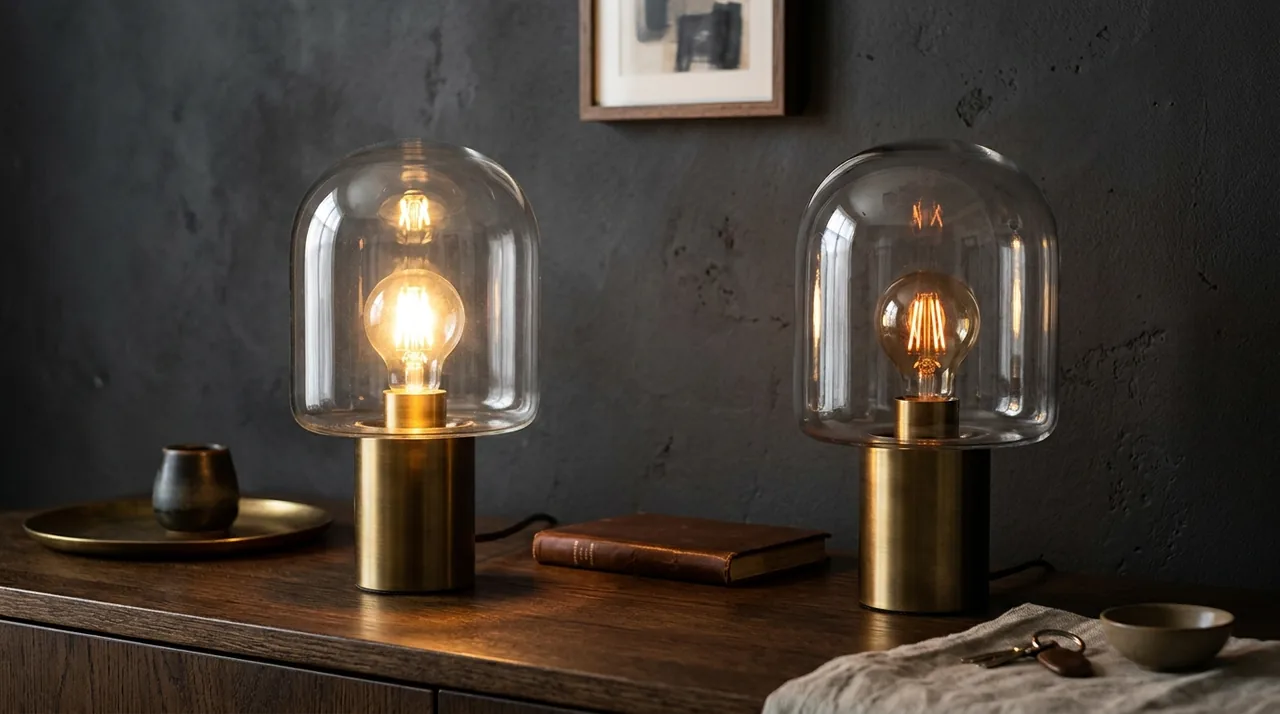
As noted in the U.S. Department of Energy Lighting Choices guide, ENERGY STAR LEDs use a fraction of old halogen power while matching warm color output. Check the Lighting Facts label on the box for CRI 90+ before you toss bulbs into your cart.
Why R9 Matters More Than Standard CRI in Dark Rooms
Standard CRI averages eight pastel test colors, which means a cheap CRI 80 bulb can score near zero on R9 deep red. When R9 drops below 20, cherry wood looks flat, leather sofas look dull, and people look washed out under winter lamplight.
Mass-market upgrades like Philips Ultra Definition Warm Glow hit CRI 95 with R9 scores around 50 to 60 and shift down toward 2200K when dimmed. Specialty bulbs like Waveform Centric Home push R9 past 80 for true gallery color, though they stay fixed at 2700K.
Pairing Dim-to-Warm Bulbs With the Right Dimmer Switch
Dim-to-warm bulbs mimic sunset by dropping from 2700K at full brightness down to 1800K or 2200K at low output. Older rotary TRIAC dimmers built for incandescent bulbs often cause LEDs to buzz, strobe, or drop out below 25 percent.
Swap legacy switches for an LED-rated trailing-edge ELV dimmer or a modern smart plug dimmer like Lutron Caseta. You get silent, flicker-free dimming down to 5 percent for late-night winter lounging.
| Bulb Option | CRI / R9 Score | Dimming Behavior | Best Use Case |
|---|---|---|---|
| Budget CRI 80 LED | CRI 80 / R9 near 0 | Fixed 2700K, prone to flicker | Closets, hallways, utility spaces |
| Philips Ultra Definition Warm Glow | CRI 95 / R9 50+ | Dims 2700K down to 2200K | Main living room table and floor lamps |
| Waveform Centric Home | CRI 95+ / R9 80+ | Fixed 2700K, zero-flicker driver | Reading lamps, art, true color rooms |
Which Lamp Shade Materials Diffuse Winter Glare Best?
Natural white linen, oatmeal fabric, and frosted opal glass diffuse 2700K light best because they scatter glare evenly across the room. Dark opaque metal and heavy black drum shades trap light inside narrow vertical cones. Those dark shades leave your walls and corners pitch black.
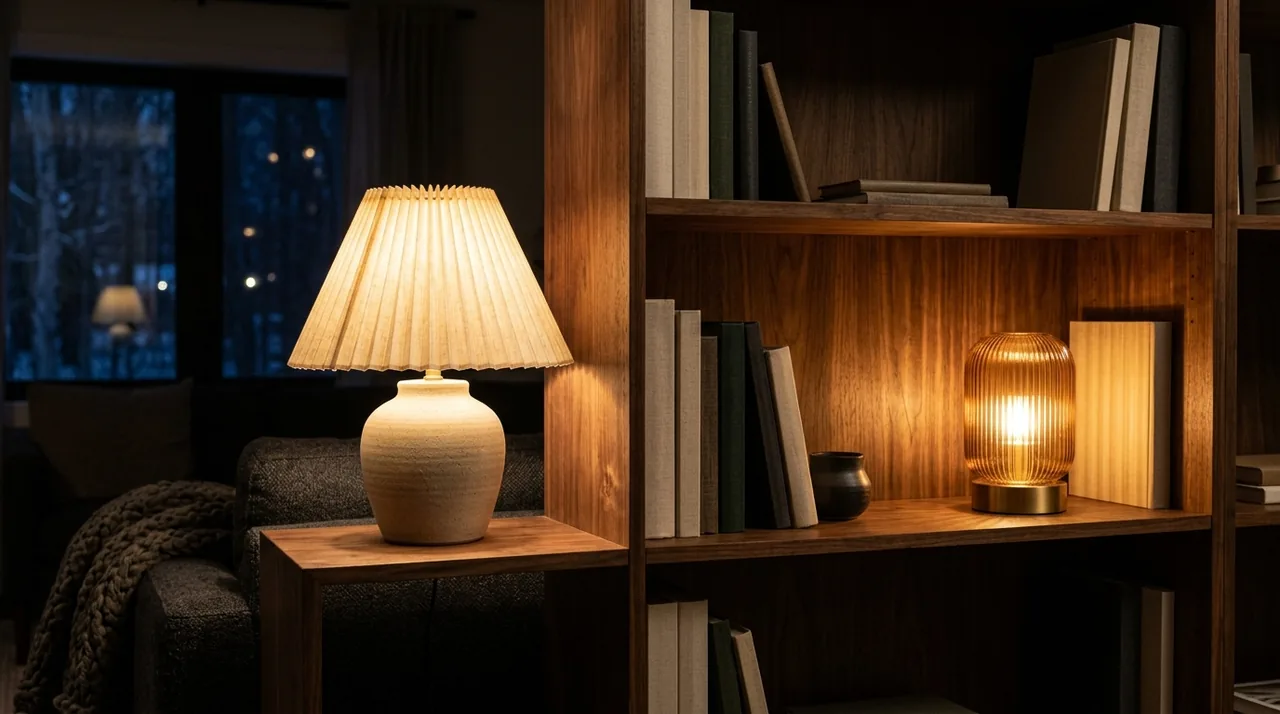
The material wrapped around your bulb controls half of your room mood and comfort. Match your shade diameter to your end table width so the drum sits at least two inches inside the table edge. Use these shade rules when shopping for winter lamps:
- Natural linen and oatmeal cotton shades pass 50 to 65 percent of bulb lumens through the sides. They warm up nearby walls and hide the bare filament from view.
- Frosted opal glass globes spread 360-degree ambient glow for tight end tables and dark entry corners.
- Warm parchment and cream paper shades add a subtle golden tint that pairs naturally with 2700K dim-to-warm bulbs.
- Opaque metal or dark fabric shades block side spill completely. Save them for focused reading chairs next to brighter ambient lamps.
How Do You Time Your 2700K Lighting Shift During Dark Winter Evenings?
Run your living room lamps at full 2700K brightness around 4:00 PM when winter daylight fades, then dim them to 40 percent two hours before bed. Stepping down brightness on a consistent schedule helps your eyes adjust to evening darkness without plunging your living room into gloom.
Winter sunsets arrive before dinner in northern climates, which often triggers eye strain if you wait until dark to turn on lamps. Automated smart dimmers bridge the gap between afternoon overcast light and late-night relaxation. Program your living room scene around three simple evening checkpoints:
- At 4:00 PM, trigger your floor torchieres and table lamps to 85 percent output at 2700K to offset gray window light.
- At 7:00 PM, drop the floor torchieres to 55 percent and keep reading lamps at 70 percent for dinner and conversation.
- At 9:30 PM, shift dim-to-warm bulbs down to 30 percent so they glow at 2000K to 2200K while accent picture lights carry the background.
How Can Renters Add Warm Mood Lighting Without Hardwiring?
Renters can build a complete three-tier 2700K layout using plug-in wall sconces, rechargeable magnetic picture lights, and smart dimmer plugs. You get wall-mounted height and synchronized evening dimming in under an hour without cutting drywall or touching household electrical wiring.
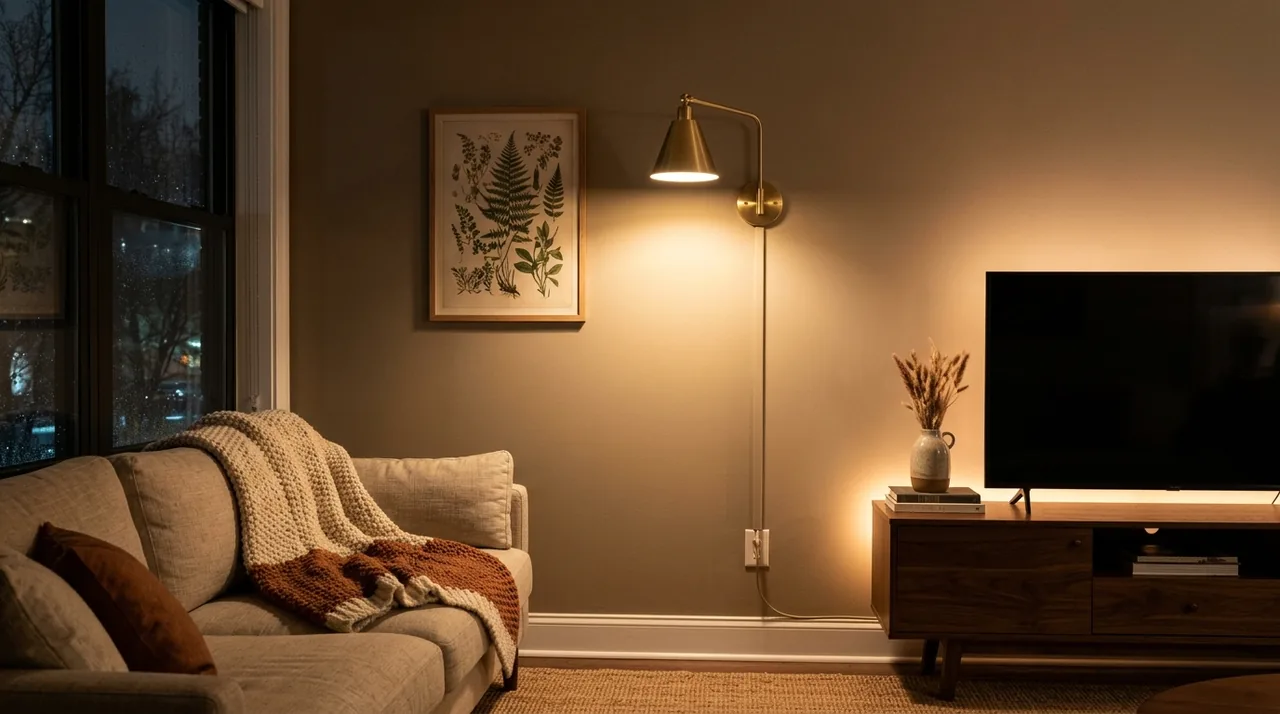
Skipping hardwired switches does not mean settling for a dark apartment. Try these four zero-damage upgrades:
- Mount plug-in swing-arm sconces beside your sofa using drywall anchors, and hide the drop cord inside paintable adhesive cord channels.
- Plug standard floor and table lamps into smart lamp dimmers so one tap on a wireless remote dims all three tiers together at 5:00 PM.
- Clip USB-C rechargeable 2700K picture lights onto framed art or bookshelves for wire-free Tier 3 accent glow.
- Tuck a slim 2700K LED strip behind a low media console or bookshelf to wash the wall with soft indirect bounce.
Top 2700K Mood Lighting Picks for Dark Winter Living Rooms
Pairing high-CRI 2700K bulbs with diffusing shades and compatible dimmers solves dark winter glare in one afternoon. These six fixture and bulb picks match the exact lumen, R9, and height specs covered above, helping you build a layered room without guesswork.
1. Philips Ultra Definition Warm Glow LED Bulbs (2700K to 2200K)
These standard E26 bulbs start at a crisp 2700K for afternoon reading and shift down to a 2200K candle glow as you dim them.
- Specs: 800 lumens (60W equivalent), CRI 90+, 2700K to 2200K dim-to-warm curve.
- Best For: Table lamps and floor lamps that need an affordable, everyday warm-dimming upgrade.
2. Waveform Lighting Centric Home 2700K Full Spectrum LED
Built for color-sensitive spaces, this flicker-free bulb renders rich walnut furniture, terracotta textiles, and natural skin tones without any greenish or muddy cast.
- Specs: 800 lumens, CRI 95+, R9 80+ deep-red rendering, zero-flicker driver.
- Best For: Primary living room lamps in rooms with dark wood paneling, leather, or warm paint.
3. Brushed Brass Torchiere Floor Lamp with Linen Shade
An upward-facing torchiere bounces warm 2700K light off your ceiling to push back dark winter corners without shining bare bulbs into your eyes.
- Specs: 65 to 72 inches tall, heavy weighted base, accepts 800 to 1,500 lumen E26 LED bulbs.
- Best For: Dead living room corners behind sectionals or beside bookcases.
4. Ceramic Table Lamp with Cream Linen Drum Shade
A 22 to 26 inch table lamp places the bottom edge of its cream linen shade right around seated eye level to eliminate bulb glare.
- Specs: 24 inches overall height, translucent cream linen drum shade, rotary socket switch.
- Best For: Side tables and media consoles paired with 200 to 400 lumen 2700K bulbs.
5. Lutron Caseta Plug-In Smart Lamp Dimmer Kit
Renters and homeowners can add smooth, buzz-free dimming to any two living room lamps without touching wall wiring or hiring an electrician.
- Specs: Supports up to 100W dimmable LEDs, includes wireless Pico remote, zero-flicker dimming curve.
- Best For: Controlling multiple floor and table lamps together from the sofa on dark winter nights.
6. Brass Plug-In Swing-Arm Wall Sconce with Cord Cover
Mount these beside a sofa or reading chair with simple drywall anchors to free up cramped end tables while adding directional 2700K task light.
- Specs: 6-foot plug-in cord, matching brass cord channels, articulating swing arm, white linen shade.
- Best For: Apartments and narrow living rooms with no floor space for extra lamp tables.
Frequently Asked Questions About Winter Living Room Mood Lighting
Most winter living room lighting issues stem from relying on a single overhead fixture, mixing 2700K and 3000K bulbs, or using low-CRI LEDs. Matching your bulb Kelvin, layering three vertical tiers, and adding plug-in dimmers fixes glare and dark corners in one afternoon.
Can I mix 2700K and 3000K bulbs in the same living room?
Keep all living room bulbs at the same Kelvin temperature whenever possible. Placing a 3000K bulb across from a 2700K lamp makes the 2700K light look overly yellow and the 3000K light look sterile. If you need 3000K for a task desk in an open-plan space, turn off the desk lamp during evening movie hours.
Why do my 2700K LED bulbs flicker when dimmed low?
Flickering happens when modern LED drivers are wired to old incandescent TRIAC dimmers that cannot handle low wattage loads. Check your bulb packaging for compatible dimmer lists and upgrade to an LED-rated trailing-edge ELV dimmer or a smart plug dimmer.
How do I brighten a north-facing living room in winter without harsh glare?
Aim two 2700K floor torchieres or wide linen-shaded lamps toward light-colored walls and matte ceilings. Bouncing 15 to 20 lumens per square foot off vertical surfaces fills the room with soft indirect light and keeps every bare bulb out of sight.