Lamp Shade Size Calculator Guide: 5 Proportion Rules
Reader Disclosure: This post contains affiliate links. If you buy through them, we may earn a commission at no extra cost to you. We only recommend items tested for clean craftsmanship and authentic durability.
A properly scaled lampshade should have a height equal to roughly two-thirds of your lamp base height. The bottom diameter of the shade should sit within two inches of the base height. Crucially, the shade width must measure at least twice the widest point of the base. Following these three rules creates balance and hides internal hardware completely.
Homeowners constantly struggle with two frustrating lampshade mistakes. First, they pick a replacement shade that sits too high on the brass harp. This exposes the raw socket, screw threading, and switch knob. Second, they pair a massive 18-inch drum shade with a petite ceramic jug base. The lamp looks top-heavy, wobbles at the slightest bump, and ruins tabletop balance. You can fix both issues with a simple tape measure.
Before purchasing replacement shades or ordering custom fabric covers, enter your lamp base dimensions into our interactive Lamp Shade Calculator to generate your ideal shade height, bottom diameter, and harp size instantly.
The Three Golden Proportions of Lamp Shade Sizing
Classic interior design relies on three mathematical ratios to pair lamp shades with bases. The first ratio governs height: shade height should equal sixty to sixty-five percent of the base height. The second ratio controls width: shade bottom diameter should measure within two inches of total base height. The third ratio dictates bulk: the shade bottom must measure at least twice the width of the base at its widest section.
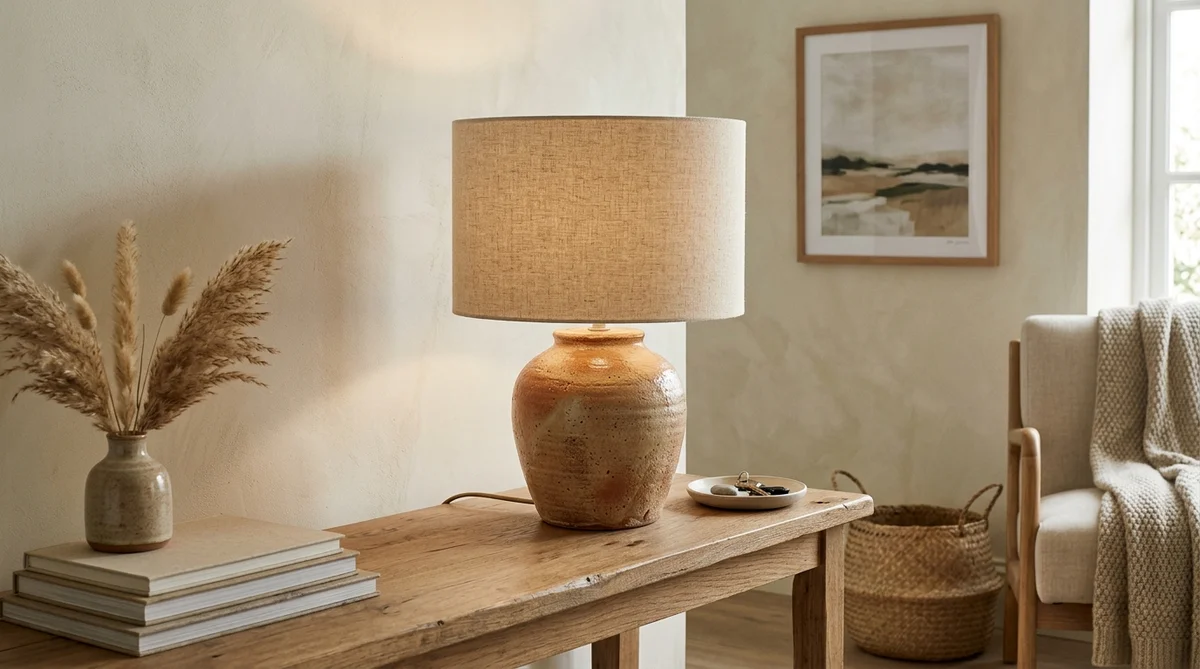
A seasoned contributor on Reddit’s r/ThriftStoreHauls recently shared an antique ginger jar lamp rescue. The thrifted base stood eighteen inches tall and eight inches wide. The owner initially grabbed a cheap ten-inch bell shade from a local store. The lamp looked awkward and exposed the brass socket neck. After recalculating, they swapped to a twelve-inch-tall, sixteen-inch-wide tapered drum shade. The lamp immediately looked like an expensive designer piece.
Measuring Lamp Base Height Correctly
Many people make their first measuring error before writing down a single number. Never measure from the table surface to the tip of the decorative finial. That total height includes the shade hardware and distorts your ratio calculations.
Place your tape measure at the bottom edge of the lamp base resting on the table. Extend the tape straight up to the very base of the electrical light socket. Stop measuring where the decorative lamp body ends and the functional brass or plastic socket begins. That measurement represents your true base height.
The Two-Times Width Rule for Chunky Bases
Round ceramic jars, glass spheres, and carved stone blocks carry substantial visual bulk. For these fuller silhouettes, base height alone does not provide enough sizing data. Measure the lamp base across its widest horizontal diameter using a pair of calipers or a straight ruler.
Multiply that widest base dimension by two. A gourd lamp measuring nine inches across at its belly requires a shade with an eighteen-inch bottom diameter. A shade narrower than eighteen inches makes the lamp base appear swollen. Proper shade flare creates an anchor that grounds the entire table setting.
Harp Sizing and the One-Half-Inch Drop Rule
Your lampshade must cover the light socket completely without dropping so low that it covers the decorative neck of the lamp base. When viewed from standing or seated eye level, you should see zero brass socket parts, zero switch rods, and zero harp framework. The lower rim of the shade should drop approximately one-half inch below the bottom of the socket.
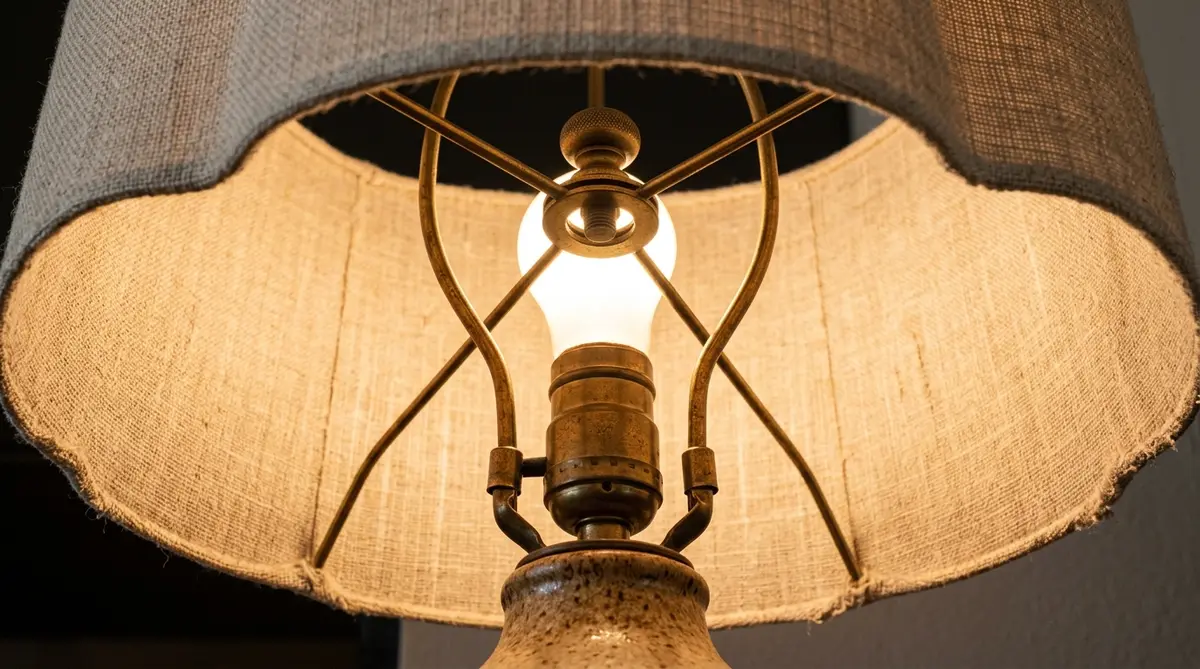
The metal wire frame arching around the lightbulb is called the lamp harp. Harps come in half-inch increments ranging from seven to twelve inches tall. Changing the harp represents the easiest and cheapest way to adjust how high or low a shade sits on your lamp.
How to Measure Replacement Harp Height
To measure an existing harp, remove the finial nut and lift the shade off the lamp. Unplug the lamp from the wall outlet first for electrical safety. Measure from the base of the harp saddle where it locks into the lower cradle up to the flat threaded stud at the top.
If your shade exposes the socket, buy a harp that measures one to two inches shorter than your current one. If the shade collides with the lamp body, buy a taller harp. Replacement harps cost under ten dollars online and install in two minutes without wire cutting.
Understanding Shade Fitter Types
The metal spider fitter represents the most common hardware style in American residential lighting. Three or four wire arms extend from the top rim of the shade to a small central washer. This washer rests directly on top of the harp stud, secured by a screw-on decorative finial.
European lamps frequently feature uno fitters or clip-on fitters instead of harps. An uno fitter attaches directly to a threaded socket shell beneath the bulb. Clip-on fitters feature two spring wire loops that grip the bulb glass directly. Check your lamp hardware style before shopping for replacement shades.
Matching Shade Shapes to Lamp Base Silhouettes
Match your shade shape to the architectural lines of your lamp base to maintain stylistic cohesion. Round, curvy, or urn-shaped bases pair naturally with round shades, drums, or classic empires. Square, rectangular, or angular geometric bases require square or rectangular shades to prevent visual clashing.
A classic drum shade features vertical sides where top and bottom diameters match. Drums deliver clean modern appeal and work well on cylindrical modern bases. A tapered drum or empire shade flares outward toward the bottom. Tapered shades direct more light downward onto table surfaces, making them practical choices for reading nooks and work desks.
Drum Shades Versus Traditional Empire Shades
Drum shades emphasize horizontal symmetry. They look bold and contemporary on mid-century modern ceramic lamps, slim brass rods, and blocky concrete forms. Because drum sides stay straight, they take up slightly more tabletop depth than tapered shapes.
Empire shades taper sharply from a narrow top to a wide bottom. They represent the classic choice for candlestick lamps, brass urns, and porcelain ginger jars. The wide bottom flare spreads warm reading light across nightstands while keeping the upper shade profile compact.
Oval and Rectangular Shades for Narrow Consoles
Narrow entryway consoles and shallow sofa tables create unique clearance challenges. A standard sixteen-inch round drum shade often bumps against the hallway wall or overhangs table edges. You risk knocking the lamp off the table whenever you walk past.
Oval and rectangular shades solve this problem neatly. An oval shade might measure eighteen inches wide along its front profile but only ten inches deep from front to back. This shallow depth hugs close to the wall while preserving generous horizontal scale from front viewing angles.
Fabric Translucency and Inner Liner Color
Shade fabric directly controls room mood and task usability. Coarse oatmeal linen diffuses light warmly while adding tactile texture to ceramic and stone lamps. Smooth silk or crisp white cotton passes more raw foot-candles, making them superior choices for home office desks.
Always inspect the interior shade liner before buying. A white or silver liner reflects maximum light downward for reading. A gold or brass foil liner warms the bulb glow into rich amber hues. Gold liners look luxurious in formal living rooms but cast a yellowish tint over makeup mirrors.
Floor Lamp Shade Proportions vs Table Lamps
Floor lamps follow modified sizing proportions because their tall vertical poles absorb visual mass differently than compact tabletop lamps. A standard floor lamp stands between fifty-four and sixty-four inches tall. Sizing a floor lamp shade to two-thirds of the pole height would result in a comically huge thirty-five-inch shade.
For standard floor lamps, shade height should measure ten to twelve inches, while bottom diameter should measure sixteen to twenty inches. Torchiere shades flare upward toward the ceiling to bounce ambient light, while downward reading pharmacy lamps keep shade diameters compact at eight to twelve inches.
Lamp Shade Sizing Reference Matrix
Use the direct reference table below to cross-check your lamp base height against recommended shade dimensions and matching harp sizes.
| Lamp Base Height (to Socket). | Ideal Shade Height. | Shade Bottom Diameter. | Recommended Harp Size. | Best Placement. |
|---|---|---|---|---|
| 10 to 12 inches (small). | 7 to 8 inches. | 10 to 12 inches. | 7.0 to 7.5 inches. | Small nightstand or bookshelf. |
| 14 to 16 inches (medium). | 9 to 11 inches. | 13 to 15 inches. | 8.0 to 8.5 inches. | Living room end table. |
| 18 to 20 inches (large). | 12 to 14 inches. | 16 to 18 inches. | 9.0 to 10.0 inches. | Wide entry console or buffet. |
| 22 to 26 inches (statement). | 14 to 17 inches. | 18 to 22 inches. | 10.5 to 12.0 inches. | Grand foyer or great room side table. |
| 54 to 60 inches (floor lamp). | 10 to 13 inches. | 18 to 20 inches. | Integrated Uno or Spider. | Beside living room reading armchair. |
For unique vintage lamps or irregular artisan pottery bases, enter your custom measurements into our Lamp Shade Calculator to calculate custom fitment parameters.
When shopping for replacement linen shades, heavy-gauge brass harps, and decorative finials, browse verified selections on Amazon to compare customer fitting photos and verified dimensions.
Five Common Lamp Shade Sizing Mistakes to Avoid
Decorator forums and thrift restoration threads frequently highlight these five common mistakes. Keep them in mind to protect your lighting budget.
Exposing the lamp socket. When your shade sits too high, the socket and switch stick out awkwardly. Choose a shorter harp or a shade with a deeper drop to hide the neck.
Overhanging table edges. Buying a shade wider than your side table invites bumped elbows and knocked-over lamps. Keep the shade rim at least two inches inside the table edge.
Ignoring bulb wattage heat ratings. Placing high-wattage bulbs inside narrow, shallow shades scorches shade liners and creates fire hazards. Maintain at least two inches of air gap between the bulb glass and the shade lining.
Mismatched base and shade shapes. Placing a sharp square shade on a curvy round ginger jar creates visual discord. Match curves with curves and angles with angles.
Forgetting the finial clearance. Choosing a shade with high spider arms without measuring ceiling clearance or harp stud threads leaves shades loose and tilted. Always tighten finials snugly.
For more architectural lighting advice across accent fixtures, chandeliers, and task lighting, explore our full Lighting Design and Fixtures guide archive.
Frequently Asked Questions About Lamp Shade Sizing
How tall should a lamp shade be compared to the base?
A lampshade height should equal approximately two-thirds of your lamp base height. Measure the base from the bottom tabletop surface up to the socket base. Multiply that number by 0.65 to find your ideal shade height in inches.
What size shade do I need for a 20-inch lamp base?
A 20-inch base needs a shade 13 to 14 inches tall with a bottom diameter between 18 and 20 inches. Pair this setup with a 9.5-inch or 10-inch harp so the lower shade rim covers the socket completely.
How do I know what size harp my lamp needs?
Measure your shade height and spider fitter drop. Subtract the spider drop from the total shade height, then add one-half inch. The resulting number matches the ideal harp height required to conceal the socket hardware.
Should a lamp shade cover the lamp socket?
Yes. The bottom rim of your lampshade should drop roughly one-half inch below the electrical socket base. You should never see the bare metal socket, switch stem, or harp hardware from standing or seated room angles.
How wide should a lampshade be compared to the table?
Your lampshade bottom diameter should stay smaller than your table surface. Leave at least two inches of clear tabletop border around the outer shade rim to prevent accidental bumps and keep room sightlines balanced.
Final Decorator Checklist for Lamp Shade Proportions
Measure base height up to the socket bottom. Multiply by 0.65 for shade height. Match bottom diameter to base height within two inches. Ensure bottom diameter measures twice the base width. Adjust your harp height so the shade rim drops one-half inch past the socket. Check that the shade sits two inches inside table edges.
Following these simple measurements ensures your table lamps look balanced, conceal unsightly wiring hardware, and provide comfortable, glare-free light across your home.