How to Layer Lighting Small Living Room: 3-Tier Blueprint
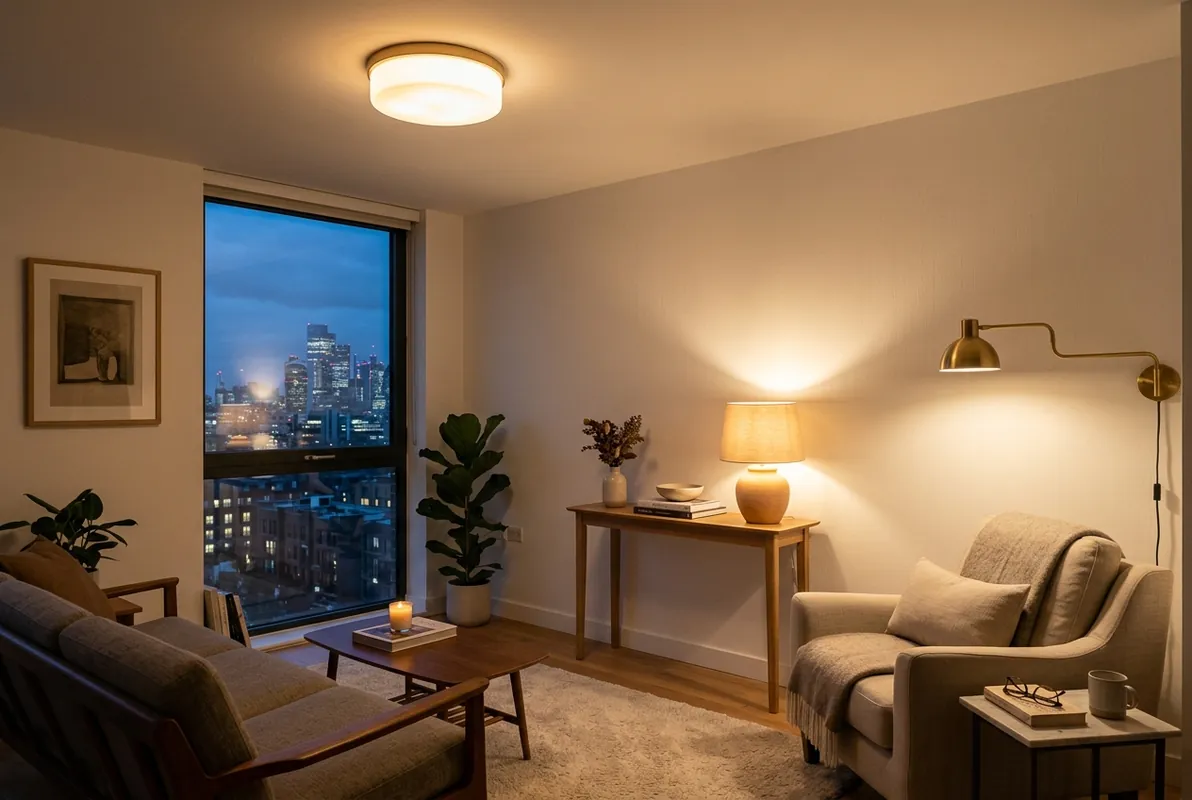
The best small living room lighting strategy layers ambient, task, and accent light. Spread fixtures across four distinct heights. Plan for 20 to 30 lumens per square foot. Use matched 2,700K warm white bulbs. Choose low-profile wall sconces, slim torchieres, and small table lamps. These pieces clear shadows without crowding floor space.
Reader Disclosure: This post contains affiliate links. If you buy through them, we may earn a commission at no extra cost to you. We only recommend items tested for clean craftsmanship and authentic durability.
Most small living rooms fall into the big light trap. Builders drop a single glass dome light into the center of the ceiling. That lone unshaded bulb casts harsh glare downward. Outer room corners stay dark and gloomy. Harsh overhead light flattens rugs and fabrics. It casts hard shadows across faces and makes a cozy living room feel cold.
Effective lighting for small living room layouts uses multiple low-wattage light sources. Avoid a single glaring ceiling fixture. Distributing small living room light fixtures across varied elevations defines conversation zones. It clears dark corners and expands tight floor space. Before purchasing new lights, calculate your room baseline with our Room Lumens Calculator to set clear light targets.
How to Layer Lighting Small Living Room Layouts: The 3 Core Tiers
Use ambient light for safe walking. Add task light for reading. Then use accent light to add depth. Balancing three layers prevents bright glare in one spot while corners sit in shadow. Each layer has one job. All three work together for flexible light from daytime hosting to late-night reading.
Ambient lighting forms your base. It replaces lost daylight at dusk. It delivers soft light for safe movement. Avoid high-wattage ceiling spotlights that blast straight down on your head. Use bounced ambient light instead. Set upward-facing torchiere lamps in corners to bounce light off pale ceilings. Bouncing photons off matte white plaster scatters the glow and makes low ceilings feel higher.
Task lighting gives you targeted brightness for reading or writing. It protects your eyes from strain. When end tables are too small for wide table lamps, mount a dimmable plug-in swing-arm brass sconce on the wall. Place the light head slightly behind your shoulder. This angle shines light on your book without reflecting off phone screens.
Accent lighting adds style and depth. It turns plain drywall into an attractive backdrop. Without accent light, a small room looks flat. Mount slim picture lights over art prints. Place micro LED strips under shelf edges. Or hide a small uplight behind a potted plant. Casting leaf shadows on corner walls shows off your decor and pushes room borders outward.
The 4-Tier Vertical Elevation System: Creating Optical Depth
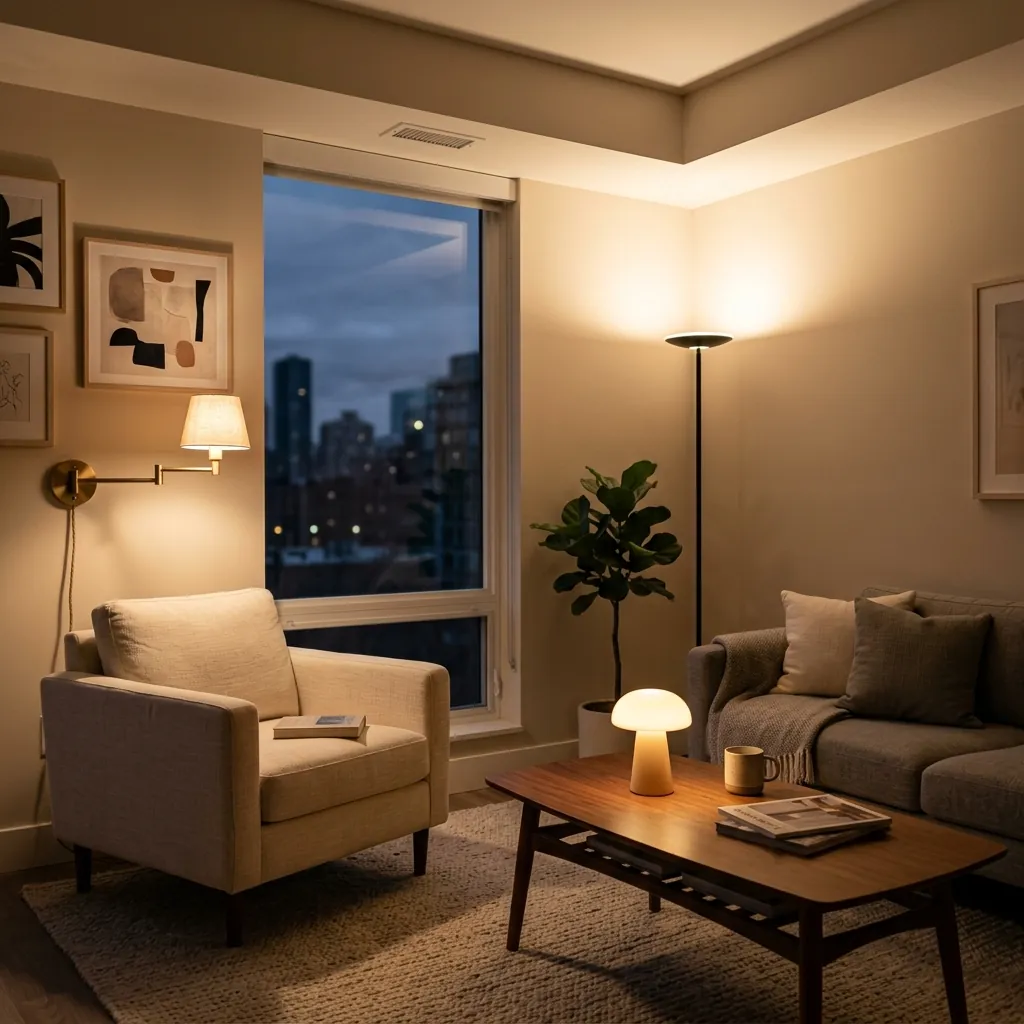
The 4-tier elevation system places light across four height levels. Set the ceiling plane at 84 to 96 inches. Keep standing eye level at 60 to 66 inches. Place seated eye level at 38 to 44 inches. Keep low accents at 18 to 28 inches. Spreading light across heights guides sightlines along gentle diagonal paths. This trick makes walls feel farther apart and ceilings feel taller.
Rooms feel boxed-in when all lamps sit at the same height. Staggering lights across levels creates pools of warm light that draw the eye through the living space. Plan your setup around four clear heights.
The ceiling plane works best with soft, indirect fixtures. A semi-flush fixture with an opal glass shade spreads even light across the upper room. In rental apartments, skip hardwired ceiling work. Put a slender minimalist torchiere floor lamp in a corner. It sends 1,200 lumens straight up to the ceiling paint.
Standing eye level holds wall sconces and art lights. Mount plug-in wall sconces 60 inches from the floor to draw the gaze toward side walls. Lighting outer borders tricks your spatial depth. Narrow living rooms feel much wider right away.
Seated eye level fits close tasks near sofas and chairs. Put low-profile table lamps on side consoles within this band. Keep the bottom rim of the shade level with your eye when sitting. This alignment hides bare light bulbs from view. It lights your book or coffee mug with soft, glare-free light.
The low accent plane adds subtle depth near floor level. Tuck small puck lights onto lower media shelves. Put a cordless stone lamp on your coffee table. Or run low-voltage warm LED strips behind the sofa base. Light along baseboards makes heavy sofas look light and floating.
Best Light Fixtures for a Small Living Room
The best light fixtures for a small living room use wall and ceiling surfaces without wasting floor space. Pick flush-mount ceiling diffusers, plug-in swing-arm sconces, slim torchiere uplights, and arc lamps. These fixtures light room borders and give you great task light while keeping walkways open.
Selecting small living room light fixtures requires checking light output and physical size. Heavy tripod lamps steal floor area in tight paths. Wide drum lampshades crowd small side tables, leaving no room for drinks. Instead, pick compact lighting for small living room spaces. Keeping floor space clear tricks the eye into seeing a larger room.
Space-Saving Fixtures for Compact Living Rooms: Comparison Matrix
The top space-saving lights for small living rooms include plug-in wall sconces, slim torchiere uplights, magnetic picture lights, shelf LED channels, and arc floor lamps. Each light gives you bright output while taking up almost zero floor space. Clear floor lines keep small rooms easy to navigate and open.
Bulky lamps crowd tight walkways fast. Heavy table lamps leave no surface room on end tables for mugs or books. Picking slim lighting hardware saves floor room and builds a clean, custom look. Compare top space-saving fixtures in the matrix below:
| Fixture Style & Type | Floor Footprint | Primary Lighting Tier | Optimal Room Placement | Space-Saving Benefit |
|---|---|---|---|---|
| Plug-In Swing-Arm Sconce | 0 Sq Ft (Wall-Mounted) | Task & Ambient | Flanking sofa or reading nook | Frees 100% of side table surfaces |
| Slender Torchiere Uplight | Under 1 Sq Ft (Flat Base) | Ambient Ceiling Bounce | Tucked into deep corners | Washes ceiling without wide tripod legs |
| Wireless Magnetic Picture Light | 0 Sq Ft (Frame-Mounted) | Accent main feature | Mounted over wall art or mirror | Adds gallery warmth with zero wall wiring |
| Recessed Bookcase LED Channel | 0 Sq Ft (Shelf-Mounted) | Accent & Ambient | Underneath open shelf lips | Illuminates books and pushes back rear wall |
| Compact Cantilever Arc Lamp | 1.2 Sq Ft (Slide-Under Base) | Overhead Task / Ambient | Base slid under sofa frame | Suspends light over coffee table without wiring |
To highlight wall art without hiring an electrician, mount a wireless magnetic rechargeable picture light on your frame. These battery fixtures recharge through USB-C and snap onto magnetic wall brackets. You take them down for charging without tearing drywall paper. For hanging heights and rental mounting rules, read our guide to plug-in wall sconces for rentals and our guide to LED strip lights room placement.
The 2,700K Kelvin Rule and Lumen Mathematics for Small Spaces
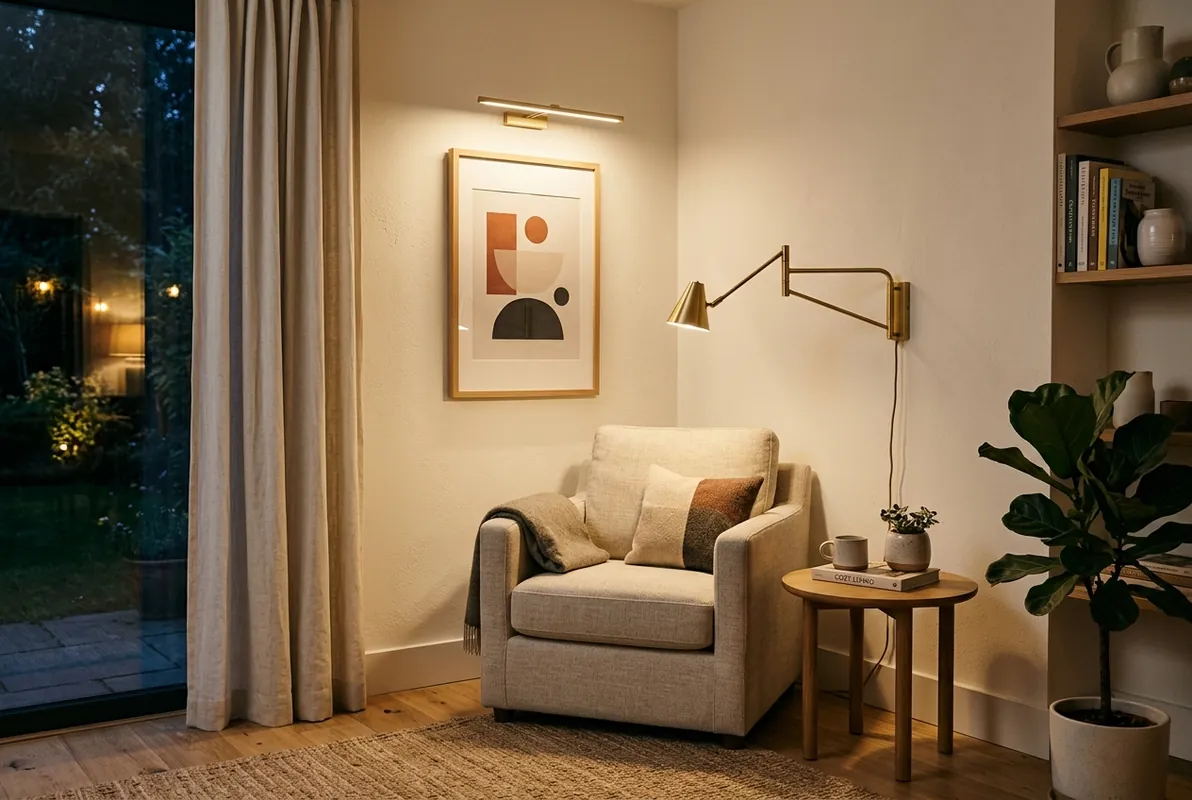
For a unified look, use 2,700K warm white bulbs across the room. Pick bulbs with a CRI of 90 or higher. Plan for 20 to 30 lumens per square foot. Mismatched bulb colors break visual balance. This clash tires your eyes and spoils your decor.
Mixing cool 4,000K daylight bulbs with warm 2,700K bulbs creates an unappealing clash. The brain reads this mix as visual chaos. The harsh light shows dust and makes neutral paint look gray. Follow these clear rules for a calm feel:
The 2,700K warm white standard matches the amber glow of classic tungsten filaments and candlelight. This warm hue flatters skin tones, enriches wood grain, and helps your body relax at night. For a crisper modern tone, read our review of 2700K vs 3000K living room lighting. You can also test different tones with our interactive Kelvin Color Temperature Visualizer.
To calculate baseline lumens, use this simple formula:
Room Length (ft) × Room Width (ft) × 20 Lumens = Total Baseline Lumens
A 12 × 15 foot living room covers 180 square feet. Multiplying 180 by 20 gives a baseline target of 3,600 lumens. For rooms where you read or work, raise the number to 25 or 30 lumens per square foot. That sets your goal near 4,500 lumens. Check our guide on lumens per square foot for a living room for more details.
Do not deliver all your light from one central ceiling fixture. Split 3,600 lumens across four or five fixtures. Use one 1,100-lumen torchiere uplight for ambient bounce. Add two 450-lumen sconces for seating. Use one 450-lumen table lamp. Finish with two 250-lumen shelf light strips. Control each light with smart plug-in lamp dimmer switches. Dimmers let you change light levels fast from bright family gatherings to movie night.
Common Small Living Room Lighting Pitfalls and Field Corrections
The most common mistakes are dark corners, bare bulbs, and downlight-only setups. Each issue makes a compact room feel cold and cramped. Fixing these problems takes smart fixture placement and soft light diffusion.
When dark shadows sit in corners, your eyes judge room size only by the bright center spot. This dark border visually shrinks the room. Fix this by placing a small uplight or slim torchiere in your darkest corner. Light where two walls meet to draw sightlines out to true room edges. This adjustment makes the room look larger. For step-by-step tips, read our guide on how to fix a dark corner in a room.
Bare filament bulbs look fun in store photos. Looking straight at a bare filament causes glare and eye strain. Always cover bulbs with linen shades, paper lanterns, or frosted glass globes. Translucent shades soften bright rays and spread light evenly across your seating area.
Using only downward lights is another common error. Pointing all lights down at the floor leaves the ceiling dark. This dark upper ceiling creates a cave effect. Balance your plan with upward lights that wash the ceiling plane. Bouncing light upward makes ceilings look taller and gives rooms an airy feel.
Avoid switch fatigue. Turning off five individual lamp cords every night gets tedious. Plug your lamps into matched smart plugs or a master remote strip. One quick tap turns off every fixture at once. Managing your lighting layers stays simple.
Consult the Illuminating Engineering Society residential standards for verified lighting safety guidelines and technical foot-candle recommendations.
Frequently Asked Questions About Small Room Lighting
How many light sources should a small living room have?
A small living room needs four to five separate light sources. Spread them across different walls and heights. Combine an ambient ceiling-bounce light, two reading lamps, and two accent lights. This removes dark corners and gives the room great depth.
What color temperature is best for a small cozy living room?
A warm white color temperature of 2,700K is best for a small living room. This hue creates a cozy golden glow. It flatters skin tones, warms wood furniture, and lets your eyes relax at night.
Can you layer lighting in a rental apartment without drilling walls?
Yes, renters can layer lighting easily with zero wall drilling. Use plug-in wall sconces with strong adhesive strips, slim floor torchieres, magnetic picture lights, and plug-in smart dimmers on standard wall outlets.
How many lumens do you need for a 150-square-foot living room?
A 150-square-foot living room needs roughly 3,000 to 4,500 total lumens. Split this light across four or five separate low-wattage fixtures. This creates flexible mood lighting instead of relying on one harsh ceiling bulb.
Why should you avoid relying only on overhead ceiling lights?
Relying only on overhead lights causes harsh shadows and glare. It flattens room texture and leaves corners dark. This downward light cone shrinks room size and creates a cold, uninviting feel.
How does uplighting make a small living room look bigger?
Uplighting sends light up to the ceiling and reflects a soft wash across upper walls. This upward light draws your eyes toward the ceiling. It creates a clear optical illusion of taller walls and open space.
Practical Light Living Room Ideas for Balanced Ambiance
Modern light living room ideas combine three distinct functional illumination zones: overhead ambient diffusion, mid-level eye-height task lamps, and low-level accent glows. Distributing 2,500 to 3,500 total lumens across multiple warm-white light fixtures banishes gloomy corners and delivers reliable visual comfort.
To implement balanced lighting across any living room layout, follow these practical installation rules:
- Perimeter Uplighting: Place upward-pointing floor fixtures behind armchairs and tall fiddle-leaf figs to bounce gentle indirect light off ceiling drywall.
- Reading Nook Task Lighting: Install adjustable swing-arm wall sconces flanking your sofa to supply focused 500-lumen reading beams without occupying valuable floor space.
- Architectural Accent Lighting: Add warm 2700K LED light strips inside media consoles and along floating display shelves to create depth on dark walls.
Pair your layered living room fixtures with modern ceiling fixtures reviewed in our guide on LED ceiling lights for living rooms.