Plug-In Wall Sconces for Rentals: 5 Zero-Drill Rules
Reader Disclosure: This post contains affiliate links. If you buy through them, we may earn a commission at no extra cost to you. We only recommend items tested for clean craftsmanship and authentic durability.
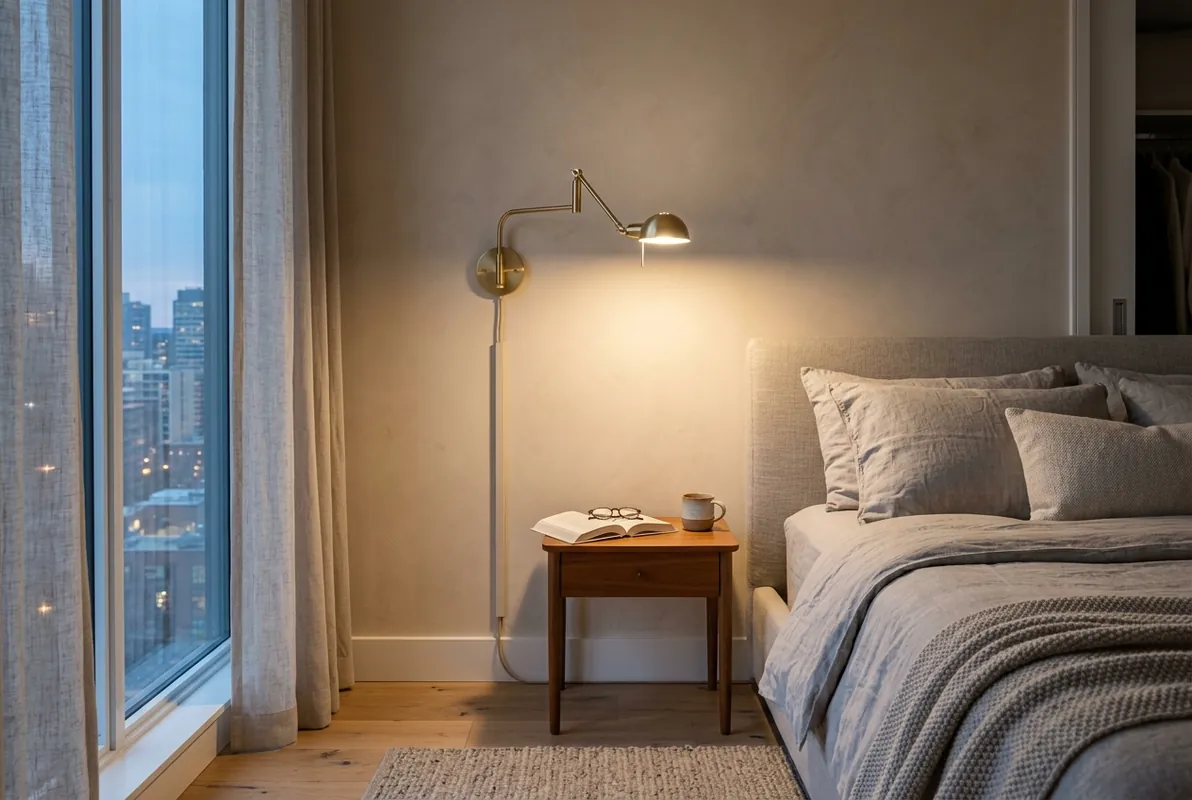
The most effective plug-in wall sconces for rentals combine articulating swing arms, woven fabric cords, and zero-drill hanging brackets. hanging surface sconces with hand-pushed spring steel wire hooks, headboard felt clamps, or dual-axis glue cleats frees up nightstand table space and delivers room lighting without hardwiring or security deposit deductions.
Standard apartment leases strictly forbid drywall cutting, surface conduit runs, and recessed junction boxes. As a result, many renters endure sterile overhead flush-mount ceiling fixtures, dim reading nooks, and cluttered bedside tables. A conventional table lamp consumes eighty percent of an average eighteen-inch nightstand. This clutter leaves almost no room for your book, glasses, or water carafe.
Wall-mounted plug-in sconces solve this spatial dilemma fully. By lifting the light fixture onto the wall, you gain generous task lighting while keeping furniture surfaces clear. Before buying fixtures, calculate your bedroom or living room illumination requirements with our interactive Room Lumens and Lighting Calculator to determine the exact wattage and lumen output your space requires. hanging your reading light onto the wall frees up 100% of valuable bedside table space in rental apartments.
Rule 1: The Cantilever Load Law and Why Standard Tape Fails
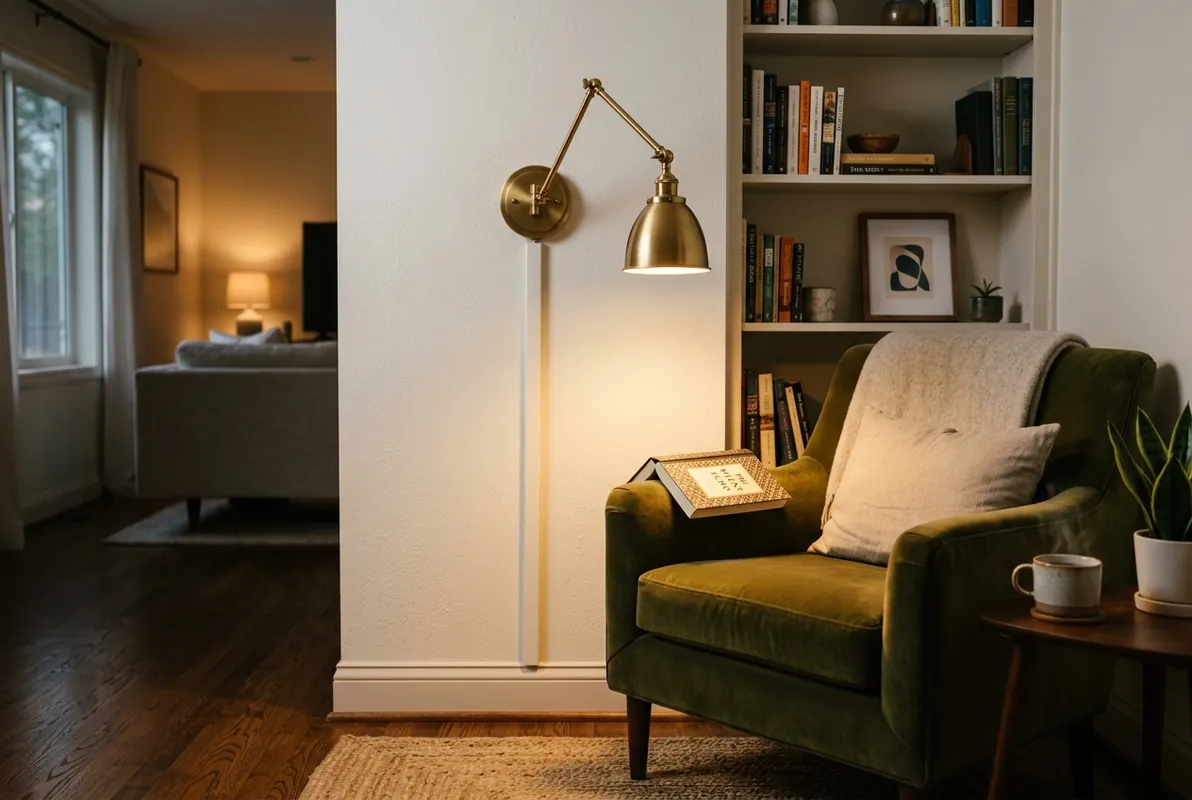
Never mount an arm-style metal wall sconce using standard flat glue tape or foam strips. A wall sconce exerts rotational cantilever torque instead of flat downward shear weight. This forward rotational pull rips flat glue strips away from drywall paper within days.
Flat wall art rests flush against drywall. This flat placement distributes all gravitational weight downward in pure shear force. A plug-in sconce behaves entirely differently. The fixture arm projects six to eighteen inches outward into the room. Gravitational pull on the heavy metal socket and glass shade turns the top edge of the hanging plate into a fulcrum. The bottom of the backplate presses inward against the wall, while the top pulls outward with multiplied mechanical leverage.
Standard glue foam strips resist downward shear force, but they possess weak tensile resistance against outward peel stress. When you extend an articulating brass arm or swing a shade sideways to read in bed, you multiply that rotational torque. The top glue fails, peels the outer paper layer off your apartment drywall, and sends the fixture crashing down. To understand drywall weight ratings and structural limits, read our decorator guide on how to hang heavy art without studs.
Rule 2: Zero-Drill hanging parts (Monkey Hooks, Clamps, and Cleats)
The three most dependable zero-drill hanging methods for rental wall sconces are curved spring-steel wire hooks, felt-lined furniture C-clamps, and dual-axis interlocked cleats. Each method supports outward cantilever loads while leaving drywall surfaces intact or marked only by an imperceptible pinhole.
Curved spring-steel wire hooks, commonly known as Monkey Hooks or Gorilla Hooks, require zero power drills. You push the sharp tip of the contour wire directly through standard half-inch drywall by hand. You rotate the hook one hundred eighty degrees until the internal curve braces firmly against the back face of the drywall panel. This hidden contour distributes cantilever weight across three inches of rear plasterboard. A single wire hook supports up to thirty-five pounds of outward force, yet leaves only a tiny one-millimeter hole that conceals with a single dab of spackle upon move-out.
Felt-lined headboard and bookcase C-clamps eliminate wall contact entirely. If your rental lease strictly bans all drywall penetration, mount your sconce directly to your furniture. Thread a compact padded steel clamp around the vertical post of your wooden headboard or the upright divider of an open bookcase. Fasten the sconce backplate to the clamp face. This technique provides rock-solid task lighting right beside your pillows while bypassing wall repairs altogether.
Dual-axis interlocked cleat plates suit ultra-light modern sconces. Pair a reinforced metal backplate cleat with industrial hook-and-loop fasteners rated for outdoor sheer resistance. Distribute two mechanical brass trim pins through the top cleat holes into the wall at a forty-five-degree downward angle. The micro-pins absorb outward rotational pull, while the glue edge stabilizes lateral wobble. For wider apartment styling ideas, explore our full review of renter-friendly wall decor ideas to personalize your space safely.
Top 5 Plug-In Wall Sconces for Rentals: Comparison Matrix
The five most versatile plug-in wall sconces for rentals are articulating brass swing-arm fixtures, frosted milk glass globe sconces, mid-century pharmacy task lights, flexible gooseneck spotlights, and pleated fabric shade fixtures. Selecting the right design requires balancing visual aesthetic, arm projection, and hanging parts weight.
Different sconce styles exert vastly different degrees of leverage on wall brackets. Long-reach swing-arm sconces require robust rear-bracing wire hooks, while compact glass globes rest comfortably on low-profile parts. Review the comparison matrix below to match fixture styles with your rental room layout:
| Sconce Style & Silhouette | Arm Projection | Best Room Application | Light Distribution Pattern | Rental hanging parts |
|---|---|---|---|---|
| Articulating Brass Swing-Arm | 12 to 24 inches | Bedside reading, sofa nook | Directional downward task cone | Monkey Hook or Gorilla Hook |
| Frosted Milk Glass Globe | 6 to 10 inches | Living room, hallway, vanity | 360-degree diffused ambient glow | Low torque wire hook |
| Mid-Century Pharmacy Sconce | 14 to 20 inches | Beside armchairs and sofas | Adjustable hood visor task light | Medium forward pull hook |
| Gooseneck Task Spotlight | 8 to 16 inches | Compact bedroom, bunk bed | Shielded cylinder reading beam | Headboard C-clamp or wire pin |
| Pleated Fabric Shade Sconce | 5 to 8 inches | Living room accent wall, entry | Soft diffused ambient glow | Lowest cantilever leverage hook |
For compact bedrooms where floor space is precious, brass swing arm plug in wall sconces offer unmatched versatility. You can extend the brass arm outward while reading in bed, and fold the fixture flat against the wall during daytime hours. This flexibility keeps your sleeping area open and tidy. To discover more ways to reclaim floor space, read our decorator strategies on maximizing vertical space in small apartments and our comprehensive guide on how to layer lighting in a small living room.
Rule 3: The 30-to-36-Inch Ergonomic Hanging Height Formula
Mount bedside plug-in sconces thirty to thirty-six inches above the top of your mattress. For living room seating and hallways, mount fixtures sixty to sixty-six inches from the finished floor to the center of the backplate.
Improper hanging heights cause daily frustration. Hang a bedside sconce too low, and you will hit your head against the metal shade whenever you prop pillows up to read. Hang it too high, and the direct glare of the bare bulb shines into your eyes while the pool of reading light scatters across the ceiling. The thirty-to-thirty-six-inch mattress offset aligns the bottom rim of the shade with your shoulder level while sitting upright in bed.
Follow these exact measurement steps before hanging your parts:
First, measure your mattress crown. Sit upright in bed against your headboard in your normal reading posture. Have a partner measure the vertical distance from the top of the mattress to your eye level. Your eye level typically sits twenty-eight to thirty-two inches above the mattress.
Second, align the shade rim. Position the bottom rim of the sconce shade exactly at chin or shoulder level, roughly two to four inches below your eye level. This position casts focused task illumination directly onto your book pages while concealing the hot bulb filament behind the shade edge.
Third, set lateral clearance. Mount the sconce six to ten inches outward from the outer edge of your bed frame or headboard. This lateral placement centers the light pool over your nightstand and reading zone. This offset preserves ample room for pillow adjustments.
In living rooms and hallways, general ambient standards apply. Center the sconce backplate sixty to sixty-six inches above the finished floor. If placing sconces beside an accent mirror or art canvas, keep fixtures eight to twelve inches away from the frame edge to ensure balanced light distribution. For tackling shadowy seating nooks, consult our step-by-step solutions on how to fix a dark corner in a room.
Rule 4: room Cord Camouflage (Metal Raceways and Fabric Drops)
Disguise dangling electrical cords using paintable metal cord channels or celebrate them intentionally with decorative braided fabric cords. Surface raceways transform messy cables into crisp room lines that blend into your wall paint.
The visible electrical cord is the defining feature of a plug-in wall sconce. An unmanaged black plastic cord dangling loosely across drywall looks untidy and accidental. Interior decorators treat cord management with two distinct philosophies:
Rigid paintable metal cord covers offer smooth concealment. Snap-together aluminum or steel wire channels conceal cords fully. Mount a slender twelve-inch metal channel directly beneath the sconce backplate. Align the channel vertically toward the baseboard. Paint the channel with matching wall paint to create the polished appearance of custom hardwired conduit. You can browse durable metal wall sconce cord cover kits that adhere safely with gentle glue tape.
Intentional braided fabric drops provide a stylish alternative. If your sconce features a vintage brass or mid-century aesthetic, highlight the cord intentionally. Choose fixtures equipped with twisted houndstooth, jute, or charcoal cloth-wrapped cords. Drop the fabric cord straight down in a clean plumb line. Secure the line with small brass wall standoffs. The cord becomes a deliberate sculptural detail instead of an unsightly distraction.
Avoid looping cords sideways across wall surfaces to reach distant outlets. If your nearest electrical outlet sits several feet away, drop the cord vertically to the baseboard first. Run the cable horizontally along the top lip of the baseboard trim using clear glue clips. This low-profile path keeps cords out of primary sightlines and prevents accidental tripping hazards.
Rule 5: Bulb Selection and Wireless Dimming Controls
Equip bedroom plug-in sconces with warm 2,700K LED bulbs delivering four hundred to six hundred lumens. Pair your fixtures with a wireless plug-in dimmer switch to enable convenient bedside control without hardwired wall switches.
Bulb choice dictates the atmosphere of your room. Harsh cool-white bulbs emitting 4,000K flood small bedrooms with clinical blue-spectrum light. This blue light suppresses natural melatonin production and interferes with restful sleep. Always select warm white bulbs rated at 2,700K with a Color Rendering Index of ninety or higher. High-CRI bulbs enrich wood grains, woven linens, and skin tones with authentic warmth. For deep insights on warm lighting selection, review our guide on 2700K vs 3000K living room lighting.
Most plug-in sconces come with a basic rotary switch or in-line cord toggle. Reaching behind your nightstand or fumbling down a dark cord to turn off your light before sleep is inconvenient. Modernize your setup with a compact wireless plug in lamp dimmer switch. Plug the compact dimmer module into your baseboard outlet, connect your sconce cord, and stick the wireless remote pad to your headboard or wall with peel-off glue tape. You gain smooth bedside dimming control without cutting a single wire.
Consult the Illuminating Engineering Society residential standards for verified residential lighting foot-candle guidelines and electrical safety recommendations.
Frequently Asked Questions About Plug-In Wall Sconces
Are plug-in wall sconces allowed in rental apartments?
Yes, plug-in wall sconces are fully permitted in rental apartments because they plug into standard wall outlets and require zero electrical hardwiring. They mount like picture frames using small pin hooks or clamps. This keeps your setup compliant with standard residential lease agreements.
How high should a plug-in sconce be mounted above a nightstand?
Mount your sconce thirty to thirty-six inches above the top of the mattress instead of measuring from the nightstand. This vertical offset positions the bottom rim of the shade at shoulder level. This position prevents head bumps and casts focused task light onto your book.
Can you hang a plug-in wall sconce with Command strips?
Only ultra-lightweight battery or paper sconces weighing under two pounds should use glue strips. Metal arm sconces create forward rotational torque that pulls flat glue strips away from drywall paper. Use curved Monkey Hook pins or furniture clamps for secure zero-drill hanging.
How do you hide the wire on a plug-in wall sconce?
Conceal wires using paintable metal cord covers painted to match your wall color. Alternatively, choose fixtures with decorative cloth-wrapped cords and drop them straight down to the baseboard. Secure the line with small decorative brass cable clips.
What type of light bulb is best for a bedside plug-in sconce?
Use a warm white 2,700K LED bulb producing four hundred to six hundred lumens with a Color Rendering Index above ninety. Choose frosted glass bulbs to soften filament glare when reading in bed.
What is the difference between a hardwired and plug-in sconce?
Hardwired sconces connect directly to internal house wiring inside a recessed metal junction box. Plug-in sconces mount directly onto the drywall surface and draw power from a standard wall outlet via an exposed electrical cord.