How to Hang Heavy Art Without Studs: 5 Anchor Tests
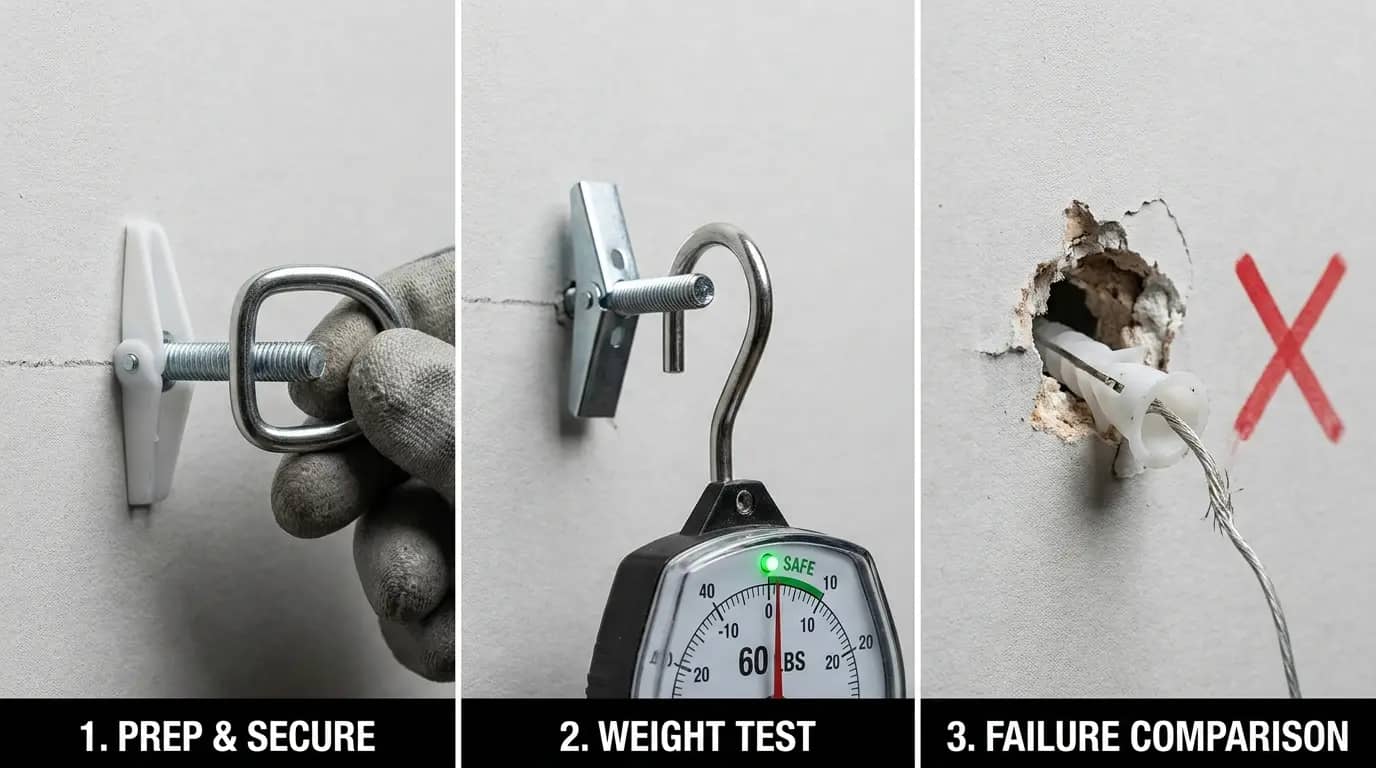
To hang heavy art without studs safely on drywall, install two 1/4-inch steel snap toggle bolts rated for at least double the frame’s weight, mount the frame directly through two heavy-gauge steel D-rings, or secure an interlocking aluminum French cleat across multiple hollow-wall anchor points.
Few household mishaps rival the sudden crash of a heavy framed canvas or gilded mirror shattering against the floor. Wall framing studs rarely align with ideal decorative focal points. When the center of your sofa, mantle, or console table falls over hollow drywall, basic picture nails or plastic plugs easily pull free from hollow gypsum.
Suspending heavy art securely without wall studs is straightforward when you match frame weight with commercial-grade toggle fasteners and dual-point hardware. Standard drywall reliably supports 50 to 100 pounds when you distribute the load across proper anchors. Before drilling into your wall, use our interactive Picture Wire and Hanging Hardware Calculator to check safe hardware limits and anchor load distribution.
How to Hang Heavy Art Without Studs: Drywall Strength and Anchor Rules
Standard half-inch gypsum drywall can safely support significant weight under shear load, which is the downward vertical force exerted by flat-hanging artwork, but possesses very little resistance against tensile pull, which is the outward pulling force created when heavy frames lean forward away from the wall plane.
Gypsum board consists of a compressed mineral core between two structural paper faces. Hanging a flat canvas directs gravitational force downward parallel to the wall. This downward shear force stresses drywall very little. Conversely, deep frames or slack picture wires pull the top of the frame outward. This forward lean creates outward tensile leverage that can pry fasteners through the drywall face.
Apply these structural safety rules when calculating wall load capacity:
- Apply the 2X safety margin rule by selecting wall anchors rated for at least double the measured weight of your art. If a mirror weighs 40 pounds, install hardware certified for at least 80 pounds of working shear load.
- Verify your drywall thickness before buying hardware. Standard interior partition walls use 1/2-inch gypsum board, whereas shared condo party walls frequently feature 5/8-inch panels. Thicker board improves anchor bite and increases safe holding capacity.
- Distinguish between modern drywall and historic plaster walls. Homes built before 1950 often feature wood lath and lime plaster, which crumbles under plastic plugs. For older homes, review our step-by-step tutorial on how to hang pictures on plaster walls without cracking to choose appropriate masonry bits and molly bolts.
The Hollow Wall Hardware Hierarchy: Comparison Matrix
The definitive hardware hierarchy for hollow drywall consists of steel snap toggle bolts for loads over 50 pounds, heavy-duty metal molly bolts for 30 to 50 pounds, zinc self-drilling threaded anchors for 15 to 30 pounds, and interlocking aluminum French cleats for oversized mirrors, with conical plastic plugs strictly avoided for heavy applications.
Selecting proper fasteners requires looking past packaging claims. Basic plastic anchors advertise high capacities based on static laboratory limits instead of realistic residential working loads. Review this hardware matrix to match artwork weight with certified hollow-wall fasteners:
| Anchor Hardware Type | Safe Working Load Limit | Required Pilot Hole | Removal & Reusability | Best Art Hanging Application |
|---|---|---|---|---|
| Heavy-Duty Steel Snap Toggle | 80 to 120 Lbs per Anchor | 1/2″ Drill Bit Hole | Permanent sleeve; removable bolt | Massive mirrors and heavy glazed frames |
| Interlocking Aluminum French Cleat | 100 to 200+ Lbs (Multi-Anchor) | Varies by anchor count | Removable wall rail | Oversized headboards and heavy canvases |
| Metal Expanding Molly Bolt | 35 to 50 Lbs per Anchor | 5/16″ Drill Bit Hole | Permanent metal sleeve | Medium framed art and decorative wall clocks |
| Zinc Threaded Self-Drilling Anchor | 20 to 35 Lbs per Anchor | No pilot hole (Screws in) | Removable screw and anchor | Standard framed prints and floating shadowboxes |
| Conical Plastic Expansion Plug | Under 10 Lbs (Drywall unsafe) | 1/4″ Drill Bit Hole | Pull-out prone; non-reusable | Lightweight calendars and mini frames only |
Conical plastic plugs are unsuitable for heavy frames. They rely purely on friction against a crumbly gypsum core. Vibrations from slamming doors or heavy footsteps quickly loosen the plastic sleeve. This constant micro-motion causes sudden anchor pullout.
Why Snap Toggles Beat Traditional Butterfly Bolts and Plastic Plugs
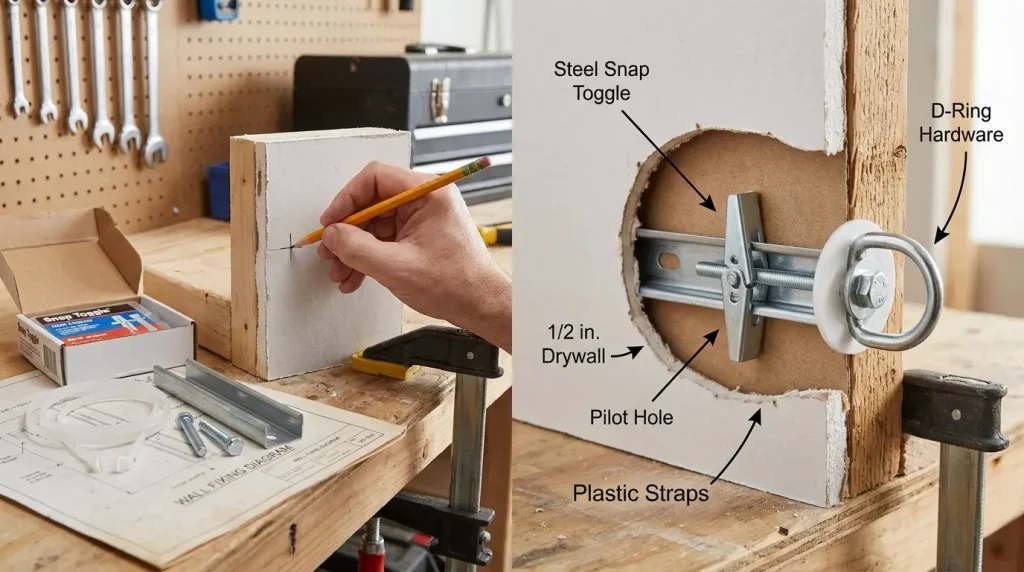
Steel snap toggle bolts outperform traditional spring-wing butterfly bolts and plastic anchors because they utilize a solid zinc-plated steel channel that clamps flat against the rear plane of the drywall. The metal bar distributes pressure across a wide surface area. In addition, you can remove and re-insert the machine bolt repeatedly without losing the anchor inside the wall.
Installing traditional spring-wing butterfly toggles is notoriously awkward. You must thread the collapsible wings onto the bolt, squeeze them through an oversized hole, and maintain outward tension while driving the screw. If you remove the bolt later to paint the wall, the spring wings drop behind the wall into the stud cavity and disappear forever.
Modern snap toggles solve every structural and installation flaw of older anchors through three mechanical features:
- A snap toggle uses flexible plastic guide straps attached to a solid steel channel. You slide the metal channel through a half-inch hole, pull the straps flush against the rear drywall face, and slide the front collar tight. Once you snap off the plastic straps, the threaded steel nut remains firmly in place.
- Threading a machine bolt into the channel clamps the gypsum sheet between steel behind the wall and the front bracket. This sandwiching action converts concentrated point loads into broad surface compression that drywall easily handles.
- Because the exterior plastic collar locks the threaded steel channel in place, you can remove the bolt anytime to paint or swap art, then thread it right back into the existing wall anchor without losing parts.
Step-by-Step Installation: Mounting Heavy Art Safely
To mount heavy art safely without studs, determine the exact weight using a scale, replace weak sawtooth hangers with heavy-gauge steel D-rings on the frame sides, install two independent snap toggle anchors leveled precisely, and hang the frame directly onto the wall bolts.
Relying on a single center hanging point invites failure. Traditional picture wire stretches under tension. This lateral tension pulls inward on frame rails and weakens corner miter joints. Single-point hanging also allows frames to tilt whenever nearby doors slam. Using two independent mounting points halves the load per anchor and keeps art straight permanently. Read our empirical testing breakdown on picture hanging wire sag vs dual D-rings to see why rigid brackets outperform wire.
Follow this precise four-step installation protocol for foolproof wall security:
- Step 1: Weigh Your Artwork Accurately: Weigh your artwork accurately on a bathroom digital scale. Step onto the scale holding the frame, then step on alone. The difference is your exact frame weight. Never guess: heavy mirrors built with solid hardwood moldings and beveled plate glass frequently weigh double initial visual estimates.
- Step 2: Upgrade Frame Hardware to Three-Hole Steel D-Rings: Remove flimsy sawtooth brackets or light wire loops. Fasten heavy three-hole steel D-rings to the left and right vertical frame stiles, roughly one-third down from the top edge. Drive three-quarter-inch wood screws directly into solid wood frame stiles.
- Step 3: Drill and Seat Two Snap Toggle Anchors: Measure the exact center-to-center distance between your frame D-rings. Transfer this measurement to your wall using a four-foot level at standard eye height, typically 57 to 60 inches from the floor to the art center. Drill half-inch pilot holes, slide the toggle channels through, pull the straps taut, slide the face collars flush, and snap off the excess plastic straps.
- Step 4: Secure Heavy-Duty Machine Bolts and Hang the Frame: Thread quarter-inch machine bolts into the anchored toggles. Leave the bolt heads projecting one-quarter inch from the wall plane. With a partner, lift the artwork and set the two D-rings directly over the bolt heads.
The French Cleat Solution for Oversized Mirrors and Statement Canvases
For oversized mirrors and heavy canvases weighing over 70 pounds, an interlocking aluminum French cleat provides the ultimate security by distributing the load across a continuous 30-inch horizontal metal rail secured with multiple hollow-wall toggle anchors.
Originally developed for hanging heavy architectural cabinetry, a French cleat pairs two matching extruded metal bars with opposing 45-degree beveled lips. One rail mounts securely to the upper frame back, while the mating rail fastens to the wall. Lowering the mirror in place interlocks the two beveled edges across their full width.
Aluminum French cleats deliver three distinct mechanical advantages for heavy wall decor:
- A 30-inch aluminum cleat features multiple pre-drilled mounting slots. Fastening three or four snap toggles along the rail spreads a 90-pound load so each individual anchor carries only 25 to 30 pounds of shear weight. If you are securing tall, heavy floor mirrors instead of wall-mounted pieces, consult our guide to leaning full-length floor mirror safety and anchor angles.
- Leveling a single 30-inch horizontal metal rail with a spirit level is simple compared to aligning separate wall points across several feet. Once your wall rail is level, your mirror hangs perfectly true automatically.
- Because the interlocking beveled lips seat deeply across the full horizontal span, artwork cannot be bumped off the wall by passing shoulders or vacuum cleaner handles.
Steel snap toggles, three-hole frame D-rings, and aluminum French cleats guarantee that your heaviest artwork remains completely stable on hollow drywall.
Drywall Hardware Longevity and Safety Inspection Protocols
Hardware anchors mounted in hollow gypsum board experience gradual structural fatigue when subjected to continuous downward shear stress and ambient household vibration. Wall art hung in heavy wooden or metal frames exerts constant pull against the brittle plaster core of standard drywall. To prevent anchor slippage over five to ten years of display, follow a structured annual inspection protocol.
First, inspect the contact perimeter where the anchor collar meets the painted drywall surface. If you detect fine hairline cracking in the paint ring surrounding the metal rim, the gypsum core has begun compressing under dynamic weight. Remove the artwork immediately and check the hole with a flashlight. Powdered gypsum spilling from the entry hole indicates that the internal toggle channel has widened.
Second, inspect braided hanging wire for strand separation. Copper and galvanized steel picture wire stretches over time when supporting loads above 20 pounds. As the wire sags, the angle at the top hanger sharpens. This sharp angle doubles the outward tensile pull on your drywall fasteners. Replace frayed hanging wire with solid stainless steel D-ring hangers mounted directly to the vertical frame rails.
Third, verify that frame bumper pads remain intact at both lower corners. Dense silicone bumpers hold the frame bottom parallel to the wall surface. These spacers prevent bottom-heavy pivot leverage that pulls top toggle bolts outward. Replacing compressed felt pads with half-inch silicone cushions stabilizes the hanging angle and protects brittle gypsum board from premature failure.
Consult the ASTM International fastener load standards for verified technical documentation, safety codes, and official industry standards.
Frequently Asked Questions About Hanging Heavy Art Without Studs
Can drywall really hold a 50-pound mirror without a stud?
Yes, standard half-inch drywall easily supports a 50-pound mirror when mounted with two commercial steel snap toggle bolts, which clamp against the rear drywall face to distribute shear weight safely over wide surface areas.
What are the strongest drywall anchors for heavy pictures?
Steel snap toggle bolts are the strongest hollow drywall anchors available. They support 80 to 100 pounds per anchor in half-inch drywall by locking a solid metal channel flat against the hidden rear wall face.
Why should you avoid using picture wire for heavy art?
Picture wire stretches under heavy weight. This angle pulls the top of the frame outward and exerts dangerous tensile stress on wall fasteners. Hanging directly from two rigid steel D-rings keeps weight safely vertical and prevents tilting.
What is a French cleat and how does it work on drywall?
A French cleat is a two-piece interlocking metal bracket system with opposing 45-degree beveled edges. One rail mounts to the wall and the other to the frame. This continuous rail distributes heavy weights evenly across multiple wall anchors.
How big of a hole does a snap toggle leave in drywall?
A standard 1/4-inch snap toggle requires a 1/2-inch diameter pilot hole. While larger than nail holes, the opening is easily patched with standard spackle and light sanding when moving or rearranging art.
Can you use heavy-duty Command strips to hang a heavy mirror?
No, adhesive strips should never be used for heavy mirrors or art over 10 pounds. Adhesive bonds can fail unpredictably in humid weather or strip drywall paint. These adhesive failures lead to catastrophic frame drops and shattered glass. Review our complete load analysis on Command strip weight limits for picture frames to understand adhesive failure thresholds.