Command Strip Weight Limits: How to Hang Heavy Frames Without Wall Crashes
Reader Disclosure: This post contains affiliate links. If you buy through them, we may earn a commission at no extra cost to you. We only recommend items tested for clean craftsmanship and authentic durability.
Command picture hanging strips support frames up to sixteen pounds when you use four pairs of large strips, clean the drywall with isopropyl alcohol, press each strip for thirty seconds, and wait one hour before hanging the frame. Following these steps stops midnight picture frame crashes and protects rental drywall from ripped paint. Never guess frame weight or skip surface cleaning on rental walls.
Many apartment tenants experience a loud crash in the middle of the night. A framed print slips from the drywall, shattering glass across baseboards and hardwood floors. Most adhesive failures happen because renters ignore weight ratings or stick strips over dusty walls. You can find more damage-free hanging strategies in our Rental-Friendly & Small Spaces section.
Before mounting art or mirrors in your apartment, calculate your required adhesive pairs with our interactive Command Strip Calculator. This tool matches your exact frame weight and dimensions with the right strip size, giving you complete peace of mind before you hang your decor.
Command Strip Sizing and Weight Rating Specifications
Command picture hanging strips hold four pounds for four small pairs, twelve pounds for four medium pairs, and sixteen pounds for four large pairs. These manufacturer ratings assume clean drywall, vertical shear load, and flat contact across the back of the picture frame. Exceeding these limits causes the adhesive foam to tear away under tension.
Never rely on a single pair of adhesive strips to hold any frame. Four small pairs distribute weight across four corners of the frame. This layout balances the load evenly and stops the frame from tipping forward. If your frame weighs six pounds, do not use two pairs of medium strips. Use four pairs of medium strips so each corner carries equal weight.
Picture hanging strips differ from standard utility hooks. Picture hanging strips use dual interlocking mushroom heads that click together like firm plastic snaps. This click design lets you take frames down to clean glass or swap photos without peeling adhesive off the wall. The wall-side adhesive remains flat on the drywall while the frame-side adhesive stays glued to the wood or metal frame.
Weight Ratings: Small vs Medium vs Large Interlocking Strips
Small picture hanging strips work best for small eight-by-ten inch frames that weigh up to four pounds. These thin strips fit narrow wood moldings where wider adhesive strips would stick out past the frame edge. Always use all four pairs on the four corners to keep the frame level.
Medium strips hold up to twelve pounds and suit common sixteen-by-twenty inch gallery prints. Large strips support up to sixteen pounds and suit substantial twenty-four-by-thirty-six inch poster frames with glass fronts. If you hang heavy matted frames or mirrors, large strips provide the deep foam cushioning needed to absorb wall vibrations.
Why You Must Apply a 50% Safety Redundancy Factor
Always apply a fifty percent safety margin to protect your picture frames from falling. If your framed print weighs eight pounds, do not use strips rated for exactly eight pounds. Mount four large interlocking strip sets rated for sixteen pounds. This safety buffer handles daily indoor environmental stress.
Household walls vibrate whenever heavy trucks drive past or interior doors slam shut. In addition, summer humidity softens acrylic adhesive polymers, reducing their holding strength by up to twenty percent. A fifty percent safety cushion ensures that normal room vibrations and weather shifts never cause your frames to fall.
The 4-Step Installation Protocol That Prevents Frame Crashes
To install Command picture hanging strips without frame failures, clean the wall with isopropyl alcohol, attach paired strips to the frame, press the frame firmly against the wall for thirty seconds, take the frame down, press the wall pads for thirty seconds, and wait one full hour before hanging the frame back up. Skipping any of these steps cuts adhesive strength in half.
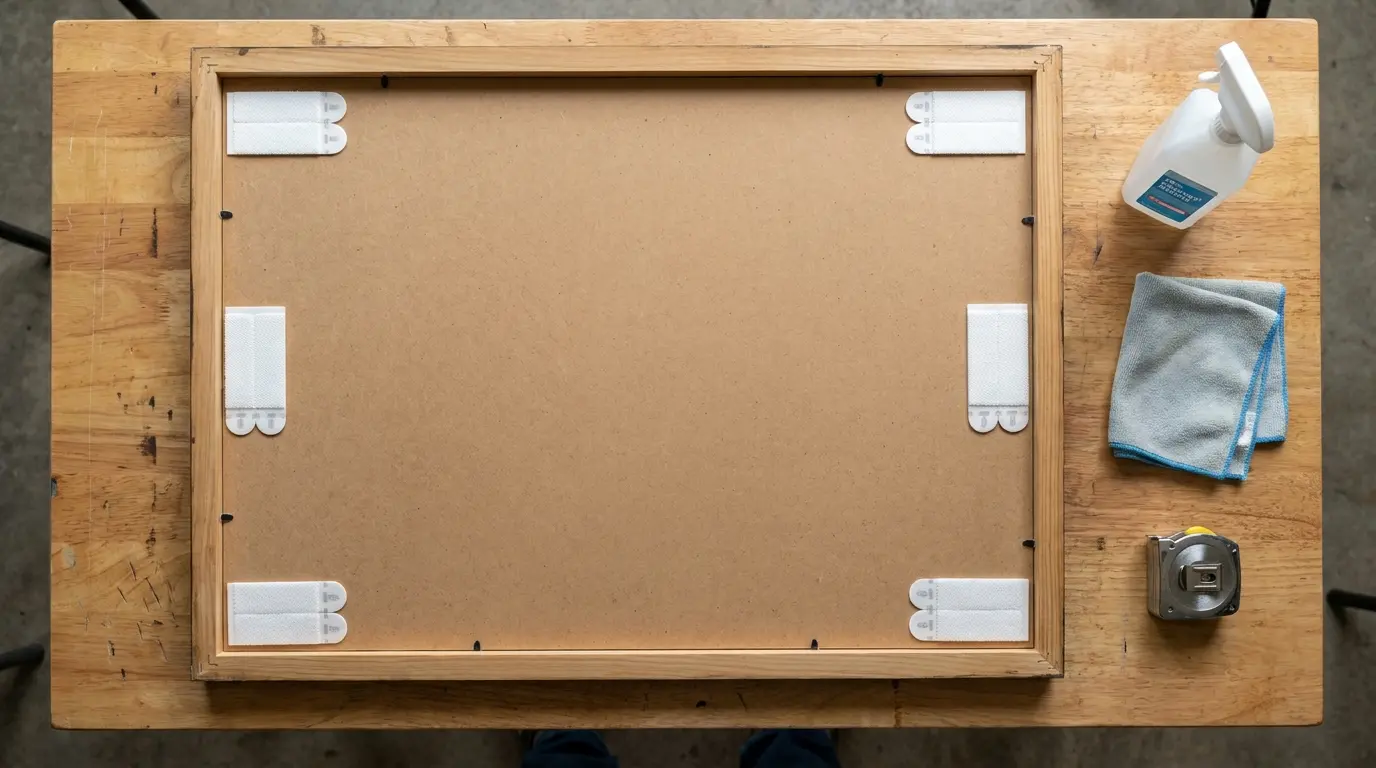
Start by pairing your strips together. Press two matching strips together until you hear a distinct clicking sound. Peel off one green liner and stick the strip to the back of your frame. Place two sets near the top corners and two sets near the bottom corners. For very tall frames, place the strips along the vertical side rails instead of the top rail.
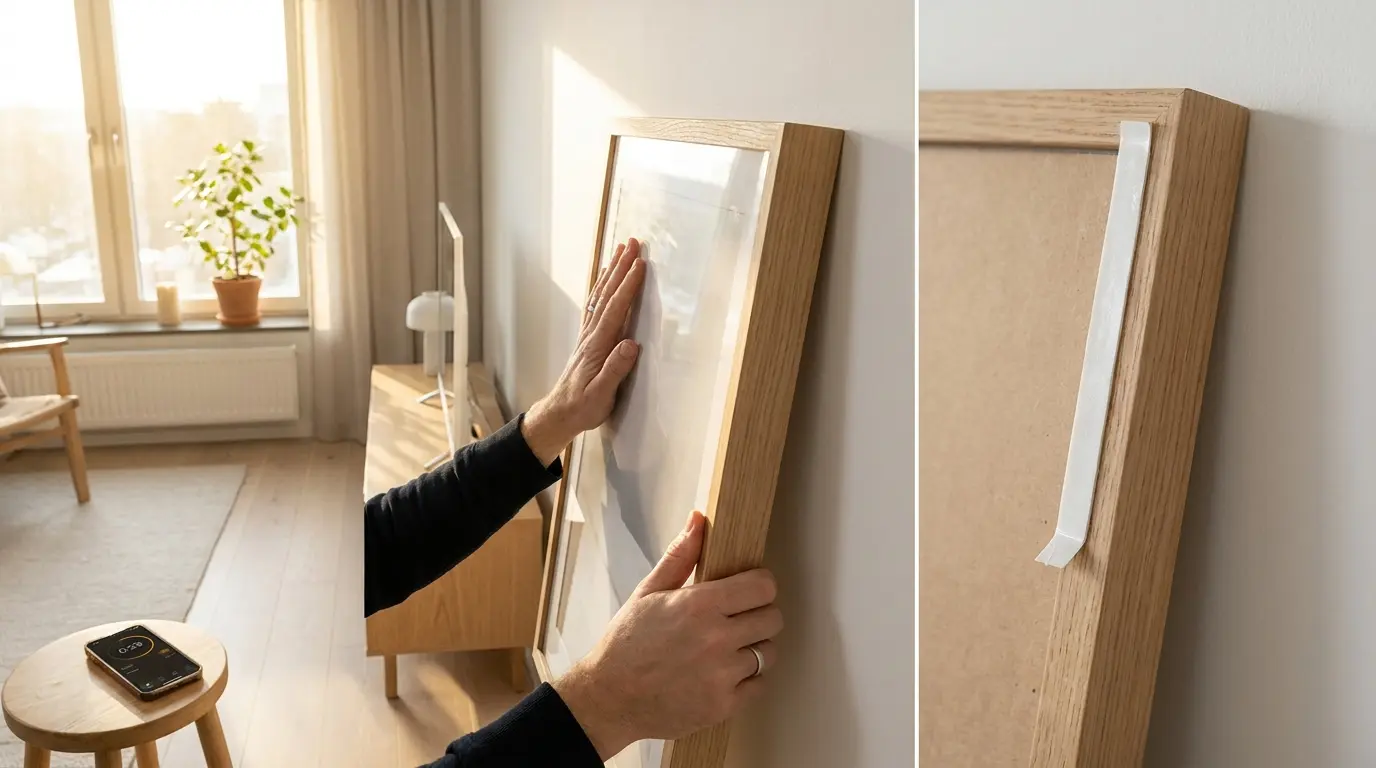
Next, remove the remaining liners and press the frame firmly against your clean drywall for thirty seconds. Now comes the most critical step: grab the bottom corners of your frame and peel it upward off the wall. The interlocking plastic teeth will separate, leaving the wall pads stuck to the drywall. Press those wall pads with your thumbs for thirty seconds to force the glue deep into the paint texture.
Why Isopropyl Alcohol Is the Only Safe Wall Prep Cleaner
Clean your drywall mounting spots with seventy percent isopropyl rubbing alcohol only. Never use household glass cleaners, soapy water, or multi-surface disinfectant wipes. Standard household cleaning sprays leave thin silicone or wax films on the wall that stop adhesive from sticking.
Rubbing alcohol cuts through grease, skin oils, and airborne dust without leaving any chemical residue. It evaporates completely in less than sixty seconds, leaving clean paint ready for adhesive bonding. Dampen a clean cotton ball or cloth with alcohol, wipe the drywall, and let the area dry fully before touching the wall with adhesive.
The 1-Hour Adhesive Cure Window Explained
The one-hour waiting period is mandatory because pressure-sensitive acrylic adhesives require time to cross-link with paint molecules. When you first press a strip against drywall, only twenty percent of the adhesive makes direct physical contact with the wall surface.
Over the next sixty minutes, the viscoelastic adhesive slowly flows into microscopic paint pores. This chemical flow builds the full holding power of the bond. If you hang a heavy glass frame immediately without waiting, the downward pull shears the adhesive before it bonds, causing your frame to drop within hours.
Surfaces Where Command Strips Will Inevitably Fail
Never use adhesive picture hanging strips on textured knockdown drywall, brick, unprimed wallpaper, or walls painted within the past thirty days. Adhesive strips require a flat, smooth, cured surface to create safe shear grip. Placing strips on incompatible surfaces guarantees wall damage and fallen frames.
Inspect your apartment walls under bright side lighting before buying hanging strips. If your walls have bumpy orange peel or heavy knockdown textures, adhesive strips only touch the raised ridges of the plaster. This tiny contact area cannot support heavy weight. On textured walls, use small picture hanging nails or monkey hooks instead of adhesive strips.
Likewise, do not use standard Command strips on raw wood, porous fabric, or peeling paint. If the base paint is already chalky or bubbling, the strip will pull the old paint right off the drywall under load. Always test paint adhesion on an out-of-the-way spot before hanging prized artwork.
The 30-Day Fresh Paint Rule
Wait thirty full days after painting before you apply Command strips to any wall. Interior latex paint feels dry to the touch in two hours, but the paint film takes four full weeks to cure and harden completely. As paint cures, it releases water and chemical solvents into the room air.
If you stick adhesive strips over fresh paint, the strip seals the surface and traps escaping solvents. The trapped chemicals soften the paint under the strip. When you eventually pull the removal tab, the adhesive rips away an entire sheet of uncured paint down to the paper drywall core.
High Humidity Hazards in Bathrooms and Kitchens
Standard white Command picture hanging strips perform poorly in humid bathrooms and damp kitchen zones. Hot shower steam penetrates the porous foam core of standard strips, softening the water-soluble tackifiers in the glue. Within a few weeks, the adhesive turns gummy and lets go of the tile or wall.
If you need to hang decor in a bathroom, buy blue-packaged Command Bath water-resistant strips. Bath strips use a sealed closed-cell foam backing and silicone-modified adhesive that repels moisture. They hold firmly on glass, glazed ceramic tile, and painted drywall even in steamy shower rooms.
Damage-Free Removal: The Straight-Down Stretch Technique
To remove Command strips without peeling paint or tearing drywall paper, steady the top of the strip with one hand and pull the bottom release tab slowly straight down flush against the wall for twelve to fifteen inches until the strip releases. The adhesive strip releases clean only when stretched parallel to the wall.
Take your picture frame off the wall first by peeling the bottom edge upward. This separates the interlocking plastic teeth and leaves the wall strips exposed. Grasp the rounded pull tab at the bottom of the wall strip. Never pull the tab outward toward your chest. Pulling outward puts perpendicular tension on the drywall paper, ripping paint off in large chunks.
Stretch the tab down slowly along the baseboard line. Keep your hand flat against the drywall as you pull. As you stretch the rubber strip, the adhesive loses its grip and drops cleanly away. If the strip feels stuck, keep pulling slowly downward without yanking. The strip will stretch up to three times its original length before releasing completely.
The Critical Mistake: Pulling Outward Toward Yourself
Pulling the removal tab outward toward your body is the single biggest cause of rental wall damage. When you pull outward at a ninety-degree angle, you exert direct leverage against the thin paper facing of the drywall. The glue refuses to stretch, and the drywall paper tears away instantly.
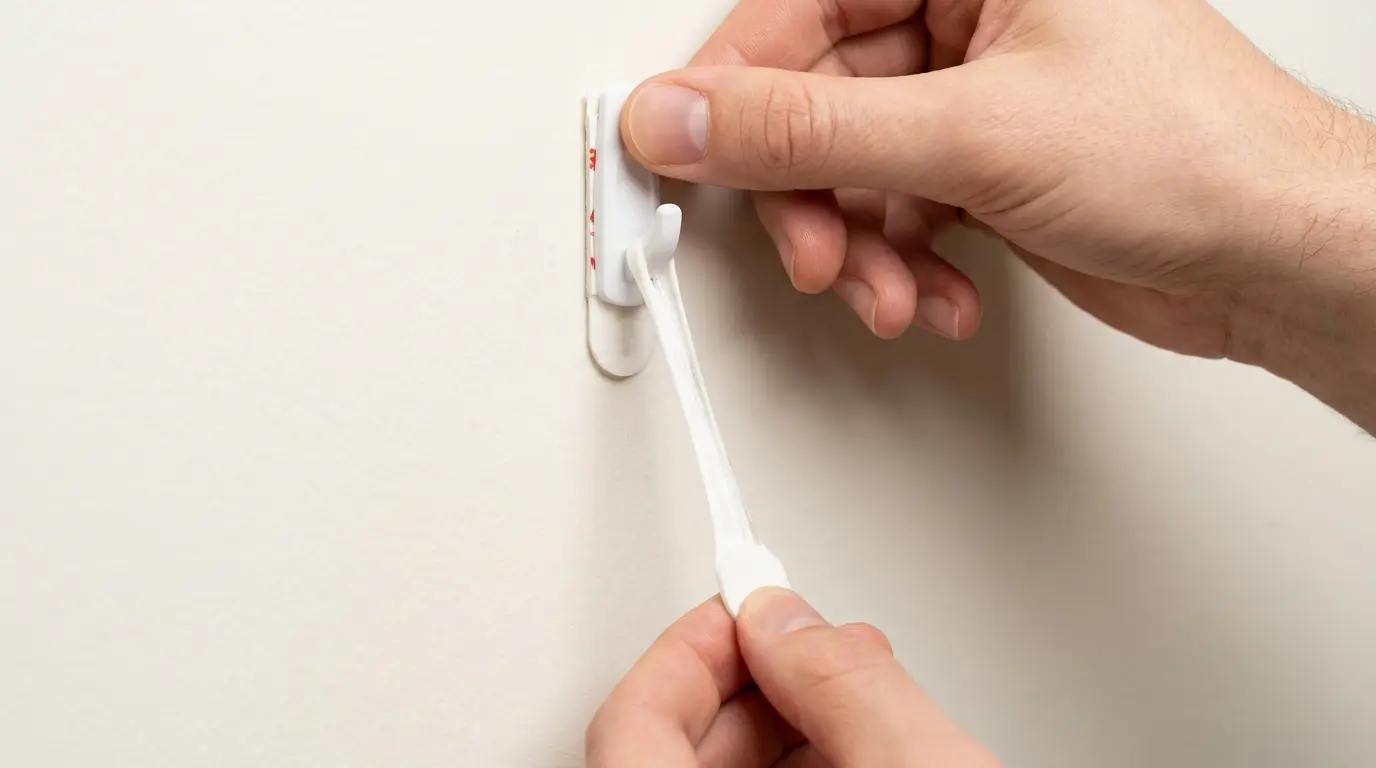
Teach everyone in your household the downward stretch rule. If you cannot reach the tab easily because a desk or sofa blocks the wall, move the furniture away first. Rushing the removal process or pulling from an awkward angle will turn a five-second removal into a two-hour drywall patching chore.
What to Do When a Command Strip Tab Snaps
If the pull tab snaps off flush with the strip, do not try to scrape the remaining pad off with a knife or metal blade. Scraping gouges deep holes into your drywall plaster. Instead, use a length of dental floss or strong sewing thread to slice the foam.
Slide the floss behind the plastic mount at the top of the strip. Saw the floss back and forth in a gentle downward motion to cut through the foam core. Once the plastic piece pops off, roll the remaining rubber glue downward with your thumb. You can warm the stuck glue with a hairdryer for fifteen seconds to make rolling even easier.
Command Strip Sizing and Weight Capacity Matrix
Reviewing strip dimensions and real-world weight limits confirms that matching strip size to frame weight prevents costly wall damage. Use the reference matrix below to pick the right strip size, quantity, and frame limit for your rental apartment.
| Strip Size | Pairs Needed per Frame | Max Manufacturer Weight | Safe Real-World Limit | Max Frame Dimensions |
|---|---|---|---|---|
| Small Picture Hanging Strips | 4 Pairs (1 at each corner). | 4 lbs total frame weight. | 2.5 lbs for lightweight prints. | Up to 8 x 10 inches. |
| Medium Picture Hanging Strips | 4 Pairs (1 at each corner). | 12 lbs total frame weight. | 8.0 lbs for standard wood frames. | Up to 18 x 24 inches. |
| Large Picture Hanging Strips | 4 Pairs (2 on left, 2 on right). | 16 lbs total frame weight. | 11.0 lbs for heavy glass frames. | Up to 24 x 36 inches. |
| Water-Resistant Bath Strips | 2 to 4 Pairs per item. | 5 to 10 lbs total weight. | 5.0 lbs for bathroom mirrors. | Up to 16 x 20 inches in humidity. |
| Narrow Picture Hanging Strips | 4 Pairs (side rail placement). | 12 lbs total frame weight. | 7.5 lbs for thin metal frames. | Up to 16 x 24 inches. |
Frequently Asked Questions About Command Strips
Direct answers to common tenant questions regarding frame weight limits, adhesive failures, paint protection, and humidity safety.
How much weight can large Command picture hanging strips hold?
Four pairs of large Command picture hanging strips can support frames weighing up to sixteen pounds. For long-term reliability and safety, keep actual frame weight under twelve pounds to account for household vibrations.
Why do Command strips fall off the wall?
Command strips fall off primarily because the wall was not cleaned with isopropyl alcohol, the frame was not unclicked for the one-hour adhesive cure, or the wall has heavy texture that prevents complete adhesive contact.
How do you remove Command strips without peeling paint?
Gently hold the frame base, grasp the bottom pull tab, and pull it slowly straight down parallel to the wall. Avoid pulling the tab straight into the room, which tears drywall paper and peels paint.
Can you use Command strips on freshly painted walls?
No, never apply Command strips to freshly painted walls. Paint requires twenty-eight to thirty days to fully cure. Applying strips earlier traps evaporating paint solvents, causing the adhesive to bond permanently and rip off paint.
Do Command strips work in humid bathrooms?
Standard Command strips fail in humid bathrooms because steam softens the adhesive. Always choose specialized Command Bath water-resistant strips, which feature water-resistant adhesive foam designed to hold firmly on damp bathroom tiles.