How Many Lumens Do You Need for a Living Room? (The Room Size Formula)
Reader Disclosure: This post contains affiliate links. If you purchase through these links, we may earn a commission at no additional cost to you.
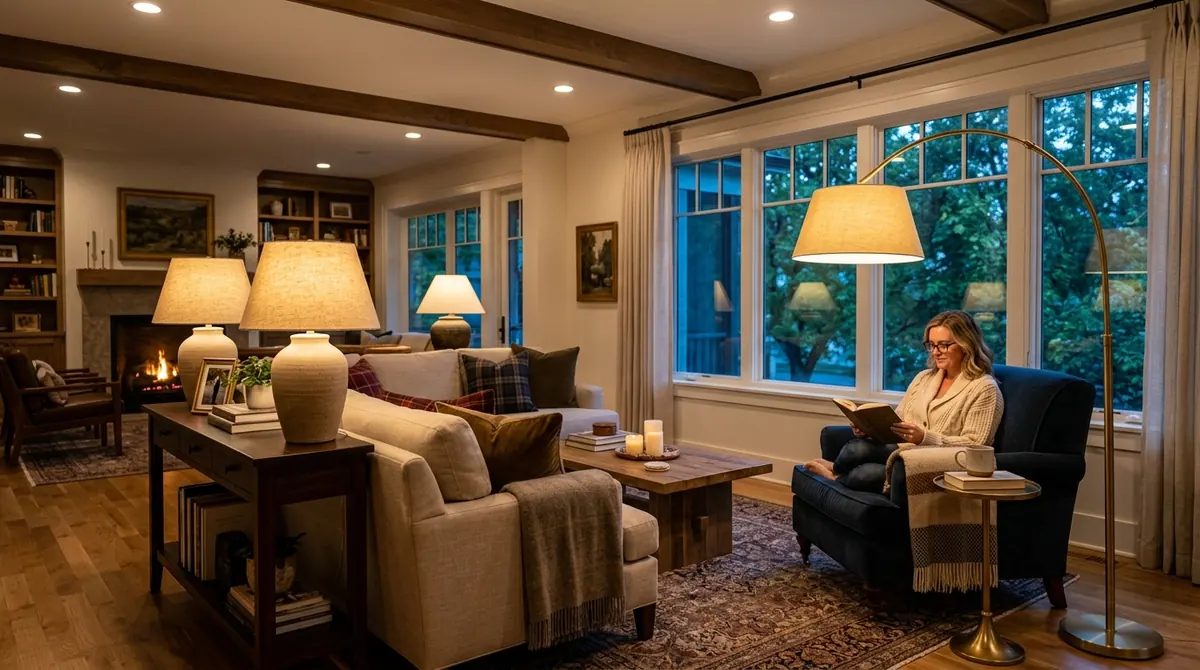
To calculate how many lumens you need for a living room, multiply your room square footage by ten to twenty foot-candles for general relaxation. You can also up to thirty foot-candles for reading and entertaining. A standard two-hundred-square-foot living room requires two thousand to four thousand total lumens. Never dump all four thousand lumens from a single central ceiling fixture. Divide your total lumens across ambient overhead fixtures, eye-level reading lamps. It also decorative wall accents with dimmer controls.
Few decorating mistakes make a home feel more uncomfortable than bad lighting math. Install too few lumens. It also your living room feels gloomy, dreary, and small. Install too many lumens in a single un-dimmed ceiling fixture, and your space feels like a commercial office or an interrogation room. Professional interior decorators avoid both extremes by calculating total lumens first, then dividing those lumens into balanced layers.
Modern LED bulbs make wattage ratings obsolete. Wattage only measures electrical power consumption, not actual brightness. Lumens measure real visible light output. Once you understand the square footage formula, you can plan your fixtures with confidence. You can also calculate your exact room brightness using our free interactive room lumens and foot-candle calculator before buying fixtures.
Quick Comparison: Living Room Lumens by Room Size & Activity
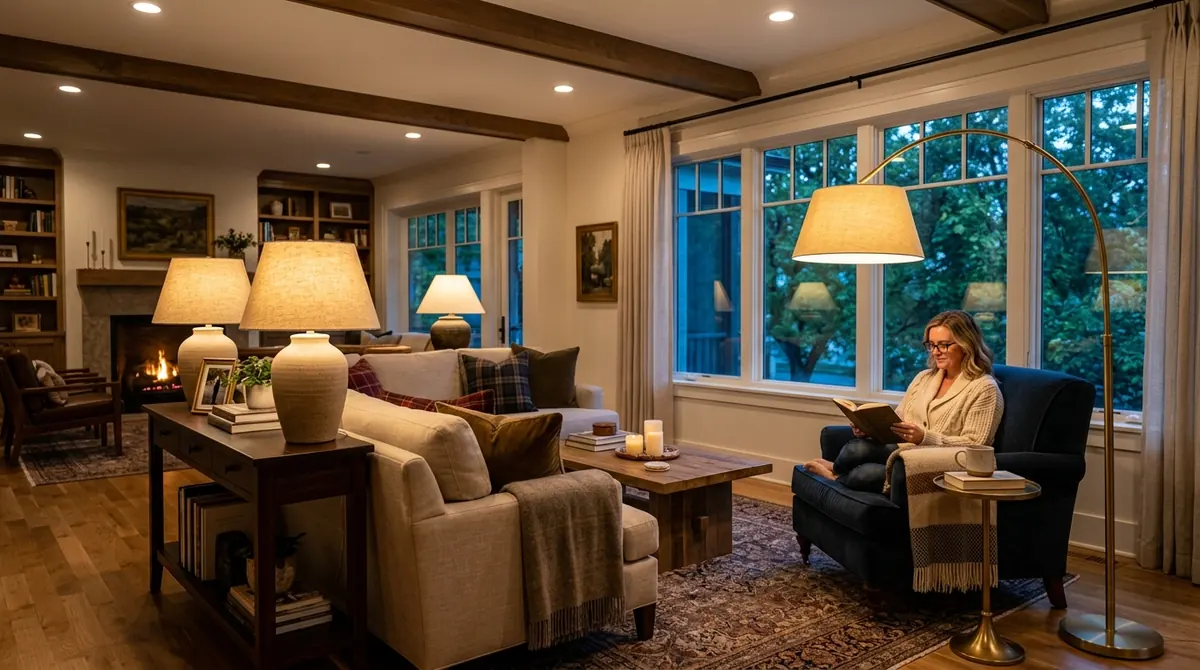
The total lumens needed in a living room depend directly on room dimensions, ceiling height. It also daily activities. Cozy evening conversation requires ten to fifteen foot-candles. Family game nights and casual reading require twenty to thirty foot-candles. Dark wall paint and high ceilings demand an additional twenty percent lumen buffer.
Review this quick reference matrix to find your living room target lumens:
| Room Dimensions | Square Footage | Relaxed Ambient (10-15 fc) | Active Task (20-30 fc) | Recommended Fixture Combo |
|---|---|---|---|---|
| Compact Den (10′ x 12′) | 120 sq ft | 1,200 to 1,800 lumens | 2,400 to 3,600 lumens | 1 central flush mount + 2 table lamps |
| Medium Living Room (12′ x 15′) | 180 sq ft | 1,800 to 2,700 lumens | 3,600 to 5,400 lumens | 4 recessed cans + 1 floor lamp + 1 table lamp |
| Standard Living Room (12′ x 16′) | 192 sq ft | 1,900 to 2,900 lumens | 3,800 to 5,700 lumens | 6 recessed cans + 2 side table lamps |
| Large Living Room (14′ x 20′) | 280 sq ft | 2,800 to 4,200 lumens | 5,600 to 8,400 lumens | 6 recessed cans + 1 chandelier + 2 reading lamps |
| Open Great Room (18′ x 22′) | 396 sq ft | 4,000 to 6,000 lumens | 8,000 to 12,000 lumens | 8 to 12 recessed cans + chandelier + 4 lamps |
Calculate Your Room Lumens and Foot-Candles Instantly
Room dimensions alone do not tell the whole story. Wall paint reflectance, ceiling height. It also window placement all change how bright a room feels. Dark walls absorb light. This white walls reflect it. Ten-foot ceilings disperse light over a greater distance than eight-foot ceilings.
Before purchasing bulbs and fixtures, run your room numbers through our interactive room lumens and foot-candle calculator. It factors in your wall colors and room dimensions to generate exact fixture counts and wattage equivalents in seconds.
Watts vs. Lumens: Why Old Thinking Causes Dark Rooms
Watts measure electrical power consumption. This lumens measure actual visible light output. For decades, homeowners bought bulbs by wattage because all incandescent bulbs used the same tungsten filament design. A sixty-watt incandescent bulb produced about eight hundred lumens. A one-hundred-watt bulb produced sixteen hundred lumens.
Modern LED bulbs changed everything. A high-efficiency LED bulb produces eight hundred lumens while using only eight to nine watts of power. If you shop for bulbs based on wattage alone, you risk buying weak fixtures that leave your living room dark.
Always check the lumen rating printed on the front of the bulb box. We recommend standard Philips 800-lumen frosted A19 LED bulbs for living room table and floor lamps. They provide the familiar brightness of a sixty-watt incandescent bulb while saving eighty-five percent on electricity.
The Room Size Mathematical Formula: Step-by-Step
Calculating your exact living room lumen requirement requires two simple steps based on architectural standards. The Illuminating Engineering Society (IES) defines residential room lighting in foot-candles. One foot-candle equals one lumen spread across one square foot of surface area.
Step 1: Calculate Room Square Footage
Measure the length and width of your living room in feet using a tape measure. Multiply length by width to find total square footage. For example, a living room that measures twelve feet wide by sixteen feet long covers one hundred ninety-two square feet. If your room features an open L-shape, divide the space into two rectangles. Calculate each area separately and add the two totals together.
Step 2: Multiply by Desired Foot-Candles (Lumens Per Square Foot)
Multiply your square footage by your target foot-candle range. For general living room relaxation, use fifteen foot-candles. Take your one-hundred-ninety-two-square-foot room and multiply by fifteen foot-candles. You get two thousand eight hundred eighty total lumens. If your family reads books or plays games in the room, multiply by twenty-five foot-candles. That gives you four thousand eight hundred total lumens.
Adjust your calculation for ceiling height. Standard formulas assume an eight-foot ceiling. For every foot of ceiling height above eight feet, add ten percent more lumens. A nine-foot ceiling requires ten percent more light. A ten-foot ceiling requires twenty percent more light. This extra light ensures adequate brightness reaches the floor.
The 3-Tier Layering Rule: Avoid the “Interrogation Room” Effect
Never deliver all your calculated lumens from a single overhead ceiling fixture. Forcing three thousand lumens through one ceiling chandelier creates harsh shadows under your eyes and nose. It also produces sharp glare on television screens. Professional designers distribute total lumens across three distinct vertical layers.
Layer 1: Ambient Lighting (The Foundation)
Ambient lighting provides the baseline illumination that allows you to walk safely through the room. It should deliver fifty to sixty percent of your total lumens. Achieve this layer with recessed downlights, flush-mount fixtures, or a dimmable central chandelier. Follow our spacing rules in how many pot lights per room to place ceiling cans without creating ceiling clutter.
Layer 2: Task Lighting (The Function)
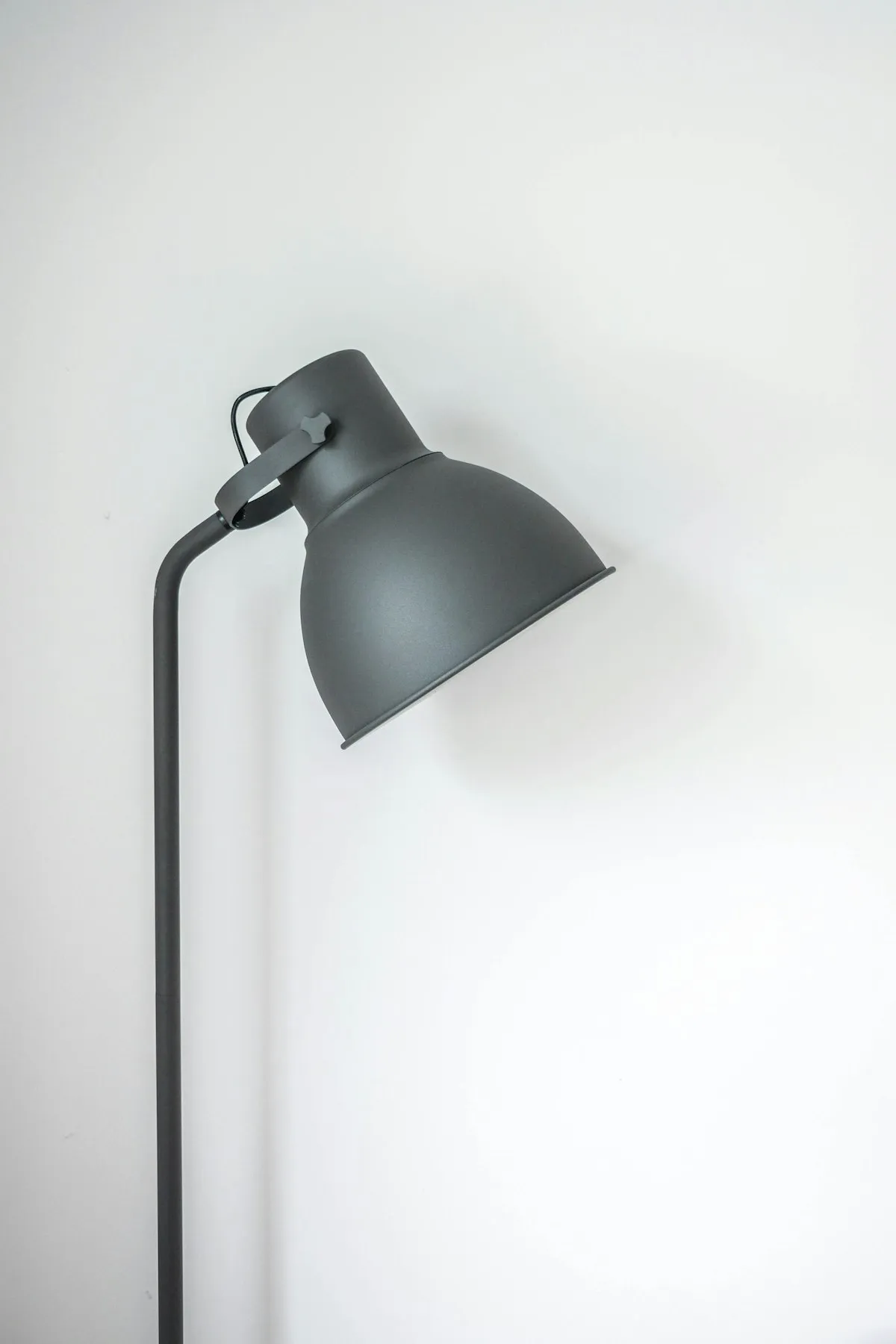
Task lighting delivers focused brightness to specific work and seating zones. It should account for twenty-five to thirty percent of your total lumens. Place table lamps beside sofas, desk lamps on consoles, and an adjustable reading lamp near armchairs. Adding an elegant Brightech modern arched floor lamp behind your armchair supplies four hundred to eight hundred lumens directly over reading materials.
Layer 3: Accent Lighting (The Drama)
Accent lighting draws the eye to architectural features, textured fireplaces, artwork. It also built-in bookshelves. It should deliver ten to fifteen percent of your total lumens. Slim picture lights above framed wall art need two hundred to three hundred lumens. Discreet LED strip tape under floating display shelves needs one hundred fifty to two hundred fifty lumens per linear foot. These accent fixtures create rich depth and visual interest throughout the space.
Light Reflectance Value (LRV): How Paint Colors Steal Your Lumens
Light Reflectance Value (LRV) measures the percentage of visible light a paint color reflects back into a room. The LRV scale runs from zero for absolute black to one hundred for pure white. Dark wall paint absorbs light like a sponge. You must add extra lumens to achieve comfortable room brightness.
If your living room walls have light paint with an LRV of seventy or higher, light bounces off the drywall efficiently. Benjamin Moore Simply White has an LRV of eighty-nine. Rooms with white paint only need twelve to fifteen foot-candles. If your walls feature moody charcoal, deep navy. You can also dark forest green paint with an LRV below thirty, walls absorb up to eighty percent of light. Benjamin Moore Hale Navy has an LRV of eight. In dark rooms, add twenty to thirty percent more lumens to compensate for paint absorption.
Bulb color temperature also affects how your paint looks. Pair warm light bulbs with warm undertones to keep your room feeling cohesive. Read our complete design guide on 2700K vs 3000K living room lighting to choose the best color temperature for your paint colors.
Smart Dimming: Controlling Your Living Room Atmosphere
Dimmer switches are the most useful tool in home lighting design. A living room serves multiple functions throughout the day. You need full brightness for morning house cleaning, moderate light for afternoon entertaining. It also soft low light for late-night movies. Without dimmers, your four-thousand-lumen lighting system locks you into a single rigid brightness level.
Always install dedicated LED-compatible dimmer switches on every ambient circuit. We recommend the Lutron Diva LED+ dimmer switch for smooth, flicker-free performance down to ten percent brightness. Smart dimmers also let you program custom scene presets like movie night, casual dinner, or morning wake-up. If your LED fixtures hum or strobe at low settings, check our guide on why LED bulbs flicker on dimmer switches to solve electrical mismatch.
The Nighttime Dark Corner Audit: How to Diagnose Shadow Dead Zones
To test your living room lighting, perform a nighttime shadow audit after sunset. Turn off lights in adjacent rooms and switch on your standard living room lights. Walk over time along the edges of the room. Look for dark shadow triangles in room corners, behind sofas. It also around entertainment centers.
Shadow pockets make rooms feel smaller, colder, and unbalanced. If you find dark corners, do not install brighter overhead bulbs. Instead, place an accent table lamp, a floor uplight behind an indoor plant, or a wall sconce in that specific corner. You can verify real foot-candle levels across your seating areas using an affordable digital lux light meter. A simple handheld meter confirms whether your reading chairs reach the recommended thirty foot-candles.
How to Create a Balanced Living Room Lighting Plan
Creating a balanced lighting plan starts with your furniture layout. Identify where people sit to talk, read books. It also watch television. Position task lights at seated shoulder height so light falls directly on books and tablets without shining into resting eyes.
Next, map your ambient fixtures to cover primary walkways. In open-concept homes where living areas connect to dining rooms, coordinate your fixture styles and color temperatures. Review our full collection of room blueprints in our lighting design and fixtures library to build a cohesive lighting scheme.
Consult the official Energy Star light fixture criteria to verify certified lumen outputs, efficiency ratings, and long-term driver reliability.
Frequently Asked Questions About Living Room Lumens
Is 3,000 lumens too bright for a living room?
No, three thousand lumens is not too bright for a standard living room measuring one hundred fifty to two hundred square feet. Three thousand lumens supplies fifteen to twenty foot-candles of light. This is the recommended level for family living. However, you should distribute those three thousand lumens across multiple lamps and fixtures with dimmer controls.
How many recessed lights do I need for a 200 sq ft living room?
A two-hundred-square-foot living room needs four to six four-inch recessed downlights. Four fixtures producing seven hundred lumens each supply two thousand eight hundred ambient lumens. Adding two table lamps provides an additional sixteen hundred task lumens. This combination creates a balanced, well-lit room.
How far should recessed lights be placed from the wall?
Place recessed pot lights twenty-four to thirty inches away from your walls. This distance represents roughly half the spacing between your ceiling fixtures. It washes wall art softly without creating harsh scallop shadows along the upper ceiling drywall.
What is the difference between lumens and foot-candles?
Lumens measure the total amount of light emitted by a light bulb in all directions. This foot-candles measure the intensity of light that reaches a specific surface. One foot-candle equals one lumen per square foot. Lumens describe the bulb, while foot-candles describe how bright your room actually feels.
Can floor lamps light an entire living room without ceiling fixtures?
Yes, floor lamps can illuminate an entire living room effectively without overhead ceiling fixtures. Combine two tall torchiere floor lamps that bounce light off white ceilings for ambient illumination with two lower reading lamps near seating areas for task visibility. This arrangement creates a warm, layered atmosphere.