Air Purifying Indoor Plants Safe for Cats: 7 Choices
Reader Disclosure: This post contains affiliate links. If you buy through them, we may earn a commission at no extra cost to you. We only recommend items tested for clean craftsmanship and authentic durability.
Spider plants, Boston ferns, and parlor palms are the best air-purifying indoor plants that are safe for cats. They filter harmful indoor chemicals like formaldehyde and benzene without risking pet health. These non-toxic plants contain zero poisonous sap or sharp crystals, keeping playful kittens completely safe even if they nibble on green leaves.
Many popular houseplant guides recommend plants that poison domestic pets. Common favorites like pothos, snake plants, and monsteras contain microscopic needle crystals that cause burning mouth pain and throat swelling in cats. You do not need to choose between clean indoor air and pet safety. Choosing ASPCA-verified non-toxic greenery lets you purify your living room while protecting your beloved pets.
Before shopping for indoor greenery, test your space with our interactive indoor plant room planner. It calculates exact window light levels, pot sizes, and room air volume for your pet-friendly home.
Why Many Popular Air-Purifying Plants Poison Cats
Popular house plants often produce natural defensive toxins to stop wild animals from eating their foliage. Plants like peace lilies, philodendrons, and ZZ plants produce sharp calcium crystals. These tiny chemical crystals look like tiny glass needles under close view. When a curious cat bites a leaf, the needles shoot into sensitive mouth tissue, causing intense drooling, pawing at the mouth, and vomiting.
True lilies from the Lilium family pose an even deadlier danger to indoor pets. Easter lilies, tiger lilies, and daylilies cause rapid kidney failure in felines. Even drinking water from a vase of cut lilies or licking tiny pollen grains from fur can prove fatal within thirty-six hours. Remove all true lilies from your living space immediately and choose safe, pet-friendly green plants instead.
Choice 1: Spider Plant for Formaldehyde Removal
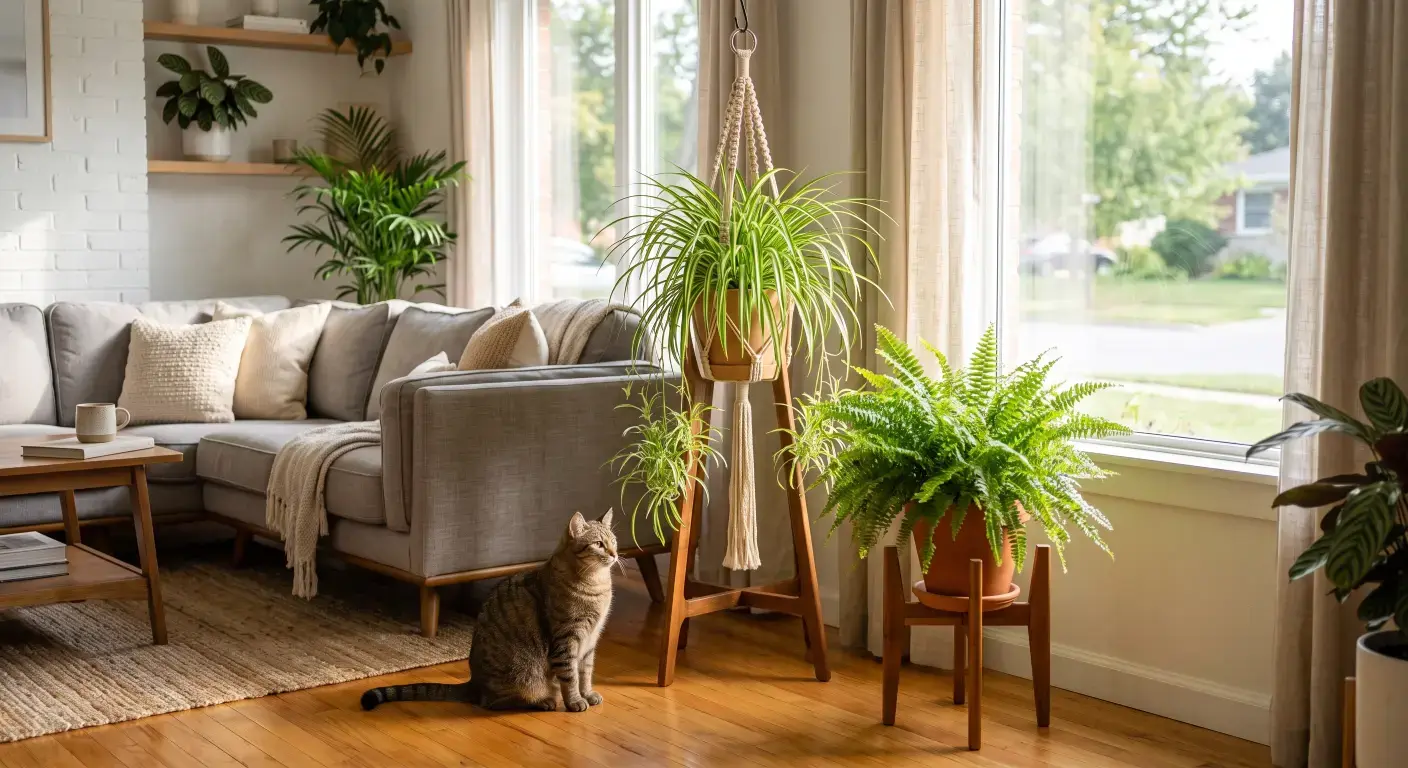
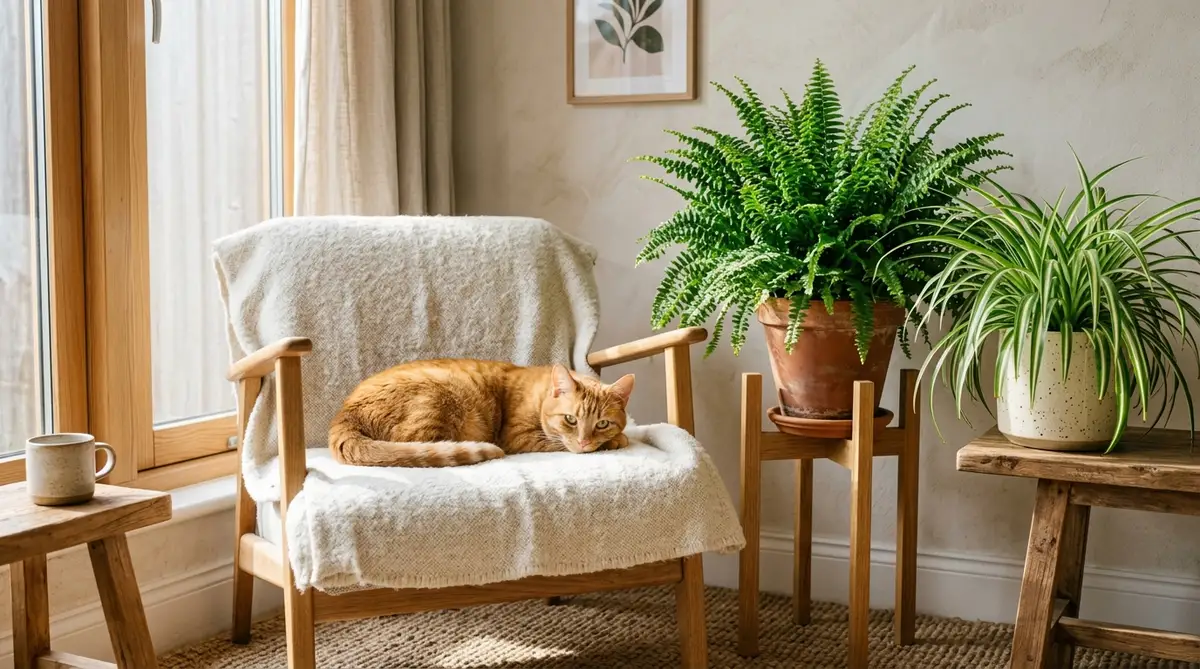
The spider plant stands as one of the most resilient, cat-safe air cleaners you can grow. Spider plants clean room air fast. Studies show they clear up to ninety-five percent of airborne formaldehyde within one day. They grow long arching green leaves. These pretty leaves spill over pot rims, looking lovely on wall shelves.
Why Cats Love Nibbling Spider Plants
Do not panic if you catch your cat chewing on fresh spider plant tips. Spider plants contain mild natural compounds that produce a harmless, mild catnip effect in felines. While eating too many leaves can cause an upset stomach, the plant contains zero systemic toxins. Hang your spider plant in a sunny macrame hanger so it cleans your air out of your cat’s reach.
How to Root Spiderettes for Free Clean Air
Healthy mature spider plants grow long runner stems with tiny baby plants called spiderettes. You can clip these baby offshoots to grow new plants for every room in your home. Snip the baby plant from the mother stem with clean scissors.
Place the base of the baby plant in a small jar of tap water. Keep the jar on a high kitchen window ledge where cats cannot knock it over. Small white roots will sprout within seven days. Plant the rooted baby in potting soil, and you have a new non-toxic air cleaner at zero cost.
Choice 2: Boston Fern for High Humidity and Toxin Filtering
Boston ferns have lush feathery fronds. These green fronds work as great natural room humidifiers. They soak up harsh paint fumes from new furniture. They also clear cleaning chemical odors from indoor air. Their dense foliage releases clean moisture into dry winter rooms, helping your skin and breathing.
Caring for Boston Ferns in Living Spaces
Place your Boston fern in bright, indirect window light. Keep the potting soil damp with regular light watering. Mist the fronds twice a week with clean water, or place the pot on a shallow tray filled with river pebbles and water. Cats love batting swinging fern leaves with their paws. Keep your fern safe on a tall wooden plant stand.
Choice 3: Parlor Palm for Pet-Safe Tropical Height
The parlor palm brings graceful tropical elegance to small apartments without threatening curious pets. It thrives in low indirect sunlight and tolerates dry room air with ease. Studies praise the parlor palm for cleaning indoor air. It filters benzene and smoke fumes from living rooms.
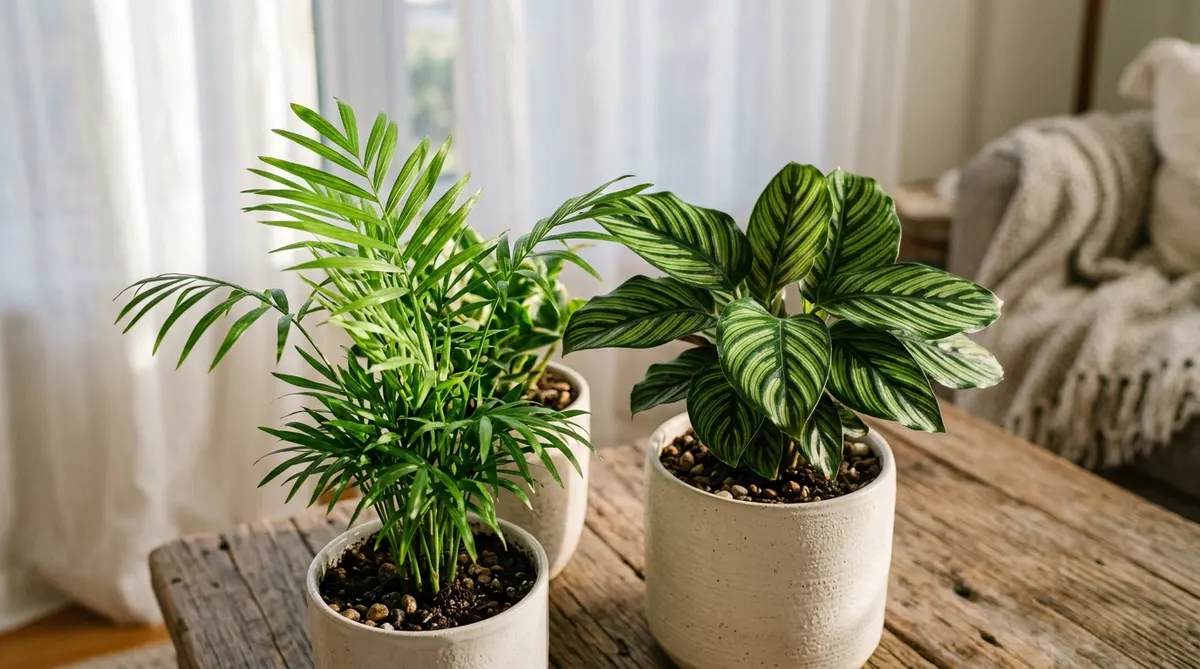
Parlor palms grow slowly, reaching three to four feet in total height over several years. Water the plant only when the top inch of potting soil feels dry to the touch. The firm fronds hold up well when cats brush past them. This palm makes a great floor plant beside your couch.
Choice 4: Calathea Prayer Plant for Patterned Foliage
Calathea plants feature broad oval leaves decorated with intricate pinstripe and peacock feather patterns. They are completely non-toxic to cats and dogs. Their wide leaves trap floating room dust. This keeps side tables and bedroom air clean.
Understanding the Daily Prayer Leaf Motion
Calatheas fold their leaves upward at sunset and open them flat at dawn. This natural daily leaf movement fascinates playful cats. Because the foliage contains zero toxins, you do not need to worry if your cat taps the moving leaves. Keep calatheas in medium indirect light and water with filtered water to prevent brown leaf tips.
Choice 5: Areca Palm for Large Living Rooms
If you need a large statement plant for an empty corner, choose the areca palm. Areca palms grow six to eight feet tall with lush, golden-stemmed fronds. A tall areca palm releases almost one quart of water vapor each day. This mist keeps room air fresh and moist.
Areca palms filter acetone, xylene, and formaldehyde with high efficiency. Set this tall palm near a sunny window. Make sure it gets bright filtered daylight. Use a heavy ceramic pot so playful cats cannot knock the tall palm over when playing nearby.
Choice 6: Cast Iron Plant for Low-Light Apartments
The cast iron plant earned its famous name by surviving extreme neglect and poor growing conditions. It thrives in dim hallway corners, drafty entryways, and windowless bedrooms. Its broad dark green leaves filter indoor dust while remaining one hundred percent safe for household pets.
Wipe the wide leaves with a damp microfiber cloth once a month to remove trapped household dust. Water the plant once every two weeks. The thick tough leaves resist playful cat paws. It is the most durable pet-safe houseplant you can buy.
Choice 7: Money Tree for Clean Architectural Lines
The money tree features a braided wood trunk topped with palm-like green foliage umbrellas. It brings bold clean style to modern living rooms while purifying indoor air of smoke and benzene fumes. The ASPCA verifies that the money tree is completely non-toxic to cats and dogs.
Water your money tree thoroughly once a week, allowing excess water to drain out of the pot bottom. Place the tree in bright, indirect window light. Keep the soil slightly dry between waterings to prevent root rot.
Pick a pot with large drainage holes for your money tree. Line the bottom of the pot with one inch of coarse pumice or clay pebbles. This layer stops plant roots from sitting in soggy soil. Good soil drainage keeps money tree leaves bright green and stops root rot from killing your indoor greenery.
Clean plant leaves work much better at absorbing air toxins. Dust coats leaf pores over time, cutting down on plant breathing. Wipe both sides of each green leaf with a damp cotton cloth once every two weeks. This quick cleaning step helps your houseplants filter household air at top speed.
Soil Safety: Avoiding Toxic Fertilizers and Mold
Pet plant safety goes deeper than green leaves. What sits inside your plant pots can also harm cats. Many synthetic plant food spikes contain concentrated urea and chemical salts. If your cat drinks runoff water from a plant saucer, these chemicals cause stomach pain.
Feed your houseplants with organic worm castings or liquid kelp meal instead. Never use cocoa mulch on indoor plant pots. Cocoa bean shells contain theobromine, the exact same compound that makes chocolate deadly to pets. Empty plant drainage saucers thirty minutes after watering so stagnant water never attracts harmful mold spores.
Air-Purifying Pet-Safe Plants Comparison Matrix
Review this comparison table to pick the best non-toxic air-cleaning plants for your home layout:
| Plant Name | Key Toxins Filtered | Light Needs | Watering Schedule | Pet Safety Status |
|---|---|---|---|---|
| Spider Plant | Formaldehyde, carbon monoxide | Medium to bright indirect | Once every 7 to 10 days | 100% Non-toxic (ASPCA safe) |
| Boston Fern | Xylene, toluene, dry indoor air | Bright indirect, high humidity | Twice weekly; keep moist | 100% Non-toxic (ASPCA safe) |
| Parlor Palm | Benzene, trichloroethylene | Low to medium indirect | Once every 10 to 14 days | 100% Non-toxic (ASPCA safe) |
| Calathea | Dust, particulate matter | Medium indirect | Weekly with filtered water | 100% Non-toxic (ASPCA safe) |
| Areca Palm | Xylene, formaldehyde | Bright filtered sunlight | Weekly; keep soil moist | 100% Non-toxic (ASPCA safe) |
| Cast Iron Plant | Airborne dust and particulate | Low light to full shade | Once every 14 to 20 days | 100% Non-toxic (ASPCA safe) |
| Money Tree | Benzene, smoke, formaldehyde | Medium to bright indirect | Once weekly; drain well | 100% Non-toxic (ASPCA safe) |
Frequently Asked Questions About Cat-Safe Air-Purifying Plants
Are snake plants safe for cats?
Snake plants are toxic to cats and dogs. They contain chemical saponins that cause severe nausea, vomiting, and mouth irritation. Replace snake plants with cast iron plants or parlor palms for pet-safe low-light greenery.
Why do cats eat spider plant leaves?
Spider plants produce mild chemical compounds that give cats a harmless, mild euphoric feeling similar to catnip. The plant is non-toxic, but hang pots high to protect fronds from over-enthusiastic chewing.
Can peace lilies kill cats?
Peace lilies contain sharp calcium crystals that cause intense mouth pain, drooling, and throat swelling. While rarely fatal unlike true Easter lilies, they cause severe misery. Avoid keeping them around pets.
How many plants do you need to clean indoor air?
NASA research suggests placing two to three medium-sized plants for every one hundred square feet of living space. Grouping multiple pet-safe plants in sunny corners boosts air filtration and room humidity naturally.
What should you do if your cat eats a houseplant?
Identify the plant immediately and call the ASPCA Animal Poison Control Center or your emergency vet. Take a photo of the chewed leaf and keep your cat calm while seeking professional veterinary guidance.
Vertical Plant Styling: Keeping Pots Away from Cats
Keep your indoor plants thriving by designing smart vertical displays. Cats are natural climbers that love high perches. If you place a wide plant stand next to an armchair, your cat will jump onto the stand and knock the pot down.
Use slender metal plant pedestals that offer zero landing space for feline paws. Install floating wood wall shelves high on empty accent walls. Keep the shelves isolated with at least three feet of open wall space around them. When cats see no launch pad nearby, they leave your beautiful air-purifying foliage completely alone.
Decorator Rules for Cat-Proofing Houseplant Displays
Styling houseplants with pets requires smart display strategies. Use heavy ceramic or stone planters rather than lightweight plastic pots. Heavy pots have wide, stable bases that cats cannot knock over when leaping onto window sills.
Cats love digging in loose potting soil and using big planters as litter boxes. Cover the exposed potting soil with smooth river stones measuring at least two inches wide. The heavy stones block cat paws from digging into dirt while allowing watering moisture to seep through cleanly to plant roots.
Mount ceiling hooks and wall brackets to hang delicate trailing plants like spider plants and Boston ferns up high. Ceiling displays add vertical greenery to small rooms while keeping tender leaves away from curious kittens. With the right pet-safe plant choices, you enjoy clean indoor air and lush greenery without worry.