Affordable Sustainable Furniture That Does Not Fall Apart

Affordable sustainable furniture pairs solid wood with simple joints. It uses non-toxic plant finishes at fair prices. You get durable pieces by choosing local lumber. Look for vetted secondhand hardwoods. Seek sturdy steel hardware. These clean materials skip toxic glues. They last for decades of daily home use.

What Qualifies as Affordable Sustainable Furniture?
Furniture qualifies as green when builders use renewable wood. They apply safe plant finishes. Pieces hold third-party seals like FSC certificates. Real sustainability also demands fair prices. Pieces skip chemical glues. They feature parts you can take apart with simple tools.
Many shoppers assume green decor requires luxury prices. In truth, real sustainability focuses on clean materials. It values lasting strength. A simple pine table from a local mill has a tiny carbon footprint. In contrast, heavy showroom tables travel across oceans.
Look for three basic marks on any piece. Check for verified wood sources. Seek non-toxic surface finishes. Ensure the piece uses steel fasteners. FSC forests protect clean water and wildlife. Plant oils seal raw wood pores. They protect boards without fumes. Steel bolts let you tighten joints whenever needed.
Where to Buy Affordable Sustainable Furniture on a Budget
You can buy affordable sustainable furniture from three main sources. Check direct domestic mills. Browse secondhand thrift shops. Look for solid wood retail lines. Buy untreated platform beds straight from regional mills. Hunt for vintage dining sets at local charity shops. At flat-pack stores, pick untreated solid pine.
Finding durable pieces under tight budgets requires watching for showroom markups. Traditional stores often charge 300 percent markups. They charge extra for factory stains, branding, and prime retail space. Bypassing these markups lets you buy denser wood. You get heavy steel hardware for the same total cost.
| Retail Channel / Maker | Category Focus | Typical Starting Price | Verified Sustainability Credentials |
|---|---|---|---|
| KD Frames (Direct Mill) | Platform beds and futons. | $180 – $260 | Untreated solid Virginia tulip poplar. Zero chemical stains. Made in USA. |
| IKEA Solid Pine (TARVA / IVAR) | Dressers, shelving, and side tables. | $60 – $160 | FSC-certified solid pine. Flat-pack shipping. Plastic-free bare wood surface. |
| Habitat for Humanity ReStore | Dining tables, chairs, and dressers. | $50 – $220 | 100% circular reuse. Solid vintage hardwoods. Keeps wood out of landfills. |
| Kaiyo and AptDeco | Sofas, armchairs, and desks. | $150 – $450 | Vetted circular resale. Professional inspection. Deep secondhand discounts. |
| Architectural Salvage Yards | Heavy dining tables and desks. | $80 – $280 | Reclaimed domestic timber. Dense old-growth grain. Zero factory emissions. |
| Regional Etsy Woodworkers | Dining tables and benches. | $220 – $450 | Local lumber sourcing. Built to order with non-toxic plant oils. |
When shopping at big flat-pack stores, read product tags with care. IKEA sells both disposable items and great solid wood bargains. Lines like TARVA and IVAR use solid untreated pine. You see real wood grain across every board. In contrast, lines like LACK use hollow cardboard and particleboard. Once water swells these paper panels, you cannot fix them. Always check the materials tag to verify solid wood.
Why Cheap Fast Furniture Collapses Within 18 Months
Fast furniture breaks within eighteen months. Particleboard cores crumble under daily stress. Makers glue wood scraps with chemical glue. Then they wrap panels in thin paper foil. These weak boards swell when exposed to humidity or water spills.
Particleboard Creep and Formaldehyde Off-Gassing
Flat-pack pieces rely on particleboard panels. These panels bend under steady weight. Place a heavy TV on a cheap shelf, and the center sags. Solid wood bends slightly under heavy loads. Yet it springs right back when you lift the weight. Crushed particleboard stays bent forever.
Binding glues also hurt indoor air quality. Cheap boards leak chemical fumes into your living areas. The EPA regulates composite wood under strict TSCA Title VI rules. Urea-formaldehyde glues trigger lung irritation and eye strain in closed rooms. During hot summer months, indoor humidity speeds up this chemical release. Moisture also weakens resin bonds inside the boards.
Dynamic Load Fatigue and the Cam-Lock Blowout
Zinc cam-locks cause most flat-pack failures. Makers drill holes into soft boards. They insert zinc cams and tighten steel pins. This design handles downward weight. But sliding a desk creates sideways pull. This sharp force rips right through the soft holes.
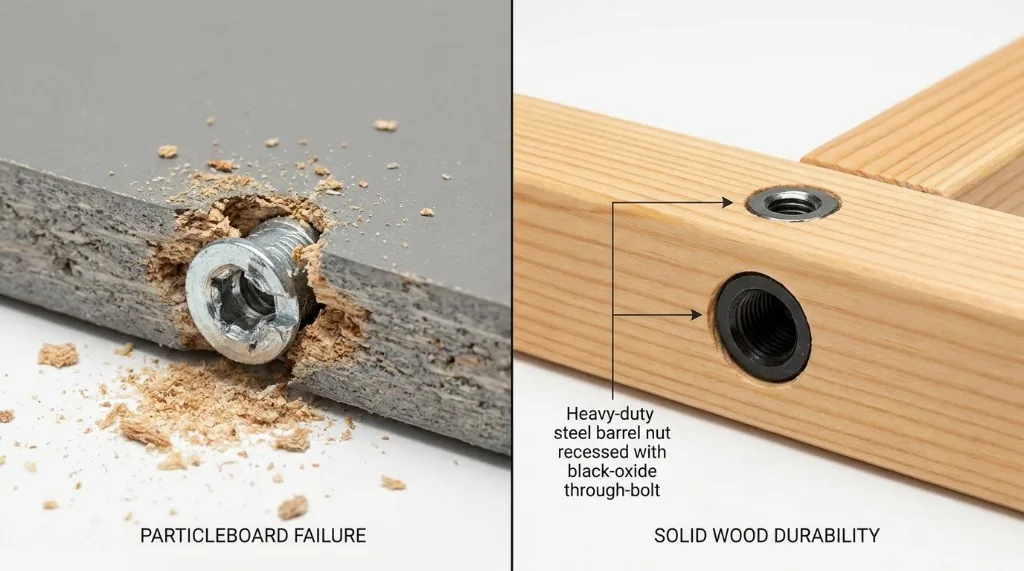
Zinc cams snap under side stress. When a cam breaks, it shreds the sawdust core. Particleboard has no grain to grip glue. You cannot fix a blown hole with wood glue. The panel fails, and the item ends up in the trash. Picking solid joints breaks this wasteful cycle.
The Joinery Checklist: How to Spot Durable Wood Construction
Spot durable furniture by checking joint styles and fasteners. Look for mortise joints before buying. Seek corner blocks secured with steel screws. Check for steel barrel nuts. These metal parts hold frames steady. They allow repeated moves over decades.
Mortise-and-Tenon, Dowels, and Steel Barrel Nuts
Good joints make furniture last. Quality pieces lock together like puzzle blocks. They skip surface glue and plastic plugs. A mortise joint slips a wood tongue into a deep pocket. This lock spreads household stress over wide surfaces. Pine frames often use thick hardwood dowels. These wood pins hold heavy weight.
For knock-down furniture, look for steel barrel nuts. A barrel nut drops into a hole inside the wood rail. A heavy machine bolt threads through from the outer leg. Tightening this bolt clamps both wood pieces together under direct tension. If a frame loosens after years of use, turn the bolt with an Allen wrench. This quick fix restores stiffness without harming the wood grain.
Solid Wood Corner Blocks and Heavy Bracing
Always inspect the underside of tables and chairs. Reliable makers install wood blocks in every corner. Workers glue and screw these braces to both side rails. This triangular shape stops wobbling when people lean on table edges.
Pass on tables that use stamped sheet metal brackets. Skip pieces with plastic corner clips. Thin metal bends after repeated knocks. Plastic clips snap during cold winter months. Thick wood corner blocks keep frame joints square through years of family use.
| Structural Component | Fast Furniture Standard | Durable Budget Engineering | Longevity Benefit |
|---|---|---|---|
| Core Board | Pressed particleboard. | Kiln-dried pine, poplar, or ash. | Solid wood takes sanding and fresh coats of oil. |
| Main Fasteners | Brittle zinc cam-locks. | Heavy steel through-bolts and barrel nuts. | Allows repeated moves without stripping wood holes. |
| Corner Joint | Stapled plastic brackets. | Glued and screwed hardwood blocks. | Stops table wobble and resists side bumps. |
| Edge Banding | Paper foil or thin PVC tape. | Milled solid wood profile. | Solid edges resist chips and will not peel in humidity. |
| Drawer Slides | Flimsy plastic wheels. | Solid wood runners or ball-bearing steel rails. | Hardwood runners glide easily with occasional wax buffing. |
How to Buy Long-Lasting Upholstered Sofas Under $1,500
Durable sofas under $1,500 use kiln-dried hardwood frames. They feature heavy steel sinuous springs and removable slipcovers. Avoid scrap plywood frames held by staples. Skip bonded pleather fabrics. Steer clear of cheap foam cushions that sink within two years.
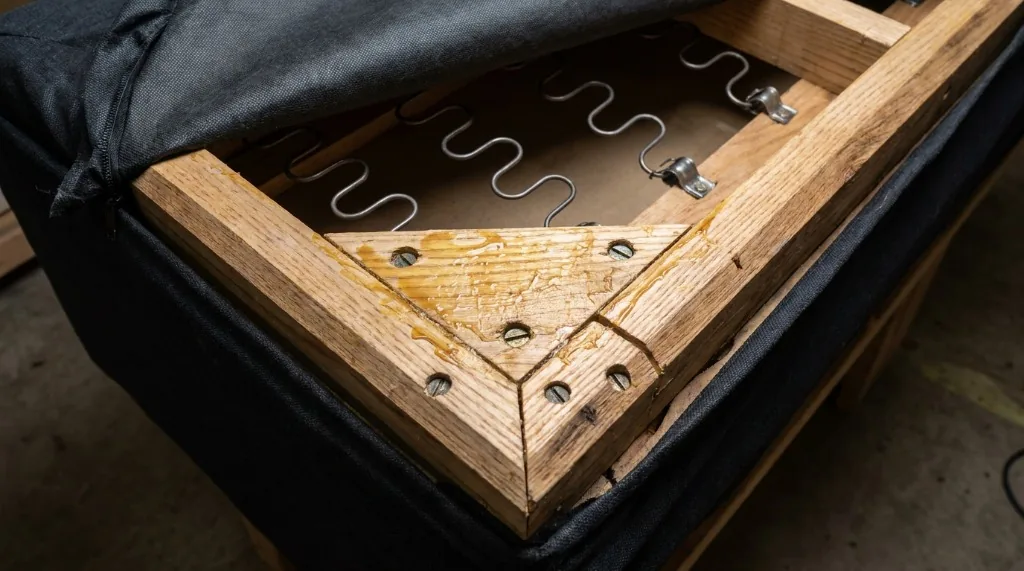
Kiln-Dried Hardwood Rails vs Soft Scrap Plywood
Cheap sofas often hide scrap plywood under their bottom dust cover. Workers staple these thin frames together with air guns. Daily sitting loosens these staples from soft wood. The frame creaks, and armrests wobble. You cannot set staples back into soft plywood.
Demand solid kiln-dried hardwood rails made from alder, ash, or birch. The USDA Forest Products Lab recommends drying wood to 6 to 8 percent moisture. This drying stops frame boards from warping over time. You can test sofa frame stiffness in the store. Lift one front leg six inches off the floor. The other front leg should rise right away. If it stays down, the frame has too much flex.
Steel Sinuous Springs vs Elastic Webbing
Seat suspension carries your body weight. Cheap couches stretch elastic webbing across the seat base. These ribbons sag after two years, leaving you in a sunken dip. Look for heavy steel S-springs. Builders clip these steel wires across hardwood rails. Lined metal clips silence squeaks.
Tempered steel springs keep their rebound for decades. If a spring clip ever pops loose, you can replace it from underneath with hand tools. That five-dollar repair saves a great sofa from the landfill.
High-Resilience Cushion Foam and Washable Slips
Flattened cushions ruin good sofas. Standard foam breaks down fast. Look for CertiPUR-US foam rated at 2.0 to 2.5 pounds per cubic foot. These dense cores spring back quickly. They keep your back supported.
Pair dense foam with removable slipcovers sewn from washed linen or heavy cotton canvas. Fixed synthetic covers trap body oils and pet dirt. Spot cleaning often leaves dark rings. Removable slipcovers wash clean in a regular washing machine. You can also dye them to refresh room colors.
Secondhand Solid Wood: The 5-Minute Thrift Store Inspection
Secondhand solid wood delivers exceptional value. You get dense vintage timber for less money than cheap new particleboard. Sourcing vintage dressers, tables, and desks from thrift stores secures handmade joints. It keeps sturdy pieces in active use.
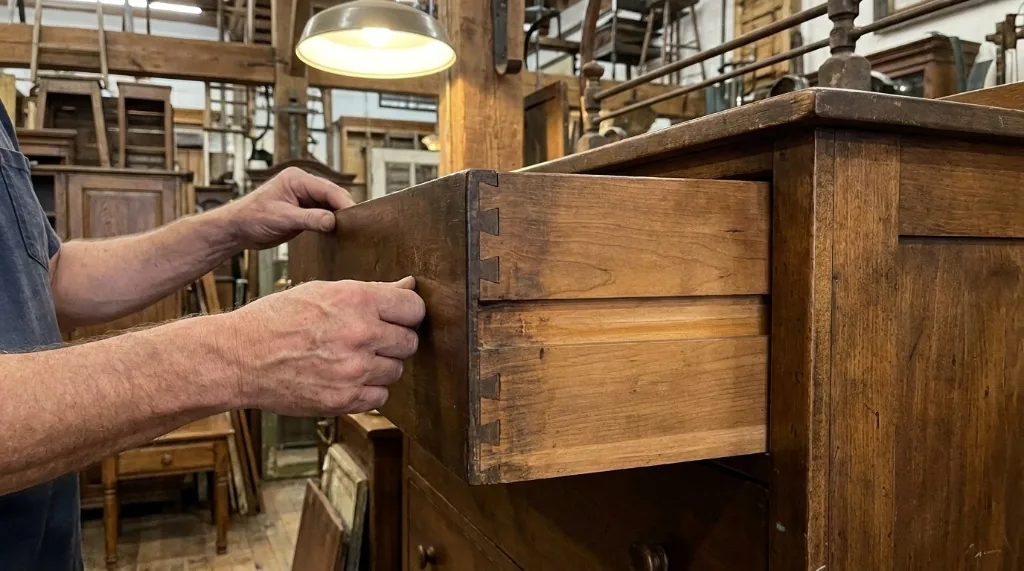
The Physical Rock Test and Joint Audit
Thrift shopping requires a sharp eye. Check joints before looking at price tags. Place both hands on top and rock the piece side to side. Clear wobble means dried glue inside the joints. Re-gluing joints takes time. Use loose joints to ask for a big discount.
Inspect the bottom feet for water stains or wood beetle holes. Moisture from wet basements can rot lower wood grain. Run your bare palm across the tabletop to feel for lifting veneer. Solid wood surfaces handle deep scratches easily. You can sand them down. Lifting veneer sheets require complex clamps and messy glue to repair.
Dovetail Joinery and Solid Wood Back Panels
Pull out a drawer and check front corners. Look for wedged fingers called English dovetails. These fingers lock drawer sides to front boards through friction. Dovetails cut from maple or oak hold firm under heavy loads.
Check the back of the cabinet. Fast furniture tacks cheap printed cardboard across the rear. Good vintage pieces feature thick plywood or tongue-and-groove pine boards fastened with wood screws. A solid wood back panel keeps the entire case square. It stops drawers from jamming.
Surface Cleaning and Vintage Lead Paint Safety
Thrifted pieces often look dark under shop lights. In most cases, this sticky film comes from old cooking oil, hand grease, and oxidized wax. The solid wood underneath remains in great shape. Do not start by sanding the timber with rough paper.
Always test vintage painted furniture with a lead swab. Test before sanding old paint. Sanding vintage paint releases toxic dust. If the swab shows lead, seal the paint under a safe clear coat. Or use a wet stripper. Do not run a power sander on old paint.
For natural wood, dampen a cloth with odorless mineral spirits. Wipe the surface along the grain lines. Mineral spirits dissolve old wax and grime without hurting original lacquer. In ten minutes of wiping, the wood clears up and reveals its warm grain.
How to Polish Wood Furniture with Natural Beeswax
Polish solid wood with natural beeswax. Rub the wax into clean wood with a soft cloth. Natural beeswax feeds dry wood grain. It repels water drops. It leaves a warm satin glow. It avoids synthetic silicone sprays.
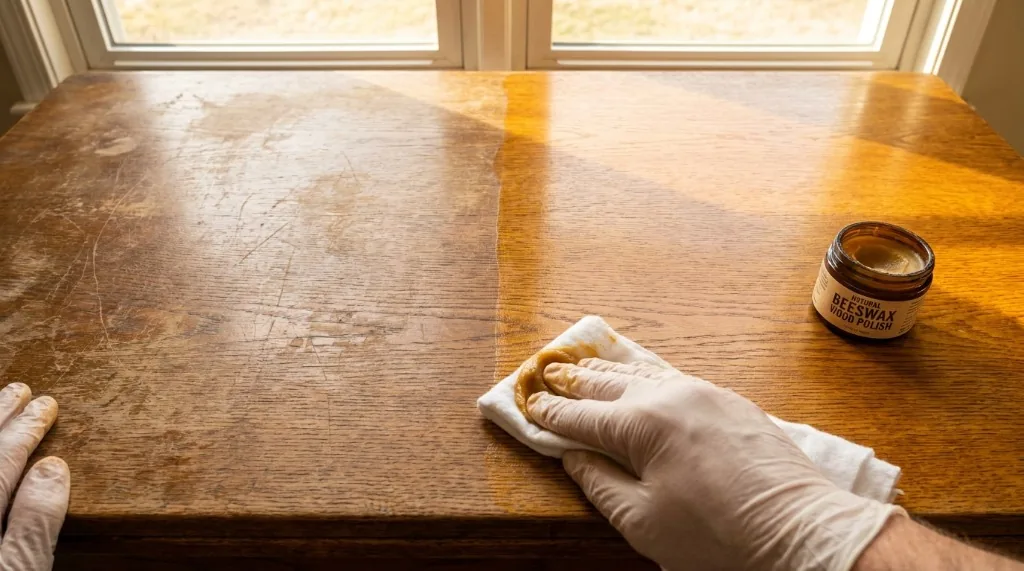
Aerosol sprays leave a slick silicone film on wood surfaces. Once silicone enters wood pores, fresh coats of oil or varnish cannot stick. The finish bubbles and peels in ugly spots. Pure beeswax creates a safe, breathable seal that protects wood naturally.
You can mix your own paste at home. Or buy a tin of yellow beeswax blended with walnut or linseed oil. The plant oil sinks into dry wood pores to enrich grain lines. Meanwhile, the beeswax sets on the outer surface. It forms a water-resistant seal that stops drinking glasses from leaving white water rings.
- Wipe the wood with a damp cotton cloth and mild plant soap. Dry it right away with a clean towel.
- Scoop a small spoonful of wax paste into your cloth. Rub the cloth between your fingers to soften the wax.
- Rub the wax in circular strokes across the timber. Press the paste into open pores and fine scratches.
- Let the wax rest for twenty minutes until a dry haze forms. Buff firmly along the grain with a flannel rag until it shines.
Unfinished Domestic Wood: How to Finish Raw Timber at Home
Finishing raw wood at home saves serious cash. You get maximum frame durability and skip commercial showroom markups. Pick unfinished Southern pine or tulip poplar. You can inspect raw joints yourself and seal surfaces with safe plant oils.
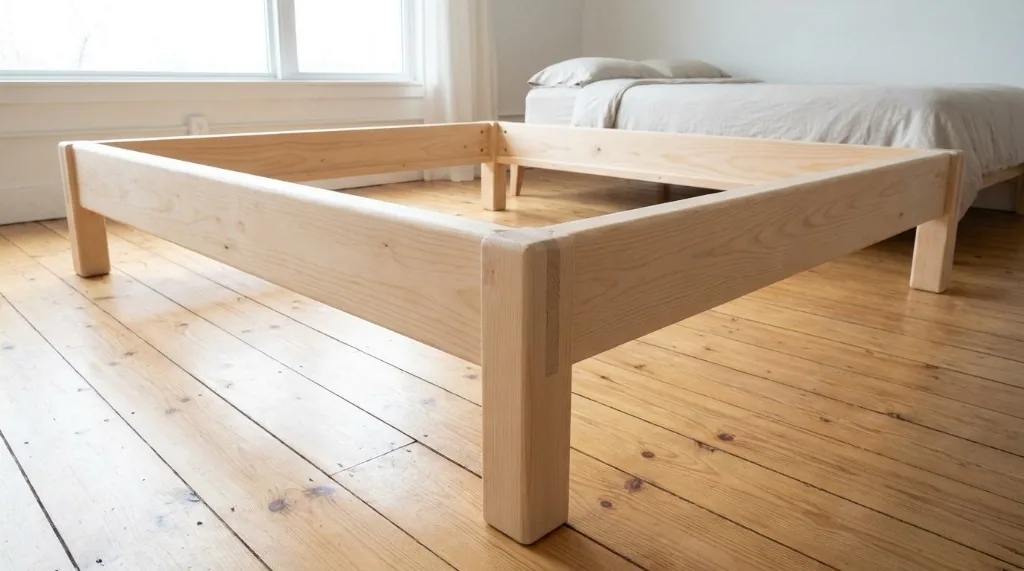
Showroom furniture brands charge high premiums for spray-applied clear coats. These factory finish booths release solvent fumes into the air. They also mask wood flaws behind dark stains. When you buy unfinished furniture from domestic mills, you pay solely for solid lumber and accurate milling. You can inspect every knot and joint yourself.
Sturdy queen platform beds milled from domestic pine or poplar cost between $180 and $260. They ship straight from the mill. These sturdy beds use thick solid side rails and solid legs. Pine foundation slats sit less than three inches apart. Mills sell directly to buyers without markups. You get twice as much solid lumber for less money..
Finishing bare lumber at home takes minimal effort. Sand the bare timber with 150-grit paper. Follow with 220-grit paper, and wipe off all fine dust. Brush on pure tung oil mixed half-and-half with natural citrus solvent. Tung oil cures through contact with room air. It builds a waterproof, food-safe seal that brings out warm amber wood tones without plastic films.
Critical Safety Warning on Oily Rags: Rags soaked in tung oil or linseed oil can catch fire by themselves. As the oil dries, it creates internal heat. Always dunk used rags into a sealed metal can filled with water. Or lay each rag completely flat outdoors on concrete until it dries hard before tossing it out.
The $1,200 Three-Room Budget Blueprint
You can furnish a three-room apartment for under $1,200. Pair unfinished solid domestic frames with vintage storage pieces. Spend money on daily high-use items like your bed platform. Then hunt for accent tables through local salvage sales.
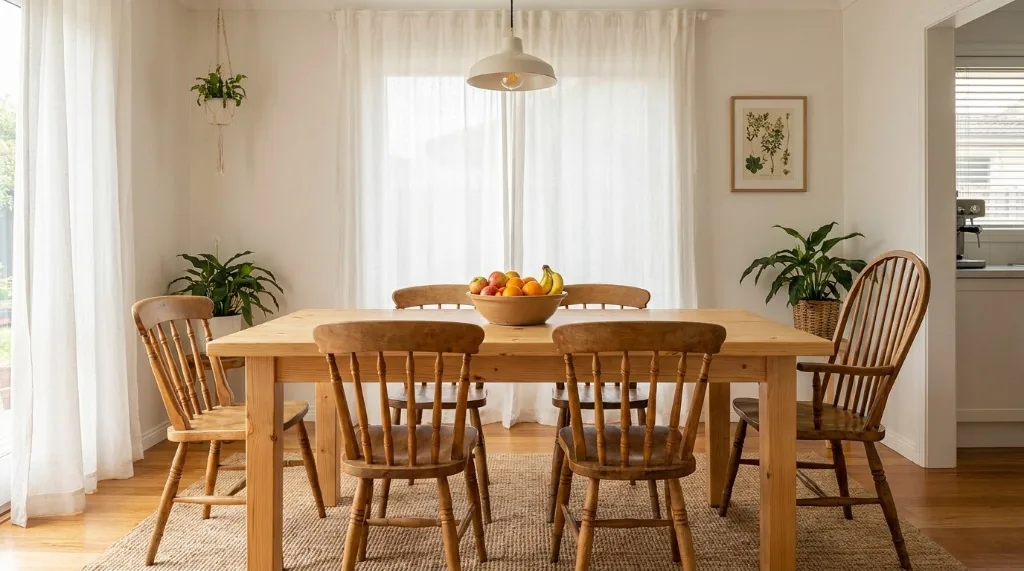
Shoppers often waste money buying matching five-piece showroom suites made from particleboard. These coordinated sets lose most of their resale value the day they arrive. Instead, buy individual solid wood pieces over time. You create a warm home filled with honest joinery and real grain.
When planning your rooms, refer to our comprehensive sustainable furniture guide to prioritize durability. A solid wood table made from domestic timber outlasts five cheap flat-pack tables. Check our guide on sustainable wood furniture for logging standards. Review our guide on sustainable hardwood furniture for timber density ratings.
| Room Area | Selected Sustainable Item | Sourcing Channel | Estimated Cost |
|---|---|---|---|
| Bedroom | Unfinished solid pine platform bed frame. | Direct domestic mill (KD Frames). | $220 |
| Bedroom | Vintage solid maple six-drawer dresser. | Estate sale or Habitat ReStore. | $110 |
| Living Room | Secondhand solid wood framed sofa. | Local marketplace (Kaiyo / Craigslist). | $380 |
| Living Room | Solid oak round coffee table. | Vintage thrift shop or salvage yard. | $75 |
| Dining Room | Unfinished solid pine or poplar table. | IKEA solid wood line or local carpenter. | $240 |
| Dining Room | Set of four vintage wood spindle chairs. | Thrift store or flea market. | $95 |
| Finishing Supplies | Pure tung oil, citrus solvent, and wax. | Local hardware store. | $50 |
| Total Investment | Complete 3-Room Apartment Setup. | Curated Sustainable Mix. | $1,170 |
Frequently Asked Questions About Affordable Sustainable Furniture
Is sustainable furniture more expensive than fast furniture?
Green furniture costs slightly more upfront than flat-pack kits. Yet it costs far less over ten years. A cheap dresser breaks after two moves. A vintage maple dresser lasts for decades. It cuts your long-term furniture costs in half.
Is IKEA furniture considered sustainable?
Certain IKEA lines qualify as sustainable, while others do not. IKEA lines like TARVA and IVAR use FSC-certified solid pine. You can sand, paint, and repair these untreated wood pieces for years. In contrast, IKEA lines like LACK and KALLAX use hollow paper cardboard and particleboard. Once water swells these panels, you cannot fix them.
What is the most eco-friendly wood for budget furniture?
Domestic softwoods like Eastern white pine and Southern yellow pine are top eco-friendly picks. American tulip poplar also offers great value. These trees grow fast in managed regional forests. They require little shipping fuel and provide sturdy frames without logging tropical rainforests.
How do you check secondhand wooden furniture for pests?
Check secondhand wood furniture by taking out all drawers. Inspect every interior corner with a bright flashlight. Look for tiny dark spots, insect casings, or fresh wood dust around leg joints. Steam tight joints with a garment steamer to kill insect eggs. Then wipe all boards with mineral spirits before bringing furniture inside.