Sustainable Furniture Guide: What to Buy and What to Avoid

Genuine sustainable furniture combines solid certified hardwoods, interlocking joinery, and non-toxic plant finishes. It pairs solid wood with clean wool and Dunlop latex. True green furniture avoids weak particleboard and peeling faux leather. It favors simple repairs and lasting strength over fast trends.
Walk through any big-box furniture store today. Browse major online catalog shops. Almost every brand claims green credentials. Sales teams label cheap flat-pack desks as eco-friendly. They do this simply because they wrap boxes in brown paper tape. Some brands boast about tiny bits of recycled plastic in leg glides.
Underneath that thin paper veneer lies pressed sawdust packed with chemical glue. Within two or three years, the plastic edge banding peels away. Weak fiberboard shelves bow under the weight of a few books. Soon, the broken piece ends up in a local landfill.
Experienced woodworkers and furniture restorers share one clear rule: durability defines true sustainability. A solid wood table that lasts eighty years creates very little waste. It beats buying four disposable tables over a single decade. American homes throw away twelve million tons of furniture every year. Most of that trash consists of toxic composite boards and petroleum foams.
Building a healthy home requires looking past marketing buzzwords. You must check timber species and inspect frame joints. You must demand third-party textile certificates. You must verify cushion fillings. This guide shows what to buy and what to skip. It helps you spot quality craft before you spend your hard-earned money.
What Defines Genuine Sustainable Furniture?
Genuine sustainable furniture meets four strict standards. It uses renewable natural materials and non-toxic finishes. It relies on sturdy mechanical joints and circular recycling. Compliant pieces last for decades without sagging. They survive repeated household moves without damage. Most importantly, they release zero toxic chemical fumes into your home.
Inspect every piece from its forest harvest to its final disposal. A product cannot claim green status if it uses petroleum foam. It fails if it uses chemical fire retardants or cheap glues. Look for these four main pillars in every piece you purchase:
- Material Authenticity: The main frame uses solid wood from certified forests. It can use renewable bamboo stalks or recyclable metals like steel and brass. Quality builders skip glued sawdust cores and plastic fillers.
- Mechanical Reparability: Skilled makers assemble frames with mortise joints, dovetails, or thick steel bolts. When a joint loosens after ten years, you can tighten a bolt. You can add wood glue instead of dumping the frame on the curb.
- Indoor Air Safety: Builders seal raw wood surfaces with natural plant oils, beeswax, or waterborne finishes. Cushions use pure tree latex or wool batting instead of foam.
- Circular Longevity: You can sand, refinish, or reupholster solid furniture across generations. When someone discards untreated wood decades later, it breaks down cleanly in soil. It leaves zero toxic residues behind.
Our practical field guide to eco friendly products for the home shows how to eliminate disposable items. Furniture represents a large investment, so strict standards matter.
What to Avoid: 5 Fast Furniture Traps and Greenwashing Gimmicks
Protect indoor air and your wallet. Avoid glued particleboard, peeling fake leather, and stapled frames. Skip petroleum foam cushions and melamine-plastic bamboo blends. These cheap materials off-gas chemical fumes. They break under normal daily loads. They also resist simple repairs and end up in landfills quickly.
Fast furniture brands use smart styling tricks to hide disposable parts. Watch out for these five common shortcuts:
1. Particleboard and MDF Cores with Printed Paper Veneers
Makers grind wood scraps into fine dust. They mix that sawdust with urea-formaldehyde glue and press it into boards. Next, they glue a paper photograph of wood grain over the top. Indoor humidity shifts cause these composite panels to swell. Screws strip out of the soft crumbly core under normal use. Even worse, the formaldehyde resin leaks fumes into your home for years.
2. Synthetic Polyurethane and PVC “Vegan” Leather
Marketers promote polyurethane and vinyl as ethical vegan leather. In truth, these materials come from crude oil and plastic additives. Everyday body heat and sitting friction make the thin surface crack quickly. Within two years, the plastic flakes off in messy pieces. You cannot condition or restore synthetic leather. Once it cracks, the entire chair goes to the trash. Choose vegetable-tanned leather, pure Belgian linen, or organic cotton canvas instead.
3. Hidden Staple and Hot-Melt Glue Joinery
Look underneath cheap sofa frames and dining chairs. Mass makers fasten joints with wire staples, cardboard, and hot glue. When an adult drops onto the seat, those staples twist loose. The wood splits, and the frame begins to wobble. Quality furniture uses solid hardwood corner blocks secured with heavy wood screws.
4. Petroleum Polyurethane Foams and Chemical Flame Retardants
Standard sofa cushions use polyurethane foam poured from petroleum chemicals. Factory teams historically treated this foam with harsh chemical fire retardants. Over time, the internal foam bubbles break down into fine dust. That chemical dust enters your home air ducts. Family members inhale those particles every single day. Look for natural Dunlop latex, organic wool, or certified clean foams.
5. Melamine-Bonded “Eco” Bamboo Composites
Bamboo grows fast without harsh farm chemicals. It makes great furniture when artisans laminate solid stalks. However, some brands grind bamboo into powder and mix it with melamine plastic. They mold this blend into cheap tables and chairs. These plastic composites crack easily under stress. They shed microplastics and cannot decompose in regular soil.
What to Buy: The Gold Standard Materials and Construction
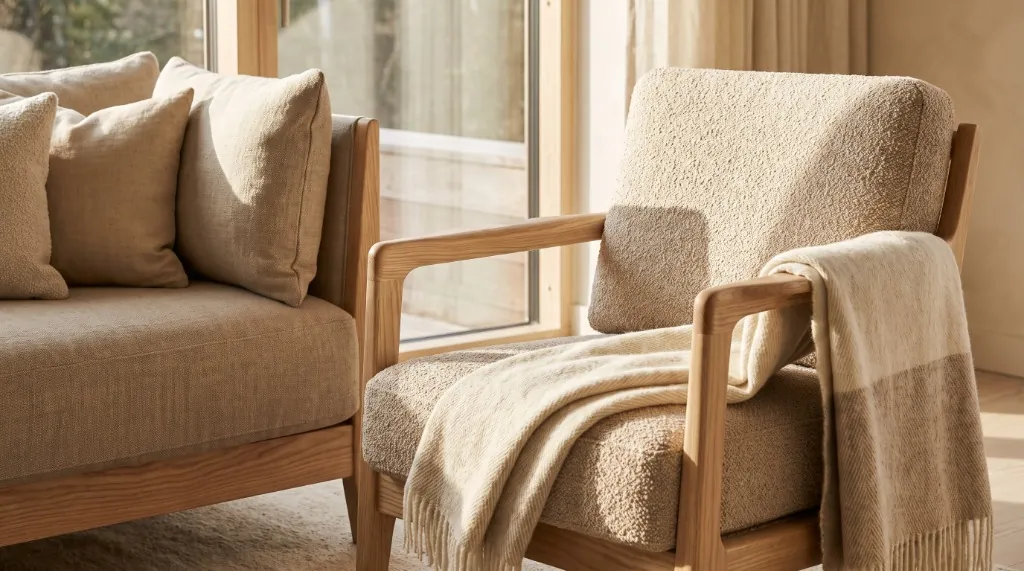
Choose kiln-dried solid FSC hardwoods like white oak and walnut. Look for interlocking mortise joints, Dunlop latex cushions, and organic natural fabrics. These sturdy materials resist wear. They clean up easily. They keep strong resale value over decades of use.
Spotting authentic craftsmanship requires checking specific technical build details. Look for these five gold standards:
1. Kiln-Dried Solid Hardwoods (FSC 100% Certified)
Domestic woods like white oak, black walnut, and maple offer great strength. Kiln ovens remove moisture evenly. This prevents boards from warping or splitting during seasonal weather shifts. Look for the FSC 100% seal. This stamp guarantees that loggers cut timber from well-managed forests. You can sand solid hardwood surfaces many times to remove minor scratches.
2. Proven Mechanical Joinery
Good wood joints determine how long a piece stays stable. Look for these proven mechanical connections:
- Mortise-and-Tenon: A solid wooden peg on one rail fits into a matching hole. This classic wood joint provides great glue area and resists twisting forces.
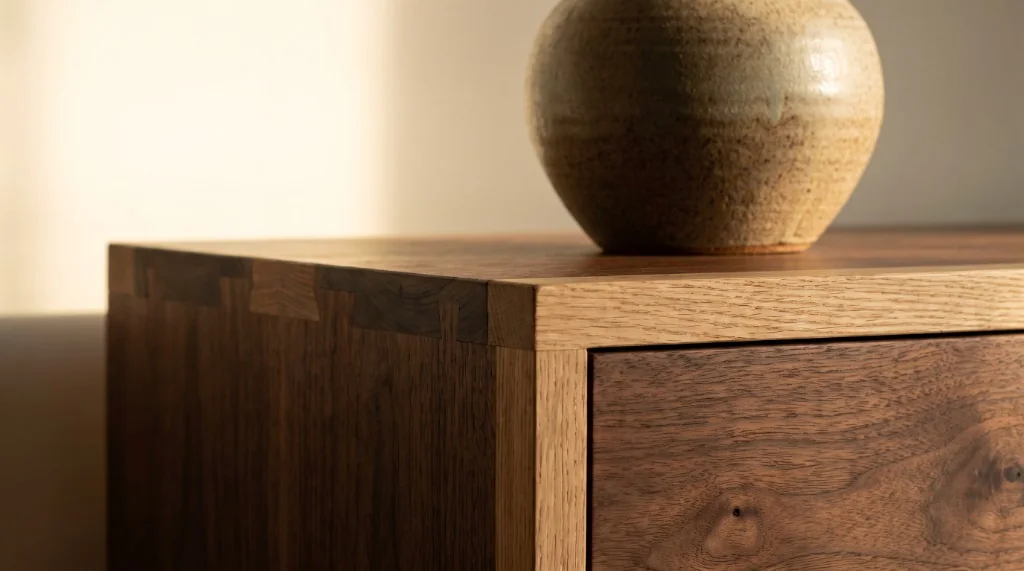
- Dovetail Joints: Interlocking wedge shapes secure drawer box corners. They resist outward pulling forces every time you yank a drawer open.
- Corner Blocks with Screws: Heavy triangular wood blocks sit in frame corners. Wood screws lock them down to absorb side stress when people lean back.
3. Natural Dunlop Latex and Organic Wool Cushions
Replace synthetic foam cushions with inserts made from natural Dunlop tree latex. Natural latex retains its springy support for over twenty years without packing down. Wrap the latex core in pure organic wool batting. Wool provides a natural fire barrier without chemical sprays. It also wicks away humidity to keep cushions fresh.
4. Heavyweight Natural Fiber Upholstery
Pick upholstery woven from pure flax linen, organic cotton, or natural wool. Dense weaves resist dirt naturally through strong plant fibers. They release zero microplastics into your living room air. For ethical brand choices, explore our guide to fair trade home decor brands that make artisan textiles and solid timber goods.
5. Natural Plant Oil and Beeswax Finishes
Avoid plastic polyurethane varnishes that seal wood pores under a synthetic film. Plastic clear coats turn yellow and peel over time. Removing them requires harsh chemical strippers. Instead, pick furniture finished with linseed oil, tung oil, or raw beeswax. These natural finishes sink deep into wood pores. They nourish the grain and allow easy home touch-ups. Maintain your solid wood surfaces using Howard Feed-N-Wax Beeswax and Orange Oil to preserve the wood grain naturally without synthetic fumes.
Fast Furniture vs. Sustainable Furniture: Complete Comparison Matrix
Comparing fast furniture with sustainable pieces reveals key differences. You see gaps in core strength, joint life, and air safety. Fast furniture carries a lower upfront sticker price. However, its short lifespan makes it far more expensive per year of use. Solid sustainable pieces cost more upfront but last for generations.
Use this side-by-side matrix to evaluate pieces before you spend money:
| Evaluation Metric | Fast Furniture (Avoid) | Sustainable Furniture (Invest) | Trade Impact |
|---|---|---|---|
| Core Material | MDF, particleboard, and glued sawdust. | Solid kiln-dried FSC hardwood timber. | Solid wood resists moisture and holds screws firmly. |
| Frame Joinery | Metal staples, plastic pins, and hot glue. | Mortise-and-tenon, dovetail, and wood dowels. | Mechanical joints withstand repeated household moves. |
| Indoor Air Quality | Leaks formaldehyde and chemical fumes. | Greenguard Gold certified with plant oils. | Stops toxic chemical emissions in living areas. |
| Cushion Core | Low-density petroleum polyurethane foam. | GOLS organic Dunlop tree latex and wool. | Keeps resilient bounce for 25 years without sagging. |
| Upholstery Cover | Polyester and PVC synthetic plastic leather. | GOTS certified linen, organic cotton, and wool. | Sheds zero microplastics and breathes well. |
| Usable Lifespan | 1 to 4 years before total failure. | 50 to 100 years of daily use. | Lasts across multiple generations of family life. |
| Reparability | Non-repairable paper veneer peels off. | Easy to sand, repair, and refinish at home. | Fix surface scratches with simple fine sandpaper. |
| End of Life | Destined for local municipal landfills. | High resale value and recyclable timber. | Protects natural resources and skips landfill dumps. |
For more home ideas with organic textures, read our tips on natural home decor. Learn how to mix hardwoods, stone, and wool rugs cleanly.
How to Vet Furniture Brands and Certifications Like a Pro
To verify sustainable claims, look for five proven third-party seals. Check FSC 100% for timber traceability. Look for Greenguard Gold for clean air. Seek GOTS for organic fabrics, GOLS for pure latex, and OEKO-TEX Standard 100. Brands with these labels submit factory floors to independent laboratory testing.
Do not trust self-made marketing labels like conscious collection or eco-friendly. Demand these verified seals on product spec sheets:
- FSC 100% (Forest Stewardship Council): Confirms that every board comes from certified forests. Avoid the vague FSC Mix label. That label allows up to thirty percent uncertified lumber.
- Greenguard Gold: Tests finished furniture in sealed chambers for chemical emissions. It enforces strict safety limits for kids and sensitive adults.
- GOTS (Global Organic Textile Standard): The gold standard for organic cloth. GOTS requires ninety-five percent organic fibers. It bans toxic azo dyes and heavy metal treatments.
- GOLS (Global Organic Latex Standard): Proves that cushion latex contains ninety-five percent organic sap. Tappers harvest this sap from certified rubber tree farms.
- OEKO-TEX Standard 100: Checks every zipper, thread, and button on upholstery. It guarantees safety from hundreds of known harmful chemicals.
Room-by-Room Buying Checklist for Long-Lasting Furniture
When furnishing different rooms, match material specs to daily stress. Pick kiln-dried hardwood sofa frames with wool upholstery for living spaces. Select solid wood dining tables that handle liquid spills. Choose mortise-joint platform beds with close slat spacing for bedrooms.
Follow these room rules to spend wisely across your home:
Living Room: High-Traffic Durability
- Sofa Construction: Insist on a kiln-dried hardwood frame with glued corner blocks. Skip frames made from soft pine or particleboard.
- Suspension System: Choose eight-way hand-tied steel coils or thick sinuous steel springs. Avoid cheap elastic webbing that sags after two years.
- Tables and Benches: Choose solid timber, natural marble, or steel. Look for pieces like a solid wood entryway bench built from plantation-grown wood with sturdy dowel joints.
Dining Room: Scratch and Spill Resilience
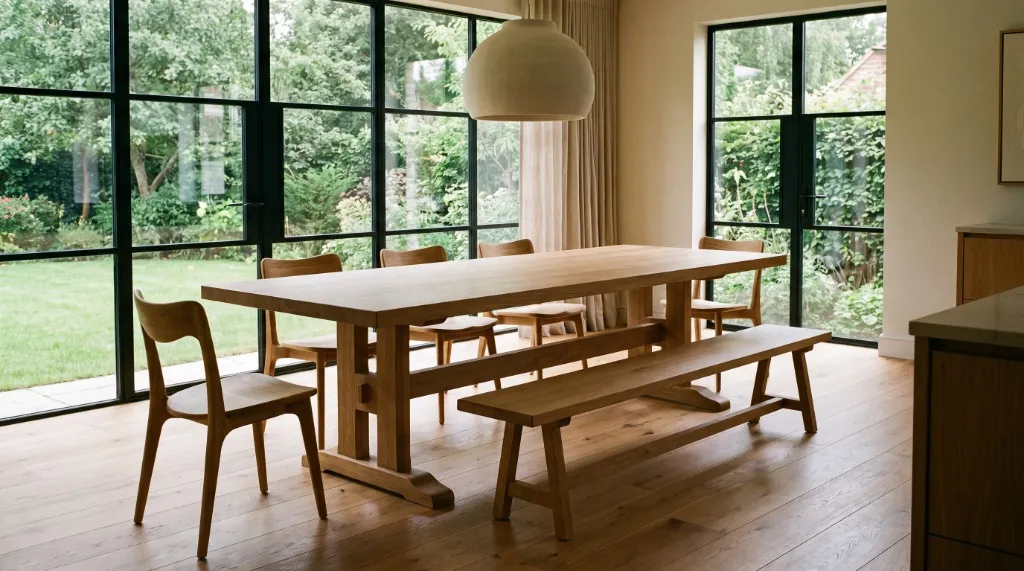
- Tabletops: Avoid paper-thin wood veneers that bubble when drinks spill during dinners. Solid oak or walnut tables handle hot plates and spills. You can sand out surface stains easily.
- Chair Frames: Lift a dining chair by one rear leg. If the frame twists in your grip, the joints use cheap staples. A solid chair stays stiff and rigid.
Bedroom: Sleep Safety and Structural Silence
- Bed Platform: Pick a bed assembled with heavy steel corner brackets or drop-in wooden joints. Keep slat gaps under three inches to support mattresses and stop mold growth.
- Nightstands and Dressers: Pull the drawers all the way out. Solid wood dovetail drawers outlast stapled fiberboard drawers by fifty years.
Audit Your Pieces with the Eco Furniture Checker
Run prospective pieces through our design audit tool before buying. The Eco Furniture Checker audits wood sources, joints, fumes, and cushions. It gives you a clear durability score.
The tool flags hidden particleboard cores and uncertified foam fillings. It confirms proper mechanical wood joints. Use it when checking quotes to ensure you buy heirloom quality.
Frequently Asked Questions About Sustainable Furniture
Shoppers often ask about furniture costs, daily care, wood sourcing, and vintage durability. Homeowners want to know if solid wood pays off over time. These direct answers help you make smart furniture purchases with confidence.
Is sustainable furniture always more expensive than conventional furniture?
Sustainable furniture costs more upfront. Makers use solid hardwoods, strong joints, and clean materials. However, sustainable pieces last decades longer. They stop frequent replacement costs. They keep high resale value. That makes them much cheaper over time.
How do you verify if a brand is greenwashing its furniture?
Verify green claims with third-party seals like FSC 100%, Greenguard Gold, and GOTS. Never trust slick sales ads. Inspect specs for solid hardwood frames and mechanical joints. Honest brands share lumber sources and material test sheets openly.
Can you repair and refinish solid sustainable wood furniture at home?
Yes. You can repair solid wood at home with sandpaper and plant oil. Paper veneers tear easily. In contrast, solid lumber lets you sand out scratches and water rings easily.
What is the most sustainable furniture option for shoppers on a tight budget?
The greenest budget choice is buying vintage solid wood at thrift shops. Vintage solid hardwood pieces offer skilled joinery. They cause zero new factory emissions. Best of all, they cost far less than fast furniture.