Eco Friendly Products for the Home: A Pragmatic Room-by-Room Guide

Choose eco friendly products for the home by replacing worn items. Swap goods early if chemicals risk your health. Good swaps include cast iron pans and Swedish dishcloths. You can also add linen bedding and glass spray bottles. This simple room plan cuts waste and stops microplastics.
Social media often treats green living as an expensive visual trend. Influencers tell people to throw away working plastic containers. They tell you to buy costly bamboo jars. In zero-waste forums, smart homeowners call this fake green shopping. Throwing away good items creates instant landfill trash. It also wastes energy used to make new goods.
Real green living starts with common sense. The best product is the one you already own. Keep using your tools until they break. When an item wears out, buy a natural replacement. Replace goods early if they leak toxic fumes into your rooms. Smart choices keep your air clean. They also lower your shopping bills.
The Pragmatic Approach to Eco Friendly Products for the Home.
A smart plan for eco friendly products for the home protects your budget. Never replace working goods just for looks. Use old plastic bins until they crack. Spend money to remove single-use trash and peeling pans. True green living values items that last for decades.
Divide your home goods into two clear groups to guide your shopping.
- Health and Chemical Hazards (Replace Promptly). Remove items that touch high heat or food. Peeling nonstick pans leak chemicals into meals. Scratched plastic tubs shed plastic bits when heated in microwaves. Foam pillows emit chemical gases while you sleep. Replace these hazards with cast iron, glass, and pure latex.
- Mechanical Goods (Replace Upon Failure). Keep plastic laundry baskets and dustpans until they break. Use plastic storage bins until they crack. When a basket breaks, buy galvanized steel. You can also pick solid oak or woven cane.
Search trends show huge growth for refillable bottles and plastic-free tools. Homeowners want sturdy tools that save money and cut plastic trash.
Kitchen: High-Impact Swaps for Food Prep and Cleaning.
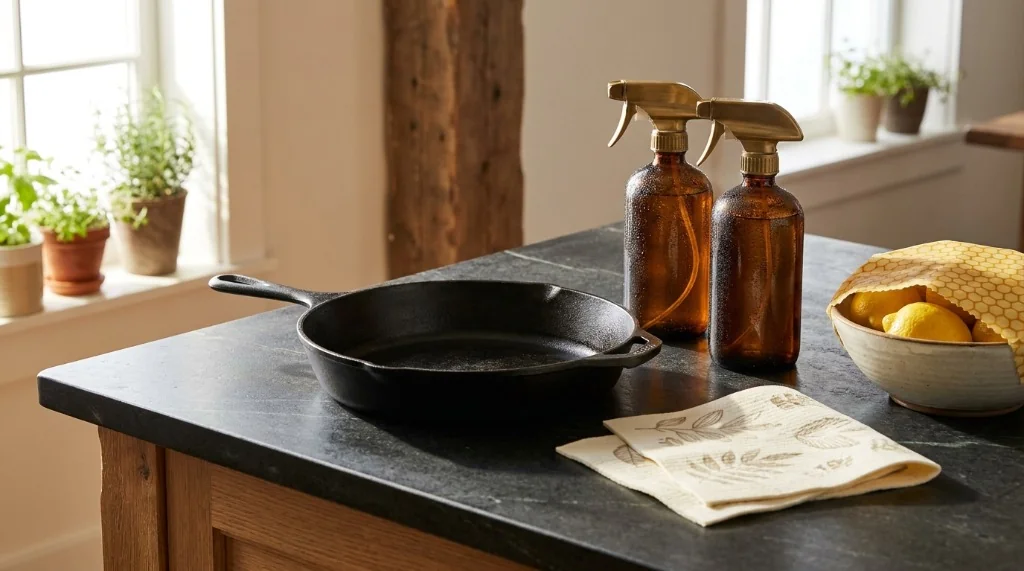
Kitchens produce lots of daily trash. This makes them ideal spots for eco friendly products for the home. Swap plastic sponges for Swedish dishcloths. Trade plastic wrap for washable beeswax sheets. Buy cast iron skillets that last for decades without nonstick fumes.
Most kitchen sponges contain plastic foam and synthetic mesh. Scrubbing plates washes tiny plastic bits into city drains. Standard nonstick pans also use chemical coatings. These coatings break down on high heat. They release chemical fumes into your room air.
Check these durable kitchen swaps to cut trash and keep surfaces clean.
| Kitchen Product. | Standard Material. | Green Swap. | Lifespan. | Core Benefit. |
|---|---|---|---|---|
| Dish Cloth. | Plastic sponge. | Swedish cellulose cloth. | 6 to 12 months. | Composts fully in soil. Replaces 15 paper rolls. |
| Cooking Pan. | Chemical nonstick pan. | Cast iron skillet. | 100 plus years. | Zero chemical fumes. Naturally nonstick surface. |
| Food Wrap. | Clear plastic film. | Beeswax food wraps. | 12 to 18 months. | Washable cotton sheets. Seals fresh fruit well. |
| Spray Cleaner. | Plastic cleaner jugs. | Glass spray bottle. | Lifetime use. | Cuts shipping weight. Eliminates plastic jugs. |
| Trash Bags. | Standard plastic bags. | Plant starch bags. | Single use. | Breaks down in city compost bins. |
Start your kitchen upgrade with these tested items:
- Heirloom Cookware. A classic pre-seasoned cast iron skillet handles high heat on any stove. It releases zero chemical fumes. Scrub the pan with hot water and a stiff brush. Dry it over heat and wipe with cooking oil.
- Waste-Free Cleaning. Washable Swedish cellulose dishcloths soak up lots of water. Wash them in your dishwasher to keep them fresh. One cloth replaces many paper towel rolls.
- Reusable Sprays. Fill sturdy amber glass spray bottles with water and soap tablets. This swap stops plastic jugs from entering your home.
Watch out for cheap bamboo plates sold on discount websites. Factories often mix bamboo dust with plastic glue. This glue can leak formaldehyde into hot food. Choose plain stoneware, steel, or solid wood bowls instead.
Living Room: Non-Toxic Furniture and Natural Fiber Textiles.
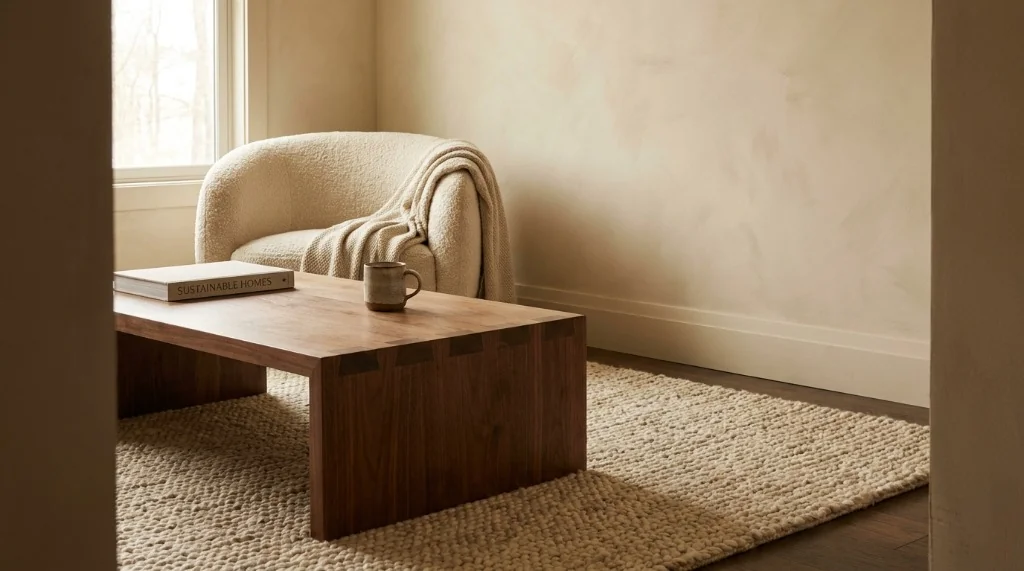
Green living rooms use solid wood frames and wool textiles. Low-VOC finishes keep your room air clean. Avoid cheap particleboard furniture held with chemical glues. Pick handwoven wool or cotton rugs over synthetic carpets. Synthetic carpets shed plastic fibers into house dust. Natural materials last longer and clean easily.
Cheap fast furniture uses glued sawdust boards and synthetic foam cushions. Makers spray cushions with flame retardant chemicals. Over time, these materials break down into fine dust. This dust floats through your living space. Solid wood furniture costs more upfront, but it lasts for generations. You can sand, fix, and oil solid wood when needed.
Look for textiles certified by OEKO-TEX or GOTS when buying soft furnishings. Wool bouclé, flax linen, and cotton canvas resist stains naturally. Their tight weave and natural oils repel dirt. For ethical makers, read our vetted list of fair trade home decor brands. You will find skilled woodworkers and weavers.
Bedroom: Low-VOC Sleep Essentials and Organic Bedding.
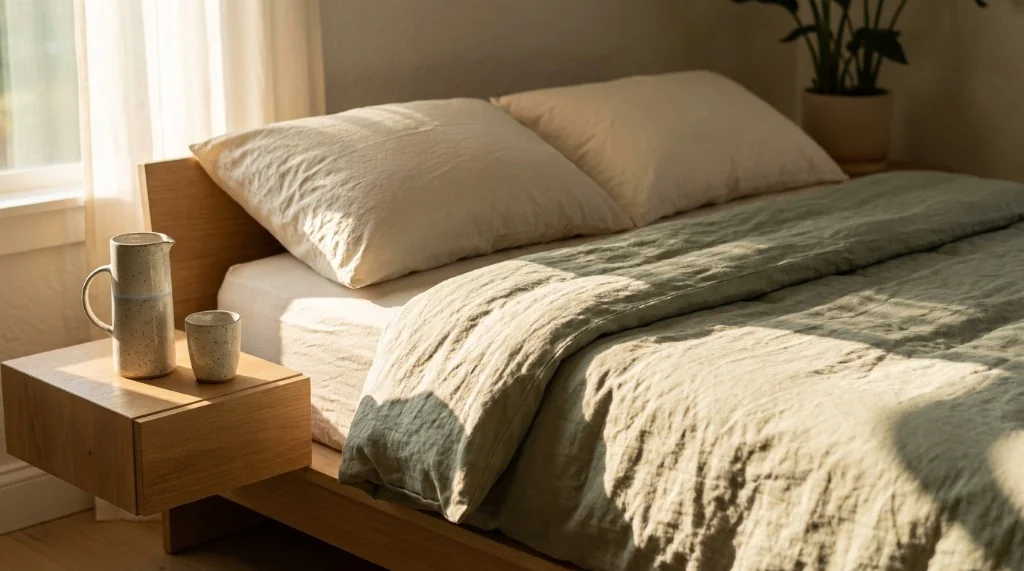
People spend one-third of their lives in bed, making bedroom materials essential for health. Buy bedding certified by GOTS and OEKO-TEX to remove indoor toxins. Pick breathable linen or cotton percale sheets. Sleep on natural tree-sap latex pillows. Choose solid hardwood bed frames finished with plant oils.
Polyester sheets and synthetic blankets trap heat and sweat. They shed plastic fibers during washing. Many also carry chemical wrinkle treatments. Plant fibers allow air to pass freely. They help your body stay cool and restful all night.
Focus your bedroom spending on these essential sleep goods:
- Organic Bed Sheets. Sleep on GOTS certified organic cotton percale sheets with a 300-thread count weave. Organic cotton avoids synthetic pesticides and chemical bleach. The fabric softens with every wash cycle.
- Natural Pillows. Swap foam pillows for organic latex or wool fill. Natural latex comes from rubber tree sap. It supports your neck without chemical odors.
- Solid Wood Frames. Rest your mattress on an oak or walnut platform bed. Pick frames built with wood joinery instead of chemical glue. Read our design guide for natural home decor to mix warm textures and keep rooms cozy.
Bathroom: Zero-Plastic Hygiene and Water-Efficient Fixtures.
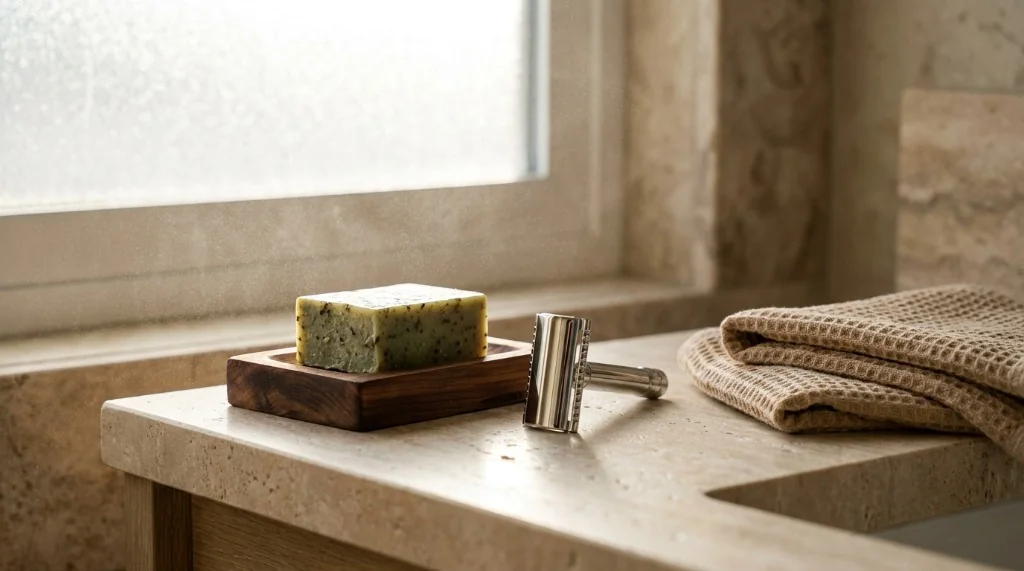
Bathrooms create piles of empty bottles, but simple eco friendly products for the home fix this issue. Switch to cold-processed soap bars. Use a stainless steel safety razor with recyclable blades. Add waffle cotton towels that dry fast to stop damp room odors.
Liquid body wash bottles hold mostly water packed in thick plastic jugs. Shipping heavy bottles burns fuel and increases road emissions. Solid soap bars skip plastic bottles entirely. They deliver rich lather made from plant oils without chemical foaming agents.
Try these four bathroom swaps to cut waste:
- Metal Safety Razors. Toss disposable plastic razors. A solid double-edge safety razor uses cheap steel blades. It cuts hairs cleanly with zero plastic trash.
- Solid Soap Bars. Pick olive oil and shea butter soap bars wrapped in plain paper.
- Waffle Cotton Towels. Thick towels hold moisture and smell musty in small rooms. Waffle cotton towels dry in half the time.
- Bamboo Toilet Paper. Tree-free paper made from bamboo grass protects old forests. It feels soft on skin and breaks down quickly in septic tanks.
How to Spot Greenwashing on Sustainable Home Goods.
Spot real eco friendly products for the home by checking test badges. Never trust vague words like all-natural or eco-safe. Check labels for USDA Organic, GOTS, FSC, and OEKO-TEX Standard 100 marks. Honest makers publish complete material lists and laboratory tests.
Ad makers love using words like conscious or pure to hide synthetic goods. When a company cannot show a recognized seal, treat the item like standard plastic goods.
Check these four trusted seals before buying home goods:
- GOTS (Global Organic Textile Standard). Proves fabrics contain at least ninety-five percent organic fibers made without heavy metal dyes.
- OEKO-TEX Standard 100. Tests fabric and zippers for over one thousand harmful chemicals and pesticides.
- FSC (Forest Stewardship Council) 100%. Confirms timber comes from responsibly run forests that ban illegal logging.
- Cradle to Cradle Certified. Grades products on pure materials, clean water use, and safe recycling.
Audit Your Furnishings with the Eco Furniture Checker.
Test furniture for safety and material health before spending money. Run your pieces through our interactive design audit. The Eco Furniture Checker scores wood sourcing seals, glue safety ratings, and textile tests. This free audit helps you invest in safe pieces for your family.
The tool checks goods against clean home standards. It spots chemical vapors, synthetic foam fillers, and unverified tropical timber. Use it to ensure your furniture choices match your clean living goals.
Frequently Asked Questions About Eco Friendly Products for the Home.
Frequently asked questions about eco friendly products for the home cover prices and durability. They also explain cleaning steps and certification seals. Homeowners often need help telling good items apart from green marketing tricks. Here are direct answers to common questions about non-toxic household goods and room upgrades.
What are the most cost-effective eco friendly products for beginners?
Beginner swaps with big savings include Swedish dishcloths, bar soaps, and cleaning tablets in glass bottles. These affordable items cost very little upfront. They replace paper towels and plastic jugs, cutting grocery bills and trash right away.
Are bamboo kitchen products genuinely safe and non-toxic?
Solid bamboo cutting boards and cooking spoons are safe and non-toxic. Avoid molded bamboo plates and cups made with plastic glues. Those glues can leak formaldehyde into hot soup or tomato sauce.
How do you care for and wash reusable beeswax food wraps?
Wash beeswax food wraps with cold water and mild dish soap. Set them on a rack to air dry. Keep wraps away from hot water, ovens, and microwaves, which melt the natural wax.
Does organic cotton bedding improve indoor air quality?
Certified organic cotton bedding improves indoor air quality by skipping formaldehyde treatments, synthetic dyes, and pesticide residues. Unbleached organic cotton breathes naturally, keeping chemical fumes out of your bedroom.