Natural Home Decor Ideas That Don’t Look Basic: 7 Decorator Rules
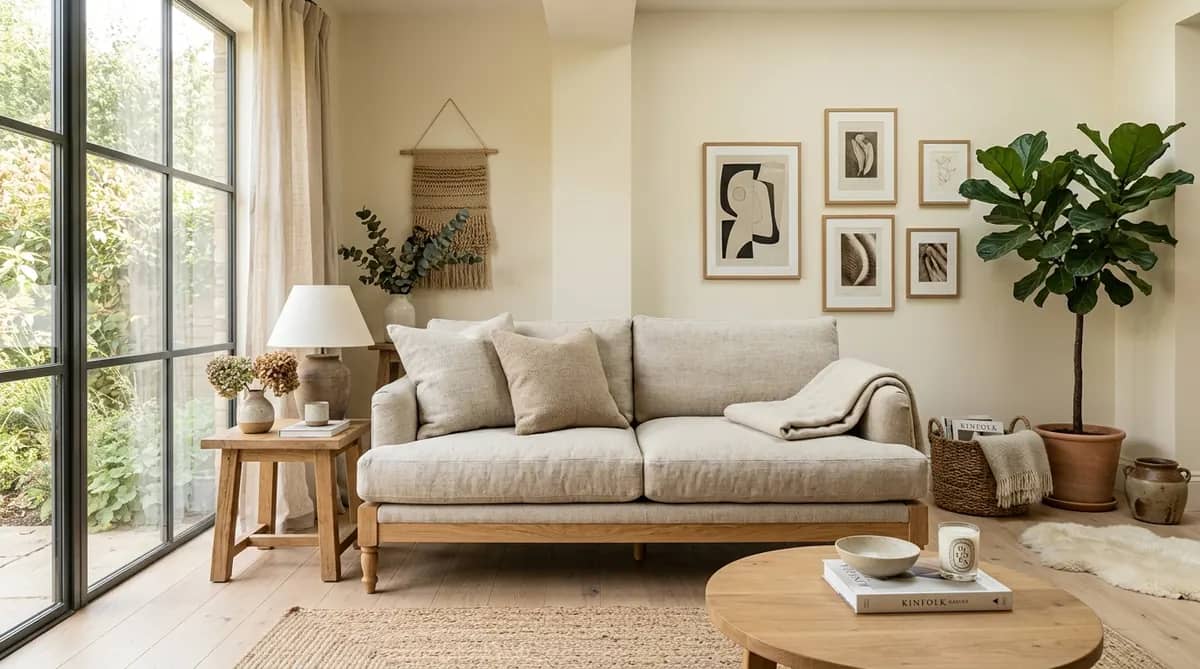
Natural home decor works best when pale furniture has texture and contrast. Pair soft linen and wool with rough timber or stone, then add a few black metal accents. Warm 2700K lighting shows the grain and weave in each material. This mix gives neutral rooms depth without crowding the space.
A beige wall, cream sofa, pale oak table, and tan rug can blend together. Each piece is light, warm, and smooth. Your eye has few edges to follow. The room may feel flat, even if you like every item on its own. You can fix that with texture and a few dark accents.
Natural decor works in apartments and larger homes when each material has a clear role. Combine smooth and rough textures, then place dark accents near pale furniture. Use lamps to cast soft shadows across wood, wool, and stone. The seven ideas below explain where these materials work and how to care for them.
Why Most Natural Home Decor Looks Flat and Boring
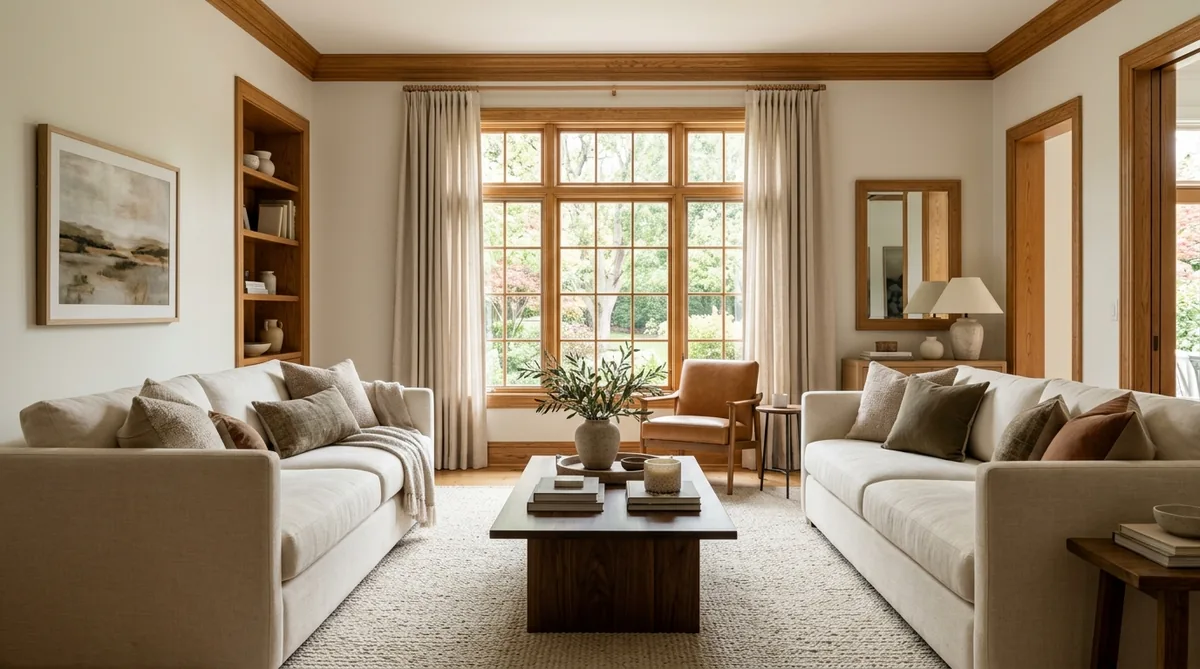
Most natural home decor looks flat because homeowners buy identical light beige tones without introducing visual weight, surface friction, or shadow lines. Without dark grounding elements and rough materials to catch shadows, neutral furnishings blend together into a sterile catalog display. You need deliberate contrast to make organic materials feel intentional.
When you place an oatmeal-colored sofa against a pale beige wall on top of a light cream rug, your eyes find nowhere to rest. Human visual perception relies on edges, shadow gradients, and tonal shifts to comprehend three-dimensional volume. Mass-market retail catalogs sell matching sets because matching furniture sells easily, but matching sets destroy visual curiosity.
To break this monotonous mold, decorators follow the 70/20/10 Organic Contrast Formula:
- 70% Neutral Base: Unbleached flax linen, wool bouclé, chalk white plaster, or soft oatmeal wall paint. This provides an open, calming backdrop that maximizes natural window light.
- 20% Warm Midtones: Honey-toned white oak, oiled walnut, terracotta pots, woven rush baskets, or raw leather cushions. These materials inject warmth and establish visual weight in the middle third of the room.
- 10% Dark Grounding Anchors: Matte blackened forged iron, charcoal soapstone coasters, ebonized ash side tables, or dark bronze picture hardware. These sharp focal points stop the eye and prevent the light tones from feeling weightless.
Think of your room like an oil painting. If an artist uses only titanium white and raw sienna, the canvas looks washed out. Adding burnt umber and lamp black instantly brings the foreground forward and pushes the background back.
Essential Natural Materials That Add Depth and Friction
The most effective natural home decor materials include coarse Belgian flax linen, reclaimed white oak, honed soapstone, unglazed terracotta, and handwoven raw wool. These organic elements introduce varied microscopic surface textures that scatter light differently throughout the day. Layering contrasting material densities creates architectural depth that smooth factory finishes can never replicate.
Some faux linen and coated wood panels have a shiny surface. Compare samples in daylight before you choose either material. Linen often shows small changes in its weave, while matte finishes soften glare. These details can create gentle shadows across a sofa, table, or window.
Use this material reference matrix to pair surfaces with contrasting textures and appropriate room placements:
| Material | Surface Texture | Visual Weight | Ideal Placement | Maintenance Factor |
|---|---|---|---|---|
| Belgian Flax Linen | Coarse, irregular slubbed weave | Light to Medium | Drapery, sofa slipcovers, throw pillows | Gentle wash, line dry, naturally wrinkles |
| Reclaimed White Oak | Open grain with saw kerfs and knots | Heavy anchor | Dining tables, coffee tables, open shelving | Wipe clean; follow the maker’s finish care guide |
| Honed Soapstone / Travertine | Silky, matte, porous micro-texture | Heavy anchor | Accent side tables, lamp bases, trays | Ask about sealing; keep acid off travertine |
| Unglazed Terracotta | Chalky, earthy, porous clay finish | Medium accent | Floor planters, mantle urns, tabletop vessels | Use interior plastic liners to prevent leaks |
| Handspun New Zealand Wool | Thick, springy, tactile loop pile | Medium to Heavy | Living room area rugs, bedroom floor runners | Vacuum with suction only, spot clean with wool wash |
| Matte Blackened Iron | Forged, slightly pitted industrial finish | Sharp contrast | Curtain rods, cabinet pulls, floor lamp stems | Dust with dry microfiber, rust-resistant coating |
When selecting pieces, pair extreme opposites together. If your coffee table features a smooth, cool piece of honed travertine, top it with a rough, hand-carved reclaimed wood bowl or an unglazed terracotta pot. If your sofa features heavy, nubby wool bouclé, balance it with sleek, blackened metal reading lamps and crisp raw linen window drapery. This continuous dialogue between rough and smooth creates sensory intrigue.
High-Contrast Styling Rules for Natural Living Rooms
To keep natural living rooms visually compelling, anchor neutral upholstery with matte black hardware, charcoal ceramics, and deep walnut accents using the 70/20/10 contrast rule. Dedicate seventy percent of the room to light neutrals, twenty percent to warm timber, and ten percent to dark grounding anchors. This ratio prevents washed-out monochrome monotony.
Start your room styling from the floor up. Flooring represents the largest unbroken plane in any room. If you lay a flat beige polyester rug over a beige carpet, the room disappears into blandness. Instead, layer your floor coverings to introduce physical depth. Place an oversized flatweave jute rug as a textured foundation, then center a smaller, thick-pile chunky wool-and-jute area rug over top. The jute frames the room with golden fiber, while the wool adds plush softness underfoot.
On horizontal surfaces, avoid grouping items made from the same material. Never place a wooden bowl on an oak table next to a wooden picture frame. Instead, build a vignette using three distinct material families:
- An Organic Living Element: A small branch of olive foliage in water or a potted succulent in a hand-thrown rustic terracotta planter.
- A Carved Wooden Accent: A solid, sculpted reclaimed wood decorative dough bowl displaying natural knot holes and saw marks.
- A Dark Metallic Counterpoint: A matte black iron task lamp or forged brass candle holder that draws the eye like punctuation mark on a page.
A round table can soften a room full of straight lines. Try one with a wood top or a stone base. You can also add a curved chair. Check the space around each piece before you buy. Leave enough room to walk past it with ease.
If you love artisan-crafted decor, explore our companion guide to fair trade home decor brands for verified artisan makers who produce non-toxic textiles, hand-carved timber trays, and fair-wage baskets that fit this exact aesthetic.
Calibrating Lighting Color Temperature for Natural Wood and Stone
Use warm 2700K LED bulbs to show wood and linen at their best. Look for a color score of 90 or more on the box. This score is called CRI. Warm lamps can bring out wood grain and cast soft shadows. Test one bulb at home before you replace them all.
Cool white bulbs can make warm wood look gray. They may also make cream fabric look dull. Check the bulb label for its Kelvin number. A higher number gives a cooler light. Try a warm bulb in the room at night, when you use the lamps most.
To highlight natural decor properly, follow this three-point lighting protocol:
- Bulb temperature: Try 2700K LED bulbs for warm room lighting. Compare them in your room at night. Match the color of lamps you see together, and look for a CRI of 90 or more when accurate wood and fabric colors matter. These dimmable warm LED bulbs show one type to compare.
- Turn Off Overhead Cans: Recessed can lighting shines straight down, casting unflattering downward shadows under furniture and washing out tabletop textures. Rely instead on eye-level table lamps, floor uplights, and low-hanging woven pendant shades.
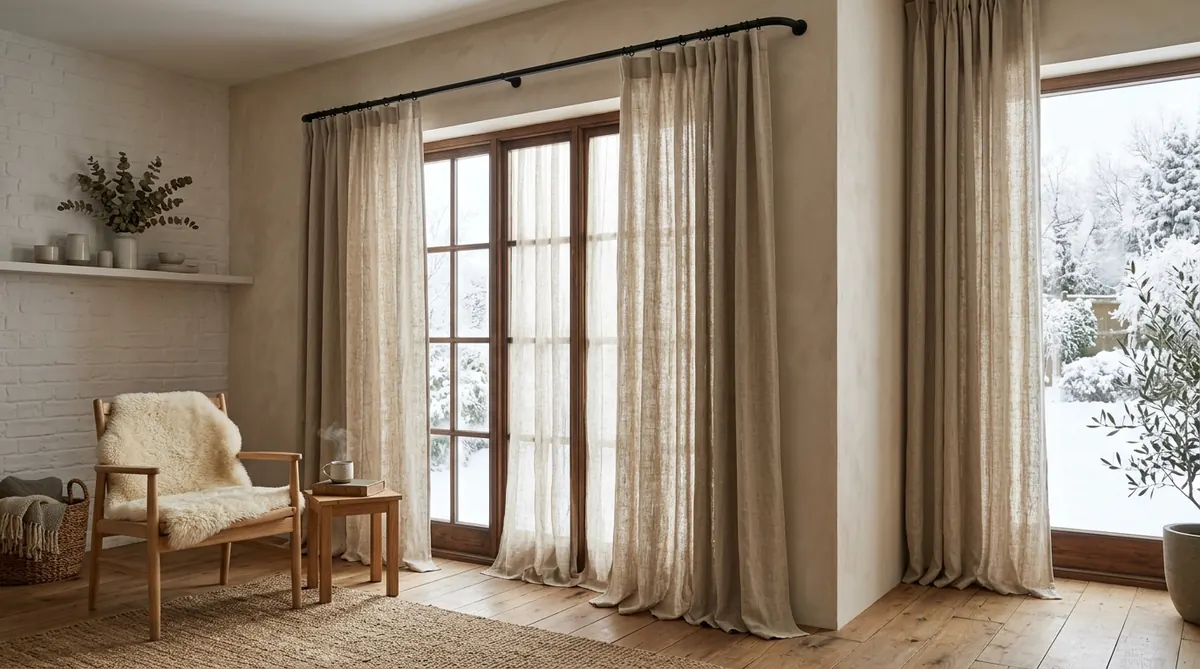
- Filter Natural Daylight: Strong afternoon sun can fade untreated wood veneers and bleach dyed linen. Hang floor-to-ceiling raw washed linen curtains across your window frames. Linen diffuses harsh sunlight into a soft, glowing ambient wash that brings out the grain in your furniture.
Incorporate Sculptural Architectural Greenery
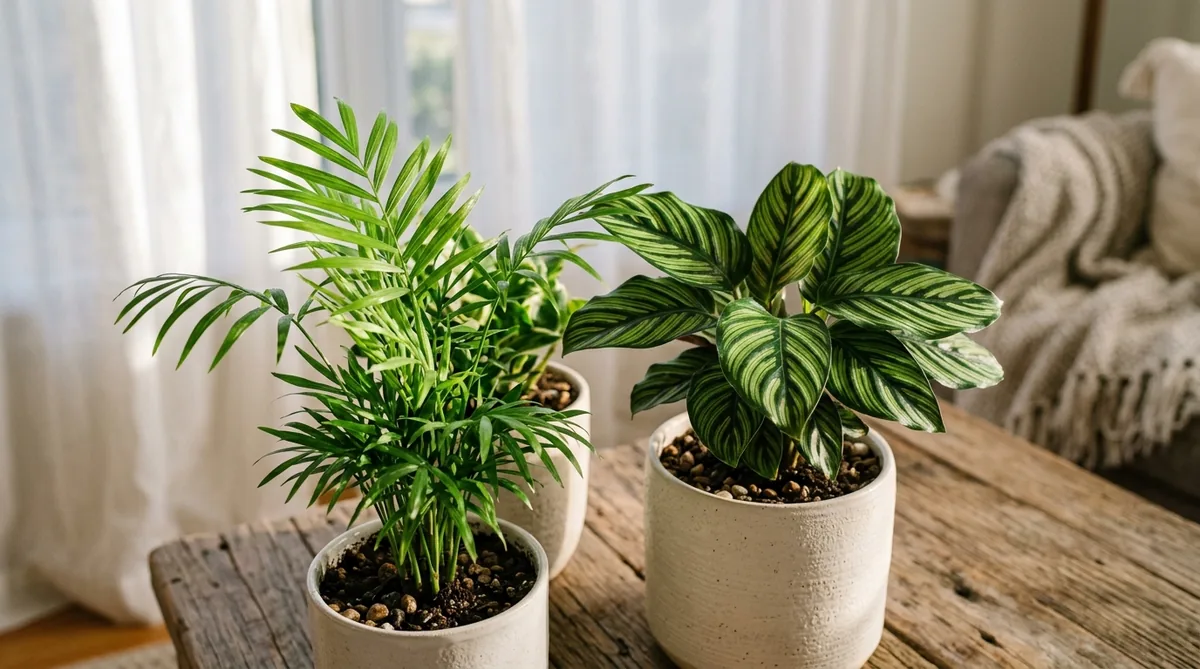
A tall indoor plant adds an organic shape and deep green color to a neutral room. Choose a parlor palm or Ficus Audrey only when your daylight and care routine suit it. Place the pot near a low sofa, and leave clear space for people to walk past.
Plants are living structural decor. When placed beside a low-slung linen sofa, a tall potted plant draws the eye upward, celebrating room volume and ceiling height. Position your primary plant pot in a room corner where sunlight streams through sheer linen drapes.
A clay pot or woven basket can hide a plain nursery container while adding texture. Set a tray under the inner pot, and confirm that water can drain after each watering. Check the floor for damp spots so moisture cannot stain the finish.
Maintenance Realities: Caring for Natural Fiber Rugs and Raw Wood
Natural rugs, wood, and stone need care that suits each finish. Vacuum jute with suction only. Blot spills on wool at once. Wipe wood with the cleaner its maker lists. Ask a stone seller how to care for your exact stone. Set a simple routine you can keep.
A pragmatic decorator knows that natural materials age, develop character, and demand respect. Here is how to keep your pieces looking pristine without chemical cleaners:
- Jute, sisal, and wool rugs: Use suction on woven jute and looped wool. A spinning brush can pull loose fibers. Blot a spill with a clean cloth. Check the rug’s care label before you add water or cleaner.
- Solid wood: Keep bare wood away from heaters and standing water. Dust it with a soft cloth. Use oil or wax only if the maker says it suits the finish. Test any care product on a hidden spot first.
- Stone: Travertine and limestone can mark when acid sits on them. Blot wine, lemon juice, or vinegar at once. Wipe with a soft cloth and a cleaner made for your stone. Ask the seller if your table needs a sealer.
Test Your Materials with the Eco Furniture Checker
Use the Eco Furniture Checker to list questions before you buy. It can help you check wood labels, foam details, and fabric claims. Ask the seller for proof tied to the exact item. The tool gives general guidance. It cannot test a product or promise how long it will last.
For wood, look for a clear FSC claim if the seller makes one. For fabric, check the scope of any OEKO-TEX label. Ask for finish details when a seller says “low VOC.” Save the answers before you place an order.
Frequently Asked Questions About Natural Home Decor
Natural decor raises practical questions about color, comfort, and upkeep. If a neutral room feels flat, review its contrast and texture before buying more furniture. Compare rug samples under bare feet, check how each wood tone looks in daylight, and choose indoor plants that suit the available light.
How do you prevent an all-neutral natural living room from looking washed out?
Incorporate the 70/20/10 contrast rule by introducing ten percent deep, dark grounding tones. Add matte black metal lighting, charcoal ceramic vases, and dark walnut picture frames. These dark accents create necessary shadow lines that make soft creams and pale woods stand out.
Which natural fiber rug feels softest on bare feet?
Wool often feels softer than jute or sisal under bare feet, but the weave changes the result. Compare rug samples for a bedroom or living room before you order. Read each care label, especially if pets or spills are part of daily life.
Can you mix dark walnut and black metal with light natural oak?
Yes, mixing wood tones and blackened metals creates necessary visual friction in natural spaces. As long as you maintain consistent warm undertones across all wood species and distribute the darker finishes across multiple areas of the room, mixed finishes look collected and intentional.
What indoor plants best complement organic natural home decor?
Architectural plants with bold leaf structures complement organic decor best. Choose Ficus Audrey, Parlor Palms, or Olive Trees potted in raw terracotta planters. Their sculptural silhouettes and deep green hues offer vibrant organic contrast against neutral flax linen and raw timber.