Sustainable Hardwood Furniture: FSC, Reclaimed Wood, and Durability Guide
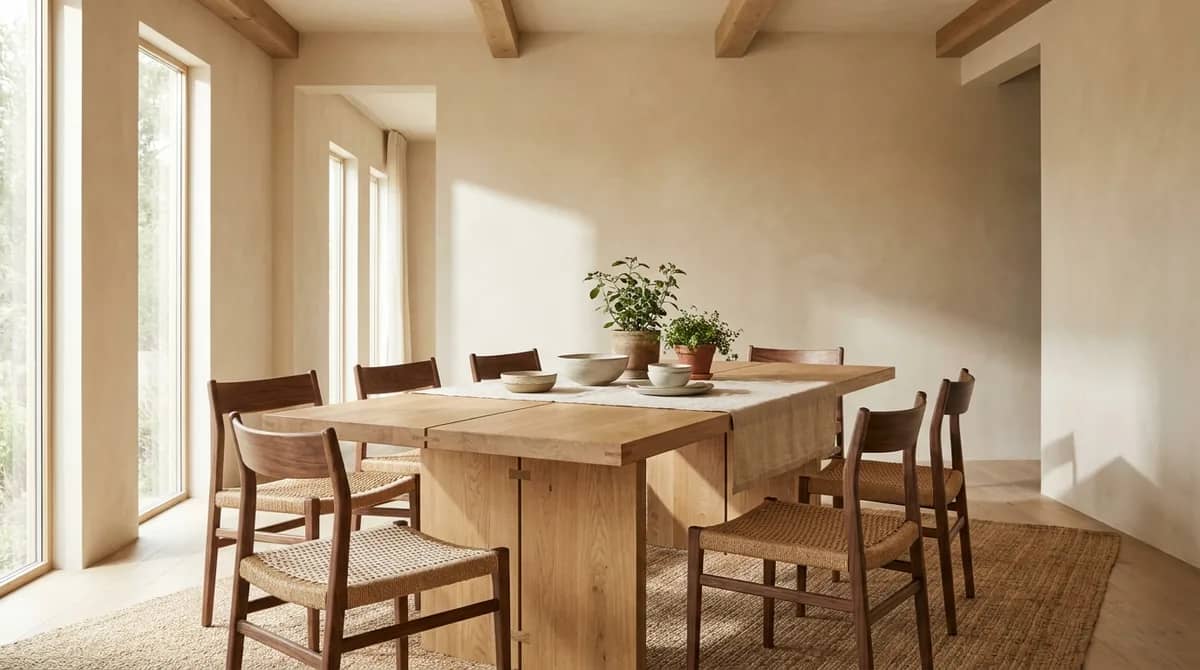
Choose sustainable hardwood furniture with clear proof of its wood source. Look for a sturdy build you can repair. The finish must suit daily use. An FSC label or proof that the wood was reclaimed can back up the source claim. Check the wood type, hidden parts, and repair options before you buy.
A thick tabletop may have a thin wood layer over a core. Ask what lies below the surface. An old-looking plank may be new wood made to look worn. Ask for a list of materials before you pay. Compare other choices in the sustainable furniture guide.
What Is Sustainable Hardwood Furniture?
Sustainable hardwood furniture uses wood from a known source. It should also last and be easy to repair. Ask where the wood grew and how the maker built the piece. Hardwood names a group of trees. The word alone tells you nothing about forest care, dents, or the air in your home.
Start with the furniture you own. A sound table that needs a new finish may already meet your needs. Replacing a sound table for a greener label creates another purchase without solving a practical problem.
For new purchases, separate four decisions:
- Verify the sourcing claim for the exact product.
- Match the species and finish to the wear your household creates.
- Check joints and access to worn parts.
- Confirm how you will maintain the surface.
You can sand and fix many solid wood surfaces later. A cabinet with a thin wood layer can also last. Check its hidden parts before you decide.
FSC-Certified Hardwood vs Reclaimed Hardwood: Which Is Better?
Choose FSC wood when you want new furniture with a checked source. Choose reclaimed wood when the maker can show its past use. Ask how they cleaned and treated it. Both choices need strong joints and a sound finish. Compare repair needs and shipping costs before you buy.
The Forest Stewardship Council (FSC) explains each claim in its label guide. FSC 100% means the forest material came from FSC-certified forests. FSC Mix may include certified, recycled, or controlled wood. Controlled wood does not carry the same forest claim as certified wood.
| Source | Useful choice for | Proof to request | Main caution |
|---|---|---|---|
| FSC 100% | New tables or bedroom sets | Product claim and licence code | No guarantee of joint strength |
| FSC Mix | New cabinets and mixed-material pieces | Exact label and product coverage | Different claim from FSC 100% |
| Reclaimed hardwood | Tables and benches with visible character | Previous use and preparation records | Unknown coatings or contamination |
| Local salvaged hardwood | Custom desks and shelves | Tree origin and drying details | Local origin alone proves little |
| Vintage solid wood | Existing dressers and dining furniture | Material inspection and condition report | Repairs may exceed your budget |
Ask the seller to link the FSC claim to your item. A logo on a box or website may refer to a different product. Chain of custody tracks certified material through the supply chain. You still need to check the drawer runners and finish.
Compare other options in the sustainable wood furniture guide. Keep product specs beside sourcing evidence.
The Best Hardwood Species for Sustainable Furniture
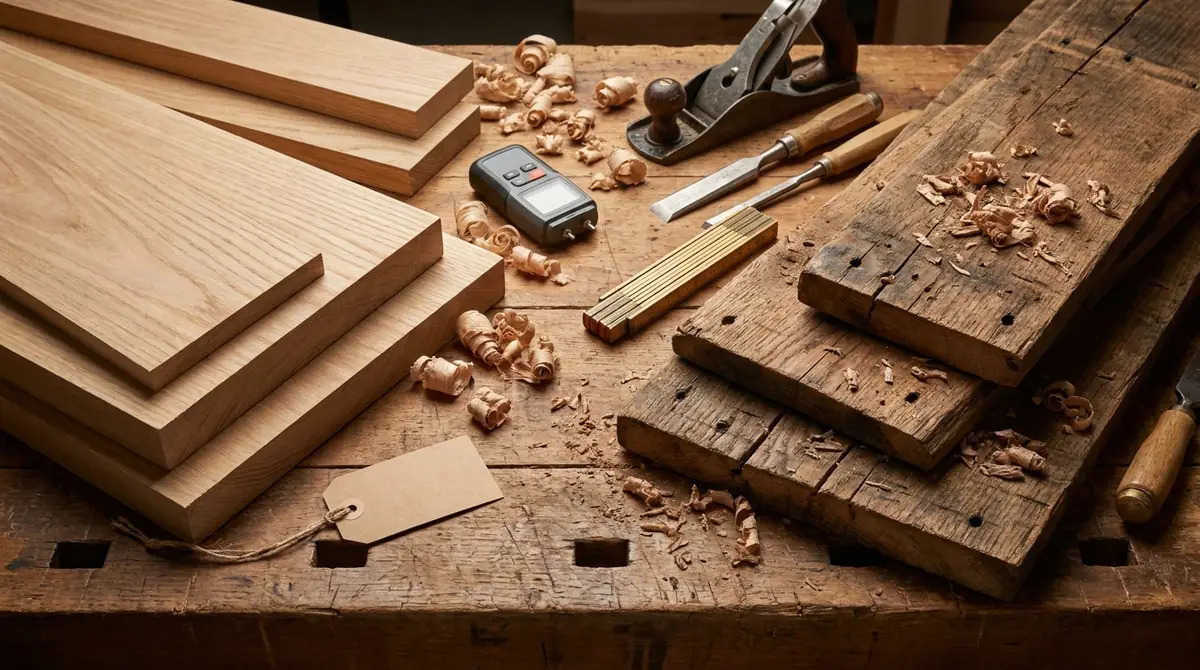
White oak and hard maple suit busy tables and desks. Walnut and cherry may show dents sooner. Check the source and build of any wood you choose. Hardness only tells you how well wood resists dents. The finish and joints also affect how long the piece lasts.
| Species | Practical use | Sourcing check | Watch for |
|---|---|---|---|
| White oak | Dining tables and benches | Certified supply or documented salvage | Indoor construction still needs protection from water |
| Red oak | Indoor cabinets and tables | Named supplier and origin | Keep indoors and wipe spills promptly |
| Hard maple | Desktops and family furniture | Exact species and source | Ask which maple; hardness varies by species |
| Black walnut | Dressers and occasional tables | Species confirmation and source | Dents under concentrated pressure |
| Black cherry | Bedroom furniture | Exact species and documented origin | Color changes with light exposure |
| Hickory | Benches and hard-use tops | Species and supply documentation | Strong grain and color variation |
| Rubberwood | Indoor budget furniture | Plantation origin and processing details | Uneven construction quality between products |
| Teak | Dining tables and outdoor-rated seating | Credible chain of custody | Vague plantation claims |
| Mixed reclaimed hardwood | Character tables and shelving | Species mix and previous use | Uneven hardness and uncertain history |
Janka hardness measures resistance to indentation. It does not measure how long an assembled chair will last. A hard seat on loose joints remains a poor purchase.
Check a finished sample in your room. Cherry can darken with exposure; different boards may start with different tones. Ask whether the maker color-matches repairs. For patios, use the separate sustainable outdoor furniture guide. Indoor oak furniture does not become weatherproof through species choice alone.
How to Tell If Hardwood Furniture Is Solid and Well Built
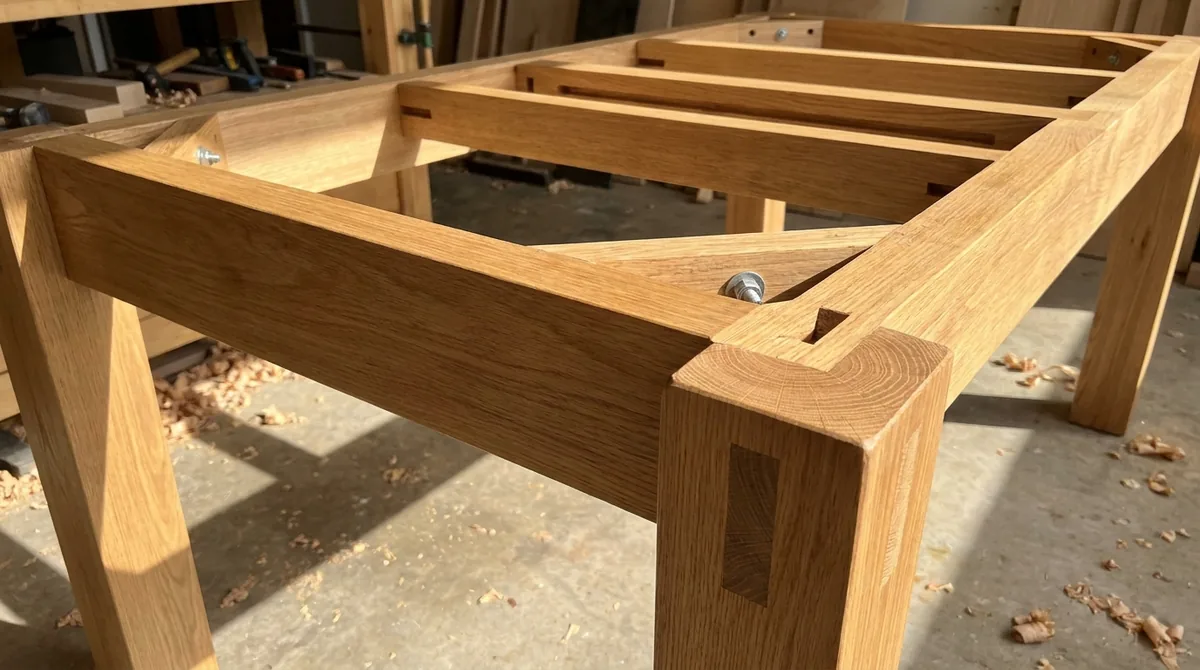
Check edges, hidden sides, drawers, and joints. Then compare them with the seller’s list of materials. End grain can help you spot solid wood. An added edge strip can hide a core under thin wood. Ask what each main part contains. Weight and wood grain alone prove little.
- Inspect the tabletop edge and underside together. Look for consistent construction and continuous end grain that matches the surface pattern across the board.
- Request separate materials for the top, legs, drawer fronts, drawer bottoms, and cabinet back.
- Pull drawers out to their mechanical stops. Check for loose joints, rough travel, and access to replaceable runners.
- Check the frame for movement on a level floor. Loose joints need an explanation before purchase.
- Inspect the tabletop fixings. Ask how the design allows solid wood to expand and shrink across its width.
- Confirm that you can reach bolts and replace damaged hardware after assembly.
Dovetails and mortise-and-tenon joints can indicate thoughtful construction, but poor fit weakens either. Corner blocks add support only when the maker screws them into solid timber. Ask for close-up photographs when you shop online.
For a dining table, check apron clearance against your actual chair arms. A long-lived table still becomes an expensive mistake when your chairs cannot tuck beneath it.
Veneer, MDF, and Particleboard: What Is Acceptable and What Is a Red Flag?
Wood veneer can work well if you know its thickness and core. Good plywood makes a strong base for a cabinet. MDF and particleboard need dry edges and sound hardware. Water can swell their edges. Ask what each part contains before you pay, especially when the seller says only “wood.”
Veneer is a thin layer of real wood. Its core may contain plywood, medium-density fiberboard (MDF), or particleboard. Thin veneer leaves less room to sand out damage. Solid timber gives a restorer more wood to work with. Check the build quality in both cases.
The U.S. Environmental Protection Agency (EPA) sets formaldehyde emission limits for covered wood panels. These include hardwood plywood, MDF, and particleboard. The rules extend to finished goods that contain those panels. EPA’s composite wood standards explain the rules under Title VI of the Toxic Substances Control Act (TSCA).
Ask for the required label when a product contains these panels. Meeting the formaldehyde limit says nothing about spill damage. It won’t tell you how to repair a stripped screw hole, either. Ask what “wood product” or “solid wood veneer” means for each part of the piece.
Low-VOC Finishes: What Should You Check?
Ask about the finish before you buy furniture for a small room. Check its full cure time. A low-VOC label describes the coating, but says little about fumes from the whole piece. Ask for test results for the finished item. Natural oils may hold solvents. Choose a finish you can clean.
| Finish | Question for the maker | Care concern |
|---|---|---|
| Water-based coating | What product and cure time apply? | Early use can damage an uncured film |
| Plant oil | Does the formula contain solvents or driers? | Reapplication depends on the product |
| Hardwax oil | Can I repair a small worn patch? | Use compatible cleaners and repair products |
| Beeswax polish | What protects the wood underneath? | Polish alone offers limited spill protection |
| Lacquer or solvent varnish | Has the finish completed its stated cure? | Repair methods vary by coating |
| Polyurethane | Is the formula water-based or solvent-based? | Patch repairs may remain visible |
EPA warns that low-VOC labels do not guarantee safer indoor products. Ask for emissions test results that cover the finished item. Follow the maker’s advice on fresh air and cure times. Check your right to return the piece if a strong odor persists.
Avoid homemade polish on an unfamiliar finish. For DIY oil application, follow the product’s fire-safety instructions for used cloths; drying oils can cause piled rags to self-heat and ignite.
The 5 Proof Checks Before You Buy Sustainable Hardwood Furniture
Before you buy, ask where the wood came from. Check the wood type, joints, finish, and repair options too. Save the seller’s answers with your order. Wait for clear replies to each point. These five checks help you compare pieces. They cannot replace a valid label or product test.
1. Match the source claim to the item
Request the FSC label details or reclaimed-source record for the product you selected. Check the licence holder through FSC’s verification tools. For reclaimed wood, ask about its previous setting. A photograph of an old barn proves little without a connection to the timber.
2. Name the wood in each component
Ask whether the top and frame use the same species. “Oak finish” describes appearance and may conceal another material. Save the written answer before ordering custom pieces with limited returns.
3. Get the hidden construction details
Request the core material and underside photographs. For a veneered top, ask for veneer thickness and the maker’s refinishing limits. For flat-pack pieces, check whether metal inserts allow repeated assembly without driving screws back into damaged panel edges.
4. Ask for the finish name and care sheet
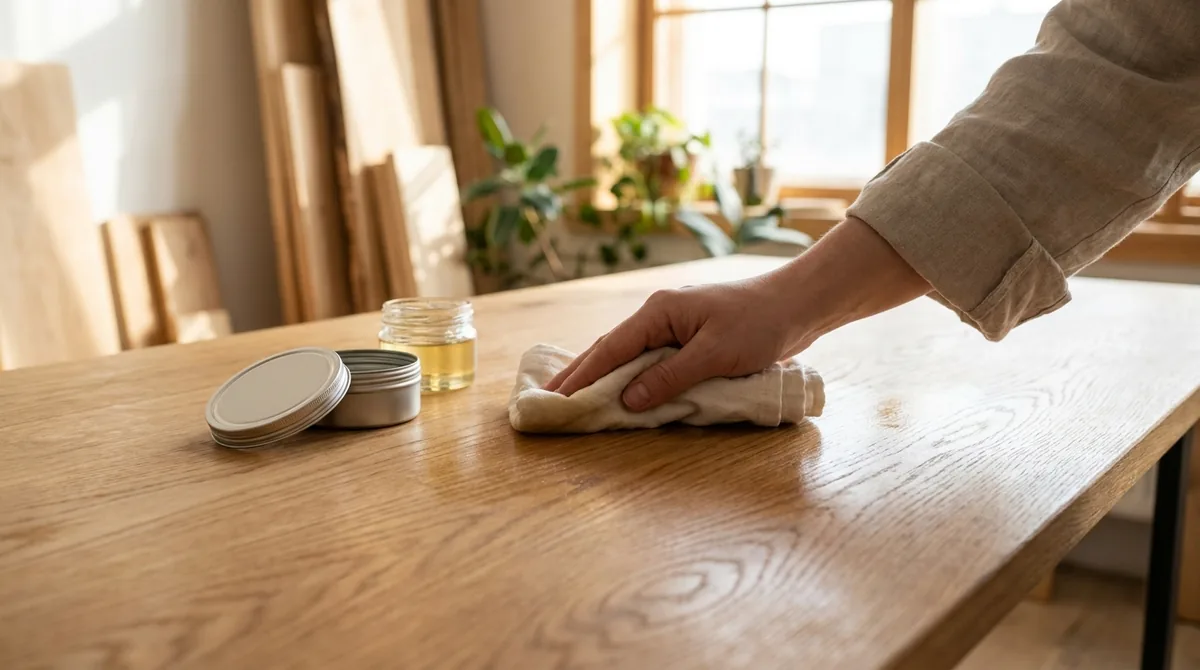
Keep the coating’s product name, cure instructions, and approved cleaner together. A seller who promises “non-toxic furniture” should explain the basis and scope of that claim. A natural-looking surface supplies no chemical information.
5. Price the likely repair
Ask how to replace a drawer runner or a damaged leg. Read warranty exclusions for humidity changes, water marks, and finish wear. Check who pays shipping for a repair. A long warranty loses practical value when you must ship a heavy table across the country.
Send one short request: “Please confirm the species and source, all panel cores, the finish product, and how I can obtain replacement hardware.” Pause the order when the reply repeats marketing language without answering those points.
Best Sustainable Hardwood Furniture by Room
Match hardwood furniture to the room’s daily wear and the repairs you can manage. For family meals or desk work, start with oak or hard maple. Consider walnut or cherry for bedroom pieces. In children’s rooms, check stability and anchoring instructions alongside materials; wood choice cannot prevent a tip-over.
For a solid wood dining table, ask how the finish handles repeated wiping and whether you can refresh worn areas. Test chair fit and leave space for people to sit down without trapping their knees against the apron.
A solid wood bed needs accessible frame bolts and appropriate center support for its size. A solid wood dresser needs sound runners and a safe anchoring plan. Follow the manufacturer’s wall-attachment instructions.
At a home-office desk, a writing pad can protect the surface from pen pressure. Check cable routes before you order a custom solid top. In an entryway, keep wet boots off a wood bench and use a separate tray.
Choose the material first, then plan fabrics and accessories with natural home decor ideas. A full matching bedroom set is optional; buy the pieces your room needs.
When Reclaimed Hardwood Is Not the Right Choice
Skip reclaimed hardwood when the seller cannot explain its past use or treatment. Old wood can hide nails, pest damage, or traces of old coatings. A worn look does not prove age or origin. Ask the maker how they checked and cleaned the wood before they used it for indoor furniture.
Ask for moisture readings and the room conditions the maker expects. One reading without a date or test location tells you little about the whole piece. The maker should explain how they dried and stored the boards before assembly.
Pause the purchase for a musty smell, loose paint, fresh insect debris, or severe cupping. Drying does not remove chemical residues or lead from an old coating. Avoid sanding unknown finishes yourself; seek a qualified assessment first. Treat timber from industrial settings with extra caution.
Budget for a restorer’s inspection of a vintage item before delivery. Include repair and transport costs before buying from a seller who excludes returns.
Sustainable Hardwood Furniture Buying Checklist
Buy once the written details match the piece you inspect. Check the source claim and hidden parts before you accept delivery. Save the care sheet and the maker’s contact details. You can use these records to resolve a wrong order or find parts when a drawer or joint needs repair.
- Save the product listing and material specification.
- Keep sourcing evidence tied to your order.
- Record the finish name and approved care method.
- Confirm replacement hardware and repair terms.
- Photograph damage before accepting or assembling the piece.
- Keep the invoice and return deadline together.
Use the eco furniture checker to organize material questions. Verify its general guidance against the product’s documents; it cannot certify an individual item or predict its service life.
FAQs About Sustainable Hardwood Furniture
Wood labels answer different questions. A source claim helps you check where the timber came from. A hardness rating helps you compare dent resistance. For repairs, ask the maker what you can replace or refinish. Keep those checks separate when you compare new, reclaimed, and veneered furniture for your home.
Is FSC-certified hardwood furniture always sustainable?
No. FSC certification supports defined forest-material sourcing claims. You still need to assess construction, finish, transport, and repair options. Confirm that the claim applies to your product, then read the label type and supporting seller documentation.
Is reclaimed wood furniture better than new hardwood furniture?
Not in every case. Reclaimed furniture reuses existing timber, but its condition and processing needs matter. Compare documented origin, contamination checks, transport, and repairs. New certified hardwood may suit your needs better when reclaimed options have unresolved defects.
What is the most durable hardwood for furniture?
No single hardwood wins for every use. Hickory and hard maple offer strong dent resistance among common furniture woods. Joint design and finish still affect performance. Choose a species for the intended room and expected wear.
Is veneer furniture sustainable?
It can be. Veneer uses a thin decorative layer over a core, so construction and repair limits matter. Ask about the substrate and veneer thickness. Disclosed plywood construction can support a useful, long-lived cabinet without solid panels throughout.
How do I avoid MDF sold as solid wood?
Request a component-by-component specification before ordering. Ask what sits beneath the surface on the top, drawer fronts, and side panels. Inspect hidden edges where possible. Weight or realistic grain alone cannot establish that furniture contains solid timber.
Can you refinish sustainable hardwood furniture?
Yes, many solid hardwood pieces allow refinishing, subject to their condition and design. Veneer needs a thickness assessment before sanding. Identify the existing coating and consult a restorer before sanding vintage furniture with unknown finishes.