Sustainable Bedroom Furniture: Bed Frames, Dressers, and Nightstands

Sustainable bedroom furniture pairs certified solid timber, non-toxic plant finishes, and durable mechanical joinery to create a healthy sleeping sanctuary that lasts decades. Prioritize FSC-certified hardwoods, zero-VOC natural oils, and mortise-and-tenon construction. These specifications prevent chemical off-gassing in enclosed bedrooms, stop nocturnal frame squeaks, and protect mattresses against premature sagging.

Furnishing an eco-friendly bedroom demands a focus on structural longevity and material purity. Most commercial furniture manufacturers rely on particle board, medium-density fiberboard (MDF), and synthetic adhesives that release hazardous fumes into enclosed sleeping spaces. By selecting heirloom-grade pieces built from American hardwoods, rapidly renewable bamboo, or reclaimed barn timber, you build an enduring bedroom retreat that protects your health and honors planetary resources.
Solid Wood Bed Frames: Joinery, Slat Spacing, and Noise Prevention
A sustainable bed frame combines solid kiln-dried hardwood lumber, friction-fit Japanese joinery, and rigid wooden slats spaced under three inches apart. This structural foundation eliminates nighttime creaks, prevents mattress core damage, and outlasts mass-market metal frames. Inspect the corner joinery and center spine support before purchasing any timber platform bed.
Japanese Interlocking Joinery vs Metal Bolt Fasteners
Traditional flat-pack bed frames rely on threaded steel bolts, zinc-plated barrel nuts, and stamped steel corner brackets. Dynamic human motion exerts rotational torque against these rigid metal fasteners every single night. Over six to twelve months, metal bolts crush soft timber fibers inside the bolt holes. The hardware loosens. Unsecured wooden rails rub together under friction and produce piercing nocturnal squeaks.
Sustainable bed makers solve this mechanical failure point with ancient Japanese woodworking methods. Interlocking mortise and tenon joints distribute mechanical load across broad timber surfaces. Wood components slide into place with precision tolerances. Gravity and mechanical friction lock perimeter rails together without bolts. When you step onto a platform frame featuring friction-fit Japanese joinery, the frame tightens under body weight. For added acoustic protection, quality makers line interior rail ledges with dense wool felt strips that eliminate direct wood-on-wood contact.
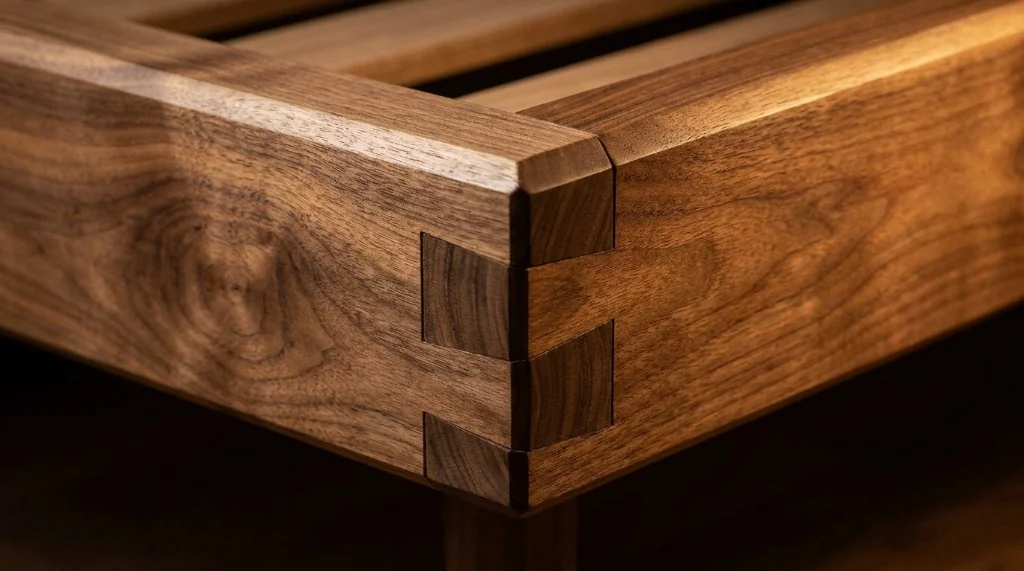
Investing in sustainable hardwood furniture guarantees dense cell structures that resist shear forces. Hard maples, black walnuts, and white oaks provide superior dimensional stability compared to fast-grown pine lumber. Corner joints remain tight across decades of seasonal humidity fluctuations.
Slat Gap Physics and Center Beam Mattress Support
The slat foundation beneath your mattress dictates both structural comfort and warranty protection. Many fast-furniture retailers supply platform beds with thin, flexible plywood slats spaced four to five inches apart. When you place a heavy latex or hybrid coil mattress onto wide slat openings, the mattress core sags through the gaps. This localized depression deforms individual pocketed coils, causes spinal misalignment, and voids manufacturer warranties.
A rigorous eco-friendly bed platform requires rigid solid wood slats measuring at least 0.75 inches thick with spacing of 2.75 to 3.0 inches or less. This tight spacing provides a continuous flat surface that supports dense natural latex without restricting underside ventilation. Continuous airflow through these three-inch gaps clears nighttime moisture from the mattress core and stops mold spore accumulation.
Queen and king bed frame configurations require a heavy-duty center support rail equipped with two or three vertical support legs that contact the floor directly. Without center support posts, wide bed spans bow downward in the middle under combined partner weight. This deflection pulls perimeter rails inward and overstresses corner joinery.
Solid Wood Dressers: Drawer Construction, Glides, and Anti-Sag Engineering
A sustainable dresser features solid timber case construction, full-extension undermount ball-bearing glides, and five-piece drawer boxes assembled with English dovetail joints. These heavy storage cases eliminate sagging bottom panels and broken drawer faces. Inspect the internal box corners and wood species before investing in primary bedroom storage pieces.
English Dovetail Boxes vs Stapled Particle Board
Mass-market dressers use 0.5-inch particle board drawer sides fastened to drawer fronts with industrial staples and chemical hot glue. Pulling open a loaded drawer pulls directly against those thin staples. Within eighteen months of regular use, the drawer face detaches from the chassis. Standard fast-furniture dressers insert flimsy 0.125-inch fiberboard for drawer bottoms. Heavy denim trousers and winter wool sweaters cause these thin panels to bow downward, slip out of side grooves, and jam against the drawer below.
Quality sustainable dressers use interlocking English dovetail joinery at all four corners of the drawer box. Interlocking wedge-shaped pins and tails resist tensile pull forces mechanically. The harder you pull a packed drawer open, the tighter the dovetail pins lock into their mating tails. Authentic cabinetmakers build drawer boxes from solid maple, poplar, or beech, and insert drawer bottoms made from 0.375-inch solid hardwood plywood. A center wooden support cleat reinforces the underside of every large drawer. This rigid spine stops heavy clothing loads from bowing the base panel.
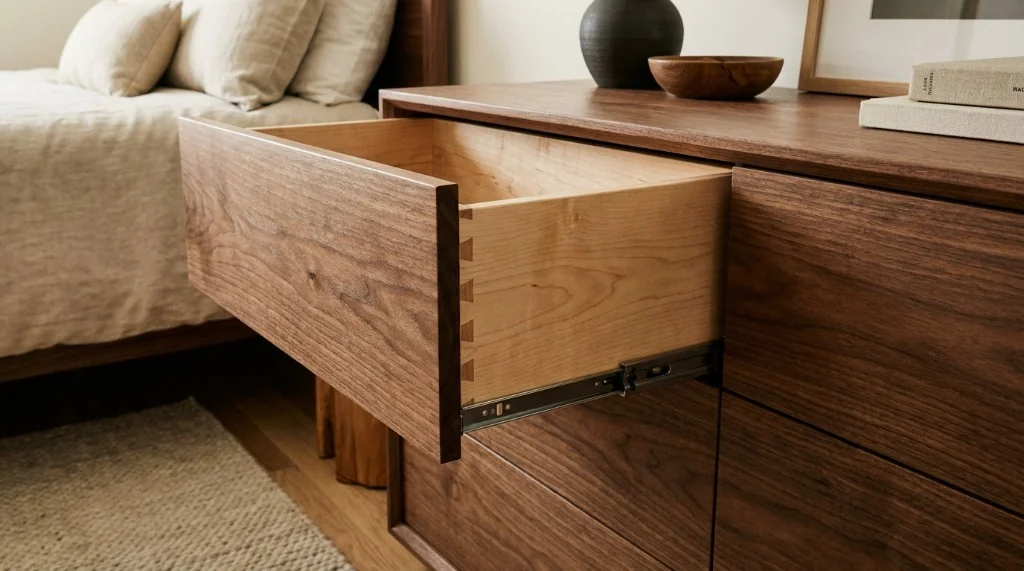
Choosing pieces made from genuine sustainable wood furniture guarantees high fiber density. Compare real-world durability across common bedroom timber species based on standardized mechanical ratings:
| Timber Species | Janka Hardness Rating | Grain Stability | Recommended Bedroom Application |
|---|---|---|---|
| American White Oak | 1,360 lbf | High dimensional stability | Primary bedroom dressers and platform frames |
| Black Walnut | 1,010 lbf | Exceptional stability | Fine case goods, dressers, and bedside tables |
| Hard Sugar Maple | 1,450 lbf | Very high shock resistance | Internal drawer box frames and heavy support legs |
| Eastern White Pine | 380 lbf | Moderate stability | Rustic budget chests and lightweight nightstands |
Undermount Ball-Bearing Glides and Solid Timber Expansion
Modern sustainable dressers pair artisan woodwork with precision hardware. Traditional wooden runner tracks swell during humid summer months. Humid wood fibers bind together, so drawers stick and seize inside the case. Modern master builders install concealed undermount ball-bearing slides rated for 75 to 100 pounds of static load. These zinc-plated steel mechanisms mount beneath the drawer box where fabrics cannot catch on lubricated tracks. The soft-close damping mechanism absorbs closing energy and protects timber joints from impact shock.
Solid wood reacts dynamically to room humidity. As relative humidity rises, timber expands across its grain; during dry winter heating cycles, timber contracts. Master cabinetmakers accommodate this physical property by floating solid wood side panels in deep perimeter dado grooves. Floating construction lets solid oak or walnut panels expand without cracking dresser frames or splitting decorative top crowns.
Sustainable Nightstands and Bedroom Sets: Space Planning and Cohesive Styling
Sustainable nightstands provide accessible bedside storage while establishing visual balance beside solid timber bed frames. Align the nightstand top surface within two inches of your top mattress height to maintain comfortable reach. Selecting individual complementary pieces creates a collected, timeless bedroom design that outlasts identical factory furniture suites.
Bedside Ergonomics and Functional Open Storage
Comfortable bedside interaction requires precise proportioning. A nightstand that stands six inches taller than your mattress creates awkward shoulder angles when you reach for a water glass in the dark. A bedside table sitting four inches lower than your mattress leaves books and reading glasses out of sight. Aim for a tabletop height that matches your mattress surface precisely, or sits no more than two inches above or below the sleeping line.
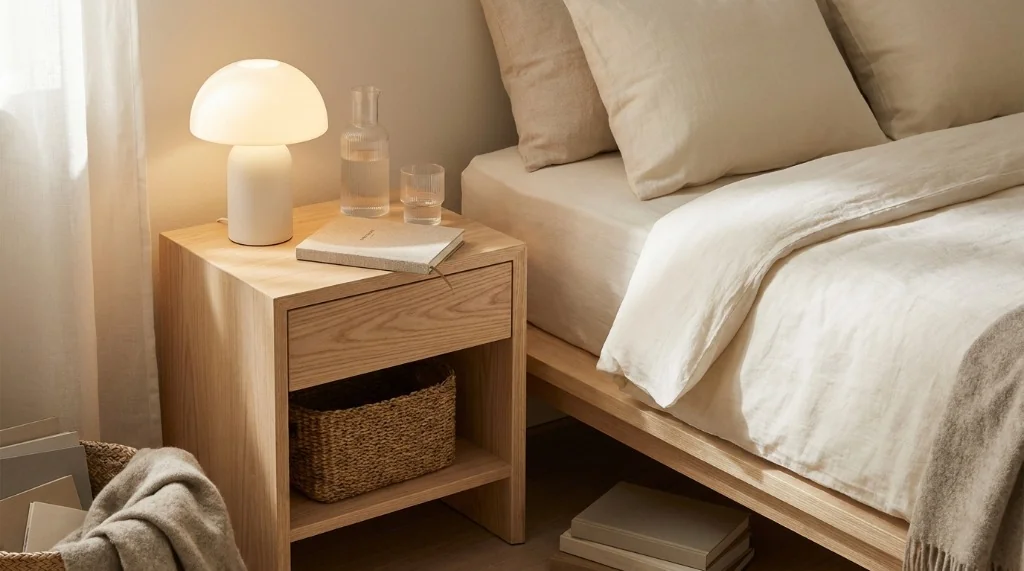
Evaluate your bedside storage habits before selecting drawer configurations. Nightstands featuring an enclosed upper drawer conceal sleep journals, medications, and charging cords. An open lower shelf accommodates woven seagrass storage baskets or bedtime reading stacks without crowding the top surface. Open lower construction promotes air circulation around the bed perimeter. This open profile preserves clean sightlines and keeps compact bedrooms visually calm.
Curated Wood Mixing vs Uniform Bedroom Suites
Purchasing an identical five-piece furniture suite from a single showroom catalogue creates a rigid, flat bedroom aesthetic. When personal taste shifts or one piece sustains wear, you face difficult odds finding an exact factory match. A thoughtful approach to sustainable decorating pairs distinct timber species and complementary grain profiles across the room.
Pair a natural white oak platform bed frame with rich black walnut nightstands to establish tactile contrast. The cool golden undertones of rift-sawn oak balance the deep chocolate warmth of walnut timber. Tie the disparate species together through shared design cues, such as tapered mid-century legs, beveled perimeter edges, or matte black iron hardware. Consult our foundational sustainable furniture guide to master timber mixing rules across living and sleeping spaces.
Bedroom Air Quality: Non-Toxic Finishes and Certified Timber Standards
Bedroom air quality relies on selecting furniture finished with zero-VOC plant oils, waterborne topcoats, and GREENGUARD Gold certified low-emission materials. Enclosed sleeping environments trap chemical off-gassing for eight hours every night. Choose certified solid timber to prevent long-term respiratory exposure from synthetic glues and solvent lacquers.
The Hidden VOC Hazard of Urea-Formaldehyde Adhesives
Standard bedroom case goods rely on particle board and composite fiber cores bonded with urea-formaldehyde resin binders. Formaldehyde is a known human respiratory irritant and carcinogen that off-gasses gaseous volatile organic compounds (VOCs) at ambient indoor temperatures. During sleep, human respiration deepens and blood pressure slows while bedroom doors and windows remain closed for eight consecutive hours.
Breathing trapped formaldehyde fumes and petroleum solvent vapors degrades sleep quality, provokes nocturnal headaches, and inflames allergic airways. Cheap nitrocellulose spray lacquers common on fast furniture continue off-gassing plasticizers and chemical aromatics for six to nine months after unpacking. Selecting solid natural wood eliminates manufactured particle board resins from your immediate breathing zone.
GREENGUARD Gold, FSC Certification, and Natural Plant Oils
Third-party environmental certifications provide reliable proof of non-toxic construction. The Forest Stewardship Council (FSC 100% or FSC Mix) verifies that timber comes from responsibly managed forests where harvesting rates never exceed natural regrowth and local habitats receive legal protection. For air quality verification, look for the GREENGUARD Gold certification mark. This program enforces strict laboratory thresholds on 360 individual VOCs and total chemical emissions. These limits confirm safety for sensitive individuals and children.
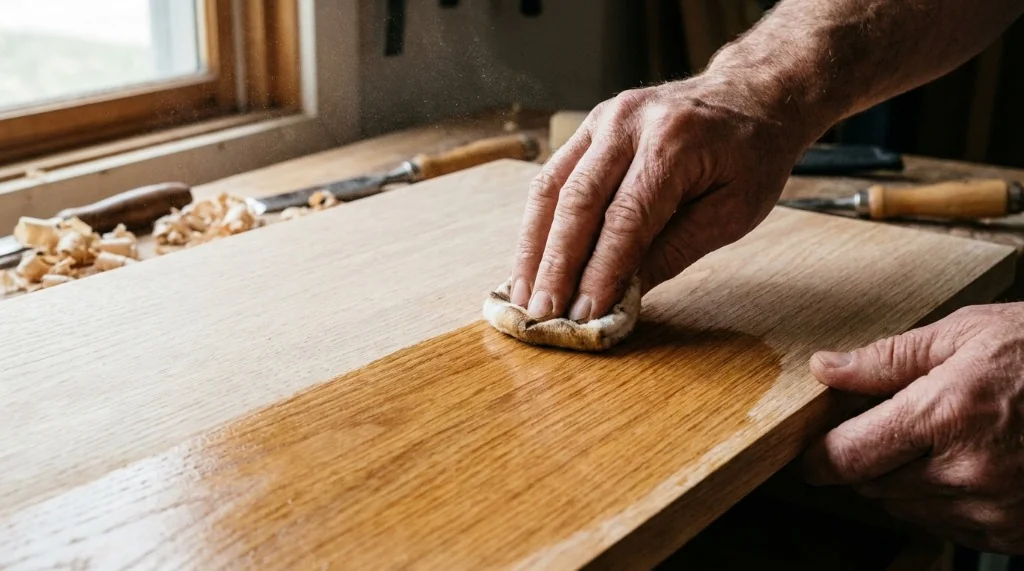
The safest surface treatments rely on penetrating natural plant oils such as cold-pressed linseed oil, tung oil, and plant-wax blends like Rubio Monocoat. These finishes molecularly bond to cellulose fibers in the wood surface without producing a brittle plastic film on top. They emit zero volatile compounds, showcase tactile wood grain, and allow spot touch-ups with an oil cloth without stripping the entire furniture case. For white or painted bedroom furniture, choose VOC-free milk paints or certified water-based acrylic mineral finishes.
Vetted Sustainable Bedroom Selections: Non-Toxic Frames and Hardwood Storage
Selecting reliable sustainable bedroom furniture requires checking verified material provenance, third-party emission testing, and mechanical joinery standards. The curated selections below combine certified American hardwoods, zero-VOC plant finishes, and heavy-duty hardware to deliver decades of silent support and chemical-free bedroom air.
Solid Hardwood Platform Bed Frame with Japanese Interlocking Joinery
This premium platform bed frame uses certified solid ash and walnut timber assembled with tool-free Japanese interlocking joinery. The frame assembles in ten minutes by hand without screws or bolts. Precision friction engineering eliminates nocturnal joint creaks. Heavy-duty solid wood slats feature felt-lined rails and 2.75-inch gap spacing that supports all hybrid and natural latex mattresses while maintaining warranty coverage.
The timber receives a hand-rubbed zero-VOC plant oil finish that enhances the organic wood grain without releasing fumes into your sleeping area. A reinforced dual center spine with two solid hardwood support legs guarantees zero mattress sag across king and queen configurations.
Solid Pine and Oak 6-Drawer Dresser with Dovetail Joinery
Crafted from FSC-certified solid timber, this heavy six-drawer double chest delivers superior storage capacity for primary bedrooms. All six drawer boxes feature authentic English dovetail corners front and back, paired with 0.375-inch solid wood bottom panels supported by center reinforcement cleats. Sturdy undermount soft-close glides handle seventy-five pounds of load per drawer without sticking or sagging.
The exterior case uses non-toxic waterborne finishes that pass strict GREENGUARD Gold indoor air limits. Floating side panel construction protects the case against humidity fluctuations, while heavy-duty steel anti-tip brackets anchor the case against child tip-over accidents.
Solid Wood Mid-Century Nightstand with Deep Storage Drawer
Featuring solid American walnut or white oak lumber, this bedside nightstand provides balanced proportions for platform beds up to 26 inches tall. The piece includes one deep English-dovetailed drawer mounted on soft-close undermount slides, alongside an open lower display shelf designed for woven baskets and bedside book storage.
The compact footprint fits comfortably into smaller urban bedrooms while maintaining solid heirloom durability. Finished in natural matte plant oils that leave timber pores open, this nightstand introduces zero synthetic off-gassing to your immediate bedside environment. For more certified manufacturers, review our ranking of leading sustainable furniture brands.
Delivery, Room Setup, and Long-Term Timber Care
Maintaining solid wood bedroom furniture demands three direct practices: humidity control, wall-stud safety anchoring, and periodic oil conditioning. Solid timber breathes and shifts with atmospheric moisture. Follow three direct maintenance directives to protect your investment for generations.
First, acclimate newly delivered timber pieces to your bedroom climate for forty-eight hours before final assembly. Maintain relative indoor humidity between 35% and 50% using a cool-mist humidifier during dry winters and air conditioning in muggy summers. Extreme humidity drops below 30% shrink timber joints and cause surface checking along dry end grain.
Second, anchor every dresser and tall chest directly into two wall studs using steel aircraft cables or heavy bracket straps. Solid timber cases carry substantial weight. Pulling open multiple loaded drawers shifts the center of gravity forward. This forward weight bias creates severe tip-over hazards for young children.
Third, apply a light coat of natural linseed oil or beeswax conditioner once every twelve to eighteen months. Pour a tablespoon of conditioner onto a dry cotton cloth and rub firmly along the direction of the wood grain. Wipe away excess oil after twenty minutes to preserve moisture barriers and maintain rich wood luster.
Frequently Asked Questions About Sustainable Bedroom Furniture
How do I stop a wooden bed frame from squeaking over time?
Stop wooden bed squeaks by applying heavy-duty adhesive wool felt tape along the rail ledges where support slats rest. Tighten all corner connection bolts with a hex key, and insert nylon washers between metal brackets and timber rails to eliminate friction.
What slat spacing protects mattresses from sagging?
Maintain slat spacing between 2.5 and 3.0 inches across your platform bed frame. Openings exceeding three inches allow pocketed coils and natural latex cores to sink downward. This localized depression causes premature mattress sag and voids manufacturer warranties.
Why do dresser drawers sag, and how do I prevent it?
Dresser drawers sag when manufacturers use 0.125-inch fiberboard bases without bottom support. Prevent sagging by selecting dressers with 0.375-inch solid plywood bottoms, English dovetail corner joints, and longitudinal wooden center support cleats beneath every drawer.
What wood finishes produce zero harmful emissions in a bedroom?
Natural plant penetrating oils such as pure tung oil, cold-pressed linseed oil, and solvent-free hardwax oils produce zero harmful VOC emissions. These finishes cure through oxidation. They emit no toxic chemical solvents into enclosed sleeping quarters.