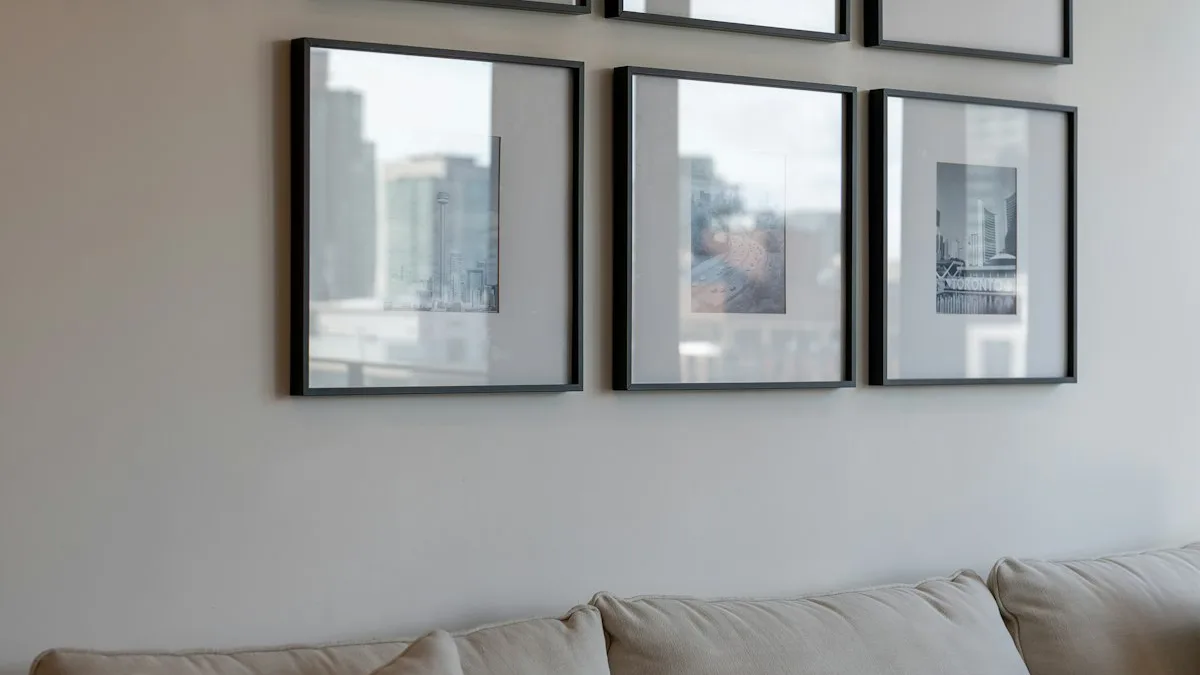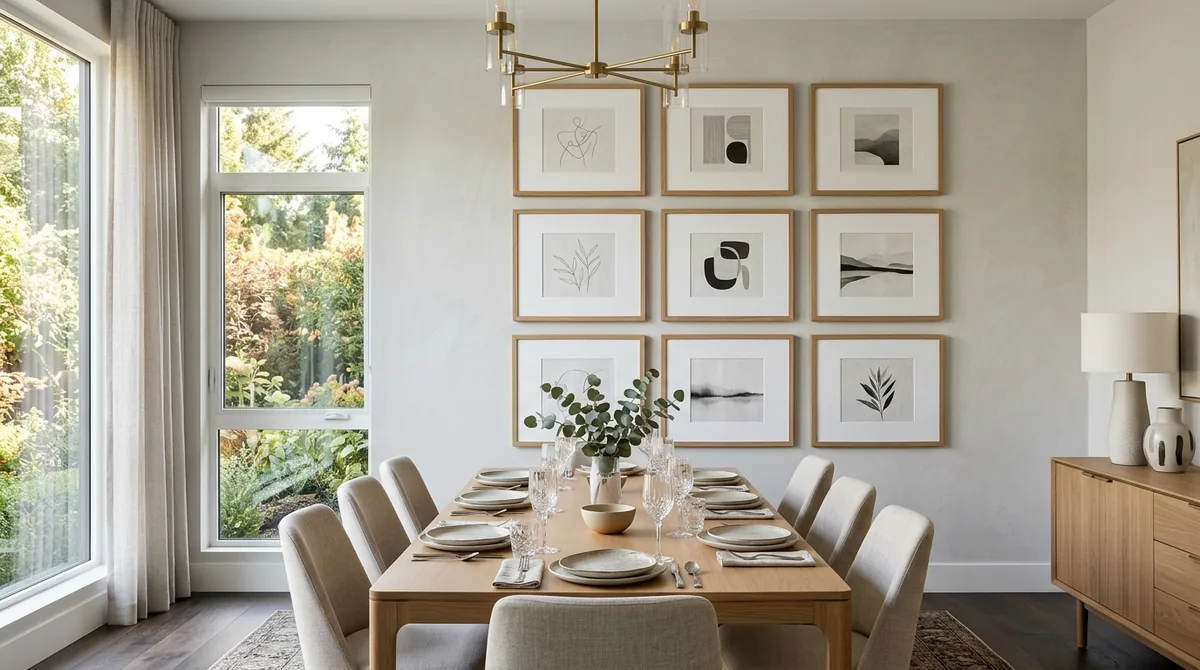
Grid Gallery Wall Spacing: How to Hang 6 or 9 Matching Frames Flawlessly
Hang a symmetrical 6 or 9 frame grid gallery wall with zero crooked nails. Master the 2-to-3 inch frame spacing formula and paper template layout method.
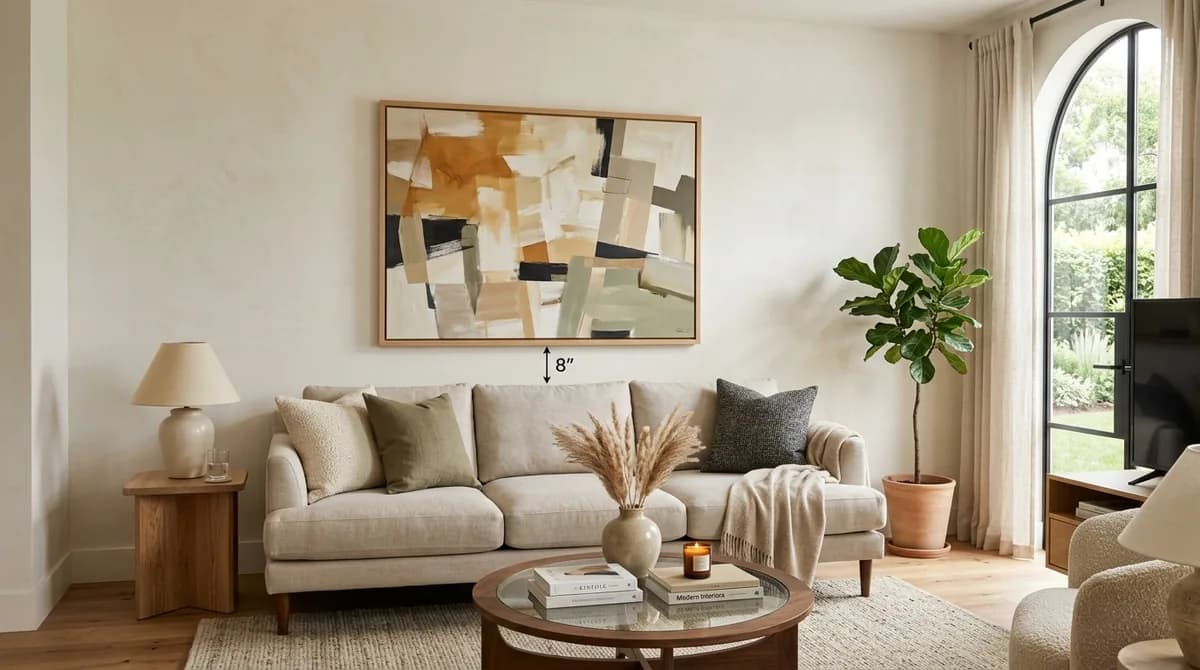
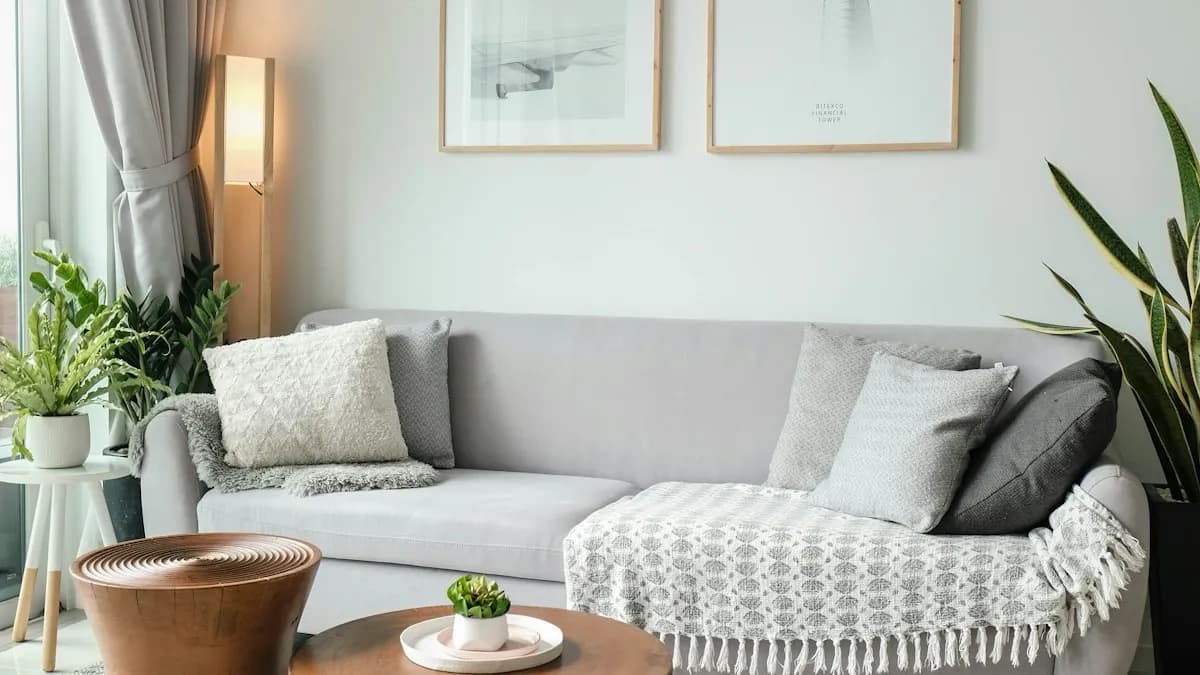
The universal gallery standard for hanging wall art requires the center point of the artwork or picture frame to sit exactly 57 to 60 inches from the finished floor. This eye-level measurement matches average human sightlines and stops the common mistake of hanging art too high near the ceiling. When hanging pictures above furniture like sofas or console tables, position the bottom frame edge 6 to 8 inches above the furniture backrest.
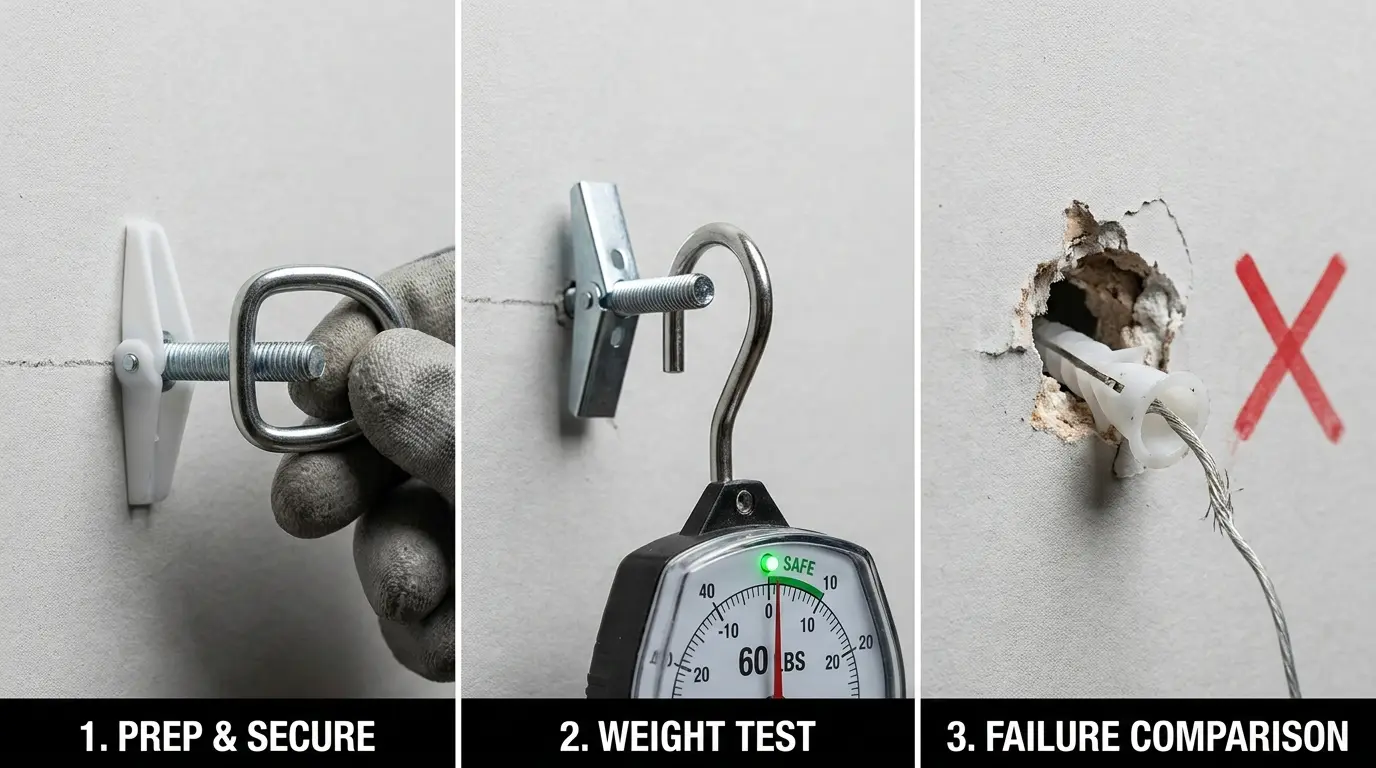
Scale artwork to match the supporting furniture beneath it: single frames or gallery groupings should cover 60 to 75 percent of the total sofa or credenza width. For gallery walls, maintain consistent spacing between frames of 2 to 3 inches for clean grid arrangements, and 3 to 4 inches for organic salon layouts. Anchor heavy wall art exceeding 20 pounds with dual picture wire hangers or heavy-duty toggle bolts into wall studs.
Measure 57 to 60 inches from the floor to the center of your artwork across living rooms and hallways.
Ensure artwork spans 60 to 75 percent of the total horizontal width of the furniture piece anchored below it.
Leave 6 to 8 inches between the bottom of the picture frame and the top of the sofa back or console table.
Maintain 2 to 3 inches of uniform spacing between adjacent frames to keep multi-piece displays cohesive.
Calculate exact picture spacing gaps, layout dimensions, and nail hanging heights for balanced gallery walls.
Explore practical room tutorials, sizing guidelines, and decorator case studies.

Hang a symmetrical 6 or 9 frame grid gallery wall with zero crooked nails. Master the 2-to-3 inch frame spacing formula and paper template layout method.

Calculate board and batten wall spacing with no leftover gaps. Beginner-friendly wall layout formulas, batten width math, and cut list instructions.

Calculate the perfect mat border size for picture frames. Learn standard mat dimensions, the golden ratio 2-to-3 inch border rule, and bottom-weighted mats.

Master the 57-inch museum eye-level art hanging rule. Step-by-step mathematical formulas for hanging wall art over sofas, headboards, and fireplaces.

Discover renter-friendly wall decor ideas with 5 zero-damage hacks. Hang frames, murals, and mirrors safely without drywall holes or lost security deposits.

Elevate your space with minimalist wall decor neutral living room ideas. Discover 5 curated concepts featuring textured plaster, wood slats, and matting.

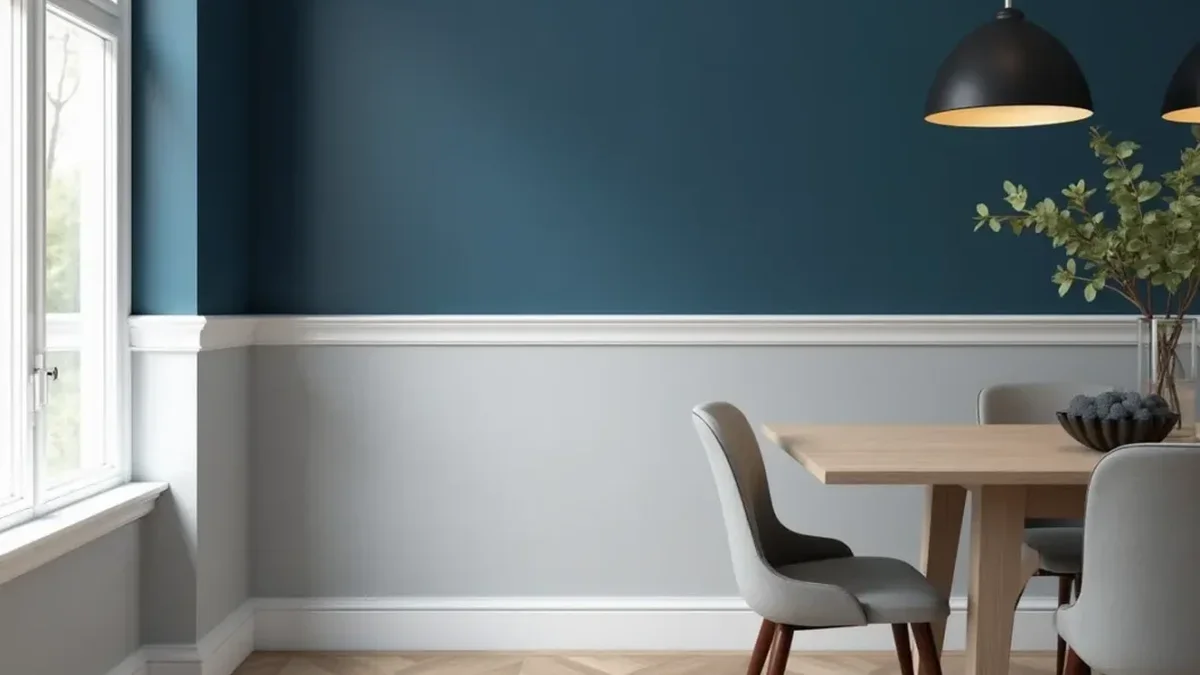
Explore wainscoting ideas for small rooms with 5 classic sizing rules. Calculate chair rail heights, board-and-batten ratios, and vertical proportions.

Learn how to size oversized wall art with 5 proportion rules. Calculate blank wall ratios, sofa width guidelines, and ceiling clearance formulas.

Learn how to hang heavy art without studs with 5 anchor load tests. Compare toggle bolts, drywall anchors, and French cleats for mirror and frame safety.

Design a staircase gallery wall layout with 5 measurement steps. Establish a level datum line fifty-seven inches above stair treads for cohesive frame flow.

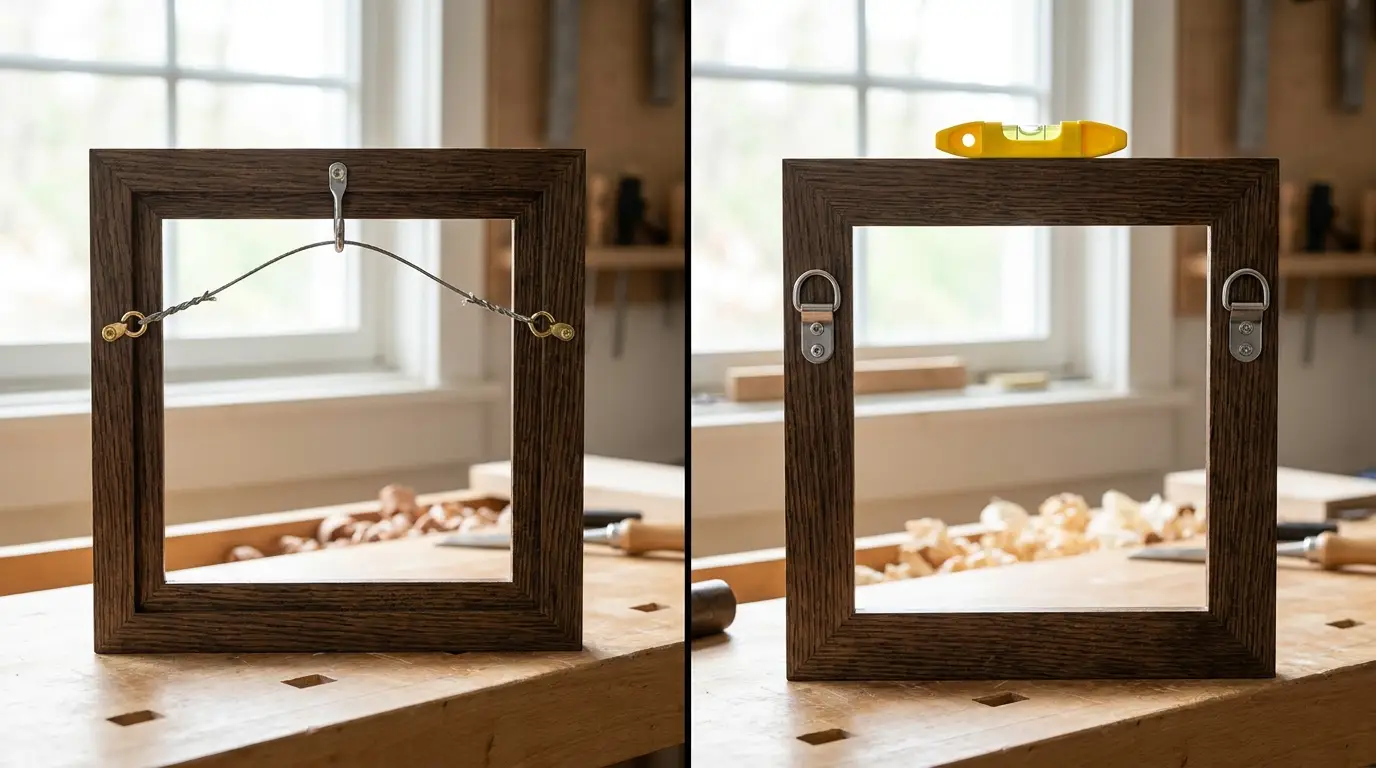
Compare picture hanging wire sag vs dual D-rings across 5 structural tests. Eliminate frame tilting, reduce drywall shear load, and keep art permanently flush.

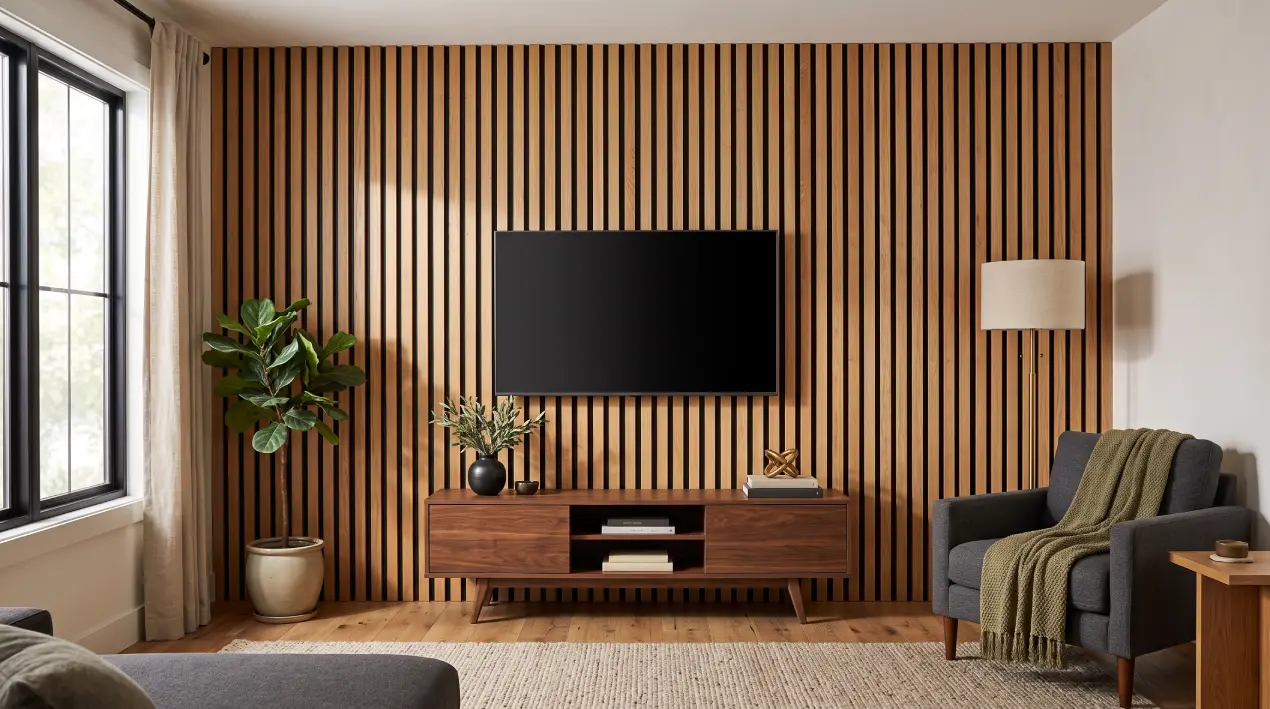
Calculate DIY wood slat accent wall spacing with 5 math formulas. Balance slat widths against reveal gaps to create professional acoustic architectural panels.

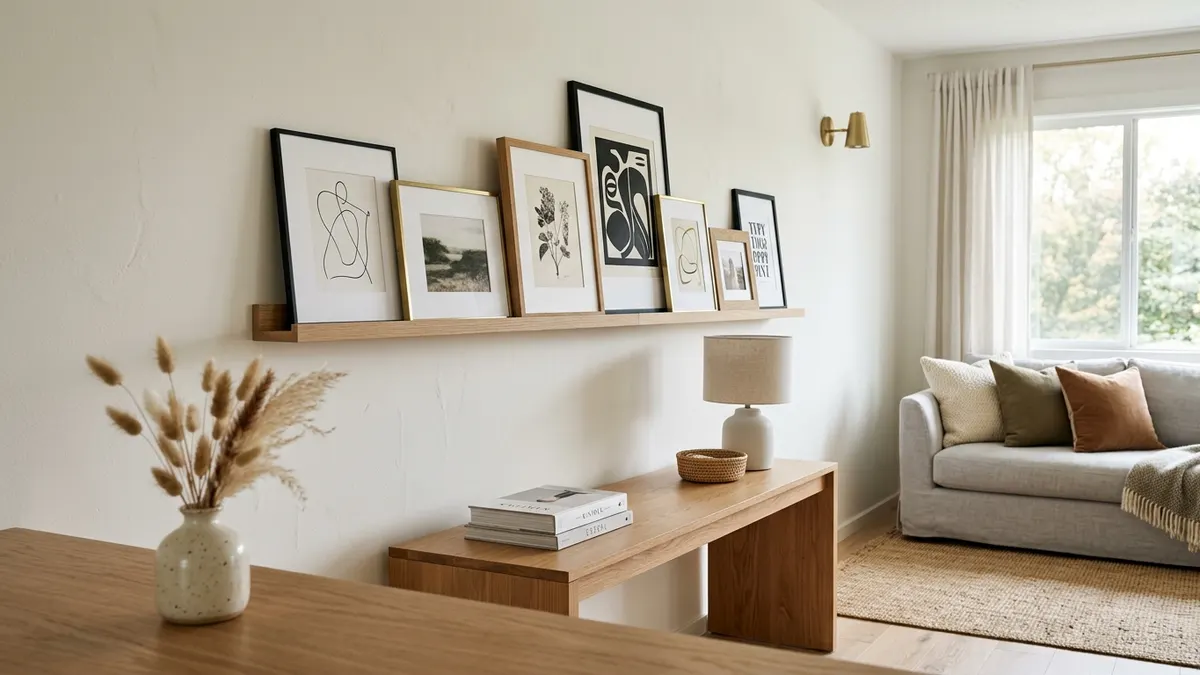
Master picture ledge shelf styling with 5 layering guidelines. Stagger oversized framed prints, textured ceramic pieces, and small canvases without clutter.

Master the chair rail height rule 8-foot ceiling specifications require. Mount molding thirty-two inches above finished floors to preserve room proportions.

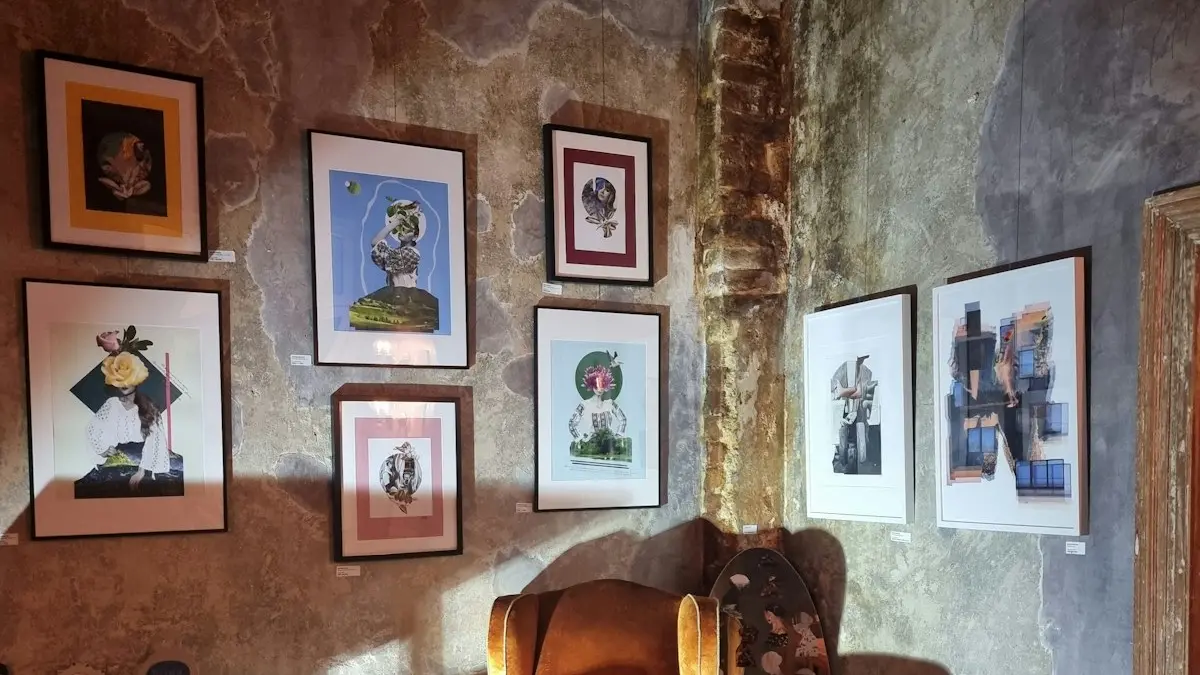
Plan a corner gallery wall that wraps cleanly around tight rooms. Use 2 to 3 inch setbacks, shared sight lines, and smart lighting.

Hang 3 piece canvas art over a couch with exact spacing. Use 2 to 3 inch gaps, a 65 to 75 percent width target, and level hardware.

Anchor a leaning floor mirror safely with the right wall tether, lean angle, base grip, stud placement, and child safety checks.

Hang pictures on plaster walls without cracking by drilling pilot holes, taping brittle plaster, choosing anchors, and avoiding lath damage.