DIY Non-Toxic Wood Polish Recipe: 3 Natural Formulas
Reader Disclosure: This post contains affiliate links. If you buy through them, we may earn a commission at no extra cost to you. We only recommend items tested for clean craftsmanship and authentic durability.
A DIY non-toxic wood polish recipe blends pure organic beeswax with cold-pressed plant oils to nourish dry wood grain. Homemade polish feeds timber fibers, protects surfaces from water rings, and restores a warm satin luster without toxic fumes. Commercial aerosol spray cans contain liquid silicone that leaves a sticky film across heirloom furniture.
Most commercial dusting sprays harm solid wood furniture over time. Aerosol cans contain butane gas, artificial perfumes, and cheap petroleum oils. These chemicals trap household dust and block open wood pores from breathing. Making your own natural wood polish takes only fifteen minutes on your kitchen stove. You control every ingredient, keeping your home air clean for children and pets.
Before mixing your polish batch, check our interactive wood care calculator. It calculates exact surface area, wax ounce ratios, and curing times for your wooden tables and dressers.
Why Commercial Aerosol Wood Polishes Ruin Solid Wood Furniture
Commercial spray polishes contain liquid silicone oils that permanently damage fine wood finishes. Silicone creates an artificial wet shine that looks clean for twenty-four hours. Yet silicone never cures, dries, or evaporates. It turns into a gummy film that attracts pet hair, lint, and floating kitchen grease.
Wood refinishers hate working on tables treated with commercial aerosol sprays. Silicone oil seeps through small lacquer cracks into deep timber cells. If you ever try to apply fresh varnish to that wood, the new clear coat beads up into small craters called fish-eyes. Switch to pure beeswax paste so your antique furniture stays clean and easy to restore.
How to Strip Old Sticky Silicone Buildup Before Waxing
Never apply fresh beeswax paste over old commercial spray buildup. If you put new wax over old silicone, you lock dirt into the wood finish. Test your furniture surface first by rubbing a clean cotton cloth across the top. If the cloth drags or picks up gray grime, you must strip the surface before applying homemade polish.
Dampen a clean cotton rag with odorless mineral spirits. Wipe the furniture top gently in long strokes along the wood grain. The mineral spirits dissolve old silicone film and wax residue without softening original lacquer. Dry the wood immediately with a clean towel. Let the piece sit for two hours in a warm room before applying your new beeswax paste.
Formula 1: The Classic Beeswax and Walnut Oil Conditioning Paste
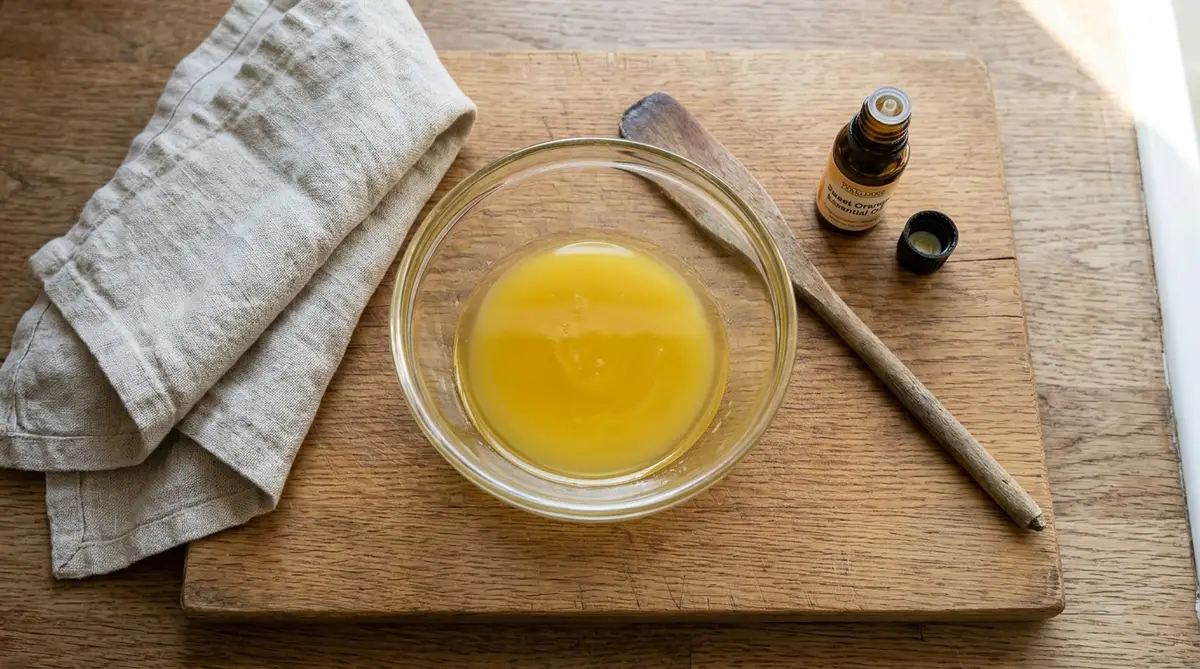
The classic beeswax and walnut oil paste provides the best balance of deep wood nourishment and water protection. Walnut oil is a true natural drying oil. Unlike olive oil, walnut oil cures over three days into a hard, non-tacky protective film inside the wood pores.
Exact Ingredient Measurements for Formula 1
Gather these clean kitchen ingredients to yield eight ounces of rich conditioning paste:
- Two ounces of pure organic yellow beeswax pastilles or grated wax bars.
- Six ounces of cold-pressed raw walnut oil or pure liquid jojoba oil.
- Fifteen drops of pure sweet orange essential oil for natural citrus cleaning power.
- One clean eight-ounce glass mason jar with an airtight metal lid.
This paste works wonders on raw timber, antique pine dressers, and walnut dining tables. The sweet orange oil cuts through surface grime while melted wax seals open grain pores against daily moisture.
Why Raw Walnut Oil Beats Mineral Oil
Many online recipes suggest using cheap drugstore mineral oil. While mineral oil is cheap, it comes from refined crude petroleum oil. Mineral oil never cures or hardens inside timber. It stays liquid in the wood cells, washing out every time you wipe your dining table with a damp sponge.
Raw walnut oil cures naturally through oxidation. It combines with airborne oxygen to create a resilient amber film that bonds directly with wood lignin. This natural cure locks in moisture, stops timber checking, and keeps your wood furniture protected for months.
Formula 2: The Olive Oil and Lemon Juice Quick Dusting Spray
The olive oil and lemon juice mix offers a fast emergency polish for sealed factory furniture. Fresh lemon juice contains natural citric acid that cuts through sticky finger marks on cabinets and table edges. The olive oil leaves a light temporary shine across clear topcoats.
Mixing Ratio and Shelf Life Rules
Combine two parts extra virgin olive oil with one part fresh strained lemon juice in a small glass spray bottle. Shake the bottle hard before every spray because oil and lemon juice separate fast. Spray the mixture directly onto a clean cotton cloth, never directly onto the wood.
Never store this mixture for more than forty-eight hours. Fresh lemon juice contains water and organic sugars that spoil at room temperature. Olive oil also turns into a rancid sticky film if left on raw, open wood pores. Use Formula 2 only on sealed lacquered wood for quick party cleanup, and throw away leftovers the same day.
Formula 3: The Carnauba and Jojoba Heavy-Duty Tabletop Shield
The carnauba and jojoba paste creates a tough, water-repellent wax shield for high-use surfaces. Carnauba wax comes from Brazilian palm leaves and melts at one hundred and eighty degrees Fahrenheit. Its high melting point produces a hard protective crust that resists hot coffee mugs and water spills.
Exact Recipe for Heavy Dining Tables
Measure these durable wax ingredients for kitchen islands and dining tables:
- One ounce of hard carnauba wax flakes.
- One ounce of natural yellow beeswax pastilles.
- Six ounces of golden jojoba oil.
- Ten drops of pure cedarwood essential oil to deter pests.
Jojoba oil is a liquid plant wax ester that never turns rancid. It stays fresh for years in your pantry. When combined with rock-hard carnauba wax, this formula creates a water-beading satin seal that outlasts simple mineral oil pastes by six full months.
Step-by-Step Instructions: How to Melt, Pour, and Store Homemade Polish
Making beeswax furniture polish requires gentle indirect heat. Direct stove heat burns delicate beeswax and creates smoke. Follow this safe four-step kitchen procedure:
- Set up a double boiler by resting a heatproof glass bowl over a small saucepan filled with two inches of water.
- Bring the water to a gentle simmer on medium-low stove heat. Place your beeswax into the glass bowl and stir with a clean wooden stick until completely melted.
- Pour your walnut or jojoba oil into the melted wax in a slow, steady stream. The cool oil will turn the hot wax cloudy. Keep stirring over low heat for two minutes until the mixture turns clear again.
- Remove the bowl from heat. Stir in your essential oil drops. Pour the warm liquid into clean glass jars and let it cool uncovered for two hours until it sets into a firm butter paste.
Screw airtight metal lids onto your cooled jars. Store your homemade polish in a cool, dark pantry away from direct radiator heat. Formula 1 and Formula 3 stay fresh and effective for up to eighteen months.
How to Buff Wood Furniture for a Streak-Free Satin Luster
Applying homemade wood polish requires thin coats and firm cotton buffing. Thick wax coats trap grime and make wood surfaces feel sticky. Use this decorator method for a streak-free satin glow:
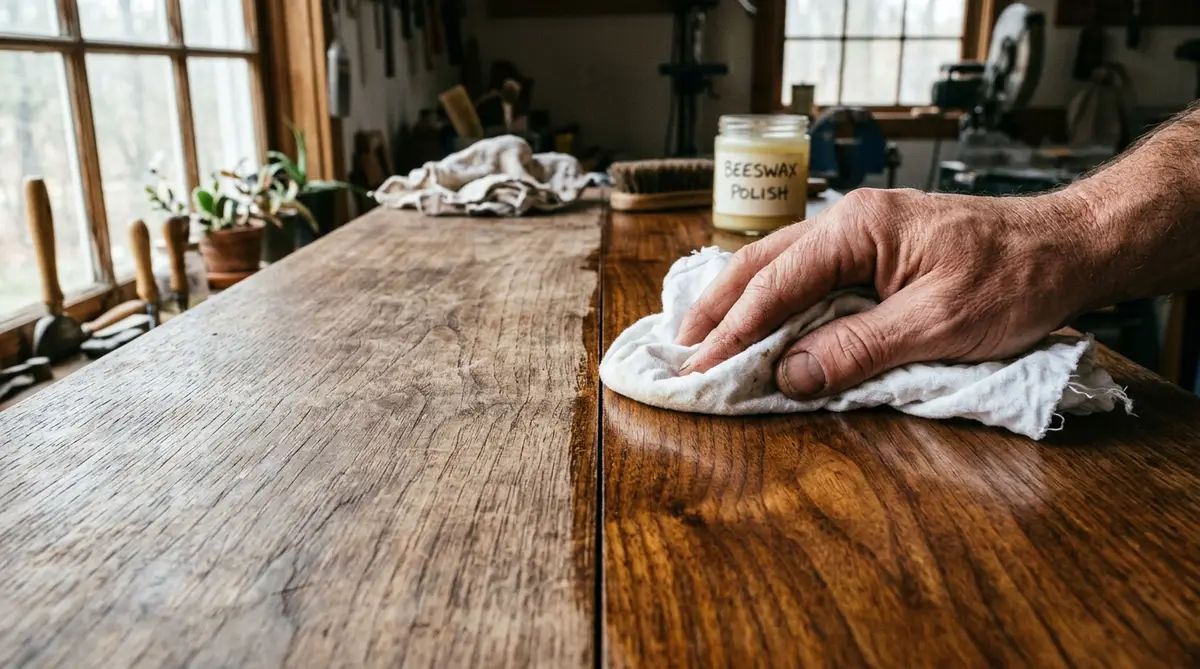
First, clean the furniture surface of all loose dust and grime. Wipe boards with a soft rag dampened with warm water and one drop of mild castile soap. Dry the timber immediately with a clean towel. Never apply wax paste over dusty surfaces or you will grind dirt into open wood pores.
Second, scoop a quarter-sized dab of wax paste onto a clean cotton rag. Rub the wax into the wood using small, overlapping circles. Work along the direction of the wood grain to push wax deep into timber pores. Let the wax rest on the wood for twenty minutes so the oils penetrate.
Third, grab a dry, clean cotton flannel cloth. Buff the surface with firm, brisk strokes along the wood grain. Friction heat hardens the thin beeswax layer into a clear satin sheen. If the wood still feels tacky under your fingers, buff it again with a fresh dry cloth.
Caring for Kitchen Butcher Blocks and Cutting Boards
Kitchen cutting boards and butcher block counter tops need regular food-safe wax care. Washing wood boards with dish soap strips natural timber oils, causing boards to dry out, warp, and split down the middle. Use Formula 1 without any essential oils to keep food prep surfaces safe and clean.
Scrub your cutting board with coarse kosher salt and half a fresh cut lemon once a month. The salt lifts food stains while the lemon juice kills surface odors. Rinse the board quickly with cool tap water and dry it with a towel. Once the timber dries completely, buff a generous coat of beeswax walnut paste into all board faces. The beeswax seals knife marks and stops raw meat juices from soaking into the wood core.
Non-Toxic DIY Wood Polish Formulas Comparison Matrix
Review this comparison table to choose the right natural polish recipe for your home furniture:
| Formula Name | Key Ingredients | Best Wood Use | Protection Level | Shelf Life |
|---|---|---|---|---|
| Formula 1: Beeswax & Walnut | Organic beeswax, walnut oil, orange oil | Antiques, dressers, raw oak, cutting boards | Medium water & scratch resistance | 12 to 18 months |
| Formula 2: Olive & Lemon | Olive oil, fresh lemon juice | Quick party dusting on sealed lacquer | Light surface sheen only | Use within 48 hours |
| Formula 3: Carnauba & Jojoba | Carnauba wax, beeswax, jojoba oil | Dining tables, coffee tables, desks | Heavy water & heat protection | 24+ months |
Frequently Asked Questions About DIY Wood Polish
Can you use olive oil to polish wood furniture?
Avoid using pure olive oil on unfinished porous wood. Olive oil does not dry or cure. Over several weeks, it oxidizes, turns rancid, smells sour, and creates a sticky film that attracts airborne dirt.
How often should you polish solid wood furniture?
Apply natural beeswax conditioning paste every three to four months. Heavy-use dining tables benefit from seasonal wax coats, while decorative bedroom dressers only need buffing twice a year to maintain deep moisture.
Does homemade beeswax polish go bad over time?
Beeswax pastes mixed with stable oils like jojoba or raw walnut oil stay fresh for over eighteen months. Store your glass jars in a cool pantry away from bright sun to prevent oil oxidation.
Can you use DIY beeswax polish on cutting boards?
Formula 1 is one hundred percent food-safe for wooden salad bowls, butcher blocks, and kitchen cutting boards. Skip the essential oils when making board butter to keep pure wood surfaces completely flavor-free.
Why does commercial furniture spray make wood sticky?
Commercial sprays contain synthetic silicone oils that never dry or evaporate. Each spray adds another sticky chemical layer that traps floating dust, lint, and pet dander into a dull, gummy grime coat.
Decorator Rules for Caring for Antique Wood Finishes
Caring for solid wood furniture requires smart daily environmental control. Maintain indoor relative humidity between forty and fifty percent throughout winter heating months. Dry indoor air shrinks wood planks, causing cracks along glued joints. Place humidifiers in living rooms with valuable antique tables to prevent timber splits.
Keep solid wood furniture at least three feet away from baseboard heaters, floor vents, and working fireplaces. Direct furnace heat bakes natural oils out of timber fibers within weeks. Dust weekly using a dry microfiber cloth, and apply your homemade beeswax paste each autumn to keep your furniture glowing with clean, timeless elegance.
Summer humidity also affects solid wood furniture in coastal and river valley regions. High humidity causes wooden table leaves and dresser drawers to swell and stick. Run an indoor dehumidifier to keep room moisture below fifty-five percent. Rub a small block of dry paraffin or natural beeswax along sticky drawer wooden slides. This simple wax step lets wooden drawers glide smoothly without jamming or tearing soft drawer runners.