Sustainable Table Decorations for Christmas Dinner: Eco-Friendly Tablescape Ideas
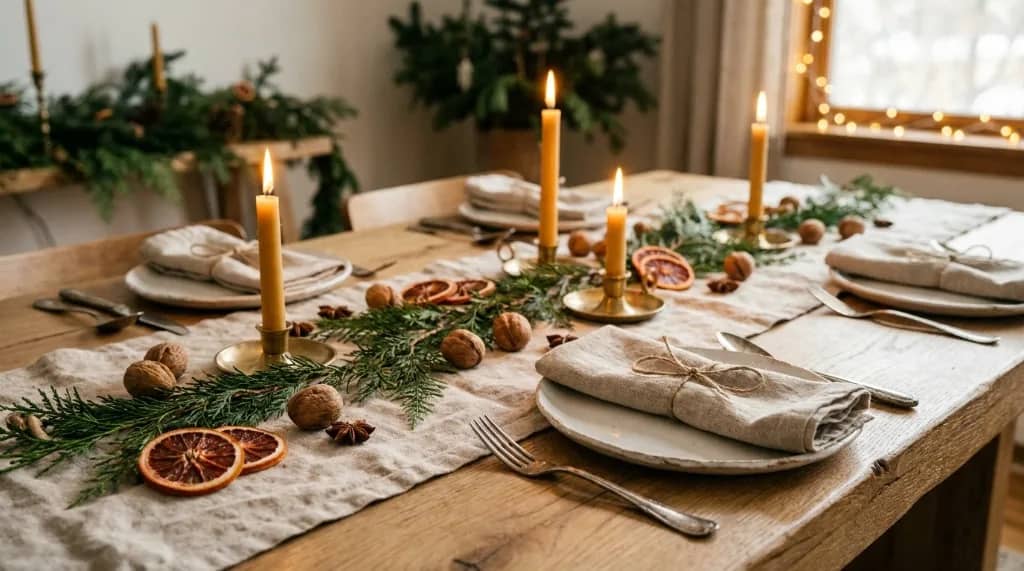
Designing sustainable table decorations for Christmas dinner centers on low-profile botanical runners, pure beeswax taper candles, unbleached flax linens, and compostable culinary accents that enrich holiday dining without plastic waste. Balancing flat-laid cedar branches with heirloom brass candleholders leaves ample space for hot serving platters while maintaining clear sightlines between seated dinner guests.
Mass-market holiday tablescapes rely on plastic-coated tablecloths, disposable glitter confetti, and chemically treated florist centerpieces that end up in landfills by Boxing Day. These synthetic accessories introduce microplastics to dining surfaces, block across-table conversations, and create stress when carving turkeys or passing gravy boats. A thoughtful, zero-waste table setting restores warmth and intimacy to holiday hosting through durable textures and organic forest elements.

The 10-Inch Sightline Rule: Low-Profile Centerpieces for Dinner Service
A functional sustainable Christmas centerpiece must remain under 10 inches (25 cm) in total height to preserve unobstructed eye contact between seated guests across the dining table. Confining greenery to a central 12-inch runner leaves 10 inches of clear perimeter space on standard dining tables for passing heavy platters and wine carafes.
Tall, sprawling floral towers look dramatic in staged photographs, but they ruin actual dinner parties. Guests spend the entire evening bobbing their heads sideways to speak around oversized branches, while hosts scramble to find space for carved meat, mashed potatoes, and vegetable side dishes. Establishing strict vertical and horizontal clearance guidelines guarantees that holiday dining remains sociable and stress-free.
Flat-Laid Cedar and Bay Laurel Runners
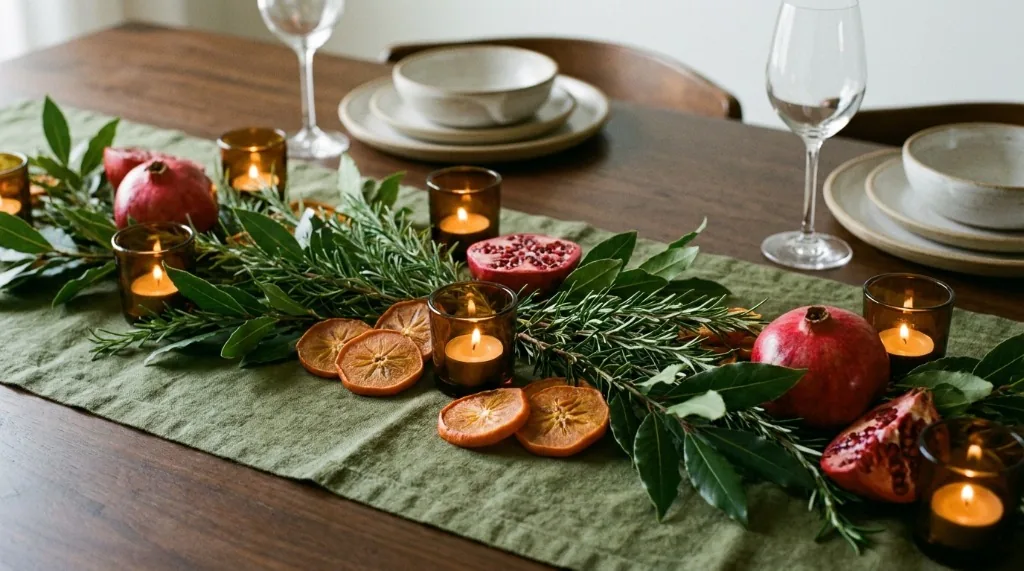
Lay flat boughs of freshly pruned Western red cedar, noble fir, and culinary bay laurel directly down the center of an unbleached linen runner. Overlap the branch bases by three inches to hide cut stems and create a dense carpet of greenery. Because the foliage rests completely flat against the table, the entire botanical base measures less than three inches in height. This arrangement provides rich woodland fragrance and deep evergreen color without stealing precious vertical airspace.
Recycled Amber Glass Votives with Soy Tea Lights
Nestle small amber glass votive holders inside the greenery clusters every eighteen inches along the table runner. Fill each votive with an unscented non-GMO soy or beeswax tea light resting in a reusable metal cup. The low-profile glass shields protect open flames from errant napkins or sleeve cuffs during lively table conversation. Amber glass diffuses candle illumination into warm golden pools across ceramic dinner plates while keeping flame heights below four inches.
Food-Safe Botanical Styling: Culinary Herbs, Citrus, and Spices
Food-safe holiday botanical styling utilizes edible culinary herbs, dried winter citrus, and whole spices that safely touch dinnerware, bread rolls, and butter without chemical contamination. Using organic rosemary, bay laurel, star anise, and dehydrated blood orange wheels eliminates toxic pesticides and preserves natural dining aromas.
Many hosts harvest ornamental greenery from commercial floral markets without realizing that commercial growers treat decorative foliage with synthetic fungicides, systemic insecticides, and chemical leaf-shine sprays. Placing chemically treated florist eucalyptus or pine needles directly onto dinner napkins or grazing boards exposes holiday food to hazardous chemical residue.
Adopt strict botanical safety standards when building festive table runners:
1. Culinary Herb Garlands: Rosemary and Bay Laurel
Prune fresh sprigs of garden rosemary (*Rosmarinus officinalis*) and true bay laurel (*Laurus nobilis*). Both woody culinary herbs withstand dry indoor room heat for twelve hours without dropping brittle needles into salad bowls. Weave fresh rosemary stems into miniature wreaths around wine glass stems or lay them across dinner napkins. The volatile aromatic oils release pleasant herbal notes that complement roasted holiday meats and winter root vegetables.
2. Dehydrated Citrus Wheels and Whole Spices
Dehydrate quarter-inch slices of navel oranges, lemons, and blood oranges on stainless steel drying racks at 175°F (80°C) for four hours. Scatter these translucent amber disks along your table runner alongside whole Ceylon cinnamon sticks, dried star anise pods, and unshelled English walnuts. These elements introduce festive color and natural holiday perfume without synthetic aerosol room sprays or plastic baubles.
3. Rejecting Toxic Garden Greenery
Never use English yew (*Taxus baccata*), holly berries (*Ilex aquifolium*), or mistletoe (*Viscum album*) on dining tables. Every part of the English yew, except the fleshy red aril, contains lethal taxine alkaloids that cause severe cardiac arrhythmias if accidentally ingested by children or household pets. Holly berries contain saponins that trigger acute gastrointestinal distress. Reserve these traditional winter plants strictly for high fireplace mantels or outdoor porch swags well away from food-contact surfaces.
4. Banning Floral Foam Microplastics
Conventional floral centerpieces rely on green phenolic resin foam blocks to hydrate cut stems. This brittle petroleum foam breaks down into non-biodegradable microscopic dust particles that float across dining tables and enter domestic waterways. Eliminate floral foam entirely by anchoring botanical branches with reusable cast iron floral frogs (*kenzan*), heavy ceramic flower bricks, or clean river stones set in shallow stoneware bowls.
Non-Toxic Candlelight: Beeswax Tapers, Brass Bobeches, and Linen Protection
Non-toxic holiday dinner lighting relies on 100% pure cappings beeswax taper candles fitted with solid brass bobeches to protect tablecloths from hot wax drips. Beeswax burns with a bright, smokeless golden flame that neutralizes household odors, while brass drip collars capture falling wax before it can damage vintage table runners.
Standard commercial taper candles contain paraffin wax, a sludge byproduct of crude oil refining. When burned over a warm dining table, paraffin candles emit toxic petrochemical vapors including toluene and benzene, leaving dark soot deposits on glassware and ceiling plaster. In contrast, pure beeswax burns cleanly with a high melting point of 144°F to 147°F (62°C to 64°C), producing a slow, steady flame with a delicate, natural honey fragrance.

Equipping Candleholders with Brass Bobeches
Pair pure beeswax tapers with heavy solid brass candleholders. Fit a removable brass bobeche (a dished metal drip-catcher ring) around the base of each candle socket. The wide brass lip catches accidental wax runs caused by passing drafts or open windows, preventing boiling wax from puddling onto expensive table linens. Brass bobeches lift off easily for post-dinner cleaning under hot tap water.
The Emergency Linen Wax Extraction Protocol
When hot wax accidentally spills onto an heirloom linen runner or tablecloth, avoid aggressive scraping that tears delicate flax fibers. Follow this professional three-step textile extraction method:
- Chill and Flake: Place two ice cubes inside a clean cotton rag and press them against the wax puddle for three minutes until the wax hardens completely. Gently snap and lift the brittle top wax layer away using the dull edge of a butter knife.
- Kraft Paper Heat Transfer: Sandwich the stained linen between two clean sheets of unbleached brown kraft paper or paper grocery bags. Set an electric iron to the medium linen setting without steam. Press the heated iron over the paper for ten seconds. The porous kraft paper absorbs the liquified wax directly out of the fabric weave. Move to a clean section of paper and repeat until no oily residue transfers.
- Boiling Water Flush: For stubborn oil halos on white or unbleached linen, stretch the fabric taut over a heat-safe ceramic bowl. Pour boiling water directly through the weave from a height of eighteen inches. The thermal shock flushes residual beeswax fats straight through the cloth into the bowl below. Launder the linen with plant-based soap and line dry.
Plastic-Free Place Settings: Stoneware, Linen Napkins, and Deckle-Edge Cards
Plastic-free holiday place settings combine artisanal stoneware plates, braided natural jute charger mats, stonewashed European linen napkins, and compostable paper name tags. Layering textured organic fibers and durable ceramics replaces disposable paper tableware while creating an inviting tactile dining experience that endures through decades of holiday celebrations.
Single-use gold foil plates and polyester napkins introduce unnecessary waste to family gatherings. High-grade stoneware, natural plant fibers, and heirloom cutlery feel substantial in the hand and communicate genuine hospitality to your dinner guests.
Layering Natural Place Settings
Assemble individual dinner covers using tactile, zero-waste components:
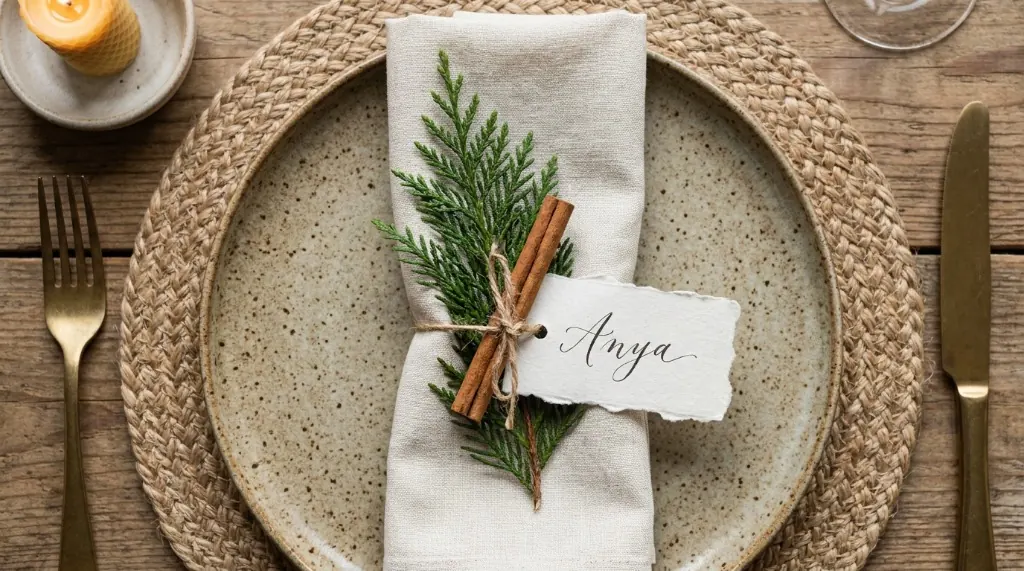
- Braided Jute Chargers: Position hand-braided circular jute or sea grass placemats under each plate. Jute protects wooden table surfaces from hot dinnerware while introducing rich natural texture and golden undertones.
- Handcrafted Ceramic Stoneware: Stack off-white speckled stoneware dinner plates and salad bowls. The subtle organic variations in hand-glazed ceramics add artisan depth that mass-produced porcelain cannot replicate.
- Stonewashed Flax Linen Napkins: Fold heavyweight oatmeal or moss-green European flax napkins into neat rectangles. Linen absorbs moisture efficiently, softens with every wash cycle, and lasts twenty years without fraying.
- Botanical Name Tag Accents: Cut place cards from handmade 100% cotton rag paper with natural deckle edges, or select plantable seed paper embedded with wildflower seeds. Write guest names using iron gall ink or black graphite. Tie the paper tag around a crisp cedar twig and a whole Ceylon cinnamon stick with a twelve-inch length of unbleached jute twine.
Removing Holiday Stains from Table Linens
Address holiday dinner spills promptly to keep flax linens spotless. Treat red wine, dark gravy, and cranberry sauce spills by soaking napkins in a bucket of cold water mixed with two tablespoons of sodium percarbonate (oxygen bleach powder) for four hours. Sodium percarbonate breaks down organic tannin stains through active oxygen release without weakening natural flax cellulose fibers. Never apply chlorine bleach, which yellows natural linen and breaks down fiber strength.
Zero-Waste Holiday Crackers: Reusable Fabric Bonbons and Table Favors
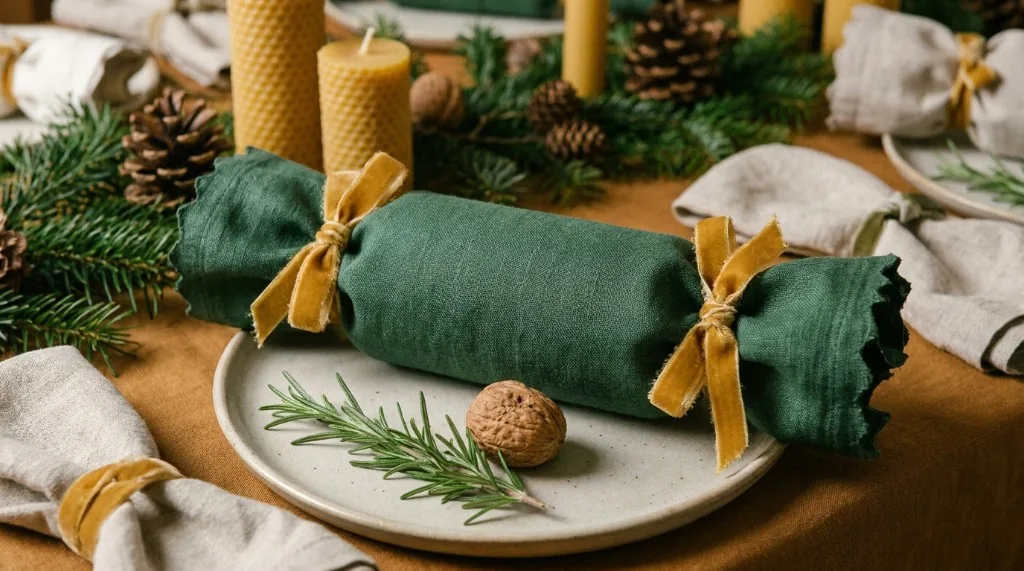
Zero-waste holiday crackers, known as reusable fabric bonbons, replace single-use paper party poppers with folded linen napkins tied with velvet ribbon. Filling reusable fabric crackers with fair-trade chocolate truffles, organic tea sachets, or handwritten conversation prompts eliminates pounds of plastic landfill trinkets and torn metallic wrapping paper.
Commercial Christmas crackers produce immense holiday refuse. Millions of cardboard tubes wrapped in non-recyclable metallic foil get pulled open, discarded in trash bins within sixty seconds, and leave behind cheap plastic whistles, magnifying glasses, and paper crowns. Reusable cloth bonbons preserve the tactile joy of festive table favors while establishing a sustainable family tradition.
Assembling Reusable Linen Bonbons
Assemble handmade fabric crackers in five minutes using basic household supplies:
- Save empty unbleached cardboard toilet paper rolls or cut paper towel rolls into four-inch segments.
- Cut scraps of forest green, terracotta, or natural linen fabric into ten-inch by twelve-inch rectangles using pinking shears to create decorative scalloped edges.
- Center the cardboard core over the fabric and roll the linen tightly around the cylinder.
- Tie one end securely with an eight-inch strip of cotton velvet ribbon or unbleached jute cord.
- Slide your selected holiday favors into the open cardboard chamber.
- Gather the opposite end of the fabric and secure it with a matching ribbon tie.
Meaningful Plastic-Free Fillers
Surprise your dinner guests with thoughtful, consumable table gifts instead of disposable plastic novelties:
- Single-origin dark chocolate truffles wrapped in compostable unbleached parchment.
- Hand-blended organic herbal tea sachets featuring peppermint, chamomile, and winter clove.
- Small wooden spinning tops carved from sustainably harvested beechwood.
- Wildflower seed packets packaged in brown kraft envelopes for spring garden planting.
- Handwritten dinner conversation starters, customized holiday trivia, or personal messages of gratitude.
When dinner concludes, collect the fabric rectangles and velvet ribbons, press them with an iron, and store them in a clean storage box for next December.
Modular Centerpiece Management: The Wooden Dough Bowl Solution
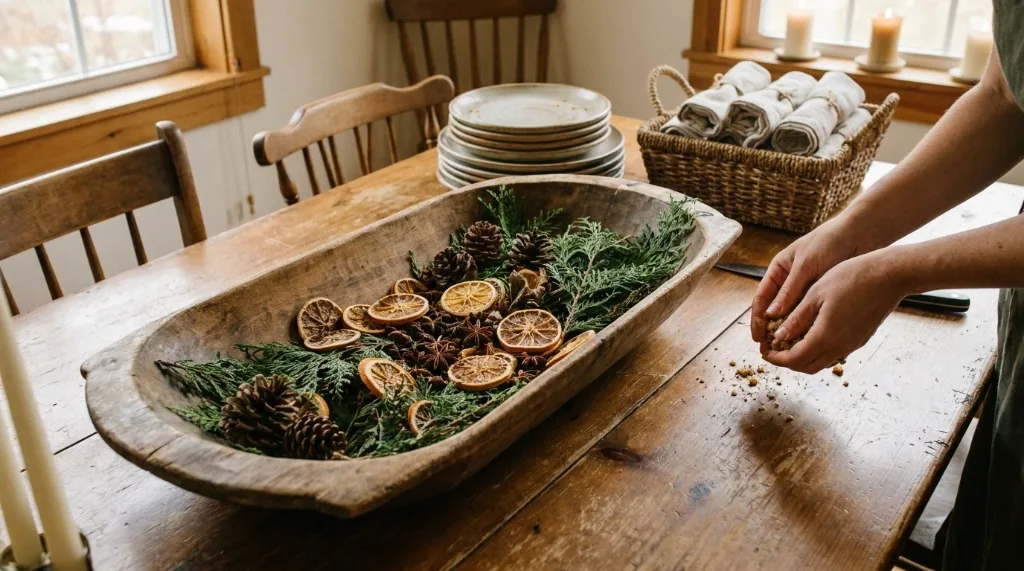
Modular centerpiece management uses shallow hand-carved wooden dough bowls or metal trays to consolidate dining table decorations into a single movable vessel. When family-style serving platters arrive, the host lifts the entire arrangement to a sideboard in five seconds, instantly freeing essential tabletop space for dinner service.
Fixed table runners decorated with hundreds of loose pine needles and scattered glass baubles become a logistical hazard when hot food leaves the oven. When guests attempt to pass heavy enameled cast iron roasting pans or bubbling potato gratins, loose branches get dragged into gravy bowls, and candles get knocked askew. A modular container system solves table crowding without sacrificing decorative impact.
Styling a Movable Centerpiece Vessel
Select a hand-carved Paulownia wood dough bowl, an antique French bread trough, or an unlacquered brass rimmed tray measuring between twenty and thirty inches in length. Line the base of the vessel with a small unbleached cotton tea towel to catch loose wood dust. Layer the bowl with fragrant cedar cuttings, natural Scotch pine cones, dried orange wheels, star anise pods, and two unscented pillar candles set inside heavy glass hurricane cylinders.
The low wood walls keep every decorative botanical element neatly contained. When guests sit down and dinner service begins, simply lift the dough bowl by its carved handles and place it onto an adjoining kitchen island, buffet credenza, or nearby fireplace hearth. The dining table instantly transforms from an elaborate holiday showcase into an uncluttered, functional feast station.
Composting Post-Dinner Botanicals
When the holiday gathering winds down, zero-waste cleanup requires no plastic garbage bags. Extinguish candle wicks, remove any brass candleholders or glassware, and gather the dried botanicals. Toss dried citrus wheels, star anise, cinnamon sticks, and pinecones straight into your backyard compost bin or indoor kindling basket. Pinecones and cedar sprigs serve as excellent natural fire starters for living room woodstoves, returning organic nutrients cleanly to the soil and hearth.
Sustainable Christmas Table Decor Comparison Matrix
Compare structural lifespans, food contact safety ratings, reusability horizons, and end-of-life disposal methods across five foundational sustainable table decor components:
| Table Element | Primary Raw Material | Food Contact Safe? | Expected Lifespan | End-of-Life Disposal |
|---|---|---|---|---|
| Flax Linen Runner & Napkins | 100% European flax | Yes (Clean laundered) | 15 to 25 Years | 100% Backyard Compostable |
| Culinary Herb Garland | Rosemary, bay laurel, cedar | Yes (Culinary herbs) | 1 Dinner Event | 100% Food Scrap Compost |
| Solid Brass Candleholders | Cast unlacquered brass | Yes (Non-toxic metal) | 50+ Years (Heirloom) | 100% Scrap Metal Recyclable |
| Beeswax Taper Candles | 100% pure cappings wax | Yes (Non-toxic vapor) | 10 to 12 Hours Burn | 100% Biodegradable Wax |
| Reusable Fabric Bonbons | Linen fabric, velvet ribbon | Yes (Clean textile) | 20+ Years | 100% Biodegradable Linen |
To coordinate your dining room styling with broader living room themes, explore our master guide on Sustainable Christmas Decorations: 25 Low-Waste Ideas.
If you are trimming a natural evergreen centerpiece for your living space, consult our recommendations for Sustainable Christmas Tree Decorations Without Plastic.
To handcraft botanical ornaments and salt dough place medallions at home, read our tutorial on How to Make Sustainable Christmas Decorations.
For off-season packing techniques that keep your heirloom linens and brassware pristine, reference our guide to Sustainable Holiday Decorations That Store and Reuse Well.
Before finalizing your tablescape layout, balance your wood, textile, and metal proportions using our free interactive Texture Mixing Calculator.
Frequently Asked Questions About Sustainable Christmas Table Decorations
How do you keep a Christmas centerpiece from blocking conversation?
You keep a Christmas centerpiece from blocking conversation by strictly capping total decoration height at ten inches (25 cm) above the tabletop. Lay botanical garlands flat against an unbleached linen runner and place candles inside low-profile glass votives. This clear vertical zone ensures guests maintain unobstructed eye contact across the dining table throughout dinner.
How do you get candle wax out of a linen tablecloth without ruining it?
You get candle wax out of a linen tablecloth by chilling the wax with an ice cube to flake away top deposits, then sandwiching the fabric between brown kraft paper and pressing it with a warm electric iron. The porous paper draws the melted wax out of the linen weave. Pour boiling water through the fabric to eliminate residual wax fats.
What greenery is safe to place directly on dinner plates?
Culinary herbs including garden rosemary, true bay laurel, and fresh thyme are completely safe to place directly on dinner plates and cloth napkins. Never place English yew, holly berries, mistletoe, or chemically treated florist greenery on food-contact surfaces because these plants contain dangerous toxins and chemical preservatives that cause acute illness if ingested.
What can you use instead of single-use Christmas crackers?
You can use reusable fabric bonbons instead of single-use Christmas crackers. Roll unbleached cloth napkins around cardboard cylinders and tie both ends with velvet or jute ribbon. Fill the inner chamber with artisanal dark chocolate truffles, organic herbal tea sachets, wildflower seeds, or handwritten dinner conversation prompts to eliminate disposable metallic paper and plastic waste.