Sustainable Christmas Tree Decorations Without Plastic: Complete Guide

Styling sustainable Christmas tree decorations without plastic means replacing petroleum baubles, acrylic glitter, and synthetic PVC tinsel with renewable, biodegradable materials. Solid turned timber, boiled wool felt, dehydrated citrus, unbleached paper, and hand-woven straw deliver authentic texture and high-end holiday warmth while keeping microplastics and toxic off-gassing out of your living room.
Traditional department store holiday sections flood shelves with cheap polystyrene and PVC ornaments coated in microplastic glitter. These decorations snap easily, shed synthetic particles across living room rugs, and persist in landfills for centuries. Designing an organic holiday tree creates a warm visual centerpiece using time-tested craft techniques and compostable botanical accents. Practical, shatterproof wooden christmas tree ornaments, fragrant kitchen garland recipes, natural straw crown toppers, and breathable storage routines protect your family and eliminate seasonal waste.

Why Ditching Plastic Tree Decor Matters for Your Home and Health
Ditching plastic Christmas decorations eliminates synthetic off-gassing, prevents dangerous pet ingestion hazards, and stops microplastic pollution inside indoor living environments. Most commercial plastic ornaments contain polyvinyl chloride (PVC), phthalates, and halogenated flame retardants that release volatile compounds into warmed indoor winter air.
Beyond indoor air quality, pet safety remains an urgent household concern. Felines and dogs frequently swat low-hanging tree branches during the holiday season. Traditional plastic baubles shatter into sharp jagged shards that lacerate paws, while shiny PVC tinsel poses a lethal intestinal blockage hazard requiring emergency surgery. Opting for natural materials protects household pets while creating an organic sensory aesthetic that mass-market plastic cannot replicate.
Every purchase of cheap plastic holiday items also fuels fossil fuel extraction and single-use packaging waste. By curating durable natural pieces or foraging seasonal trimmings, you invest in heirloom objects that gain character over decades instead of ending up in trash bins every January.
Shatterproof Natural Ornaments: Safe Eco Friendly Tree Ornaments
Shatterproof natural ornaments utilize dense boiled wool felt, lathe-turned solid hardwoods, folded heavyweight kraft paper, and pressed salt dough to replace fragile glass and plastic globes. These eco friendly tree ornaments resist accidental pet swats, survive floor drops without cracking, and introduce tactile richness across pine branches.
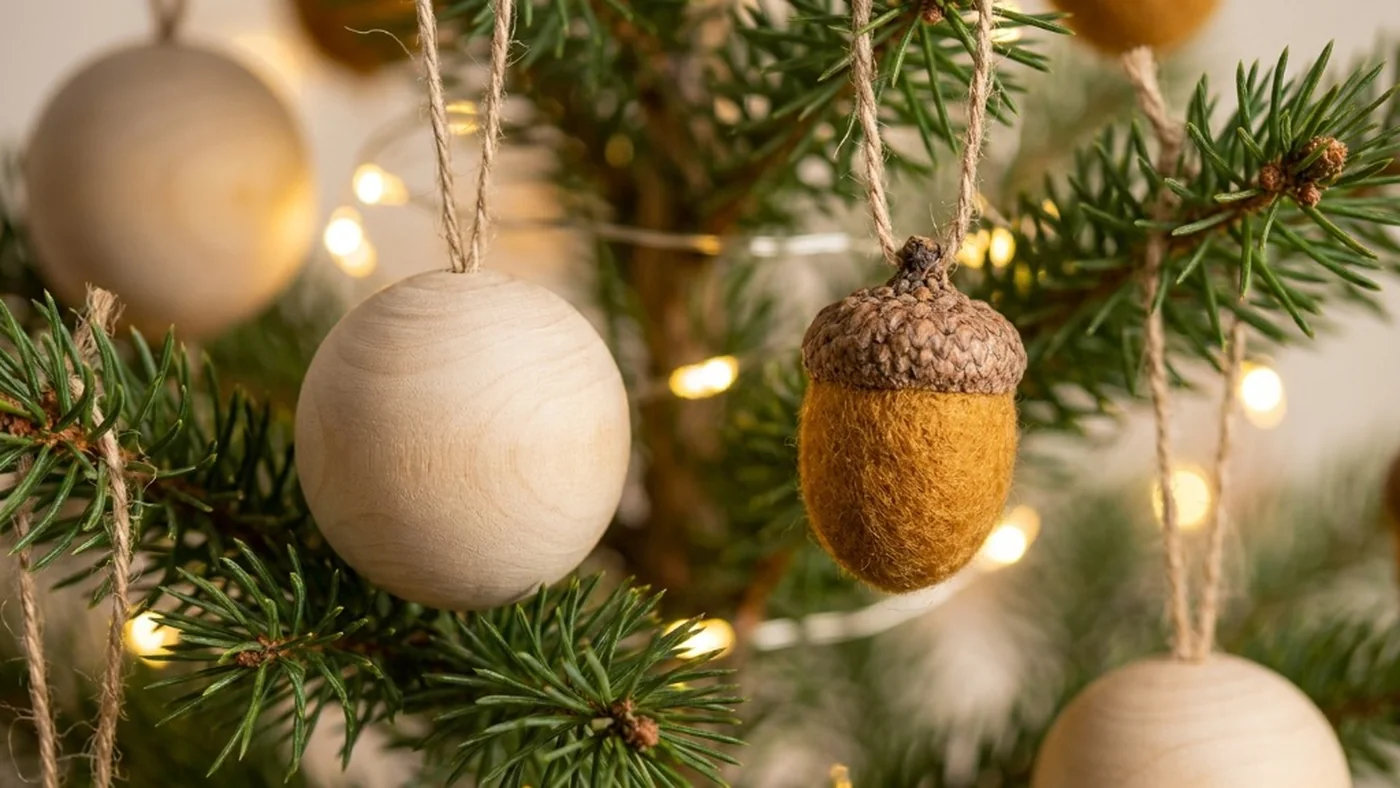
1. Lathe-Turned Solid Birch and Beech Baubles
Woodworkers craft turned wooden christmas tree ornaments from renewable birch, beech, or maple offcuts. These wooden spheres feature smooth sanded surfaces showing subtle organic grain lines. You can hang them raw for a minimalist Scandinavian aesthetic or rub them with cold-pressed walnut oil for a warm honey finish. They never shatter when knocked onto hardwood floors and last across generations.2. Boiled Wool Felt Spheres and Acorns
Artisans roll 100% natural sheep wool using warm water and olive oil soap to create firm, dense felt globes. Wool naturally absorbs warm ambient room light and avoids synthetic reflections. Real foraged acorn caps glued atop small wool felt drops using natural plant starch adhesive provide charming woodland depth without petroleum hot-melt glues.3. Folded Heavyweight Kraft and Book-Page Stars
Origami geometric pendants folded from heavy unbleached kraft paper or vintage discarded book pages add architectural structure to middle boughs. German Moravian stars folded from raw parchment catch ambient branch lighting gently. When stored flat in dry envelopes, paper pendants endure for years without denting.4. Baked Mineral Clay and Botanical Salt Dough Medallions
Mix two cups of unbleached all-purpose flour, one cup of fine sea salt, and one cup of water into a pliable dough. Roll the mixture thin, press freshly clipped rosemary sprigs or cedar leaves into the surface to leave crisp botanical impressions, and cut circles using a biscuit cutter. Bake at 200°F (93°C) for three hours until solid and bone-dry. These matte stone-like discs biodegrade entirely at their eventual end of life.5. Punched Unlacquered Brass and Sheet Tin Silhouettes
Thin sheets of unlacquered sheet brass or reclaimed tin offer golden reflective highlights across deep green needles without microplastic metallic paint. Hammer classic star or woodland silhouettes using metal snips and center punches. Raw brass develops a soft natural patina over time that deepens with each holiday season.Plastic-Free Tree Garlands: Organic Strands for a Plastic Free Christmas Tree
Plastic-free garlands replace synthetic shiny tinsel and metallized PVC ropes with long continuous strands of dehydrated citrus, wood beads, whole spices, and raw wool roving. These tactile garlands wrap branches gracefully, scent the room with natural botanicals, and complete an authentic plastic free christmas tree aesthetic.
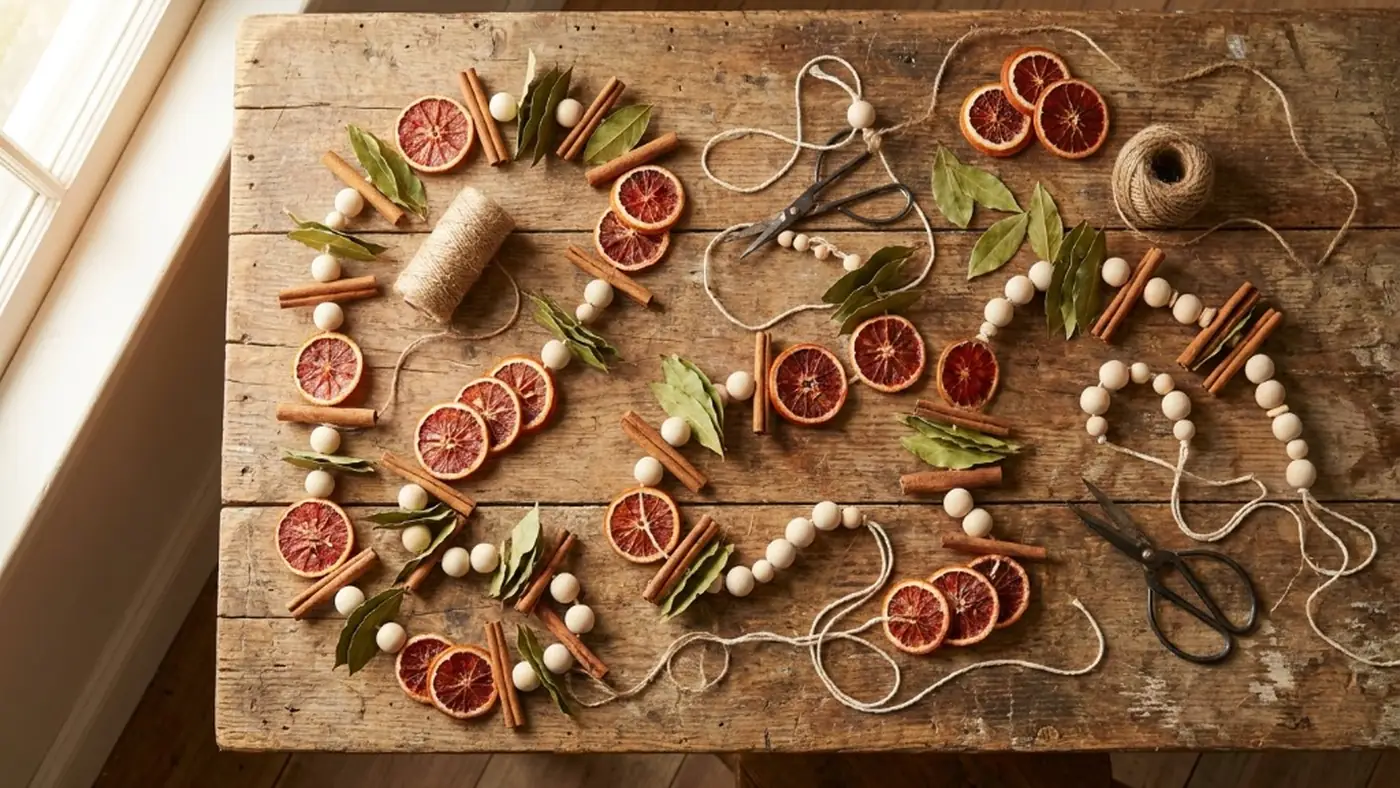
1. Dehydrated Blood Orange and Whole Bay Leaf Swags
Slice blood oranges and navel oranges uniformly into quarter-inch discs. Pat the slices with clean linen towels to pull surface moisture, then arrange them on parchment-lined baking sheets. Bake at 175°F (80°C) for four hours, turning once until leathery and translucent. Thread the slices onto unbleached cotton twine, alternating with dried aromatic bay leaves. Ambient holiday lights shine through the jewel-toned fruit centers like stained glass.2. Ceylon Cinnamon Stick and Raw Maple Bead Ropes
Alternate three-inch sticks of genuine Ceylon cinnamon with raw three-quarter-inch maple wooden beads on thick jute string. Cinnamon gently releases natural spicy warmth as the tree lights heat surrounding air. Raw wooden beads provide rhythmic visual breaks that anchor busy branches.3. Popcorn and Whole Fresh Cranberry Strands
Air-pop plain corn kernels without oil, butter, or salt. Let the popped corn sit uncovered overnight so the kernels turn slightly stale and pliable. Thread sturdy waxed linen cord through firm fresh cranberries and stale popcorn clusters using a blunt yarn needle. This classic Victorian technique costs very little, engages children in holiday crafting, and feeds garden birds when hung outdoors after Christmas.4. Unspun Cream Wool Roving Ribbons
Drape thick ropes of unspun, carded sheep wool roving across branch tips to mimic freshly fallen alpine snow. Pure wool holds its cloud-like shape without synthetic adhesives or flame-retardant polyester batting. The soft cream fibers soften harsh evergreen silhouettes and nestle warm fairy lights safely.5. Twisted Natural Raffia and Raw Linen Bunting
Twist strands of unbleached natural raffia palm fiber into rustic ropes or tie three-inch strips of washed linen scraps into petite knots along cotton baker twine. The frayed matte edges introduce textural variety that contrasts beautifully against rigid spruce needles.Natural Tree Toppers That Will Not Bend the Crown
Natural tree toppers utilize lightweight materials such as woven wheat straw, willow wicker, carved linden wood, and folded brass foil to avoid bending or breaking the fragile top leader branch. Traditional heavy cast-resin angels and battery-heavy plastic stars weigh down tree crowns, causing awkward tilting and branch damage.

1. Scandinavian Hand-Woven Wheat Straw Stars
Scandi straw stars represent an eight-hundred-year-old Nordic holiday tradition. Artisans split, soak, and weave dried golden wheat straw with natural cotton thread into complex geometric snowflakes. Because wheat straw weighs mere ounces, it sits tall on the thinnest evergreen leader without needing wires or plastic stabilizers.2. Bent Willow and Woven Rattan Geometric Stars
Local basket-makers form lightweight stars from slender steamed willow wands or natural rattan peel. These open-weave designs allow tree lights to shine through the center, framing the tree apex with earthy warmth. Secure the star to the main trunk using two wraps of natural jute garden twine.3. Hand-Carved Basswood and Pine Finials
Folk carvers whittle slender architectural finials from dried basswood or salvaged pine offcuts. These smooth wooden spikes slot cleanly over vertical leader shoots. They create an elegant Old-World silhouette that never cracks, chips, or fades like molded plastic ornaments.4. Folded Sheet Brass Starbursts
Cut thin, untreated brass sheets with scissors into twelve pointed rays, then score and fold along centerlines to create three-dimensional facet reflections. The lightweight metal catches ceiling lights and firelight brilliantly without requiring battery packs, synthetic lacquer, or artificial glitter.Edible and Botanical Tree Trimmings: Zero-Waste Seasonal Accents
Edible and botanical tree trimmings turn seasonal fruits, herbs, baked goods, and foraged pinecones into fragrant ornaments that disappear into composting systems or holiday treats once festivities conclude. They eliminate post-holiday clutter and connect your home directly to natural winter cycles.

1. Spiced Gingerbread Stars Hung with Raw Cotton Ribbons
Bake traditional gingerbread cookies using dark molasses, ground ginger, cloves, and nutmeg. Punch a quarter-inch hole near the top edge before baking. Allow the cookies to cool completely on wire racks, then thread them with frayed unbleached cotton ribbons. The warm spices perfume the room naturally throughout December.2. Pure Beeswax-Dipped Sugar Pinecones
Forage fallen sugar pine or spruce cones from local woodland paths. Bake the cones on foil sheets at 200°F (93°C) for thirty minutes to melt residual sap and eliminate tiny dormant bark insects. Melt pure local beeswax in a double boiler, then dip the bottom tips of each cone into the warm golden wax. The beeswax hardens into a subtle frosty trim with a sweet honey scent.3. Whole Dried Pomegranate Ornaments
Pierce small whole pomegranates with a skewer and dry them slowly in a dehydrator or low 150°F oven for thirty-six hours until light, hollow, and leathery. Their rich burgundy skins maintain deep jewel-box color across evergreen branches, adding authentic festive color without chemical red dyes.4. Fresh Rosemary and Cedar Mini Wreaths
Bend flexible fresh rosemary sprigs or green cedar tips into four-inch circles, binding the ends with thin florist wire or green cotton thread. Hang these miniature living wreaths from branch tips. They release crisp woodsy oils whenever brushed and dry in place gracefully.5. Bundled Whole Vanilla Beans and Star Anise Clusters
Bind three whole vanilla beans together with unbleached linen thread, topping the knot with a single whole star anise pod using natural gum arabic glue. These petite spice bundles look architectural and fill the room with rich festive aromas without artificial aerosol room sprays.Tree Trimming Material Comparison Matrix
The table below outlines common tree ornament materials, evaluating their ecological footprint, safety profiles, durability, and practical disposal options.
| Material | Plastic Risk | Pet & Child Safety | Durability | End-of-Life Disposal |
|---|---|---|---|---|
| Solid Turnings (Birch/Beech) | Zero plastic; renewable timber | High; shatterproof when dropped | Generational (50+ years) | 100% Biodegradable / Firewood |
| Boiled Wool Felt | Zero; 100% natural animal fiber | High; soft, bouncy, chew-safe | Decades with moth care | 100% Backyard Compostable |
| Dehydrated Citrus & Botanicals | Zero; single-season edible fruit | Moderate; non-toxic if sampled | Single holiday season | 100% Food Scrap Compost |
| Woven Wheat Straw | Zero; agricultural byproduct | High; resilient and ultra-light | 10 to 15 years in dry storage | 100% Garden Compostable |
| Unlacquered Sheet Brass | Zero; infinitely recyclable metal | Moderate; avoid sharp edges | Indefinite (Centuries) | Recyclable Scrap Metal |
| Commercial PVC / Polystyrene | Severe; releases microplastics | Dangerous; sharp shards and tinsel | Poor; snaps easily | Permanent Landfill Waste |
To explore broader whole-home styling ideas that complement your sustainable Christmas tree decorations, review our guide to Sustainable Christmas Decorations: 25 Low-Waste Ideas. You can also pair these organic textures with our foundational Natural Home Decor Ideas to maintain an earth-toned aesthetic throughout your living room. If you want to refine the exact balance of raw timber, woven cane, and linen accents in your holiday space, test your room proportions with our free Texture Mixing Calculator.
4 Mistakes People Make When Transitioning to a Plastic-Free Tree
Switching to a plastic-free tree requires patience and thoughtful curation rather than immediate retail spending. Avoid these four common missteps to maintain budget control and design integrity:
1. Purging All Existing Plastic Decorations in a Single Season
Throwing away usable plastic ornaments simply to display an eco-friendly aesthetic creates needless immediate landfill waste. Keep and display your existing family ornaments until they wear out, or gift them to local community centers. Focus on adding zero new plastic going forward.2. Falling for Greenwashed Resin and Poly-Clay Lookalikes
Many budget retail stores market molded polyester resin and acrylic fiber ornaments as “woodland natural” collections. Always check product labels. If an ornament feels cool and slick like plastic, lists synthetic resin as its base, or sheds glitter flakes onto your fingers, skip it. True natural items feature real timber grain, woven plant fibers, or natural wool textures.3. Hanging Fragile Heirlooms on Low Cat-Reachable Branches
When eliminating shatterproof plastic baubles, people often turn to delicate antique glass. Hanging fragile glass or ceramic ornaments within two feet of the floor invites accidents from playful pets and young children. Place shatterproof boiled wool felt and turned wood items on lower branches, reserving delicate paper or glass accents for the top third of the tree.4. Storing Wool and Botanical Ornaments in Damp Basements
Natural decorations require proper post-holiday care. Storing wool felt ornaments in unsealed cardboard boxes in damp basements invites moth larvae, while packed citrus slices will mildew if stored with trapped humidity. Always pack natural items into breathable cotton storage bags with natural cedar blocks.Plastic-Free Tree Skirts, Hardware, and Storage Strategies
Completing a plastic-free tree setup extends to the tree collar, hanging fasteners, and off-season storage routines. Eliminating synthetic fasteners ensures your entire holiday corner remains eco-conscious.

Plastic-Free Tree Collars and Base Coverings
Ditch synthetic polyester tree skirts that shed microfibers during vacuuming. Instead, choose a hand-woven wicker tree ring crafted from natural rattan peel or hazel hurdles. Alternatively, wrap the tree stand in a heavy unbleached wool knit blanket or a piece of washed antique European grain sack linen. These natural textiles anchor the tree visually and soften hardwood flooring.Natural Hanging Hardware
Discard flimsy green plastic wire hooks. Fasten your ornaments using one of these three sustainable fasteners:- Raw Jute Garden Twine: Cut four-inch loops of thin two-ply jute twine. The earthy brown fiber blends into evergreen needles naturally.
- Waxed Organic Cotton Cord: Sturdy cotton cord holds tight knots and never frays during tree take-down.
- Thin Unpolished Copper Wire: Twist flexible copper wire into small S-hooks using needle-nose pliers. Copper holds heavy wooden baubles firmly and ages to a soft verdigris finish.
Off-Season Storage Protocols
Keep natural ornaments pristine year after year by following these clean preservation habits:- Compost Seasonal Botanicals: Toss dried orange garlands, popcorn strings, and fresh herb wreaths into your garden compost bin in January. Crafting fresh garlands each December forms an enjoyable annual ritual.
- Store Wool with Red Cedar: Place boiled wool felt baubles inside breathable unbleached muslin bags alongside solid red cedar blocks to repel fabric moths naturally.
- Pack Wooden Ornaments in Kraft Tissue: Wrap turned wood baubles in unbleached kraft paper sheets to buffer against seasonal humidity shifts during attic storage.