Sustainable Christmas Decorations: 25 Low-Waste Ideas That Look High-End

Sustainable Christmas decorations use compostable botanical elements, recycled paper fibers, pure beeswax, and heirloom natural materials like solid wood, wool, and cast brass. These low-waste alternatives eliminate disposable plastic baubles and synthetic microplastic glitter. They establish an elegant holiday interior that returns cleanly to the earth or endures for decades of annual reuse.
Every December, retail stores stock miles of cheap holiday ornaments made from fragile polystyrene, polyvinyl chloride greenery, and petroleum glitters. These synthetic decorations look gaudy under warm lighting, crack when handled by children, and shed toxic microplastics across rugs and upholstery. Worst of all, millions of pounds of broken holiday trinkets end up in municipal landfills by the second week of January.
You can break this cycle of festive waste while creating a warmer, more sophisticated holiday interior. Professional interior decorators often rely on historical styling principles that celebrate organic materials, tactile textures, and natural scents. By selecting real evergreen boughs, dehydrated pantry fruits, untreated hardwoods, and hand-dipped beeswax candles, you fill your home with rich forest aromas and authentic seasonal charm.
Natural holiday decorating relies on raw physical science rather than store-bought shortcuts. Dehydrating citrus at precise low heat locks in rich translucent color without mold, baking fallen pinecones melts raw sap into a protective bug-free glaze, and swapping petroleum wax for local beeswax clears winter indoor air while eliminating non-recyclable landfill waste.
What Makes Holiday Decor Truly Sustainable?
Holiday decor achieves genuine sustainability when pieces either biodegrade naturally in home compost or provide structural durability for decades of annual reuse. Prioritizing untreated organic timber, fresh botanical trimmings, pure beeswax, and unbleached natural textiles avoids petroleum polyvinyl chloride plastics, toxic synthetic glitters, and single-use packaging that overwhelm municipal landfills each January.
To evaluate whether a holiday ornament or styling piece meets authentic ecological standards, apply three foundational criteria before bringing it into your living space:
- Biological degradability guarantees that botanical trimmings, unbleached papers, and dried fruits break down cleanly in home compost bins within twelve weeks after the holidays. They add organic nitrogen and carbon back to garden soil without leaving persistent synthetic chemicals.
- Heirloom structural integrity ensures that durable accents like turned hardwood spheres, solid cast brass chimes, and needle-felted wool figurines survive fifty seasons of handling. True heirloom pieces gain character over decades, completely eliminating the impulse to purchase seasonal plastic replacements.
- Indoor air purity requires zero petroleum waxes, zero synthetic fragrance oils, and zero off-gassing adhesives. Burning pure beeswax tapers actually neutralizes airborne dust while filling the room with a mild natural honey scent, protecting your family and pets from respiratory irritants.
For a broader foundational approach to chemical-free spaces throughout your entire home, explore our complete guide to natural home decor ideas featuring raw linens and non-toxic wall finishes.
Foraged and Fresh Botanical Decor: 5 Living Accents
Foraged botanical decorations provide organic holiday elegance without plastic waste by using natural evergreen clippings, wild pinecones, and garden branches. Sourcing trimmings from your backyard or local tree lot brings authentic woodsy scent indoors, while proper heat treatment kills lingering insects and preserves plant cell moisture throughout the entire holiday season.
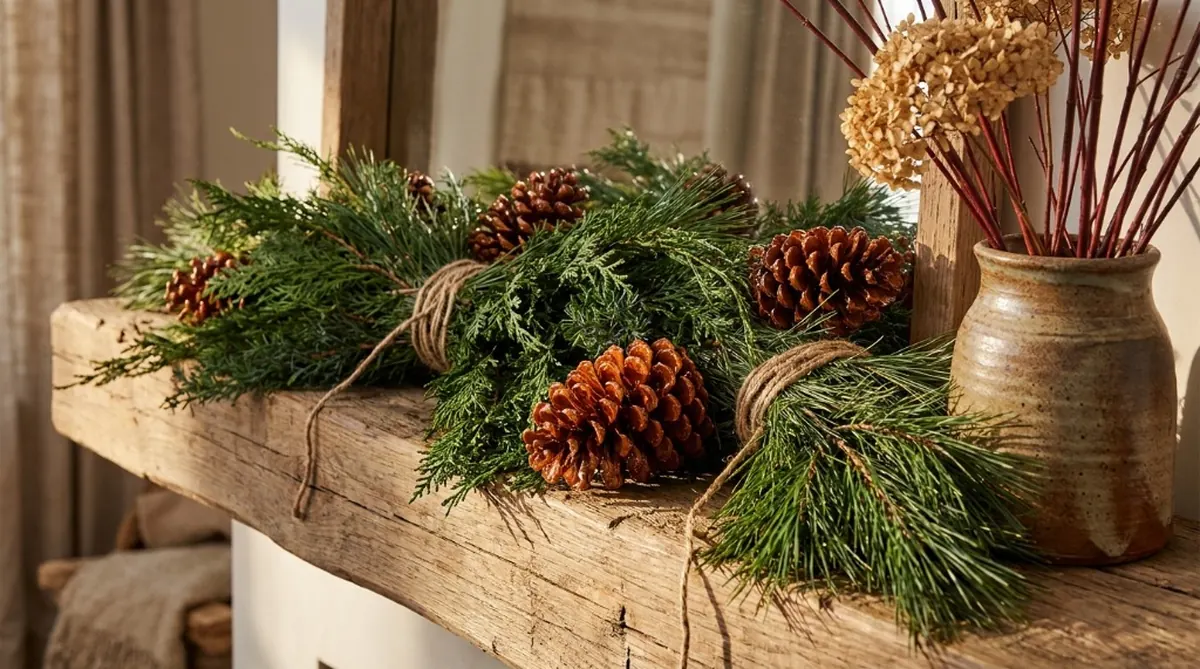
Fresh garden clippings and windfallen winter wood deliver architectural scale without plastic packaging:
1. Oven-Baked Foraged Pinecones
Pinecones gathered from parks or backyards often harbor tiny spiders, beetle larvae, and sticky raw pitch. Place foraged pinecones on a parchment-lined baking sheet in an oven preheated to 200 degrees Fahrenheit for 35 to 45 minutes. The gentle heat melts and sets the sticky sap into a glossy glaze while driving out moisture and killing latent insects. Once cool, arrange the sanitized cones in wide wooden bowls or wire them onto wreaths.
2. Fresh Cedar and Juniper Mantel Swags
Skip fake plastic pine garlands that shed toxic green vinyl needles. Prune fresh cedar, juniper, and white pine boughs from your garden or ask for free trimmings at a local Christmas tree lot. Soak the cut stems in cold water for two hours, then bind them together with natural jute twine. Mist the greenery lightly every three days to keep the foliage supple and aromatic across three full weeks.
3. Glossy Magnolia Leaf Table Runners
Magnolia grandiflora leaves feature a leathery dark green upper face and a rich cinnamon-brown velvet underside. Overlap cut magnolia sprigs down the center of a dining table to build an architectural, sculptural runner. As the leaves dry over two weeks, their undulating forms lock into a sophisticated matte leather finish that composts completely after New Year celebrations.
4. Bare Birch and Dogwood Branch Sculptures
Stark winter branches offer striking height and clean Scandinavian geometry in tall stoneware crocks. Gather fallen birch twigs or red-osier dogwood branches after winter storms. Place them in heavy ceramic urns near entryways, weaving warm micro-LED lights through the bare twigs for dramatic evening shadows.
5. Dried Hydrangea and Seed Pod Wreaths
Leave faded autumn hydrangea blossoms and allium seed heads on their stems until late November, then snip them for winter wreaths. Fasten the dried flower heads onto a simple twisted grapevine base using unlacquered copper wire. The champagne and parchment tones create a peaceful neutral aesthetic that bridges the gap between Christmas and early spring.
Dehydrated Pantry Crafts: 5 Aromatic Biodegradable Projects
Kitchen pantry decorations convert whole citrus fruits, whole spices, and basic baking staples into fragrant, completely biodegradable tree ornaments and window garlands. Low-temperature oven dehydration removes cellular water to prevent bacterial decay, yielding translucent amber ornaments that catch tree lights and decompose safely in compost bins after the festive season.

Whole pantry spices and fresh winter citrus yield long-lasting organic ornaments when prepared with proper moisture control:
6. Oven-Dehydrated Citrus Slice Garlands
Slice navel oranges, blood oranges, grapefruits, and lemons crosswise into uniform one-eighth-inch wheels. Blot the fruit slices firmly with clean cotton kitchen towels to draw out excess surface juice. Arrange the slices in a single layer on wire cooling racks placed atop baking sheets, then bake at 180 degrees Fahrenheit for three to four hours. Turn the slices over every forty-five minutes until the pulp turns leathery and translucent. Thread the dried wheels onto natural hemp cord to hang across sunny south-facing windows.
7. Traditional Whole Clove Orange Pomanders
Pierce whole oranges with dried clove buds in geometric bands, spiral rings, or dense all-over patterns. The natural eugenol oils in whole cloves act as an antimicrobial agent, curing the fruit slowly over several weeks rather than letting it rot. Display three to five pomanders in an unglazed terracotta bowl to perfume an entryway with warming holiday spice.
8. Cinnamon Stick and Star Anise Bundles
Bundle three whole Ceylon or cassia cinnamon sticks together using raw linen thread. Use a tiny dab of natural gum arabic or non-toxic wood glue to affix a whole star anise pod to the center of the knot. Hang these aromatic bundles directly onto evergreen tree branches to introduce rich spicy undertones without chemical room sprays.
9. Baked Salt Dough Botanical Imprints
Combine two cups of all-purpose unbleached flour, one cup of fine sea salt, and one cup of lukewarm water to form a firm dough. Roll the dough to a one-quarter-inch thickness, then press fresh rosemary sprigs, cedar needles, or lace scrapings into the surface to transfer fine textural imprints. Cut out circular discs, punch a small hanging hole with a wooden skewer, and bake at 250 degrees Fahrenheit for two hours until rock hard.
10. Air-Popped Corn and Fresh Cranberry Strands
Thread fresh firm cranberries and day-old stale air-popped corn onto thick cotton sewing thread using a sharp embroidery needle. Alternate three white kernels with one crimson cranberry for rhythmic visual contrast. Drape the strands around your holiday tree, then carry the garland outdoors on Boxing Day to hang across garden shrubs as winter sustenance for songbirds.
Heirloom Paper, Fabric, and Wood Accents: 5 Durable Swaps
Heirloom paper, textile, and wood decorations replace fragile plastic baubles with durable artisanal craftsmanship designed for twenty or more seasons of festive display. Sourcing unbleached recycled paper, needle-felted sheep wool, and FSC-certified hardwoods supports ethical craft communities while eliminating the microplastic shedding typical of cheap mass-market seasonal goods.

Durable artisanal materials withstand decades of handling while eliminating synthetic microplastic dust:
11. 3D Accordion-Folded Kraft Paper Stars
Craft sculptural geometric snowflakes using heavy recycled kraft paper or discarded sheet music. Cut symmetrical petal patterns, glue the ribs with non-toxic cornstarch adhesive, and fan out the folds into three-dimensional stars. When the season ends, these paper ornaments fold completely flat for compact storage in cardboard folders.
12. Hand-Felted Pure Wool Baubles
Needle-felted wool balls made from organic sheep fleece provide soft, unbreakable beauty. Wool takes dye exceptionally well, producing rich forest greens, deep clarets, and warm oatmeal neutrals. If you share your home with inquisitive cats, puppies, or toddlers, wool ornaments offer total safety because they bounce without breaking or chipping.
13. Turned FSC-Certified Hardwood Baubles
Solid wood baubles turned from FSC-certified walnut, cherry, and hard maple display exquisite natural timber grain. Finished with simple walnut oil or natural carnauba wax, these solid wooden spheres develop a rich aged patina over decades. They carry reassuring structural weight and survive generations of annual family celebrations.
14. Torn-Edge Linen Ribbon Bows
Replace metallic polypropylene gift ribbons with torn strips of raw flax linen. Tear medium-weight natural linen along its grain to generate soft, feathered selvedge edges. Tie the linen ribbons into relaxed double bows at the tips of pine boughs. Press the ribbons with an iron after the holidays, roll them onto wooden spools, and reuse them indefinitely.
15. Reclaimed Solid Brass Bell Clusters
Scour architectural salvage yards and thrift shops for vintage brass handbells, sleigh bells, and livestock chimes. Cluster three bells of graduated sizes together on a length of twisted hemp rope. Brass rings with a clear, resonant tone that tinny aluminum holiday trinkets can never duplicate. Its polished metallic surface mirrors ambient candlelight with genuine golden warmth.
If you enjoy furnishing living spaces with certified sustainable craftsmanship, see our comprehensive analysis of sustainable furniture covering joinery durability and certified lumber standards.
Clean Lighting and Cozy Holiday Ambiance: 5 Low-Energy Ideas
Sustainable holiday lighting pairs ultra-low-wattage warm light-emitting diode strings with hand-poured pure beeswax tapers to eliminate indoor air pollution and heavy electric consumption. Choosing warm 2200K color temperatures mimics authentic firelight, while switching from petroleum paraffin candles prevents toxic toluene emissions and black soot residue across your painted walls.
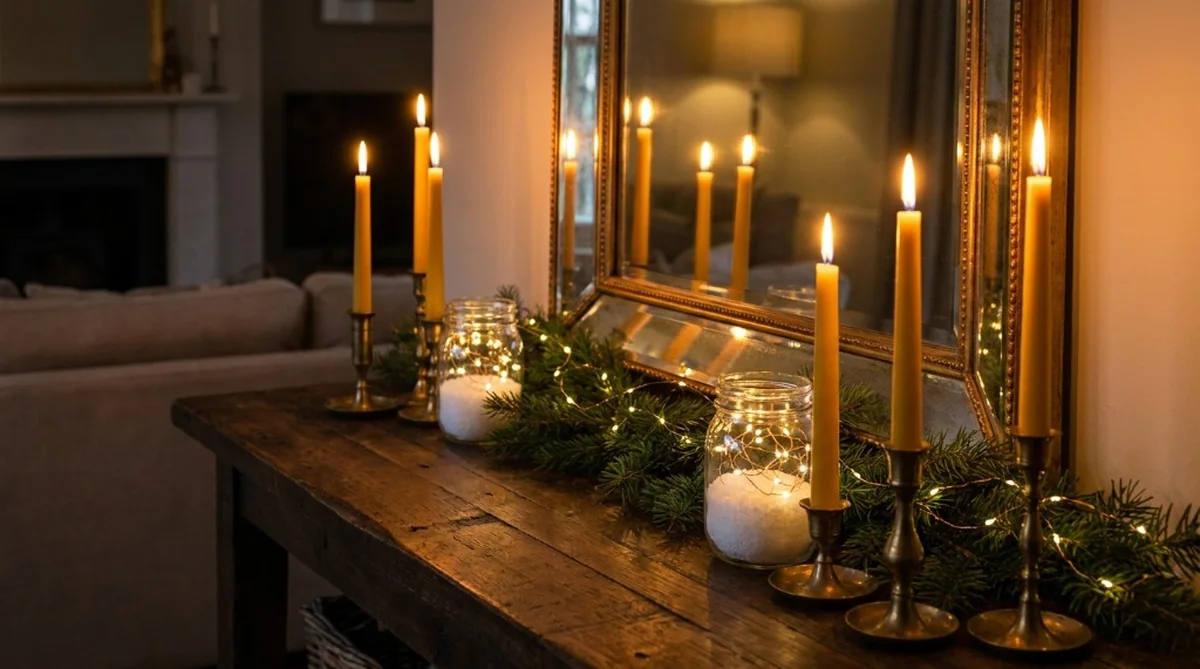
Low-voltage wiring and renewable apiary waxes build cozy evening ambiance without toxic indoor emissions:
16. Hand-Poured Pure Beeswax Taper Candles
Most commercial scented candles contain paraffin wax, a sludge byproduct of petroleum refinement that releases carcinogenic benzene and toluene particles when lit. Switch to 100 percent pure beeswax tapers fitted into brass or ceramic candlesticks. Beeswax burns with a bright, warm golden flame that emits negative ions, neutralizing airborne dust without synthetic fragrances.
17. Warm Copper-Wire Micro-LED Fairy Lights
Modern copper-wire micro-LED light strings use 90 percent less electricity than incandescent mini-bulbs while producing almost zero heat. Choose strings calibrated to a warm 2200K to 2500K color temperature to replicate the cozy amber radiance of real candles. The bendable copper wire weaves neatly into evergreen garlands without unsightly plastic clips.
18. Upcycled Glass Jar Salt Lanterns
Repurpose empty glass jelly and pickle jars by removing their paper labels with warm water and baking soda. Fill the base of each jar with two inches of coarse Epsom salt or kosher sea salt to simulate fresh winter snowdrifts. Nest a pure beeswax tea light in the center of the salt bed to cast diffuse candlelight across window sills.
19. Punched Recycled Tin Can Luminaries
Fill clean, empty steel soup cans with water and freeze them solid overnight so the metal walls resist denting. Use a hammer and a sharp four-penny finish nail to punch festive snowflake or starburst patterns through the tin. Once the ice melts, paint the cans with non-toxic water-based matte milk paint, drop a tea light inside, and line your front porch walkway.
20. Vintage Framed Mirrors for Ambient Light Doubling
Position thrifted antique beveled mirrors directly behind candle clusters or mantel garlands. The reflective glass surface doubles the perceived illumination of your energy-efficient lights, amplifying the depth of your living room without requiring additional electric power.
Zero-Waste Tabletop and Gifting Accents: 5 Refined Details
Zero-waste tabletop and gift accents utilize reusable cloth napkins, unbleached kraft parcel wrap, and fresh herb sprigs to eliminate non-recyclable metallic wrapping foils and plastic table confetti. These tactile styling details enrich dinner place settings with understated charm. Every component re-enters your household linen collection or garden compost after the meal.
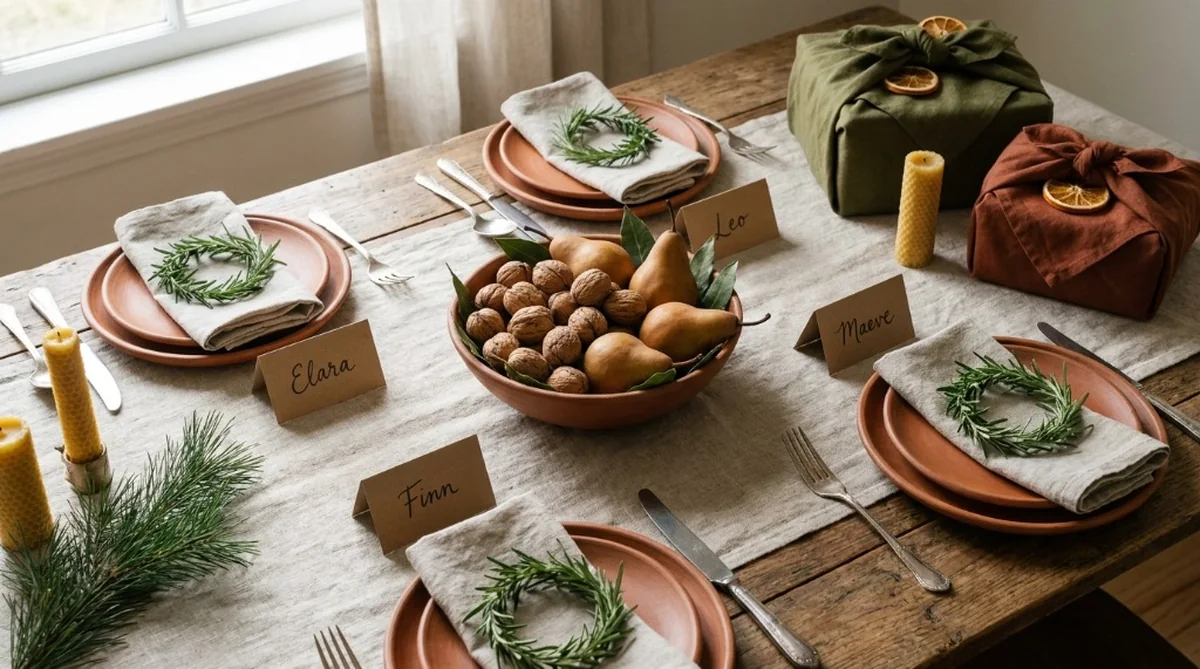
Washable natural textiles and edible centerpieces create memorable place settings that leave zero trash behind:
21. Traditional Furoshiki Fabric Parcel Wrapping
Each holiday season, Americans generate millions of tons of wrapping waste that paper mills reject because of metallic foil inks, glitter flecks, and plastic lamination coatings. Adopt the Japanese art of furoshiki by wrapping gifts in square cuts of washed linen, cotton bandanas, or thrifted silk scarves. The recipient keeps the fabric as part of the present, or returns it for your next family gift exchange.
22. Unbleached Kraft Paper with Fresh Botanical Accents
Wrap boxed presents in rolls of 100 percent recycled, unbleached brown kraft paper. Secure the seams with natural water-activated paper tape instead of petroleum plastic tape. Secure a sprig of fresh rosemary, a pinecone, and a handwritten luggage tag beneath natural cotton twine. This entire package composts cleanly in residential soil.
23. Rosemary Sprig Place Card Wreaths
Form three-inch rings from fresh woody rosemary sprigs, binding the overlapping ends with fine cotton thread. Place a mini wreath atop each dinner plate, tucking a torn-edge kraft paper card with your guest’s name inside the foliage. The herbal scent greets guests as they sit down for holiday dinner.
24. Natural Washed Linen Table Runners
Skip single-use paper tablecloths in favor of heavyweight unbleached linen runners in oatmeal, moss green, or charcoal. Pure flax linen grows with minimal irrigation, resists spills naturally, and softens with every wash cycle. A quality linen runner serves your home for twenty years across thanksgiving, Christmas, and summer garden parties.
25. Earthenware Bowls Filled with Seasonal Harvest
Create an abundant table centerpiece using wide, low terracotta or stoneware shallow bowls. Fill the vessels with unshelled walnuts, Bosc pears, pomegranates, and clementine oranges resting on fresh bay leaves. After the holiday meal, your guests can eat the centerpiece, leaving zero decorative waste behind.
To coordinate matching sustainable textiles across your living room and dining room, consult our guide on eco friendly products for the home.
Holiday Material Sustainability Matrix
Evaluating holiday decor materials requires balancing decomposition timelines, indoor toxicity risks, and multi-year durability. While foraged botanicals return to soil biology in weeks, heirloom brass and solid turned hardwoods provide decades of service, contrasting sharply with cheap polyvinyl chloride decorations that linger in landfills for four centuries.
The comparative breakdown below details how traditional and sustainable holiday materials perform over time:
| Material Type | Primary Environmental Impact | Expected Lifespan | Indoor Air Quality Impact | End-of-Life Disposal Route |
|---|---|---|---|---|
| Foraged Botanicals & Citrus | Zero fossil footprint; captures carbon | 3 to 6 weeks | Pure natural phytoncides; zero VOCs | 100% Home compostable |
| Pure Beeswax Candles | Renewable apiary harvest; zero petroleum | 1 season (consumed) | Neutralizes airborne dust; no soot | Fully consumed; cotton wick composts |
| Turned FSC Hardwoods | Managed sustainable forestry; carbon sink | 50+ years (heirloom) | Zero emissions when oiled naturally | Biodegradable or wood reclamation |
| Needle-Felted Wool | Renewable sheep fiber; biodegradable | 25+ years | Non-toxic; zero microplastic shedding | Biodegradable natural textile |
| Cast Brass & Glass | Recyclable metal and mineral sand | 50+ years | Completely inert; zero chemical release | Infinite metal/glass recycling |
| PVC Faux Greenery & Plastic | Petrochemical extraction; chlorine bleaching | 2 to 4 years | Off-gasses phthalates; sheds microplastics | Non-recyclable landfill waste (400+ yrs) |
4 Fast Holiday Decor Traps to Avoid This Season
Avoid four pervasive marketing traps when buying holiday decorations: plastic micro-glitter coatings, cheap polyvinyl chloride faux greenery, scented paraffin wax candles, and single-use metallic foil wrapping paper. These low-cost products release hazardous indoor airborne compounds, shed persistent microplastics into home dust, and contaminate municipal recycling sorting facilities.
Mass-market retail aisles push several deceptive materials that disguise toxic waste behind holiday marketing:
- Plastic micro-glitter consists of tiny shards of aluminum-bonded polyethylene terephthalate. Glitter sheds onto your flooring, enters local waterways through laundry drains, and contaminates municipal paper recycling facilities, causing entire bales of paper to be discarded into incinerators.
- Polyvinyl chloride artificial garlands and trees shed thousands of green plastic fragments during setup and packing. Manufacturing PVC produces carcinogenic dioxins, and the material cannot be recycled in curbside blue bins. If you already own an artificial tree, use it for at least twenty consecutive seasons to justify its initial production footprint.
- Artificially scented paraffin candles release hazardous volatile organic compounds, including benzene and formaldehyde, into closed winter living rooms. Synthetic fragrance mixtures often contain undisclosed phthalates that trigger headaches and asthma flare-ups in sensitive family members.
- Metallic foil and plastic-laminated wrapping papers cannot be pulped into new cardboard. When paper processing mills encounter metallic foil rolls, the plastic film clogs paper-slurry machinery. Perform the simple scrunch test: if you crumple a piece of wrapping paper into a tight ball and it springs open on its own, it contains plastic film and belongs in the trash.
Audit Your Holiday Room with the Texture Mixing Calculator
Balance natural fibers, raw woods, and botanical greenery across your living room using our interactive design calculator. The Texture Mixing Calculator evaluates your room proportions and surface finishes to ensure your sustainable holiday accents achieve sophisticated visual depth without visual clutter or unnecessary decorative excess.
Holiday decorating succeeds when diverse physical textures harmonize across your living room surfaces. Pairing matte foraged evergreens with smooth translucent dried citrus, rough burlap ribbons, and warm polished brass bells delivers compelling tactile depth. Calculate your room’s textural balance before gathering materials.
Frequently Asked Questions About Sustainable Christmas Decorations
Homeowners frequently ask how to preserve dried citrus garlands across seasons, how to safely clean foraged pinecones, whether real or fake trees offer better sustainability, and how to store natural decor. Following straightforward pest-control baking steps and storing organic items in breathable cotton bags keeps natural holiday accents fresh for years.
How do you store dried citrus garlands for next year?
Store fully dehydrated citrus garlands in airtight glass mason jars or metal cookie tins with a food-grade silica gel pack. Keep the containers in a cool, dark, dry closet. Slices that were completely dehydrated into brittle wafers survive two to three seasons without mold.
Do foraged pinecones need to be washed before decorating?
Baking foraged pinecones in an oven at 200 degrees Fahrenheit for 40 minutes on parchment paper sanitizes them effectively. The heat kills insects, evaporates lingering moisture, and melts pine sap into an attractive protective luster without requiring water immersion or chemical bleach baths.
Is a real Christmas tree more sustainable than an artificial one?
A locally grown, pesticide-free real tree is significantly more sustainable because it absorbs carbon dioxide while growing and turns into beneficial garden mulch or compost after the holidays. An artificial PVC tree requires twenty years of annual reuse to offset its petroleum extraction footprint.
What can I use instead of traditional plastic tree hooks?
Hang ornaments using cut lengths of natural unbleached jute twine, butcher twine, thin copper craft wire, or bent brass paper clips. These natural alternatives look cleaner among evergreen needles, hold weight securely, and decompose easily or recycle cleanly after use.