Sustainable Holiday Decorations That Store and Reuse Well
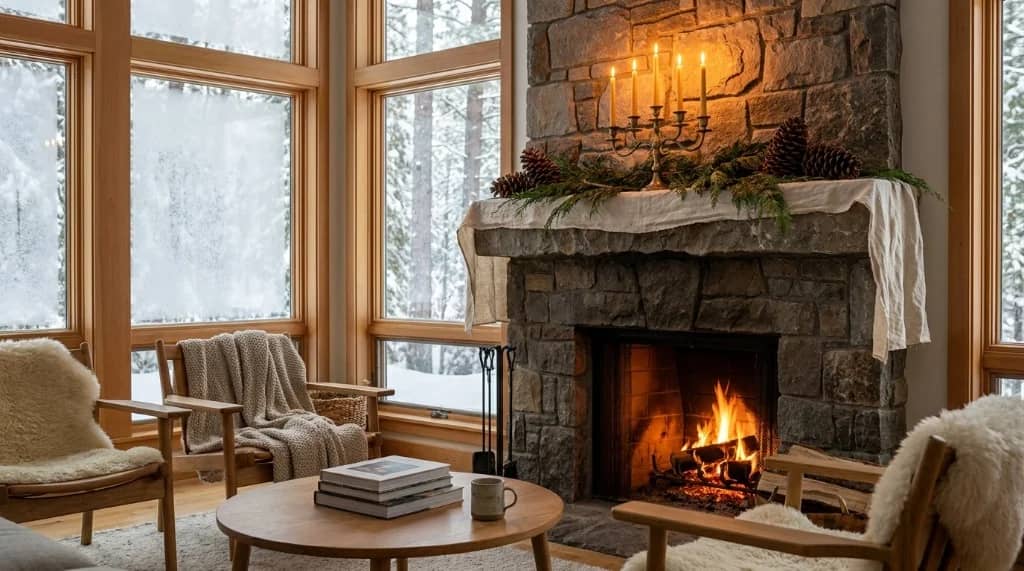
Investing in sustainable holiday decorations centers on selecting durable, natural materials like unlacquered brass, mouth-blown glass, FSC-certified hardwoods, and raw linen that transition across winter festivities and store compactly year after year. Handcrafted metalwork, ceramic vessels, and compostable botanicals eliminate disposable plastic trinkets and seasonal garage clutter while protecting long-term household budgets.
Mass-market retail aisles push seasonal polystyrene baubles and synthetic plastic ribbon designed to degrade after a single holiday cycle. When packed into sweltering attics, these petroleum-based goods shed toxic microplastics, yellow under heat exposure, and crack along fragile seam welds. Curating a high-end, reusable holiday collection shifts your home toward an authentic Scandinavian winter aesthetic rooted in physical longevity and modular styling.
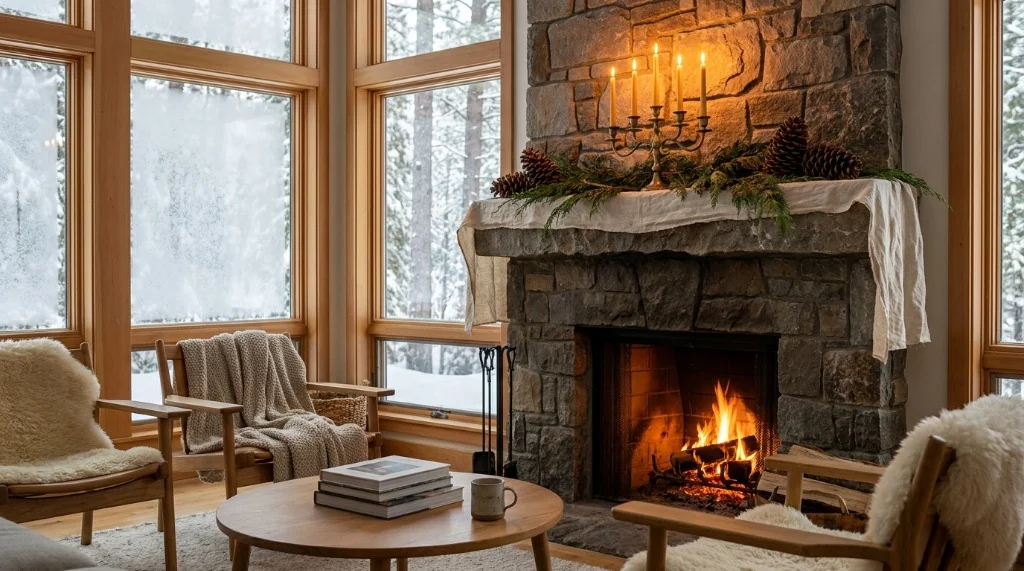
Eco Friendly Holiday Decorations: Heirloom Materials That Endure Decades
Choosing eco friendly holiday decorations demands rigorous inspection of raw material composition. Heirloom holiday accents rely on high-density metals, mouth-blown borosilicate glass, European flax linen, and responsibly harvested timber that withstand dozens of annual unpacking cycles without structural fatigue or aesthetic degradation.
Commercial retailers label thin plastic baubles with faux-metallic coatings as sustainable simply because outer packaging uses recycled paperboard. Genuine environmental durability demands monolithic materials that you can clean, polish, and repair across generations. Prioritize four core material categories when assembling a permanent winter collection:
1. Solid Cast Brass and Forged Iron
Unlacquered cast brass candelabras, heavy taper holders, and forged iron mantel hooks provide substantial ballast that anchors winter living rooms. Solid brass develops a self-healing living patina that grows richer with age. If you prefer bright luster, a quick polish restores factory shine in minutes. Cast iron elements introduce architectural weight and hold firm against winter drafts on fireplace hearths and dining tables.
2. Borosilicate and Recycled Pressed Glass
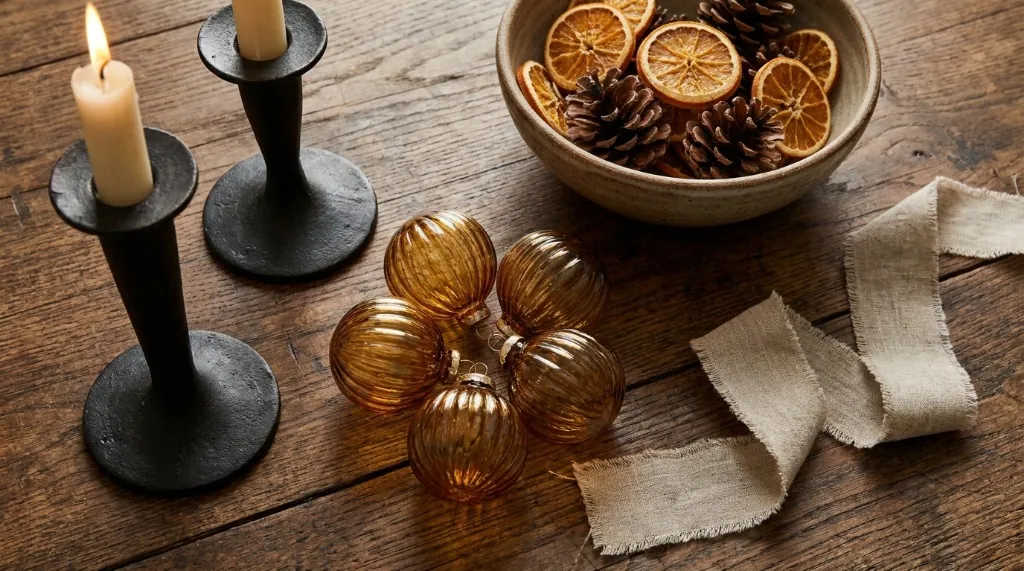
Mouth-blown borosilicate glass spheres and ribbed amber vessels withstand physical temperature fluctuations far better than cheap soda-lime baubles. Thick, tinted glass ornaments catch warm candlelight and fairy light reflections without synthetic glitter. When wrapped in unbleached kraft paper, thick pressed glass survives seasonal storage without fracturing under light crate pressure.
3. Stonewashed European Linen and Carded Wool
Heavyweight linen table runners, tree skirts, and mantle drapery offer tactile breathability and natural resistance to moth larvae when stored clean. Pure sheep wool stockings and woven tree collars provide rustic thermal depth without petroleum-based polyester fleece. Natural plant and animal fibers absorb room humidity without trapping mildew. These weaves soften with each annual laundering.
4. FSC-Certified Domestic Hardwoods
Carved walnut, white oak, and turned birch ornaments age without brittle warping. Untreated wood absorbs natural conditioning oils. You can buff out minor surface scratches using raw walnut meat or cold-pressed linseed oil. Wooden garlands, dough bowls, and star medallions eliminate petroleum polymers while tying holiday living spaces directly to natural forest textures.
Reusable Holiday Decorations for Multi-Season Winter Styling
Curating reusable holiday decorations around a neutral winter foundation allows your home to transition from late autumn Thanksgiving through Winter Solstice, Hanukkah, Christmas, and New Year celebrations without complete decor overhauls. Layering flexible brass, warm textiles, and seasonal botanicals saves storage space and eliminates repetitive impulse purchases.
Most homeowners exhaust themselves packing away Thanksgiving decor on Sunday only to drag out dozens of Christmas bins on Monday, repeating the process three weeks later for New Year Eve. A unified winter decorating strategy establishes a single calm aesthetic baseline that requires only minor botanical adjustments across different festive milestones:
Phase 1: Late Autumn and Thanksgiving Warmth
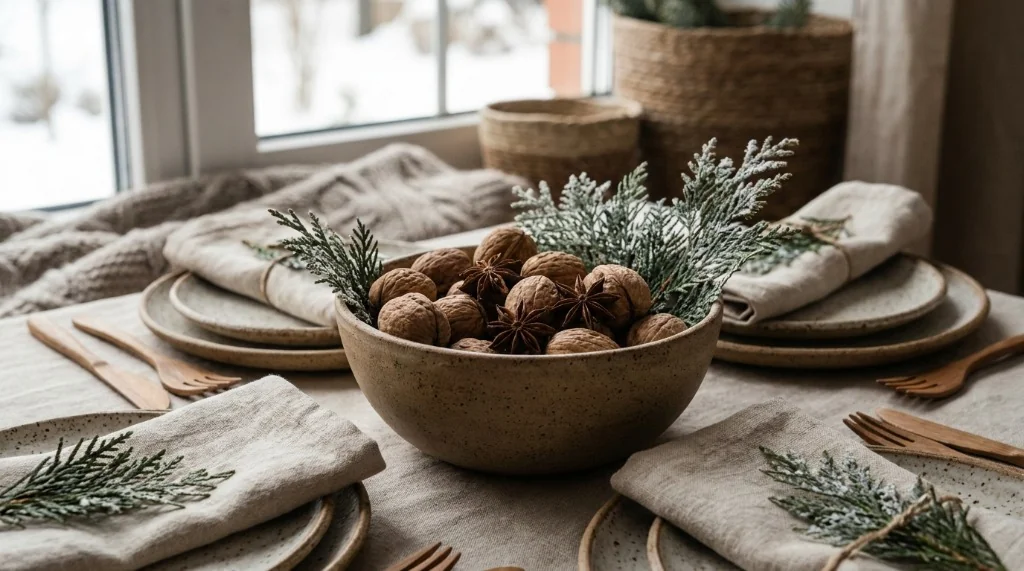
Establish your physical room foundation in November using heavy neutral linen runners, unlacquered brass taper candlesticks, and hand-thrown stoneware bowls. Fill centerpieces with whole unshelled walnuts, star anise pods, and dried autumn botanicals. This warm amber foundation anchors family feasts without commercial plastic harvest trinkets.
Phase 2: Winter Solstice, Hanukkah, and Christmas Festivities
Keep your brass, iron, and stoneware foundations untouched on mantels and tables. Weave fresh garden cedar boughs, flat-leaf fir clippings, and sugar pinecones through candle bases. Introduce glowing copper micro-LED fairy lights and hang wool stockings from iron mantel hooks. For Hanukkah tables, pair forged candelabras with ivory and midnight-blue beeswax tapers alongside raw linen napkins.
Phase 3: New Year Eve and Midwinter Serenity
Remove dried evergreen boughs and holiday-specific motifs the week following Christmas. Leave brass candleholders, glowing fairy lights, wool throws, and neutral stoneware in place through February. This clean architectural foundation combats post-holiday gloom. It delivers cozy visual warmth throughout midwinter without seasonal holiday clutter.
Sustainable Holiday Decor Storage: The One-Bin Rule and Zero-Plastic Preservation
Implementing sustainable holiday decor storage protects delicate heirloom items against summer heat, moisture buildup, and pest infestations while avoiding expensive virgin plastic storage totes. Upcycled cardboard wine dividers, breathable cotton muslin bags, and interior climate control preserve ornaments permanently so you never purchase replacement pieces.
Seasonal decor damage almost always occurs during the ten months items sit in storage, not while hanging on display. Traditional polyethylene plastic storage totes trap atmospheric humidity, sweat during summer temperature spikes, and emit volatile plasticizers that dissolve delicate paint pigments. Adopting the minimalist container concept keeps your seasonal footprint disciplined and organized:
The Reddit-Backed One-Bin Rule (The Container Concept)
Homeowners in zero-waste and decluttering communities advocate limiting holiday collections to one or two 64-quart designated storage containers per household. This physical boundary forces intentional curation:
- If a new heirloom ornament enters your home, donate or gift an older piece to maintain the container limit.
- Limiting collection volume prevents overwhelming basement clutter and simplifies annual setup to sixty minutes.
- The constraint prioritizes high-value sentimental treasures over disposable novelty trinkets.
Upcycled Cardboard Wine Case Dividers for Glass Baubles
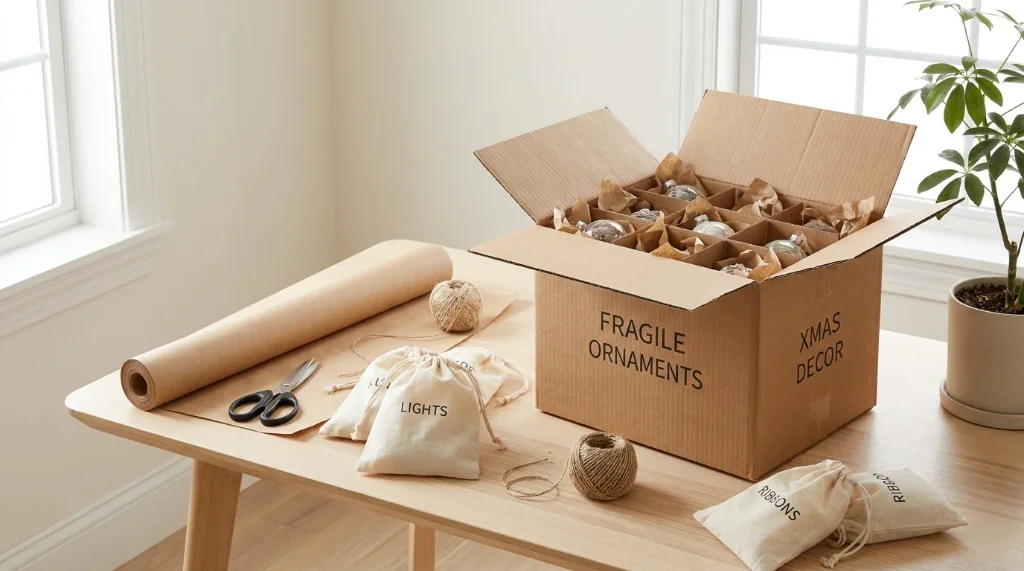
Avoid purchasing single-use bubble wrap or synthetic foam ornament dividers. Visit local grocery or wine shops in January and collect discarded twelve-bottle corrugated wine boxes complete with internal grid dividers:
- Each partitioned cardboard cell provides rigid structural cushioning for round glass baubles, ceramic figures, and wooden stars.
- Wrap individual glass spheres in clean post-consumer brown kraft tissue before placing them into grid cells.
- Double-wall corrugated cardboard breathes naturally to prevent humidity condensation and surface mold.
Breathable Cotton Muslin Bags for Linens and Wreaths
Never store natural linen table runners, wool tree skirts, or velvet ribbons inside sealed plastic contractor garbage bags:
- Enclosing natural textiles in airtight plastic traps moisture, which triggers mildew stains and fabric rot.
- Pack laundered seasonal linens inside unbleached cotton drawstring muslin bags or vintage cotton pillowcases.
- Add solid Eastern red cedar wood blocks to each bag. Natural cedarwood volatile oils repel clothes moth larvae (*Tineola bisselliella*) without toxic paradichlorobenzene mothballs.
Notched Cardboard Cards for Copper LED Light Management
Tangled light cords represent the leading cause of holiday decoration disposal. When fine wires twist into knots, internal copper filaments fatigue and snap:
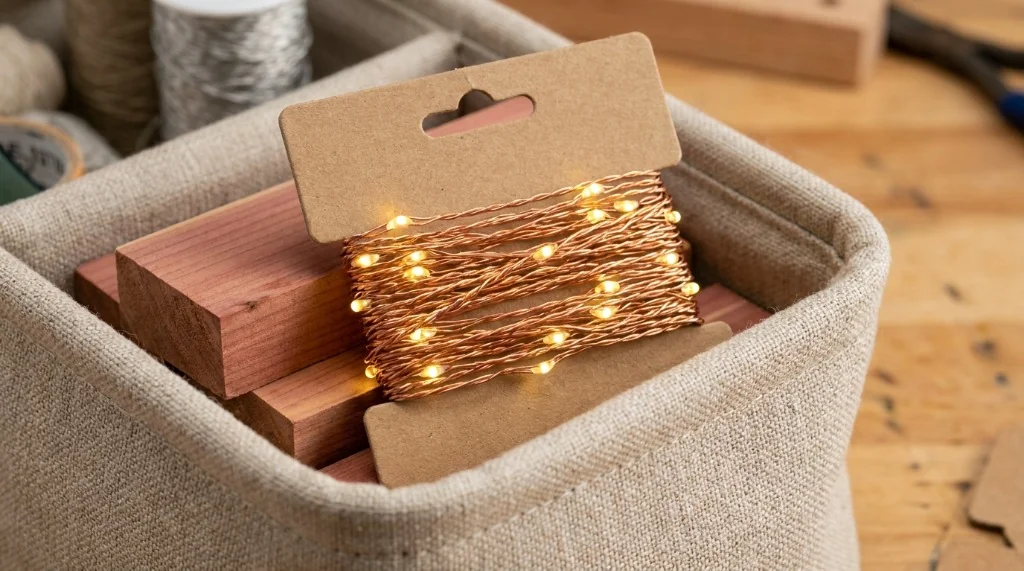
- Cut nine-inch by six-inch rectangles from discarded shipping cardboard.
- Cut half-inch V-shaped notches along opposite ends using craft shears.
- Secure the female light plug into one notch, wind the copper micro-LED wire evenly around the cardboard core, and anchor the male plug in the final notch.
- Spooled light cards stack flat inside storage crates to eliminate knots, wire fatigue, and seasonal clutter.
Climate-Controlled Indoor Storage vs. Attic Traps
Never store heirloom decorations in uninsulated attics, crawlspaces, or tin garden sheds. Attic temperatures regularly exceed 110°F (43°C) during summer months:
- Heat softens pure beeswax candles, which bend, discolor, and fuse together into unusable wax clumps.
- Extreme temperature swings dry out wood joints, crack lacquer finishes, and delaminate antique composite ornaments.
- Store your holiday crate in an interior bedroom closet, under-bed storage drawer, or climate-controlled linen closet held at 65°F to 72°F (18°C to 22°C).
Zero Waste Holiday Decorations: Foraging and Compostable Seasonal Accents
Incorporating zero waste holiday decorations from foraged backyard botanicals introduces lush winter fragrances and architectural textures that return completely to garden compost beds after the season. Fallen evergreen branches, fragrant woody herbs, and whole winter spices produce zero landfill refuse and zero long-term storage burden.
Commercial plastic wreaths and petroleum garlands shed stiff green vinyl needles that resist biological decomposition for centuries in local landfills. Foraging natural botanical cuttings connects your household directly to local seasonal ecology while costing zero dollars:

1. Backyard Evergreen Boughs and Woody Herbs
Prune low-hanging branches from garden cedar, white pine, juniper, or spruce trees using clean bypass hand pruners. Combine these woody cuttings with fresh rosemary sprigs and bay laurel branches. Arrange cuttings loosely in heavy stone pitchers or weave stems into long mantel garlands using natural jute twine. Botanical foliage releases fresh terpene aromatics that refresh indoor air without synthetic fragrance diffusers.
2. Sugar Pinecones and Dried Seed Pods
Collect fallen pinecones, sweetgum seed pods, and dried lotus heads from woodland walks. Bake collected botanicals on aluminum foil at 200°F (93°C) for thirty minutes. Oven heat liquefies sticky pine sap into the wooden scales and neutralizes latent forest insects. The scales fan open into symmetrical floral cones. Display baked pinecones in shallow wooden dough bowls or string them into rustic tree swags.
3. Dehydrated Winter Citrus and Spice Bundles
Cut navel oranges, blood oranges, and lemons into quarter-inch rounds. Dehydrate slices on wire cooling racks at 175°F (80°C) for four hours until fruit centers turn translucent and firm. String citrus rounds with whole star anise pods and three-inch Ceylon cinnamon sticks on cotton baker twine. When the holiday season closes, toss botanical garlands directly into backyard compost tumblers or woodstove kindling boxes.
Heirloom Decor Restoration: Cleaning, Conditioning, and Wire Repair
Restoring heirloom holiday decor through periodic cleaning, natural wood conditioning, and simple wire maintenance extends product lifespans indefinitely. Adopting basic preservation habits keeps metalwork glowing, wooden ornaments supple, and electrical lighting functioning reliably year after year.
Seasoned decorators rely on basic workshop techniques to maintain seasonal pieces:
1. Non-Toxic Brass and Iron Cleaning
Avoid harsh chemical commercial brass polishes that emit noxious petrochemical vapors. Mix equal parts white distilled vinegar, table salt, and unbleached flour into a thick paste. Rub the paste over tarnished solid brass candleholders with a clean cotton rag. Let the mixture sit for ten minutes, rinse with warm water, and buff dry with a soft microfiber cloth. The mild acetic acid dissolves copper tarnish, restoring glowing metallic luster without toxic fumes. For cast iron pieces, wipe dust away with a dry rag and rub with three drops of food-grade mineral oil to prevent oxidation rust.
2. Re-Oiling Dried Hardwood Ornaments
Annual indoor furnace heating siphons moisture from wooden tree ornaments, causing surface flaking and microscopic grain splitting. Before packing wooden pieces away in January, rub surfaces with cold-pressed walnut oil or raw linseed oil using a wool cloth. Let the oil absorb into wood pores for twenty minutes before buffing away excess film. The conditioning treatment feeds the grain and preserves natural flexibility against seasonal climate shifts.
3. Splicing Broken Copper Fairy Light Strands
When a micro-LED copper light strand goes dark from physical pinching, examine the wire along its length to locate the snapped strand. Cut out the damaged half-inch segment using wire nippers. Strip a quarter-inch of protective enamel from both wire ends using fine 400-grit sandpaper. Twist matching exposed copper strands together, solder with lead-free rosin-core electrical solder, and seal the exposed splice with heat-shrink tubing. This five-minute workshop repair saves twenty-dollar light sets from municipal landfills.
Holiday Decor Longevity and Storage Comparison Matrix
Compare structural lifespans, zero-plastic packaging requirements, temperature thresholds, and end-of-life disposal across core sustainable holiday decor categories:
| Decor Category | Primary Material | Expected Lifespan | Zero-Plastic Storage Method | Climate Requirement | End-of-Life Disposal |
|---|---|---|---|---|---|
| Cast Metalwork | Solid brass, forged iron | 50+ Years (Heirloom) | Unbleached cotton wraps, dry crate | Dry indoor / garage acceptable | 100% Scrap Metal Recyclable |
| Pressed & Blown Glass | Borosilicate, recycled glass | 30+ Years (Breakable) | Corrugated wine box dividers, kraft wrap | Indoor closet (prevent freeze shock) | 100% Cullet Glass Recycling |
| Textiles & Linens | European flax, carded wool | 15 to 25 Years | Cotton muslin bags with red cedar blocks | Climate-controlled closet (65°F to 72°F) | 100% Backyard Compostable |
| Hardwood Accents | Walnut, oak, turned birch | 20 to 40 Years | Kraft paper wrap, conditioned with oil | Indoor climate (prevent drying cracks) | 100% Biodegradable Firewood |
| Foraged Botanicals | Evergreens, citrus, pinecones | 1 Season (Compostable) | Single-season display; do not store green | Room temperature display | 100% Food Scrap / Yard Compost |
To explore tree-specific plastic-free trimming ideas that match these foundational accents, review our guide to Sustainable Christmas Tree Decorations Without Plastic.
For broad holiday styling advice across mantels and dining tables, read our pillar on Sustainable Christmas Decorations: 25 Low-Waste Ideas.
If you enjoy handcrafting your own botanical medallions and paper stars, consult our project guide on How to Make Sustainable Christmas Decorations.
To balance natural textures, wood, and metals across your living spaces, test your styling with our free Texture Mixing Calculator.
Frequently Asked Questions About Sustainable Holiday Decorations
How do you store holiday decorations without plastic bins?
You store holiday decorations without plastic bins by repurposing corrugated cardboard wine shipping boxes, clean shoe boxes, and breathable unbleached cotton muslin bags. Wine boxes feature internal cardboard dividers that cushion fragile glass baubles and ceramics without synthetic bubble wrap. Heavy cardboard absorbs ambient atmospheric dampness, preventing mold growth while keeping decorations dark and dust-free.
What are the most durable materials for reusable holiday decorations?
The most durable materials for reusable holiday decorations include solid unlacquered cast brass, hand-forged black iron, heavy mouth-blown borosilicate glass, and dense domestic hardwoods like oak and walnut. These architectural materials resist physical cracking, develop attractive living patinas over decades of use, and allow direct surface polishing or oil conditioning across generations of use.
Can you leave natural holiday greenery up all winter?
You can leave natural holiday greenery up all winter as long as branches remain fresh and fire-safe. Evergreens displayed in water reservoirs or positioned away from heat registers stay supple for four to six weeks. Once foliage dries out and sheds brittle needles, move branches outdoors to backyard compost piles and transition indoor mantel displays to brass candleholders, pinecones, and warm LED fairy lights.
How do you prevent moths from ruining stored wool holiday decor?
You prevent clothes moths from ruining stored wool holiday decor by laundering textiles before storage and packing them inside tightly tied unbleached cotton muslin bags alongside solid aromatic Eastern red cedar blocks. The natural cedrene oils present in red cedar repel egg-laying adult moths without hazardous paradichlorobenzene fumes. Replace cedar blocks or sand wood surfaces lightly every two years to restore aromatic potency.