Small Closet Organization Ideas Without Custom Shelving (Zero Drilling, Zero Sagging)
Reader Disclosure: This post contains affiliate links. If you buy through them, we may earn a commission at no extra cost to you. We only recommend items selected for renter-safe setup and durability.
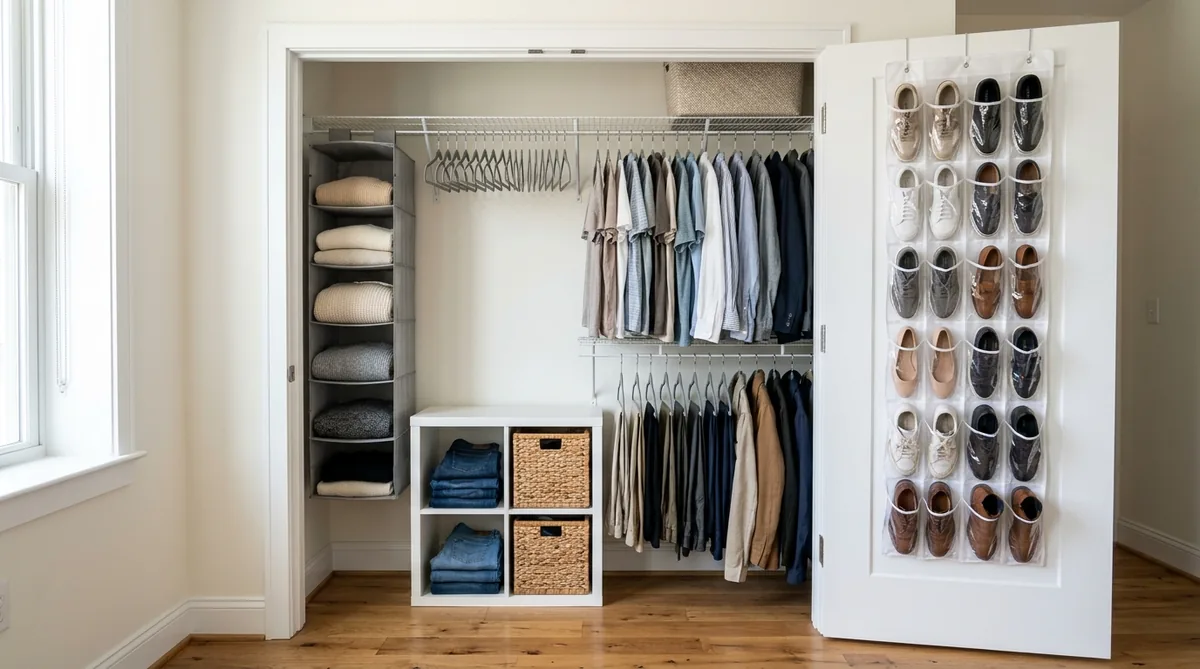
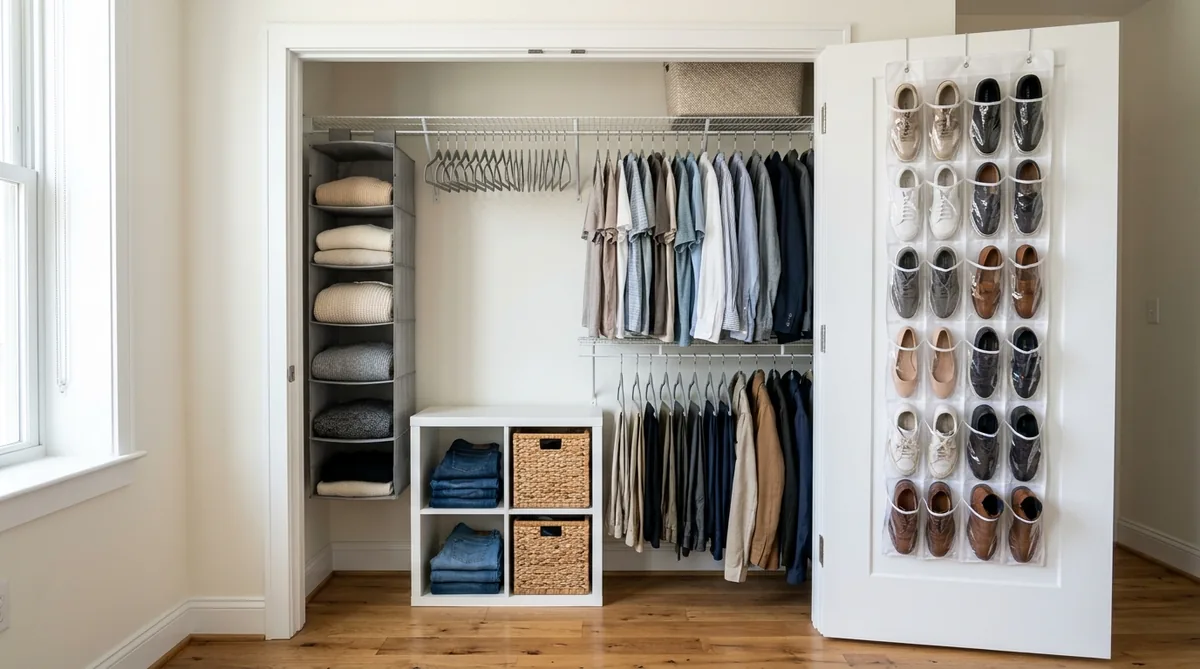
You can organize a cramped closet without custom shelving. Divide the space into four zones: a double tension rod, a centered floor cube unit, reinforced hanging cubbies, and an over-the-door pocket rack. A starter two-zone setup costs under $50. Even a full four-zone build runs $80 to $125 and installs in 30 minutes with zero wall damage.
| No-Shelving Add-On | Best For | Typical Cost | Weight & Damage Rule |
|---|---|---|---|
| Double Tension Rod + Command Hooks | Shirts, skirts, folded trousers | $15 to $25 | Support ends with 5-lb Command hooks |
| 6-Shelf Hanging Fabric Organizer | Knitwear, tees, folded hoodies | $18 to $30 | Insert wooden dowels to stop sagging |
| 4-Cube Floor Unit (IKEA Kallax style) | Jeans, bulky sweaters, bags | $35 to $50 | Center it away from bifold door tracks |
| Over-the-Door Pocket Rack | Shoes, belts, scarves, hats | $12 to $20 | Use thin metal brackets on top edge |
| Slim Velvet Hangers (50-Pack) | Everyday tops, jackets, dresses | $20 to $28 | Pick notched shoulders to stop drift |
| Clear Stackable Shoe Boxes | Sneakers, heels, ankle boots | $25 to $40 | Choose drop-front lids for bottom access |
Double Your Hanging Space Without Drilling a Single Hole
Most closets waste half their height below one high rod. Add a second tension rod 38 to 42 inches off the floor. You instantly double your hanging space for shirts, skirts, and folded pants. Pair both rods with slim velvet hangers and cascading hooks to fit twice as many clothes per foot.
Lock In a Second Tension Rod That Never Crashes at 3 A.M.
Plain tension rods often slip down painted walls under heavy denim or winter coats. Fix that slip point before you hang one shirt. If you want more renter-safe wall methods, see how to maximize vertical space in a small apartment without permanent hardware.
- Wipe both side walls with rubbing alcohol so dust never breaks the grip.
- Stick one 5-pound Command hook right below each end mark at 40 inches high.
- Wrap one wide rubber band or non-slip shelf liner around each rod end cap.
- Twist the rod tight so it rests directly on top of the Command hook cradles.
The hooks hold the downward weight. The spring tension locks the rod against the wall. Always check Command strip weight limits before loading heavy winter coats onto adhesive supports.
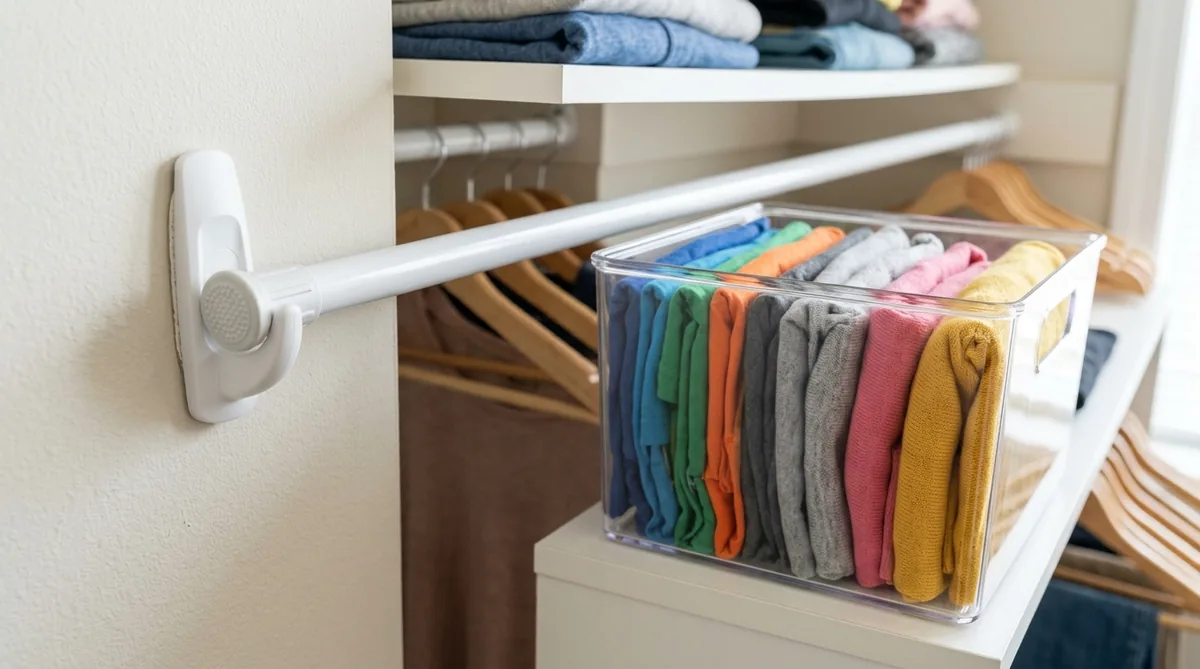
Heavy-Duty Adjustable Closet Tension Rod + Command Large Utility Hooks (5 lb)
- Expands between closet side walls without screws, anchors, or wall brackets
- Pair with 5-lb Command Large Utility Hooks under each end cap to stop slipping
- Holds shirts, skirts, and folded trousers 38 to 42 inches off the floor
- Removes cleanly when moving out with zero drywall repair
Stop Hanger Drift With Notched Velvet Hangers and Cascading Chains
Thick plastic and wood hangers waste bar space. They also jam together when you pull out one shirt. Swap every mismatched hanger for slim, notched velvet hangers. The velvet grips silk tops and wide-neck tees. The shoulder notches hold tank straps in place.
For work pants or button-downs, clip a vertical cascading chain onto the main rod. Each chain drops five hangers down in one column. You save four full inches of bar space per chain.
Notched Non-Slip Velvet Clothes Hangers (50-Pack)
- Ultra-slim profile frees up horizontal rod space compared to thick plastic hangers
- Flocked velvet surface keeps silk blouses and wide-neck tops from slipping
- Contoured shoulder notches lock tank tops and dress straps in place
- 360-degree swivel chrome hooks make sorting fast in tight closets
Turn Dead Floor Space Into a Built-In Dresser
Empty floor space under short shirts can replace a full bedroom dresser. Measure from the closet floor to the bottom of your hanging shirts. You will usually find 36 to 40 inches of open height. Slide a low cube unit, a narrow bookcase, or a rolling cart into that gap.
Slide In a Low Cube Organizer or Slim Bookcase
A horizontal 4-cube unit (such as an IKEA Kallax 2×2) measures about 30.4 inches tall and 15.4 inches deep. It works like a built-in dresser inside your closet. Put folded jeans, heavy hoodies, and bags inside the open cubbies. Slide cloth bins into the slots for socks and underwear. Removing a bulky bedroom dresser also helps make a small bedroom feel bigger right away.
Is your closet shallower than 14 inches? Skip cube units and slide in an 11-inch-deep bookcase. You get four solid shelves for shoes and folded stacks with zero screws.
File-Fold Knits Inside Clear Bins So Soft Piles Never Collapse
Tall stacks of folded shirts always tip over without shelf dividers. Pull one tee from the middle, and the whole pile slides down.
Fold every shirt, pair of leggings, and thin sweater into a neat rectangle. Stand the rectangles upright side by side inside clear bins or cloth cube drawers. You see every color at once. You pull one piece out while the rest stay upright.
Add Hanging Shelves That Actually Hold Sweaters Without Sagging
A 6-shelf hanging fabric cubby loops right over your closet rod. It creates instant vertical shelves for folded clothes. Out of the box, thin cardboard inserts inside most fabric shelves bend within a week under heavy sweaters. Reinforce every shelf seam before you load it.
The 2-Minute Dowel and Corrugated Plastic Fix for Drooping Cubbies
Strengthen weak fabric shelves with cheap hardware supplies you can cut with scissors.
- Slide two wooden dowels or pencils along the front and back lip of each shelf seam to make stiff cross-beams.
- Cut corrugated plastic sheets from old yard signs to match each cubby floor, then drop them flat inside.
- Push rigid cloth storage cubes into the bottom three slots so the outer boxes hold the frame square.
6-Shelf Hanging Closet Organizer with Side Pockets
- Loops over any standard closet rod to create six instant sweater shelves
- Side mesh pockets hold belts, socks, and small daily accessories
- Reinforce each shelf seam with wooden dowels or corrugated plastic to stop sagging
- Folds flat for moving or seasonal storage
Balance Rod Weight to Protect Builder-Grade Brackets
Weak wooden or wire rods bow in the middle when one spot holds too much weight. Hang your 6-shelf cubby near a wall bracket or center brace. Keep it away from the middle of an open span. Put heavy jeans, boots, and bags in the floor unit below. Save hanging fabric shelves for light sweaters, gym shorts, and tees.
Exploit the Back of Your Door and Side Walls for Shoes and Gear
The back of a hinged door and the blank wall strips beside the doorframe hold up to 12 pairs of shoes (one shoe per pocket on a 24-pocket rack). Over-the-door pocket racks and adhesive hooks turn flat surfaces into zero-footprint storage. Your closet floor stays clear for larger bins.
Beyond Shoes: What Fits in Clear Over-the-Door Pockets
Pick an over-the-door rack with clear vinyl pockets and thin metal top hooks so the door shuts cleanly. Fill the bottom rows with flats, sneakers, and sandals. Use eye-level pockets for rolled belts, scarves, sunglasses, clutches, and hair tools. Clear pockets let you grab items in two seconds without digging.
24-Pocket Clear Over-the-Door Hanging Shoe & Accessory Organizer
- 24 clear vinyl pockets store up to 12 pairs of shoes without touching the floor
- Transparent fronts let you spot flats, belts, and scarves in two seconds
- Thin metal top hooks fit standard interior doors so the latch shuts cleanly
- Clears floor clutter for cube units or rolling bins
Side-Wall Command Hooks for Hats, Bags, and Tomorrow’s Outfit
Most closets have 8 to 12 inches of blank side wall inside the doorframe. Stick three large Command hooks along that side strip at eye level. Hang baseball caps, canvas totes, robes, or tomorrow’s outfit on one hanger. For heavier wall items where no studs exist, learn how to hang heavy items without studs safely. When you move out, use safe adhesive removal without ripping drywall so your security deposit stays intact.
Fix Bifold Door Dead Zones and Awkward Reach-In Corners
Bifold doors fold outward and block the outer 8 to 12 inches on both sides of a closet. Pull-out drawers placed near those edges hit the folded door panels every time you open them. Build your daily layout around the center opening.
Center Your Drawers, Push Off-Season Items to the Edges
Set your cube unit, plastic drawer tower, or rolling cart in the dead center of the closet. Both doors clear the front path easily. Push heavy winter coats, formal dresses, and rare items into the dark side corners. Dark corners also benefit from light walls, so check how Light Reflectance Value brightens dark spaces if your closet feels cave-like.
When to Swap Bifold Doors for a Tension Rod Curtain
Do bifold doors still block light or pinch your fingers? Remove them in five minutes with zero tools. Lift each door off the bottom bracket, tilt the top pin out of the track, and slide the panels under your bed. Hang a sturdy tension rod inside the doorframe with a clean linen curtain. You unlock full access to the entire closet width.
What to Move Out of a Tiny Closet Right Now
A small closet works best when it holds only current-season clothes. Pull out heavy parkas, snow boots, swimsuits, and spare bedding. Pack them into flat rolling under-bed bins or vacuum-sealed bags. Moving bulky off-season gear out frees prime rod and floor space for daily outfits right away.
Frequently Asked Questions About Organizing a Small Closet Without Shelves
How do you organize a small closet without shelves?
Split the closet into four no-drill zones. Add a second tension rod for double hanging, slide a cube unit onto the floor, hang a reinforced 6-shelf fabric cubby on the rod, and mount an over-the-door pocket rack for shoes.
How do you organize a small closet without a dresser?
Replace a bedroom dresser with a low 4-cube unit or a narrow three-drawer plastic tower under your hanging shirts. Use clear bins with file-folded tees, socks, and underwear inside the cubbies so every piece stays upright and easy to see.
Should you fold or hang clothes in a small closet?
Hang shirts, blouses, pants, dresses, and jackets on slim velvet hangers to use vertical air space well. Fold bulky knit sweaters, heavy hoodies, and stretchy gym gear into floor bins or stiffened hanging cubbies so hangers never stretch the shoulders.
How do you add storage to a small closet without drilling?
Use tension rods supported by Command hook cradles, freestanding cube shelves, stackable drop-front shoe boxes, over-the-door pocket racks, and adhesive wall hooks. Every piece installs with zero screws, wall anchors, or paint damage.
How do you keep a tension rod from falling in a closet?
Wipe the wall with rubbing alcohol, stick a 5-pound Command hook right under each end mark to hold the weight, and wrap rubber bands or shelf liner around the end caps to boost grip on painted drywall.