How to Make Small Bedroom Feel Bigger: 5 Visual Tricks
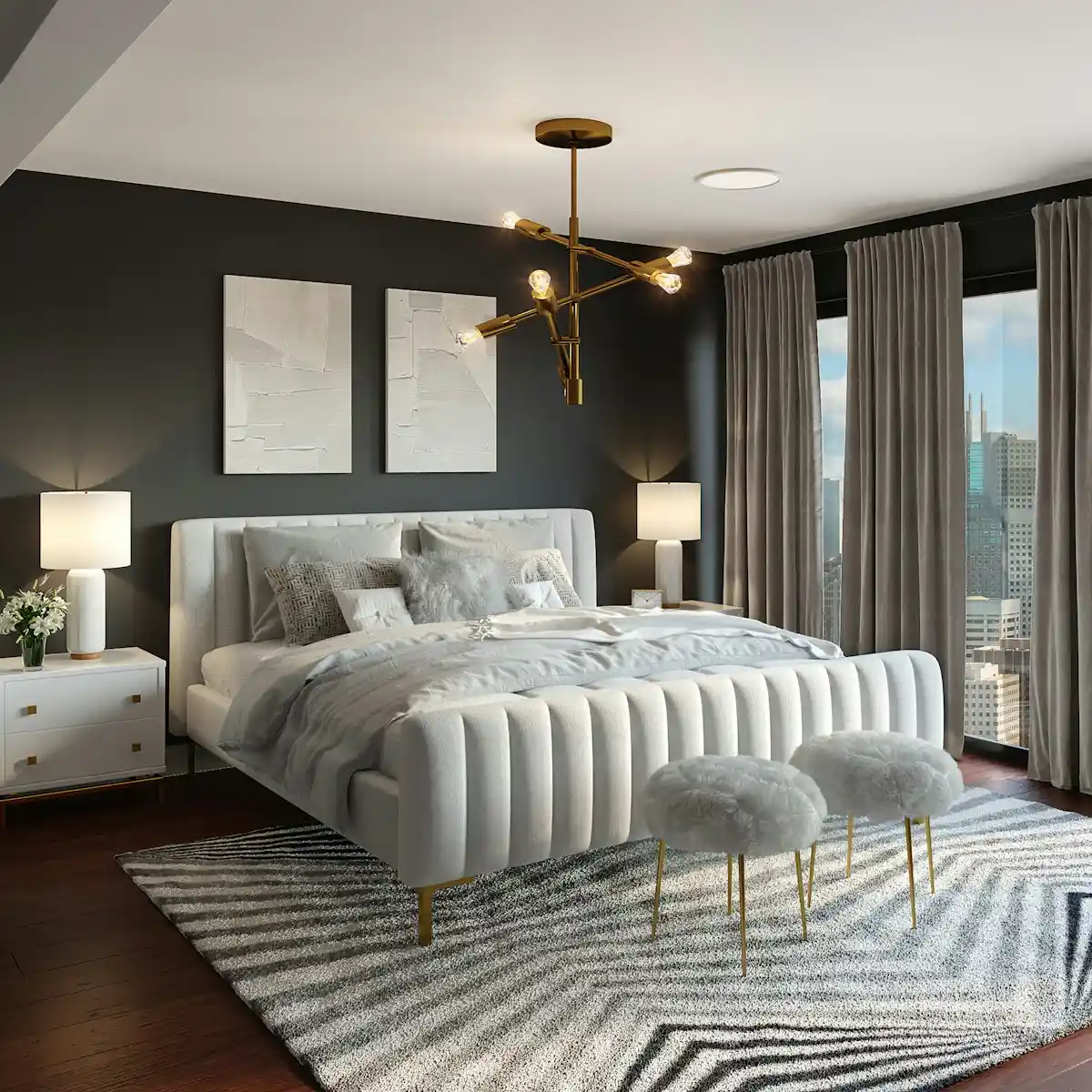
Reader Disclosure: This post contains affiliate links. If you buy through them, we may earn a commission at no extra cost to you. We only recommend items tested for clean craftsmanship and authentic durability.
Knowing how to make small bedroom feel bigger without moving walls, lower your bed profile below twenty inches, hang curtain rods two inches beneath the ceiling, angle floor mirrors adjacent to primary windows, paint walls and trim in matching monochromatic warm neutrals, and install wall-mounted floating nightstands to preserve uninterrupted floor sightlines.
Small bedrooms measuring under one hundred and twenty square feet often trigger spatial claustrophobia. Homeowners and renters often furnish sleeping quarters with oversized traditional furniture. Tall four-poster beds, heavy headboards, chunky nightstands, and dark drapery absorb light and visually shrink the room.
You do not need to hire demolition contractors or tear down structural walls to achieve an airy, luxurious retreat. Interior architecture relies heavily on perceptual physics, the science of how light, proportion, and vertical lines trick the human brain into registering generous space. Before buying compact furniture or changing your layout, use our interactive Nightstand Height to Mattress Level Calculator to verify bedside table proportions, clearances, and ergonomic balance.
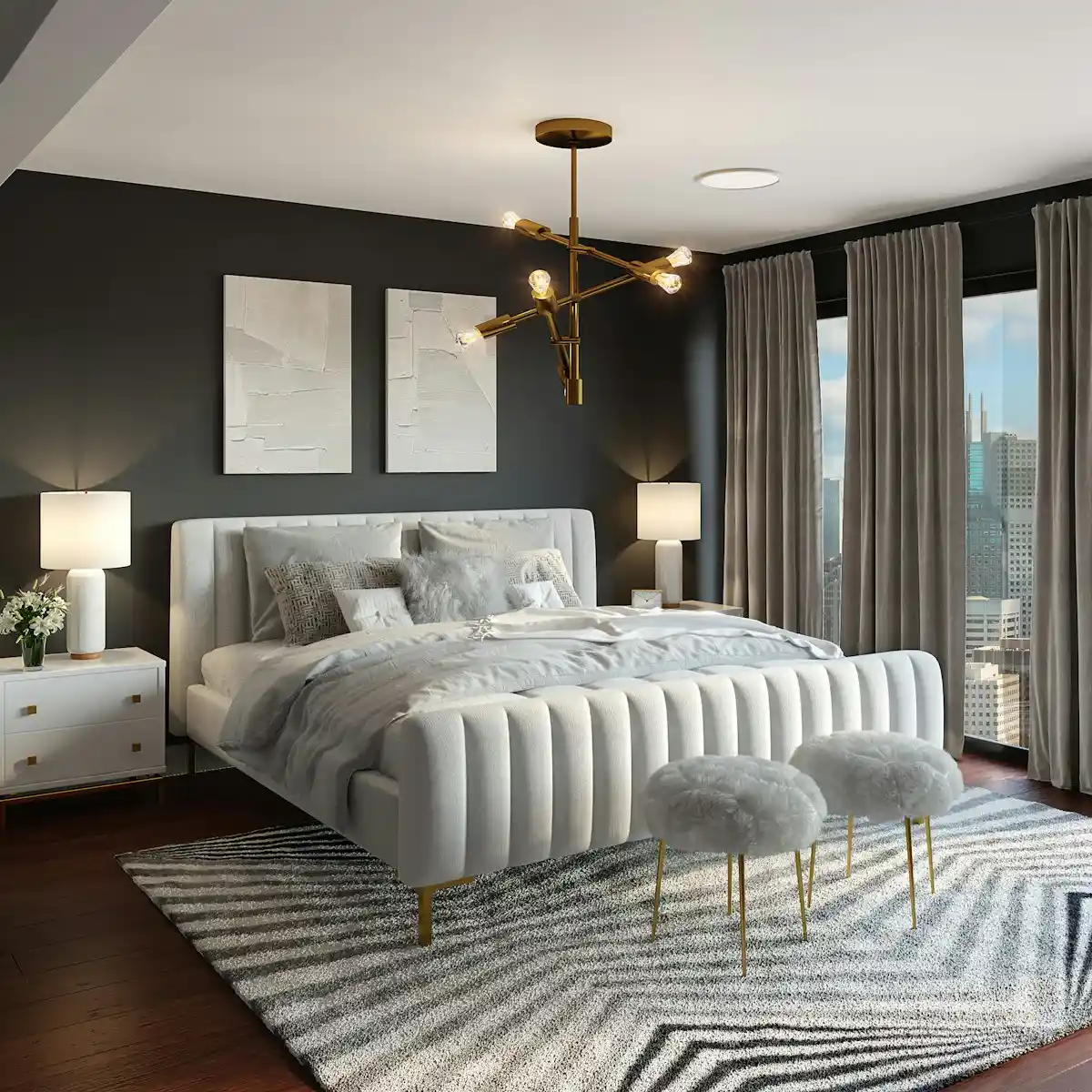
How to Make Small Bedroom Feel Bigger: Lowering Bed Heights for Airflow
Lowering your overall mattress height from the traditional thirty inches down to a modern eighteen or twenty inches immediately opens over one hundred cubic feet of unoccupied vertical air volume above your sleeping area.
In a small bedroom, the bed is the largest single piece of furniture. Placing a tall box spring, thick pillow-top mattress, and a towering headboard into an eight-by-ten-foot room visually swallows the space. Looking from the doorway, your eye hits a massive solid mass that blocks sightlines toward windows and corners.
Apply these bed scaling principles to instantly expand room perception:
- Adopt a Low-Profile Platform Frame: Switch to a platform bed frame that eliminates the need for a box spring. A platform sitting eight to ten inches off the floor paired with a ten-inch mattress keeps your sleeping plane right at nineteen inches high. This leaves expansive open wall area above the bed, making the ceiling feel dramatically higher.
- Choose a Slender, Low-Profile Headboard: Replace towering bookcases or heavy wingback headboards with a slim upholstered panel extending no higher than forty inches from the floor. Better yet, choose a headboard finished in the exact fabric tone as your wall paint to soften its architectural boundary.
- Expose Continuous Flooring Under the Bed: Avoid solid block box beds that touch the floor around their entire perimeter. A platform bed resting on slender, tapered wooden or black metal legs allows light and visible flooring to travel underneath the mattress, tricking your eyes into seeing a larger room floor plan.
Keep bedding tailored and tucked. Fluffy, oversized comforters that pool onto the floor create bulky horizontal visual weight. Choose crisp linen quilts, tucked-in duvet covers, and low-profile pillows that maintain razor-sharp mattress contours.
Strategic Mirror Placement: Doubling Natural Daylight Angles
Positioning a full-length mirror on the wall adjacent to your bedroom window reflects incoming natural daylight across dark interior corners, visually doubling the perceived room depth without causing harsh direct sunlight glare.
Mirrors are the most celebrated visual space tools in interior styling, but improper placement ruins their effectiveness. Hanging a mirror directly opposite a window bounces blinding midday sun into your eyes while you sit in bed. Even worse, placing a mirror where it reflects a cluttered clothing hamper or messy desk simply doubles the visual chaos in the room.
Maximize natural illumination and depth using these mirror tactics:
- The Adjacent Window Angle Rule: Hang or lean an oversized floor mirror on the perpendicular wall located ninety degrees from your primary window. This geometry captures diffuse natural daylight and bounces it across the darker half of the room, washing shadowy corners with soft illumination throughout the day.
- Opt for Slender or Frameless Profiles: Heavy carved baroque frames create visual bulk that defeats the purpose of the mirror. Select thin metal pill-shaped mirrors, slender brass standing leaners, or frameless polished-edge glass panels that blend smoothly into the wall plane.
- Mirrored Closet Door Modernization: If your rental features dated sliding mirrored closet doors with gold frames, do not cover them up. Keep the glass pristine and replace the gold track hardware with clean matte black spray paint, turning full-wall mirrors into modern architectural features that double room width.
Always verify what your mirror reflects from your bed. Ensure the mirror reflects pleasant elements like a potted fiddle-leaf fig, clean wall art, or an open doorway rather than unmade sheets or utility cords.
High-and-Wide Curtain Rod Physics: Expanding Window Scale
Mounting your curtain rod two inches below the ceiling molding and extending the rod brackets ten inches past the outer window casing tricks the human brain into perceiving small windows as grand, wall-to-wall architectural apertures.
Most rental bedrooms feature modest single windows centered on exterior walls. Homeowners instinctively hang cheap curtain rods directly on top of the window frame, allowing drapery panels to hang strictly within the glass boundary. This mistake blocks twenty to thirty percent of available natural light even when curtains are fully opened, making the window look miniature and the walls feel pinched.
Transform your bedroom windows with these drapery rules:
- Insist on Floor-Kissing Hems: Curtains that hover three inches above the floor create an awkward horizontal chop that makes walls look short. Order ninety-six-inch or one-hundred-and-eight-inch panels and hem them so the fabric grazes the finished floor within a half-inch margin.
Choose lightweight semi-sheer linen fabrics in warm white, soft ivory, or light natural flax. Avoid heavy velvet or blackout drapes in dark charcoal, which absorb light and close in the room like heavy theatrical stage curtains.
Small Bedroom Visual Space Techniques Matrix: Effort vs Impact
Evaluating small bedroom design tricks requires comparing financial investment, installation effort, and the tangible magnitude of perceived spatial expansion.
Not every upgrade delivers identical visual returns. Some simple adjustments take twenty minutes and cost nothing, while others require buying new furniture. Review this comparison matrix to prioritize high-impact space tricks for your bedroom:
| Design Strategy | Implementation Effort | Estimated Cost | Perceived Room Expansion Impact | Primary Aesthetic Mechanism |
|---|---|---|---|---|
| Low-Profile Platform Bed | Moderate (Furniture swap) | $150 to $350 | Exceptional (Adds 100+ cu ft overhead) | Lowers horizontal mass, opens ceiling air |
| High-and-Wide Curtain Rod | Low (Drill 2 to 3 brackets) | $40 to $90 | High (Doubles perceived window size) | Unbroken vertical fabric lines to ceiling |
| Adjacent Floor Mirror Angle | Very Low (Lean against wall) | $60 to $130 | High (Doubles ambient daylight) | Reflects light into shadowy corners |
| Monochromatic Paint & Trim | Moderate (Weekend painting) | $70 to $120 | Exceptional (Erases wall boundaries) | Blurs room perimeter edge junctions |
| Wall-Mounted Floating Nightstands | Low (Simple drywall anchors) | $50 to $110 | Moderate (Preserves open flooring) | Maintains 12-inch clear floor sightlines |
Notice how high-and-wide window drapery and adjacent floor mirrors deliver high visual returns with minimal financial expense and quick setup times. Combining these simple surface tweaks with a low-profile bed produces a compounded feeling of airy calm.
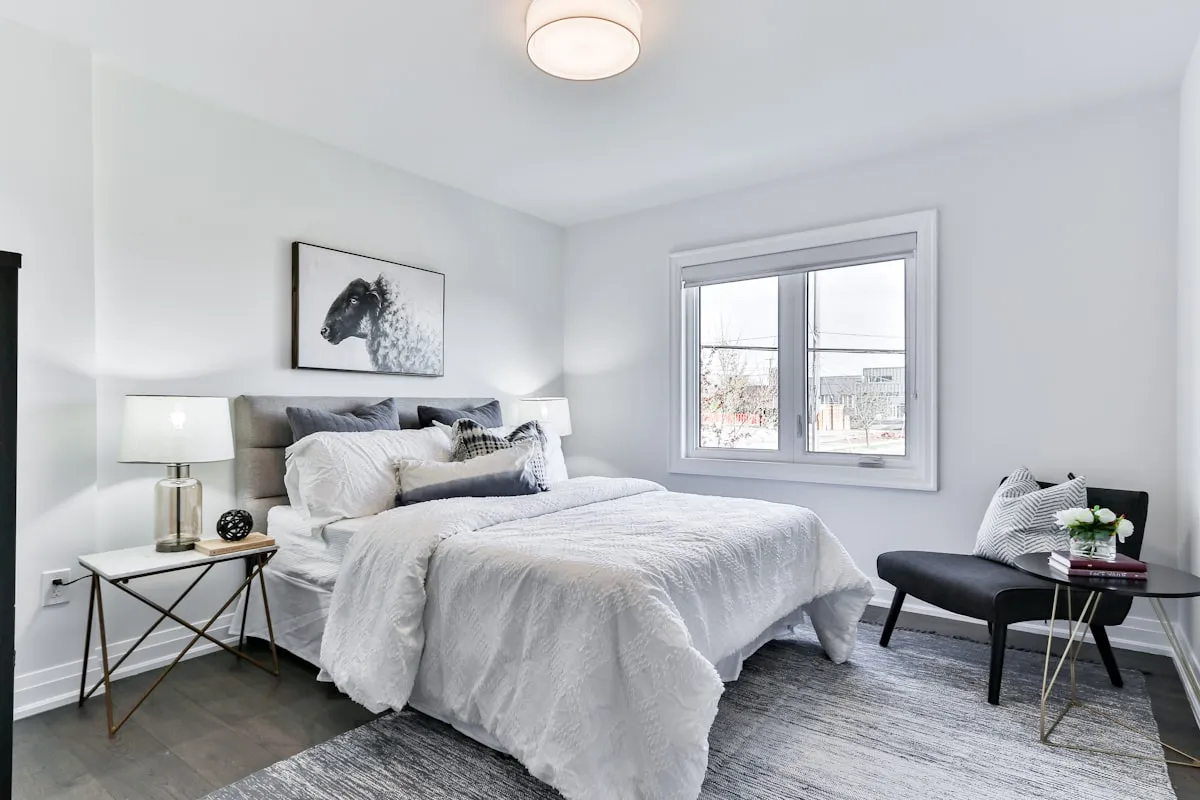
Monochromatic Color Layering: Erasing Hard Room Boundaries
Painting walls, baseboards, doors, and window trim in matching monochromatic warm neutrals with a Light Reflectance Value above sixty-five softens sharp corner junctions and prevents the eye from perceiving rigid room boundaries.
Traditional interior painting emphasizes white trim against darker wall paint. In a small bedroom, however, stark contrasting trim draws a sharp outline around the floor perimeter, highlighting exactly where the room ends and emphasizing cramped dimensions.
Use color drenching and tonal layering to expand your space:
-
- Adopt the Color Drenching Technique: Paint your walls, baseboards, door frames, and even your closet doors in the exact same paint hue. Use a flat or eggshell sheen on walls and a durable satin sheen on the trim. When walls and woodwork share a uniform color, the eye glides smoothly across corners without stopping at sharp boundary lines.
-
- Choose High-LRV Warm Neutrals: Select paint shades with a Light Reflectance Value (LRV) between sixty-five and seventy-five, such as creamy alabaster, soft linen, warm greige, or pale oatmeal. These tones reflect incoming daylight around the room while avoiding the cold, sterile feeling of hospital white.
-
- Avoid High-Contrast Accent Walls: Painting a single dark navy or charcoal accent wall behind the bed breaks the room in half visually. It pulls the back wall forward, making the bedroom look shorter. Keep all four walls in the same airy tone to preserve unified depth.
Carry this tonal harmony into your bedding and area rugs. Layering varying textures in the same color family, such as a chunky ivory knit throw over oatmeal linen sheets on a light wool rug, delivers rich sensory interest without creating visual clutter.
Floating Furniture and Wall-Mounted Nightstands for Open Floor Flow
Mounting floating cantilevered nightstands and plug-in swing-arm wall sconces preserves twelve inches of clear floor area underneath bedside tables, preventing bulky furniture bases from suffocating narrow walking pathways.
Bedside table zones in small rooms become immediate problem areas. Standard three-drawer nightstands measure twenty-four inches wide and twenty inches deep, crowding against closet doors or blocking drawers from opening. Bulky table lamps with large fabric shades consume seventy percent of the nightstand surface, leaving no room for books, glasses, or water carafes.
Free up your bedside floor plan using these floating solutions:
-
- Install Minimalist Floating Shelves or Drawers: Choose a floating bedside shelf measuring fourteen inches wide and ten inches deep. Anchoring it directly into drywall so the top aligns with your mattress leaves ten to twelve inches of completely open floor space beneath. Seeing continuous flooring extend all the way to the baseboard makes the room feel uncrowded.
-
- Switch to Plug-In Wall Sconces: Ditch tabletop lamps in favor of plug-in swing-arm brass or matte black wall sconces. Mount the sconces thirty inches above your mattress on either side of the headboard. This clears your bedside surface completely while providing direct, directional reading light.
-
- Scale Rugs Wall-to-Wall: Avoid tiny postage-stamp rugs that float awkwardly under the bed. A small rug visually cuts the floor into separate islands. Choose a large eight-by-ten-foot rug that slips under two-thirds of the bed and extends within twelve inches of the side walls, uniting the entire floor plane into a cohesive zone.
By lowering your bed profile, extending curtain rods to the ceiling, angling mirrors to reflect daylight, using monochromatic paint formulas, and floating bedside storage, you can turn a compact bedroom into a tranquil, spacious sanctuary.
Consult the American Psychological Association environmental studies for verified technical documentation, safety codes, and official industry standards.
Frequently Asked Questions About Making Small Bedrooms Look Bigger
What is the best bed size for a small bedroom?
A queen bed fits rooms ten by ten feet or larger, while full-size beds suit smaller spaces. Keep bedside pathways at twenty-four inches wide so doors and dresser drawers open without hitting the mattress frame.
Should you paint a small bedroom light or dark?
Light colors with a Light Reflectance Value above sixty-five are best for small bedrooms lacking big windows. Warm whites, pale greiges, and soft creams bounce natural daylight, creating an open, expansive visual atmosphere.
Where should you hang a mirror in a small bedroom?
Hang or lean a mirror on the wall adjacent to your window at a ninety-degree angle. This position catches incoming daylight and bounces it across dark room corners without creating blinding direct reflections while resting.
Can you put a king bed in a small bedroom?
Yes, but only if you choose a low-profile platform frame and eliminate bulky nightstands. Use wall-mounted floating ledges and sconces to ensure you maintain twenty inches of walking clearance around the mattress edges.
How high should you hang curtains to make a bedroom feel bigger?
Hang curtain rods two inches below the ceiling or crown molding, extending brackets ten inches past window casings. Long vertical drapes draw the gaze upward, making standard eight-foot ceilings feel significantly taller.
Do dark rugs make a small bedroom look smaller?
Yes, dark rugs absorb light and outline tight floor areas. Choose light neutral wool or jute rugs in creamy ivory or oatmeal, sizing them generously to cover most of the floor for unified visual flow.