Chandelier Sizing 101: How to Pick the Perfect Chandelier Size for Your Dining Table
Editorial Disclosure: We independently verify all interior design measurements, architectural clearances, and electrical load standards. Our sizing guides remain objective and unbiased. This guide contains contextual affiliate links. If you purchase through them, we may earn an affiliate commission at no extra cost to you.
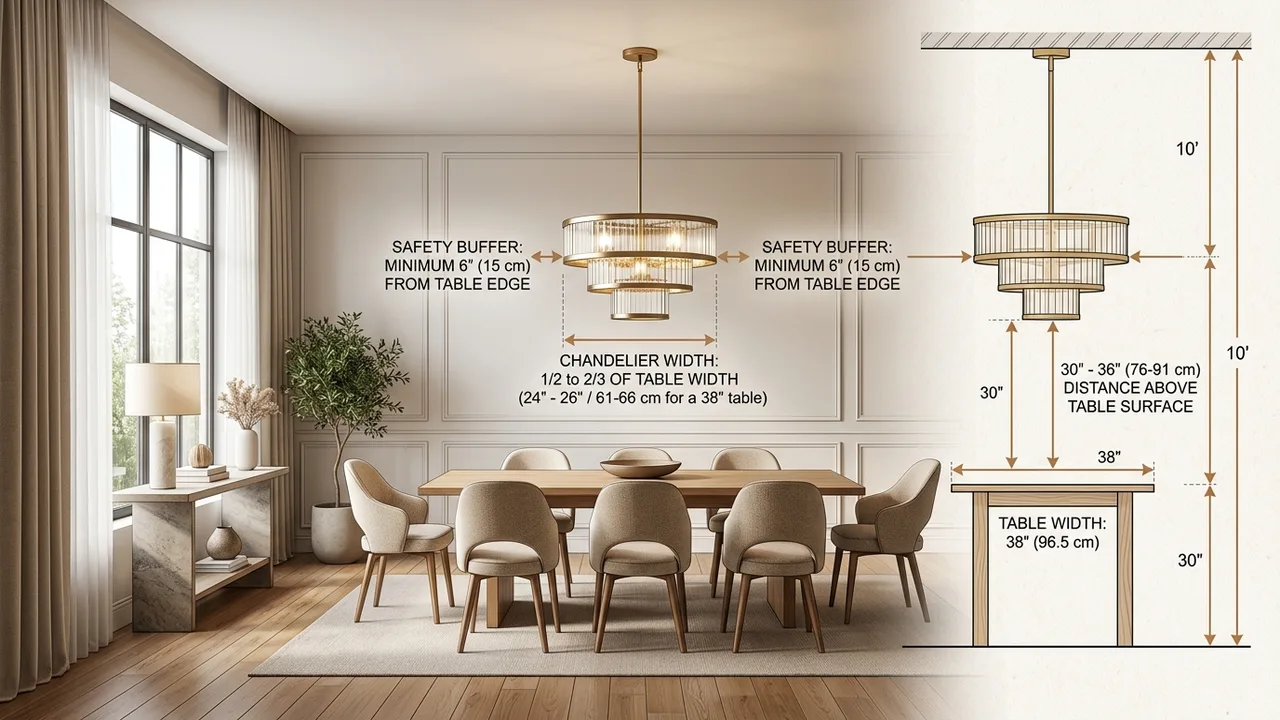
Calculating the ideal chandelier size for your dining table requires balancing fixture diameter with tabletop proportions and ceiling drop. A dining room chandelier must have a diameter or width equal to one-half to two-thirds (1/2 to 2/3) of your dining table width. For standard 8-foot ceilings, the fixture bottom must hang 30 to 36 inches above the tabletop. For open spaces without a table, add room length to room width in feet to determine ideal fixture diameter in inches.
Choosing the wrong fixture causes daily frustration. An oversized chandelier crowds guests, casts harsh glare, and creates head-knock hazards. An undersized fixture looks like a lost toy floating beneath ceiling joists. This guide details exact sizing math for rectangular, round, and extendable tables, vertical height formulas for tall ceilings, structural box load limits, and bulb Kelvin ratings to create an inviting dinner ambiance.
Quick Reference Matrix: Dining Table Dimensions vs. Chandelier Proportions
Compare standard table dimensions against fixture widths, hanging heights, socket counts, and lumen targets before shopping:
| Table Dimensions | Recommended Fixture Width | Hanging Height (8-Ft Ceiling) | Socket Count & Lumens | Best Fixture Style |
|---|---|---|---|---|
| 36″ x 60″ Rectangular (4 to 6 Seats) | 20 to 24 inches diameter | 30 to 34 inches above tabletop | 4 to 6 bulbs (2,400 to 3,200 lm) | Round Ring or Compact Sputnik |
| 40″ x 72″ Rectangular (6 to 8 Seats) | 22 to 26 inches round OR 36″ linear | 30 to 36 inches above tabletop | 5 to 8 bulbs (3,000 to 4,000 lm) | Medium Linear Island Chandelier |
| 44″ x 84″ to 96″ Rectangular (8 to 10 Seats) | 42 to 54-inch linear fixture | 32 to 36 inches above tabletop | 6 to 10 bulbs (3,600 to 5,000 lm) | Elongated Linear Trestle Light |
| 42″ to 48″ Round Table (4 Seats) | 21 to 28 inches diameter | 30 to 34 inches above tabletop | 4 to 6 bulbs (2,400 to 3,200 lm) | Circular Drum or Tiered Ring |
| 54″ to 60″ Round Table (6 to 8 Seats) | 27 to 36 inches diameter | 30 to 36 inches above tabletop | 6 to 8 bulbs (3,200 to 4,500 lm) | Orb Chandelier or Radial Sputnik |
| Ceilings 9 Feet and Taller | Maintain width; add vertical tiers | Raise +3 inches per foot over 8 ft | Multi-tier candle clusters | Tall Tiered Candelabra Fixture |
Calculate Your Ideal Chandelier Proportions Online
Table shape dictates whether a circular ring, linear trestle, or tiered fixture balances best. Use our free tool to verify exact fixture width, hanging drop, and lumen targets:
Enter room dimensions, table width, and ceiling height to calculate custom fixture sizing and circuit dimmer ratings in real time.
The Table-First Rule: Calculating Chandelier Size for Dining Table Proportions
Dining table dimensions govern chandelier sizing, not perimeter walls. If you size a fixture to room walls over a modest table, the oversized fixture dwarfs the furniture and casts uncomfortable shadows.
Apply the One-Half to Two-Thirds (1/2 to 2/3) Formula:
- Measure dining table width across its narrowest span using a steel tape measure. Standard dining tables measure 36 to 44 inches wide.
- Multiply table width by 0.50 to establish minimum fixture diameter (40 in x 0.50 = 20 inches).
- Multiply table width by 0.66 to establish maximum fixture diameter (40 in x 0.66 = 26.4 inches).
- Select a fixture with a diameter spanning 20 to 26 inches for a 40-inch wide table.
The 6-Inch Safety Buffer
Always verify the 6-inch perimeter safety clearance. Outermost metal arms, shades, or crystals must sit at least 6 inches inside the outer table edge on all sides. This setback protects guests from hitting their foreheads against glass when leaning across the table or rising from dinner.
The Visual Weight Factor: Why Diameter Alone Can Deceive You
Physical diameter tells half the story. Two chandeliers with identical 30-inch diameters command vastly different visual presence. Interior decorators evaluate visual mass alongside measurements to prevent spatial imbalance.
- Airy Open-Frame Fixtures: Geometric cages and multi-arm styles like a modern brushed brass sputnik chandelier feature negative space between arms. Because you see through the fixture to walls beyond, these designs appear light. Select fixtures near the upper end of your scale (closer to 2/3 table width) so the light commands adequate presence.
- Solid Opaque Fixtures: Heavy linen drum shades, spun metal domes, and dark ceramic pendants block sightlines completely. Solid materials carry substantial visual weight. Keep solid drum chandeliers near the lower end of your sizing scale (closer to 1/2 table width) to prevent visual crowding.
- Dense Refractive Fixtures: Tiered crystal chandeliers and cast iron fixtures catch light from every angle. Dense clusters of faceted prisms create heavy visual bulk. Maintain the 6-inch safety margin strictly to keep crystals clear of seated guests.
Sizing by Table Geometry: Round, Rectangular, and Extendable Tables
Matching chandelier silhouette to table geometry ensures balanced illumination. Mismatched shapes leave end seats in shadow while concentrating glare at the center.
Round and Square Dining Tables
Round tables pair naturally with circular fixtures, spherical globes, or radial sputniks. Concentric geometry reinforces the circular silhouette of the table and distributes light evenly toward every place setting. For a standard 48-inch round pedestal table, choose a 24 to 28-inch circular fixture. For a 60-inch round table seating six to eight guests, select a 30 to 36-inch diameter chandelier. Avoid hanging rectangular linear lights over round tables. The elongated frame cuts across circular sightlines and leaves side seats under-illuminated.
Long Rectangular Tables (72 to 108 Inches Long)
Long rectangular tables present a spatial challenge. A single round chandelier over an 8-foot table leaves diners at both ends in shadow. Choose between two configurations:
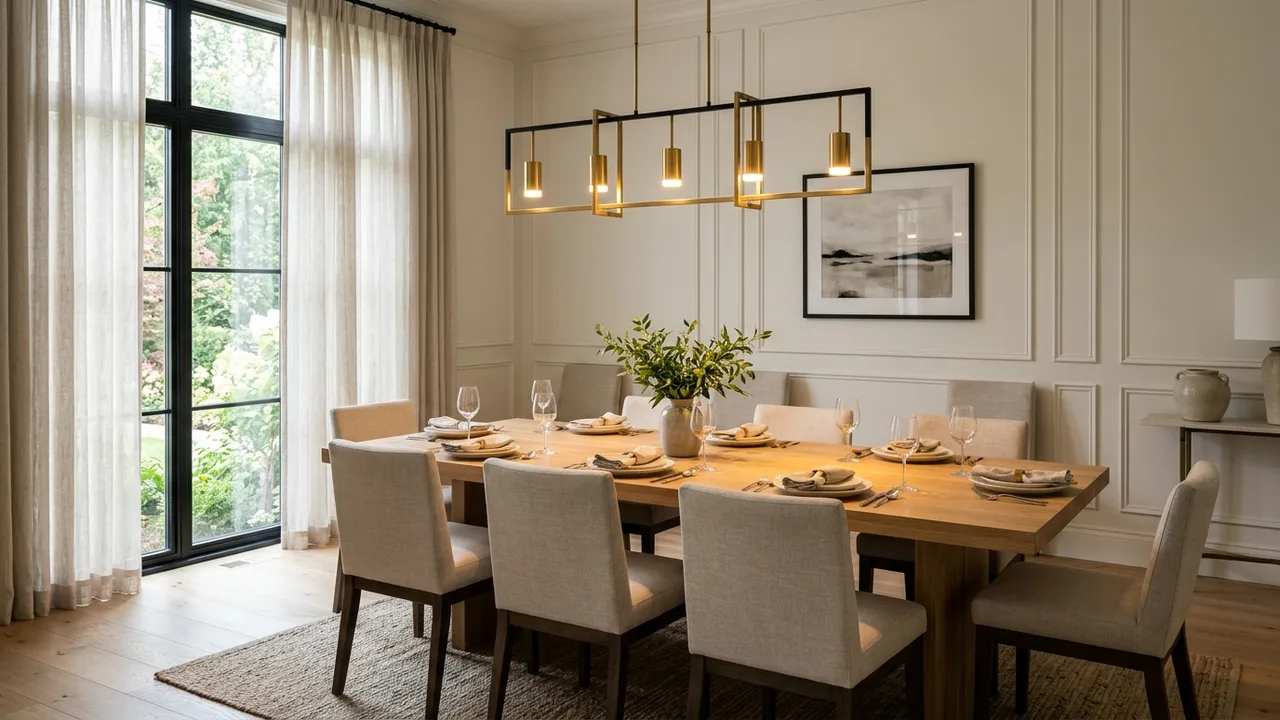
- Elongated Linear Chandelier: A quality modern linear dining room chandelier must measure one-half to two-thirds of total table length. For an 84-inch dining table, select a linear light spanning 42 to 54 inches. Leave at least 12 to 15 inches of open table exposed at each end for balanced proportions.
- Dual Matching Pendants: Mount two identical smaller chandeliers along the center axis of the table. Divide table length by three to position both ceiling boxes. For an 90-inch table, place each light roughly 30 inches inward from outer table edges for balanced light and architectural symmetry.
The Extendable Table Dilemma: Daily vs. Extended Sizing
Homeowners with extendable leaf tables often debate sizing for daily 6-seat use versus holiday 10-seat dining. Designers follow a clear rule: always size the fixture for the daily, compact table state. Your table remains in its standard size for 350 days each year. A chandelier sized for an extended table overpowers the room on weeknights.
For extended holiday tables, select fixtures with wide lateral light dispersal or illuminate table ends with perimeter wall sconces.
Hanging Height Mechanics: The 30 to 36-Inch Rule and Ceiling Adjustments
The standard hanging height for a dining room chandelier places the bottom of the fixture between 30 and 36 inches above the tabletop surface when mounted beneath standard 8-foot ceilings. This height range satisfies three essential dining requirements:
- Direct Eye Contact: At 30 to 36 inches above the table, the fixture hangs above seated eye level. Guests talk, smile, and pour drinks without craning their necks around brass rods or glass crystals.
- Intimate Light Canopy: The chandelier defines a dedicated zone of warmth over the meal. Hanging higher than 36 inches under an 8-foot ceiling detaches the light from furniture, making the fixture feel like hallway illumination.
- Glare Shielding: Seated guests view the fixture from below its lower plane. Proper hanging height prevents direct line-of-sight exposure to exposed bulb filaments.
Height Adjustments for Tall, Vaulted, and Cathedral Ceilings
When ceiling height exceeds the 8-foot standard, raise the chandelier by 3 inches for every additional foot of ceiling height. This adjustment fills vertical air volume without severing the visual connection to your dining table:
- 8-Foot Ceiling: Hang the bottom 30 to 34 inches above the tabletop.
- 9-Foot Ceiling: Hang the bottom 33 to 37 inches above the tabletop.
- 10-Foot Ceiling: Hang the bottom 36 to 40 inches above the tabletop.
- 11-Foot Ceiling: Hang the bottom 39 to 43 inches above the tabletop.
- 12-Foot Ceiling: Hang the bottom 42 to 46 inches above the tabletop.
For vaulted ceilings, verify that your fixture includes a swivel canopy mount. Swivel canopies attach flat against angled ceilings while allowing downrods to hang plumb. Alternatively, use a chain suspension that hangs plumb automatically.
The Room-Size Formula: Sizing for Open-Concept Spaces and Foyers
If you need to select a statement chandelier for an open foyer, great room, or open-concept living area where no table sits beneath the light, abandon table measurements. Size the fixture based on total room dimensions using the classic Room Addition Formula:
- Room Length (ft) + Room Width (ft) = Fixture Diameter (in).
- 12 x 14 Foot Open Dining Area: 12 + 14 = 26. Choose a 26-inch chandelier.
- 14 x 18 Foot Great Room: 14 + 18 = 32. Choose a 32-inch chandelier.
- 16 x 20 Foot Foyer: 16 + 20 = 36. Choose a 36-inch chandelier.
Remember this crucial rule: The table width rule ALWAYS overrules the room size formula whenever a dining table sits beneath the fixture. Placing a 34-inch wide table inside a 16×20 foot room yields a 36-inch chandelier under the room formula. That 36-inch fixture overhangs the 34-inch table on both sides, and creates an awkward physical hazard. Always size to the table first.
Electrical Physics & Structural Safety: Ceilings, Boxes, and Off-Center Fixes
Before ordering a heavy iron or crystal chandelier, inspect the structural capacity of your ceiling electrical box. Many DIY installations fail because homeowners overlook mechanical load limits and electrical alignment.
Ceiling Box Weight Limits: 50-Pound Safety Threshold
Standard residential plastic and lightweight metal ceiling junction boxes support static fixtures weighing up to 50 pounds. If your statement crystal or forged bronze fixture exceeds 50 pounds, never screw it into a standard ceiling box. The weight will loosen drywall screws and cause ceiling sag or catastrophic failure.
For heavy fixtures, hire an electrician to install a heavy duty fan-rated ceiling support brace box. Expandable steel braces lock between ceiling joists and support fixtures up to 150 pounds safely. Maintain crystal fixtures without disassembly using an evaporative drip-free crystal chandelier spray cleaner that leaves prisms spotless.
The Off-Center Junction Box Problem (The Reddit Fix)
Builders frequently place ceiling boxes at room center, but walkways and windows often force dining tables off-center. Never move your table into an awkward traffic lane just to align with a misplaced ceiling box.
Solve an off-center ceiling box with three reliable methods:
- Decorative Swag Hook: Choose a chain or cord fixture, mount the canopy over the existing box, and drop the light through a decorative ceiling swag hook kit anchored directly over table center.
- Elongated Canopy Bridge: If your box sits 4 to 8 inches off-center, a linear chandelier with an elongated canopy covers the original opening while dropping downrods over table center.
- Shallow Box Relocation: An electrician can install a shallow pancake box above the table center and pull cable across the ceiling joists without opening drywall trenches.
Lumens, Bulb Chemistry & Ambiance: Eliminating Dinner Table Glare
Illumination quality matters as much as fixture scale. A beautifully proportioned chandelier that uses harsh, cold, or glaring bulbs ruins dining comfort. A comfortable dining space requires 30 to 40 foot-candles of light, which equals roughly 3,000 to 4,000 total lumens for an average 12×14 foot dining room.
Follow these three essential lighting principles to achieve a warm restaurant-quality atmosphere:
- Distribute Lumens Across Multiple Sockets: Avoid chandeliers relying on a single high-output bulb. Choose fixtures with 5 to 8 sockets powered by dimmable E12 candelabra LED bulbs. Multiple 40-watt equivalent LED bulbs (300 to 450 lumens each) create soft illumination that flatters skin tones and eliminates harsh table shadows.
- Select 2700K Warm White Color Temperature: Use 2700K warm white LED bulbs with a 90+ Color Rendering Index (CRI). A 2700K color temperature provides a golden glow that makes food appetizing and flatters skin tones. Avoid 4000K or 5000K daylight bulbs, which cast cold commercial light.
- Install a Dedicated Wall Dimmer Switch: Wire your fixture to a Lutron Diva LED+ dimmer switch. Run the chandelier at full brightness for cleaning, then dim to 30 percent during meals for candlelit warmth. Ensure matching TRIAC or ELV dimming technology to prevent bulb buzzing.
Frequently Asked Questions
What if my ceiling junction box is not centered over the table?
Install a decorative swag hook kit to drape the chain from the off-center box to a ceiling hook centered over the table. Alternatively, use a fixture with an oversized canopy plate that conceals the offset box while dropping the downrod at the table center.
Can a dining room chandelier be too large?
A chandelier is too large if it extends closer than 6 inches to table edges or exceeds two-thirds table width. Oversized fixtures obstruct conversational sightlines and risk head-strikes when guests stand up.
How much weight can a standard ceiling junction box support?
Standard residential ceiling boxes support fixtures up to 50 pounds. For chandeliers weighing more than 50 pounds, install a fan-rated steel brace clamped securely between ceiling joists.
What bulb color temperature works best for dining room chandeliers?
The best color temperature is 2700K warm white with a 90+ CRI rating. This warm white spectrum provides a flattering, candle-like glow that enhances food presentation and creates an inviting dinner atmosphere.
How do you clean chandelier crystals without dismounting the fixture?
Place a thick towel over the table beneath the fixture and switch off the power. Spray drip-free chandelier cleaner liberally over crystals until liquid drips onto the towel. The solution dissolves dust and evaporates spot-free without hand buffing.
Coordinate Your Dining Room Lighting with Whole-Home Clearances
Mastering architectural dimensions creates a seamless, elegant living environment. Explore our design formulas and clearance guides to refine your interior layout:
- Dining Room Clearance: How Much Space Do You Really Need Between Table and Wall?
- How High to Hang Pendant Lights Over a Kitchen Island (The 30-36 Inch Rule)
- How Far Should Your Coffee Table Be From Your Couch? (The 18-Inch Rule)
- What Wood Tones and Paint Colors Go with Honey Oak Trim?
- What Size Rug for a Queen Bed? Placement Rules, Measurements & Diagram Guide