What Size Rug for a Queen Bed? Placement Rules & Layouts
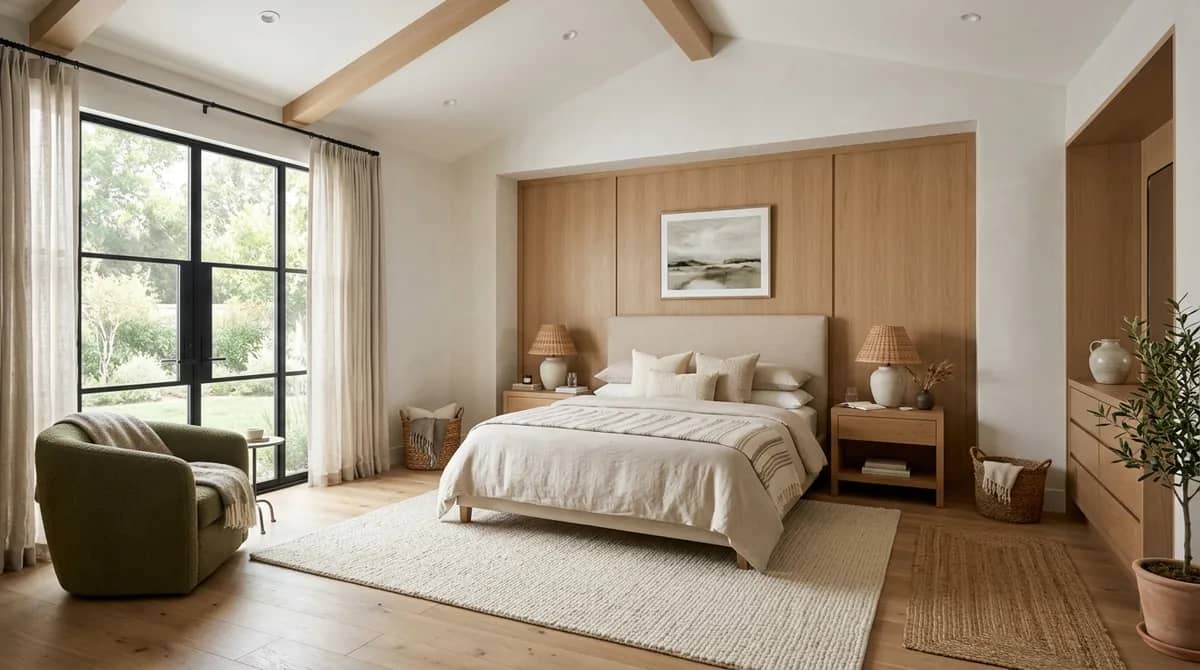
An 8×10 foot area rug provides the best proportion and balance for a queen bed. This size extends 24 inches past each mattress side. It leaves 36 inches of rug at the footboard. Compact bedrooms under 11×12 feet work better with a 6×9 rug. Expansive master bedrooms over 14×16 feet require a 9×12 rug.
Reader Disclosure: This post contains contextual affiliate links. If you purchase through them, we may earn an affiliate commission at no additional cost to you. We only recommend products tested for quality and performance.
Choosing the correct rug dimensions establishes visual stability across your bedroom floor. It prevents nightstand wobble. It protects hardwood floors from heavy furniture legs. The right rug also ensures warm, cushioned steps when you get out of bed each morning.
Quick Reference: Queen Bed Area Rug Sizes, Clearances & Room Scale
Compare standard rug dimensions against mattress margins, minimum room sizes, and nightstand placement rules. The table below provides verified measurements, extension numbers, and recommended floor plans for queen bedrooms.
| Rug Dimension | Side Extension Past Mattress | Foot Extension Past Bed | Recommended Room Dimensions | Nightstand Position | Best Floor Plan Scenario |
|---|---|---|---|---|---|
| 8×10 Feet (Standard). | 24 inches per side. | 36 inches at footboard. | 11×13 ft to 13×15 ft. | Completely on bare floor. | Classic bedroom layouts with standard walking lanes. |
| 6×9 Feet (Compact). | 18 inches per side. | 24 inches at footboard. | 10×10 ft to 10×12 ft. | Completely on bare floor. | Small urban apartments and guest rooms. |
| 9×12 Feet (Master Suite). | 36 inches per side. | 48 inches at footboard. | 14×16 ft and larger. | All four legs on rug surface. | Expansive suites with benches and lounge chairs. |
| Two 2.5×8 Runners. | 30 inches per side. | Floor exposed at foot. | Narrow rooms with wardrobes. | Flank mattress on bare floor. | Rooms with floor HVAC vents or tight perimeter pathways. |
What Size Rug for a Queen Bed Works Best in Different Room Layouts?
A standard queen mattress measures 60 inches wide by 80 inches long. Bed frames add 2 to 5 inches of extra width on each side. An 8×10 rug provides the recommended 24-inch landing zone on both sides of your frame. Smaller 6×9 rugs work well when bedroom width stays below 10 feet.
Room proportions determine how an area rug interacts with perimeter walls and closet doors. Always leave at least 18 to 24 inches of exposed hardwood between rug edges and baseboards. This negative space keeps the bedroom feeling open. It prevents the look of wall-to-wall carpeting.
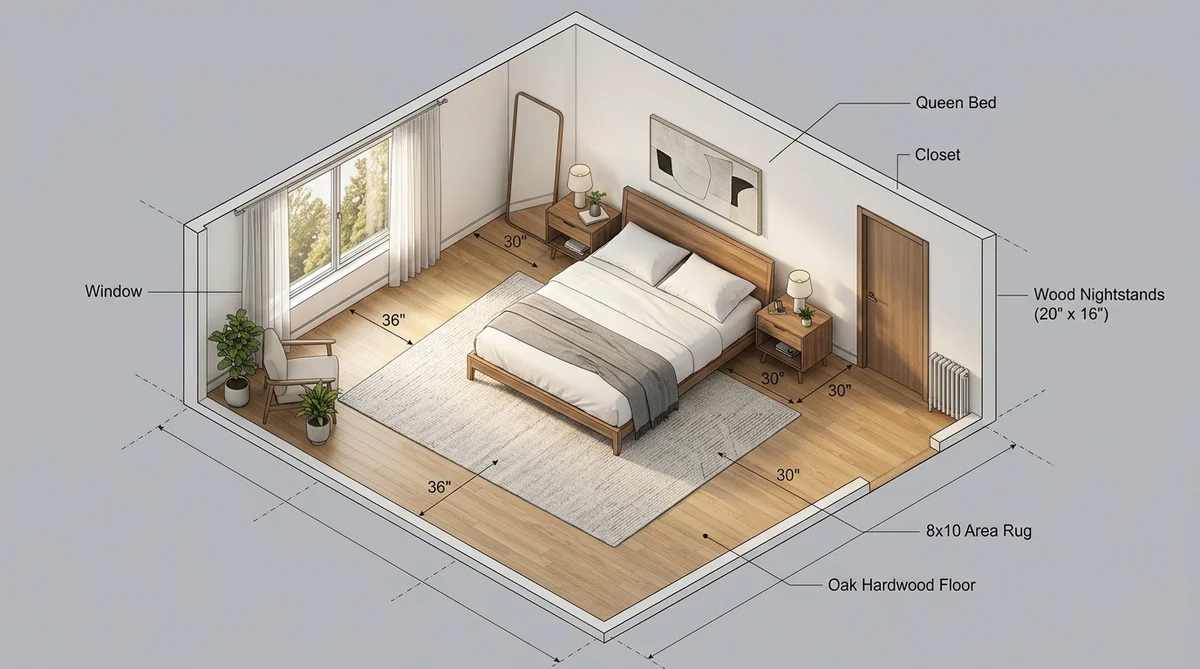
The dimensions of an 8×10 rug create balanced proportions under a standard queen frame:
- Rug width measures 96 inches across. With a 60-inch mattress, you gain 18 to 24 inches of exposed rug along both sides.
- Rug length measures 120 inches along the floor. The bed frame covers 80 inches, leaving 36 to 40 inches of rug past the footboard.
- Nightstand clearance leaves the top 20 to 24 inches of floor bare. This allows both bedside tables to rest flat on level hardwood.
Interactive Bedroom Space Planning Tool
Room dimensions decide whether an 8×10 rug anchors your bed or crowds your walkways. Test your exact layout before you buy new flooring. Use our interactive tool to calculate clearances.
Calculate your room border setbacks and door margins with our free Rug Size and Placement Calculator. The tool checks bed sizes, walkway widths, and furniture clearances instantly.
The Blue Painter Tape Method: Pre-Purchase Floor Mapping
Map rug dimensions on your bare floor with painter tape before placing an order online. Tape lines reveal potential door clearance conflicts. They also verify walking lane widths. Live with the taped outline for two full days to confirm your layout before spending money.
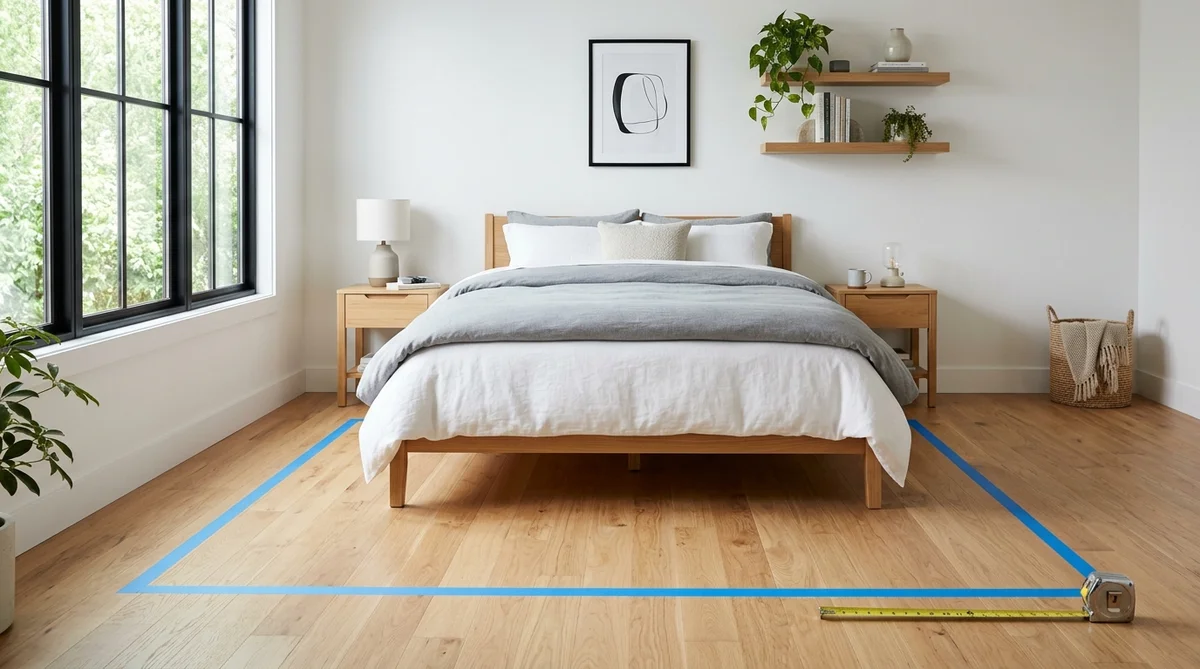
Use a roll of 1.5-inch Scotch Multi-Surface Blue Painter’s Tape to outline your floor plan. Complete these four practical steps across your bedroom floor:
- Measure 24 inches outward from your headboard wall to mark the starting edge of the rug. This line keeps both nightstands resting flat on the bare floor.
- Run continuous tape lines 96 inches wide and 120 inches long to match standard 8×10 rug proportions. Use a carpenter square at each corner.
- Swing bedroom and closet doors through their full range of motion. The bottom edge of each door must clear the tape line with at least one inch of margin.
- Step out of bed on both sides during your morning routine. Confirm that your feet land squarely within the taped border on both sides of the mattress.
The Three Designer-Approved Queen Bed Rug Layouts
Three distinct layouts accommodate different bedroom floor plans and square footage. The classic two-thirds placement serves most standard bedrooms. The full furniture layout anchors large master suites. Twin runner rugs provide a practical solution for narrow rooms and rental apartments.
Layout 1: The 2/3 Under-Bed Placement (The Industry Benchmark)
The two-thirds layout remains the industry standard for queen bedrooms. Place an 8×10 rug perpendicular to the length of the mattress. Slide the upper edge under the frame until it stops 6 to 8 inches in front of your nightstands.
This placement covers the lower two-thirds of the bed where you step down each morning. It extends 24 inches on both sides of the frame and leaves 36 inches at the footboard. Your nightstands stay completely on the bare hardwood. This positioning prevents tilted lamps and unstable table surfaces.
Layout 2: All Furniture on the Rug (The Master Suite Solution)
Expansive master bedrooms larger than 14×16 feet look best with a 9×12 foot area rug. Push the top edge of the rug near the headboard wall. Position the bed, both nightstands, and an end-of-bed bench entirely on top of the rug.
This comprehensive placement visually connects all bedroom furniture into one cohesive zone. It provides 36 inches of soft floor extension on each side of the mattress. Always verify that 12 to 18 inches of bare floor remains visible between the rug edges and outer baseboards.
Layout 3: Twin Bedside Runners (The Narrow Room & Rental Fix)
Long and narrow bedrooms under 10 feet wide often cannot accommodate an 8×10 area rug. In these tight floor plans, place two 2.5×8 foot runner rugs alongside each edge of the mattress. Runners provide morning foot comfort without crowding opposing wardrobe doors or dressers.
Twin runners cost substantially less than full-sized area rugs. They fit inside standard home washing machines. They also allow you to navigate around floor HVAC vents and radiator pipes. Position each runner so it begins at the front of your nightstands and runs to the foot of the bed.
Nightstand Stability: Solving the Half-On Furniture Dilemma
Never place the front legs of a nightstand on a rug while leaving the back legs on bare floor. This split placement creates a noticeable half-inch forward tilt. Table lamps wobble, drawer glides bind, and drink glasses can slide off the tabletop. Keep nightstands all on or all off the rug.
Use one of these three practical approaches to maintain a level tabletop surface:
- Apply the 6-inch setback rule by stopping an 8×10 rug 6 inches ahead of nightstand legs. All four legs rest evenly on bare floor.
- Upgrade to a 9×12 rug so that the entire footprint of each nightstand rests on the carpet pile.
- Insert rigid acrylic shims under the rear legs if your nightstand must straddle a rug edge. Check tabletop level with a small spirit level.
Navigating Door Clearances, HVAC Vents & Storage Beds
Inspect three critical architectural barriers before you purchase a bedroom area rug. Floor heating vents can overheat carpet backings and restrict furnace airflow. Low door bottoms frequently catch on thick carpet piles. Built-in storage drawers under platform beds can scrape against raised carpet loops.
Interior Door Swing & Pile Height Math
Measure the vertical gap between your bare floor and the bottom of your bedroom doors. Standard residential doors feature an undercut clearance between 0.5 and 0.75 inches. Select a flatweave or low-pile rug with a total height under 0.35 inches to prevent door contact.
Anchor thin rug borders using Low-Profile Non-Slip Rug Corner Grippers. These adhesive pads prevent curling edges and keep rug corners completely flat against the floor. Doors glide across the threshold without catching on loose carpet fibers.
Floor HVAC Supply Registers & Radiator Pipes
Never position an area rug over a forced-air floor heating register. Covering a register traps heat beneath the rug. This trapped heat damages latex backings and restricts home heating efficiency. Trapped thermal energy can also scorch hardwood floor finishes over extended winter months.
Maintain a minimum clearance of 4 to 6 inches between the rug edge and any metal floor grille. If a supply register sits near your bed frame, shift the rug position slightly. You can also switch to twin bedside runners that bypass floor vents entirely.
Platform Beds with Pull-Out Storage Drawers
Platform beds with integrated drawers require dedicated clearance beneath the mattress frame. Most storage drawers clear the finished floor by only 0.25 to 0.5 inches. A plush or medium-pile area rug will obstruct drawer movement. It causes drawer faces to drag against carpet fibers.
Choose an ultra-low flatweave wool rug or a woven jute foundation for bedrooms with storage beds. Alternatively, place bedside runners just outside the track of the opened drawers. This strategy preserves drawer functionality while still providing cushioned foot landing zones.
Buyer Checklist: Rug Materials, Rug Pads & Heavy Bed Setup
A sturdy queen bed frame exerts substantial downward pressure across small contact points. Choose resilient natural fibers and dense rug pads to prevent permanent indentation marks. High-grade wool fibers rebound after heavy furniture movement. Quality felt pads protect hardwood polyurethane from abrasive friction.
A dense 8×10 Hand-Tufted Wool Area Rug delivers exceptional durability for master bedrooms. Natural lanolin in wool yarn resists liquid spills and dirt accumulation. The natural crimp of wool fibers allows the pile to recover after heavy bed frames sit on the surface.
Underneath your rug, install a quarter-inch Dual-Surface Felt and Rubber Rug Pad. Needle-punched felt provides firm foot cushioning. The natural rubber backing grips slick hardwood floors. Avoid cheap open-cell PVC waffle pads, which can react with hardwood polyurethane finishes and leave permanent yellow grid stains.
Frequently Asked Questions
Can you place a 5×8 rug under a queen bed?
A 5×8 rug proves too compact for an under-bed layout beneath a queen frame. A queen mattress measures 5 feet wide by 6.7 feet long. When placed across the frame, a 5×8 rug leaves only 8 to 10 inches of exposed rug on each side. Your feet step onto cold hardwood every morning. Use a 5×8 rug solely at the foot of the bed or choose twin runners instead.
How much rug should stick out around a queen bed?
Interior designers recommend 18 to 24 inches of exposed rug along both sides of a queen bed. At the foot of the bed, extend the rug 24 to 36 inches past the frame. This proportion provides ample walking space. It also visually balances the weight of the headboard.
How much bare floor should show around the bedroom perimeter?
Leave 12 to 18 inches of exposed hardwood between the rug edges and your baseboards. In compact bedrooms measuring 10×11 feet or smaller, reduce this border to 8 inches. Maintaining exposed floor around the perimeter makes the room feel larger. It highlights your flooring material.
How do you clean hardwood under a large queen bed rug?
Vacuum the exposed rug surface weekly using suction-only mode to preserve yarn twists. Every three months, lift the perimeter edges to sweep away trapped dust. To clean beneath the bed without moving heavy furniture, fold back one side of the rug at a time. Wipe the exposed floor with a microfiber mop.
Coordinate Your Bedroom Layout with Related Sizing Guides
Proper clearances and furniture proportions create visual balance throughout your home. Explore our related furniture sizing guides for verified dimensions and placement rules:
- How Far Should a Coffee Table Be from Couch? Clearances for living room pathways.
- Dining Room Table Clearance Distance from Wall. Chair pullout guidelines.
- TV Mounting Height Above Console Calculator. Ergonomic viewing heights.
- Non-Toxic Area Rugs for Living Rooms. Low-VOC materials and natural fibers.