How to Mix Metal Finishes in a Kitchen or Bathroom: The 70/30 Designer Rule
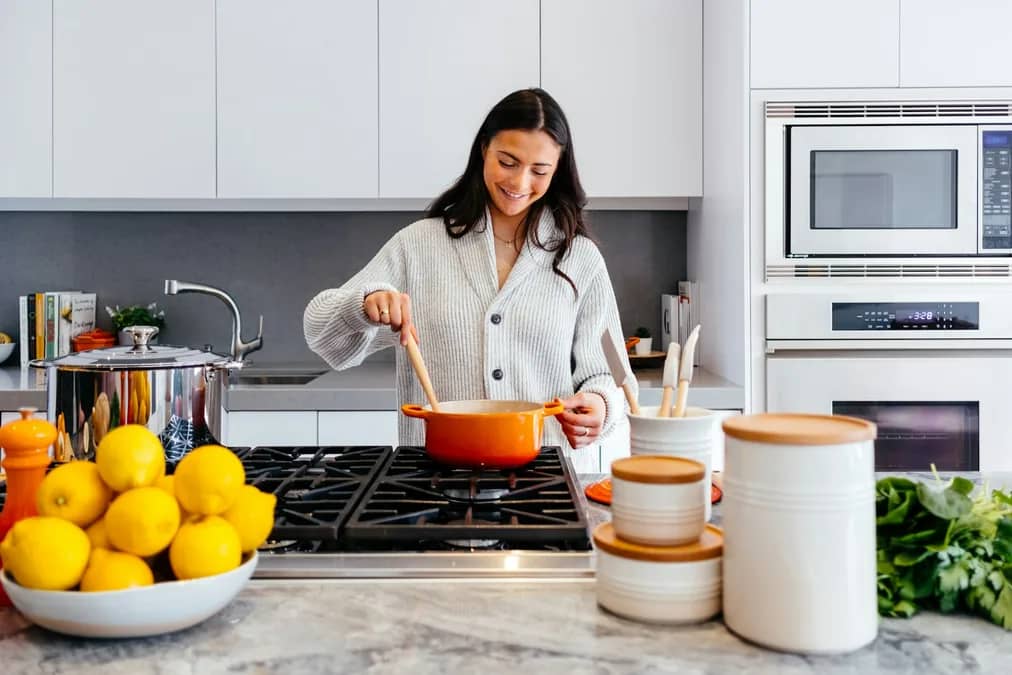
Mix metal finishes in a kitchen or bath using the 70/30 rule. Make 70 percent of hardware one dominant finish. Reserve 30 percent for an accent metal on faucets and lights. Limit small baths to two metals. Allow three metals in large kitchens.
Reader Disclosure: This home decor guide contains affiliate links. Buying through our links may earn us a small commission. We recommend cabinet pulls, faucets, and light fixtures based on workshop tests, electroplate ratings, and residential durability. Read our complete editorial policy.
Matching every handle, faucet, and light creates a flat, builder-grade look. Designers mix metals to build visual depth across cabinets and sinks. Repeat each finish twice in a room. This repetition creates a curated, custom look.
Kitchen Hardware Ratio Tool: Count your cabinet pulls, faucets, and light fixtures. Verify your 70/30 balance before ordering hardware. Launch Free Mixed Metals Finish Ratio Calculator →.
Quick Comparison: 4 Foolproof Mixed Metal Combinations
Pairing a warm metal with a cool metal creates balanced contrast. Black hardware adds crisp structure to the space. Review these four tested metal pairings before ordering hardware packages for your remodel.
| Design Aesthetic. | Dominant Finish (70%). | Secondary Accent (30%). | Visual Temperature. | Recommended Hardware Pairing. |
|---|---|---|---|---|
| Modern Transitional. | Matte Black (Pulls & Sconces). | Warm Brushed Brass (Faucet & Pendants). | High Contrast Warm and Cool. | Matte black solid brass pulls. Pair with a brass bridge faucet. |
| Classic Parisian Bistro. | Polished Nickel (Faucet & Latches). | Unlacquered Brass (Pendants & Pot Rail). | Subtle Warm and Living Patina. | Polished nickel cupboard latches. Pair with raw brass dome lights. |
| Industrial Minimalist. | Stainless Steel (Appliances & Sink). | Matte Black (Cabinet Pulls & Track Lights). | Cool Neutral and Graphic Lines. | Matte black gooseneck faucet. Pair with steel bar pulls. |
| Warm Organic Modern. | Brushed Champagne Bronze (Hardware). | Matte Black or Gunmetal (Island Pendants). | Earthy Warm and Muted Contrast. | Champagne bronze drawer pulls. Pair with blackened iron lights. |
Rules on How to Mix Metal Finishes in a Kitchen Without Clashing
Successful metal mixing relies on set ratios and clear zones. Scattering random metals without repetition looks like an accident. Follow these five basic rules to balance temperatures, sheens, and zones.
Rule 1: The 70/30 Distribution Ratio
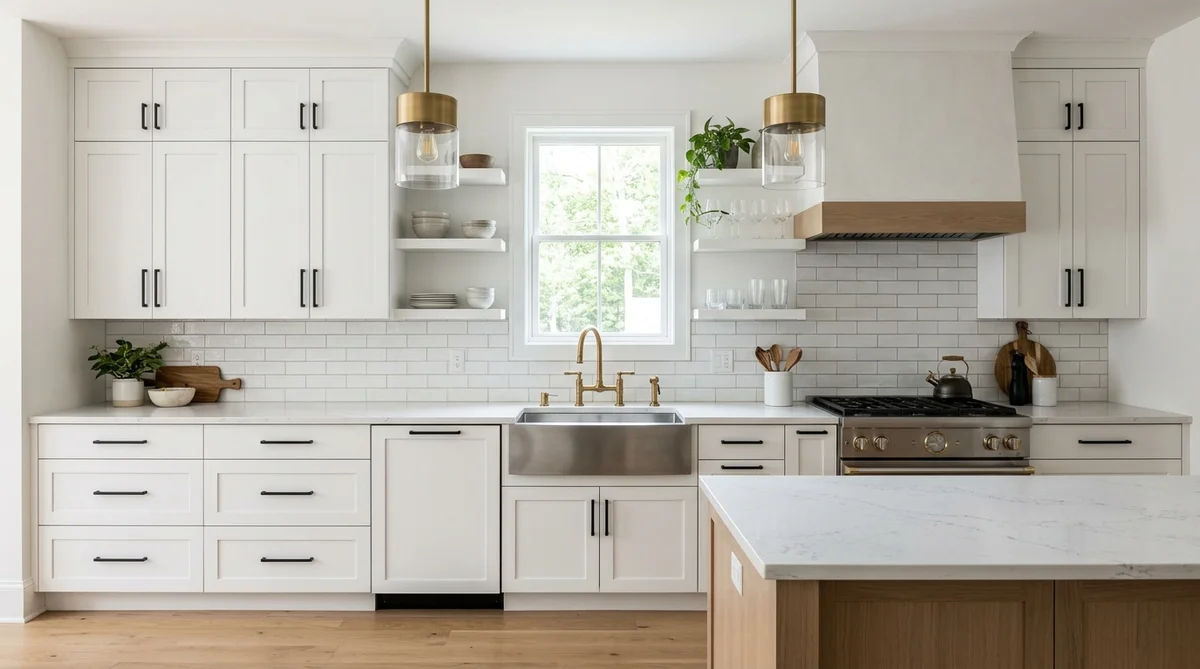
Assign 70 percent of hardware to a base metal. Reserve 30 percent for an accent metal. Consider a kitchen with 30 cabinet handles, two pendants, and one faucet. Cabinet pulls make up 70 percent of visible hardware. Install matte black handles across all doors to set your base. Use brass pendants and a brass faucet for your accent. Equal 50/50 splits look messy. The eye cannot tell which finish leads.
Rule 2: Separate Warm Metals from Cool Metals
Balanced design pairs one warm metal with one cool metal for clear contrast.
- Warm metals carry yellow, peach, and gold tones. These include brushed brass, satin gold, raw brass, bronze, and copper.
- Cool metals carry gray, blue, and silver tones. These include polished chrome, brushed nickel, stainless steel, and pewter.
- Matte black and dark bronze act as neutral anchors. They carry no color undertones. They pair with warm brass and cool chrome.
Rule 3: Match Sheens and Textures Within Families
Contrasting color temperatures adds visual depth. However, mixing competing sheens of one metal looks messy. Never put shiny yellow brass next to soft brushed brass. Pair brushed finishes with brushed finishes across the room. Alternatively, pair flat matte black handles with shiny chrome faucets for sharp contrast.
Rule 4: Concealed vs. Exposed Cabinet Hinges
Check your cabinet doors before buying hardware. Modern frameless cabinets hide hinges inside the box when closed. This hidden setup lets you pick any pull finish. Traditional face-frame cabinets show outer hinge knuckles along door edges. Always match visible outer hinges directly to your cabinet pull finish.
Rule 5: The Mixed-Metal Bridge Fixture Strategy
Add a two-tone bridge fixture to tie contrasting metals together. A bridge fixture combines two finishes in one body. Examples include matte black pendant lights with exposed brass socket cups. Another option is a black faucet with brass handles. This two-tone piece connects both colors across the room.
The Brand Finish Trap: Why Satin Brass Varies Between Manufacturers
Do not try to match brass finishes across different brands. Finish names have no universal standard. One brand sells Satin Brass. Another brand sells Brushed Gold. A third maker labels it Champagne Bronze. Factory plating tanks create clashing undertones under kitchen lights.
| Manufacturer Finish Name. | Primary Color Undertone. | Finish Coating Method. | Best Coordinating Metals. |
|---|---|---|---|
| Delta Champagne Bronze. | Warm peach, soft rose, and muted gold. | Physical Vapor Deposition (PVD). | Matte black, oil-rubbed bronze, and dark walnut. |
| Kohler Moderne Brass. | Cool yellow, champagne, and slight green hue. | Physical Vapor Deposition (PVD). | Polished nickel, white oak, and cool gray stone. |
| Brizo Luxe Gold. | Deep buttery gold and rich antique hue. | Proprietary PVD coating. | Polished chrome, matte black, and navy cabinetry. |
| Unlacquered Raw Brass. | Bright raw gold shifting to dark bronze patina. | Raw untreated mill brass. | Polished nickel, honed Carrara marble, and soapstone. |
Buy your brass pieces from a single maker. If you buy a Delta faucet in Champagne Bronze, choose matching Delta cabinet pulls. You can also contrast it with matte black handles. Never put two different brass tones on the same cabinet run.
4 Proven Metal Combinations for Kitchen Hardware and Lighting
Designers rely on these four tested metal pairings for kitchen remodels.
1. Matte Black and Warm Brushed Brass (Modern Transitional)
Matte black and brushed brass form a flexible pairing in modern homes. Black hardware frames white shaker doors with crisp lines. Meanwhile, brass hardware reflects light into the room. Install matte black pulls on all cabinets for your 70 percent base. Next, add a brushed brass bridge faucet. Use brass island pendants for your 30 percent accent.
2. Polished Nickel and Unlacquered Brass (Classic Parisian Bistro)
Polished nickel is a classic cool metal with warm yellow undertones beneath its mirror shine. Pair a polished nickel faucet and polished nickel cabinet latches with raw brass pendant lights. Over time, raw brass ages into an antique patina. Meanwhile, nickel keeps its warm silver luster.
3. Stainless Steel and Matte Black (Industrial Minimalist)
Matching all cabinet pulls to stainless steel appliances makes a kitchen feel cold and commercial. Treat appliances as a neutral backdrop. Put flat black bar pulls on drawers. Then, add a commercial-style matte black kitchen faucet with pull-down spray. Black lines absorb shine from steel appliances. They ground the room in clean contrast.
4. Polished Chrome and Matte Black (High-Contrast Modern)
Polished chrome offers hard surfaces, budget-friendly prices, and high scratch resistance. Pairing chrome with black elements makes chrome feel crisp and upscale. Install a polished chrome pull-down faucet. Add black cup pulls on drawers. Place black picture lights above open shelves for contrast.
How to Handle Stainless Steel Kitchen Appliances & Sinks
Stainless steel appliances do not force you to pick silver cabinet handles. Large appliances act as functional workhorses, not accent decor. Designers treat refrigerators, ranges, and dishwashers as neutral surfaces. They act like wood floors or window glass. You do not need to match cabinet pulls to refrigerator handles.
Apply these practical rules to sinks and range hoods.
- Stainless steel undermount sinks sit below counter level. They do not dictate faucet finishes. You can install a brass or matte black faucet over a stainless sink without clashing.
- Apron-front farm sinks show a large front face. If you pick a copper or dark sink, count that surface in your 30 percent accent allocation.
- Match decorative range hood straps to your 30 percent accent lighting metal. If your hood has brass banding, echo that brass on island pendants.
The Bathroom Mixed Metal Blueprint: Faucets, Sconces & Mirrors
Mixing metals in a bathroom follows the 70/30 formula. However, it requires tighter matching between fixtures, mirrors, and lights. Match all shower and sink valves in one finish. Add warm brass or black on mirrors and sconces.
The Vanity Trio Strategy
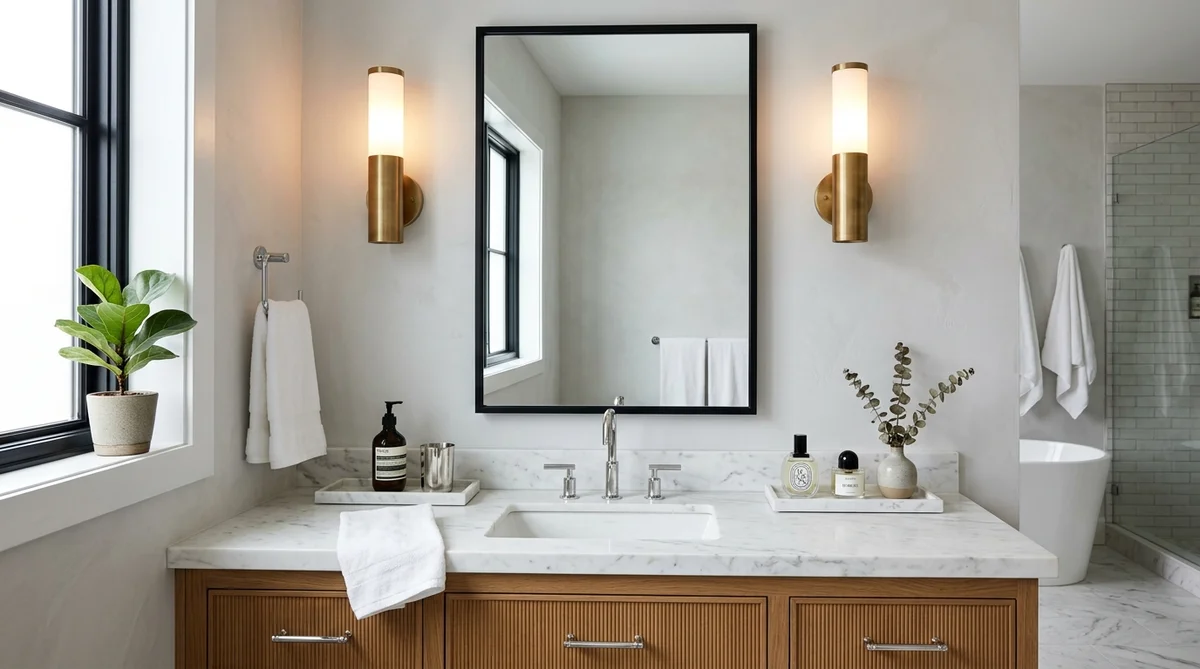
In a powder room, your main metal points are the sink faucet, wall sconces, and mirror frame. Keep your plumbing in one finish for your 70 percent base. Use chrome or brushed nickel for faucets and valves. Set your mirror and lights as the 30 percent accent layer. Hang a matte black vanity mirror alongside two brushed brass sconces.
The Two-Plane Solution for Permanent Chrome Shower Valves
Remodeling an older bath often leaves in-wall chrome shower valves. Replacing them requires tearing out tile. Use the two-plane zoning rule to solve this issue. Keep the wet zone in chrome for the shower valve, head, and glass door hinges. Shift to warm brushed brass on the dry vanity zone for cabinet pulls and towel rings. Dividing metals by wet and dry zones makes the mix look planned.
Caring for Living Finishes: Unlacquered Brass
Raw unlacquered brass has no clear protective coat. Moisture, air, and natural hand oils react with raw brass. Over time, the metal develops a rich antique patina. In a humid bathroom, raw brass darkens quickly around faucet bases. Rub hardware twice a year with paste wax to slow darkening. Buff with metal polish and a soft cloth to restore original shine.
Durability, Water Spots & Maintenance Realities
Metal finishes must hold up against hand contact, soap residue, and hard water spots. Matte black hides fingerprints but shows white calcium spots in hard water zones. Polished chrome and nickel wipe clean with a diluted vinegar spray. Brushed nickel and satin brass hide minor scuffs, making them ideal for family kitchens.
- Matte black hardware shows white water spots in hard water areas. Basic painted handles chip when hit by keys. Choose electroplated solid brass or PVD hardware, and wipe dry with a cloth.
- Polished chrome and nickel show water spots and finger smudges quickly. Clean them with a spray of diluted vinegar and water. This wipe restores mirror shine without harsh scrubbing.
- Brushed nickel and satin brass hide fingerprints, minor scratches, and daily dust. These durable options work well in busy family kitchens.
Frequently Asked Questions About Mixing Metal Finishes
Find direct answers to common questions about mixing metal finishes in kitchens and baths. Learn how to pair chrome with brass. Avoid finish clutter and protect door hardware throughout your home.
Can you mix chrome and brass in a kitchen?
Yes, you can mix chrome and brass. Follow the 70/30 rule and separate their zones. Keep main plumbing fixtures in polished chrome for a durable 70 percent base. Add brass island pendant lights and counter stools as your 30 percent accent. The contrast between cool chrome and warm brass creates rich style without clashing.
How many different metal finishes can you have in one room?
Limit finishes to two metals in a small powder room and three metals in a large kitchen. A spacious kitchen comfortably supports stainless appliances, matte black cabinet pulls, and warm brass lighting. Adding four or more metals creates clutter and visual noise.
Does matte black hardware scratch or peel easily?
Quality matte black hardware made with electroplating or PVD coatings resists scratching. It will not peel. Cheap hardware coated with basic spray paint chips quickly when struck by rings or keys. Choose solid brass or stainless hardware with durable electroplated finishes.
Should interior door knobs match kitchen cabinet hardware?
No, interior door knobs do not need to match kitchen cabinet pulls. Keep door hardware consistent across the hallway for clean floor plan flow. Cabinet hardware functions as custom furniture jewelry tailored to your kitchen woodwork.
What is the most timeless metal finish combination for kitchens?
Polished nickel paired with raw unlacquered brass is the most timeless metal combination. These two finishes have appeared in classic homes for over two centuries. They age with grace over decades while keeping lasting style.
Action Checklist: Installing Mixed Metals Without Regret
Review this simple five-step project checklist before purchasing fixtures.
- Count all hardware pieces in your room. Assign 70 percent to your main metal and 30 percent to your accent metal.
- Check cabinet construction to see whether hinges are hidden European cup hinges or visible outer butt hinges.
- Order physical finish samples to compare brass undertones under your actual home lighting.
- Confirm that wet plumbing fixtures feature solid brass cores or durable PVD coatings for moisture protection.
- Repeat your accent metal in at least two spots. Good choices include island pendants and counter stool frames.
Continue refining your interior trim, lighting, and paint choices with our practical design guides.
- How High to Hang Pendant Lights Over a Kitchen Island (The 30-36 Inch Rule).
- How to Use the 60-30-10 Color Rule in Living Room Decor (With Real Examples).
- The Best Warm Neutral Paint Colors for Dark, Low-Light Rooms (No Dingy Undertones).
- What Wood Tones and Paint Colors Actually Go with 90s Honey Oak Trim?