How High to Hang Art Over a Sofa & The 57-Inch Rule
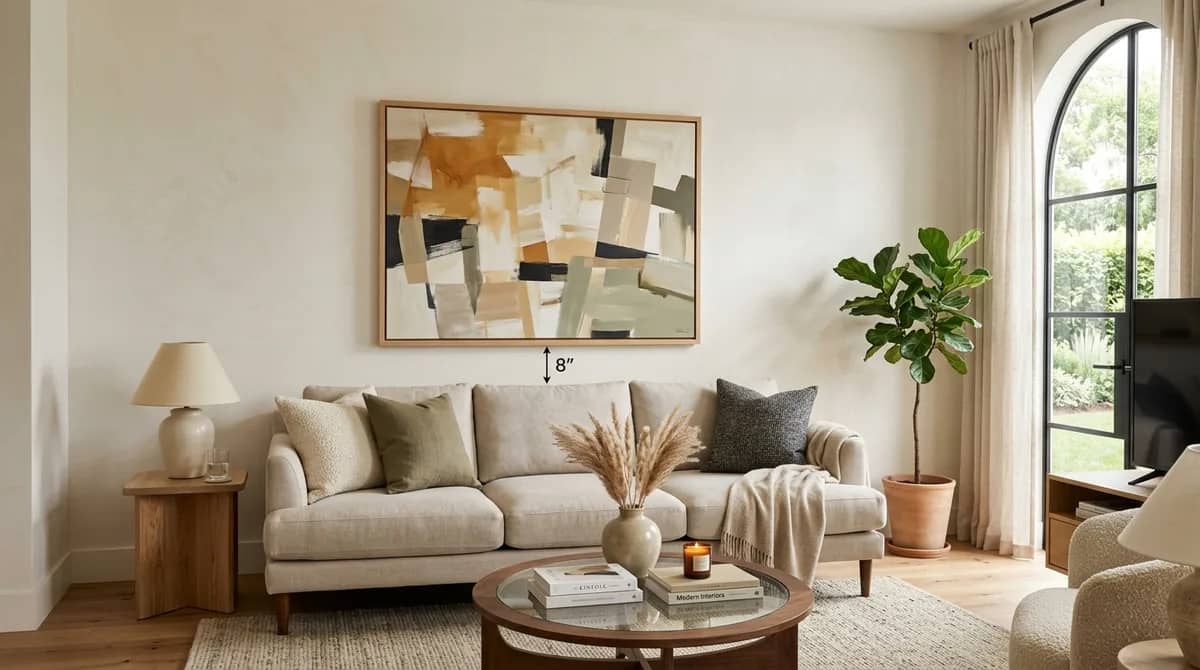
Hang artwork 6 to 10 inches above the top edge of your sofa back. An 8-inch gap provides the most balanced visual spacing. On open walls without furniture, position the center of the artwork 57 inches from the floor. This eye-level height matches professional museum guidelines. It keeps picture frames connected to surrounding seating.
Reader Disclosure: This post contains contextual affiliate links. If you purchase through them, we may earn an affiliate commission at no additional cost to you. We only recommend products tested for quality and performance.
Hanging picture frames too high is a common living room decorating mistake. Artwork mounted close to the ceiling floats away from the living space. It breaks the visual connection with your furniture below. Following verified height rules ties your sofa and wall art into one unified display.
Proper hanging heights also prevent physical damage. A picture frame hung too low catches on heads when guests lean back on sofa cushions. A frame hung too high looks detached and awkward. Following clear clearance rules gives your living room a clean, professional finish.
Quick Comparison: Art Hanging Height Rules by Wall Location
Compare hanging height rules across different rooms and furniture setups. The table below lists mounting heights, frame width ratios, and recommended hanging hardware.
| Wall Scenario / Location | Designer Hanging Standard | Distance From Floor or Furniture | Recommended Frame Width Ratio | Primary Hanging Hardware |
|---|---|---|---|---|
| Over Living Room Sofa. | Furniture anchor standard. | 6 to 10 inches above cushions (8 in sweet spot). | 60% to 75% of total sofa length. | Dual D-rings & laser level. |
| Blank Wall / Hallway. | 57-inch museum eye-level rule. | Artwork center sits exactly 57 in from floor. | 60% to 75% of open wall width. | Two-point wall picture hooks. |
| Over Bedroom Headboard. | Seated head clearance standard. | 8 to 12 inches above headboard top edge. | Roughly 2/3 of mattress width. | Interlocking aluminum French cleat. |
| Over Fireplace Mantel. | Architectural anchor rule. | 4 to 8 inches above mantel shelf. | Match firebox opening width. | Masonry anchors or brick clips. |
| Dining Room Credenza. | Low-profile furniture standard. | 6 to 8 inches above tabletop surface. | 65% to 70% of credenza width. | Heavy-duty drywall anchor studs. |
How High to Hang Art Over a Sofa: The 6 to 10-Inch Rule
Measure 6 to 10 inches from the top of your sofa back to the bottom frame edge. An 8-inch gap creates the ideal visual anchor. If you hang art higher than 10 inches, the frame looks disconnected from the seating below.
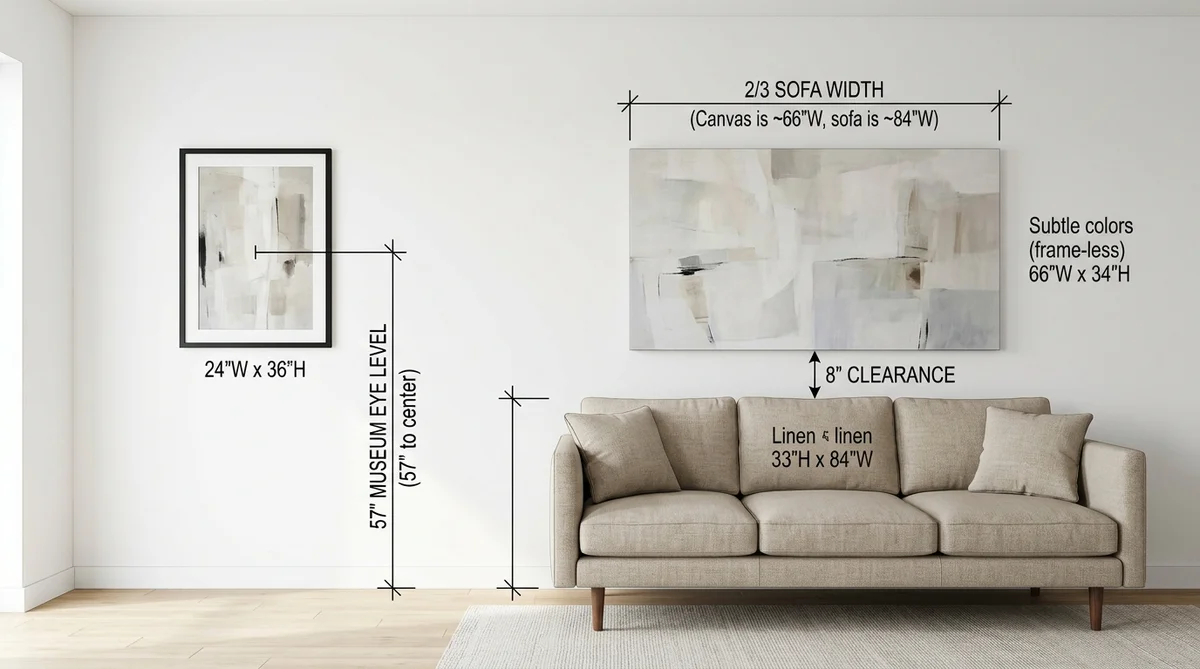
Frame width also plays an important role in wall balance. Select artwork that spans two-thirds to three-quarters of your total sofa width. An 84-inch sofa looks best with art between 56 and 63 inches wide.
Hanging a small picture over a large sofa makes the room feel incomplete. Conversely, artwork extending past the sofa arms overwhelms the furniture grouping. Maintain balanced proportions to anchor the entire seating area.
Interactive Art Size & Wall Placement Calculator
Calculate exact wall hook heights before driving nails into your drywall. Input your sofa width, ceiling height, and frame dimensions. Use our interactive tool to calculate clearances.
Find your exact nail spot with our free Art Over Furniture Calculator. The tool calculates hook placements, frame width ratios, and floor heights instantly.
The Museum Science Behind the 57-Inch Rule
Galleries and art museums hang picture centers 57 inches from the floor. This measurement reflects the average human standing eye level. It allows visitors of varying heights to view art comfortably without neck strain.
Curators developed this standard to create a consistent sightline through exhibition rooms. When artwork centers share a uniform height, gallery walls feel calm and organized. The eye glides across different canvases naturally.
Use the 57-inch rule on blank walls, in hallways, and long entryways. When walls have no furniture underneath, 57 inches to the center creates visual harmony throughout your home. However, when furniture sits beneath art, anchor the frame to the furniture instead of the floor.
The Mathematical 57-Inch Hanging Formula
Finding the exact nail height on an open wall requires a simple three-step formula. Divide your frame height by two. Subtract the hook drop distance from that number. Add the result to 57 inches to mark your nail hole.
Many homeowners drive nails at 57 inches by mistake. That error places the top of the frame too low. The formula positions the exact vertical center of the frame at 57 inches.
Here is the practical formula for a 30-inch tall picture frame:
- Divide the total frame height by two. A 30-inch frame has its horizontal center line at 15 inches.
- Measure the drop from the top frame rail to the hanging hardware wire. Let us assume a 3-inch wire drop.
- Subtract the 3-inch drop distance from the 15-inch center. This calculation leaves 12 inches.
- Add 12 inches to the 57-inch eye-level standard. Drive your picture nail at 69 inches from the floor.
Hanging Art Over Headboards: Safety and Clearance Rules
Hang art 8 to 12 inches above your bedroom headboard. This gap protects sitting occupants from bumping their heads against picture frames. It also prevents falling frame hazards while you sleep.
Choose lightweight canvas prints or framed textile art over headboards whenever possible. Avoid heavy glass frames or massive ornate mirrors in earthquake zones. A lightweight frame reduces injury risks during unexpected room shaking.
Never hang heavy glass-covered frames over a bed using simple wire hooks. Use an interlocking Heavy-Duty Aluminum French Cleat Hanger instead. French cleats lock into wall studs. They stop frames from dislodging if someone bumps the bed frame.
Multi-Piece Sets & Gallery Walls: The 2 to 3-Inch Gap Rule
Treat multi-piece art sets and gallery walls as one single large unit. Maintain 2 to 3 inches of space between adjacent frames. Wider gaps break the group apart, while tighter gaps look crowded.
When grouping a pair or triptych over a sofa, measure the total span including all frames and gaps. The complete ensemble should measure two-thirds of the sofa width. Center the whole collection above the sofa cushions as one visual piece.
Map out your gallery wall layout using low-tack Scotch Multi-Surface Blue Painter’s Tape on the wall. Cut craft paper templates to match each picture frame size. Tape the paper cutouts to the wall to test layout spacing before driving nails into plaster.
Hardware Engineering: Preventing Crooked Frames & Wire Sag
Hanging picture frames from a single center nail causes crooked art. Picture wire stretches under tension over time. Daily room vibrations shift the frame off level. Use two hanging points to keep frames level permanently.
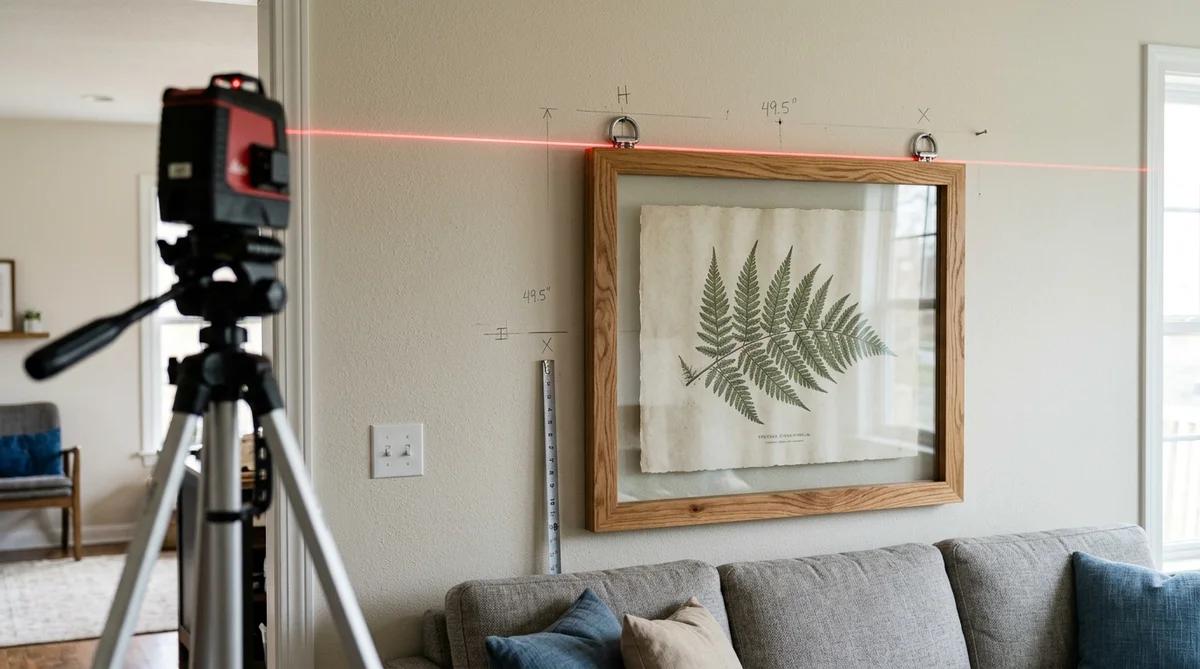
Install two Heavy Duty D-Ring Picture Hangers on the back frame rails. Align your wall hooks using a Self-Leveling Cross-Line Laser Level. Dual hooks distribute frame weight evenly and stop shifting.
Stick Clear Adhesive Silicone Frame Bumpers to the lower back corners of each frame. These rubber pads protect wall paint from black scuffs. They also keep the frame parallel to the drywall surface.
Frame bumpers also improve air circulation behind the artwork. Air movement prevents moisture condensation from collecting on drywall in humid rooms. That small air space keeps picture paper dry and flat.
Wall Substrate Physics: Anchor Selection for Heavy Art
Match your mounting hardware to your wall material and frame weight. Small frames under 10 pounds hang on standard picture nails. Heavy wood frames and mirrors require stud screws or hollow wall anchors.
Drive screws directly into wood wall studs for frames over 25 pounds. If no wall studs sit behind your sofa center, use threaded metal drywall anchors. Toggle bolts support up to 50 pounds in hollow drywall without pulling out.
Older homes often have traditional lath and plaster walls instead of drywall. Hammering nails into plaster causes large cracks. Use plastic masonry wall plugs and pre-drill holes with a carbide drill bit to prevent plaster crumbling.
High Ceilings, Wainscoting & Staircase Wall Adjustments
Tall 10 or 12-foot ceilings tempt homeowners to hang art too high. Resist the urge to push artwork upward. Keep art anchored 6 to 10 inches above the sofa, regardless of ceiling height.
In rooms with tall ceilings, buy larger vertical art pieces instead of hanging small frames high. A large canvas fills upper wall space while maintaining close connection to the furniture below.
When hanging art above dining room wainscoting, center the frame between the chair rail molding and ceiling trim. On staircases, measure 57 inches upward from every third step to create a rising gallery line that follows the stair angle.
Frequently Asked Questions
What if my living room ceilings measure 10 or 12 feet tall?
Keep your artwork anchored 6 to 10 inches above the sofa. High ceilings do not change human sitting eye level. To fill tall vertical wall space, choose larger canvas art or stack two matching frames vertically.
How high should art hang above a fireplace mantel?
Hang art 4 to 8 inches above the fireplace mantel shelf. Maintain this close spacing to keep the mantel and art visually connected. Choose art that matches the width of the firebox opening below.
Can artwork extend wider than the sofa underneath it?
Never choose art wider than the sofa underneath it. Artwork extending past sofa arms makes the seating look tiny and top-heavy. Keep art width between 60 and 75 percent of the total sofa length.
Is the 57-inch rule measured to the top or center of the frame?
The 57-inch rule always measures to the exact center point of the artwork, never to the top or bottom edge. This placement puts the focal core of the picture directly at standard human eye level.
Coordinate Your Wall Art with Surrounding Furniture Clearances
Proper clearances create visual balance throughout your living room. Check our related furniture placement guides for exact room dimensions:
- How Far Should a Coffee Table Be from Couch? Clearances for living room pathways.
- Dining Room Table Clearance Distance from Wall. Chair pullout spacing rules.
- TV Mounting Height Above Console Calculator. Ergonomic viewing heights.
- What Size Rug for a Queen Bed? Placement rules and layout diagrams.