Sustainable Bamboo Furniture: Pros, Cons, and Best Uses
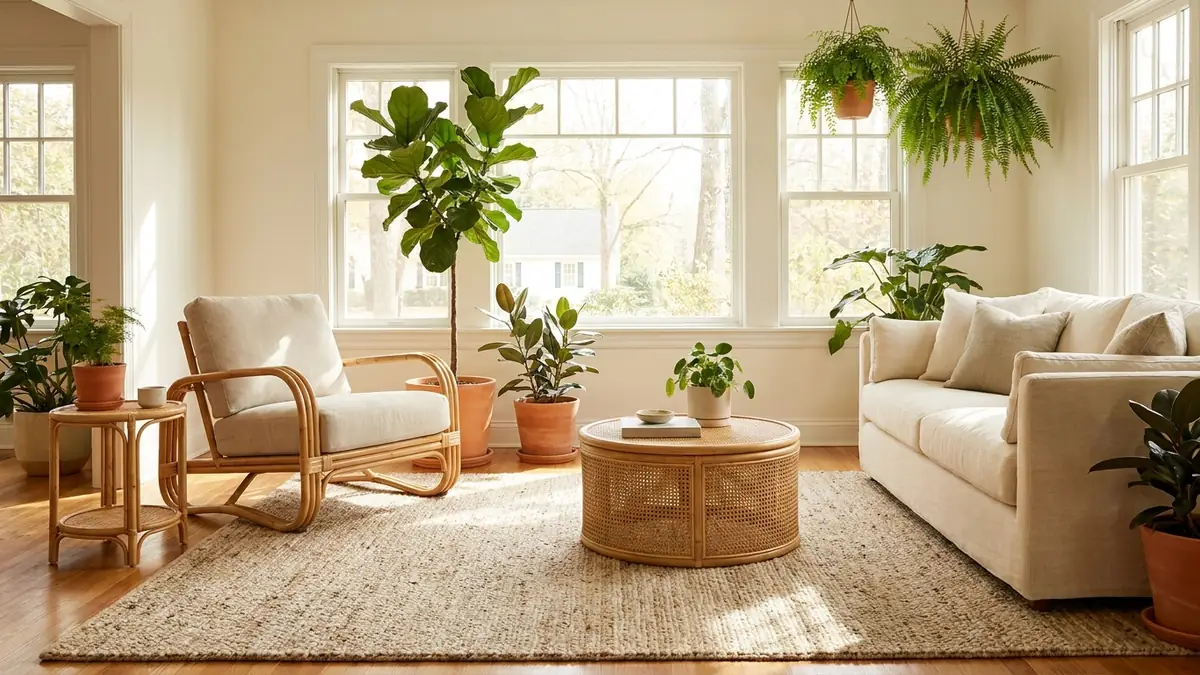
Sustainable bamboo furniture can suit dry indoor rooms when you check its source and build quality. Look for joints you can repair and proof of low chemical emissions. Bamboo grows back after harvest. The finished piece’s impact still depends on how the maker grows, processes, and ships it, and how long you keep it.
Start with the job you need the piece to do. A bedside table holds a lamp and a glass of water. A bed frame takes repeated movement and must support your mattress. Both can contain bamboo, yet their construction needs differ. Keep a sound piece you already own before you replace it for a greener label.
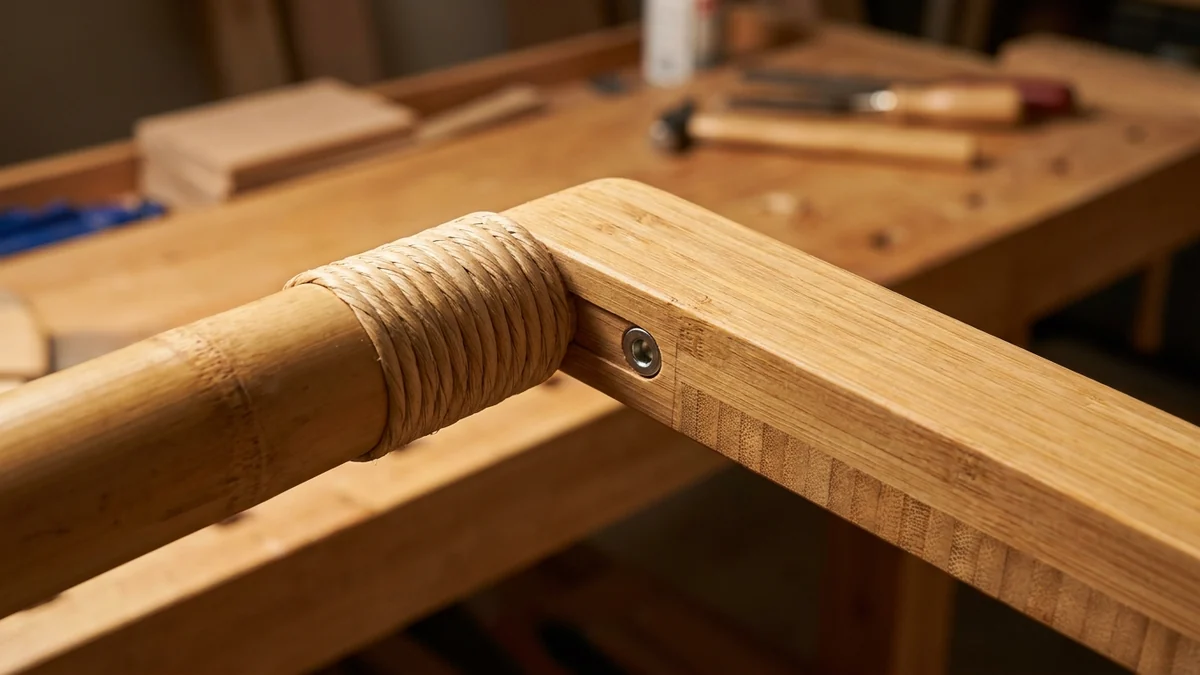
AI-generated images show room ideas and sample joints. They don’t show the named products or prove the quality of a real piece.
Is Sustainable Bamboo Furniture Worth Buying?
Buy bamboo furniture when it fits your room, has a clear material description, and offers a realistic path to repair. Its renewable raw material is a useful starting point. The finished piece still needs sound joints, suitable adhesives, and a finish that can handle the way you use it.
Look beneath a bamboo coffee table. Can you replace its feet and reach its bolts? A chair with a cracked rail is a poor buy, even with an eco-friendly label. Ask for the assembly manual before you order. It can show joints and supports that styled photos hide.
For bamboo vs wood furniture, compare actual pieces. A used hardwood table from a local shop may suit you better than a new imported one. A bamboo shelf may make sense if it fits an awkward gap and the seller can trace its source. Use our sustainable furniture buying guide to weigh those choices.
What Counts as Real Bamboo Furniture?
Real bamboo furniture can use round bamboo stems, strips bonded into boards, or dense panels of compressed strands. A bamboo veneer covers another core material. Faux bamboo describes a look that manufacturers can create in wood, metal, or plastic. Read the full material list before you judge a piece by its surface.
| Listing term | What it means | What to ask |
|---|---|---|
| Round bamboo or culm | Sections of the plant’s woody stem | How did the maker dry, treat, and connect the stems? |
| Solid laminated bamboo | Bamboo strips bonded through the board | Which adhesive and finish does it contain? |
| Strand-woven bamboo | Bamboo fibers compressed with a binder | What does the finished piece weigh? |
| Bamboo veneer | A thin bamboo face over a separate core | Is the core plywood, MDF, or another material? |
| Faux bamboo | A surface or shape that imitates bamboo | What is the actual frame material? |
The word “solid” doesn’t mean glue-free. Greenington describes its manufacturing process as laminated strips for classic bamboo boards and adhesive-bonded fibers for its denser strand material. Both use real bamboo. An MDF core can still suit some uses. Ask about emissions, keep it dry, and check what repairs it can take.
Rattan is a climbing palm, and wicker describes a weaving method. Curved cane-style arms and woven panels can appear in furniture sold under broad bamboo decor labels. A photograph cannot settle the material question. Request a close-up of an exposed edge and the manufacturer’s written specification.
Bamboo Furniture Pros and Cons at a Glance
Bamboo grows back after harvest, and makers can shape it into open frames or flat boards. Each form has trade-offs. Round stems need care to stay dry; pressed boards contain glue you should check. Judge the finished piece by the load it must carry and how you could repair a damaged joint.
| Potential advantage | Practical drawback | Buying check |
|---|---|---|
| Regrowth after harvest | Processing and transport still use resources | Ask where the bamboo grew and where the piece was manufactured. |
| Open frames can look light in small rooms | Dense bamboo boards can weigh more than expected | Check assembled weight and delivery access. |
| Natural grain works with painted furniture | Finishes and batches can differ in color | Request a sample before buying a matching set. |
| Some designs allow parts replacement | Hidden glued joints complicate repairs | Confirm access to bolts and replacement components. |
Skip broad promises that bamboo furniture is “stronger than steel” or will last a fixed number of years. A test of a raw material doesn’t tell you how a chair joint behaves. For a desk, shelf, or seat, use the maker’s load limit for that exact model and its stated conditions.
Where Bamboo Furniture Works Best in the Home
Bamboo furniture is easiest to live with in dry bedrooms and living rooms where you can wipe spills promptly. Beds need a sound support system, coffee tables need a suitable top finish, and tall shelves need the anchoring the manufacturer specifies. Match each piece to the space and load it will face.
For a bamboo bed, check the slat spacing against your mattress warranty. Ask how the center rail connects and whether its legs reach the floor. A bamboo headboard on a steel frame is a mixed-material bed, so inspect the metal connections too. Leave access to the bolts you may need to retighten.
A bamboo coffee table earns its place when you can reach it from the sofa without squeezing past it. Tape its footprint on the floor and walk your usual route. Use coasters under cold drinks and a waterproof saucer under plants; pooled water can reach edges and joints.
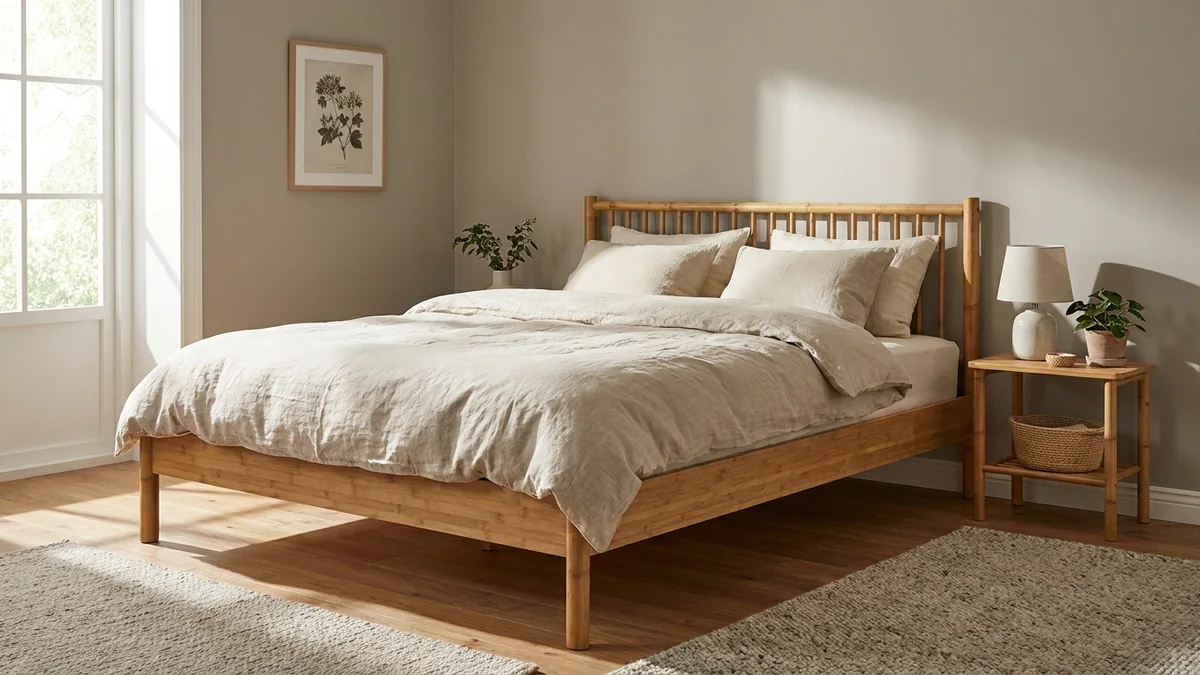
Start a bamboo furniture set with the piece you need most. Add a matching item after you see the finish in your own light. Painted storage or an upholstered sofa can break up a room full of similar honey-colored surfaces.
Keep entryway shelves clear of wet shoes and dripping umbrellas. For bathrooms, buy only a model whose care instructions cover that use. A shelf beside a shower faces a different moisture load from a nightstand in a ventilated bedroom.
Can Bamboo Furniture Work Outdoors or on a Patio?
Use bamboo furniture outdoors only when the maker approves your spot and gives clear care steps. A roof alone doesn’t make an indoor piece fit for a patio. Blown rain and damp floors can still reach it. For an open deck, ask for proof of outdoor use and check the warranty.
INBAR’s guide to bamboo treatment explains how proper drying and storage help it last. Be wary of a bare claim that a piece is “naturally weatherproof.” A glossy top tells you little about how its feet and hidden joints cope with rain.
For bamboo patio furniture, send the seller a photograph of your intended spot. Ask whether the warranty covers that location and what happens if rain reaches the legs. If the instructions say indoor use only, keep the piece indoors. A coat of household varnish doesn’t change its design rating.
Follow the maker’s storage rules in wet weather. Let the piece dry before you cover it. A cover can trap damp air against the frame. Compare other sustainable outdoor furniture materials if you need to leave it outside all year.
How to Check Sustainable Bamboo Furniture Claims
Ask where the bamboo came from, which glues it contains, and what tests cover the finished piece before you buy sustainable bamboo furniture. A forest label and an emissions test answer different questions. Match each report to the model you want. A green badge on a shop’s home page isn’t enough.
FSC certification can cover bamboo: FSC’s Malaysian bamboo announcement documents one example. For a purchase, ask the supplier to substantiate the product’s FSC claim. A company logo or a photograph of a plantation doesn’t establish that every item the company sells carries that claim.
UL GREENGUARD tests chemical emissions, the chemicals a product releases into the air. Its Gold program sets lower limits. Check that the test covers your model and finish. This label doesn’t assess how the bamboo grew. A “low VOC finish” claim covers only one part of the piece.
EPA’s TSCA Title VI guidance says bamboo products that meet the definitions of MDF or particleboard fall within the rule. Bamboo veneer over a regulated core can raise further requirements. Applicability depends on construction; don’t treat all bamboo furniture as exempt or all of it as regulated composite wood. Compliance limits formaldehyde emissions, not every chemical in a product.
Send these questions before payment:
- What materials form the top, core, frame, and back panel?
- Can you supply emissions documentation that covers this model?
- Which cleaner and finish repair method do you approve?
- Can I buy replacement hardware or a damaged component separately?
- Who pays return freight if the material differs from the listing?
Use the same document checks when you compare sustainable wood furniture and finishes. A clear answer about the core helps more than a page of green badges.
The Vintage Bamboo Furniture Inspection Checklist
Buy vintage bamboo furniture after you check its joints and feet for damage. Turn it over to see parts the front view hides. A worn finish may be easy to fix; a split rail needs more work. Ask a skilled repairer to assess a damaged chair before you sit on it.
A Reddit repair thread shows a damaged bamboo-style support and a debate about how to fix it. Look beneath the wrap and around screws when you shop. Forum advice can point out faults, but it can’t prove that an old chair will carry your weight.
- Stand the piece on a level surface. Check for rocking and movement at the joints without loading a suspect seat.
- Use a flashlight around screws and underneath rails. Look for splits or previous patches, and check for missing parts.
- Inspect feet and lower shelves for soft spots, stains, or lifted surfaces. Ask about past damp storage.
- Check cane binding for breaks and loose ends. Don’t assume a fresh wrap means the joint beneath is sound.
- Price the repair and transport before agreeing to buy. Confirm how you’ll move the piece without stressing its frame.
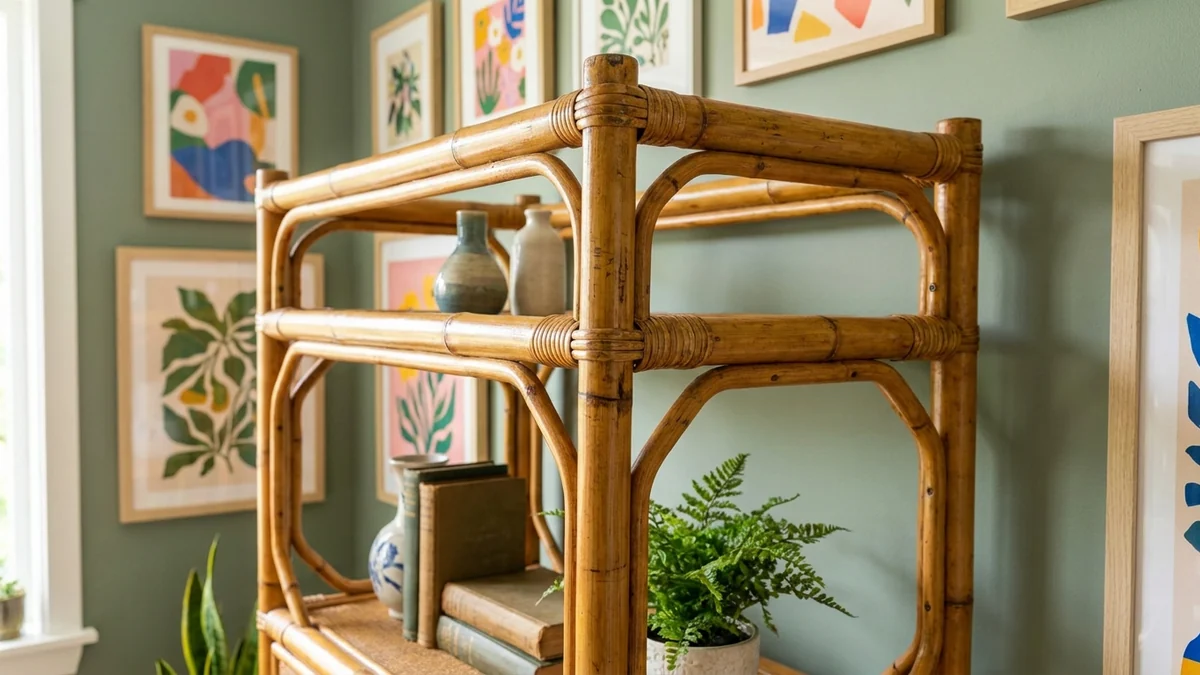
For an etagere, ask how much each shelf can hold and how to anchor it. Open shelves let you see the wall, which helps a small room feel less crowded. Follow the maker’s anchor instructions. For an old unit with no manual, get advice from a skilled installer.
Bamboo Furniture Options to Compare Before Buying
Choose a bamboo coffee table or bed by its size and build, then check the maker’s green claims. These named options have published specs you can compare. We checked those specs, not the products in person. Ask each seller about stock, emissions tests, and returns before you place an order.
Greenington Rosemary Coffee Table
Greenington lists the Rosemary as 100% solid bamboo, with an oval top measuring 46.5 inches wide, 34 inches deep, and 16 inches high. Consider it for a living room with space for that broad footprint. Its Black Walnut finish names a color, not walnut timber.
Tape out the 34-inch depth beside your sofa before ordering. The manufacturer’s page showed this version as sold out when checked on September 21, 2026; dealer stock may differ. Ask about top-finish care and emissions records. Search Amazon for the Greenington Rosemary coffee table and match the model and dimensions before purchase.
Greenington Sol Side Table
The Sol side table specification names solid Moso bamboo and a 16-by-16-inch footprint at 20 inches high. It makes a compact candidate beside a reading chair. Measure your chair arm so you know whether you can reach a drink without leaning over it.
The pedestal design leaves no drawer for bedside clutter. This version also showed sold out on the manufacturer’s page during our check. Treat dealer listings as a fresh stock check, and request the load limit before resting heavy equipment on it. Compare Amazon listings for the Greenington Sol side table.
Zinus Suzanne Metal and Bamboo Bed with Footboard
Zinus lists this Suzanne model with a metal frame, bamboo headboard and footboard, and a slatted base. It suits a room where you want bamboo accents and dark metal. Check the source of the bamboo with the seller; the parts list alone doesn’t prove its green claims.
Check the selected size’s support layout, overall length, and slat gaps. The footboard can restrict clearance in a short bedroom. Zinus sells several Suzanne versions, so compare the Suzanne with footboard on Amazon against the manufacturer’s exact model. These links open searches; results and sellers can change.
Check the Claims and Plan Everyday Care
Use the Eco Furniture Checker to review material and certification choices, then verify the result against the seller’s documents. For everyday care, follow the maker’s finish instructions, remove spills promptly, and inspect hardware when movement appears. A screening tool cannot authenticate a certificate or establish how a particular bamboo joint will perform.
Open the Eco Furniture Checker beside the product’s specs. If the glue type is unknown or a test report is missing, ask the seller. You still need proof about the item you’ll bring home.
Dust with a soft cloth. If the maker permits damp cleaning, use a well-wrung cloth and dry the surface afterward. Avoid soaking wrapped joints. Test an approved cleaner on a hidden spot, and ask before applying oil to a lacquered surface. Tighten hardware to the assembly instructions; stop using a piece if a load-bearing connection cracks.
Frequently Asked Questions About Bamboo Furniture
A bamboo label alone can’t tell you how long a piece will last or how green it is. Check the whole item, from its source to its finish. Choose a design that suits your room, and ask for test records to back claims about low emissions or use in wet weather.
Is bamboo furniture more sustainable than wood furniture?
No universal ranking applies. Bamboo regrowth supports its case, while production, freight, service life, and repair also matter. Compare documented sourcing and likely use for each piece. Keeping a sound wood table avoids the need to manufacture its replacement.
Is bamboo furniture durable enough for daily use?
A well-made bamboo piece can handle daily use within its load limit. Check the joints and supports, follow the care sheet, and keep water off its edges. A hardness test on a board can’t tell you how long the whole piece will last.
Can bamboo furniture stay outside?
Only if the maker approves outdoor use in a spot like yours. A porch roof won’t keep out all damp air or blown rain. Follow the care and storage rules. Bring pieces for indoor use back inside when you’re done.
How do I know if furniture is real bamboo?
Read the full parts list and inspect an exposed edge. Round stems may show nodes, while bonded strips form laminated boards. Ask what lies under a bamboo face. A close photo helps, but similar looks can hide different materials.
Is bamboo furniture non-toxic?
The bamboo label doesn’t tell you what a finished piece releases into the air. Glues and finishes matter too. Ask for emissions test records, such as GREENGUARD Gold where available. A low-emission result doesn’t mean a product is free of all harmful chemicals.