Peel and Stick Wallpaper How Many Rolls: The Complete Accent Wall Sizing Formula
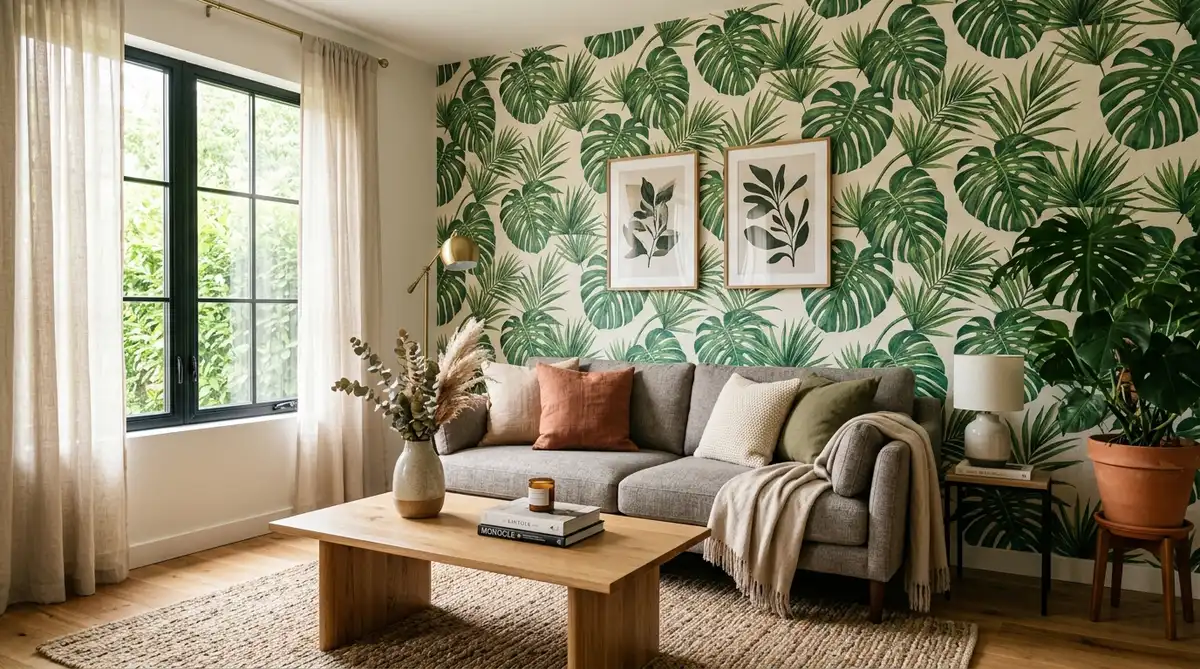
Finding for peel and stick wallpaper how many rolls you need requires vertical drop math. Never trust square footage labels on packaging. Divide wall width by roll width to find panel drops. Multiply drops by wall height plus four inches for trimming. Add pattern repeat distance. Divide linear inches by roll length. Round up and order one spare roll.
Homeowners often run short on removable wallpaper during room projects. Wallpaper boxes display total surface area. Your project needs continuous vertical panel measurements. A roll labeled thirty square feet cannot cover thirty square feet on an eight-foot wall. Pattern repeats also create scrap paper at each panel seam. Calculating your vertical drops stops shortages and protects your budget.
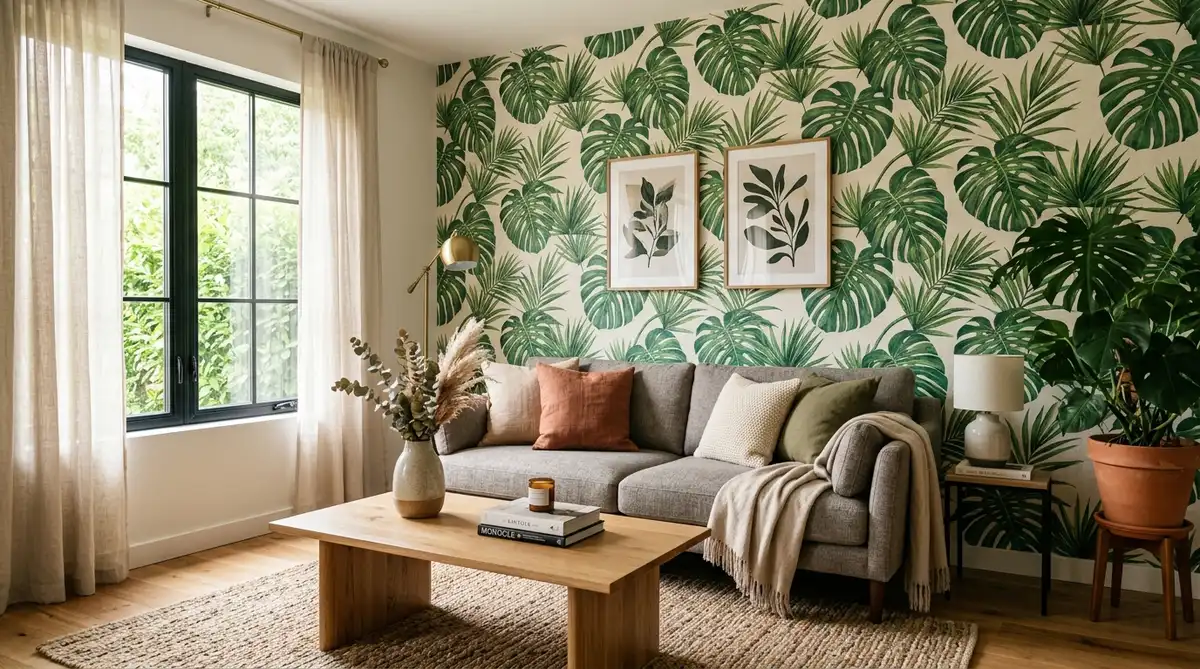
Before buying rolls, test your room sizes with our free wallpaper roll calculator. The tool handles drop math, subtracts window cutouts, and tracks pattern waste in seconds.
Peel and Stick Wallpaper How Many Rolls: The 5-Step Vertical Drop Formula
Calculate peel and stick wallpaper rolls by dividing wall width by roll width to determine vertical panel drops. Multiply total drops by wall height plus four inches for trimming margins. Add your pattern repeat distance to each drop. Divide total linear inches by roll length. Round up and add one spare roll.
Wallpaper pros calculate wallpaper orders by vertical drops. Wallpaper hangs in full strips from ceiling to floor. You cannot patch small scrap pieces horizontally without showing seams. Here is the five-step math method for a ten-foot wide by eight-foot tall wall. We pair it with a 20.5-inch wide, 18-foot roll with an 18-inch straight match pattern.
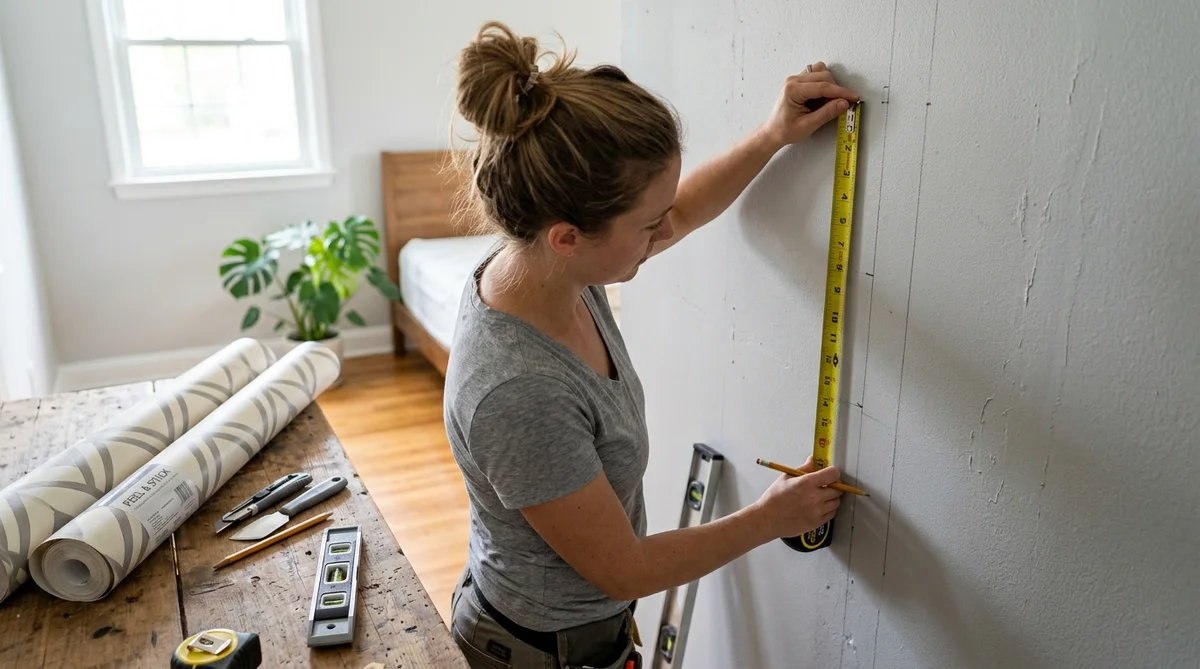
Step 1: Determine the Number of Vertical Drops
Measure your accent wall width in inches with a metal tape measure. Divide the total width by the width of your wallpaper roll. Always round up to the next whole number. On a 120-inch wide wall with 20.5-inch paper, divide 120 by 20.5 to reach 5.85 drops. Rounding up means you need six full vertical strips from corner to corner.
Step 2: Calculate the Base Cut Length with Safety Margins
Measure wall height from baseboard to ceiling at three spots: left, center, and right. Ceilings in most homes are rarely level. Take the tallest measurement and add four inches for trim margins. Allow two inches at the ceiling and two inches at the floor. For a 96-inch wall, this four-inch buffer gives a base cut length of 100 inches per strip.
Step 3: Factor in the Vertical Pattern Repeat
Check the packaging label for the pattern repeat size. Solid papers and textured grasscloth have random match with zero repeat waste. Patterned papers require extra length so designs match across seams. Add one full pattern repeat cycle to every strip after the first one. Adding an 18-inch repeat to a 100-inch cut creates an adjusted cut length of 118 inches per drop.
Step 4: Calculate Total Linear Inches
Multiply the number of vertical drops by your adjusted cut length. Take six drops times 118 inches. That calculation equals 708 total linear inches of wallpaper material needed to complete the accent wall.
Step 5: Divide by Usable Roll Length
Convert your roll length into inches. A standard 18-foot roll contains 216 inches of paper. Divide your 708 needed inches by 216 inches per roll to reach 3.27 rolls. Stores sell paper only in full rolls, so round up to four rolls. Add one extra safety roll for pattern mishaps and batch lot changes. That sets your final order at five rolls.
Quick Reference Sizing Guide: Common Accent Wall Dimensions
Standard residential accent walls need between four and seven rolls of peel-and-stick wallpaper. An eight-by-eight foot wall requires four rolls. A ten-by-eight foot wall takes five rolls. A twelve-by-eight foot wall needs six rolls. These counts assume standard 20.5-inch by 18-foot rolls with an 18-inch pattern repeat and include one safety roll.
This reference chart lists roll counts for common room sizes. The numbers use standard 20.5-inch wide by 18-foot long rolls with an 18-inch straight match pattern.
| Wall Dimensions (Width x Height) | Total Drops Needed | Adjusted Cut Length per Drop | Usable Drops per 18-ft Roll | Calculated Roll Count | Recommended Order (With Safety Roll) |
|---|---|---|---|---|---|
| 8 ft Wide x 8 ft High (96″ x 96″) | 5 Drops (4.68 actual) | 118 Inches | 1 Drop (with usable scrap) | 3 Rolls | 4 Rolls |
| 10 ft Wide x 8 ft High (120″ x 96″) | 6 Drops (5.85 actual) | 118 Inches | 1 Drop (plus scrap) | 4 Rolls | 5 Rolls |
| 12 ft Wide x 8 ft High (144″ x 96″) | 8 Drops (7.02 actual) | 118 Inches | 1 Drop (plus scrap) | 5 Rolls | 6 Rolls |
| 10 ft Wide x 9 ft High (120″ x 108″) | 6 Drops (5.85 actual) | 130 Inches | 1 Drop | 4 Rolls | 5 Rolls |
| 12 ft Wide x 9 ft High (144″ x 108″) | 8 Drops (7.02 actual) | 130 Inches | 1 Drop | 5 Rolls | 6 Rolls |
| 14 ft Wide x 10 ft High (168″ x 120″) | 9 Drops (8.20 actual) | 142 Inches | 1 Drop | 6 Rolls | 7 Rolls |
Notice the key rule in the sizing chart. On walls eight feet or taller, an 18-foot roll yields only one full drop with an 18-inch repeat. Each roll leaves about 98 inches of scrap paper. With patterns under six inches, you can often cut two drops from one roll. Check your ceiling height and pattern label before buying paper.
Straight Match vs. Drop Match: Calculating Pattern Repeat Waste
Pattern match type determines how much paper gets cut away as scrap at every seam. Random match papers produce zero repeat waste and use five to eight percent trim scrap. Straight match patterns waste twelve to eighteen percent. Half-drop match designs waste twenty to twenty-eight percent because adjacent panels shift diagonally.
Wallpaper patterns repeat in three layouts: random match, straight match, and half-drop match. Knowing your pattern layout tells you whether your project wastes five percent or twenty-five percent of each roll.
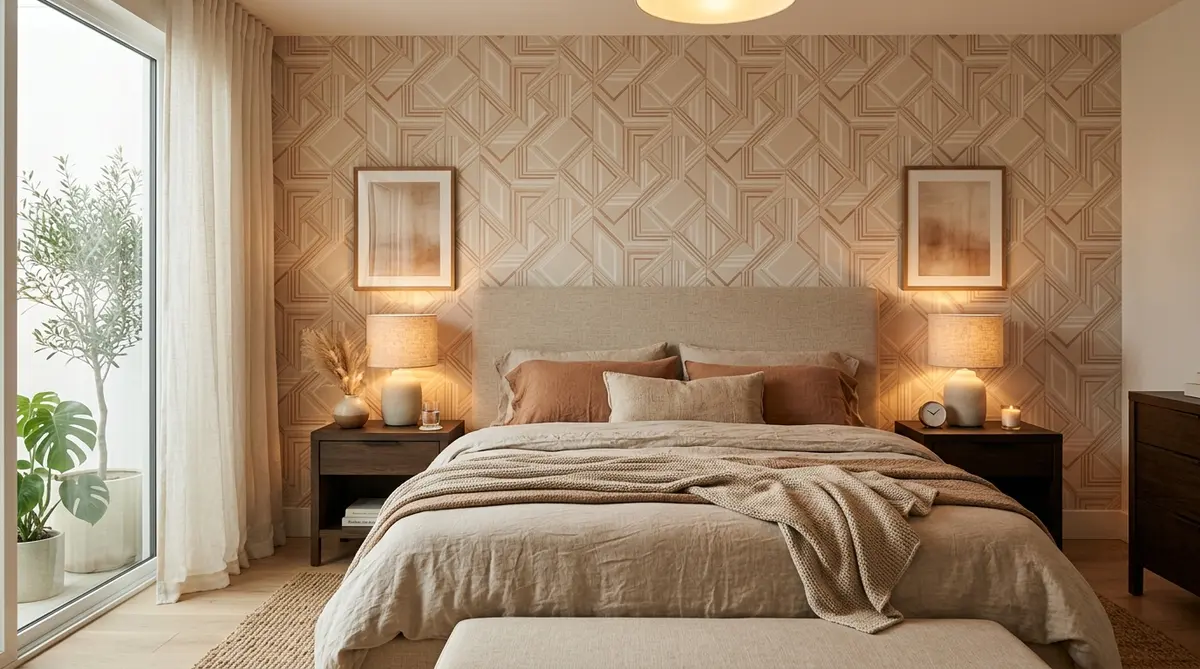
1. Random Match (Zero Pattern Waste): Textured styles like textured faux grasscloth peel-and-stick wallpaper, woven linens, and plaster textures have no horizontal pattern repeat. Each strip aligns cleanly beside the last strip without sliding up or down. You only lose four inches of top and bottom trim paper. This limits total scrap waste to five to eight percent. For beginners working alone, random match papers offer an easy project with minimal paper waste.
2. Straight Match (12% to 18% Waste): Straight match patterns align design elements straight across strips at the same height. If a flower sits twenty inches below the ceiling on strip one, it must sit twenty inches down on strip two. You must match each new strip against the previous panel before cutting. This alignment step creates twelve to eighteen percent scrap waste.
3. Half-Drop Match (20% to 28% Waste): Half-drop patterns shift design motifs diagonally across panels. The second strip shifts down by half the pattern repeat to match the first strip. The third strip shifts back up to match the first strip. Half-drop patterns create bold visual depth, but they produce heavy scrap piles. You often trim fifteen to twenty-four inches off alternating rolls before motifs align.
The Dye-Lot Nightmare: Why the Extra Roll Is Non-Negotiable
Always buy one extra wallpaper roll during checkout to ensure all rolls share the same dye-lot batch number. Wallpaper factories print rolls in separate color runs. Separate runs often have slight shade shifts. Buying an extra roll upfront prevents mismatched seam colors, covers trimming mistakes, and protects against stock sellouts.
Wallpaper mills print rolls in large factory batches called dye lots. Modern digital printing is precise, but room humidity, ink thickness, and paper moisture change between press runs. Two rolls of the same print made weeks apart in different lots often show slight color shifts.
Say you buy four rolls today. You run short on the last fifteen inches of your accent wall. You order one more roll next week. The cream background on the new roll may look warmer or cooler than your wall. In natural daylight, that seam will show clearly. Also, popular patterns often sell out or leave store shelves without notice.
Order one extra roll during initial checkout. This step ensures every roll in your box shares the same batch lot number printed on the label. You can return unopened rolls within normal store return windows, or store the spare roll in a closet for future wall patch repairs.
Rental Drywall Surface Prep: Preventing Peeling and Adhesive Damage
Prepare rental walls by washing surfaces with diluted rubbing alcohol and waiting thirty days after fresh paint before installing wallpaper. Peel-and-stick adhesives need smooth, fully cured paint to grip properly without pulling drywall paper off later. Smooth orange-peel walls and remove grease films to keep paper flat and protect your deposit.
Peel-and-stick wallpaper uses stick-on acrylic glue. This glue needs a clean, cured, and flat wall to form a tight hold. Hanging removable paper over dusty or fresh paint causes corners to peel, bubbles to form, or drywall paper to tear when you move out.
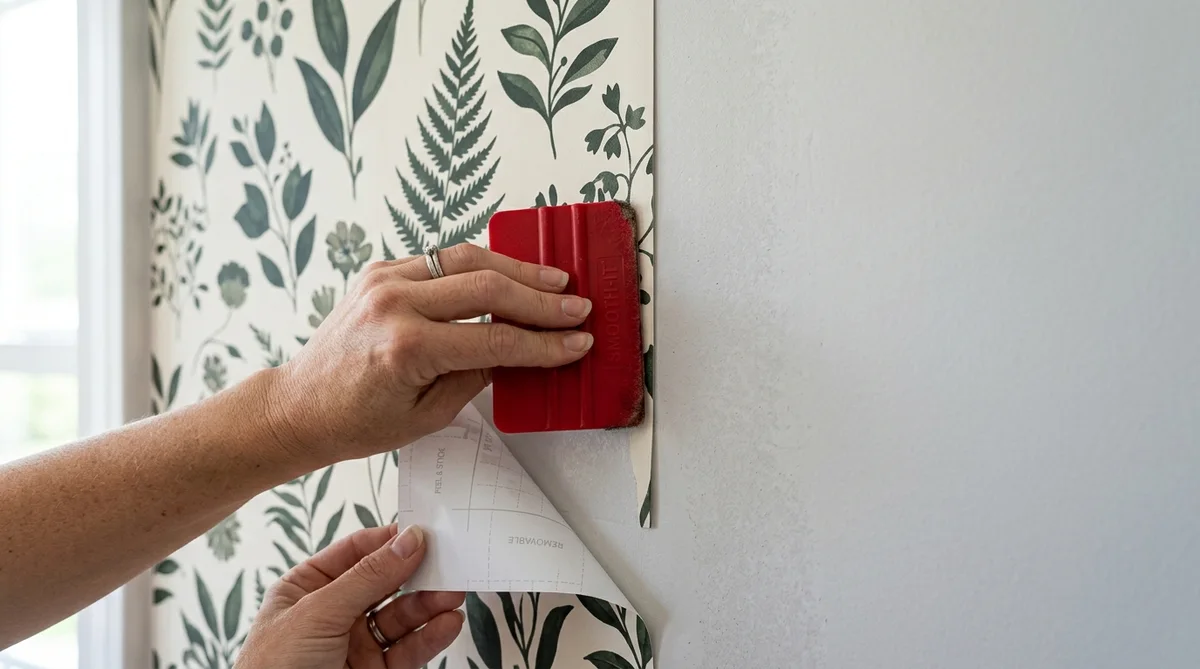
Follow these three surface prep rules to protect your rental security deposit:
- The 30-Day Paint Curing Window: If your landlord painted the apartment before move-in, wait thirty to forty-five days before hanging wallpaper. Latex paint feels dry in two hours, but paint binders need four full weeks to release fumes. Covering fresh paint with vinyl traps these fumes. The trapped fumes turn glue into sticky residue that grips drywall paper and rips holes during removal.
- 70% Isopropyl Alcohol Surface Wash: Household cleaning sprays leave behind oils, wax, and slick films that repel wallpaper glue. Mix equal parts 70 percent rubbing alcohol and warm water in a spray bottle. Wipe down the entire wall with a lint-free cloth to remove grease and dust. Let the drywall dry for ninety minutes before hanging paper.
- Smoothing Orange-Peel Textures: Removable wallpaper needs eighty percent flat surface contact to stay up under its own weight. On bumpy orange-peel walls, vinyl touches only the raised bumps. Air creeps behind the open gaps, and panels drop within days. Test a small sample square on bumpy walls for one week, or apply a thin skim coat before hanging.
For full steps on taking down stick-on paper without drywall tears, check our tested wallpaper removal guide to keep your walls clean.
The Essential Installation Toolkit for Bubble-Free Seams
A bubble-free wallpaper installation requires four basic tools: a felt-edged squeegee, a snap-off utility knife, a cross-line laser level, and a metal straightedge. These tools prevent stretched vinyl, align vertical drops, and slice clean edges along baseboards. Using household kitchen scissors or plastic cards stretches vinyl and creates wrinkled seams.
Installing peel-and-stick wallpaper with kitchen scissors and plastic cards causes stretched edges, crooked lines, and air bubbles. Professional installers use four simple tools to hang crisp, flat panels:
- Felt-Edged Smoothing Squeegee: A dedicated felt-edged wallpaper smoothing squeegee tool presses vinyl flat against the wall. The soft felt edge pushes out trapped air without scratching inks or stretching paper out of shape.
- Snap-Off Retractable Utility Knife: Dull blades cause ragged cuts along baseboards. Wallpaper vinyl is stretchy. A dull blade pulls and tears the vinyl instead of slicing cleanly. Keep a pack of heavy-duty snap-off replacement utility blades on hand. Snap off a fresh sharp blade tip after trimming every two strips.
- Self-Leveling Cross-Line Laser Level: Room corners and door frames are rarely plumb. If your first wallpaper strip tilts by even one-sixteenth of an inch, that angle grows across the wall. Panel six will look crooked. Project a straight laser line with a self-leveling cross-line laser level to set a true vertical start for strip one.
- Heavy 4-Foot Metal Straightedge: Hold a flat steel or aluminum ruler flush against the baseboard or ceiling joint. Guide your knife along the ruler edge to make clean, straight horizontal cuts.
Before hanging picture frames over fresh wallpaper, check our tested Command strip weight limits. Proper hook ratings prevent tearing your vinyl surface.
Frequently Asked Questions About Wallpaper Roll Calculations
Calculate wallpaper needs by measuring wall dimensions, finding required vertical drops, factoring pattern repeat distance, and adding one safety roll. Standard accent walls use four to seven rolls. Never subtract window cutouts from your count. Use sharp knife blades and felt squeegees to hang flat panels without bubbles.
How many rolls of peel and stick wallpaper do I need for a 10×8 accent wall?
For a standard ten-foot wide by eight-foot tall accent wall using 20.5-inch wide by 18-foot long rolls with an 18-inch repeat, you need five rolls. This count includes four rolls to cut six vertical drops, plus one extra roll for pattern matching and batch safety.
Should you subtract windows and doors from wallpaper calculations?
Never subtract windows or doors when ordering peel-and-stick wallpaper. Wallpaper hangs in full vertical strips. The spaces above and below window frames still need full strips. Counting windows as solid wall gives you the safety margins you need for pattern matching and trimming.
Why does square footage math fail for wallpaper rolls?
Square footage math fails because wallpaper hangs vertically in full strips. Short scrap pieces cannot cover vertical drops on next panels. Pattern matching also requires trimming up to twenty-four inches off each roll before motifs align.
How do you eliminate trapped air bubbles in removable wallpaper?
During installation, peel the panel back up past the bubble. Sweep the vinyl smooth with a felt squeegee from the center outward. For small bubbles found later, prick the exact center with a fine sewing pin. Press the trapped air out flat with your thumb.
Can peel and stick wallpaper stay up in a bathroom with a shower?
Vinyl peel-and-stick wallpaper holds up well in bathrooms with an exhaust fan that clears steam within fifteen minutes. Run a thin bead of clear silicone caulk along baseboards and splash zones to stop moisture from creeping behind seams.
What should you do with leftover wallpaper scraps?
Store large scrap pieces flat in a dry closet with your roll label for future wall patch repairs. You can also use leftover pieces to line dresser drawers, cover plain switch plates, or frame matching art prints.