Paint Colors for Sunroom: Glare-Free Hues and Lighting Rules
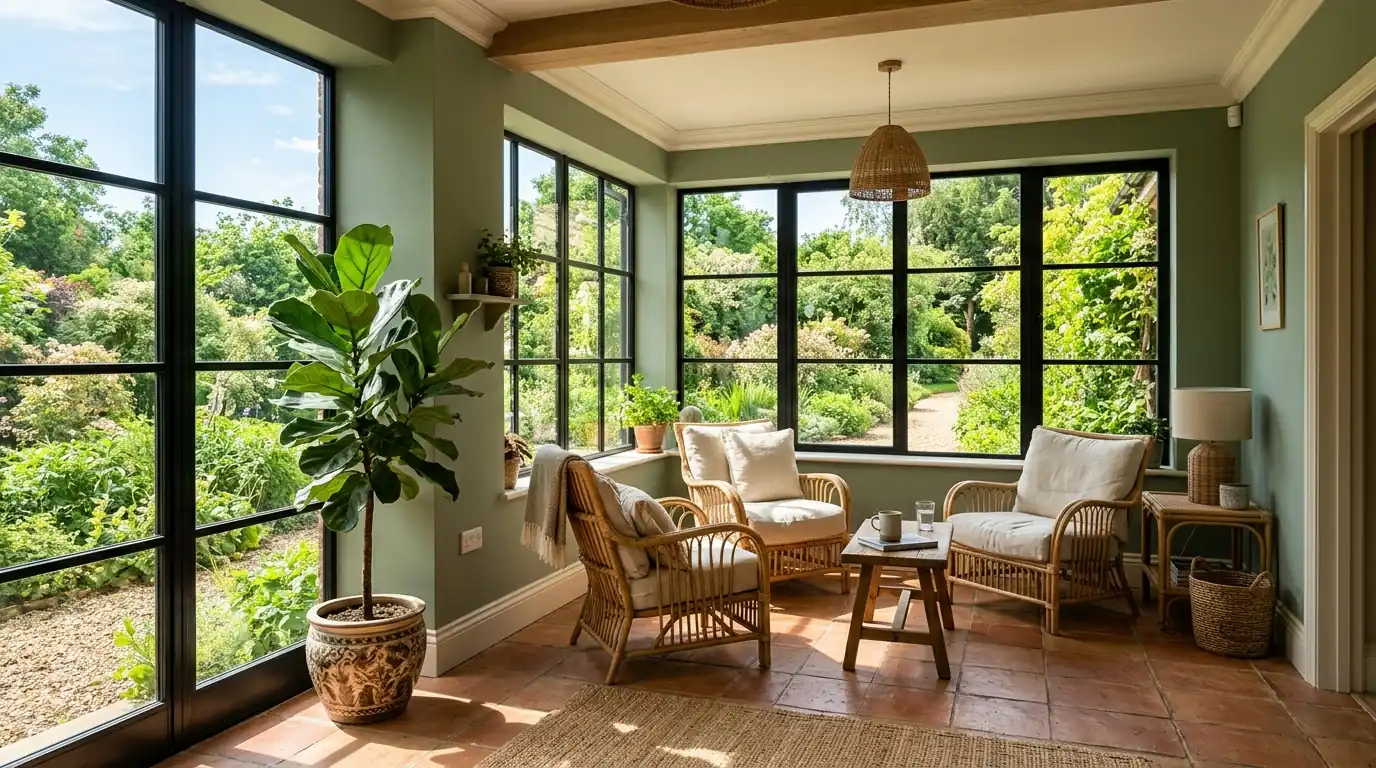
The best paint colors for a sunroom sit between 55 and 72 LRV. Muted sage greens, warm greiges, and soft sky blues work best. These mid-toned shades absorb intense daylight. They stop blinding eye glare. They also keep wall colors from washing out under direct sunlight.
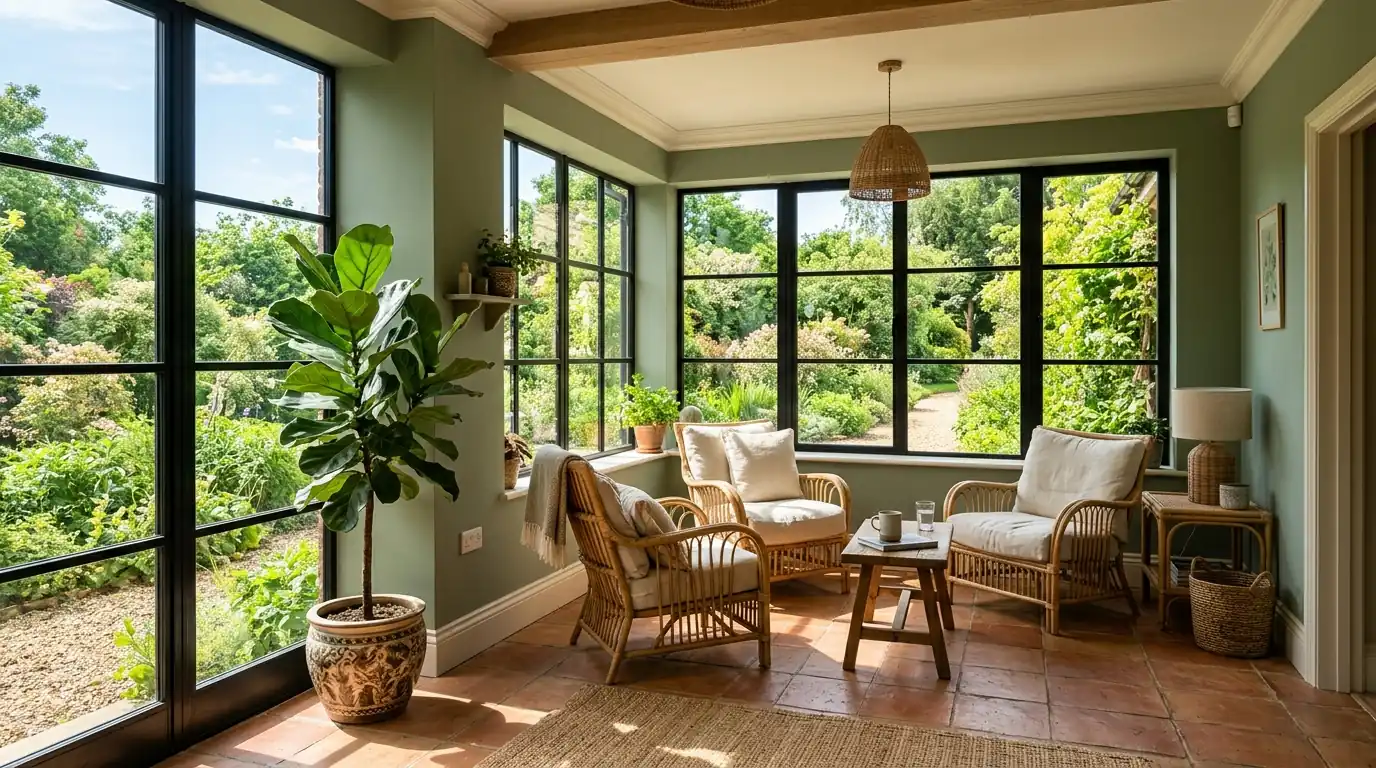
You step into your sunroom to unwind. Within minutes, squinting starts. Wide glass walls flood the room with raw daylight. Standard interior paint advice fails in these spaces. Strong sun changes how paint looks to your eyes. A swatch that looks warm in the store turns chalky on sunroom walls. Intense sun washes weak colors out fast.
Picking sunroom paint requires careful balance. You must balance light levels, paint resin, and outside views. Direct sun bleaches standard paint over time. Window frames cast sharp diagonal shadows across the drywall. These hard shadows expose every bump on your walls. You must treat sunroom wall paint as a light filter, not a decorative backdrop.
The Sunroom LRV Rule: Why Ultra-Whites and High-Gloss Paint Fail
Ultra-white paints above 82 LRV bounce raw sun across window glass. This reflection causes heavy eye strain and washed-out walls. Paints between 55 and 72 LRV absorb harsh daylight. They keep the room bright, open, and easy on your eyes.
Light Reflectance Value measures the light a paint color bounces back. The scale runs from zero to one hundred. Pure black sits at zero. Pure white sits at one hundred. In dark halls, high LRV paint helps spread light. In a sunroom, that bright paint acts like a mirror. The walls bounce raw sun straight back into your eyes.
The 55 to 72 LRV Sweet Spot
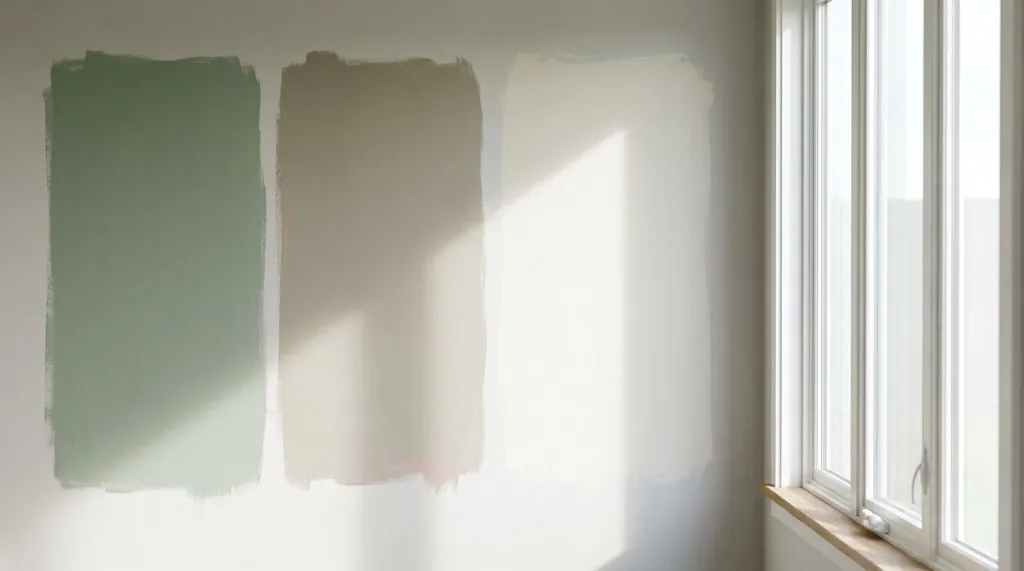
Pro painters stick to the 55 to 72 LRV range for sunrooms. Colors in this range have enough white pigment to feel open. They also hold enough tint to soften blinding solar glare. A paint with an LRV of 62 holds its true tone under midday sun. Paint above 78 LRV loses its undertone in direct light. The drywall ends up looking like flat white primer.
Sheen Allocation Across Walls, Ceilings, and Window Sills
Paint sheen controls how light bounces across the surface. The wrong sheen ruins a good color. Sunroom walls need an eggshell or low-lustre finish. Eggshell creates a fine texture on drywall. It scatters incoming rays into a soft glow. This finish cuts out harsh glare spots.
Ceilings require a dead-flat acrylic paint. Sunrooms often have skylights or high clerestory windows. Daylight hits the ceiling at flat angles. Any shine on a ceiling shows tape joints and drywall flaws. Use satin or semi-gloss urethane enamel only on window trim and sills. Sills face condensation and temperature swings. A hard enamel finish stops water damage.
Sunroom Paint Colors by Window Orientation and Solar Path
Match your sunroom paint undertones to your main window direction. South and west exposures need cool green or slate undertones. These cool tones calm down strong golden heat. North and east exposures need warm cream or honey undertones. These warm tones balance cool blue morning shadows.
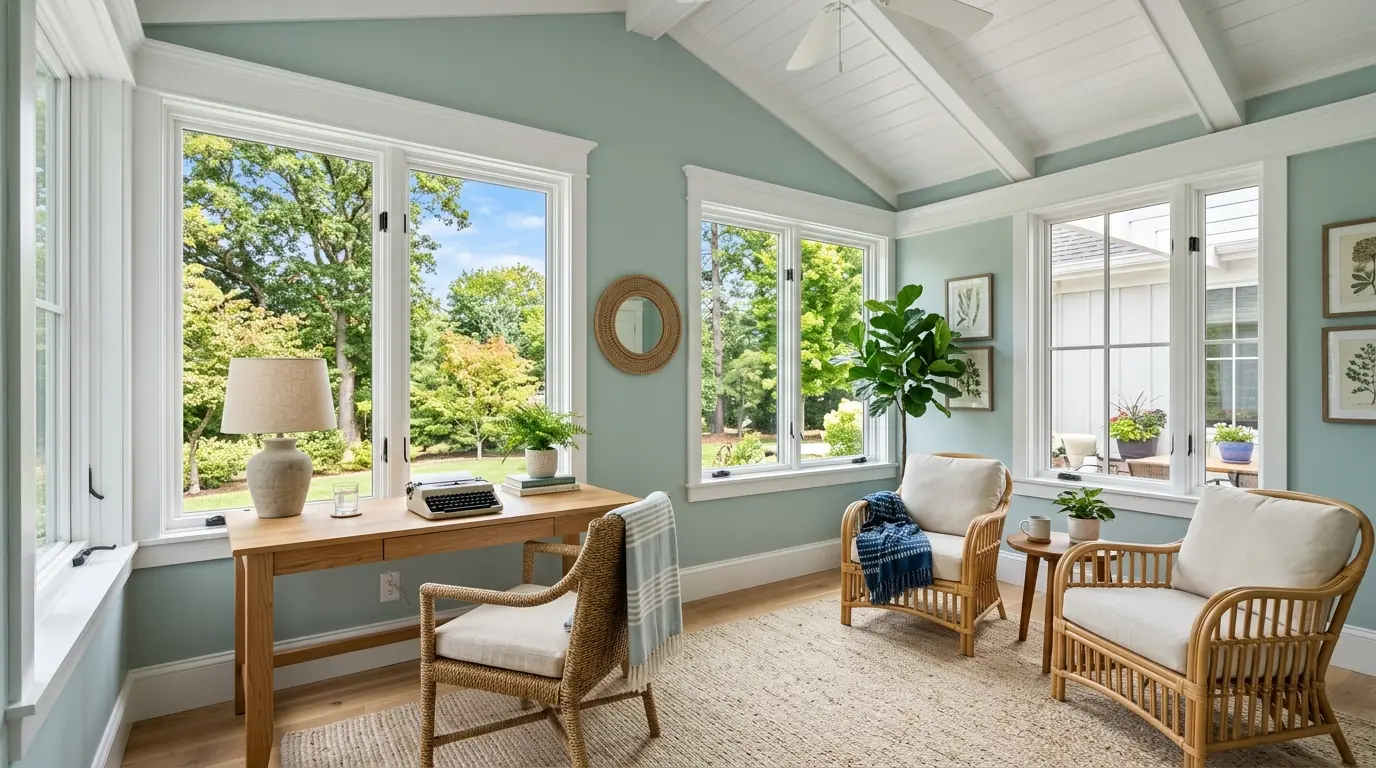
South and West-Facing Sunrooms: Cooling Down High Solar Heat
South and west sunrooms receive strong sun all afternoon. Western light peaks at a warm 3,000 Kelvin temperature. It fills the room with amber and orange light. Warm beige or yellow paint feels hot under western sun. The room quickly starts to feel stuffy and harsh. For west-facing sunrooms, balance late-day heat. Check our guide on paint colors for west facing rooms.
Cool paint formulas restore visual balance. Soft eucalyptus greens, pale seafoam tones, and cool slate grays absorb yellow light. Sherwin-Williams Sea Salt (SW 6204, LRV 63) cools down warm rooms. Benjamin Moore October Mist (1495, LRV 46.3) also works well. The gray undertone grounds the space during hot afternoons.
North and East-Facing Sunrooms: Countering Cool Shadows
East-facing sunrooms catch clear yellow light at sunrise. By early afternoon, they fall into cool shade. North-facing sunrooms get low-level sky light all day. This indirect daylight measures around 6,500 Kelvin. Cool gray or icy blue paint looks cold and flat here.
Warm neutrals bring life to cool northern light. Pick paints with soft yellow, peach, or tan undertones. Benjamin Moore White Dove (OC-17, LRV 83.16) adds warmth without turning yellow. Sherwin-Williams Creamy (SW 7012, LRV 81) also brightens shaded walls. These tones keep the room cozy on gray mornings.
Three-Sided Sunrooms and the Chameleon Shift
Most sunrooms feature glass on three sides. They catch south, east, and west light as the day moves. The room changes from soft yellow at dawn to bright white at noon. By dinner, it turns deep amber gold. Bright pastels often fail here. A light green can look minty at dawn and dull yellow by dusk.
Complex greiges handle these light shifts well. Sherwin-Williams Repose Gray (SW 7015, LRV 58) blends gray, brown, and green tints. It adapts as the sun moves across the sky. The color stays steady without turning muddy or washed out.
Managing Floor Bounce and Exterior Landscape Reflections
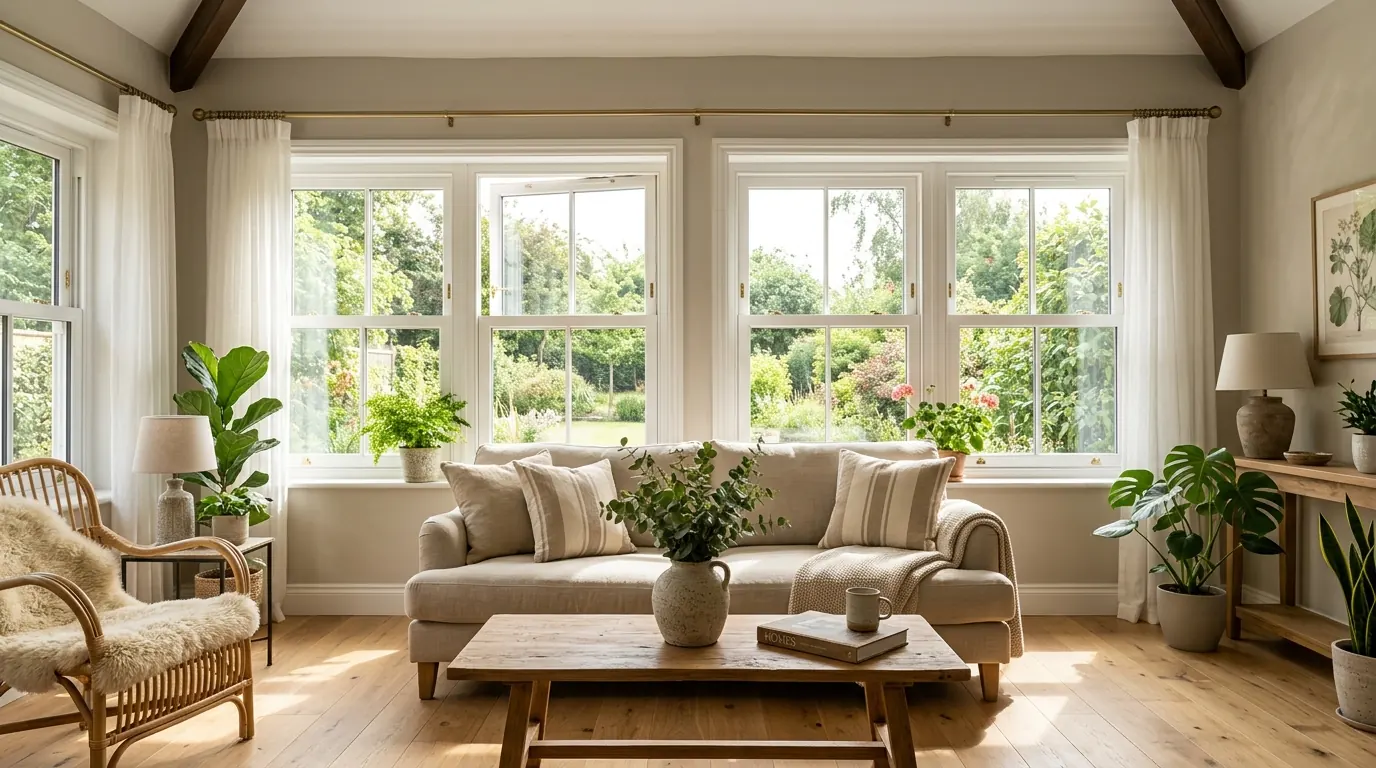
Direct sunlight bounces exterior lawn and interior floor colors onto sunroom walls. Green grass casts a cool green tint upward through glass. Terracotta tiles and red brick bounce warm amber light onto ceilings. Choose wall undertones that work with these existing color reflections.
Floor bounce creates big color shifts in glass rooms. When sun hits hard flooring, forty percent of that light bounces upward. Terracotta tiles and amber pine floors throw warm orange light. Your walls catch this warm glow all day.
Terracotta, Brick, and Slate Flooring
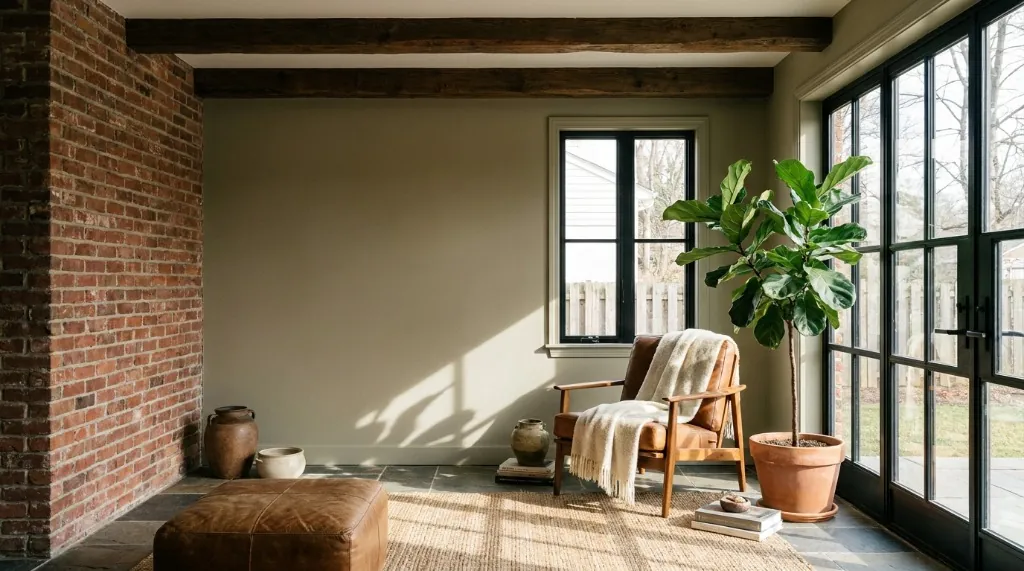
Pair terracotta or red brick floors with muted olive greens or warm greiges. Green sits opposite red-orange on the color wheel. This natural contrast grounds the room. Avoid cool blue-grays with terracotta floors. Cool blue clashes with warm tile reflections, making the room feel split.
Dark slate and flagstone floors absorb light without reflecting glare. With dark stone floors, you can pick lighter wall colors. Aim for paints with an LRV between 65 and 72. Pair stone floors with sustainable rattan furniture. Add linen cushions for a classic garden look.
Exterior Turf and Dense Tree Canopies
Large windows look out directly onto trees and grass. Sunlight hitting green grass bounces green light into your sunroom. Cool white walls soak up this green reflection. The drywall can end up looking like a hospital room.
Paints with faint red or peach undertones cancel green lawn bounce. You can also lean into the view with soft botanical greens. Sherwin-Williams Clary Sage (SW 6178, LRV 54) frames outdoor views. It builds a natural visual link between home and yard.
Proven Sunroom Paint Palettes and Designer Color Swatches
Top sunroom palettes center on biophilic sages, warm greiges, and sky blues. Sea Salt, Palladian Blue, and Evergreen Fog control glare well. They resist fading in direct sun. They link indoor seating with outdoor garden views.
These tested color formulas deliver consistent performance across various sunroom orientations and architectural styles:
| Paint Color | Brand & Code | LRV | Dominant Undertone | Best Exposure | Recommended Floor Pairing |
|---|---|---|---|---|---|
| Sea Salt | Sherwin-Williams SW 6204 | 63 | Muted Green-Gray | South & West | Light Oak, Terracotta Tile |
| Palladian Blue | Benjamin Moore HC-144 | 60.4 | Soft Blue-Green | East & South | Natural Flagstone, White Oak |
| Evergreen Fog | Sherwin-Williams SW 9130 | 34 | Grounded Olive-Sage | South (High Glare) | Red Brick, Reclaimed Wood |
| Alabaster | Sherwin-Williams SW 7008 | 82 | Warm Cream Neutral | North & East | Dark Stained Oak, Slate |
| Repose Gray | Sherwin-Williams SW 7015 | 58 | Balanced Warm Greige | All Exposures (3-Sided) | Limestone, Jute Rugs |
| Woodlawn Blue | Benjamin Moore HC-147 | 60.3 | Historic Sky Blue | Ceiling Accent | White Trim, Neutral Walls |
The Fifth Wall: Traditional Haint Blue Ceilings
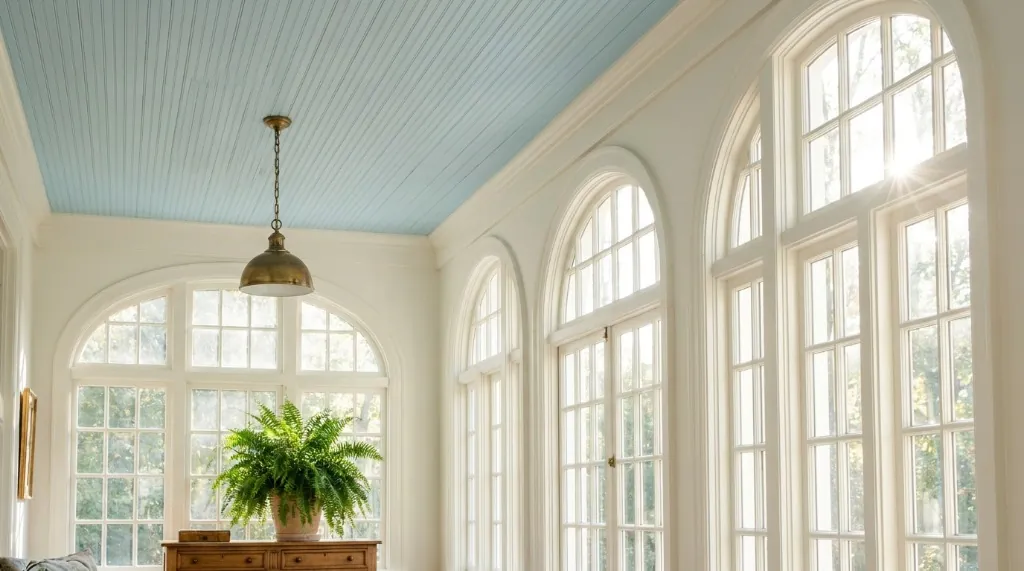
Painting a sunroom ceiling pale blue follows an old porch tradition. A soft sky blue ceiling adds visual height. It echoes open skies above tall window glass. Benjamin Moore Palladian Blue (HC-144) works well on ceilings. Sherwin-Williams Rainwashed (SW 6211) is another top pick. Use a flat finish to cut downlight glare.
Pair blue ceilings with warm off-white or greige walls. This contrast outlines window frames cleanly. It also frames your indoor seating. Furnish sunny rooms with weatherproof outdoor furniture. This setup works well for spaces opening onto decks.
UV Resistance and Paint Chemistry: Stopping Sunroom Fading and Peeling
Direct sun breaks down cheap paint binders over time. This solar damage causes chalking, fading, and peeling. Use pure acrylic paints made with inorganic mineral pigments like iron oxide. Aura and Emerald paints protect drywall. They shield walls from sun damage.
Cheap interior paints use vinyl-acrylic binders. Direct ultraviolet light snaps the binder bonds in eighteen months. The paint begins to chalk. Loose powder rubs off on your fingers. Sunlit wall patches fade faster than shaded corners.
Inorganic Mineral Pigments vs Organic Azo Colorants
Color lifespan depends on pigment chemistry. Paint bases use either organic dyes or inorganic mineral oxides. Bright reds and yellows use organic chemical bonds. Ultraviolet light breaks these bonds fast. Bright colors fade within two summers.
Earth tones, ochres, and sage greens use inorganic mineral oxides. Iron oxides and chromium oxides resist ultraviolet rays. Choosing muted earth tones keeps your walls rich for ten years.
Window Sill Preparation and Condensation Defense
Window sills face harsh temperature swings. Sills can heat to 110 degrees in summer sun. They drop to 40 degrees on autumn nights. Winter condensation pools on flat sill boards. Cheap latex paint blisters and peels under this standing water.
Sand wood sills smooth with 120-grit paper. Seal the bare grain with an acrylic primer. Coat sills with two layers of waterborne urethane enamel. Sherwin-Williams Emerald Urethane Trim Enamel cures into a tough shell. This finish handles temperature swings and repels water.
Frequently Asked Questions About Sunroom Paint Colors
Should a sunroom be painted light or dark?
Mid-toned paints between 55 and 72 LRV work best in most sunrooms. Light tones keep the space airy. Ultra-whites cause heavy glare under direct sun. Darker colors like deep olive or navy create bold contrast. They absorb glare well in sunrooms used mainly at night.
What is the best paint finish for sunroom walls?
Eggshell or low-lustre is the best finish for sunroom walls. Eggshell diffuses bright sunlight across drywall without casting harsh glare. Use dead-flat paint on sunroom ceilings to hide drywall seams. Use satin or semi-gloss urethane enamel on window sills to resist water damage.
Why does white paint look harsh in a sunroom?
White paint bounces eighty percent of daylight. This reflection causes harsh eye glare. Direct sun also strips subtle undertones away. The walls end up looking like bare white primer.
How do you test paint colors in a sunroom before buying?
Paint large two-foot square sample swatches on multiple walls. You can also use peel-and-stick sample boards. Watch the swatches at 8:00 AM, 1:00 PM, and 6:00 PM over several days. Moving sun angles shift paint tones. Watch colors change from morning to evening.
The Painter’s Action Checklist
Ready to paint your sunroom? Pick two sample swatches in the 55 to 72 LRV range. Place them on opposite walls today. Watch how morning and afternoon sun shifts the undertones. Use high-grade acrylic eggshell on walls and dead-flat on ceilings. This simple setup gives you a bright, glare-free retreat for years to come.